

Top Tweets for #HighstrangeEvents

#ApocalypticBookStudy #82
#BibleStudy #137
#SupernaturalCosmography #24
#DimensionalTheology #6
#Phenomenology #11
#HighStrangeEvents #10
📜 Ezekiel 28:1-26 - 29:1-21 - 30:1-26 📜
⚠️ Specialist Study on The Anointed Cherub, the Mountain of God, & the Fall Motif in Ezekiel With + in depth Analysis on The Dragon of the Nile, Anti-Creation & Imperial Deconstruction, Chaos Waters, Cosmic Mountains, & Edenic Memory Parallels ⚠️
⚠️ (SEE REPLIES FOR EXTRA SPECIALIST COMMENTARY & IN THE PICS AS WELL)⚠️
(Quick note: Lord = Adonay & Adonay = Lord below meaning i have 2 different translations)
📜 Ezekiel 28:1-26 📜 (3 CHAPTERS IN FULL)
A Prophecy Aimed at the King of Tyre
1 And the word of Yahweh came to me, saying,
2 “Son of man, say to the leader of Tyre,
‘Thus says the Lord Yahweh:
“Because your heart was haughty,
and you said, ‘I am a god;
I sit in the seat of the gods,
I sit in the heart of the seas!’
But you are a human, not a god,
and you gave your heart to be like the heart of a god.
3 Look, are you wiser than Daniel,
so that no secret is hidden from you?
4 By your wisdom and by your understanding
you have gained for yourself wealth,
and you have amassed gold and silver
in your treasuries.
5 By the abundance of your wisdom in your trading
you have increased your wealth
and your heart was proud in your wealth.”’”
6 Therefore thus says the Lord Yahweh:
“Because of your regarding your mind
like the mind of a god,
7 therefore look! I am bringing strangers over you,
the most ruthless of the peoples,
and they will draw their swords against the beauty of your wisdom,
and they will defile your splendor.
8 They will thrust you down to the pit,
and you will die a violent death
in the heart of the seas.
9 Will you indeed still say “I am a god!”
before the face of your killers?
And in fact you are a human and not a god
in the hand of those who pierce you.
10 You will die the death of the uncircumcised
by the hand of strangers,
for I myself have spoken!” declares the Lord Yahweh.
11 And the word of Yahweh came to me, saying,
12 “Son of man, raise a lament over the king of Tyre, and you must say to him, ‘thus says the Lord Yahweh:
“You were a perfect model of an example,
full of wisdom and perfect of beauty.
13 You were in Eden, the garden of God,
and every precious stone was your adornment:
carnelian, topaz and moonstone,
turquoise, onyx and jasper,
sapphire, malachite and emerald.
And gold was the craftsmanship of your settings
and your mountings in you;
on the day when you were created they were prepared.
14 You were an anointed guardian cherub,
and I placed you on God’s holy mountain;
you walked in the midst of stones of fire.
15 You were blameless in your ways
from the day when you were created,
until wickedness was found in you.
16 In the abundance of your trading,
they filled the midst of you with violence, and you sinned;
and I cast you as a profane thing from the mountain of God,
and I expelled you, the guardian cherub,
from the midst of the stones of fire.
17 Your heart was proud because of your beauty;
you ruined your wisdom because of your splendor.
I threw you on the ground before kings;
I have exposed you for viewing.
18 From the abundance of your iniquities
in the dishonesty of your trading,
I profaned your sanctuaries
and I brought fire from your midst;
it consumed you, and I have turned you to ashes on the earth
before the eyes of everyone who sees you.
19 All who know you among the peoples
are appalled over you;
you have become as horrors,
and you shall cease to exist forever.”’”
20 And the word of Yahweh came to me, saying,
21 “Son of man, set your face toward Sidon and prophesy against it, 22 and you must say, ‘Thus says the Lord Yahweh:
“Look! I am against you, Sidon,
and I display my glory in the midst of you,
and they will know that I am Yahweh
when I execute my judgments,
and I will show myself holy within it.
23 And I will send into it a plague,
and blood will be in its streets.
And the dead will fall in the midst of her
by the sword that is against it from all around;
and they will know that I am Yahweh.
24 And there will not be any longer a painful thorn and a sharp thornbush for the house of Israel from anywhere around them[ak] from those who are despising them, and they will know that I am the Lord Yahweh.”’”
25 Thus says the Lord Yahweh: “When I gather the house of Israel from the peoples to which they were scattered about in them, and I show myself holy in them before the eyes of the nations, then they will live on their soil, which I gave to my servant Jacob.
26 And they will live on it in safety, and they will build houses, and they will plant vineyards, and they will live in safety when I execute my judgments on all those who despise them from all around them, and then they will know that I am Yahweh their God.”
📜 Ezekiel 29:1-21 📜
Yahweh’s Judgment upon Egypt
29 In the tenth year, in the tenth month, on the twelfth day of the month, the word of Yahweh came to me, saying,
2 “Son of man, set your face against Pharaoh, the king of Egypt, and prophesy against him and against Egypt, all of it.
3 Speak, and you must say,
‘thus says the Lord Yahweh:
“Look! I am against you,
Pharaoh, king of Egypt,
the great sea Sragon (A),
the one lying down
in the midst of his Nile streams,
who says to me, “It is my Nile, and I made it for myself.”
4 And so I will put hooks in your jawbones,
and I will make the fish of your Nile streams stick to your scales,
and I will bring you up from the midst of your Nile streams,
and all of the fish of your Nile streams which cling to your scales.
5 And I will fling you to the desert,
you and all the fish of your Nile streams.
On the surface of the field you will fall;
you will not be gathered,
and you will not be assembled.
To the animals of the field
and to the birds of the heavens
I will give you as food.
6 And all of the inhabitants of Egypt will know that I am Yahweh,
because of their being a staff of reed for the house of Israel.
7 When they took hold of you with the hand, you snapped,
and you split their every shoulder.
And when they leaned on you, you broke,
and you caused all of their loins to wobble.”
8 Therefore thus says the Lord Yahweh: “Look! I am bringing on you a sword, and I will cut off from you human and animal. 9 And the land of Egypt will become a desolation and ruins, and they will know that I am Yahweh because he said, ‘The Nile is mine! And I, I made it !’
10 Therefore look! I am against you and against your Nile streams, and I will make the land of Egypt into ruins, a pile of rubble, a desolation from Migdol to Syene and up to the boundary of Cush. 11 A foot of a human will not pass over it, and a foot of an animal will not pass over it, and so it will not be inhabited for forty years.
12 And I will make the land of Egypt a desolation in the midst of desolated countries, and its cities to be in the midst of ruined cities. They will be a desolation for forty years, and I will scatter Egypt among the nations, and I will disperse them among the countries.”
13 For thus says the Lord Yahweh: “At the end of forty years I will gather Egypt from the peoples among whom they were scattered.
14 And I will restore the fortunes of Egypt, and I will bring them back to the land of Pathros, to the land of their origin, and they will be a lowly kingdom there. 15 Of all the kingdoms it will be the most lowly, and it will not exalt itself again over the nations, and I will make them small so as not to rule over the nations. 16 And it will not be again for the house of Israel an object of trust, bringing to remembrance their guilt when they turned back to them, and they will know that I am the Lord Yahweh.”
17 And then in the twenty-seventh year, in the first month, on the first day of the month, the word of Yahweh came to me, saying,
18 “Son of man, Nebuchadnezzar the king of Babylon, he made his army labor hard against Tyre. Every head was rubbed bare, and every shoulder was rubbed raw, but a wage was not paid for him and for his army from Tyre for the labor that he did against it.”
19 Therefore thus says the Lord Yahweh: “Look! I am giving to Nebuchadnezzar the king of Babylon the land of Egypt, and he will carry its wealth away, and he will plunder its plunder, and he will loot its loot, and it will be a wage for his army. 20 As his wages that he worked for, I will give to him the land of Egypt, because they worked for me,” declares the Lord Yahweh.
21 “On that day I will cause power to grow up for the house of Israel, and for you I will give an opening of your mouth in the midst of them, and they will know that I am Yahweh.”
Notes-
A- or Monster
📜 Ezekiel 30:1-26 📜
Nebuchadnezzar Will Conquer Egypt
1 Yahweh spoke his word to me. He said,
2 “Son of man, prophesy.
Say, ‘This is what Adonay Yahweh says:
Cry for that day!
3 The day is near. The day of Yahweh is near.
It will be a gloomy day, a time of trouble for the nations.
4 There will be war in Egypt and anguish in Ethiopia.
Many Egyptians will fall dead.
People will take away Egypt’s wealth,
and its foundations will be torn down.
5 Sudan, Put, Lud, all the Arabs, the Libyans,
and people from the promised land will die in battle.
6 “‘This is what Yahweh says:
All Egypt’s allies will die.
Egypt’s strength will disappear.
People will die in war from Migdol to Syene,
declares Adonay Yahweh.
7 “‘Egypt will become the most desolate country in the world, and Egypt’s cities will lie in ruins. They will be ruined more than other cities. 8 Then they will know that I am Yahweh, because I will set fire to Egypt and all her defenders will be killed. 9 On that day I will send messengers in ships to terrify those who live in safety in Sudan. The people of Sudan will be in anguish when Egypt is in trouble. That day is coming!
10 “‘This is what Adonay Yahweh says: I will use King Nebuchadnezzar of Babylon to bring an end to Egypt. 11 He and his troops, the most ruthless troops among the nations, will be brought to destroy the land. They will draw their swords to attack Egypt and fill the land with dead bodies. 12 I will dry up the Nile River and sell the land to wicked people. I will have foreigners destroy the land and everything in it. I, Yahweh, have spoken.
13 “‘This is what Adonay Yahweh says: I will destroy the statues and put an end to the idols in Memphis. A prince will never rise again in Egypt. I will spread fear throughout Egypt. 14 I will destroy Pathros, set fire to Zoan, and bring punishment on Thebes. 15 I will pour out my fury on Sin, Egypt’s fortress, and I will kill many people in Thebes. 16 I will set fire to Egypt. Sin will be in much pain. Thebes will be broken into pieces, and Memphis will be in trouble every day.
17 The young men from Heliopolis and Bubastis will die in battle, and people from these cities will go into exile. 18 At Tahpanhes the day will turn dark when I break Egypt’s power. Egypt’s strong army will be defeated. Clouds will cover Egypt, and people from its villages will go into exile. 19 Then they will know that I am Yahweh, because I will bring punishment on Egypt.’”
20 On the seventh day of the first month in the eleventh year, Yahweh spoke his word to me. He said, 21 “Son of man, I have broken the arm of Pharaoh, king of Egypt. His arm isn’t bandaged, so it can’t heal and be strong enough to hold a sword. 22 “This is what Adonay Yahweh says: I’m against Pharaoh, king of Egypt. I will break both his arms, the healthy one and the broken one. I will make the sword fall from his hand. 23 I will scatter the Egyptians among the nations and force them into other countries. 24 I will make the arms of the king of Babylon strong. I will put my sword in his hand, but I will break Pharaoh’s arms. Pharaoh will groan like a person who is dying.
25 I will strengthen the arms of the king of Babylon, but Pharaoh’s arms will fall. Then they will know that I am Yahweh, because I will put my sword in the hand of the king of Babylon. He will strike Egypt with it. 26 I will scatter the Egyptians among the nations and force them into other countries. Then they will know that I am Yahweh.”
(See NEXT REPLY FOR THE REST OF OP (PICTURES YOU SEE IN THIS POST
![TeXasMadde's tweet photo. #ApocalypticBookStudy #82
#BibleStudy #137
#SupernaturalCosmography #24
#DimensionalTheology #6
#Phenomenology #11
#HighStrangeEvents #10
📜 Ezekiel 28:1-26 - 29:1-21 - 30:1-26 📜
⚠️ Specialist Study on The Anointed Cherub, the Mountain of God, & the Fall Motif in Ezekiel With + in depth Analysis on The Dragon of the Nile, Anti-Creation & Imperial Deconstruction, Chaos Waters, Cosmic Mountains, & Edenic Memory Parallels ⚠️
⚠️ (SEE REPLIES FOR EXTRA SPECIALIST COMMENTARY & IN THE PICS AS WELL)⚠️
(Quick note: Lord = Adonay & Adonay = Lord below meaning i have 2 different translations)
📜 Ezekiel 28:1-26 📜 (3 CHAPTERS IN FULL)
A Prophecy Aimed at the King of Tyre
1 And the word of Yahweh came to me, saying,
2 “Son of man, say to the leader of Tyre,
‘Thus says the Lord Yahweh:
“Because your heart was haughty,
and you said, ‘I am a god;
I sit in the seat of the gods,
I sit in the heart of the seas!’
But you are a human, not a god,
and you gave your heart to be like the heart of a god.
3 Look, are you wiser than Daniel,
so that no secret is hidden from you?
4 By your wisdom and by your understanding
you have gained for yourself wealth,
and you have amassed gold and silver
in your treasuries.
5 By the abundance of your wisdom in your trading
you have increased your wealth
and your heart was proud in your wealth.”’”
6 Therefore thus says the Lord Yahweh:
“Because of your regarding your mind
like the mind of a god,
7 therefore look! I am bringing strangers over you,
the most ruthless of the peoples,
and they will draw their swords against the beauty of your wisdom,
and they will defile your splendor.
8 They will thrust you down to the pit,
and you will die a violent death
in the heart of the seas.
9 Will you indeed still say “I am a god!”
before the face of your killers?
And in fact you are a human and not a god
in the hand of those who pierce you.
10 You will die the death of the uncircumcised
by the hand of strangers,
for I myself have spoken!” declares the Lord Yahweh.
11 And the word of Yahweh came to me, saying,
12 “Son of man, raise a lament over the king of Tyre, and you must say to him, ‘thus says the Lord Yahweh:
“You were a perfect model of an example,
full of wisdom and perfect of beauty.
13 You were in Eden, the garden of God,
and every precious stone was your adornment:
carnelian, topaz and moonstone,
turquoise, onyx and jasper,
sapphire, malachite and emerald.
And gold was the craftsmanship of your settings
and your mountings in you;
on the day when you were created they were prepared.
14 You were an anointed guardian cherub,
and I placed you on God’s holy mountain;
you walked in the midst of stones of fire.
15 You were blameless in your ways
from the day when you were created,
until wickedness was found in you.
16 In the abundance of your trading,
they filled the midst of you with violence, and you sinned;
and I cast you as a profane thing from the mountain of God,
and I expelled you, the guardian cherub,
from the midst of the stones of fire.
17 Your heart was proud because of your beauty;
you ruined your wisdom because of your splendor.
I threw you on the ground before kings;
I have exposed you for viewing.
18 From the abundance of your iniquities
in the dishonesty of your trading,
I profaned your sanctuaries
and I brought fire from your midst;
it consumed you, and I have turned you to ashes on the earth
before the eyes of everyone who sees you.
19 All who know you among the peoples
are appalled over you;
you have become as horrors,
and you shall cease to exist forever.”’”
20 And the word of Yahweh came to me, saying,
21 “Son of man, set your face toward Sidon and prophesy against it, 22 and you must say, ‘Thus says the Lord Yahweh:
“Look! I am against you, Sidon,
and I display my glory in the midst of you,
and they will know that I am Yahweh
when I execute my judgments,
and I will show myself holy within it.
23 And I will send into it a plague,
and blood will be in its streets.
And the dead will fall in the midst of her
by the sword that is against it from all around;
and they will know that I am Yahweh.
24 And there will not be any longer a painful thorn and a sharp thornbush for the house of Israel from anywhere around them[ak] from those who are despising them, and they will know that I am the Lord Yahweh.”’”
25 Thus says the Lord Yahweh: “When I gather the house of Israel from the peoples to which they were scattered about in them, and I show myself holy in them before the eyes of the nations, then they will live on their soil, which I gave to my servant Jacob.
26 And they will live on it in safety, and they will build houses, and they will plant vineyards, and they will live in safety when I execute my judgments on all those who despise them from all around them, and then they will know that I am Yahweh their God.”
📜 Ezekiel 29:1-21 📜
Yahweh’s Judgment upon Egypt
29 In the tenth year, in the tenth month, on the twelfth day of the month, the word of Yahweh came to me, saying,
2 “Son of man, set your face against Pharaoh, the king of Egypt, and prophesy against him and against Egypt, all of it.
3 Speak, and you must say,
‘thus says the Lord Yahweh:
“Look! I am against you,
Pharaoh, king of Egypt,
the great sea Sragon (A),
the one lying down
in the midst of his Nile streams,
who says to me, “It is my Nile, and I made it for myself.”
4 And so I will put hooks in your jawbones,
and I will make the fish of your Nile streams stick to your scales,
and I will bring you up from the midst of your Nile streams,
and all of the fish of your Nile streams which cling to your scales.
5 And I will fling you to the desert,
you and all the fish of your Nile streams.
On the surface of the field you will fall;
you will not be gathered,
and you will not be assembled.
To the animals of the field
and to the birds of the heavens
I will give you as food.
6 And all of the inhabitants of Egypt will know that I am Yahweh,
because of their being a staff of reed for the house of Israel.
7 When they took hold of you with the hand, you snapped,
and you split their every shoulder.
And when they leaned on you, you broke,
and you caused all of their loins to wobble.”
8 Therefore thus says the Lord Yahweh: “Look! I am bringing on you a sword, and I will cut off from you human and animal. 9 And the land of Egypt will become a desolation and ruins, and they will know that I am Yahweh because he said, ‘The Nile is mine! And I, I made it !’
10 Therefore look! I am against you and against your Nile streams, and I will make the land of Egypt into ruins, a pile of rubble, a desolation from Migdol to Syene and up to the boundary of Cush. 11 A foot of a human will not pass over it, and a foot of an animal will not pass over it, and so it will not be inhabited for forty years.
12 And I will make the land of Egypt a desolation in the midst of desolated countries, and its cities to be in the midst of ruined cities. They will be a desolation for forty years, and I will scatter Egypt among the nations, and I will disperse them among the countries.”
13 For thus says the Lord Yahweh: “At the end of forty years I will gather Egypt from the peoples among whom they were scattered.
14 And I will restore the fortunes of Egypt, and I will bring them back to the land of Pathros, to the land of their origin, and they will be a lowly kingdom there. 15 Of all the kingdoms it will be the most lowly, and it will not exalt itself again over the nations, and I will make them small so as not to rule over the nations. 16 And it will not be again for the house of Israel an object of trust, bringing to remembrance their guilt when they turned back to them, and they will know that I am the Lord Yahweh.”
17 And then in the twenty-seventh year, in the first month, on the first day of the month, the word of Yahweh came to me, saying,
18 “Son of man, Nebuchadnezzar the king of Babylon, he made his army labor hard against Tyre. Every head was rubbed bare, and every shoulder was rubbed raw, but a wage was not paid for him and for his army from Tyre for the labor that he did against it.”
19 Therefore thus says the Lord Yahweh: “Look! I am giving to Nebuchadnezzar the king of Babylon the land of Egypt, and he will carry its wealth away, and he will plunder its plunder, and he will loot its loot, and it will be a wage for his army. 20 As his wages that he worked for, I will give to him the land of Egypt, because they worked for me,” declares the Lord Yahweh.
21 “On that day I will cause power to grow up for the house of Israel, and for you I will give an opening of your mouth in the midst of them, and they will know that I am Yahweh.”
Notes-
A- or Monster
📜 Ezekiel 30:1-26 📜
Nebuchadnezzar Will Conquer Egypt
1 Yahweh spoke his word to me. He said,
2 “Son of man, prophesy.
Say, ‘This is what Adonay Yahweh says:
Cry for that day!
3 The day is near. The day of Yahweh is near.
It will be a gloomy day, a time of trouble for the nations.
4 There will be war in Egypt and anguish in Ethiopia.
Many Egyptians will fall dead.
People will take away Egypt’s wealth,
and its foundations will be torn down.
5 Sudan, Put, Lud, all the Arabs, the Libyans,
and people from the promised land will die in battle.
6 “‘This is what Yahweh says:
All Egypt’s allies will die.
Egypt’s strength will disappear.
People will die in war from Migdol to Syene,
declares Adonay Yahweh.
7 “‘Egypt will become the most desolate country in the world, and Egypt’s cities will lie in ruins. They will be ruined more than other cities. 8 Then they will know that I am Yahweh, because I will set fire to Egypt and all her defenders will be killed. 9 On that day I will send messengers in ships to terrify those who live in safety in Sudan. The people of Sudan will be in anguish when Egypt is in trouble. That day is coming!
10 “‘This is what Adonay Yahweh says: I will use King Nebuchadnezzar of Babylon to bring an end to Egypt. 11 He and his troops, the most ruthless troops among the nations, will be brought to destroy the land. They will draw their swords to attack Egypt and fill the land with dead bodies. 12 I will dry up the Nile River and sell the land to wicked people. I will have foreigners destroy the land and everything in it. I, Yahweh, have spoken.
13 “‘This is what Adonay Yahweh says: I will destroy the statues and put an end to the idols in Memphis. A prince will never rise again in Egypt. I will spread fear throughout Egypt. 14 I will destroy Pathros, set fire to Zoan, and bring punishment on Thebes. 15 I will pour out my fury on Sin, Egypt’s fortress, and I will kill many people in Thebes. 16 I will set fire to Egypt. Sin will be in much pain. Thebes will be broken into pieces, and Memphis will be in trouble every day.
17 The young men from Heliopolis and Bubastis will die in battle, and people from these cities will go into exile. 18 At Tahpanhes the day will turn dark when I break Egypt’s power. Egypt’s strong army will be defeated. Clouds will cover Egypt, and people from its villages will go into exile. 19 Then they will know that I am Yahweh, because I will bring punishment on Egypt.’”
20 On the seventh day of the first month in the eleventh year, Yahweh spoke his word to me. He said, 21 “Son of man, I have broken the arm of Pharaoh, king of Egypt. His arm isn’t bandaged, so it can’t heal and be strong enough to hold a sword. 22 “This is what Adonay Yahweh says: I’m against Pharaoh, king of Egypt. I will break both his arms, the healthy one and the broken one. I will make the sword fall from his hand. 23 I will scatter the Egyptians among the nations and force them into other countries. 24 I will make the arms of the king of Babylon strong. I will put my sword in his hand, but I will break Pharaoh’s arms. Pharaoh will groan like a person who is dying.
25 I will strengthen the arms of the king of Babylon, but Pharaoh’s arms will fall. Then they will know that I am Yahweh, because I will put my sword in the hand of the king of Babylon. He will strike Egypt with it. 26 I will scatter the Egyptians among the nations and force them into other countries. Then they will know that I am Yahweh.”
(See NEXT REPLY FOR THE REST OF OP (PICTURES YOU SEE IN THIS POST](https://pbs.twimg.com/media/HBTtyOXbcAA_oT6.jpg)
![TeXasMadde's tweet photo. #ApocalypticBookStudy #82
#BibleStudy #137
#SupernaturalCosmography #24
#DimensionalTheology #6
#Phenomenology #11
#HighStrangeEvents #10
📜 Ezekiel 28:1-26 - 29:1-21 - 30:1-26 📜
⚠️ Specialist Study on The Anointed Cherub, the Mountain of God, & the Fall Motif in Ezekiel With + in depth Analysis on The Dragon of the Nile, Anti-Creation & Imperial Deconstruction, Chaos Waters, Cosmic Mountains, & Edenic Memory Parallels ⚠️
⚠️ (SEE REPLIES FOR EXTRA SPECIALIST COMMENTARY & IN THE PICS AS WELL)⚠️
(Quick note: Lord = Adonay & Adonay = Lord below meaning i have 2 different translations)
📜 Ezekiel 28:1-26 📜 (3 CHAPTERS IN FULL)
A Prophecy Aimed at the King of Tyre
1 And the word of Yahweh came to me, saying,
2 “Son of man, say to the leader of Tyre,
‘Thus says the Lord Yahweh:
“Because your heart was haughty,
and you said, ‘I am a god;
I sit in the seat of the gods,
I sit in the heart of the seas!’
But you are a human, not a god,
and you gave your heart to be like the heart of a god.
3 Look, are you wiser than Daniel,
so that no secret is hidden from you?
4 By your wisdom and by your understanding
you have gained for yourself wealth,
and you have amassed gold and silver
in your treasuries.
5 By the abundance of your wisdom in your trading
you have increased your wealth
and your heart was proud in your wealth.”’”
6 Therefore thus says the Lord Yahweh:
“Because of your regarding your mind
like the mind of a god,
7 therefore look! I am bringing strangers over you,
the most ruthless of the peoples,
and they will draw their swords against the beauty of your wisdom,
and they will defile your splendor.
8 They will thrust you down to the pit,
and you will die a violent death
in the heart of the seas.
9 Will you indeed still say “I am a god!”
before the face of your killers?
And in fact you are a human and not a god
in the hand of those who pierce you.
10 You will die the death of the uncircumcised
by the hand of strangers,
for I myself have spoken!” declares the Lord Yahweh.
11 And the word of Yahweh came to me, saying,
12 “Son of man, raise a lament over the king of Tyre, and you must say to him, ‘thus says the Lord Yahweh:
“You were a perfect model of an example,
full of wisdom and perfect of beauty.
13 You were in Eden, the garden of God,
and every precious stone was your adornment:
carnelian, topaz and moonstone,
turquoise, onyx and jasper,
sapphire, malachite and emerald.
And gold was the craftsmanship of your settings
and your mountings in you;
on the day when you were created they were prepared.
14 You were an anointed guardian cherub,
and I placed you on God’s holy mountain;
you walked in the midst of stones of fire.
15 You were blameless in your ways
from the day when you were created,
until wickedness was found in you.
16 In the abundance of your trading,
they filled the midst of you with violence, and you sinned;
and I cast you as a profane thing from the mountain of God,
and I expelled you, the guardian cherub,
from the midst of the stones of fire.
17 Your heart was proud because of your beauty;
you ruined your wisdom because of your splendor.
I threw you on the ground before kings;
I have exposed you for viewing.
18 From the abundance of your iniquities
in the dishonesty of your trading,
I profaned your sanctuaries
and I brought fire from your midst;
it consumed you, and I have turned you to ashes on the earth
before the eyes of everyone who sees you.
19 All who know you among the peoples
are appalled over you;
you have become as horrors,
and you shall cease to exist forever.”’”
20 And the word of Yahweh came to me, saying,
21 “Son of man, set your face toward Sidon and prophesy against it, 22 and you must say, ‘Thus says the Lord Yahweh:
“Look! I am against you, Sidon,
and I display my glory in the midst of you,
and they will know that I am Yahweh
when I execute my judgments,
and I will show myself holy within it.
23 And I will send into it a plague,
and blood will be in its streets.
And the dead will fall in the midst of her
by the sword that is against it from all around;
and they will know that I am Yahweh.
24 And there will not be any longer a painful thorn and a sharp thornbush for the house of Israel from anywhere around them[ak] from those who are despising them, and they will know that I am the Lord Yahweh.”’”
25 Thus says the Lord Yahweh: “When I gather the house of Israel from the peoples to which they were scattered about in them, and I show myself holy in them before the eyes of the nations, then they will live on their soil, which I gave to my servant Jacob.
26 And they will live on it in safety, and they will build houses, and they will plant vineyards, and they will live in safety when I execute my judgments on all those who despise them from all around them, and then they will know that I am Yahweh their God.”
📜 Ezekiel 29:1-21 📜
Yahweh’s Judgment upon Egypt
29 In the tenth year, in the tenth month, on the twelfth day of the month, the word of Yahweh came to me, saying,
2 “Son of man, set your face against Pharaoh, the king of Egypt, and prophesy against him and against Egypt, all of it.
3 Speak, and you must say,
‘thus says the Lord Yahweh:
“Look! I am against you,
Pharaoh, king of Egypt,
the great sea Sragon (A),
the one lying down
in the midst of his Nile streams,
who says to me, “It is my Nile, and I made it for myself.”
4 And so I will put hooks in your jawbones,
and I will make the fish of your Nile streams stick to your scales,
and I will bring you up from the midst of your Nile streams,
and all of the fish of your Nile streams which cling to your scales.
5 And I will fling you to the desert,
you and all the fish of your Nile streams.
On the surface of the field you will fall;
you will not be gathered,
and you will not be assembled.
To the animals of the field
and to the birds of the heavens
I will give you as food.
6 And all of the inhabitants of Egypt will know that I am Yahweh,
because of their being a staff of reed for the house of Israel.
7 When they took hold of you with the hand, you snapped,
and you split their every shoulder.
And when they leaned on you, you broke,
and you caused all of their loins to wobble.”
8 Therefore thus says the Lord Yahweh: “Look! I am bringing on you a sword, and I will cut off from you human and animal. 9 And the land of Egypt will become a desolation and ruins, and they will know that I am Yahweh because he said, ‘The Nile is mine! And I, I made it !’
10 Therefore look! I am against you and against your Nile streams, and I will make the land of Egypt into ruins, a pile of rubble, a desolation from Migdol to Syene and up to the boundary of Cush. 11 A foot of a human will not pass over it, and a foot of an animal will not pass over it, and so it will not be inhabited for forty years.
12 And I will make the land of Egypt a desolation in the midst of desolated countries, and its cities to be in the midst of ruined cities. They will be a desolation for forty years, and I will scatter Egypt among the nations, and I will disperse them among the countries.”
13 For thus says the Lord Yahweh: “At the end of forty years I will gather Egypt from the peoples among whom they were scattered.
14 And I will restore the fortunes of Egypt, and I will bring them back to the land of Pathros, to the land of their origin, and they will be a lowly kingdom there. 15 Of all the kingdoms it will be the most lowly, and it will not exalt itself again over the nations, and I will make them small so as not to rule over the nations. 16 And it will not be again for the house of Israel an object of trust, bringing to remembrance their guilt when they turned back to them, and they will know that I am the Lord Yahweh.”
17 And then in the twenty-seventh year, in the first month, on the first day of the month, the word of Yahweh came to me, saying,
18 “Son of man, Nebuchadnezzar the king of Babylon, he made his army labor hard against Tyre. Every head was rubbed bare, and every shoulder was rubbed raw, but a wage was not paid for him and for his army from Tyre for the labor that he did against it.”
19 Therefore thus says the Lord Yahweh: “Look! I am giving to Nebuchadnezzar the king of Babylon the land of Egypt, and he will carry its wealth away, and he will plunder its plunder, and he will loot its loot, and it will be a wage for his army. 20 As his wages that he worked for, I will give to him the land of Egypt, because they worked for me,” declares the Lord Yahweh.
21 “On that day I will cause power to grow up for the house of Israel, and for you I will give an opening of your mouth in the midst of them, and they will know that I am Yahweh.”
Notes-
A- or Monster
📜 Ezekiel 30:1-26 📜
Nebuchadnezzar Will Conquer Egypt
1 Yahweh spoke his word to me. He said,
2 “Son of man, prophesy.
Say, ‘This is what Adonay Yahweh says:
Cry for that day!
3 The day is near. The day of Yahweh is near.
It will be a gloomy day, a time of trouble for the nations.
4 There will be war in Egypt and anguish in Ethiopia.
Many Egyptians will fall dead.
People will take away Egypt’s wealth,
and its foundations will be torn down.
5 Sudan, Put, Lud, all the Arabs, the Libyans,
and people from the promised land will die in battle.
6 “‘This is what Yahweh says:
All Egypt’s allies will die.
Egypt’s strength will disappear.
People will die in war from Migdol to Syene,
declares Adonay Yahweh.
7 “‘Egypt will become the most desolate country in the world, and Egypt’s cities will lie in ruins. They will be ruined more than other cities. 8 Then they will know that I am Yahweh, because I will set fire to Egypt and all her defenders will be killed. 9 On that day I will send messengers in ships to terrify those who live in safety in Sudan. The people of Sudan will be in anguish when Egypt is in trouble. That day is coming!
10 “‘This is what Adonay Yahweh says: I will use King Nebuchadnezzar of Babylon to bring an end to Egypt. 11 He and his troops, the most ruthless troops among the nations, will be brought to destroy the land. They will draw their swords to attack Egypt and fill the land with dead bodies. 12 I will dry up the Nile River and sell the land to wicked people. I will have foreigners destroy the land and everything in it. I, Yahweh, have spoken.
13 “‘This is what Adonay Yahweh says: I will destroy the statues and put an end to the idols in Memphis. A prince will never rise again in Egypt. I will spread fear throughout Egypt. 14 I will destroy Pathros, set fire to Zoan, and bring punishment on Thebes. 15 I will pour out my fury on Sin, Egypt’s fortress, and I will kill many people in Thebes. 16 I will set fire to Egypt. Sin will be in much pain. Thebes will be broken into pieces, and Memphis will be in trouble every day.
17 The young men from Heliopolis and Bubastis will die in battle, and people from these cities will go into exile. 18 At Tahpanhes the day will turn dark when I break Egypt’s power. Egypt’s strong army will be defeated. Clouds will cover Egypt, and people from its villages will go into exile. 19 Then they will know that I am Yahweh, because I will bring punishment on Egypt.’”
20 On the seventh day of the first month in the eleventh year, Yahweh spoke his word to me. He said, 21 “Son of man, I have broken the arm of Pharaoh, king of Egypt. His arm isn’t bandaged, so it can’t heal and be strong enough to hold a sword. 22 “This is what Adonay Yahweh says: I’m against Pharaoh, king of Egypt. I will break both his arms, the healthy one and the broken one. I will make the sword fall from his hand. 23 I will scatter the Egyptians among the nations and force them into other countries. 24 I will make the arms of the king of Babylon strong. I will put my sword in his hand, but I will break Pharaoh’s arms. Pharaoh will groan like a person who is dying.
25 I will strengthen the arms of the king of Babylon, but Pharaoh’s arms will fall. Then they will know that I am Yahweh, because I will put my sword in the hand of the king of Babylon. He will strike Egypt with it. 26 I will scatter the Egyptians among the nations and force them into other countries. Then they will know that I am Yahweh.”
(See NEXT REPLY FOR THE REST OF OP (PICTURES YOU SEE IN THIS POST](https://pbs.twimg.com/media/HBTtyLsaoAATwto.jpg)
![TeXasMadde's tweet photo. #ApocalypticBookStudy #82
#BibleStudy #137
#SupernaturalCosmography #24
#DimensionalTheology #6
#Phenomenology #11
#HighStrangeEvents #10
📜 Ezekiel 28:1-26 - 29:1-21 - 30:1-26 📜
⚠️ Specialist Study on The Anointed Cherub, the Mountain of God, & the Fall Motif in Ezekiel With + in depth Analysis on The Dragon of the Nile, Anti-Creation & Imperial Deconstruction, Chaos Waters, Cosmic Mountains, & Edenic Memory Parallels ⚠️
⚠️ (SEE REPLIES FOR EXTRA SPECIALIST COMMENTARY & IN THE PICS AS WELL)⚠️
(Quick note: Lord = Adonay & Adonay = Lord below meaning i have 2 different translations)
📜 Ezekiel 28:1-26 📜 (3 CHAPTERS IN FULL)
A Prophecy Aimed at the King of Tyre
1 And the word of Yahweh came to me, saying,
2 “Son of man, say to the leader of Tyre,
‘Thus says the Lord Yahweh:
“Because your heart was haughty,
and you said, ‘I am a god;
I sit in the seat of the gods,
I sit in the heart of the seas!’
But you are a human, not a god,
and you gave your heart to be like the heart of a god.
3 Look, are you wiser than Daniel,
so that no secret is hidden from you?
4 By your wisdom and by your understanding
you have gained for yourself wealth,
and you have amassed gold and silver
in your treasuries.
5 By the abundance of your wisdom in your trading
you have increased your wealth
and your heart was proud in your wealth.”’”
6 Therefore thus says the Lord Yahweh:
“Because of your regarding your mind
like the mind of a god,
7 therefore look! I am bringing strangers over you,
the most ruthless of the peoples,
and they will draw their swords against the beauty of your wisdom,
and they will defile your splendor.
8 They will thrust you down to the pit,
and you will die a violent death
in the heart of the seas.
9 Will you indeed still say “I am a god!”
before the face of your killers?
And in fact you are a human and not a god
in the hand of those who pierce you.
10 You will die the death of the uncircumcised
by the hand of strangers,
for I myself have spoken!” declares the Lord Yahweh.
11 And the word of Yahweh came to me, saying,
12 “Son of man, raise a lament over the king of Tyre, and you must say to him, ‘thus says the Lord Yahweh:
“You were a perfect model of an example,
full of wisdom and perfect of beauty.
13 You were in Eden, the garden of God,
and every precious stone was your adornment:
carnelian, topaz and moonstone,
turquoise, onyx and jasper,
sapphire, malachite and emerald.
And gold was the craftsmanship of your settings
and your mountings in you;
on the day when you were created they were prepared.
14 You were an anointed guardian cherub,
and I placed you on God’s holy mountain;
you walked in the midst of stones of fire.
15 You were blameless in your ways
from the day when you were created,
until wickedness was found in you.
16 In the abundance of your trading,
they filled the midst of you with violence, and you sinned;
and I cast you as a profane thing from the mountain of God,
and I expelled you, the guardian cherub,
from the midst of the stones of fire.
17 Your heart was proud because of your beauty;
you ruined your wisdom because of your splendor.
I threw you on the ground before kings;
I have exposed you for viewing.
18 From the abundance of your iniquities
in the dishonesty of your trading,
I profaned your sanctuaries
and I brought fire from your midst;
it consumed you, and I have turned you to ashes on the earth
before the eyes of everyone who sees you.
19 All who know you among the peoples
are appalled over you;
you have become as horrors,
and you shall cease to exist forever.”’”
20 And the word of Yahweh came to me, saying,
21 “Son of man, set your face toward Sidon and prophesy against it, 22 and you must say, ‘Thus says the Lord Yahweh:
“Look! I am against you, Sidon,
and I display my glory in the midst of you,
and they will know that I am Yahweh
when I execute my judgments,
and I will show myself holy within it.
23 And I will send into it a plague,
and blood will be in its streets.
And the dead will fall in the midst of her
by the sword that is against it from all around;
and they will know that I am Yahweh.
24 And there will not be any longer a painful thorn and a sharp thornbush for the house of Israel from anywhere around them[ak] from those who are despising them, and they will know that I am the Lord Yahweh.”’”
25 Thus says the Lord Yahweh: “When I gather the house of Israel from the peoples to which they were scattered about in them, and I show myself holy in them before the eyes of the nations, then they will live on their soil, which I gave to my servant Jacob.
26 And they will live on it in safety, and they will build houses, and they will plant vineyards, and they will live in safety when I execute my judgments on all those who despise them from all around them, and then they will know that I am Yahweh their God.”
📜 Ezekiel 29:1-21 📜
Yahweh’s Judgment upon Egypt
29 In the tenth year, in the tenth month, on the twelfth day of the month, the word of Yahweh came to me, saying,
2 “Son of man, set your face against Pharaoh, the king of Egypt, and prophesy against him and against Egypt, all of it.
3 Speak, and you must say,
‘thus says the Lord Yahweh:
“Look! I am against you,
Pharaoh, king of Egypt,
the great sea Sragon (A),
the one lying down
in the midst of his Nile streams,
who says to me, “It is my Nile, and I made it for myself.”
4 And so I will put hooks in your jawbones,
and I will make the fish of your Nile streams stick to your scales,
and I will bring you up from the midst of your Nile streams,
and all of the fish of your Nile streams which cling to your scales.
5 And I will fling you to the desert,
you and all the fish of your Nile streams.
On the surface of the field you will fall;
you will not be gathered,
and you will not be assembled.
To the animals of the field
and to the birds of the heavens
I will give you as food.
6 And all of the inhabitants of Egypt will know that I am Yahweh,
because of their being a staff of reed for the house of Israel.
7 When they took hold of you with the hand, you snapped,
and you split their every shoulder.
And when they leaned on you, you broke,
and you caused all of their loins to wobble.”
8 Therefore thus says the Lord Yahweh: “Look! I am bringing on you a sword, and I will cut off from you human and animal. 9 And the land of Egypt will become a desolation and ruins, and they will know that I am Yahweh because he said, ‘The Nile is mine! And I, I made it !’
10 Therefore look! I am against you and against your Nile streams, and I will make the land of Egypt into ruins, a pile of rubble, a desolation from Migdol to Syene and up to the boundary of Cush. 11 A foot of a human will not pass over it, and a foot of an animal will not pass over it, and so it will not be inhabited for forty years.
12 And I will make the land of Egypt a desolation in the midst of desolated countries, and its cities to be in the midst of ruined cities. They will be a desolation for forty years, and I will scatter Egypt among the nations, and I will disperse them among the countries.”
13 For thus says the Lord Yahweh: “At the end of forty years I will gather Egypt from the peoples among whom they were scattered.
14 And I will restore the fortunes of Egypt, and I will bring them back to the land of Pathros, to the land of their origin, and they will be a lowly kingdom there. 15 Of all the kingdoms it will be the most lowly, and it will not exalt itself again over the nations, and I will make them small so as not to rule over the nations. 16 And it will not be again for the house of Israel an object of trust, bringing to remembrance their guilt when they turned back to them, and they will know that I am the Lord Yahweh.”
17 And then in the twenty-seventh year, in the first month, on the first day of the month, the word of Yahweh came to me, saying,
18 “Son of man, Nebuchadnezzar the king of Babylon, he made his army labor hard against Tyre. Every head was rubbed bare, and every shoulder was rubbed raw, but a wage was not paid for him and for his army from Tyre for the labor that he did against it.”
19 Therefore thus says the Lord Yahweh: “Look! I am giving to Nebuchadnezzar the king of Babylon the land of Egypt, and he will carry its wealth away, and he will plunder its plunder, and he will loot its loot, and it will be a wage for his army. 20 As his wages that he worked for, I will give to him the land of Egypt, because they worked for me,” declares the Lord Yahweh.
21 “On that day I will cause power to grow up for the house of Israel, and for you I will give an opening of your mouth in the midst of them, and they will know that I am Yahweh.”
Notes-
A- or Monster
📜 Ezekiel 30:1-26 📜
Nebuchadnezzar Will Conquer Egypt
1 Yahweh spoke his word to me. He said,
2 “Son of man, prophesy.
Say, ‘This is what Adonay Yahweh says:
Cry for that day!
3 The day is near. The day of Yahweh is near.
It will be a gloomy day, a time of trouble for the nations.
4 There will be war in Egypt and anguish in Ethiopia.
Many Egyptians will fall dead.
People will take away Egypt’s wealth,
and its foundations will be torn down.
5 Sudan, Put, Lud, all the Arabs, the Libyans,
and people from the promised land will die in battle.
6 “‘This is what Yahweh says:
All Egypt’s allies will die.
Egypt’s strength will disappear.
People will die in war from Migdol to Syene,
declares Adonay Yahweh.
7 “‘Egypt will become the most desolate country in the world, and Egypt’s cities will lie in ruins. They will be ruined more than other cities. 8 Then they will know that I am Yahweh, because I will set fire to Egypt and all her defenders will be killed. 9 On that day I will send messengers in ships to terrify those who live in safety in Sudan. The people of Sudan will be in anguish when Egypt is in trouble. That day is coming!
10 “‘This is what Adonay Yahweh says: I will use King Nebuchadnezzar of Babylon to bring an end to Egypt. 11 He and his troops, the most ruthless troops among the nations, will be brought to destroy the land. They will draw their swords to attack Egypt and fill the land with dead bodies. 12 I will dry up the Nile River and sell the land to wicked people. I will have foreigners destroy the land and everything in it. I, Yahweh, have spoken.
13 “‘This is what Adonay Yahweh says: I will destroy the statues and put an end to the idols in Memphis. A prince will never rise again in Egypt. I will spread fear throughout Egypt. 14 I will destroy Pathros, set fire to Zoan, and bring punishment on Thebes. 15 I will pour out my fury on Sin, Egypt’s fortress, and I will kill many people in Thebes. 16 I will set fire to Egypt. Sin will be in much pain. Thebes will be broken into pieces, and Memphis will be in trouble every day.
17 The young men from Heliopolis and Bubastis will die in battle, and people from these cities will go into exile. 18 At Tahpanhes the day will turn dark when I break Egypt’s power. Egypt’s strong army will be defeated. Clouds will cover Egypt, and people from its villages will go into exile. 19 Then they will know that I am Yahweh, because I will bring punishment on Egypt.’”
20 On the seventh day of the first month in the eleventh year, Yahweh spoke his word to me. He said, 21 “Son of man, I have broken the arm of Pharaoh, king of Egypt. His arm isn’t bandaged, so it can’t heal and be strong enough to hold a sword. 22 “This is what Adonay Yahweh says: I’m against Pharaoh, king of Egypt. I will break both his arms, the healthy one and the broken one. I will make the sword fall from his hand. 23 I will scatter the Egyptians among the nations and force them into other countries. 24 I will make the arms of the king of Babylon strong. I will put my sword in his hand, but I will break Pharaoh’s arms. Pharaoh will groan like a person who is dying.
25 I will strengthen the arms of the king of Babylon, but Pharaoh’s arms will fall. Then they will know that I am Yahweh, because I will put my sword in the hand of the king of Babylon. He will strike Egypt with it. 26 I will scatter the Egyptians among the nations and force them into other countries. Then they will know that I am Yahweh.”
(See NEXT REPLY FOR THE REST OF OP (PICTURES YOU SEE IN THIS POST](https://pbs.twimg.com/media/HBTtyLEWAAAV20w.jpg)
![TeXasMadde's tweet photo. #ApocalypticBookStudy #82
#BibleStudy #137
#SupernaturalCosmography #24
#DimensionalTheology #6
#Phenomenology #11
#HighStrangeEvents #10
📜 Ezekiel 28:1-26 - 29:1-21 - 30:1-26 📜
⚠️ Specialist Study on The Anointed Cherub, the Mountain of God, & the Fall Motif in Ezekiel With + in depth Analysis on The Dragon of the Nile, Anti-Creation & Imperial Deconstruction, Chaos Waters, Cosmic Mountains, & Edenic Memory Parallels ⚠️
⚠️ (SEE REPLIES FOR EXTRA SPECIALIST COMMENTARY & IN THE PICS AS WELL)⚠️
(Quick note: Lord = Adonay & Adonay = Lord below meaning i have 2 different translations)
📜 Ezekiel 28:1-26 📜 (3 CHAPTERS IN FULL)
A Prophecy Aimed at the King of Tyre
1 And the word of Yahweh came to me, saying,
2 “Son of man, say to the leader of Tyre,
‘Thus says the Lord Yahweh:
“Because your heart was haughty,
and you said, ‘I am a god;
I sit in the seat of the gods,
I sit in the heart of the seas!’
But you are a human, not a god,
and you gave your heart to be like the heart of a god.
3 Look, are you wiser than Daniel,
so that no secret is hidden from you?
4 By your wisdom and by your understanding
you have gained for yourself wealth,
and you have amassed gold and silver
in your treasuries.
5 By the abundance of your wisdom in your trading
you have increased your wealth
and your heart was proud in your wealth.”’”
6 Therefore thus says the Lord Yahweh:
“Because of your regarding your mind
like the mind of a god,
7 therefore look! I am bringing strangers over you,
the most ruthless of the peoples,
and they will draw their swords against the beauty of your wisdom,
and they will defile your splendor.
8 They will thrust you down to the pit,
and you will die a violent death
in the heart of the seas.
9 Will you indeed still say “I am a god!”
before the face of your killers?
And in fact you are a human and not a god
in the hand of those who pierce you.
10 You will die the death of the uncircumcised
by the hand of strangers,
for I myself have spoken!” declares the Lord Yahweh.
11 And the word of Yahweh came to me, saying,
12 “Son of man, raise a lament over the king of Tyre, and you must say to him, ‘thus says the Lord Yahweh:
“You were a perfect model of an example,
full of wisdom and perfect of beauty.
13 You were in Eden, the garden of God,
and every precious stone was your adornment:
carnelian, topaz and moonstone,
turquoise, onyx and jasper,
sapphire, malachite and emerald.
And gold was the craftsmanship of your settings
and your mountings in you;
on the day when you were created they were prepared.
14 You were an anointed guardian cherub,
and I placed you on God’s holy mountain;
you walked in the midst of stones of fire.
15 You were blameless in your ways
from the day when you were created,
until wickedness was found in you.
16 In the abundance of your trading,
they filled the midst of you with violence, and you sinned;
and I cast you as a profane thing from the mountain of God,
and I expelled you, the guardian cherub,
from the midst of the stones of fire.
17 Your heart was proud because of your beauty;
you ruined your wisdom because of your splendor.
I threw you on the ground before kings;
I have exposed you for viewing.
18 From the abundance of your iniquities
in the dishonesty of your trading,
I profaned your sanctuaries
and I brought fire from your midst;
it consumed you, and I have turned you to ashes on the earth
before the eyes of everyone who sees you.
19 All who know you among the peoples
are appalled over you;
you have become as horrors,
and you shall cease to exist forever.”’”
20 And the word of Yahweh came to me, saying,
21 “Son of man, set your face toward Sidon and prophesy against it, 22 and you must say, ‘Thus says the Lord Yahweh:
“Look! I am against you, Sidon,
and I display my glory in the midst of you,
and they will know that I am Yahweh
when I execute my judgments,
and I will show myself holy within it.
23 And I will send into it a plague,
and blood will be in its streets.
And the dead will fall in the midst of her
by the sword that is against it from all around;
and they will know that I am Yahweh.
24 And there will not be any longer a painful thorn and a sharp thornbush for the house of Israel from anywhere around them[ak] from those who are despising them, and they will know that I am the Lord Yahweh.”’”
25 Thus says the Lord Yahweh: “When I gather the house of Israel from the peoples to which they were scattered about in them, and I show myself holy in them before the eyes of the nations, then they will live on their soil, which I gave to my servant Jacob.
26 And they will live on it in safety, and they will build houses, and they will plant vineyards, and they will live in safety when I execute my judgments on all those who despise them from all around them, and then they will know that I am Yahweh their God.”
📜 Ezekiel 29:1-21 📜
Yahweh’s Judgment upon Egypt
29 In the tenth year, in the tenth month, on the twelfth day of the month, the word of Yahweh came to me, saying,
2 “Son of man, set your face against Pharaoh, the king of Egypt, and prophesy against him and against Egypt, all of it.
3 Speak, and you must say,
‘thus says the Lord Yahweh:
“Look! I am against you,
Pharaoh, king of Egypt,
the great sea Sragon (A),
the one lying down
in the midst of his Nile streams,
who says to me, “It is my Nile, and I made it for myself.”
4 And so I will put hooks in your jawbones,
and I will make the fish of your Nile streams stick to your scales,
and I will bring you up from the midst of your Nile streams,
and all of the fish of your Nile streams which cling to your scales.
5 And I will fling you to the desert,
you and all the fish of your Nile streams.
On the surface of the field you will fall;
you will not be gathered,
and you will not be assembled.
To the animals of the field
and to the birds of the heavens
I will give you as food.
6 And all of the inhabitants of Egypt will know that I am Yahweh,
because of their being a staff of reed for the house of Israel.
7 When they took hold of you with the hand, you snapped,
and you split their every shoulder.
And when they leaned on you, you broke,
and you caused all of their loins to wobble.”
8 Therefore thus says the Lord Yahweh: “Look! I am bringing on you a sword, and I will cut off from you human and animal. 9 And the land of Egypt will become a desolation and ruins, and they will know that I am Yahweh because he said, ‘The Nile is mine! And I, I made it !’
10 Therefore look! I am against you and against your Nile streams, and I will make the land of Egypt into ruins, a pile of rubble, a desolation from Migdol to Syene and up to the boundary of Cush. 11 A foot of a human will not pass over it, and a foot of an animal will not pass over it, and so it will not be inhabited for forty years.
12 And I will make the land of Egypt a desolation in the midst of desolated countries, and its cities to be in the midst of ruined cities. They will be a desolation for forty years, and I will scatter Egypt among the nations, and I will disperse them among the countries.”
13 For thus says the Lord Yahweh: “At the end of forty years I will gather Egypt from the peoples among whom they were scattered.
14 And I will restore the fortunes of Egypt, and I will bring them back to the land of Pathros, to the land of their origin, and they will be a lowly kingdom there. 15 Of all the kingdoms it will be the most lowly, and it will not exalt itself again over the nations, and I will make them small so as not to rule over the nations. 16 And it will not be again for the house of Israel an object of trust, bringing to remembrance their guilt when they turned back to them, and they will know that I am the Lord Yahweh.”
17 And then in the twenty-seventh year, in the first month, on the first day of the month, the word of Yahweh came to me, saying,
18 “Son of man, Nebuchadnezzar the king of Babylon, he made his army labor hard against Tyre. Every head was rubbed bare, and every shoulder was rubbed raw, but a wage was not paid for him and for his army from Tyre for the labor that he did against it.”
19 Therefore thus says the Lord Yahweh: “Look! I am giving to Nebuchadnezzar the king of Babylon the land of Egypt, and he will carry its wealth away, and he will plunder its plunder, and he will loot its loot, and it will be a wage for his army. 20 As his wages that he worked for, I will give to him the land of Egypt, because they worked for me,” declares the Lord Yahweh.
21 “On that day I will cause power to grow up for the house of Israel, and for you I will give an opening of your mouth in the midst of them, and they will know that I am Yahweh.”
Notes-
A- or Monster
📜 Ezekiel 30:1-26 📜
Nebuchadnezzar Will Conquer Egypt
1 Yahweh spoke his word to me. He said,
2 “Son of man, prophesy.
Say, ‘This is what Adonay Yahweh says:
Cry for that day!
3 The day is near. The day of Yahweh is near.
It will be a gloomy day, a time of trouble for the nations.
4 There will be war in Egypt and anguish in Ethiopia.
Many Egyptians will fall dead.
People will take away Egypt’s wealth,
and its foundations will be torn down.
5 Sudan, Put, Lud, all the Arabs, the Libyans,
and people from the promised land will die in battle.
6 “‘This is what Yahweh says:
All Egypt’s allies will die.
Egypt’s strength will disappear.
People will die in war from Migdol to Syene,
declares Adonay Yahweh.
7 “‘Egypt will become the most desolate country in the world, and Egypt’s cities will lie in ruins. They will be ruined more than other cities. 8 Then they will know that I am Yahweh, because I will set fire to Egypt and all her defenders will be killed. 9 On that day I will send messengers in ships to terrify those who live in safety in Sudan. The people of Sudan will be in anguish when Egypt is in trouble. That day is coming!
10 “‘This is what Adonay Yahweh says: I will use King Nebuchadnezzar of Babylon to bring an end to Egypt. 11 He and his troops, the most ruthless troops among the nations, will be brought to destroy the land. They will draw their swords to attack Egypt and fill the land with dead bodies. 12 I will dry up the Nile River and sell the land to wicked people. I will have foreigners destroy the land and everything in it. I, Yahweh, have spoken.
13 “‘This is what Adonay Yahweh says: I will destroy the statues and put an end to the idols in Memphis. A prince will never rise again in Egypt. I will spread fear throughout Egypt. 14 I will destroy Pathros, set fire to Zoan, and bring punishment on Thebes. 15 I will pour out my fury on Sin, Egypt’s fortress, and I will kill many people in Thebes. 16 I will set fire to Egypt. Sin will be in much pain. Thebes will be broken into pieces, and Memphis will be in trouble every day.
17 The young men from Heliopolis and Bubastis will die in battle, and people from these cities will go into exile. 18 At Tahpanhes the day will turn dark when I break Egypt’s power. Egypt’s strong army will be defeated. Clouds will cover Egypt, and people from its villages will go into exile. 19 Then they will know that I am Yahweh, because I will bring punishment on Egypt.’”
20 On the seventh day of the first month in the eleventh year, Yahweh spoke his word to me. He said, 21 “Son of man, I have broken the arm of Pharaoh, king of Egypt. His arm isn’t bandaged, so it can’t heal and be strong enough to hold a sword. 22 “This is what Adonay Yahweh says: I’m against Pharaoh, king of Egypt. I will break both his arms, the healthy one and the broken one. I will make the sword fall from his hand. 23 I will scatter the Egyptians among the nations and force them into other countries. 24 I will make the arms of the king of Babylon strong. I will put my sword in his hand, but I will break Pharaoh’s arms. Pharaoh will groan like a person who is dying.
25 I will strengthen the arms of the king of Babylon, but Pharaoh’s arms will fall. Then they will know that I am Yahweh, because I will put my sword in the hand of the king of Babylon. He will strike Egypt with it. 26 I will scatter the Egyptians among the nations and force them into other countries. Then they will know that I am Yahweh.”
(See NEXT REPLY FOR THE REST OF OP (PICTURES YOU SEE IN THIS POST](https://pbs.twimg.com/media/HBTtyLDXwAAxEhl.jpg)
#ApocalypticBookStudy #78
#BibleStudy #131
#HighStrangeEvents #8
📜Ezekiel 12:1-28 - 13:1-23 - 14:1-23 - 15:1-8
⚠️Specialist Study on Soul-Netting, Binding Spells (Black Magic) & Divine Unraveling of the Ritualized Mind & Soul which shows the Theological Limits of Illicit Spiritual Power in Ezekiel & Yahweh as the Breaker of those Ritual Bonds & Sorcery (False Magic) with also Legends Noah to Danel & Job who cant save the disobedient Even if they could Yahweh Warns in these jam packed Chapters for this weeks Study⚠️
⚠️Chapters Start in Full with Specialist Commentary Below in the Replies as always⚠️
⚠️If you are new please see #76-#77 for previous Chapters for Ezekiel we have already covered - I will though post earlier studies in the replies when I get to them- Thanks⚠️
⚠️Study/Lesson/Class STARTS⚠️
📜 Ezekiel 12:1-28 📜
Ezekiel Plays Out Israel’s Exile
1 Yahweh spoke his word to me. He said,
2 “Son of man, you are living among rebellious people. They have eyes, but they can’t see. They have ears, but they can’t hear because they are rebellious people.
3 “Son of man, pack your bags as if you were going into exile. Let the people see you leave in the daylight. March like a captive from your place to another place as they watch. Maybe they will understand, even though they are rebellious people. 4 Let them see you in the daylight. Bring out your bags as if you were going into exile. In the evening let them see you leave like a captive going into exile. 5 Dig a hole through the wall of your house, and leave through it. 6 Let them see you put your bags on your shoulders and carry them out in the dark. Cover your face so that you won’t see the land. I’ve made you a sign to warn the nation of Israel.”
7 I did what I was ordered to do. During the day I brought out bags as if I were going into exile. In the evening I dug a hole through the wall. I brought out my bags in the dark. I let the people see me as I carried my bags on my shoulders.
8 The next morning Yahweh spoke his word to me. He said, 9 “Son of man, didn’t the rebellious nation of Israel ask you what you were doing?
10 “Tell them, ‘This is what Adonay Yahweh says: This is the divine revelation about the prince from Jerusalem and about all the people of Israel who live there.’
11 “Tell them, ‘I am your warning sign. What I have done will happen to you. You will go into exile and into captivity. 12 The prince who is among you will put his bags on his shoulders in the dark and leave. People will dig holes in the wall to go through. The prince will cover his face so that he cannot see the land.
13 I will spread my net over him, and he will be caught in my net. I will bring him to Babylon, the land of the Babylonians, but he will not see it. And that’s where he’ll die. 14 I will scatter in every direction all those who are around him—his staff and all his troops. I will pursue them with my sword. 15 Then they will know that I am Yahweh, because I will scatter them among the nations and force them into other countries. 16 However, I will spare a few of them from wars, famines, and plagues. Wherever they go among the nations, they will realize that everything they did was disgusting. Then they will know that I am Yahweh.’”
17 Yahweh spoke his word to me. He said,
18 “Son of man, shake as you eat your food. Tremble and be worried as you drink your water.
19 “Tell the people of this land, ‘This is what Adonay Yahweh says about the people who live in Jerusalem and in the land of Israel: They will be worried as they eat their food and terrified as they drink their water. Their country will be stripped of everything because everyone who lives there is violent. 20 The cities where people live will be destroyed, and the country will become a wasteland. Then they will know that I am Yahweh.’”
21 Yahweh spoke his word to me. He said, 22 “Son of man, what is this proverb you have in Israel: ‘Days go by, and every vision comes to nothing’?
23 “Tell the people, ‘This is what Adonay Yahweh says: I will put a stop to the use of this proverb. You will no longer quote it in Israel.’ Instead, tell them, ‘The time is near when every vision will come true. 24 There will no longer be any false visions or flattering fortunetelling to the people. 25 I, Yahweh, will speak. Everything that I say will happen without any more delay. I will say something, and it will happen during your lifetime, you rebellious people, declares Adonay Yahweh.’”
26 Yahweh spoke his word to me. He said,
27 “Son of man, the people of Israel are saying, ‘The vision that Ezekiel sees won’t happen for a long time. What he prophecies will happen in the distant future.’
28 “Tell them, ‘This is what Adonay Yahweh says: Everything that I say will no longer be delayed. Whatever I say will happen, declares Adonay Yahweh.’”
📜 Ezekiel 13:1-23 📜
False Prophets Condemned
1Yahweh spoke his word to me. He said,
2 “Son of man, prophesy against the prophets of Israel. Tell those who make up their prophecies, ‘Listen to the word of Yahweh.
3 “‘This is what Adonay Yahweh says: How horrible it will be for the foolish prophets. They follow their own ideas, and they have seen nothing. 4 Israel, your prophets are like foxes among the ruins of a city.
5 They haven’t repaired the gaps in the wall or rebuilt the wall for the nation of Israel. So Israel will not be protected in battle on the day of Yahweh. 6 These foolish prophets see false visions, and their predictions don’t come true. They say, “Yahweh said this.” But Yahweh hasn’t sent them. Then they hope that their message will come true.
7 Prophets of Israel, haven’t you seen false visions and predicted things that don’t come true? Don’t you say, “Yahweh said this,” even though I haven’t said anything?
8 “‘This is what Adonay Yahweh says: Your predictions are false, and your visions are lies. That is why I’m against you, declares Adonay Yahweh.
9 I will use my power against the prophets who see false visions and predict things that don’t come true. They will not help my people make decisions or be recorded in the records of the nation of Israel. They won’t even enter Israel. Then you will know that I am Adonay Yahweh.
10 “‘They have deceived my people by saying that everything is alright, but it’s not alright. When someone builds a flimsy wall, the prophets cover it up with paint. 11 Tell those who cover up the wall with paint that their wall will fall down. Rain will pour down, hailstones will fall on it, and stormy winds will break it to pieces. 12 When the wall falls down, people will ask them, “Where’s the paint that you used to cover the wall?”
13 “‘This is what Adonay Yahweh says: In my fury I’ll cause a storm to break out. In my anger rain will pour down, and hailstones will destroy the wall.
14 I will tear down the wall that the prophets covered up with paint. I will level it and expose its foundation. When the wall falls, they will be destroyed by it. Then you will know that I am Yahweh.
15 I will unleash my fury on the wall and on those who covered it up with paint.
“‘Then I will say to you, “The wall is gone, and so are those who painted it. 16 The prophets of Israel who prophesied to Jerusalem are gone. Those who said that everything was alright, when it wasn’t alright, are gone, declares��Adonay Yahweh.” ’
" Yahweh against Black Magic & Mind Control "
⚠️ added Title in quotes you just read for verses 17-23 below⚠️
17 “Son of man, look at the women among your people who make up prophecies, and prophesy against them.
18 “Tell them, ‘This is what Adonay Yahweh says: How horrible it will be for women who sew magic charms for people’s wrists and make magic veils of every size for people’s heads. You want to trap people. You want to control the lives of my people for your own profit. 19 You dishonor me in front of my people for a few handfuls of barley and a few pieces of bread. You kill people who shouldn’t die, and you spare the lives of people who shouldn’t live. You lie to my people who are willing to listen.
20 “‘This is what Adonay Yahweh says: I’m against the magic charms that you use to trap people like birds. I will tear them from your arms and free the people that you have trapped.
21 I will tear off your magic veils and rescue my people from your power so that they will no longer be under your control. Then you will know that I am Yahweh.
22 You have discouraged righteous people with your lies, even though I hadn’t brought them any grief. You encouraged wicked people not to turn from their wicked ways to save their lives.
23 That is why you will no longer see false visions or make predictions. I will rescue my people from your power. Then you will know that I am Yahweh.’”
📜 Ezekiel 14:1-23 📜
Idolaters Condemned
1 Some of Israel’s leaders came to me and sat down in front of me. 2 Then Yahweh spoke his word to me. He said, 3 “Son of man, these people are devoted to their idols, and they are allowing themselves to fall into sin. Should they be allowed to ask me for help?
4 “So speak to them. Tell them, ‘This is what Adonay Yahweh says: Suppose an Israelite is devoted to idols and allows himself to fall into sin. Suppose he goes to a prophet to ask for my help. I, Yahweh, will give that Israelite an answer, the answer that his many idols deserve. 5 I will do this to recapture the hearts of the nation of Israel. They have deserted me because of their disgusting idols.’ 6 “So tell the nation of Israel, ‘This is what Adonay Yahweh says: Change the way you think and act! Turn away from your idols, and don’t return to any of your disgusting things.
7 Suppose an Israelite or a foreigner who lives in Israel deserts me by devoting himself to idols and by allowing himself to fall into sin. If he goes to a prophet to ask for my help, I, Yahweh, will give him an answer.
8 I will reject him, and I will make an example of him. I will exclude him from my people. Then you will know that I am Yahweh. 9 “‘If a prophet is tricked into giving a prophecy, it is I, Yahweh, who tricked the prophet. I will use my power against you and destroy you from among my people Israel.
10 Both of you will suffer for your sins. The prophet will be as guilty as you are when you ask for his help. 11 Then the people of Israel will no longer wander away from me. They will no longer dishonor me with all their sins. Then they will be my people, and I will be their Elohim, declares Adonay Yahweh.’” 12 Yahweh spoke his word to me. He said, 13 “Son of man, suppose a country sins against me by being unfaithful to me. I will use my power against it, cut off its food supply, send a famine to it, and destroy its people and animals.
14 Even if these three men—Noah, Daniel, and Job—were in that country, they would, by their righteousness, rescue only themselves,” declares Adonay Yahweh. 15 “Suppose I send wild animals through that country and they make it childless and turn it into such a wasteland that no one travels through it because of the animals. 16 As I live, declares Adonay Yahweh, not even Noah, Daniel, and Job could rescue their own sons or daughters. They could rescue only themselves. And the country would become a wasteland.
17 “Suppose I bring a war against that country by saying, ‘I will let a war go throughout this country.’ Suppose I destroy the people and the animals in it.
18 As I live, declares Adonay Yahweh, not even Noah, Daniel, and Job could rescue their sons or daughters. They could rescue only themselves. 19 “Suppose I send a plague into that country or pour out my fury on it by killing people and destroying animals. 20 As I live, declares Adonay Yahweh, not even Noah, Daniel, and Job could, by their righteousness, rescue their sons or daughters. They could rescue only themselves. 21 “This is what Adonay Yahweh says: I will surely send four terrible punishments against Jerusalem. I will send wars, famines, wild animals, and plagues. They will destroy people and animals.
22 But some people will survive. Some of your sons and daughters will be brought out. When they come out to you, you will see how they live. Then you will be comforted after the disasters that I will bring on Jerusalem, after every disaster that I will bring against it. 23 You will be comforted when you see how they live. Then you will know that everything I have done was done for a reason,” declares Adonay Yahweh.
📜 Ezekiel 15:1-8 📜
Jerusalem Is Compared to Wood from a Wild Vine
1 Yahweh spoke his word to me. He said, 2 “Son of man, what good is the wood from a vine? Is it better than the wood from a tree in the forest? 3 Do people use it to make something? Do they make a peg from it to hang things on? 4 No! It is only thrown into the fire as fuel. The fire burns up both its ends and chars its middle. Then can it be used to make anything? 5 When the vine was in perfect condition, it couldn’t be made into anything. How can it be used to make anything after the fire has burned and charred it? 6 “So this is what Adonay Yahweh says: As a vine is taken from among the trees in the forest to be used to feed the fire, so I will take the people who live in Jerusalem to punish them.
7 I will turn against the people of Jerusalem. Even though they have escaped one fire, another fire will burn them. Then they will know that I am Yahweh, because I will turn against them.
8 I will turn the country into a wasteland because they have been unfaithful,” declares Adonay Yahweh.


#SupernaturalCosmography #19
#Pseudepigrapha Ed. #11
#BibleStudy #130
#Phenomenology #9
#HighStrangeEvents #7
#DimensionalTheology #3
📜 3 Enoch 17-18-19-20-21-22-23-24-25-26-27
(11 Chapters)
⚠️ Specialist Study on Angelology (names, ranks, functions) + Supernatural phenomenology (what is experienced, not merely described) & Cosmography & cosmology (heavens, orbs, palaces, spatial theology) & Dimensional theology (thresholds, veils, gradations of being) & Massive biblical cross-reference (Genesis → Revelation) with Second Temple and apocalyptic parallels (1 Enoch, 2 Enoch, Daniel, Qumran, Testaments, Apocalypses, Hekhalot Rabbati, Shiʿur Qomah, etc.)
⚠️ BELOW FIRST IS A OUTLINE OF EACH CHAPTER FOLLOWED By A 🔑 Specialist Abstract /Introduction afterwards ⚠️
⚠️ IF you want a sooner meatier analysis of these chapters than skip this outline for the 🔑 Specialist Abstract directly below this Outline ⚠️
🔑📜 3 ENOCH 17–27 🔑📜
The Architecture of the Seven Heavens and the Metatronian Cosmos
CHAPTER 17
The Princes of the Seven Heavens: Angelic Governance of Cosmic Space
Core Content
Chapter 17 introduces the seven great princes set over the seven heavens, revealed by Metatron, Prince of the Divine Presence (Sar ha-Panim).
Named Princes:
• Michael
• Gabriel
• Ṣatqiʾel
• Ṣahaqiʾel
• Baradiʾel
• Baraqiʾel
• Sidriʾel
Each rules:
• A specific heaven
• A distinct cosmological function
• An angelic host numbering 496,000 myriads (symbolic hyper plenitude)
Angelology
This is archangelic governance, not merely messenger angels.
Compare:
• Daniel 10-12 - territorial princes
• Deut 32:8 (DSS LXX) - nations apportioned to divine beings
• 1 Enoch 20 - seven archangels
• Revelation 8-16 - angels assigned to cosmic domains
This reflects an ancient Near Eastern administrative cosmos, where heaven is bureaucratic, stratified, and functional.
Cosmography
Each heaven bears a name (Wilôn, Raqiʿa, Sheḥaqim, Zebul, Maʿon, Makon, ʿArabot) not metaphorical, but locative realms.
Compare:
• Genesis 1 - layered heavens implied
• Psalm 68:33
• 2 Enoch 3-20 - explicit heavenly layers
• Babylonian astral theology (MUL.APIN)
Dimensional Theology
Heaven is not up. It is tiered proximity to Presence.
Movement is ontological ascent, not spatial travel.
CHAPTER 17 (Expanded)
The Seven Princes as Cosmic Administrators and Ontological Anchors
The list of seven princes of the heavens in this chapter is not arbitrary nor merely traditional. It reflects an ancient structural logic where cosmic stability depends on personal intelligences assigned to strata of reality.
Comparative Angelology Expansion
Sevenfold governance appears consistently across traditions:
• 1 Enoch 20 - seven archangels tied to cosmic functions
• Tobit 12:15 - seven angels who stand before God
• Zechariah 4 - seven eyes of YHWH ranging through the earth
• Revelation 1-5 - seven spirits before the throne
In 3 Enoch, however, this sevenfold structure is expanded into spatial rulership, not merely presence.
Each prince functions as:
• A guardian of dimensional integrity
• A regulator of angelic traffic
• A boundary marker preventing collapse between realms
This reflects ancient threshold cosmology, where disorder (chaos, demons, hostile powers) results from breaches between levels (cf. Genesis 6; 1 Enoch 6-11).
CHAPTER 18
Wilôn and the Veil of Creation: The First Heaven as Cosmic Curtain
Core Concept
Wilôn functions as a veil, drawn open and shut daily.
This is not symbolic. It is mechanical cosmology
Phenomenology
Wilôn:
• Opens so light enters creation
• Closes so darkness falls
Compare:
• Genesis 1:3-5
• Job 38:9
• Isaiah 40:22 - heaven stretched like a curtain
• Revelation 6:14 - sky rolled up
Hekhalot Tradition
Wilôn is a threshold realm, not a habitation.
It mediates visibility and concealment.
Compare:
• Pargod (veil) in later Hekhalot
• Temple veil (Exod 26; Matt 27:51)
Temple equals Heaven equals Veiled Presence
CHAPTER 18 (Expanded)
Wilôn as the Mechanics of Visibility: Ontology of Light and Darkness
Wilôn is frequently underestimated as a poetic metaphor. In Hekhalot cosmology, it is a functional apparatus.
Phenomenological Theology
Wilôn governs:
• Visibility versus invisibility
• Manifestation versus concealment
• Epistemic access to creation
This aligns with:
• Genesis 1 - light precedes luminaries
• Job 26:9 - God encloses His throne in cloud
• Isaiah 45:15 - Truly, you are a God who hides himself
Wilôn is thus a cosmic epistemological filter.
Without Wilôn:
• Creation would be overwhelmed by divine intensity
• Humanity could not endure reality unmediated
Temple parallel:
• Outer court to inner court to veil to Holy of Holies
Wilôn equals macrocosmic veil
Temple veil equals microcosmic Wilôn
CHAPTER 19
Raqiʿa: The Astronomical Heaven and Angelic Motion
Cosmology
Raqiʿa governs:
• Sun
• Moon
• Stars
• Zodiacal movement
Angels literally move celestial bodies.
Compare:
• Genesis 1:14-18
• Job 38
• 1 Enoch 72-82 (Astronomical Book)
• Qumran 4QInstruction
Angelology
Galgaliel and subordinate angels rotate orbs.
This is anti mechanistic cosmology.
No impersonal laws. Everything is animated by intelligence
Compare:
• Plato, Timaeus
• Aristotle, Prime Movers
• Philo of Alexandria
CHAPTER 19 (Expanded)
Raqiʿa and the Living Heavens: Anti Mechanistic Cosmology
The angelic movement of celestial bodies in Raqiʿa represents a radically personal universe.
Comparative Cosmology
• 1 Enoch 72-82 - precise solar gates and angelic guides
• Jubilees 2 - angels created alongside luminaries
• Philo - stars as ensouled intelligences
• Plato (Timaeus) - visible gods
3 Enoch resists later Greek determinism.
Stars do not move because of laws, but because obedient intelligences enact divine will.
Theological Implication
This preserves:
• Divine sovereignty
• Moral causality
• Prayer’s efficacy
A mechanistic cosmos cannot respond to prayer.
An angelic cosmos can.
CHAPTER 20
Sheḥaqim: Provision, Manna, and Heavenly Sustenance
Function
Sheḥaqim supplies:
• Manna
• Dew
• Spiritual nourishment
Compare:
• Psalm 78:23-25
• Exodus 16
• John 6 (Heavenly bread theology)
Angelic Role
Angels distribute sustenance to:
• Israel
• The righteous
• The cosmos itself
This is cosmic liturgy, not logistics.
CHAPTER 20 (Expanded)
Sheḥaqim and the Ontology of Sustenance
Sheḥaqim is the heaven where provision is not merely material but metaphysical.
Manna here is:
• Light condensed
• Wisdom made edible
• Sustenance for both angels and souls
Compare:
• Psalm 78 - bread of angels
• Wisdom of Solomon 16
• John 6 - Logos as true bread
Second Temple Parallels
• Qumran texts portray Torah itself as sustenance
• 4 Ezra 8-9 links righteousness to cosmic nourishment
Sheḥaqim reveals a worldview where existence itself requires continual divine feeding.
CHAPTER 21
Zebul: The Heavenly Temple and Angelic Liturgy
Core Theme
Zebul houses:
• The Heavenly Temple
• Altar
• Angelic priesthood
Compare:
• Isaiah 6
• Ezekiel 1 and 10
• Hebrews 8-9
• Revelation 4-8
Angelology
Angels are:
• Priests
• Singers
• Guardians of holiness
This chapter underlies later Christian liturgical theology.
CHAPTER 21 (Expanded)
Zebul as the Axis of Heavenly Liturgy
Zebul = heavenly copy of the Temple and It is the archetype.
Liturgical Cosmology
Angel priests:
• Offer praise
• Maintain holiness
• Stabilize the cosmos through worship
Compare:
• Isaiah 6 - holiness sustains creation
• Revelation 4 - worship precedes judgment
• Hebrews 12 - believers join heavenly assembly
In this theology, worship is not symbolic. It is structural.
Without liturgy, cosmic order dissolves.
CHAPTER 22
Maʿon: The Heaven of Angelic Song and Judgment
Phenomenology
Maʿon resounds with:
• Continuous praise
• Judicial declarations
Compare:
• Psalm 29
• Daniel 7
• 1 Enoch 14
• Revelation 19
Sound itself becomes cosmic force.
CHAPTER 22 (Expanded)
Maʿon: Sound, Judgment, and Vibrational Theology
Maʿon introduces sound as creative force.
Angel voices:
• Issue decrees
• Activate judgments
• Sustain reality
Compare:
• Psalm 29 - voice of YHWH shatters cedars
• Daniel 10 - voice like a multitude
• Revelation 1 - voice like rushing waters
This anticipates later mystical sound theology (names, vibrations, divine speech).
CHAPTER 23
Makon: Storehouses of Fire, Snow, and Judgment
Cosmology
Makon contains:
• Fire
• Hail
• Snow
• Punitive forces
Compare:
• Job 38:22-23
• 1 Enoch 17-19
• Revelation 8 and 16
This is eschatological weaponry (not regular weather that has been materialized as just something that natural happens)
CHAPTER 23 (Expanded)
Makon and the Storage of Eschatological Forces
Makon is a cosmic armory.
These forces are restrained, not random.
Judgment is:
• Measured
• Stored
• Released at appointed times
CHAPTER 24
ʿArabot: The Highest Heaven and Throne of Glory
Supreme Heaven
ʿArabot houses:
• Throne of Glory
• Shekhinah
• Divine Presence
Compare:
• Deuteronomy 10:14
• Ezekiel 1
• Daniel 7
• Revelation 4
Metatron’s Position
Michael governs administratively, but Metatron stands in Presence.
This introduces:
• The exalted human angel
• Proto Logos theology
Compare:
• Enoch’s transformation
• Philonic Logos
• John 1
• Hebrews 1
(Even though John 1 refers to the real Logos Word Yeshua the Christ)
3 Enoch is borrowed theology especially since the Jewish Rabbis banned any Christian views. In other words, Metatron is in place of many roles Yeshua the Messiah factually plays. The only difference is Metatron is allegedly Enoch.
CHAPTER 24 (Expanded
ʿArabot and the Metaphysics of Proximity
ʿArabot is defined not by height but by intensity of Presence.
Here:
• Space dissolves into glory
• Time becomes liturgical
• Identity becomes relational
Compare:
• 2 Enoch 22
• Daniel 7
• Revelation 21-22
This is eschatological reality already existing.
CHAPTERS 25-27
Metatron’s Investiture and Cosmic Authority
Angelology
Metatron:
• Is clothed with glory
• Receives a throne
• Bears the Divine Name
Compare:
• Exodus 23:20-21
• Daniel 7
• 1 Enoch 71
• Revelation 3:21
Dimensional Theology
Metatron functions as:
• Interface between finite and infinite
• Living axis mundi
• Embodied cosmology
This resolves the tension between:
• God’s transcendence
• God’s immanence
CHAPTERS 25-27 (Expanded)
Metatron as the Embodied Axis of Heaven
Metatron is:
• Human exalted
• Angelized without erasure of identity
• Living mediator
Deep Comparative Layer
• 1 Enoch 71 - Enoch becomes Son of Man
• Philonic Logos - divine intermediary
• Exodus 23 - angel bearing the Name
• Revelation 3 - throne sharing
SYNTHESIS: WHAT 3 ENOCH 17-27 IS REALLY DOING
This is not mythology.
It is...
• A map of reality
• A theology of space
• A manual of ascent
• A cosmic priesthood document
• A bridge between Temple, Heaven, and Apocalypse
It integrates:
• Genesis cosmology
• Prophetic throne visions
• Second Temple angelology
• Early Christian heavenly Christology
• Later Merkabah mysticism
🔑 Specialist Expanded Introduction Abstract
3 Enoch 17-27: A Verse Guided Ascent through the Ordered Heavens
Chapters 17-27 of 3 Enoch form a tightly constructed cosmological and theological unit in which the reader is progressively introduced to the inner mechanics of heaven itself. These chapters do not merely describe visionary impressions. They catalog, assign, and regulate the cosmos through named angelic authorities, heavenly locations, numerical orders, and ritual functions. What emerges is a scripturally anchored cosmography, one that reads earlier biblical verses as incomplete disclosures now unfolded through mystical revelation.
The section opens in 3 Enoch 17 with Metatron’s authoritative declaration to Rabbi Ishmael concerning the princes of the seven heavens, each explicitly named and assigned jurisdiction over a specific heavenly domain. Verses detailing Michael’s governance of the highest heaven (ʿArabot) and the cascading authority of Gabriel, Ṣatqiʾel, Ṣahaqiʾel, Baradiʾel, Baraqiʾel, and Sidriʾel immediately signal that heaven operates as an ordered polity, not an amorphous spiritual realm. These verses echo and expand upon scattered biblical allusions such as Michael’s role as great prince in Daniel 12:1, the host of heaven in 1 Kings 22:19, and the division of nations according to heavenly beings in Deuteronomy 32:8 (DSS LXX), while moving beyond them into explicit administrative detail absent from the Hebrew Bible.
As the reader enters chapters 18 and 19, the text descends deliberately to the lower heavens, beginning with Wilôn, whose verses describe it as a veil that opens and closes daily. This imagery concretizes earlier biblical metaphors such as stretching out the heavens like a curtain (Isaiah 40:22), or God covering His throne (Job 26:9), by presenting Wilôn as a functional cosmic boundary regulating light, darkness, and human perception. These verses prepare the reader to understand that revelation itself is controlled, filtered, and timed, a concept further reinforced by obscure rabbinic parallels describing Wilôn as a mechanism of renewal rather than a place of habitation.
In Raqiʿa, described in the verses of chapter 19, the reader encounters an explicitly anti mechanistic astronomy. Angels are said to cause the sun’s orb to run, moving it through precise measurements measured in parasangs, a numerical detail that subtly links the text to the 364 day calendrical systems found in 1 Enoch and Qumran literature. These verses transform Genesis 1’s brief mention of luminaries into a fully animated cosmology, where celestial motion depends upon angelic obedience. Obscure parallels surface here in texts such as 2 Enoch and the Astronomical Book (1 Enoch 72-82), where named angels govern solar gates and stellar cycles.
With Sheḥaqim in chapter 20, the verses shift from movement to sustenance. References to heavenly storehouses of manna and nourishment recall Psalm 78:23-25 (bread of angels) and anticipate later theological developments found in Wisdom of Solomon 16 and John 6, where divine provision is both material and revelatory. The reader is thus prepared to encounter a theology in which existence itself, angelic and human, requires continual feeding from above, a motif rarely made explicit outside apocalyptic and mystical sources.
The verses of chapter 21, centered on Zebul, introduce the reader to the Heavenly Temple proper, complete with altar, priestly angels, and continuous liturgy. These passages are best read alongside Isaiah 6, Ezekiel 1 and 10, and the temple vision traditions embedded in Hebrews 8-9 and Revelation 4-8. Yet 3 Enoch intensifies these traditions by identifying specific heavens as liturgical zones, reinforcing the idea that worship is not symbolic but cosmically operative. Obscure Hekhalot parallels suggest that angelic song stabilizes reality itself.
In chapter 22, the verses describing Maʿon emphasize sound, voice, and proclamation. Angelic utterance is presented not as praise alone but as a judicial force, resonating with passages such as Psalm 29, Daniel 10, and Revelation 1, where divine speech manifests as overwhelming power. These verses anticipate later mystical traditions in which divine names, measurements, and vocalizations possess creative potency.
Chapter 23 leads the reader into Makon, whose verses catalog storehouses of fire, hail, snow, and destructive forces reserved for appointed times. These passages provide the clearest bridge between cosmology and eschatology, echoing Job 38:22-23, 1 Enoch 17-19, and the trumpet and bowl judgments of Revelation 8-16. The reader learns here that judgment is not chaotic but stored, measured, and restrained, awaiting divine command.
The ascent culminates in chapter 24 with ʿArabot, the highest heaven, whose verses situate the Throne of Glory, the Shekhinah, and the fullness of divine presence beyond all prior domains. Biblical throne visions (Ezekiel 1, Daniel 7) are here expanded into a stable, inhabited realm, one already existing as the eschatological reality anticipated in Revelation 21-22.
Finally, chapters 25-27 focus on verses describing Metatron’s exaltation, enthronement, and authority. These passages draw together obscure and controversial traditions: the angel who bears the Divine Name (Exodus 23:20-21), the Son of Man exalted in 1 Enoch 71, and throne sharing imagery later echoed in Revelation 3:21. The reader is prepared to encounter a theology of mediation in which a transformed human stands at the threshold of divine glory, not as a rival to God, but as the supreme servant through whom heaven and earth remain ordered.
Taken as a whole, 3 Enoch 17-27 invites the reader into a verse by verse ascent through a cosmos that is administrative, liturgical, and alive with intelligence. The chapters assume familiarity with biblical language while deliberately exceeding it, offering what earlier scriptures only intimated: a vision of heaven as a living temple, governed by angels, sustained by worship, and oriented toward transformation. What follows is not merely a description of heaven, but an initiation into how ancient Jewish tradition understood reality itself to be structured, maintained, and revealed.


#ApocalypticBookStudy #76
#BibleStudy #128
#Phenomenology #7
#HighStrangeEvents #5
#DimensionalTheology #2
#SupernaturalCosmography #16 FT. its -
🪽Angelology🪽 & SO much MORE ......
⚠️ NEW BOOK ⚠️
📜 Ezekiel 1:1-28 - 2:1-10 - 3:1-15 - 4:1-17 - 5:1-17 - 6:1-14 (6 Chapters)
⚠️ Specialist Deep look on the Dimensional, Spirtual, Supernatural Features on the Mysteries of 4 living Creatures, The Throne, The Wheels n the Wheels, Ophanim Angels & KEY Analysis & A Poly-Math Study on the Throne Beyond Material Realms FT. Ezekiel’s Merkabah, Celestial Geography, Angelic Hierarchies, & the Hidden Structure of Reality in Biblical and First/Second Temple Theology (TRUTH)⚠️
⚠️ Highly Obscure Lesson/Study/Class for ADVANCED students ONLY past this point ⚠️
⚠️🔑 This week Key verses must be read in full in the chapters below meaning in order to understand Everything must be read in Full & Taking a couple vsrses out would lead to distractions in context to these kinds of obscure verses/chapters ⚠️🔑
⚠️ So we start in full......... first......
📜 Ezekiel 1:1-28 📜
Ezekiel Sees the Lord’s Throne
1 On the fifth day of the fourth month in the thirtieth year, while I was living among the exiles by the Chebar River, the sky opened, and I saw visions from Elohim. 2 On the fifth day of the month, during the fifth year of the exile of King Jehoiakin, 3 Yahweh spoke his word to the priest Ezekiel, son of Buzi, in Babylon by the Chebar River. The power of Yahweh came over Ezekiel.
4 As I looked, I saw a storm coming from the north. There was an immense cloud with flashing lightning surrounded by a bright light. The middle of the lightning looked like glowing metal.
5 In the center of the cloud I saw what looked like four living creatures. They were shaped like humans, 6 but each of them had four faces and four wings.
7 Their legs were straight, their feet were like those of calves, and they glittered like polished bronze.
8 They had human hands under their wings on each of their four sides. All four of them had faces and wings.
9 Their wings touched each other. The creatures went straight ahead, and they did not turn as they moved.
10 Their faces looked like this: From the front, each creature had the face of a human. From the right, each one had the face of a lion. From the left, each one had the face of a bull. And from the back, each one had the face of an eagle.
11 That is what their faces looked like. Their wings were spread out, pointing upward. Each creature had two wings with which they touched each other. The other two wings covered their bodies.
12 Each of the creatures went straight ahead. They went wherever their spirit wanted to go, and they didn’t turn as they moved. 13 The living creatures looked like burning coals and torches. Fire moved back and forth between the living creatures. The fire was bright, and lightning came out of the fire. 14 The living creatures ran back and forth like lightning.
15 As I looked at the living creatures, I saw a wheel on the ground beside each of them. 16 This is how the wheels looked and how they were made: They looked like beryl. All four wheels looked the same. They looked like a wheel within a wheel.
17 Whenever they moved, they moved in any of the four directions without turning as they moved.
18 The rims of the wheels were large and frightening. They were covered with eyes.
19 When the living creatures moved, the wheels moved with them. When the living creatures rose from the earth, the wheels rose.
20 Wherever their spirit wanted to go, the creatures went. The wheels rose with them, because the spirit of the living creatures was in the wheels.
21 So whenever the creatures moved, the wheels moved. Whenever the creatures stood still, the wheels stood still. And whenever the creatures rose from the earth, the wheels rose with them, because the spirit of the living creatures was in the wheels.
22 Something like a dome was spread over the heads of the living creatures. It looked like dazzling crystal. 23 Under the dome, each creature had two wings that were stretched out straight, touching one another. Each creature had two wings that covered its body.
24 When the creatures moved, I heard the sound of their wings. The sound was like the noise of rushing water, like the thunder of Shadday, like the commotion in an army camp. When the creatures stood still, they lowered their wings.
25 A voice came from above the dome over their heads as they stood still with their wings lowered.
26 Above the dome over their heads was something that looked like a throne made of sapphire. On the throne was a figure that looked like a human.
27 Then I saw what he looked like from the waist up. He looked like glowing bronze with fire all around it. From the waist down, he looked like fire. A bright light surrounded him.
28 The brightness all around him looked like a rainbow in the clouds. It was like Yahweh’s glory. When I saw it, I immediately bowed down, and I heard someone speaking.
📜 Ezekiel 2:1-10 📜
Ezekiel’s Vision of a Scroll
1 He said to me, “Son of man, stand up, and I will speak to you.”
2 As he spoke to me, the Ruach entered me, stood me on my feet, and I heard him speaking to me.
3 He said to me, “Son of man, I am sending you to the people of Israel. They are people from a nation that has rebelled against me. They and their ancestors have rebelled against me to this day.
4 I am sending you to these defiant and stubborn children. Tell them, ‘This is what Adonay Yahweh says.’
5 Whether these rebellious people listen or not, they will realize that a prophet has been among them. 6 Son of man, don’t be afraid of them or the things they say. Don’t be afraid, even though thorns and thistles are around you and you live among scorpions. Don’t let the things they say frighten you. Don’t be terrified in their presence, even though they are rebellious people.
7 Speak my words to them whether they listen or not, because they are rebellious. 8 But you, son of man, listen to what I say. Don’t be rebellious like those rebellious people. Open your mouth, and eat what I am giving to you.”
9 As I looked, I saw a hand stretched out toward me. In it was a scroll. 10 He spread the scroll in front of me. There was writing on the front and back. There were funeral songs, songs of mourning, and horrible things written on it.
📜 Ezekiel 3:1-15 📜
1 Yahweh said to me, “Son of man, eat what you find. Eat this scroll. Then speak to the people of Israel.” 2 So I opened my mouth, and he gave me the scroll to eat.
3 He said to me, “Son of man, eat this scroll I’m giving you, and fill your stomach with it.” So I ate it, and it tasted as sweet as honey in my mouth.
4 He said to me, “Son of man, go to the people of Israel, and speak my words to them. 5 I am not sending you to people whose language is hard to understand or difficult to speak. I am sending you to Israel. 6 I am not sending you to nations whose language is hard to understand, difficult to speak, or whose words you cannot understand. If I send you to those nations, they will certainly listen to you.
7 But the people of Israel will refuse to listen to you because they refuse to listen to me. All the people of Israel are very stubborn and hardheaded.
8 Yet, I will make you as stubborn and as hardheaded as they are. 9 I will make you as hard as a diamond, harder than stone. Don’t be afraid of them. Don’t be terrified in their presence, even though they are rebellious people.”
10 He also said to me,
“Son of man, take to heart everything I have spoken to you, and listen closely.
11 Go to the exiles, to your people. Whether they listen or not, tell them,
‘This is what Adonay Yahweh says.’”
12 Then the Ruach lifted me, and behind me I heard a loud thundering voice say, “Blessed is Yahweh’s glory, which left this place.” 13 I also heard the noise of the wings of the living creatures touching one another and the noise of the wheels beside them as well as a loud rumbling.
14 Then the Ruach lifted me and took me away. I went away feeling bitter and angry. The strong power of Yahweh came over me. 15 I went to Tel Abib, to the exiles who lived by the Chebar River. I sat there among them for seven days. I was stunned.
Ezekiel Is Appointed to Be a Watchman
16 After seven days Yahweh spoke his word to me. He said,
17 “Son of man, I have made you a watchman over the people of Israel. Listen to what I say, and warn them for me.
18 Suppose I tell you that wicked people will surely die, but you don’t warn them or speak out so that they can change their wicked ways in order to save their lives. Then these wicked people will die because of their sin, but I will hold you responsible for their deaths.
19 But suppose you warn the wicked people, and they don’t turn from their wicked ways. Then they will die because of their sin, but you will save yourself.
20 If righteous people turn from living the right way and do wrong, I will make them stumble, and they will die. If you don’t warn them, they will die because of their sin, and the right things they did will not be remembered. I will hold you responsible for their deaths.
21 But if you warn righteous people not to sin, and they don’t sin, they will certainly live because they listened to the warning. You will save yourself.”
The Lord Gives Ezekiel Directions to Follow
22 The power of Yahweh came over me. He said,
“Get up, and go to the plain. I will speak to you there.”��
23 I got up and went to the plain. Yahweh’s glory was standing there like the glory I saw by the Chebar River, and I immediately bowed down.
24 Then the Ruach entered me and stood me on my feet. He talked to me. He said,
“Go into your home, and shut yourself inside.
25 People will tie you up with ropes, son of man, so that you can’t go outside.
⚠️ PLEASE SEE NEXT REPLY FOR THE CONTINUED LESSON/BOOK/STUDY⚠️
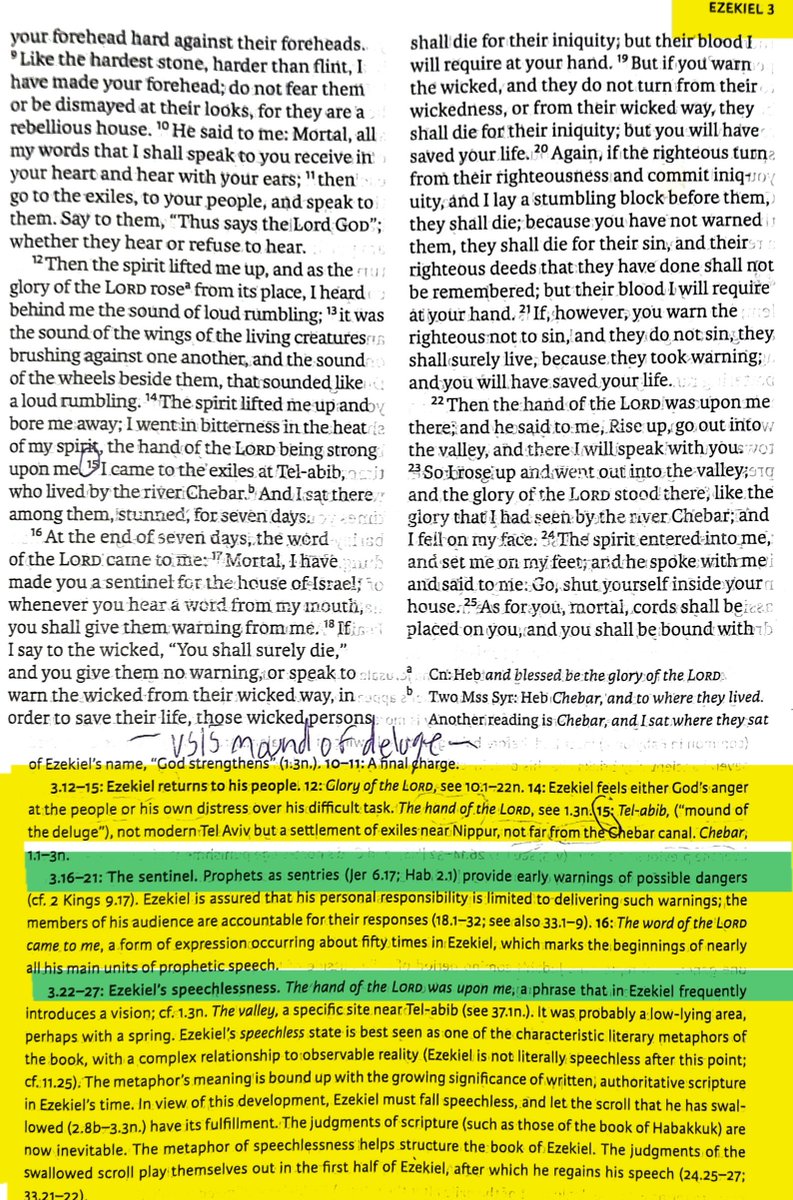
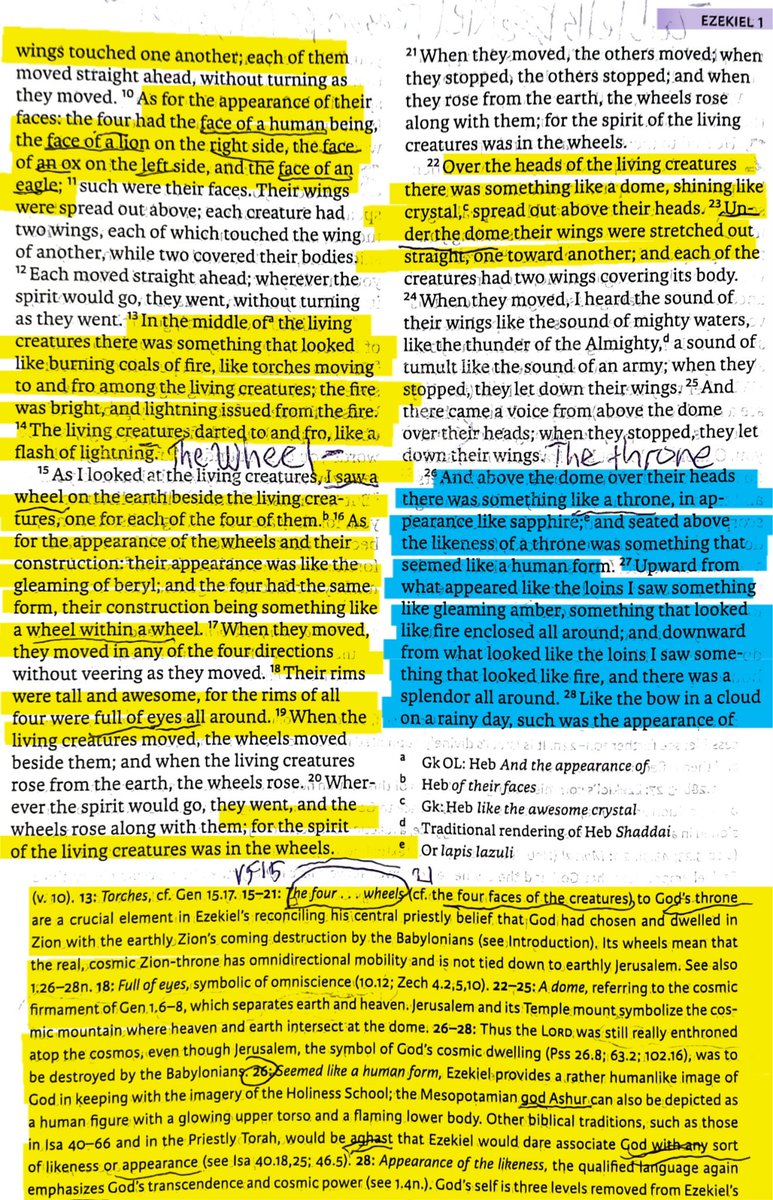
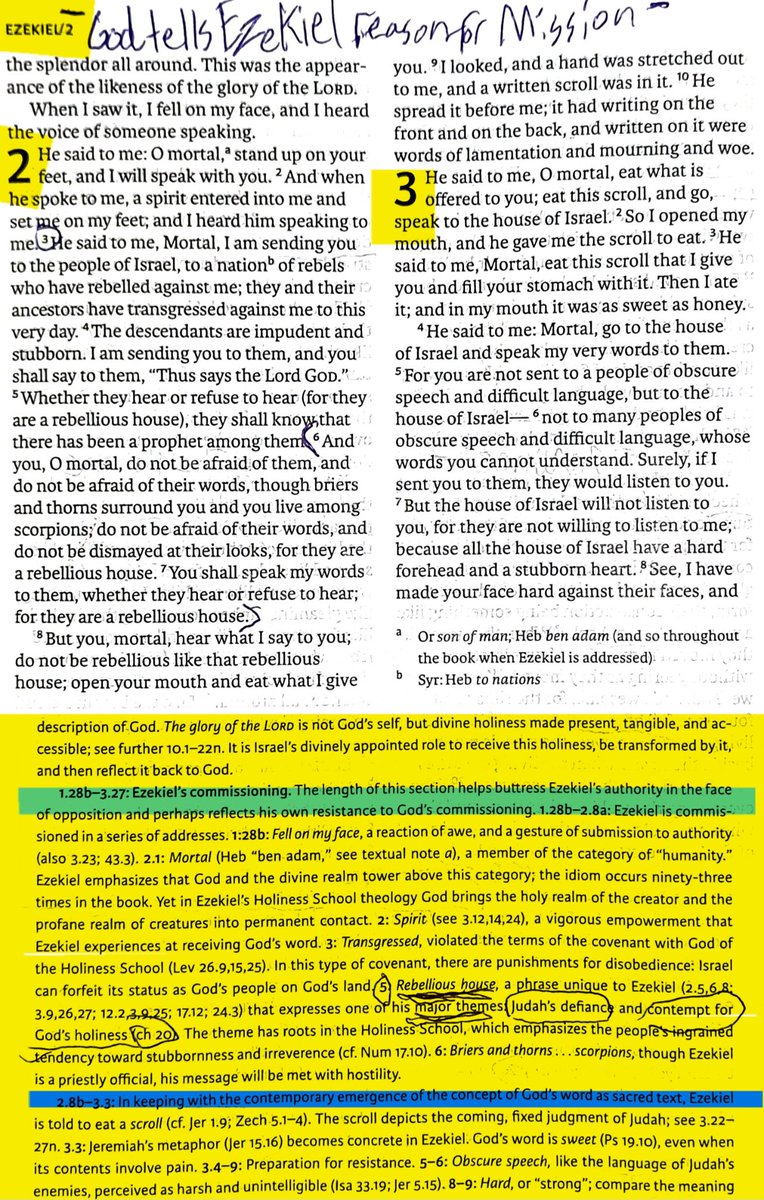
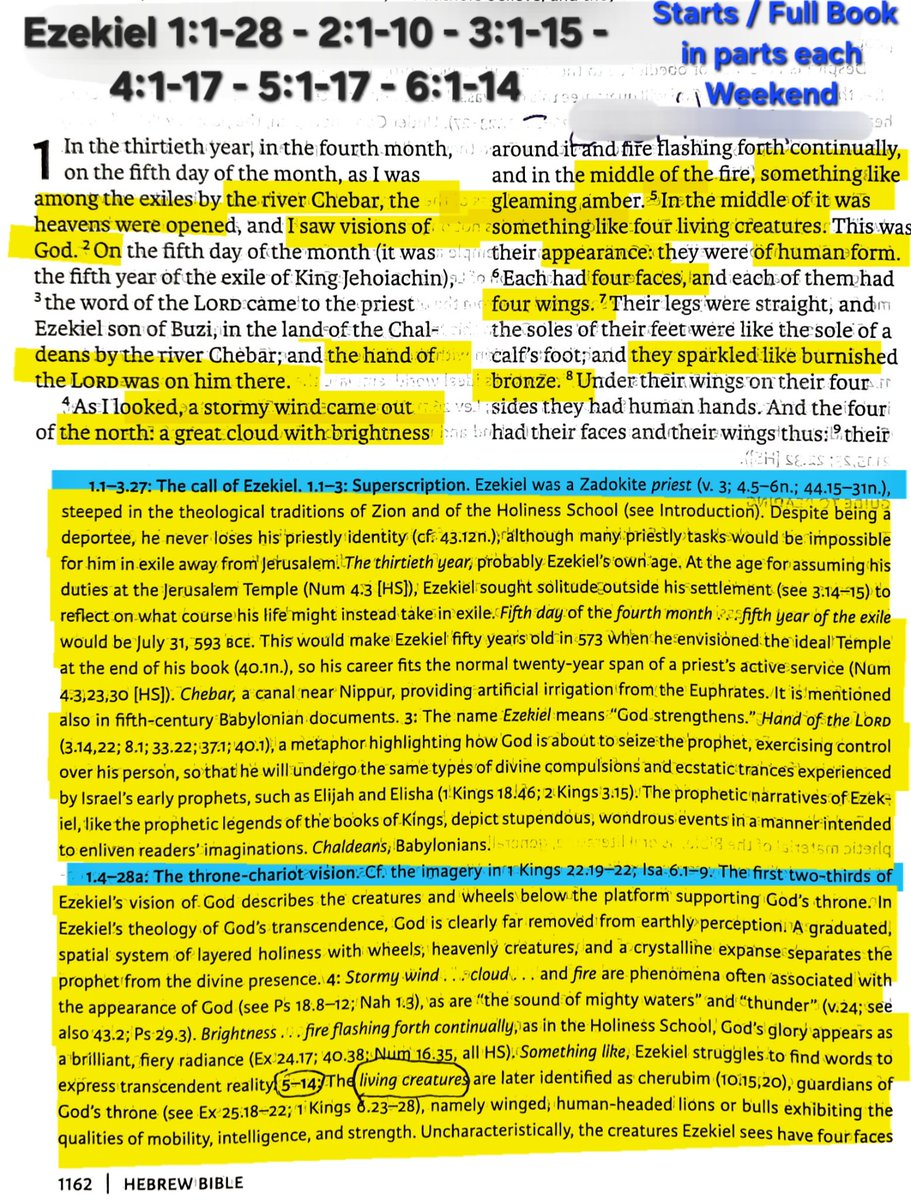
#SupernaturalCosmography #13
#Phenomenology #4
#BibleStudy #124
#Pseudepigrapha ED. #10
#HighstrangeEvents #8
#DimensionalTheology ED. #1
⚠️ Specialist Study on the Mysterious 3rd Book of Enoch (3 Enoch) ( Sefer Hekhalot ) Ft. All the Background Notes on ALL the Supernatural Depths not ever spoken of or understood in Biblical study or much less in Academic Education ⚠️
📜 3 Enoch 1 - 16 (first 16 chapters) with BONUS ANGELOLOGY DESCRIPTION OF 18 DIFFERENT ANGELS / POWERS AFTER CHAPTER 1 - 16 OVERVIEW ! (See Next Replies)
🔑 First Below is a review/ analysis of each chapter
⚠️ PLEASE SEE PICTURES IN THIS POST FOR COMPLETE CHAPTERS & VERSES ALONG WITH SPECIALIST FOOTNOTES at the bottom of each pic THAT CAN GUIDE IN A GOOD WAY BUT AT TIMES CAN BE VERY MODERN JUDGEMENTAL & LINGUISTIC CRITICAL SO BE WEARY WHEN READING EACH CHAPTER ⚠️
But WITH THAT SAID HERE.....
Below is a 🔑 specialist, non-mainstream, verse-by-verse exposition of 3 Enoch (Sefer Hekhalot) chapters 1–16, written deliberately inside the ancient worldview Temple mysticism, throne-theology, angelic hierarchies, heavenly geography, and apocalyptic eschatology without flattening it into modern academic reductionism.
⚠️ I will treat each chapter unit and then key verses inside each, because 3 Enoch survives in multiple recensions where verse numbering varies. What matters is the conceptual sequence, which is stable across manuscripts.
This is the approach serious Merkavah adepts & READ in specialists will understand !
⚠️ 1 final point is the below analysis is to be read after you read 3 Enoch 1-16 yourself or you will be LOST ⚠️
📜 3 ENOCH (SEFER HEKHALOT)📜
📜 CHAPTERS 1��16 📜
🔑 VERSE-BY-VERSE ESOTERIC COMMENTARY
CHAPTER 1 – RABBI ISHMAEL’S ASCENT
Verse core: Rabbi Ishmael ascends and
encounters Metatron.
Explanation
This opening is not narrative decoration. It establishes continuity of revelation:
• Rabbi Ishmael = High-Priestly lineage
• Ascent = Heavenly Temple access
• This is not vision alone but translocation of consciousness
The ascent mirrors:
• Ezekiel 1
• Isaiah 6
• Paul’s “third heaven” (2 Cor 12)
The ascent confirms that post-Temple mysticism preserved priestly access to heaven, not abolished it.
CHAPTER 2 – THE ANGELIC GATEKEEPERS
Verse core: Angels guard the heavenly chambers.
Explanation
Heaven is not democratic.
Each gate corresponds to:
• A cosmic function
• A territorial authority
• A judicial level
These angels are not symbolic they are administrators of reality, enforcing divine law between dimensions.
Compare:
• Daniel 10 (Princes of Persia & Greece)
• Revelation 7 (angels holding winds)
• Deuteronomy 32:8 (original nations assigned to divine beings)
CHAPTER 3 – METATRON REVEALS HIMSELF
Verse core: Metatron identifies himself as Enoch.
Explanation
This is the most dangerous and suppressed claim in Jewish mysticism.
Metatron:
• Was human
• Was transformed
• Retains identity
• Sits near the Throne
This establishes transfiguration theology, later echoed in:
• Moses’ glorification
• Elijah’s translation
• Christ’s ascension
This is apotheosis by obedience, not rebellion.
CHAPTER 4 – THE NAME OF METATRON
Verse core: Metatron bears the Divine Name.
Explanation
Bearing the Name means:
• Authorized execution of divine will
• Legal representation of Yahweh’s authority
• Functioning as the Lesser YHWH
This explains:
• Exodus 23:20–21
• The Angel of the LORD passages
• The Word (Logos) theology later developed
Metatron is not God but God’s authority embodied as we read in this fascinating book (so far)
CHAPTER 5 – THE THRONE VISION
Verse core: Metatron describes the Throne.
Explanation
The Throne is:
• Not furniture
• Not metaphor
• It is a cosmic command center
The Throne exists outside time, governing:
• Creation
• Judgment
• Angelic hierarchy
This corresponds to:
• Daniel 7
• Revelation 4–5
• Psalm 110
CHAPTER 6 – THE HEAVENLY SCHOOLS
Verse core: Angels study Torah.
Explanation
Torah here means cosmic law, not just text.
Angels:
• Learn
• Debate
• Receive command updates
This destroys the myth of static angels. They are learning intelligences, advancing in function and authority.
Compare:
• 1 Peter 1:12
• Job 38
• Ephesians 3:10
CHAPTER 7 – ENOCH’S TRANSFORMATION
Verse core: Enoch’s flesh becomes fire.
Explanation
This is body-conversion, not metaphor.
Flesh → Fire
Bones → Flame
Eyes → Lightning
This matches:
• Moses’ radiant face
• Christ’s Transfiguration
• Resurrection body theology (1 Cor 15)
He becomes fit for higher dimensional existence.
CHAPTER 8 – THE BOOKS OF HEAVEN
Verse core: Records of humanity.
Explanation
Multiple books exist:
• Deeds
• Intentions
• Spoken words
• Hidden thoughts
Judgment is multi-layered, not simplistic.
Compare:
• Daniel 7:10
• Revelation 20
• Psalm 56:8
CHAPTER 9 – METATRON AS SCRIBE
Verse core: Metatron records history.
Explanation
History is written as it happens, not after.
This explains:
• Prophetic inevitability
• Why prophecy cannot fail
• How foreknowledge and free will coexist
Time is observed from above, not linear.
CHAPTER 10 – THE ANGELIC ORDERS
Verse core: Seraphim, Cherubim, Ophanim.
Explanation
Each order governs:
• Elemental forces
• Spiritual functions
• Psychological realities
Examples:
• Ophanim – cosmic motion
• Seraphim – purification & judgment
• Cherubim – knowledge guardians
This mirrors Ezekiel and Revelation exactly.
CHAPTER 11 – THE FALL OF OTHER ANGELS
Verse core: Angels protest Metatron.
Explanation
Some angels resent humanity’s elevation.
This is the original jealousy motif:
• Psalm 8
• Genesis 6
• Book of Watchers
Obedience preserves rank.
Pride destroys it.
CHAPTER 12 – THE PUNISHMENT OF AZZAH & AZZAEL
Verse core: Fallen watchers punished.
Explanation
These are pre-Flood entities.
They taught:
• Forbidden knowledge
• Weaponry
• Sorcery
• Astral manipulation
Their binding explains:
• Genesis 6
• Jude
• 2 Peter 2
CHAPTER 13 – METATRON’S AUTHORITY LIMITS
Verse core: Metatron cannot act independently.
Explanation
This refutes idolatry accusations.
Metatron:
• Executes commands
• Does not originate them
• Cannot override Yahweh
This preserves monotheism without flattening hierarchy.
CHAPTER 14 – THE MEASURES OF HEAVEN
⚠️ See BOTTOM SEPERATE COMMENTARY AFTER THIS CHAPTER & THE NEXT 2 ON EACH ANGELS FUNCTION/ROLE BELOW ⚠️
Verse core: Vast dimensions described.
Explanation
Heaven is quantifiable, not abstract.
Distances imply:
• Multiple realms
• Different time rates
• Layered dimensionality
Modern physics accidentally echoes this.
CHAPTER 15 – THE SONG OF HEAVEN
Verse core: Angelic liturgy.
Explanation
Praise sustains creation.
Speech maintains reality.
This is why:
• Psalms matter
• Words matter
• Names matter
Compare:
• Isaiah 6
• Revelation 5
• John 1
CHAPTER 16 – THE ROLE OF HUMANITY
Verse core: Humans surpass angels in potential.
Explanation
This is the climax.
Humans:
• Bear God’s image
• Can ascend
• Can judge angels (1 Cor 6)
The eschatological goal:
Restored Adamic authority
🔑 CORE THEMES YOU MUST NOT MISS
• Heaven is structured governance
• Angels have jurisdiction & territory
• Humanity is destined for glorification
• Metatron is the bridge figure
• Judgment is cosmic administration
• Torah is universal law
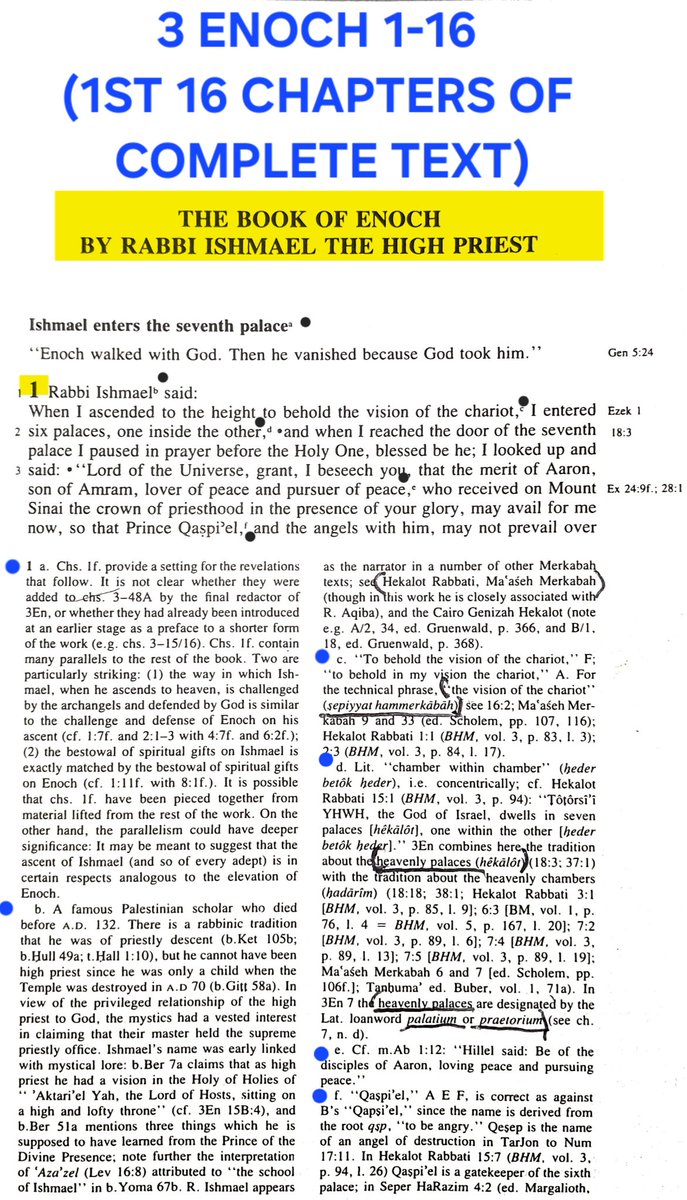
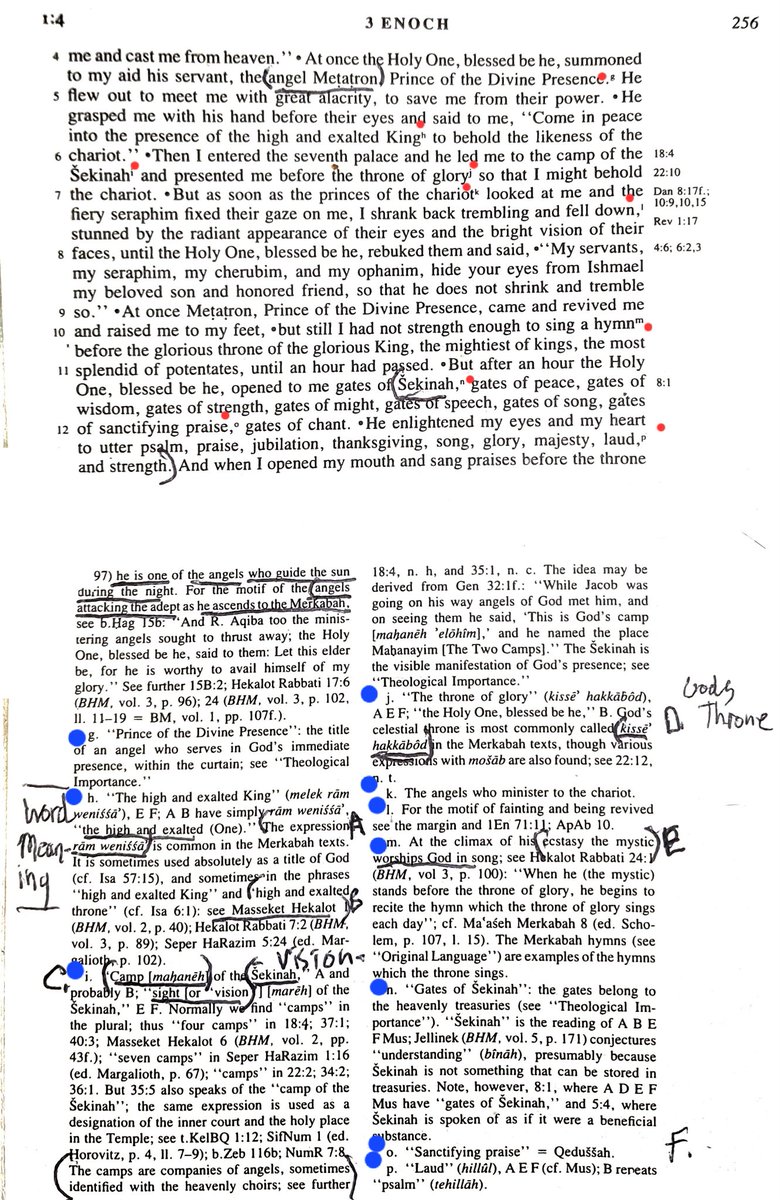
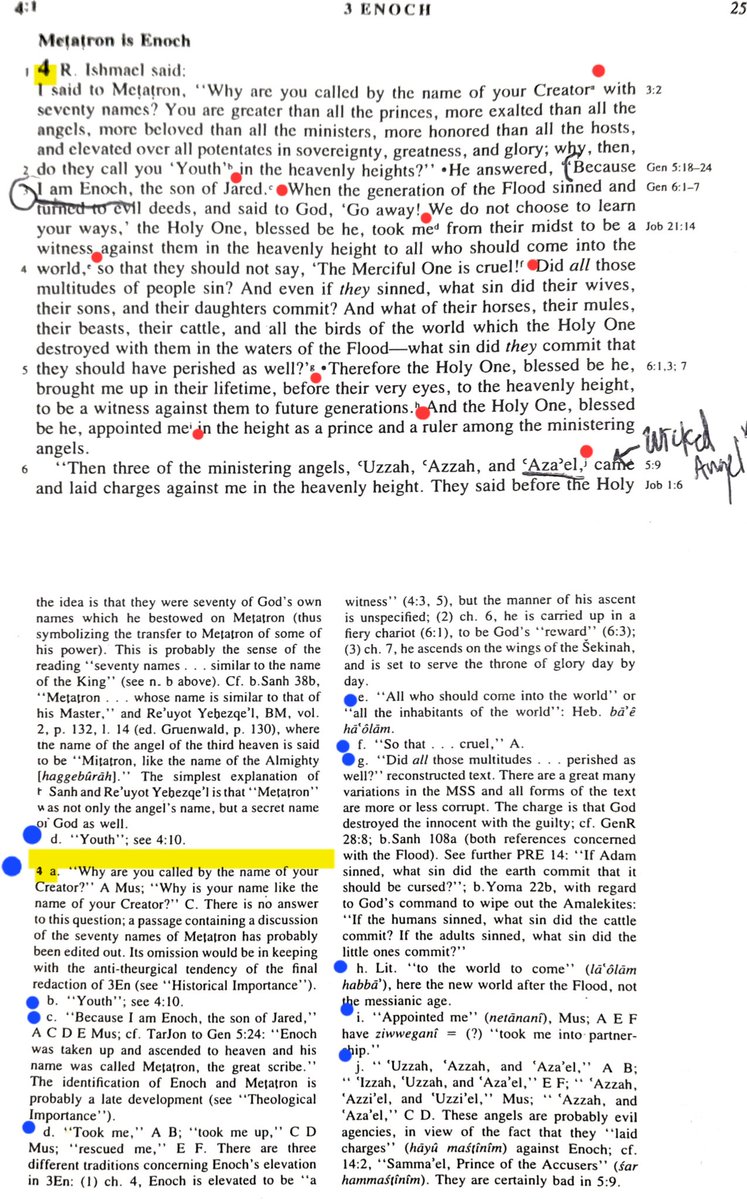

#ufotwitter #UFOS #ufosightings #UFOキャッチャー #uap #uapx #Orbs #Orb #HighStrangeEvents #WINTER #Updates on #Unkown #Technology our #Gov hides .....
If this is real & any type of invasion happens the few ppl like myself who know what to do & how to handle supernatural warfare may not be available to catch you up on what ppl like myself have been trying to reveal for years now! Aka you may not find help & will be left behind in darkness if you only listen to influencers & trendy corners of the net!
Many places in the World / US are already being invaded or rather swarmed with Ufo / Uap objects that are real nhi / other worldly powers who are revealing themselves mixed in with S.A.P.(s) & other secret Gov teams of man made craft to Orbs that can be controlled side by side with the real phenomena you are seeing!
The New Jersey Orbs was a test run or pre run to what is going on everywhere on planet earth!
#BibleStudy #105
#Pseudepigrapha Ed. #8
#SupernaturalCosmography #6
#HighStrangeEvents #6
#AncientTabletsStudy #7
📜 Ancient Papyrus Edition 📜
⚠️ Specialist Manuscript Study on Rare Texts/Scrolls of the Ancient World with Multidisciplinary fields ⚠️
FEATURING ....
🔷️ 📜 🔷️The Book of Giants (Iranian Manichean Version)
-included in ANE (Ancient Near east ) Papyrology background textual analysis from Deluxe Minds that have real expertise in Ancient cultures Pre Flood & Post Flood - Caution this before you is a Advanced study / class ⚠️
🔑 - Key Introduction - (typed in Post below AFTER this quick msg)- a deep look into Nephilim, Anakim like races to the Rephaim but not before a quick intro of Gilgamesh & his real vs Pseudo beginnins ! (In Pics Below is the Text of the book of Giants itself if you dont want to read this intro but I encourage you to read it bc next Study I will be posting 1st Enoch with the entire full Giants book with every version integrated back into the ancient text in a combined read along form ! Allot more smooth than this current one i present to you now & This below will prepare you for the next studies etc to state it simple) ENJOY & GOD BLESS! TTYVSl
(See Pics for Full book below)
🔷️ 📜 🔷️The Book of Giants: General Introduction
- Featuring the Literary Context / Literary Background -
🔷️ ⬛️⬜️ 🔷️Mesopotamian traditions about Gilgamesh are the earliest known influences on the Book of Giants.^ Gilgamesh was a legendary figure in Sumerian and Akkadian literature, best known from the Epic of Gilgamesh, a work whose importance in ancient Mesopotamia was comparable to that of the Homeric epics in ancient Greece. It told the story of Gil- gamesh, the ancient king of the Mesopotamian city-state Uruk. Gilgamesh befriended the wildman Enkidu. They had adventures, notably the defeat of the monster Humbaba of the Cedar Forest, until Enkidu's untimely death at the hands of the goddess Ishtar. Distraught by the loss of his friend, Gilgamesh set out to find the secret of eternal life. He went on a quest to consult with Utnapishtim, the Babylonian Noah figure and the only man to survive the great flood. The gods gave Utnapishtim and his wife eternal life. But Gilgamesh was unable to achieve immortality for himself. He had to be content with his own great reputation for his vast accomplishments.
Gilgamesh, Humbaba, and perhaps Utnapishtim appear as characters in the Book of Giants. Gilgamesh and Humbaba (Hobabish) seem to be giants in the Aramaic version, and Utnapishtim (Atanbish) may be a giant or Enoch himself in the Manichean version. The Book of Giants has no direct references to the events in the Epic of Gilgamesh, but there are hints that the author was familiar with elements of it. In both the Aramaic Book of Giants and the epic, Gilgamesh was a semidivine being associated with dreams that foretold disaster. Both present Gilgamesh and Humbaba/ Hobabish as giant warriors. In the Epic of Gilgamesh, Humbaba is associated with Mount Hermon in Lebanon. The site is important also in the Enochic version of the story of the Watchers and the giants (cf. 1 En. 6:6; 13:7-9). It very likely figured in the Book of Giants as well. In Mesopota- mian tradition Gilgamesh became a judge in the underworld, and in the giants tradi- tions in the Book of Giants and the Enochic literature the giants became disembodied demonic forces after their deaths who aflict human beings with illness and suffering (1 En. 15:8-16:1; Jub. 10:1-14). It is possible that the author of the Book of Giants knew he Epic of Gilgamesh in a late Aramaic translation, but it is no less likely that the author was working with oral traditions about Gilgamesh.?
The most important influence on the Book of Giants was the legend of the Watchers and their ofspring preserved mainly in the Enochic literature, especially the Book of he Watchers (1 En. 1-36) and the Similitudes of Enoch (1 En. 37-71). There are also ref- erences to the story in the Book of Dream Visions (1 En. 83-90). Outside the Enochician literature the story is mentioned in the Book of Jubilees and occasionally in the Dead Sea Scrolls.#
The versions of the Enochic legend of the Watchers vary slightly among themselves, but the basic narrative is something like the following: The Watchers were a group of angels whose job was to worship God unsleepingly and to guard his throne (1 En. 14:23; 39:12-13; 71:7). A group of Watchers descended to earth, either with good intention to teach humankind righteously (Jub. 4:15) or because from heaven they saw mortal women and desired to mate with them (1 En. 6:1-2; 39:1; 86:1-3). The chief of the fallen Watchers was Shemihazah (1 En. 6:3; 69:2) or Azazel (1 En. 54:5; 55:4; or Asael; cf. 1 En. 9:6) and some of their other leaders are named (1 En. 6:7-8; 8:3; 69:2-13). Once on earth they taught mortals how to make weaponry, jewelry, and makeup, as well as secrets of met- allurgy, sorcery, and astrology (1 En. 7:1; 8:1-4; 9:6-8; 64:2; 65:6-7). The unions of the angels with mortal women resulted in the birth of monstrous cannibalistic giants who brought ruin to the earth (1 En. 7:2-6; 9:9; 86:4-6).
The four archangels brought the situation to the attention of God, who ordered them to intervene (1 En. 9:1-10:3). They subdued the fallen Watchers and banished them to a deep abyss where they lie chained, awaiting their fiery judgment at the eschaton (1 En. 10:4-8, 11-14; 54:1-6; 67:4-11; 69:28; 88:1-3; 90:21, 23-24). The archangels also incited the giants to take up a war against one another until all (or nearly all?) of them were dead (1 En. 10:9-10, 12, 15; 56:2-4?; 87:1, 4; 88:2). Some of them also seem to have died in the great flood (1 En. 89:6), which took place after these events. Perhaps some even survived beyond the Flood (see below). In any case the disembodied spirits of the dead giants, or some of them at any rate (Jub. 10:1-14), survived as demonic forces that afflict human beings with illness and suffering (1 En. 15:8-16:1). This story is assumed as the background of the narrative in the Book of Giants.
Some of the traditions in the Bible also provide background to the Book of Giants, although it is unclear whether any of these traditions actually influenced it directly. The enigmatic episode in Gen 6:1-4 almost certainly has some connection with the story of the Watchers and the giants. This passage tells us that before the Flood "the sons of God" (i.e, the angels; cf. Job 1:6; 2:1) saw the beauty of human women and took some of them as wives. This seems to have displeased YHWH, who in turn placed a time limit of one hundred twenty years on the spirit dwelling in human beings. We are alsc told that the "Nephilim" lived at the time (and also "afterward") when the sons of God were mating with the mortal women who bore children to them. And we are told that these Nephilim were famous warriors.
What does all this mean? Why did angels behave in this way, unparalleled elsewhere in the Hebrew Bible? On what is the one hundred twenty years a time limit? Who are the Ne. philim? The word comes from a root meaning to fall ("fallen ones?") and in later Hebrew it means "abortions." Were the Nephilim the same creatures as the offspring of the morta women by the angels? The text may imply they were, but it does not say so explicitly
One possibility is that the writer of Genesis knew some version of the story of the Watchers and the giants, whether the one now found in the Book of the Watchers or a common tradition shared by it. The mythological notion of gods mating with human beings may not have appealed to the writer of Genesis, but the story was too wellknown to ignore. So the writer gave just a brief and allusive account before moving on to the Flood narrative. Another possibility is that Gen 6:1-4 was the inspiration for the story of the Watchers and the giants. Subsequent exegetes pondered the puzzling details of these four verses and filled in the blanks to produce something like the story we now find in 1 Enoch. Different specialists have argued for each of these possibilities and we need not try to decide between them here.9
In the Book of Giants (4Q530 2 ii 16b-20a) one of the giants has what seems to be a predictive dream in which he sees God descend from heaven to earth and occupy a throne, while other thrones are also set up. Books are opened, judgment declared, and God's judgment written down. This passage has close similarities in thought and word. ing to the throne theophany scene in Dan 7:9-10.
It also has notable similarities to the throne theophany in 1 En. 14:18-23, a passage that also shares wording and ideas with Dan 7:9-10. The relationship between the theophanies in Dan 7 and 1 En. 14 has been debated for some time. Milik concluded that the Book of Giants was dependent on Dan- iel. Some scholars have subsequently challenged his view while others have supported it. There is no consensus on which of the three came first and influenced the others or whether they all drew on an independent written or oral tradition. Again, it suffices for our purposes to note the problem without attempting to solve it.0
In addition, there are a number of stories in the Bible about giants.'1 These provide some context for our understanding of the Book of Giants. Although Genesis places the Nephilim in the time before the Flood, it hints that they had a further history. And indeed they appear again in the context of the survey of Canaan by the Israelite spies in Num 13. In 13:32-33 the spies report that the people of the land were of great size and that there the spies saw the Nephilim, whose stature made them feel like grasshoppers. This is the only indication in the Bible that the Nephilim were giants, although this point is also specified in 1 En. 7:2.2 The passage also mentions in passing that the "Anakim" were descended from the Nephilim.
This leads us to another group of biblical giants. 13 The first mention of the Anakim in the Bible is also in the story of the Israelite spies Numbers 13:22 reports that the spies also encountered the children of Anak in Hebror and it mentions three of them by name. Then, in his account of the invasion of the land by the Israelites, Moses comments in an aside that the "Emim" had once inhabited Moab and that they were as tall as the Anakim and, like the Anakim, were reckoned as "Re phaim." Likewise, he says that the land of the Ammonites was reckoned as a land of th Rephaim (whom the Ammonites called Zamzumim"), because formerly the Rephaim inhabited it (Deut 2:10-11, 19-21). Deuteronomy 9:2 also reinforces the strength and stature of the Anakim.
The name Rephaim leads us still further. It can mean something more or less equiv- alent to "ghost" (e.g., Prov 21:16; Isa 14:9), but it usually refers to a group of people who inhabited Canaan before the Israelites did. Notably, one of the few named giants in the Bible-Og King of Bashan---is called the last of the Rephaim in Deut 3:11. The description of Og's enormous bed makes it clear that he too was a giant.'
By far the most famous biblical giant is, of course, Goliath of Gath, whose downfall at the hands of David is familiar from 1 Sam 17. Goliath was a Philistine, but he too is connected with the primordial Rephaim. In 2 Sam 21:15-22 we find a collection of brief tories about four Philistine warriors who were descended of Rapha, that is, were among the Rephaim. One named Ishbi-benob carried an enormous spear and so presumably was a giant. He nearly killed David in battle, but another Israelite intervened and killed the Philistine.' Another named Saph was slain by an Israelite in a battle at Gob. Then there is an alternate account of the killing of Goliath the Gittite by one Elhanan son of Jaare-oregim the Bethlehemite.'s The fourth was an unnamed man of great stature who had six fingers on his hands and six toes on his feet. He was slain by a nephew of David, Three of these four are presented as large men, confirming the identification of the Rephaim with giants.'7Finally, in 1 Chr 1:22-23, we read of an Egyptian giant who also carried a huge spear He was killed with his own weapon by one of David's chief warriors,
The Greek Bible also has a number of references to "gjiants (Greek gigas).'$ Some of the uses of the words in the Septuagint (LXX) translation are helpful for understanding how some of the passages in the Hebrew Bible discussed above were understood in the late Second Temple period.'s The term Nephilim is translated as "giants" in its occur- rences in Gen 6:4 and Num 13:33 (LXX 13:34). The Hebrew word gibbor normally means "warrior," but sometimes its use in context led the translators to translate it as "giant" (Gen 6:4; 10:8-9, cf. 1 Chr 1:10 [of Nimrod]; Gen 14:5; Ps 19:5 [LXX 18:6]; 33:16 [LXX 32:16]; Isa 3:2; 13:3; 49:24-25; Ezek 32:12, 21, 27;20 39:18, 20).
The term Rephaim is frequently, although not always, translated as "giants." Og is called one of the giants in Josh 12:4 and 13:12, although Rephaim is transliterated as Raphain in Deut 3:11. Likewise, the word Rapha is transliterated into Greek letters all four times in 2 Sam 21:15-22, but 21:22 does specify that they were all giants.21 The geographical name "the valley of Rephaim is translated as "the valley of giants" in 1 Chr 1:15 and 14:9, 13. In Prov 21:16; Isa 14:9; and Job 26:5 the meaning of Rephaim in its original context in Hebrew is "ghost, but it is translated as "giants" In Deut 1:28 the term Anakim is translated as "giants." The Greek of Sir 16:7 refers to a revolt of ancient giants but the Hebrew text uses another word that does not normally mean giant. The Greek of Sir 47:4 refers to Goliath (who is named) as a giant. The Hebrew of this verse does not survive
There are a few other references to giants in books of the Greek Bible that were composed in Greek or whose Hebrew originals are entirely lost. There is mention of the doom of the ancient giants before the Flood in Wis 14:6 and 3 Mac 2:4. Baruch 3:26 echoes the language of Gen 6:4 when referring to the giants. In her hymn of victory, Judith gloats over the fact that a woman, rather than Titans or giants, vanquished her enemy (Jdt 16:5-6).2 In 1 Maccabees the poem in praise of Judah the Maccabee says that he "put on a breastplate like a giant" (1 Mac 3:3).
Thus we see that there was a rich mythology of giants in the Hebrew Bible and it continued to develop in the Second Temple period. Space does not permit further discussion of traditions about giants in the Classical world or the ancient Near East, but a few more references to giants in Second Temple Jewish literature should be roted. Sibylline oracles were originally pithy oracles attributed to the Sibyl, a pagan prophetess. Some collections of her oracles were known in ancient Rome. They are now almost entirely lost. But Jews and Christians composed many books in the name of the Sibyl in antiquity. The first three books of Sibylline Oracles, of Jewish origin but with some Christian editing and interpolation, provide some passages of interest. Sibylline Oracle 1:87-103 retells the story of the Watchers briefly, but treats them as its third generation of human beings. It mentions giants in 1:123, but it is unclear that they are the giants of the Watchers myth. The seventh generation is identified as Titans, but these are also the human beings who built the Tower of Babel (Sib. Or. 1:307-23). The latter story is much expanded in Sib. Or. 3:97-161. This passage tells a version of the traditional story of the conflict between the Titans anc Cronus that led to the birth of Zeus.?3
The first-century BCE chronographer Alexander Polyhistor refers twice to earlier traditions about Abraham that mention giants. The work of Alexander is lost, but the fourth-century CE historian Eusebius of Caesarea quotes the relevant passages in his Praep. ev. 9.17.2-9 and 9.18.2.2 Alexander attributes the first passage to the Jewish writer Eupolemos, although some think that he was mistaken and that it was written by some- one else, possibly a Samaritan. In any case, the passage creatively retells the story of Abraham, prefacing it with an account of the founding of the city Babylon and the build- ing of the Tower of Babel by giants after the Flood. These giants spread over the earth after God destroyed the tower. It also identifies Enoch with Atlas, a Titan. In the second passage Alexander relates that certain anonymous works say that Abraham claimed to be descended from the giants.
The first-century CE Jewish philosopher Philo of Alexandria wrote an entire treatise on Gen 6:1-4 called On the Giants.2s As is his usual practice, he allegorizes the story, making it about the temptation of the soul by worldly pleasures. He cautions his read- ers that the story is not a myth, hinting that he perhaps knew and disapproved of the story of the Watchers and the giants. But he does not directly refer or allude to that story. The first-century Jewish historian Josephus mentions giants a number of times in his works, mostly following the Greek narrative of the Septuagint. In his treatment of Gen 6:1-4 in A. J. 1.72-73 he interprets the passage to say that angels mated with mortal women and that the unions produced offspring. He does not call the latter giants directly, but he hints that he knows of a tradition in which they committed outrages similar to those committed by the giants of Greek mythology. Otherwise, he does not refer directly to the story of the Watchers and the giants, although he does say that the bones of some of the giants mentioned in Num 13:33 were on display in his day (Ant. 5.125).
⚠️ REMEMBER BELOW IN PICS IN THE NEXT REPLIES IS THE BOOK OF GIANTS ITS SELF ⚠️
⚫️ NOTES FOR ABOVE INTRODUCTION OF THE GIANTS BOOK(S) ⚫️ (some numbers to the Notes got lost but the notes are in full & aren't missing any data or sources ) make what you can of it !
⚫️ 4. For discussions of the manuscripts, date, provenance, genre, and structure of the Aramaic and Manichean versions of the B ook of Giants, see the introductions to the chapters by Loren Stuckenbruck, Prods Oktor Skjæervo, and Peter Zieme, which folOw. , 5. For an English translation, see Andrew George, The Epic of Gilgamesh: The Babylonian Epic Poem and Other Texts in Akkadian and Sumerian (London: Penguin, 1999).
6. See the discussion of Turkic fragment A by Zieme below in his translation.
⚫️ 7. Matthew Goff, "Gilgamesh the Giant: The Qumran Book of Ciants Appropriation of Gilgamesh Motifs," DSD 16 (2009): 221-53, doi:10.1163/156851709X395740
⚫️ 8. The best English translation of1 Enoch is George W. E. Nickelsburg and James C. VanderKam, 1 Enoch: A New Translation Based on the Hermeneia Commentary (Minneapolis: Fortress, 2012). For a con- enient translation of Jubilees, see O. S. Wintermute, "Jubilees," OTP 2:35-142. For the relevant passages in the Dead Sea Scrolls, see the chapter on the Aramaic Book of Giants by Stuckenbruck in this volume
⚫️ 9 For the ancient Near Eastern and related background to Gen 6:1-4, see Ronald Hendel, "The Ne bhilim Were on the Earth: Genesis 6:1-4, and Its Ancient Near Eastern Context," in The Fall of the Angels ed. Christoph Auffarth and Loren T. Stuckenbruck, TBN 6 (Leiden: Brill, 2004), 11-34. For a discussion of Gen 6:1-4 and its relation to the Watchers tradition, see Chris Seeman, ""The Watchers Traditions and Gen 6:1-4 (MT and LXX)," in The Watchers in Jewish and Christian Traditions, ed. Angela Kim Harkins, Kel- ey Coblentz Bautch, and John C. Endress (Minneapolis: Fortress, 2014), 25-38, doi:10.2307/j.ctt22nmb25.6
⚫️ 10. For a discussion with bibliography, see Amanda M. Davis Bledsoe, "Throne Theophanies, Dream Visions, and Righteous(?) Seers: Daniel, the Book of Giants, and 1 Enoch Reconsidered," in Goff, Stuck- enbruck, and Morano, Ancient Tales of Giants, 81-96.
⚫️ 11 The biblical references to giants are covered in detail in Brian R. Doak, The Last of the Rephaim Conquest and Cataclysm in the Heroic Ages of Ancient Israel, Ilex Foundation Series 7 (Boston: Ilex Foundation; Washington, DC: Center for Hellenic Studies, 2012). For a summary see Doak, "The Giants n a "Thousand Years: Tracing Narratives of Gigantism in the Hebrew Bible and Beyond" in Goff, Stuck enbruck, and Morano, Ancient Tales of Giants, 13-32
⚫️12. In Ezek 32:27 there is a reference to "fallen warriors of old in the underworld (Sheol). The phrase ould also be read as *warrior Nephilim of old" and this may have been its original meaning. The dua ense of Nephilim as ancient warriors and as ghosts coheres well with the biblical sense of Rephaim with whom they are associated (see below).
⚫️ 13. Deuteronomy 1:28 also refers to the report by the spies that the people of the land were powerful and tall and that they saw the children of the Anakim there. It does not, however, mention the Nephilim.
⚫️ 14. It was argued by Wolfgang Rölling that an ancient Phoenician grave inscription from Byblos (Byblos 13) also mentions Og. Rölling, "Eine neue phoenizische Inscrift aus Byblos"' Neue Ephemeris für Semitische Epigraphik 2 (1974): ⚫️15 and pl. 1. The inscription dates to about 500 BCE and invokes a curse on anyone who disturbs the bones of the occupant of the grave. The suggestion is interesting, but it involves a number of philological difficulties. Subsequent analysis of the inscription, including by Röllig, has not found this interpretation to be credible. For a review of the scholarship see Laura Quick, "Laying Og to Rest: Deuteronomy 3 and the Making of a Myth," Bib 98 (2017): 161-72, esp. 170-71. The legend of Og the giant continued to develop in the postbiblical period through late antiquity, the Middle Ages, and even into the modern period. For a survey of the Og legend see Admiel Kosman, "The Story of a Giant Story: The Winding Way of Og King of Bashan in the Jewish Haggadic Tradition," HUCA 73 (2002): 157-90. 15. This episode is omitted in the parallel passage in 1 Chr 20:4-8, but cf. n. 21 below,
⚫️ 16. The parallel passage in 1 Chr 20:5 says that Elhanan slew Lahmi the brother of Goliath. The dif ference between the Hebrew texts of the two passages is slight and it is difficult to tell which is original. The passage in 1 Samuel may have accidently been miscopied so that it refers to Goliath rather than his brother. Or the Chronicler may have accidentally or deliberately miscopied the text so that it now refers to Goliath's brother, not Goliath himself, thus resolving the contradiction with 1 Sam 17. In any case, both versions imply Goliath's descent from the Rephaim.
⚫️17. The alphabetic cuneiform texts from Ugarit, a city in Syria in the late second millennium BCE, provide some background information on the Rephaim. The Ugaritic language is closely related to He- brew and the Ugaritic texts refer from time to time to the rāpi'uma. These appear to be the deceased spirits of ancestral kings. This meaning has similarities to the biblical usage of Rephaim, which can mean specified as kings. For a detailed review of the Ugaritic evidence and its implications for the biblical word, .e Hedwige Rouillard-Bonraisin, "Rephaim," DDD, 692-700.
⚫️ 18. For a more detailed discussion of giants traditions in Jewish Greek literature see Michael Tuval, 2ovywyn ylyávrov (Prov 21:26): The Giants in the Jewish Literature in Greek, in Goff, Stuckenbruck, and Morano, Ancient Tales of Giants, 41-57.
⚫️19. For an English translation of the Septuagint, see Albert Pietersma and Benjamin G. Wright, eds. A New English Translation of the Septuagint (Oxford: Oxford University Press, 2007).
⚫️ 20. The Hebrew word gibbor, "warrior," in Ezek 32:21, 27 refers to the dead in the underworld (f. n. 12 above).
⚫️ 21. The parallel passage in 1 Chr 20:4-8 translates Rapha as "giants" twice and transliterates it once n 20:8 it too specifies that all"four" were giants, even though only three are mentioned (cf. n. 15 above) The reference to "Dan son of Ioa, from the descendants of the giants [= Rephaim?]" in the Greek text of 2 Sam 21:11is missing in the Hebrew.
⚫️ 22. For the Titans see Samantha Newington, "Greek Titans and Biblical Giants" in Goff, Stuckenbruck and Morano, Ancient Tales of Giants, 33-40,
![TeXasMadde's tweet photo. #BibleStudy #105
#Pseudepigrapha Ed. #8
#SupernaturalCosmography #6
#HighStrangeEvents #6
#AncientTabletsStudy #7
📜 Ancient Papyrus Edition 📜
⚠️ Specialist Manuscript Study on Rare Texts/Scrolls of the Ancient World with Multidisciplinary fields ⚠️
FEATURING ....
🔷️ 📜 🔷️The Book of Giants (Iranian Manichean Version)
-included in ANE (Ancient Near east ) Papyrology background textual analysis from Deluxe Minds that have real expertise in Ancient cultures Pre Flood & Post Flood - Caution this before you is a Advanced study / class ⚠️
🔑 - Key Introduction - (typed in Post below AFTER this quick msg)- a deep look into Nephilim, Anakim like races to the Rephaim but not before a quick intro of Gilgamesh & his real vs Pseudo beginnins ! (In Pics Below is the Text of the book of Giants itself if you dont want to read this intro but I encourage you to read it bc next Study I will be posting 1st Enoch with the entire full Giants book with every version integrated back into the ancient text in a combined read along form ! Allot more smooth than this current one i present to you now & This below will prepare you for the next studies etc to state it simple) ENJOY & GOD BLESS! TTYVSl
(See Pics for Full book below)
🔷️ 📜 🔷️The Book of Giants: General Introduction
- Featuring the Literary Context / Literary Background -
🔷️ ⬛️⬜️ 🔷️Mesopotamian traditions about Gilgamesh are the earliest known influences on the Book of Giants.^ Gilgamesh was a legendary figure in Sumerian and Akkadian literature, best known from the Epic of Gilgamesh, a work whose importance in ancient Mesopotamia was comparable to that of the Homeric epics in ancient Greece. It told the story of Gil- gamesh, the ancient king of the Mesopotamian city-state Uruk. Gilgamesh befriended the wildman Enkidu. They had adventures, notably the defeat of the monster Humbaba of the Cedar Forest, until Enkidu's untimely death at the hands of the goddess Ishtar. Distraught by the loss of his friend, Gilgamesh set out to find the secret of eternal life. He went on a quest to consult with Utnapishtim, the Babylonian Noah figure and the only man to survive the great flood. The gods gave Utnapishtim and his wife eternal life. But Gilgamesh was unable to achieve immortality for himself. He had to be content with his own great reputation for his vast accomplishments.
Gilgamesh, Humbaba, and perhaps Utnapishtim appear as characters in the Book of Giants. Gilgamesh and Humbaba (Hobabish) seem to be giants in the Aramaic version, and Utnapishtim (Atanbish) may be a giant or Enoch himself in the Manichean version. The Book of Giants has no direct references to the events in the Epic of Gilgamesh, but there are hints that the author was familiar with elements of it. In both the Aramaic Book of Giants and the epic, Gilgamesh was a semidivine being associated with dreams that foretold disaster. Both present Gilgamesh and Humbaba/ Hobabish as giant warriors. In the Epic of Gilgamesh, Humbaba is associated with Mount Hermon in Lebanon. The site is important also in the Enochic version of the story of the Watchers and the giants (cf. 1 En. 6:6; 13:7-9). It very likely figured in the Book of Giants as well. In Mesopota- mian tradition Gilgamesh became a judge in the underworld, and in the giants tradi- tions in the Book of Giants and the Enochic literature the giants became disembodied demonic forces after their deaths who aflict human beings with illness and suffering (1 En. 15:8-16:1; Jub. 10:1-14). It is possible that the author of the Book of Giants knew he Epic of Gilgamesh in a late Aramaic translation, but it is no less likely that the author was working with oral traditions about Gilgamesh.?
The most important influence on the Book of Giants was the legend of the Watchers and their ofspring preserved mainly in the Enochic literature, especially the Book of he Watchers (1 En. 1-36) and the Similitudes of Enoch (1 En. 37-71). There are also ref- erences to the story in the Book of Dream Visions (1 En. 83-90). Outside the Enochician literature the story is mentioned in the Book of Jubilees and occasionally in the Dead Sea Scrolls.#
The versions of the Enochic legend of the Watchers vary slightly among themselves, but the basic narrative is something like the following: The Watchers were a group of angels whose job was to worship God unsleepingly and to guard his throne (1 En. 14:23; 39:12-13; 71:7). A group of Watchers descended to earth, either with good intention to teach humankind righteously (Jub. 4:15) or because from heaven they saw mortal women and desired to mate with them (1 En. 6:1-2; 39:1; 86:1-3). The chief of the fallen Watchers was Shemihazah (1 En. 6:3; 69:2) or Azazel (1 En. 54:5; 55:4; or Asael; cf. 1 En. 9:6) and some of their other leaders are named (1 En. 6:7-8; 8:3; 69:2-13). Once on earth they taught mortals how to make weaponry, jewelry, and makeup, as well as secrets of met- allurgy, sorcery, and astrology (1 En. 7:1; 8:1-4; 9:6-8; 64:2; 65:6-7). The unions of the angels with mortal women resulted in the birth of monstrous cannibalistic giants who brought ruin to the earth (1 En. 7:2-6; 9:9; 86:4-6).
The four archangels brought the situation to the attention of God, who ordered them to intervene (1 En. 9:1-10:3). They subdued the fallen Watchers and banished them to a deep abyss where they lie chained, awaiting their fiery judgment at the eschaton (1 En. 10:4-8, 11-14; 54:1-6; 67:4-11; 69:28; 88:1-3; 90:21, 23-24). The archangels also incited the giants to take up a war against one another until all (or nearly all?) of them were dead (1 En. 10:9-10, 12, 15; 56:2-4?; 87:1, 4; 88:2). Some of them also seem to have died in the great flood (1 En. 89:6), which took place after these events. Perhaps some even survived beyond the Flood (see below). In any case the disembodied spirits of the dead giants, or some of them at any rate (Jub. 10:1-14), survived as demonic forces that afflict human beings with illness and suffering (1 En. 15:8-16:1). This story is assumed as the background of the narrative in the Book of Giants.
Some of the traditions in the Bible also provide background to the Book of Giants, although it is unclear whether any of these traditions actually influenced it directly. The enigmatic episode in Gen 6:1-4 almost certainly has some connection with the story of the Watchers and the giants. This passage tells us that before the Flood "the sons of God" (i.e, the angels; cf. Job 1:6; 2:1) saw the beauty of human women and took some of them as wives. This seems to have displeased YHWH, who in turn placed a time limit of one hundred twenty years on the spirit dwelling in human beings. We are alsc told that the "Nephilim" lived at the time (and also "afterward") when the sons of God were mating with the mortal women who bore children to them. And we are told that these Nephilim were famous warriors.
What does all this mean? Why did angels behave in this way, unparalleled elsewhere in the Hebrew Bible? On what is the one hundred twenty years a time limit? Who are the Ne. philim? The word comes from a root meaning to fall ("fallen ones?") and in later Hebrew it means "abortions." Were the Nephilim the same creatures as the offspring of the morta women by the angels? The text may imply they were, but it does not say so explicitly
One possibility is that the writer of Genesis knew some version of the story of the Watchers and the giants, whether the one now found in the Book of the Watchers or a common tradition shared by it. The mythological notion of gods mating with human beings may not have appealed to the writer of Genesis, but the story was too wellknown to ignore. So the writer gave just a brief and allusive account before moving on to the Flood narrative. Another possibility is that Gen 6:1-4 was the inspiration for the story of the Watchers and the giants. Subsequent exegetes pondered the puzzling details of these four verses and filled in the blanks to produce something like the story we now find in 1 Enoch. Different specialists have argued for each of these possibilities and we need not try to decide between them here.9
In the Book of Giants (4Q530 2 ii 16b-20a) one of the giants has what seems to be a predictive dream in which he sees God descend from heaven to earth and occupy a throne, while other thrones are also set up. Books are opened, judgment declared, and God's judgment written down. This passage has close similarities in thought and word. ing to the throne theophany scene in Dan 7:9-10.
It also has notable similarities to the throne theophany in 1 En. 14:18-23, a passage that also shares wording and ideas with Dan 7:9-10. The relationship between the theophanies in Dan 7 and 1 En. 14 has been debated for some time. Milik concluded that the Book of Giants was dependent on Dan- iel. Some scholars have subsequently challenged his view while others have supported it. There is no consensus on which of the three came first and influenced the others or whether they all drew on an independent written or oral tradition. Again, it suffices for our purposes to note the problem without attempting to solve it.0
In addition, there are a number of stories in the Bible about giants.'1 These provide some context for our understanding of the Book of Giants. Although Genesis places the Nephilim in the time before the Flood, it hints that they had a further history. And indeed they appear again in the context of the survey of Canaan by the Israelite spies in Num 13. In 13:32-33 the spies report that the people of the land were of great size and that there the spies saw the Nephilim, whose stature made them feel like grasshoppers. This is the only indication in the Bible that the Nephilim were giants, although this point is also specified in 1 En. 7:2.2 The passage also mentions in passing that the "Anakim" were descended from the Nephilim.
This leads us to another group of biblical giants. 13 The first mention of the Anakim in the Bible is also in the story of the Israelite spies Numbers 13:22 reports that the spies also encountered the children of Anak in Hebror and it mentions three of them by name. Then, in his account of the invasion of the land by the Israelites, Moses comments in an aside that the "Emim" had once inhabited Moab and that they were as tall as the Anakim and, like the Anakim, were reckoned as "Re phaim." Likewise, he says that the land of the Ammonites was reckoned as a land of th Rephaim (whom the Ammonites called Zamzumim"), because formerly the Rephaim inhabited it (Deut 2:10-11, 19-21). Deuteronomy 9:2 also reinforces the strength and stature of the Anakim.
The name Rephaim leads us still further. It can mean something more or less equiv- alent to "ghost" (e.g., Prov 21:16; Isa 14:9), but it usually refers to a group of people who inhabited Canaan before the Israelites did. Notably, one of the few named giants in the Bible-Og King of Bashan---is called the last of the Rephaim in Deut 3:11. The description of Og's enormous bed makes it clear that he too was a giant.'
By far the most famous biblical giant is, of course, Goliath of Gath, whose downfall at the hands of David is familiar from 1 Sam 17. Goliath was a Philistine, but he too is connected with the primordial Rephaim. In 2 Sam 21:15-22 we find a collection of brief tories about four Philistine warriors who were descended of Rapha, that is, were among the Rephaim. One named Ishbi-benob carried an enormous spear and so presumably was a giant. He nearly killed David in battle, but another Israelite intervened and killed the Philistine.' Another named Saph was slain by an Israelite in a battle at Gob. Then there is an alternate account of the killing of Goliath the Gittite by one Elhanan son of Jaare-oregim the Bethlehemite.'s The fourth was an unnamed man of great stature who had six fingers on his hands and six toes on his feet. He was slain by a nephew of David, Three of these four are presented as large men, confirming the identification of the Rephaim with giants.'7Finally, in 1 Chr 1:22-23, we read of an Egyptian giant who also carried a huge spear He was killed with his own weapon by one of David's chief warriors,
The Greek Bible also has a number of references to "gjiants (Greek gigas).'$ Some of the uses of the words in the Septuagint (LXX) translation are helpful for understanding how some of the passages in the Hebrew Bible discussed above were understood in the late Second Temple period.'s The term Nephilim is translated as "giants" in its occur- rences in Gen 6:4 and Num 13:33 (LXX 13:34). The Hebrew word gibbor normally means "warrior," but sometimes its use in context led the translators to translate it as "giant" (Gen 6:4; 10:8-9, cf. 1 Chr 1:10 [of Nimrod]; Gen 14:5; Ps 19:5 [LXX 18:6]; 33:16 [LXX 32:16]; Isa 3:2; 13:3; 49:24-25; Ezek 32:12, 21, 27;20 39:18, 20).
The term Rephaim is frequently, although not always, translated as "giants." Og is called one of the giants in Josh 12:4 and 13:12, although Rephaim is transliterated as Raphain in Deut 3:11. Likewise, the word Rapha is transliterated into Greek letters all four times in 2 Sam 21:15-22, but 21:22 does specify that they were all giants.21 The geographical name "the valley of Rephaim is translated as "the valley of giants" in 1 Chr 1:15 and 14:9, 13. In Prov 21:16; Isa 14:9; and Job 26:5 the meaning of Rephaim in its original context in Hebrew is "ghost, but it is translated as "giants" In Deut 1:28 the term Anakim is translated as "giants." The Greek of Sir 16:7 refers to a revolt of ancient giants but the Hebrew text uses another word that does not normally mean giant. The Greek of Sir 47:4 refers to Goliath (who is named) as a giant. The Hebrew of this verse does not survive
There are a few other references to giants in books of the Greek Bible that were composed in Greek or whose Hebrew originals are entirely lost. There is mention of the doom of the ancient giants before the Flood in Wis 14:6 and 3 Mac 2:4. Baruch 3:26 echoes the language of Gen 6:4 when referring to the giants. In her hymn of victory, Judith gloats over the fact that a woman, rather than Titans or giants, vanquished her enemy (Jdt 16:5-6).2 In 1 Maccabees the poem in praise of Judah the Maccabee says that he "put on a breastplate like a giant" (1 Mac 3:3).
Thus we see that there was a rich mythology of giants in the Hebrew Bible and it continued to develop in the Second Temple period. Space does not permit further discussion of traditions about giants in the Classical world or the ancient Near East, but a few more references to giants in Second Temple Jewish literature should be roted. Sibylline oracles were originally pithy oracles attributed to the Sibyl, a pagan prophetess. Some collections of her oracles were known in ancient Rome. They are now almost entirely lost. But Jews and Christians composed many books in the name of the Sibyl in antiquity. The first three books of Sibylline Oracles, of Jewish origin but with some Christian editing and interpolation, provide some passages of interest. Sibylline Oracle 1:87-103 retells the story of the Watchers briefly, but treats them as its third generation of human beings. It mentions giants in 1:123, but it is unclear that they are the giants of the Watchers myth. The seventh generation is identified as Titans, but these are also the human beings who built the Tower of Babel (Sib. Or. 1:307-23). The latter story is much expanded in Sib. Or. 3:97-161. This passage tells a version of the traditional story of the conflict between the Titans anc Cronus that led to the birth of Zeus.?3
The first-century BCE chronographer Alexander Polyhistor refers twice to earlier traditions about Abraham that mention giants. The work of Alexander is lost, but the fourth-century CE historian Eusebius of Caesarea quotes the relevant passages in his Praep. ev. 9.17.2-9 and 9.18.2.2 Alexander attributes the first passage to the Jewish writer Eupolemos, although some think that he was mistaken and that it was written by some- one else, possibly a Samaritan. In any case, the passage creatively retells the story of Abraham, prefacing it with an account of the founding of the city Babylon and the build- ing of the Tower of Babel by giants after the Flood. These giants spread over the earth after God destroyed the tower. It also identifies Enoch with Atlas, a Titan. In the second passage Alexander relates that certain anonymous works say that Abraham claimed to be descended from the giants.
The first-century CE Jewish philosopher Philo of Alexandria wrote an entire treatise on Gen 6:1-4 called On the Giants.2s As is his usual practice, he allegorizes the story, making it about the temptation of the soul by worldly pleasures. He cautions his read- ers that the story is not a myth, hinting that he perhaps knew and disapproved of the story of the Watchers and the giants. But he does not directly refer or allude to that story. The first-century Jewish historian Josephus mentions giants a number of times in his works, mostly following the Greek narrative of the Septuagint. In his treatment of Gen 6:1-4 in A. J. 1.72-73 he interprets the passage to say that angels mated with mortal women and that the unions produced offspring. He does not call the latter giants directly, but he hints that he knows of a tradition in which they committed outrages similar to those committed by the giants of Greek mythology. Otherwise, he does not refer directly to the story of the Watchers and the giants, although he does say that the bones of some of the giants mentioned in Num 13:33 were on display in his day (Ant. 5.125).
⚠️ REMEMBER BELOW IN PICS IN THE NEXT REPLIES IS THE BOOK OF GIANTS ITS SELF ⚠️
⚫️ NOTES FOR ABOVE INTRODUCTION OF THE GIANTS BOOK(S) ⚫️ (some numbers to the Notes got lost but the notes are in full & aren't missing any data or sources ) make what you can of it !
⚫️ 4. For discussions of the manuscripts, date, provenance, genre, and structure of the Aramaic and Manichean versions of the B ook of Giants, see the introductions to the chapters by Loren Stuckenbruck, Prods Oktor Skjæervo, and Peter Zieme, which folOw. , 5. For an English translation, see Andrew George, The Epic of Gilgamesh: The Babylonian Epic Poem and Other Texts in Akkadian and Sumerian (London: Penguin, 1999).
6. See the discussion of Turkic fragment A by Zieme below in his translation.
⚫️ 7. Matthew Goff, "Gilgamesh the Giant: The Qumran Book of Ciants Appropriation of Gilgamesh Motifs," DSD 16 (2009): 221-53, doi:10.1163/156851709X395740
⚫️ 8. The best English translation of1 Enoch is George W. E. Nickelsburg and James C. VanderKam, 1 Enoch: A New Translation Based on the Hermeneia Commentary (Minneapolis: Fortress, 2012). For a con- enient translation of Jubilees, see O. S. Wintermute, "Jubilees," OTP 2:35-142. For the relevant passages in the Dead Sea Scrolls, see the chapter on the Aramaic Book of Giants by Stuckenbruck in this volume
⚫️ 9 For the ancient Near Eastern and related background to Gen 6:1-4, see Ronald Hendel, "The Ne bhilim Were on the Earth: Genesis 6:1-4, and Its Ancient Near Eastern Context," in The Fall of the Angels ed. Christoph Auffarth and Loren T. Stuckenbruck, TBN 6 (Leiden: Brill, 2004), 11-34. For a discussion of Gen 6:1-4 and its relation to the Watchers tradition, see Chris Seeman, ""The Watchers Traditions and Gen 6:1-4 (MT and LXX)," in The Watchers in Jewish and Christian Traditions, ed. Angela Kim Harkins, Kel- ey Coblentz Bautch, and John C. Endress (Minneapolis: Fortress, 2014), 25-38, doi:10.2307/j.ctt22nmb25.6
⚫️ 10. For a discussion with bibliography, see Amanda M. Davis Bledsoe, "Throne Theophanies, Dream Visions, and Righteous(?) Seers: Daniel, the Book of Giants, and 1 Enoch Reconsidered," in Goff, Stuck- enbruck, and Morano, Ancient Tales of Giants, 81-96.
⚫️ 11 The biblical references to giants are covered in detail in Brian R. Doak, The Last of the Rephaim Conquest and Cataclysm in the Heroic Ages of Ancient Israel, Ilex Foundation Series 7 (Boston: Ilex Foundation; Washington, DC: Center for Hellenic Studies, 2012). For a summary see Doak, "The Giants n a "Thousand Years: Tracing Narratives of Gigantism in the Hebrew Bible and Beyond" in Goff, Stuck enbruck, and Morano, Ancient Tales of Giants, 13-32
⚫️12. In Ezek 32:27 there is a reference to "fallen warriors of old in the underworld (Sheol). The phrase ould also be read as *warrior Nephilim of old" and this may have been its original meaning. The dua ense of Nephilim as ancient warriors and as ghosts coheres well with the biblical sense of Rephaim with whom they are associated (see below).
⚫️ 13. Deuteronomy 1:28 also refers to the report by the spies that the people of the land were powerful and tall and that they saw the children of the Anakim there. It does not, however, mention the Nephilim.
⚫️ 14. It was argued by Wolfgang Rölling that an ancient Phoenician grave inscription from Byblos (Byblos 13) also mentions Og. Rölling, "Eine neue phoenizische Inscrift aus Byblos"' Neue Ephemeris für Semitische Epigraphik 2 (1974): ⚫️15 and pl. 1. The inscription dates to about 500 BCE and invokes a curse on anyone who disturbs the bones of the occupant of the grave. The suggestion is interesting, but it involves a number of philological difficulties. Subsequent analysis of the inscription, including by Röllig, has not found this interpretation to be credible. For a review of the scholarship see Laura Quick, "Laying Og to Rest: Deuteronomy 3 and the Making of a Myth," Bib 98 (2017): 161-72, esp. 170-71. The legend of Og the giant continued to develop in the postbiblical period through late antiquity, the Middle Ages, and even into the modern period. For a survey of the Og legend see Admiel Kosman, "The Story of a Giant Story: The Winding Way of Og King of Bashan in the Jewish Haggadic Tradition," HUCA 73 (2002): 157-90. 15. This episode is omitted in the parallel passage in 1 Chr 20:4-8, but cf. n. 21 below,
⚫️ 16. The parallel passage in 1 Chr 20:5 says that Elhanan slew Lahmi the brother of Goliath. The dif ference between the Hebrew texts of the two passages is slight and it is difficult to tell which is original. The passage in 1 Samuel may have accidently been miscopied so that it refers to Goliath rather than his brother. Or the Chronicler may have accidentally or deliberately miscopied the text so that it now refers to Goliath's brother, not Goliath himself, thus resolving the contradiction with 1 Sam 17. In any case, both versions imply Goliath's descent from the Rephaim.
⚫️17. The alphabetic cuneiform texts from Ugarit, a city in Syria in the late second millennium BCE, provide some background information on the Rephaim. The Ugaritic language is closely related to He- brew and the Ugaritic texts refer from time to time to the rāpi'uma. These appear to be the deceased spirits of ancestral kings. This meaning has similarities to the biblical usage of Rephaim, which can mean specified as kings. For a detailed review of the Ugaritic evidence and its implications for the biblical word, .e Hedwige Rouillard-Bonraisin, "Rephaim," DDD, 692-700.
⚫️ 18. For a more detailed discussion of giants traditions in Jewish Greek literature see Michael Tuval, 2ovywyn ylyávrov (Prov 21:26): The Giants in the Jewish Literature in Greek, in Goff, Stuckenbruck, and Morano, Ancient Tales of Giants, 41-57.
⚫️19. For an English translation of the Septuagint, see Albert Pietersma and Benjamin G. Wright, eds. A New English Translation of the Septuagint (Oxford: Oxford University Press, 2007).
⚫️ 20. The Hebrew word gibbor, "warrior," in Ezek 32:21, 27 refers to the dead in the underworld (f. n. 12 above).
⚫️ 21. The parallel passage in 1 Chr 20:4-8 translates Rapha as "giants" twice and transliterates it once n 20:8 it too specifies that all"four" were giants, even though only three are mentioned (cf. n. 15 above) The reference to "Dan son of Ioa, from the descendants of the giants [= Rephaim?]" in the Greek text of 2 Sam 21:11is missing in the Hebrew.
⚫️ 22. For the Titans see Samantha Newington, "Greek Titans and Biblical Giants" in Goff, Stuckenbruck and Morano, Ancient Tales of Giants, 33-40,](https://pbs.twimg.com/media/G0yH9AlXIAAjPE5.jpg)
![TeXasMadde's tweet photo. #BibleStudy #105
#Pseudepigrapha Ed. #8
#SupernaturalCosmography #6
#HighStrangeEvents #6
#AncientTabletsStudy #7
📜 Ancient Papyrus Edition 📜
⚠️ Specialist Manuscript Study on Rare Texts/Scrolls of the Ancient World with Multidisciplinary fields ⚠️
FEATURING ....
🔷️ 📜 🔷️The Book of Giants (Iranian Manichean Version)
-included in ANE (Ancient Near east ) Papyrology background textual analysis from Deluxe Minds that have real expertise in Ancient cultures Pre Flood & Post Flood - Caution this before you is a Advanced study / class ⚠️
🔑 - Key Introduction - (typed in Post below AFTER this quick msg)- a deep look into Nephilim, Anakim like races to the Rephaim but not before a quick intro of Gilgamesh & his real vs Pseudo beginnins ! (In Pics Below is the Text of the book of Giants itself if you dont want to read this intro but I encourage you to read it bc next Study I will be posting 1st Enoch with the entire full Giants book with every version integrated back into the ancient text in a combined read along form ! Allot more smooth than this current one i present to you now & This below will prepare you for the next studies etc to state it simple) ENJOY & GOD BLESS! TTYVSl
(See Pics for Full book below)
🔷️ 📜 🔷️The Book of Giants: General Introduction
- Featuring the Literary Context / Literary Background -
🔷️ ⬛️⬜️ 🔷️Mesopotamian traditions about Gilgamesh are the earliest known influences on the Book of Giants.^ Gilgamesh was a legendary figure in Sumerian and Akkadian literature, best known from the Epic of Gilgamesh, a work whose importance in ancient Mesopotamia was comparable to that of the Homeric epics in ancient Greece. It told the story of Gil- gamesh, the ancient king of the Mesopotamian city-state Uruk. Gilgamesh befriended the wildman Enkidu. They had adventures, notably the defeat of the monster Humbaba of the Cedar Forest, until Enkidu's untimely death at the hands of the goddess Ishtar. Distraught by the loss of his friend, Gilgamesh set out to find the secret of eternal life. He went on a quest to consult with Utnapishtim, the Babylonian Noah figure and the only man to survive the great flood. The gods gave Utnapishtim and his wife eternal life. But Gilgamesh was unable to achieve immortality for himself. He had to be content with his own great reputation for his vast accomplishments.
Gilgamesh, Humbaba, and perhaps Utnapishtim appear as characters in the Book of Giants. Gilgamesh and Humbaba (Hobabish) seem to be giants in the Aramaic version, and Utnapishtim (Atanbish) may be a giant or Enoch himself in the Manichean version. The Book of Giants has no direct references to the events in the Epic of Gilgamesh, but there are hints that the author was familiar with elements of it. In both the Aramaic Book of Giants and the epic, Gilgamesh was a semidivine being associated with dreams that foretold disaster. Both present Gilgamesh and Humbaba/ Hobabish as giant warriors. In the Epic of Gilgamesh, Humbaba is associated with Mount Hermon in Lebanon. The site is important also in the Enochic version of the story of the Watchers and the giants (cf. 1 En. 6:6; 13:7-9). It very likely figured in the Book of Giants as well. In Mesopota- mian tradition Gilgamesh became a judge in the underworld, and in the giants tradi- tions in the Book of Giants and the Enochic literature the giants became disembodied demonic forces after their deaths who aflict human beings with illness and suffering (1 En. 15:8-16:1; Jub. 10:1-14). It is possible that the author of the Book of Giants knew he Epic of Gilgamesh in a late Aramaic translation, but it is no less likely that the author was working with oral traditions about Gilgamesh.?
The most important influence on the Book of Giants was the legend of the Watchers and their ofspring preserved mainly in the Enochic literature, especially the Book of he Watchers (1 En. 1-36) and the Similitudes of Enoch (1 En. 37-71). There are also ref- erences to the story in the Book of Dream Visions (1 En. 83-90). Outside the Enochician literature the story is mentioned in the Book of Jubilees and occasionally in the Dead Sea Scrolls.#
The versions of the Enochic legend of the Watchers vary slightly among themselves, but the basic narrative is something like the following: The Watchers were a group of angels whose job was to worship God unsleepingly and to guard his throne (1 En. 14:23; 39:12-13; 71:7). A group of Watchers descended to earth, either with good intention to teach humankind righteously (Jub. 4:15) or because from heaven they saw mortal women and desired to mate with them (1 En. 6:1-2; 39:1; 86:1-3). The chief of the fallen Watchers was Shemihazah (1 En. 6:3; 69:2) or Azazel (1 En. 54:5; 55:4; or Asael; cf. 1 En. 9:6) and some of their other leaders are named (1 En. 6:7-8; 8:3; 69:2-13). Once on earth they taught mortals how to make weaponry, jewelry, and makeup, as well as secrets of met- allurgy, sorcery, and astrology (1 En. 7:1; 8:1-4; 9:6-8; 64:2; 65:6-7). The unions of the angels with mortal women resulted in the birth of monstrous cannibalistic giants who brought ruin to the earth (1 En. 7:2-6; 9:9; 86:4-6).
The four archangels brought the situation to the attention of God, who ordered them to intervene (1 En. 9:1-10:3). They subdued the fallen Watchers and banished them to a deep abyss where they lie chained, awaiting their fiery judgment at the eschaton (1 En. 10:4-8, 11-14; 54:1-6; 67:4-11; 69:28; 88:1-3; 90:21, 23-24). The archangels also incited the giants to take up a war against one another until all (or nearly all?) of them were dead (1 En. 10:9-10, 12, 15; 56:2-4?; 87:1, 4; 88:2). Some of them also seem to have died in the great flood (1 En. 89:6), which took place after these events. Perhaps some even survived beyond the Flood (see below). In any case the disembodied spirits of the dead giants, or some of them at any rate (Jub. 10:1-14), survived as demonic forces that afflict human beings with illness and suffering (1 En. 15:8-16:1). This story is assumed as the background of the narrative in the Book of Giants.
Some of the traditions in the Bible also provide background to the Book of Giants, although it is unclear whether any of these traditions actually influenced it directly. The enigmatic episode in Gen 6:1-4 almost certainly has some connection with the story of the Watchers and the giants. This passage tells us that before the Flood "the sons of God" (i.e, the angels; cf. Job 1:6; 2:1) saw the beauty of human women and took some of them as wives. This seems to have displeased YHWH, who in turn placed a time limit of one hundred twenty years on the spirit dwelling in human beings. We are alsc told that the "Nephilim" lived at the time (and also "afterward") when the sons of God were mating with the mortal women who bore children to them. And we are told that these Nephilim were famous warriors.
What does all this mean? Why did angels behave in this way, unparalleled elsewhere in the Hebrew Bible? On what is the one hundred twenty years a time limit? Who are the Ne. philim? The word comes from a root meaning to fall ("fallen ones?") and in later Hebrew it means "abortions." Were the Nephilim the same creatures as the offspring of the morta women by the angels? The text may imply they were, but it does not say so explicitly
One possibility is that the writer of Genesis knew some version of the story of the Watchers and the giants, whether the one now found in the Book of the Watchers or a common tradition shared by it. The mythological notion of gods mating with human beings may not have appealed to the writer of Genesis, but the story was too wellknown to ignore. So the writer gave just a brief and allusive account before moving on to the Flood narrative. Another possibility is that Gen 6:1-4 was the inspiration for the story of the Watchers and the giants. Subsequent exegetes pondered the puzzling details of these four verses and filled in the blanks to produce something like the story we now find in 1 Enoch. Different specialists have argued for each of these possibilities and we need not try to decide between them here.9
In the Book of Giants (4Q530 2 ii 16b-20a) one of the giants has what seems to be a predictive dream in which he sees God descend from heaven to earth and occupy a throne, while other thrones are also set up. Books are opened, judgment declared, and God's judgment written down. This passage has close similarities in thought and word. ing to the throne theophany scene in Dan 7:9-10.
It also has notable similarities to the throne theophany in 1 En. 14:18-23, a passage that also shares wording and ideas with Dan 7:9-10. The relationship between the theophanies in Dan 7 and 1 En. 14 has been debated for some time. Milik concluded that the Book of Giants was dependent on Dan- iel. Some scholars have subsequently challenged his view while others have supported it. There is no consensus on which of the three came first and influenced the others or whether they all drew on an independent written or oral tradition. Again, it suffices for our purposes to note the problem without attempting to solve it.0
In addition, there are a number of stories in the Bible about giants.'1 These provide some context for our understanding of the Book of Giants. Although Genesis places the Nephilim in the time before the Flood, it hints that they had a further history. And indeed they appear again in the context of the survey of Canaan by the Israelite spies in Num 13. In 13:32-33 the spies report that the people of the land were of great size and that there the spies saw the Nephilim, whose stature made them feel like grasshoppers. This is the only indication in the Bible that the Nephilim were giants, although this point is also specified in 1 En. 7:2.2 The passage also mentions in passing that the "Anakim" were descended from the Nephilim.
This leads us to another group of biblical giants. 13 The first mention of the Anakim in the Bible is also in the story of the Israelite spies Numbers 13:22 reports that the spies also encountered the children of Anak in Hebror and it mentions three of them by name. Then, in his account of the invasion of the land by the Israelites, Moses comments in an aside that the "Emim" had once inhabited Moab and that they were as tall as the Anakim and, like the Anakim, were reckoned as "Re phaim." Likewise, he says that the land of the Ammonites was reckoned as a land of th Rephaim (whom the Ammonites called Zamzumim"), because formerly the Rephaim inhabited it (Deut 2:10-11, 19-21). Deuteronomy 9:2 also reinforces the strength and stature of the Anakim.
The name Rephaim leads us still further. It can mean something more or less equiv- alent to "ghost" (e.g., Prov 21:16; Isa 14:9), but it usually refers to a group of people who inhabited Canaan before the Israelites did. Notably, one of the few named giants in the Bible-Og King of Bashan---is called the last of the Rephaim in Deut 3:11. The description of Og's enormous bed makes it clear that he too was a giant.'
By far the most famous biblical giant is, of course, Goliath of Gath, whose downfall at the hands of David is familiar from 1 Sam 17. Goliath was a Philistine, but he too is connected with the primordial Rephaim. In 2 Sam 21:15-22 we find a collection of brief tories about four Philistine warriors who were descended of Rapha, that is, were among the Rephaim. One named Ishbi-benob carried an enormous spear and so presumably was a giant. He nearly killed David in battle, but another Israelite intervened and killed the Philistine.' Another named Saph was slain by an Israelite in a battle at Gob. Then there is an alternate account of the killing of Goliath the Gittite by one Elhanan son of Jaare-oregim the Bethlehemite.'s The fourth was an unnamed man of great stature who had six fingers on his hands and six toes on his feet. He was slain by a nephew of David, Three of these four are presented as large men, confirming the identification of the Rephaim with giants.'7Finally, in 1 Chr 1:22-23, we read of an Egyptian giant who also carried a huge spear He was killed with his own weapon by one of David's chief warriors,
The Greek Bible also has a number of references to "gjiants (Greek gigas).'$ Some of the uses of the words in the Septuagint (LXX) translation are helpful for understanding how some of the passages in the Hebrew Bible discussed above were understood in the late Second Temple period.'s The term Nephilim is translated as "giants" in its occur- rences in Gen 6:4 and Num 13:33 (LXX 13:34). The Hebrew word gibbor normally means "warrior," but sometimes its use in context led the translators to translate it as "giant" (Gen 6:4; 10:8-9, cf. 1 Chr 1:10 [of Nimrod]; Gen 14:5; Ps 19:5 [LXX 18:6]; 33:16 [LXX 32:16]; Isa 3:2; 13:3; 49:24-25; Ezek 32:12, 21, 27;20 39:18, 20).
The term Rephaim is frequently, although not always, translated as "giants." Og is called one of the giants in Josh 12:4 and 13:12, although Rephaim is transliterated as Raphain in Deut 3:11. Likewise, the word Rapha is transliterated into Greek letters all four times in 2 Sam 21:15-22, but 21:22 does specify that they were all giants.21 The geographical name "the valley of Rephaim is translated as "the valley of giants" in 1 Chr 1:15 and 14:9, 13. In Prov 21:16; Isa 14:9; and Job 26:5 the meaning of Rephaim in its original context in Hebrew is "ghost, but it is translated as "giants" In Deut 1:28 the term Anakim is translated as "giants." The Greek of Sir 16:7 refers to a revolt of ancient giants but the Hebrew text uses another word that does not normally mean giant. The Greek of Sir 47:4 refers to Goliath (who is named) as a giant. The Hebrew of this verse does not survive
There are a few other references to giants in books of the Greek Bible that were composed in Greek or whose Hebrew originals are entirely lost. There is mention of the doom of the ancient giants before the Flood in Wis 14:6 and 3 Mac 2:4. Baruch 3:26 echoes the language of Gen 6:4 when referring to the giants. In her hymn of victory, Judith gloats over the fact that a woman, rather than Titans or giants, vanquished her enemy (Jdt 16:5-6).2 In 1 Maccabees the poem in praise of Judah the Maccabee says that he "put on a breastplate like a giant" (1 Mac 3:3).
Thus we see that there was a rich mythology of giants in the Hebrew Bible and it continued to develop in the Second Temple period. Space does not permit further discussion of traditions about giants in the Classical world or the ancient Near East, but a few more references to giants in Second Temple Jewish literature should be roted. Sibylline oracles were originally pithy oracles attributed to the Sibyl, a pagan prophetess. Some collections of her oracles were known in ancient Rome. They are now almost entirely lost. But Jews and Christians composed many books in the name of the Sibyl in antiquity. The first three books of Sibylline Oracles, of Jewish origin but with some Christian editing and interpolation, provide some passages of interest. Sibylline Oracle 1:87-103 retells the story of the Watchers briefly, but treats them as its third generation of human beings. It mentions giants in 1:123, but it is unclear that they are the giants of the Watchers myth. The seventh generation is identified as Titans, but these are also the human beings who built the Tower of Babel (Sib. Or. 1:307-23). The latter story is much expanded in Sib. Or. 3:97-161. This passage tells a version of the traditional story of the conflict between the Titans anc Cronus that led to the birth of Zeus.?3
The first-century BCE chronographer Alexander Polyhistor refers twice to earlier traditions about Abraham that mention giants. The work of Alexander is lost, but the fourth-century CE historian Eusebius of Caesarea quotes the relevant passages in his Praep. ev. 9.17.2-9 and 9.18.2.2 Alexander attributes the first passage to the Jewish writer Eupolemos, although some think that he was mistaken and that it was written by some- one else, possibly a Samaritan. In any case, the passage creatively retells the story of Abraham, prefacing it with an account of the founding of the city Babylon and the build- ing of the Tower of Babel by giants after the Flood. These giants spread over the earth after God destroyed the tower. It also identifies Enoch with Atlas, a Titan. In the second passage Alexander relates that certain anonymous works say that Abraham claimed to be descended from the giants.
The first-century CE Jewish philosopher Philo of Alexandria wrote an entire treatise on Gen 6:1-4 called On the Giants.2s As is his usual practice, he allegorizes the story, making it about the temptation of the soul by worldly pleasures. He cautions his read- ers that the story is not a myth, hinting that he perhaps knew and disapproved of the story of the Watchers and the giants. But he does not directly refer or allude to that story. The first-century Jewish historian Josephus mentions giants a number of times in his works, mostly following the Greek narrative of the Septuagint. In his treatment of Gen 6:1-4 in A. J. 1.72-73 he interprets the passage to say that angels mated with mortal women and that the unions produced offspring. He does not call the latter giants directly, but he hints that he knows of a tradition in which they committed outrages similar to those committed by the giants of Greek mythology. Otherwise, he does not refer directly to the story of the Watchers and the giants, although he does say that the bones of some of the giants mentioned in Num 13:33 were on display in his day (Ant. 5.125).
⚠️ REMEMBER BELOW IN PICS IN THE NEXT REPLIES IS THE BOOK OF GIANTS ITS SELF ⚠️
⚫️ NOTES FOR ABOVE INTRODUCTION OF THE GIANTS BOOK(S) ⚫️ (some numbers to the Notes got lost but the notes are in full & aren't missing any data or sources ) make what you can of it !
⚫️ 4. For discussions of the manuscripts, date, provenance, genre, and structure of the Aramaic and Manichean versions of the B ook of Giants, see the introductions to the chapters by Loren Stuckenbruck, Prods Oktor Skjæervo, and Peter Zieme, which folOw. , 5. For an English translation, see Andrew George, The Epic of Gilgamesh: The Babylonian Epic Poem and Other Texts in Akkadian and Sumerian (London: Penguin, 1999).
6. See the discussion of Turkic fragment A by Zieme below in his translation.
⚫️ 7. Matthew Goff, "Gilgamesh the Giant: The Qumran Book of Ciants Appropriation of Gilgamesh Motifs," DSD 16 (2009): 221-53, doi:10.1163/156851709X395740
⚫️ 8. The best English translation of1 Enoch is George W. E. Nickelsburg and James C. VanderKam, 1 Enoch: A New Translation Based on the Hermeneia Commentary (Minneapolis: Fortress, 2012). For a con- enient translation of Jubilees, see O. S. Wintermute, "Jubilees," OTP 2:35-142. For the relevant passages in the Dead Sea Scrolls, see the chapter on the Aramaic Book of Giants by Stuckenbruck in this volume
⚫️ 9 For the ancient Near Eastern and related background to Gen 6:1-4, see Ronald Hendel, "The Ne bhilim Were on the Earth: Genesis 6:1-4, and Its Ancient Near Eastern Context," in The Fall of the Angels ed. Christoph Auffarth and Loren T. Stuckenbruck, TBN 6 (Leiden: Brill, 2004), 11-34. For a discussion of Gen 6:1-4 and its relation to the Watchers tradition, see Chris Seeman, ""The Watchers Traditions and Gen 6:1-4 (MT and LXX)," in The Watchers in Jewish and Christian Traditions, ed. Angela Kim Harkins, Kel- ey Coblentz Bautch, and John C. Endress (Minneapolis: Fortress, 2014), 25-38, doi:10.2307/j.ctt22nmb25.6
⚫️ 10. For a discussion with bibliography, see Amanda M. Davis Bledsoe, "Throne Theophanies, Dream Visions, and Righteous(?) Seers: Daniel, the Book of Giants, and 1 Enoch Reconsidered," in Goff, Stuck- enbruck, and Morano, Ancient Tales of Giants, 81-96.
⚫️ 11 The biblical references to giants are covered in detail in Brian R. Doak, The Last of the Rephaim Conquest and Cataclysm in the Heroic Ages of Ancient Israel, Ilex Foundation Series 7 (Boston: Ilex Foundation; Washington, DC: Center for Hellenic Studies, 2012). For a summary see Doak, "The Giants n a "Thousand Years: Tracing Narratives of Gigantism in the Hebrew Bible and Beyond" in Goff, Stuck enbruck, and Morano, Ancient Tales of Giants, 13-32
⚫️12. In Ezek 32:27 there is a reference to "fallen warriors of old in the underworld (Sheol). The phrase ould also be read as *warrior Nephilim of old" and this may have been its original meaning. The dua ense of Nephilim as ancient warriors and as ghosts coheres well with the biblical sense of Rephaim with whom they are associated (see below).
⚫️ 13. Deuteronomy 1:28 also refers to the report by the spies that the people of the land were powerful and tall and that they saw the children of the Anakim there. It does not, however, mention the Nephilim.
⚫️ 14. It was argued by Wolfgang Rölling that an ancient Phoenician grave inscription from Byblos (Byblos 13) also mentions Og. Rölling, "Eine neue phoenizische Inscrift aus Byblos"' Neue Ephemeris für Semitische Epigraphik 2 (1974): ⚫️15 and pl. 1. The inscription dates to about 500 BCE and invokes a curse on anyone who disturbs the bones of the occupant of the grave. The suggestion is interesting, but it involves a number of philological difficulties. Subsequent analysis of the inscription, including by Röllig, has not found this interpretation to be credible. For a review of the scholarship see Laura Quick, "Laying Og to Rest: Deuteronomy 3 and the Making of a Myth," Bib 98 (2017): 161-72, esp. 170-71. The legend of Og the giant continued to develop in the postbiblical period through late antiquity, the Middle Ages, and even into the modern period. For a survey of the Og legend see Admiel Kosman, "The Story of a Giant Story: The Winding Way of Og King of Bashan in the Jewish Haggadic Tradition," HUCA 73 (2002): 157-90. 15. This episode is omitted in the parallel passage in 1 Chr 20:4-8, but cf. n. 21 below,
⚫️ 16. The parallel passage in 1 Chr 20:5 says that Elhanan slew Lahmi the brother of Goliath. The dif ference between the Hebrew texts of the two passages is slight and it is difficult to tell which is original. The passage in 1 Samuel may have accidently been miscopied so that it refers to Goliath rather than his brother. Or the Chronicler may have accidentally or deliberately miscopied the text so that it now refers to Goliath's brother, not Goliath himself, thus resolving the contradiction with 1 Sam 17. In any case, both versions imply Goliath's descent from the Rephaim.
⚫️17. The alphabetic cuneiform texts from Ugarit, a city in Syria in the late second millennium BCE, provide some background information on the Rephaim. The Ugaritic language is closely related to He- brew and the Ugaritic texts refer from time to time to the rāpi'uma. These appear to be the deceased spirits of ancestral kings. This meaning has similarities to the biblical usage of Rephaim, which can mean specified as kings. For a detailed review of the Ugaritic evidence and its implications for the biblical word, .e Hedwige Rouillard-Bonraisin, "Rephaim," DDD, 692-700.
⚫️ 18. For a more detailed discussion of giants traditions in Jewish Greek literature see Michael Tuval, 2ovywyn ylyávrov (Prov 21:26): The Giants in the Jewish Literature in Greek, in Goff, Stuckenbruck, and Morano, Ancient Tales of Giants, 41-57.
⚫️19. For an English translation of the Septuagint, see Albert Pietersma and Benjamin G. Wright, eds. A New English Translation of the Septuagint (Oxford: Oxford University Press, 2007).
⚫️ 20. The Hebrew word gibbor, "warrior," in Ezek 32:21, 27 refers to the dead in the underworld (f. n. 12 above).
⚫️ 21. The parallel passage in 1 Chr 20:4-8 translates Rapha as "giants" twice and transliterates it once n 20:8 it too specifies that all"four" were giants, even though only three are mentioned (cf. n. 15 above) The reference to "Dan son of Ioa, from the descendants of the giants [= Rephaim?]" in the Greek text of 2 Sam 21:11is missing in the Hebrew.
⚫️ 22. For the Titans see Samantha Newington, "Greek Titans and Biblical Giants" in Goff, Stuckenbruck and Morano, Ancient Tales of Giants, 33-40,](https://pbs.twimg.com/media/G0yBSBqX0AA9GUx.jpg)
![TeXasMadde's tweet photo. #BibleStudy #105
#Pseudepigrapha Ed. #8
#SupernaturalCosmography #6
#HighStrangeEvents #6
#AncientTabletsStudy #7
📜 Ancient Papyrus Edition 📜
⚠️ Specialist Manuscript Study on Rare Texts/Scrolls of the Ancient World with Multidisciplinary fields ⚠️
FEATURING ....
🔷️ 📜 🔷️The Book of Giants (Iranian Manichean Version)
-included in ANE (Ancient Near east ) Papyrology background textual analysis from Deluxe Minds that have real expertise in Ancient cultures Pre Flood & Post Flood - Caution this before you is a Advanced study / class ⚠️
🔑 - Key Introduction - (typed in Post below AFTER this quick msg)- a deep look into Nephilim, Anakim like races to the Rephaim but not before a quick intro of Gilgamesh & his real vs Pseudo beginnins ! (In Pics Below is the Text of the book of Giants itself if you dont want to read this intro but I encourage you to read it bc next Study I will be posting 1st Enoch with the entire full Giants book with every version integrated back into the ancient text in a combined read along form ! Allot more smooth than this current one i present to you now & This below will prepare you for the next studies etc to state it simple) ENJOY & GOD BLESS! TTYVSl
(See Pics for Full book below)
🔷️ 📜 🔷️The Book of Giants: General Introduction
- Featuring the Literary Context / Literary Background -
🔷️ ⬛️⬜️ 🔷️Mesopotamian traditions about Gilgamesh are the earliest known influences on the Book of Giants.^ Gilgamesh was a legendary figure in Sumerian and Akkadian literature, best known from the Epic of Gilgamesh, a work whose importance in ancient Mesopotamia was comparable to that of the Homeric epics in ancient Greece. It told the story of Gil- gamesh, the ancient king of the Mesopotamian city-state Uruk. Gilgamesh befriended the wildman Enkidu. They had adventures, notably the defeat of the monster Humbaba of the Cedar Forest, until Enkidu's untimely death at the hands of the goddess Ishtar. Distraught by the loss of his friend, Gilgamesh set out to find the secret of eternal life. He went on a quest to consult with Utnapishtim, the Babylonian Noah figure and the only man to survive the great flood. The gods gave Utnapishtim and his wife eternal life. But Gilgamesh was unable to achieve immortality for himself. He had to be content with his own great reputation for his vast accomplishments.
Gilgamesh, Humbaba, and perhaps Utnapishtim appear as characters in the Book of Giants. Gilgamesh and Humbaba (Hobabish) seem to be giants in the Aramaic version, and Utnapishtim (Atanbish) may be a giant or Enoch himself in the Manichean version. The Book of Giants has no direct references to the events in the Epic of Gilgamesh, but there are hints that the author was familiar with elements of it. In both the Aramaic Book of Giants and the epic, Gilgamesh was a semidivine being associated with dreams that foretold disaster. Both present Gilgamesh and Humbaba/ Hobabish as giant warriors. In the Epic of Gilgamesh, Humbaba is associated with Mount Hermon in Lebanon. The site is important also in the Enochic version of the story of the Watchers and the giants (cf. 1 En. 6:6; 13:7-9). It very likely figured in the Book of Giants as well. In Mesopota- mian tradition Gilgamesh became a judge in the underworld, and in the giants tradi- tions in the Book of Giants and the Enochic literature the giants became disembodied demonic forces after their deaths who aflict human beings with illness and suffering (1 En. 15:8-16:1; Jub. 10:1-14). It is possible that the author of the Book of Giants knew he Epic of Gilgamesh in a late Aramaic translation, but it is no less likely that the author was working with oral traditions about Gilgamesh.?
The most important influence on the Book of Giants was the legend of the Watchers and their ofspring preserved mainly in the Enochic literature, especially the Book of he Watchers (1 En. 1-36) and the Similitudes of Enoch (1 En. 37-71). There are also ref- erences to the story in the Book of Dream Visions (1 En. 83-90). Outside the Enochician literature the story is mentioned in the Book of Jubilees and occasionally in the Dead Sea Scrolls.#
The versions of the Enochic legend of the Watchers vary slightly among themselves, but the basic narrative is something like the following: The Watchers were a group of angels whose job was to worship God unsleepingly and to guard his throne (1 En. 14:23; 39:12-13; 71:7). A group of Watchers descended to earth, either with good intention to teach humankind righteously (Jub. 4:15) or because from heaven they saw mortal women and desired to mate with them (1 En. 6:1-2; 39:1; 86:1-3). The chief of the fallen Watchers was Shemihazah (1 En. 6:3; 69:2) or Azazel (1 En. 54:5; 55:4; or Asael; cf. 1 En. 9:6) and some of their other leaders are named (1 En. 6:7-8; 8:3; 69:2-13). Once on earth they taught mortals how to make weaponry, jewelry, and makeup, as well as secrets of met- allurgy, sorcery, and astrology (1 En. 7:1; 8:1-4; 9:6-8; 64:2; 65:6-7). The unions of the angels with mortal women resulted in the birth of monstrous cannibalistic giants who brought ruin to the earth (1 En. 7:2-6; 9:9; 86:4-6).
The four archangels brought the situation to the attention of God, who ordered them to intervene (1 En. 9:1-10:3). They subdued the fallen Watchers and banished them to a deep abyss where they lie chained, awaiting their fiery judgment at the eschaton (1 En. 10:4-8, 11-14; 54:1-6; 67:4-11; 69:28; 88:1-3; 90:21, 23-24). The archangels also incited the giants to take up a war against one another until all (or nearly all?) of them were dead (1 En. 10:9-10, 12, 15; 56:2-4?; 87:1, 4; 88:2). Some of them also seem to have died in the great flood (1 En. 89:6), which took place after these events. Perhaps some even survived beyond the Flood (see below). In any case the disembodied spirits of the dead giants, or some of them at any rate (Jub. 10:1-14), survived as demonic forces that afflict human beings with illness and suffering (1 En. 15:8-16:1). This story is assumed as the background of the narrative in the Book of Giants.
Some of the traditions in the Bible also provide background to the Book of Giants, although it is unclear whether any of these traditions actually influenced it directly. The enigmatic episode in Gen 6:1-4 almost certainly has some connection with the story of the Watchers and the giants. This passage tells us that before the Flood "the sons of God" (i.e, the angels; cf. Job 1:6; 2:1) saw the beauty of human women and took some of them as wives. This seems to have displeased YHWH, who in turn placed a time limit of one hundred twenty years on the spirit dwelling in human beings. We are alsc told that the "Nephilim" lived at the time (and also "afterward") when the sons of God were mating with the mortal women who bore children to them. And we are told that these Nephilim were famous warriors.
What does all this mean? Why did angels behave in this way, unparalleled elsewhere in the Hebrew Bible? On what is the one hundred twenty years a time limit? Who are the Ne. philim? The word comes from a root meaning to fall ("fallen ones?") and in later Hebrew it means "abortions." Were the Nephilim the same creatures as the offspring of the morta women by the angels? The text may imply they were, but it does not say so explicitly
One possibility is that the writer of Genesis knew some version of the story of the Watchers and the giants, whether the one now found in the Book of the Watchers or a common tradition shared by it. The mythological notion of gods mating with human beings may not have appealed to the writer of Genesis, but the story was too wellknown to ignore. So the writer gave just a brief and allusive account before moving on to the Flood narrative. Another possibility is that Gen 6:1-4 was the inspiration for the story of the Watchers and the giants. Subsequent exegetes pondered the puzzling details of these four verses and filled in the blanks to produce something like the story we now find in 1 Enoch. Different specialists have argued for each of these possibilities and we need not try to decide between them here.9
In the Book of Giants (4Q530 2 ii 16b-20a) one of the giants has what seems to be a predictive dream in which he sees God descend from heaven to earth and occupy a throne, while other thrones are also set up. Books are opened, judgment declared, and God's judgment written down. This passage has close similarities in thought and word. ing to the throne theophany scene in Dan 7:9-10.
It also has notable similarities to the throne theophany in 1 En. 14:18-23, a passage that also shares wording and ideas with Dan 7:9-10. The relationship between the theophanies in Dan 7 and 1 En. 14 has been debated for some time. Milik concluded that the Book of Giants was dependent on Dan- iel. Some scholars have subsequently challenged his view while others have supported it. There is no consensus on which of the three came first and influenced the others or whether they all drew on an independent written or oral tradition. Again, it suffices for our purposes to note the problem without attempting to solve it.0
In addition, there are a number of stories in the Bible about giants.'1 These provide some context for our understanding of the Book of Giants. Although Genesis places the Nephilim in the time before the Flood, it hints that they had a further history. And indeed they appear again in the context of the survey of Canaan by the Israelite spies in Num 13. In 13:32-33 the spies report that the people of the land were of great size and that there the spies saw the Nephilim, whose stature made them feel like grasshoppers. This is the only indication in the Bible that the Nephilim were giants, although this point is also specified in 1 En. 7:2.2 The passage also mentions in passing that the "Anakim" were descended from the Nephilim.
This leads us to another group of biblical giants. 13 The first mention of the Anakim in the Bible is also in the story of the Israelite spies Numbers 13:22 reports that the spies also encountered the children of Anak in Hebror and it mentions three of them by name. Then, in his account of the invasion of the land by the Israelites, Moses comments in an aside that the "Emim" had once inhabited Moab and that they were as tall as the Anakim and, like the Anakim, were reckoned as "Re phaim." Likewise, he says that the land of the Ammonites was reckoned as a land of th Rephaim (whom the Ammonites called Zamzumim"), because formerly the Rephaim inhabited it (Deut 2:10-11, 19-21). Deuteronomy 9:2 also reinforces the strength and stature of the Anakim.
The name Rephaim leads us still further. It can mean something more or less equiv- alent to "ghost" (e.g., Prov 21:16; Isa 14:9), but it usually refers to a group of people who inhabited Canaan before the Israelites did. Notably, one of the few named giants in the Bible-Og King of Bashan---is called the last of the Rephaim in Deut 3:11. The description of Og's enormous bed makes it clear that he too was a giant.'
By far the most famous biblical giant is, of course, Goliath of Gath, whose downfall at the hands of David is familiar from 1 Sam 17. Goliath was a Philistine, but he too is connected with the primordial Rephaim. In 2 Sam 21:15-22 we find a collection of brief tories about four Philistine warriors who were descended of Rapha, that is, were among the Rephaim. One named Ishbi-benob carried an enormous spear and so presumably was a giant. He nearly killed David in battle, but another Israelite intervened and killed the Philistine.' Another named Saph was slain by an Israelite in a battle at Gob. Then there is an alternate account of the killing of Goliath the Gittite by one Elhanan son of Jaare-oregim the Bethlehemite.'s The fourth was an unnamed man of great stature who had six fingers on his hands and six toes on his feet. He was slain by a nephew of David, Three of these four are presented as large men, confirming the identification of the Rephaim with giants.'7Finally, in 1 Chr 1:22-23, we read of an Egyptian giant who also carried a huge spear He was killed with his own weapon by one of David's chief warriors,
The Greek Bible also has a number of references to "gjiants (Greek gigas).'$ Some of the uses of the words in the Septuagint (LXX) translation are helpful for understanding how some of the passages in the Hebrew Bible discussed above were understood in the late Second Temple period.'s The term Nephilim is translated as "giants" in its occur- rences in Gen 6:4 and Num 13:33 (LXX 13:34). The Hebrew word gibbor normally means "warrior," but sometimes its use in context led the translators to translate it as "giant" (Gen 6:4; 10:8-9, cf. 1 Chr 1:10 [of Nimrod]; Gen 14:5; Ps 19:5 [LXX 18:6]; 33:16 [LXX 32:16]; Isa 3:2; 13:3; 49:24-25; Ezek 32:12, 21, 27;20 39:18, 20).
The term Rephaim is frequently, although not always, translated as "giants." Og is called one of the giants in Josh 12:4 and 13:12, although Rephaim is transliterated as Raphain in Deut 3:11. Likewise, the word Rapha is transliterated into Greek letters all four times in 2 Sam 21:15-22, but 21:22 does specify that they were all giants.21 The geographical name "the valley of Rephaim is translated as "the valley of giants" in 1 Chr 1:15 and 14:9, 13. In Prov 21:16; Isa 14:9; and Job 26:5 the meaning of Rephaim in its original context in Hebrew is "ghost, but it is translated as "giants" In Deut 1:28 the term Anakim is translated as "giants." The Greek of Sir 16:7 refers to a revolt of ancient giants but the Hebrew text uses another word that does not normally mean giant. The Greek of Sir 47:4 refers to Goliath (who is named) as a giant. The Hebrew of this verse does not survive
There are a few other references to giants in books of the Greek Bible that were composed in Greek or whose Hebrew originals are entirely lost. There is mention of the doom of the ancient giants before the Flood in Wis 14:6 and 3 Mac 2:4. Baruch 3:26 echoes the language of Gen 6:4 when referring to the giants. In her hymn of victory, Judith gloats over the fact that a woman, rather than Titans or giants, vanquished her enemy (Jdt 16:5-6).2 In 1 Maccabees the poem in praise of Judah the Maccabee says that he "put on a breastplate like a giant" (1 Mac 3:3).
Thus we see that there was a rich mythology of giants in the Hebrew Bible and it continued to develop in the Second Temple period. Space does not permit further discussion of traditions about giants in the Classical world or the ancient Near East, but a few more references to giants in Second Temple Jewish literature should be roted. Sibylline oracles were originally pithy oracles attributed to the Sibyl, a pagan prophetess. Some collections of her oracles were known in ancient Rome. They are now almost entirely lost. But Jews and Christians composed many books in the name of the Sibyl in antiquity. The first three books of Sibylline Oracles, of Jewish origin but with some Christian editing and interpolation, provide some passages of interest. Sibylline Oracle 1:87-103 retells the story of the Watchers briefly, but treats them as its third generation of human beings. It mentions giants in 1:123, but it is unclear that they are the giants of the Watchers myth. The seventh generation is identified as Titans, but these are also the human beings who built the Tower of Babel (Sib. Or. 1:307-23). The latter story is much expanded in Sib. Or. 3:97-161. This passage tells a version of the traditional story of the conflict between the Titans anc Cronus that led to the birth of Zeus.?3
The first-century BCE chronographer Alexander Polyhistor refers twice to earlier traditions about Abraham that mention giants. The work of Alexander is lost, but the fourth-century CE historian Eusebius of Caesarea quotes the relevant passages in his Praep. ev. 9.17.2-9 and 9.18.2.2 Alexander attributes the first passage to the Jewish writer Eupolemos, although some think that he was mistaken and that it was written by some- one else, possibly a Samaritan. In any case, the passage creatively retells the story of Abraham, prefacing it with an account of the founding of the city Babylon and the build- ing of the Tower of Babel by giants after the Flood. These giants spread over the earth after God destroyed the tower. It also identifies Enoch with Atlas, a Titan. In the second passage Alexander relates that certain anonymous works say that Abraham claimed to be descended from the giants.
The first-century CE Jewish philosopher Philo of Alexandria wrote an entire treatise on Gen 6:1-4 called On the Giants.2s As is his usual practice, he allegorizes the story, making it about the temptation of the soul by worldly pleasures. He cautions his read- ers that the story is not a myth, hinting that he perhaps knew and disapproved of the story of the Watchers and the giants. But he does not directly refer or allude to that story. The first-century Jewish historian Josephus mentions giants a number of times in his works, mostly following the Greek narrative of the Septuagint. In his treatment of Gen 6:1-4 in A. J. 1.72-73 he interprets the passage to say that angels mated with mortal women and that the unions produced offspring. He does not call the latter giants directly, but he hints that he knows of a tradition in which they committed outrages similar to those committed by the giants of Greek mythology. Otherwise, he does not refer directly to the story of the Watchers and the giants, although he does say that the bones of some of the giants mentioned in Num 13:33 were on display in his day (Ant. 5.125).
⚠️ REMEMBER BELOW IN PICS IN THE NEXT REPLIES IS THE BOOK OF GIANTS ITS SELF ⚠️
⚫️ NOTES FOR ABOVE INTRODUCTION OF THE GIANTS BOOK(S) ⚫️ (some numbers to the Notes got lost but the notes are in full & aren't missing any data or sources ) make what you can of it !
⚫️ 4. For discussions of the manuscripts, date, provenance, genre, and structure of the Aramaic and Manichean versions of the B ook of Giants, see the introductions to the chapters by Loren Stuckenbruck, Prods Oktor Skjæervo, and Peter Zieme, which folOw. , 5. For an English translation, see Andrew George, The Epic of Gilgamesh: The Babylonian Epic Poem and Other Texts in Akkadian and Sumerian (London: Penguin, 1999).
6. See the discussion of Turkic fragment A by Zieme below in his translation.
⚫️ 7. Matthew Goff, "Gilgamesh the Giant: The Qumran Book of Ciants Appropriation of Gilgamesh Motifs," DSD 16 (2009): 221-53, doi:10.1163/156851709X395740
⚫️ 8. The best English translation of1 Enoch is George W. E. Nickelsburg and James C. VanderKam, 1 Enoch: A New Translation Based on the Hermeneia Commentary (Minneapolis: Fortress, 2012). For a con- enient translation of Jubilees, see O. S. Wintermute, "Jubilees," OTP 2:35-142. For the relevant passages in the Dead Sea Scrolls, see the chapter on the Aramaic Book of Giants by Stuckenbruck in this volume
⚫️ 9 For the ancient Near Eastern and related background to Gen 6:1-4, see Ronald Hendel, "The Ne bhilim Were on the Earth: Genesis 6:1-4, and Its Ancient Near Eastern Context," in The Fall of the Angels ed. Christoph Auffarth and Loren T. Stuckenbruck, TBN 6 (Leiden: Brill, 2004), 11-34. For a discussion of Gen 6:1-4 and its relation to the Watchers tradition, see Chris Seeman, ""The Watchers Traditions and Gen 6:1-4 (MT and LXX)," in The Watchers in Jewish and Christian Traditions, ed. Angela Kim Harkins, Kel- ey Coblentz Bautch, and John C. Endress (Minneapolis: Fortress, 2014), 25-38, doi:10.2307/j.ctt22nmb25.6
⚫️ 10. For a discussion with bibliography, see Amanda M. Davis Bledsoe, "Throne Theophanies, Dream Visions, and Righteous(?) Seers: Daniel, the Book of Giants, and 1 Enoch Reconsidered," in Goff, Stuck- enbruck, and Morano, Ancient Tales of Giants, 81-96.
⚫️ 11 The biblical references to giants are covered in detail in Brian R. Doak, The Last of the Rephaim Conquest and Cataclysm in the Heroic Ages of Ancient Israel, Ilex Foundation Series 7 (Boston: Ilex Foundation; Washington, DC: Center for Hellenic Studies, 2012). For a summary see Doak, "The Giants n a "Thousand Years: Tracing Narratives of Gigantism in the Hebrew Bible and Beyond" in Goff, Stuck enbruck, and Morano, Ancient Tales of Giants, 13-32
⚫️12. In Ezek 32:27 there is a reference to "fallen warriors of old in the underworld (Sheol). The phrase ould also be read as *warrior Nephilim of old" and this may have been its original meaning. The dua ense of Nephilim as ancient warriors and as ghosts coheres well with the biblical sense of Rephaim with whom they are associated (see below).
⚫️ 13. Deuteronomy 1:28 also refers to the report by the spies that the people of the land were powerful and tall and that they saw the children of the Anakim there. It does not, however, mention the Nephilim.
⚫️ 14. It was argued by Wolfgang Rölling that an ancient Phoenician grave inscription from Byblos (Byblos 13) also mentions Og. Rölling, "Eine neue phoenizische Inscrift aus Byblos"' Neue Ephemeris für Semitische Epigraphik 2 (1974): ⚫️15 and pl. 1. The inscription dates to about 500 BCE and invokes a curse on anyone who disturbs the bones of the occupant of the grave. The suggestion is interesting, but it involves a number of philological difficulties. Subsequent analysis of the inscription, including by Röllig, has not found this interpretation to be credible. For a review of the scholarship see Laura Quick, "Laying Og to Rest: Deuteronomy 3 and the Making of a Myth," Bib 98 (2017): 161-72, esp. 170-71. The legend of Og the giant continued to develop in the postbiblical period through late antiquity, the Middle Ages, and even into the modern period. For a survey of the Og legend see Admiel Kosman, "The Story of a Giant Story: The Winding Way of Og King of Bashan in the Jewish Haggadic Tradition," HUCA 73 (2002): 157-90. 15. This episode is omitted in the parallel passage in 1 Chr 20:4-8, but cf. n. 21 below,
⚫️ 16. The parallel passage in 1 Chr 20:5 says that Elhanan slew Lahmi the brother of Goliath. The dif ference between the Hebrew texts of the two passages is slight and it is difficult to tell which is original. The passage in 1 Samuel may have accidently been miscopied so that it refers to Goliath rather than his brother. Or the Chronicler may have accidentally or deliberately miscopied the text so that it now refers to Goliath's brother, not Goliath himself, thus resolving the contradiction with 1 Sam 17. In any case, both versions imply Goliath's descent from the Rephaim.
⚫️17. The alphabetic cuneiform texts from Ugarit, a city in Syria in the late second millennium BCE, provide some background information on the Rephaim. The Ugaritic language is closely related to He- brew and the Ugaritic texts refer from time to time to the rāpi'uma. These appear to be the deceased spirits of ancestral kings. This meaning has similarities to the biblical usage of Rephaim, which can mean specified as kings. For a detailed review of the Ugaritic evidence and its implications for the biblical word, .e Hedwige Rouillard-Bonraisin, "Rephaim," DDD, 692-700.
⚫️ 18. For a more detailed discussion of giants traditions in Jewish Greek literature see Michael Tuval, 2ovywyn ylyávrov (Prov 21:26): The Giants in the Jewish Literature in Greek, in Goff, Stuckenbruck, and Morano, Ancient Tales of Giants, 41-57.
⚫️19. For an English translation of the Septuagint, see Albert Pietersma and Benjamin G. Wright, eds. A New English Translation of the Septuagint (Oxford: Oxford University Press, 2007).
⚫️ 20. The Hebrew word gibbor, "warrior," in Ezek 32:21, 27 refers to the dead in the underworld (f. n. 12 above).
⚫️ 21. The parallel passage in 1 Chr 20:4-8 translates Rapha as "giants" twice and transliterates it once n 20:8 it too specifies that all"four" were giants, even though only three are mentioned (cf. n. 15 above) The reference to "Dan son of Ioa, from the descendants of the giants [= Rephaim?]" in the Greek text of 2 Sam 21:11is missing in the Hebrew.
⚫️ 22. For the Titans see Samantha Newington, "Greek Titans and Biblical Giants" in Goff, Stuckenbruck and Morano, Ancient Tales of Giants, 33-40,](https://pbs.twimg.com/media/G0yBSBpW0AALcrY.jpg)
![TeXasMadde's tweet photo. #BibleStudy #105
#Pseudepigrapha Ed. #8
#SupernaturalCosmography #6
#HighStrangeEvents #6
#AncientTabletsStudy #7
📜 Ancient Papyrus Edition 📜
⚠️ Specialist Manuscript Study on Rare Texts/Scrolls of the Ancient World with Multidisciplinary fields ⚠️
FEATURING ....
🔷️ 📜 🔷️The Book of Giants (Iranian Manichean Version)
-included in ANE (Ancient Near east ) Papyrology background textual analysis from Deluxe Minds that have real expertise in Ancient cultures Pre Flood & Post Flood - Caution this before you is a Advanced study / class ⚠️
🔑 - Key Introduction - (typed in Post below AFTER this quick msg)- a deep look into Nephilim, Anakim like races to the Rephaim but not before a quick intro of Gilgamesh & his real vs Pseudo beginnins ! (In Pics Below is the Text of the book of Giants itself if you dont want to read this intro but I encourage you to read it bc next Study I will be posting 1st Enoch with the entire full Giants book with every version integrated back into the ancient text in a combined read along form ! Allot more smooth than this current one i present to you now & This below will prepare you for the next studies etc to state it simple) ENJOY & GOD BLESS! TTYVSl
(See Pics for Full book below)
🔷️ 📜 🔷️The Book of Giants: General Introduction
- Featuring the Literary Context / Literary Background -
🔷️ ⬛️⬜️ 🔷️Mesopotamian traditions about Gilgamesh are the earliest known influences on the Book of Giants.^ Gilgamesh was a legendary figure in Sumerian and Akkadian literature, best known from the Epic of Gilgamesh, a work whose importance in ancient Mesopotamia was comparable to that of the Homeric epics in ancient Greece. It told the story of Gil- gamesh, the ancient king of the Mesopotamian city-state Uruk. Gilgamesh befriended the wildman Enkidu. They had adventures, notably the defeat of the monster Humbaba of the Cedar Forest, until Enkidu's untimely death at the hands of the goddess Ishtar. Distraught by the loss of his friend, Gilgamesh set out to find the secret of eternal life. He went on a quest to consult with Utnapishtim, the Babylonian Noah figure and the only man to survive the great flood. The gods gave Utnapishtim and his wife eternal life. But Gilgamesh was unable to achieve immortality for himself. He had to be content with his own great reputation for his vast accomplishments.
Gilgamesh, Humbaba, and perhaps Utnapishtim appear as characters in the Book of Giants. Gilgamesh and Humbaba (Hobabish) seem to be giants in the Aramaic version, and Utnapishtim (Atanbish) may be a giant or Enoch himself in the Manichean version. The Book of Giants has no direct references to the events in the Epic of Gilgamesh, but there are hints that the author was familiar with elements of it. In both the Aramaic Book of Giants and the epic, Gilgamesh was a semidivine being associated with dreams that foretold disaster. Both present Gilgamesh and Humbaba/ Hobabish as giant warriors. In the Epic of Gilgamesh, Humbaba is associated with Mount Hermon in Lebanon. The site is important also in the Enochic version of the story of the Watchers and the giants (cf. 1 En. 6:6; 13:7-9). It very likely figured in the Book of Giants as well. In Mesopota- mian tradition Gilgamesh became a judge in the underworld, and in the giants tradi- tions in the Book of Giants and the Enochic literature the giants became disembodied demonic forces after their deaths who aflict human beings with illness and suffering (1 En. 15:8-16:1; Jub. 10:1-14). It is possible that the author of the Book of Giants knew he Epic of Gilgamesh in a late Aramaic translation, but it is no less likely that the author was working with oral traditions about Gilgamesh.?
The most important influence on the Book of Giants was the legend of the Watchers and their ofspring preserved mainly in the Enochic literature, especially the Book of he Watchers (1 En. 1-36) and the Similitudes of Enoch (1 En. 37-71). There are also ref- erences to the story in the Book of Dream Visions (1 En. 83-90). Outside the Enochician literature the story is mentioned in the Book of Jubilees and occasionally in the Dead Sea Scrolls.#
The versions of the Enochic legend of the Watchers vary slightly among themselves, but the basic narrative is something like the following: The Watchers were a group of angels whose job was to worship God unsleepingly and to guard his throne (1 En. 14:23; 39:12-13; 71:7). A group of Watchers descended to earth, either with good intention to teach humankind righteously (Jub. 4:15) or because from heaven they saw mortal women and desired to mate with them (1 En. 6:1-2; 39:1; 86:1-3). The chief of the fallen Watchers was Shemihazah (1 En. 6:3; 69:2) or Azazel (1 En. 54:5; 55:4; or Asael; cf. 1 En. 9:6) and some of their other leaders are named (1 En. 6:7-8; 8:3; 69:2-13). Once on earth they taught mortals how to make weaponry, jewelry, and makeup, as well as secrets of met- allurgy, sorcery, and astrology (1 En. 7:1; 8:1-4; 9:6-8; 64:2; 65:6-7). The unions of the angels with mortal women resulted in the birth of monstrous cannibalistic giants who brought ruin to the earth (1 En. 7:2-6; 9:9; 86:4-6).
The four archangels brought the situation to the attention of God, who ordered them to intervene (1 En. 9:1-10:3). They subdued the fallen Watchers and banished them to a deep abyss where they lie chained, awaiting their fiery judgment at the eschaton (1 En. 10:4-8, 11-14; 54:1-6; 67:4-11; 69:28; 88:1-3; 90:21, 23-24). The archangels also incited the giants to take up a war against one another until all (or nearly all?) of them were dead (1 En. 10:9-10, 12, 15; 56:2-4?; 87:1, 4; 88:2). Some of them also seem to have died in the great flood (1 En. 89:6), which took place after these events. Perhaps some even survived beyond the Flood (see below). In any case the disembodied spirits of the dead giants, or some of them at any rate (Jub. 10:1-14), survived as demonic forces that afflict human beings with illness and suffering (1 En. 15:8-16:1). This story is assumed as the background of the narrative in the Book of Giants.
Some of the traditions in the Bible also provide background to the Book of Giants, although it is unclear whether any of these traditions actually influenced it directly. The enigmatic episode in Gen 6:1-4 almost certainly has some connection with the story of the Watchers and the giants. This passage tells us that before the Flood "the sons of God" (i.e, the angels; cf. Job 1:6; 2:1) saw the beauty of human women and took some of them as wives. This seems to have displeased YHWH, who in turn placed a time limit of one hundred twenty years on the spirit dwelling in human beings. We are alsc told that the "Nephilim" lived at the time (and also "afterward") when the sons of God were mating with the mortal women who bore children to them. And we are told that these Nephilim were famous warriors.
What does all this mean? Why did angels behave in this way, unparalleled elsewhere in the Hebrew Bible? On what is the one hundred twenty years a time limit? Who are the Ne. philim? The word comes from a root meaning to fall ("fallen ones?") and in later Hebrew it means "abortions." Were the Nephilim the same creatures as the offspring of the morta women by the angels? The text may imply they were, but it does not say so explicitly
One possibility is that the writer of Genesis knew some version of the story of the Watchers and the giants, whether the one now found in the Book of the Watchers or a common tradition shared by it. The mythological notion of gods mating with human beings may not have appealed to the writer of Genesis, but the story was too wellknown to ignore. So the writer gave just a brief and allusive account before moving on to the Flood narrative. Another possibility is that Gen 6:1-4 was the inspiration for the story of the Watchers and the giants. Subsequent exegetes pondered the puzzling details of these four verses and filled in the blanks to produce something like the story we now find in 1 Enoch. Different specialists have argued for each of these possibilities and we need not try to decide between them here.9
In the Book of Giants (4Q530 2 ii 16b-20a) one of the giants has what seems to be a predictive dream in which he sees God descend from heaven to earth and occupy a throne, while other thrones are also set up. Books are opened, judgment declared, and God's judgment written down. This passage has close similarities in thought and word. ing to the throne theophany scene in Dan 7:9-10.
It also has notable similarities to the throne theophany in 1 En. 14:18-23, a passage that also shares wording and ideas with Dan 7:9-10. The relationship between the theophanies in Dan 7 and 1 En. 14 has been debated for some time. Milik concluded that the Book of Giants was dependent on Dan- iel. Some scholars have subsequently challenged his view while others have supported it. There is no consensus on which of the three came first and influenced the others or whether they all drew on an independent written or oral tradition. Again, it suffices for our purposes to note the problem without attempting to solve it.0
In addition, there are a number of stories in the Bible about giants.'1 These provide some context for our understanding of the Book of Giants. Although Genesis places the Nephilim in the time before the Flood, it hints that they had a further history. And indeed they appear again in the context of the survey of Canaan by the Israelite spies in Num 13. In 13:32-33 the spies report that the people of the land were of great size and that there the spies saw the Nephilim, whose stature made them feel like grasshoppers. This is the only indication in the Bible that the Nephilim were giants, although this point is also specified in 1 En. 7:2.2 The passage also mentions in passing that the "Anakim" were descended from the Nephilim.
This leads us to another group of biblical giants. 13 The first mention of the Anakim in the Bible is also in the story of the Israelite spies Numbers 13:22 reports that the spies also encountered the children of Anak in Hebror and it mentions three of them by name. Then, in his account of the invasion of the land by the Israelites, Moses comments in an aside that the "Emim" had once inhabited Moab and that they were as tall as the Anakim and, like the Anakim, were reckoned as "Re phaim." Likewise, he says that the land of the Ammonites was reckoned as a land of th Rephaim (whom the Ammonites called Zamzumim"), because formerly the Rephaim inhabited it (Deut 2:10-11, 19-21). Deuteronomy 9:2 also reinforces the strength and stature of the Anakim.
The name Rephaim leads us still further. It can mean something more or less equiv- alent to "ghost" (e.g., Prov 21:16; Isa 14:9), but it usually refers to a group of people who inhabited Canaan before the Israelites did. Notably, one of the few named giants in the Bible-Og King of Bashan---is called the last of the Rephaim in Deut 3:11. The description of Og's enormous bed makes it clear that he too was a giant.'
By far the most famous biblical giant is, of course, Goliath of Gath, whose downfall at the hands of David is familiar from 1 Sam 17. Goliath was a Philistine, but he too is connected with the primordial Rephaim. In 2 Sam 21:15-22 we find a collection of brief tories about four Philistine warriors who were descended of Rapha, that is, were among the Rephaim. One named Ishbi-benob carried an enormous spear and so presumably was a giant. He nearly killed David in battle, but another Israelite intervened and killed the Philistine.' Another named Saph was slain by an Israelite in a battle at Gob. Then there is an alternate account of the killing of Goliath the Gittite by one Elhanan son of Jaare-oregim the Bethlehemite.'s The fourth was an unnamed man of great stature who had six fingers on his hands and six toes on his feet. He was slain by a nephew of David, Three of these four are presented as large men, confirming the identification of the Rephaim with giants.'7Finally, in 1 Chr 1:22-23, we read of an Egyptian giant who also carried a huge spear He was killed with his own weapon by one of David's chief warriors,
The Greek Bible also has a number of references to "gjiants (Greek gigas).'$ Some of the uses of the words in the Septuagint (LXX) translation are helpful for understanding how some of the passages in the Hebrew Bible discussed above were understood in the late Second Temple period.'s The term Nephilim is translated as "giants" in its occur- rences in Gen 6:4 and Num 13:33 (LXX 13:34). The Hebrew word gibbor normally means "warrior," but sometimes its use in context led the translators to translate it as "giant" (Gen 6:4; 10:8-9, cf. 1 Chr 1:10 [of Nimrod]; Gen 14:5; Ps 19:5 [LXX 18:6]; 33:16 [LXX 32:16]; Isa 3:2; 13:3; 49:24-25; Ezek 32:12, 21, 27;20 39:18, 20).
The term Rephaim is frequently, although not always, translated as "giants." Og is called one of the giants in Josh 12:4 and 13:12, although Rephaim is transliterated as Raphain in Deut 3:11. Likewise, the word Rapha is transliterated into Greek letters all four times in 2 Sam 21:15-22, but 21:22 does specify that they were all giants.21 The geographical name "the valley of Rephaim is translated as "the valley of giants" in 1 Chr 1:15 and 14:9, 13. In Prov 21:16; Isa 14:9; and Job 26:5 the meaning of Rephaim in its original context in Hebrew is "ghost, but it is translated as "giants" In Deut 1:28 the term Anakim is translated as "giants." The Greek of Sir 16:7 refers to a revolt of ancient giants but the Hebrew text uses another word that does not normally mean giant. The Greek of Sir 47:4 refers to Goliath (who is named) as a giant. The Hebrew of this verse does not survive
There are a few other references to giants in books of the Greek Bible that were composed in Greek or whose Hebrew originals are entirely lost. There is mention of the doom of the ancient giants before the Flood in Wis 14:6 and 3 Mac 2:4. Baruch 3:26 echoes the language of Gen 6:4 when referring to the giants. In her hymn of victory, Judith gloats over the fact that a woman, rather than Titans or giants, vanquished her enemy (Jdt 16:5-6).2 In 1 Maccabees the poem in praise of Judah the Maccabee says that he "put on a breastplate like a giant" (1 Mac 3:3).
Thus we see that there was a rich mythology of giants in the Hebrew Bible and it continued to develop in the Second Temple period. Space does not permit further discussion of traditions about giants in the Classical world or the ancient Near East, but a few more references to giants in Second Temple Jewish literature should be roted. Sibylline oracles were originally pithy oracles attributed to the Sibyl, a pagan prophetess. Some collections of her oracles were known in ancient Rome. They are now almost entirely lost. But Jews and Christians composed many books in the name of the Sibyl in antiquity. The first three books of Sibylline Oracles, of Jewish origin but with some Christian editing and interpolation, provide some passages of interest. Sibylline Oracle 1:87-103 retells the story of the Watchers briefly, but treats them as its third generation of human beings. It mentions giants in 1:123, but it is unclear that they are the giants of the Watchers myth. The seventh generation is identified as Titans, but these are also the human beings who built the Tower of Babel (Sib. Or. 1:307-23). The latter story is much expanded in Sib. Or. 3:97-161. This passage tells a version of the traditional story of the conflict between the Titans anc Cronus that led to the birth of Zeus.?3
The first-century BCE chronographer Alexander Polyhistor refers twice to earlier traditions about Abraham that mention giants. The work of Alexander is lost, but the fourth-century CE historian Eusebius of Caesarea quotes the relevant passages in his Praep. ev. 9.17.2-9 and 9.18.2.2 Alexander attributes the first passage to the Jewish writer Eupolemos, although some think that he was mistaken and that it was written by some- one else, possibly a Samaritan. In any case, the passage creatively retells the story of Abraham, prefacing it with an account of the founding of the city Babylon and the build- ing of the Tower of Babel by giants after the Flood. These giants spread over the earth after God destroyed the tower. It also identifies Enoch with Atlas, a Titan. In the second passage Alexander relates that certain anonymous works say that Abraham claimed to be descended from the giants.
The first-century CE Jewish philosopher Philo of Alexandria wrote an entire treatise on Gen 6:1-4 called On the Giants.2s As is his usual practice, he allegorizes the story, making it about the temptation of the soul by worldly pleasures. He cautions his read- ers that the story is not a myth, hinting that he perhaps knew and disapproved of the story of the Watchers and the giants. But he does not directly refer or allude to that story. The first-century Jewish historian Josephus mentions giants a number of times in his works, mostly following the Greek narrative of the Septuagint. In his treatment of Gen 6:1-4 in A. J. 1.72-73 he interprets the passage to say that angels mated with mortal women and that the unions produced offspring. He does not call the latter giants directly, but he hints that he knows of a tradition in which they committed outrages similar to those committed by the giants of Greek mythology. Otherwise, he does not refer directly to the story of the Watchers and the giants, although he does say that the bones of some of the giants mentioned in Num 13:33 were on display in his day (Ant. 5.125).
⚠️ REMEMBER BELOW IN PICS IN THE NEXT REPLIES IS THE BOOK OF GIANTS ITS SELF ⚠️
⚫️ NOTES FOR ABOVE INTRODUCTION OF THE GIANTS BOOK(S) ⚫️ (some numbers to the Notes got lost but the notes are in full & aren't missing any data or sources ) make what you can of it !
⚫️ 4. For discussions of the manuscripts, date, provenance, genre, and structure of the Aramaic and Manichean versions of the B ook of Giants, see the introductions to the chapters by Loren Stuckenbruck, Prods Oktor Skjæervo, and Peter Zieme, which folOw. , 5. For an English translation, see Andrew George, The Epic of Gilgamesh: The Babylonian Epic Poem and Other Texts in Akkadian and Sumerian (London: Penguin, 1999).
6. See the discussion of Turkic fragment A by Zieme below in his translation.
⚫️ 7. Matthew Goff, "Gilgamesh the Giant: The Qumran Book of Ciants Appropriation of Gilgamesh Motifs," DSD 16 (2009): 221-53, doi:10.1163/156851709X395740
⚫️ 8. The best English translation of1 Enoch is George W. E. Nickelsburg and James C. VanderKam, 1 Enoch: A New Translation Based on the Hermeneia Commentary (Minneapolis: Fortress, 2012). For a con- enient translation of Jubilees, see O. S. Wintermute, "Jubilees," OTP 2:35-142. For the relevant passages in the Dead Sea Scrolls, see the chapter on the Aramaic Book of Giants by Stuckenbruck in this volume
⚫️ 9 For the ancient Near Eastern and related background to Gen 6:1-4, see Ronald Hendel, "The Ne bhilim Were on the Earth: Genesis 6:1-4, and Its Ancient Near Eastern Context," in The Fall of the Angels ed. Christoph Auffarth and Loren T. Stuckenbruck, TBN 6 (Leiden: Brill, 2004), 11-34. For a discussion of Gen 6:1-4 and its relation to the Watchers tradition, see Chris Seeman, ""The Watchers Traditions and Gen 6:1-4 (MT and LXX)," in The Watchers in Jewish and Christian Traditions, ed. Angela Kim Harkins, Kel- ey Coblentz Bautch, and John C. Endress (Minneapolis: Fortress, 2014), 25-38, doi:10.2307/j.ctt22nmb25.6
⚫️ 10. For a discussion with bibliography, see Amanda M. Davis Bledsoe, "Throne Theophanies, Dream Visions, and Righteous(?) Seers: Daniel, the Book of Giants, and 1 Enoch Reconsidered," in Goff, Stuck- enbruck, and Morano, Ancient Tales of Giants, 81-96.
⚫️ 11 The biblical references to giants are covered in detail in Brian R. Doak, The Last of the Rephaim Conquest and Cataclysm in the Heroic Ages of Ancient Israel, Ilex Foundation Series 7 (Boston: Ilex Foundation; Washington, DC: Center for Hellenic Studies, 2012). For a summary see Doak, "The Giants n a "Thousand Years: Tracing Narratives of Gigantism in the Hebrew Bible and Beyond" in Goff, Stuck enbruck, and Morano, Ancient Tales of Giants, 13-32
⚫️12. In Ezek 32:27 there is a reference to "fallen warriors of old in the underworld (Sheol). The phrase ould also be read as *warrior Nephilim of old" and this may have been its original meaning. The dua ense of Nephilim as ancient warriors and as ghosts coheres well with the biblical sense of Rephaim with whom they are associated (see below).
⚫️ 13. Deuteronomy 1:28 also refers to the report by the spies that the people of the land were powerful and tall and that they saw the children of the Anakim there. It does not, however, mention the Nephilim.
⚫️ 14. It was argued by Wolfgang Rölling that an ancient Phoenician grave inscription from Byblos (Byblos 13) also mentions Og. Rölling, "Eine neue phoenizische Inscrift aus Byblos"' Neue Ephemeris für Semitische Epigraphik 2 (1974): ⚫️15 and pl. 1. The inscription dates to about 500 BCE and invokes a curse on anyone who disturbs the bones of the occupant of the grave. The suggestion is interesting, but it involves a number of philological difficulties. Subsequent analysis of the inscription, including by Röllig, has not found this interpretation to be credible. For a review of the scholarship see Laura Quick, "Laying Og to Rest: Deuteronomy 3 and the Making of a Myth," Bib 98 (2017): 161-72, esp. 170-71. The legend of Og the giant continued to develop in the postbiblical period through late antiquity, the Middle Ages, and even into the modern period. For a survey of the Og legend see Admiel Kosman, "The Story of a Giant Story: The Winding Way of Og King of Bashan in the Jewish Haggadic Tradition," HUCA 73 (2002): 157-90. 15. This episode is omitted in the parallel passage in 1 Chr 20:4-8, but cf. n. 21 below,
⚫️ 16. The parallel passage in 1 Chr 20:5 says that Elhanan slew Lahmi the brother of Goliath. The dif ference between the Hebrew texts of the two passages is slight and it is difficult to tell which is original. The passage in 1 Samuel may have accidently been miscopied so that it refers to Goliath rather than his brother. Or the Chronicler may have accidentally or deliberately miscopied the text so that it now refers to Goliath's brother, not Goliath himself, thus resolving the contradiction with 1 Sam 17. In any case, both versions imply Goliath's descent from the Rephaim.
⚫️17. The alphabetic cuneiform texts from Ugarit, a city in Syria in the late second millennium BCE, provide some background information on the Rephaim. The Ugaritic language is closely related to He- brew and the Ugaritic texts refer from time to time to the rāpi'uma. These appear to be the deceased spirits of ancestral kings. This meaning has similarities to the biblical usage of Rephaim, which can mean specified as kings. For a detailed review of the Ugaritic evidence and its implications for the biblical word, .e Hedwige Rouillard-Bonraisin, "Rephaim," DDD, 692-700.
⚫️ 18. For a more detailed discussion of giants traditions in Jewish Greek literature see Michael Tuval, 2ovywyn ylyávrov (Prov 21:26): The Giants in the Jewish Literature in Greek, in Goff, Stuckenbruck, and Morano, Ancient Tales of Giants, 41-57.
⚫️19. For an English translation of the Septuagint, see Albert Pietersma and Benjamin G. Wright, eds. A New English Translation of the Septuagint (Oxford: Oxford University Press, 2007).
⚫️ 20. The Hebrew word gibbor, "warrior," in Ezek 32:21, 27 refers to the dead in the underworld (f. n. 12 above).
⚫️ 21. The parallel passage in 1 Chr 20:4-8 translates Rapha as "giants" twice and transliterates it once n 20:8 it too specifies that all"four" were giants, even though only three are mentioned (cf. n. 15 above) The reference to "Dan son of Ioa, from the descendants of the giants [= Rephaim?]" in the Greek text of 2 Sam 21:11is missing in the Hebrew.
⚫️ 22. For the Titans see Samantha Newington, "Greek Titans and Biblical Giants" in Goff, Stuckenbruck and Morano, Ancient Tales of Giants, 33-40,](https://pbs.twimg.com/media/G0yBSBnXIAAZTFg.jpg)
#ApocalypticBookStudy #60
#BibleStudy #101
#SupernaturalCosmography Ed. #4
#HighStrangeEvents #5
📜 Daniel 8:1-27 - 9:1-27 - 10:1-21
Ram Vs Goat (Apocalyptic Visions ) + Angelology , Heavenly Host & their cosmic angelic warfare + the Palmoni & its Sacred Numbering systems & the Anti Christ figure in relation to 2nd temple extra biblical texts & so much more
🔵📜🔵🔴📜🔴🔵📜🔵🔴📜🔴
3 Jam Packed CHAPTERS easily in the top 5 to 10 throughout all Biblical passages & its contents ) Enjoy & Comment or Dm if you have questions ! Remember 99% of Ppl / teachers / preachers never in a million years give ALL this needed information all at once in a easy to digest format where you will learn & evolve so much with the word of God as fruit for your spirit & soul & for humanity that will receive this information!
🔑 1. Setting and Vision Context (Daniel 8:1–2)
• Date: “In the third year of the reign of King Belshazzar” (Dan 8:1, NRSV/KJV/AMP).
• Location: Daniel is transported in vision to Susa/Shushan, a Persian capital, “by the Ulai canal.”
• Symbolism: The vision takes place in the heart of Persian imperial territory, prefiguring the coming Medo-Persian empire.
🐏 vs.🐐
2. The Ram and the Goat (Daniel
8:3–8)
• The Ram with Two Horns (8:3–4):
• One horn higher and later → Persia rising after Media.
• Pushes west, north, south; no power withstands it.
• Interpretation (8:20): Ram = kings of Media and Persia.
• The Goat from the West (8:5–8):
• Moves so fast “not touching the ground.”
• Great horn between its eyes = Alexander the Great.
• At his height, horn is broken → four horns replace it (Alexander’s successors, the Diadochi).
• Interpretation (8:21–22): Goat = Greece; Great horn = first king; four = four kingdoms, “not with his power.”
3. The Little Horn (Daniel 8:9–12)
• From one of the four horns comes a little horn, growing toward the south, east, and the Beautiful Land (Israel).
• Exalts itself against the host of heaven, casts down some stars, tramples them.
• Removes the tamid (daily sacrifice), throws down the sanctuary.
• Meaning: A Hellenistic king (historically Antiochus IV Epiphanes) symbolizing arrogant earthly rule that dares to assault the heavenly host itself.
✨️
4. Palmoni and Sacred Numbering
(Daniel 8:13–14, 8:26–27; 9:24–27)
• 8:13: Two holy ones speak; one asks, “How long the vision?” Another answers.
• 8:13 Hebrew: ha-palmoni (הַפַּלְמוֹנִי) = “the Wonderful Numberer.”
• KJV: “that certain saint.”
• AMP: spells out “the wonderful numberer.”
• LXX: “the wondrous one who numbers.”
• 8:14: “Unto 2300 evenings–mornings, then the sanctuary shall be restored/cleansed.”
• Read either as 2300 days (~6 years) or 1150 daily sacrifices (3+ years).
• 8:26: “Seal up the vision; it refers to many days hence.” Daniel faints and is sick.
• 9:24–27 (Seventy Weeks):
• Seventy weeks of years (490 years) decreed to: finish transgression, end sin, bring everlasting righteousness, anoint the holy.
• From command to rebuild Jerusalem → “an anointed one, a prince (Messiah Nagid)” comes after 7+62 weeks.
• Later, an anointed one is “cut off.”
• Final week includes covenant confirmation, abomination that desolates, and destruction decreed.
• Palmoni system: reframes Jeremiah’s 70 years (9:2) into cosmic sabbatical arithmetic (70×7).
5. The Host of Heaven (Daniel 8:10–12)
• “Host of heaven” = angelic armies + stars = celestial beings.
• The little horn “casts down some of the host and stars” = symbolic of assault on heaven itself, or persecution of Israel’s priestly leaders (“stars”).
• Represents cosmic arrogance: empire opposing not just earth but heaven.
🪽⭐️💫☄️💥🗡🛡🌌
6. Angelic Figures and Warfare
(Daniel 8–10)
Gabriel
• Daniel 8:16: First named angel in scripture. “Gabriel, make this man understand.”
• Daniel 9:21–22: Appears again at evening sacrifice to give Daniel “skill and understanding.”
• Role: Interpreter of visions, heavenly messenger of divine timing.
Michael
• Daniel 10:13, 21; 12:1: Called “one of the chief princes,” and “your prince” (guardian of Israel).
• Role: Heavenly warrior, protector of God’s people.
Princes of Persia & Greece (Daniel 10:13, 20)
• Spiritual “princes” of empires—angelic-national patrons resisting God’s messengers.
• Gabriel: “Prince of Persia withstood me 21 days, but Michael came to help.”
• After Persia, “the prince of Greece will come.”
• Meaning: Nations are ruled by angelic powers, some opposed to God.
7. The Book of Truth (Daniel 10:21)
• Hebrew: ketav emet = “writing of truth.”
• LXX: biblos aletheias = “book of truth.”
• Represents heavenly archive of decreed history.
• Parallels: Book of Life, Heavenly Tablets (Jubilees), Scroll of War (Qumran), Sealed Scroll (Revelation 5).
8. The Glorious Man in Linen (Daniel 10:5–6)
• Description: clothed in linen, girded with gold, body like beryl, face like lightning, eyes like torches, arms/legs like polished bronze, voice like a multitude.
• Interpreted as:
• A high angel (possibly Gabriel), OR
• A theophany/Christophany (pre-incarnate Logos).
• Functions as revelation-bringer, introducing Daniel to the reality of angelic conflict.
9. Messianic References in Daniel 7–10
• Daniel 7:13–14: “One like a Son of Man” comes with the clouds, given everlasting dominion.
• Foundation for later Messianic/Son of Man traditions.
• Daniel 9:25–26: “An anointed one, a prince (Messiah Nagid)” and “an anointed one cut off.”
• KJV = “Messiah the Prince.”
• LXX = christos.
• Daniel 8:25: “He shall rise against the Prince of princes, but shall be broken without hand.”
• Points to divine, messianic overthrow.
• Daniel 10:5–6: Some interpret the glorious man as messianic.
10. Key Numbers in Daniel 8–10
• 2300 evenings–mornings (8:14): Time of sanctuary desecration → restoration.
• 70 Weeks = 490 years (9:24): Cosmic sabbatical cycle.
• Half a week (9:27): Abomination that desolates.
• 21 days (10:13): Angelic warfare delay, symbolic of divine calendars.
11. Summary of Core Passages
Daniel 8
• 8:1–2 — Vision context (Susa, Ulai).
• 8:3–8 — Ram (Medo-Persia), Goat (Greece), Horns.
• 8:9–12 — Little Horn, Host of Heaven desecrated.
• 8:13–14 — Palmoni, 2300 evenings–mornings.
• 8:16 — Gabriel named.
• 8:23–25 — King of fierce face opposes Prince of princes, broken “without hand.”
Daniel 9
• 9:2 — Daniel studies Jeremiah’s 70 years.
• 9:21–22 — Gabriel interprets.
• 9:24–27 — Seventy Weeks prophecy (Messiah the Prince, cut off, abomination).
Daniel 10
• 10:5–6 — Glorious man in linen.
• 10:12–13 — Prince of Persia opposes Gabriel; Michael aids.
• 10:20–21 — Prince of Greece, Book of Truth, Michael as Israel’s defender.
Final Integrated Picture
Daniel 8–10 portrays the world as a stage for cosmic angelic warfare:
• Empires (Persia, Greece) are ruled by spiritual princes who resist God’s plan.
• Michael (Israel’s guardian) and Gabriel (interpreter) battle on behalf of God’s people.
• Palmoni (the Wonderful Numberer) reveals time measured to the exact day: 2300 evenings–mornings and the Seventy Weeks.
• Earthly desecration (little horn) reflects heavenly struggle (host of heaven cast down).
• Messianic hope emerges in the Son of Man (7:13–14), the Anointed One (9:25–26), and the final victory when the arrogant king is destroyed “without hand” (8:25).
• All of this is written already in the Book of Truth—history sealed in heaven, revealed to the prophet.
🔑 Quick roadmap for your chapter
• 8:1–9: Stage and symbols (Susa, Ulai; ram/Medo-Persia; goat/Greece; four horns; rise of the little horn).
• 8:10–14: Assault on cult and Host of Heaven; Palmoni’s 2300 evenings–mornings.
• 8:15–27: Gabriel interprets; Prince of princes opposed; horn broken without hand.
• 9:1–2, 4–19: Prayer rooted in Jeremiah’s 70.
• 9:24–27: Seventy Weeks (messianic/anointed references).
• 10:5–6, 12–13, 20–21: Man in linen; Michael vs. princes of Persia/Greece; Book of Truth.
• Canonical anchors: Daniel 7:13–14 Son of Man; carry that horizon into 8–10.
⚠️📜 Extra “don’t-miss” items
• 8:25 “broken without hand” ↔ 2:34–35 “stone cut without hands”: a cross-chapter motif of divine, non-human intervention.
• 9:2: Daniel studies Jeremiah’s “seventy years”, then prays (9:4–19). Gabriel’s Seventy Weeks answer (9:24–27) reframes 70 years into a sabbatical macro-cycle (70×7 = 490)—classic Palmoni “numbering” of history.
• 10:13, 20–21: National angelic princes (Persia, Greece) resist Gabriel; Michael (“your prince”) aids; the message is sourced from the “Book of Truth.” This anchors a robust angelology of nations.
⚠️📜 Micro–translation
• 8:13 “Palmoni” (KJV margin; AMP explicates): literally “that certain one,” yet idiomatically preserved as “Wonderful Numberer.”
• 8:11 “Prince of the host” (śar haṣṣābāʾ): most naturally God/YHWH as Lord of Hosts; some argue a chief angel (e.g., Michael) or even (in historical readings) the high priest—note options and argue your view.
• 8:14 “then shall the sanctuary be justified/restored/cleansed”: verb ṣādaq (“be vindicated/put right”). Different English versions (NRSV “restored,” KJV “cleansed,” AMP “restored/justified”) reflect nuance.
🔑 Daniel mentions the Son of Man / Messiah (and related titles)
1) Daniel 7:13–14 — “One like a Son of Man”
• Aramaic: kĕbar ʾĕnāš — “one like a human being.”
• Given dominion, glory, and a kingdom, everlasting and universal.
• Traditions: Later Second Temple and early Christian interpretation read this messianically (and even pre-existent/heavenly).
• Why it matters here: Chapters 8–10 assume the same cosmic frame—angelic princes, heavenly court—introduced in 7. The Son of Man’s everlasting rule forms the backdrop against which Persia/Greece and their “princes” rise and fall.
2) Daniel 9:25–26 — “An anointed one (Messiah), a prince”
• Hebrew: māšîaḥ nāgîd (“an anointed one, a prince”).
• KJV: “Messiah the Prince.”
• NRSV: “an anointed one, a leader” (more neutral).
• LXX (Theodotion tradition): uses χριστ��ς (“anointed”)—hence later “Christ”-language.
• Appears twice: one “anointed one” after 7 weeks, later “an anointed one cut off” after the 62 weeks.
• Debate: Which refer to a messianic figure vs. high priest/royal? Your book can trace both messianic and non-messianic identifications with careful footnotes.
3) Daniel 10 — The Man in Linen (not explicitly “Messiah,” but debated)
• 10:5–6: Glorious “man clothed in linen” with lightning face, fiery eyes—some see Gabriel, others a theophany/Logos (a Christophany reading in some Christian traditions).
• “Messiah” or “Son of Man.” Treat as possible theophany vs. high angel.
Important contrast inside ch. 8
• 8:17: Gabriel calls Daniel “son of man” (ben ʾadam)—address to Daniel, not the Daniel 7 figure. Keep these distinct in your notes.
🔑 Unifying Themes 🔑
• Palmoni the Numberer → Divine sovereignty over time.
• Michael vs. Princes of Persia & Greece → Cosmic conflict behind human empires.
• Antiochus IV Epiphanes → Historical figure but also prototype of the Antichrist.
• Messiah / Son of Man → Cut off, yet bringing everlasting righteousness.
• Book of Truth → Heavenly decrees paralleling Second Temple traditions of celestial tablets.
• Host of Heaven → Both persecuted and triumphant in cosmic war
🔑 Bonus 🔑
The Antichrist in Connection with Daniel 8–10
1. Daniel’s Vision and the Prototype (Daniel 8–10)
• Antiochus IV Epiphanes (Daniel 8:9–12, 23–25) is the historical figure who desecrated the Jerusalem Temple, outlawed Jewish practices, and exalted himself against God.
• He is both a real king and a prophetic type, serving as a forerunner of the final “man of sin.”
• Daniel 8:17, 19 calls this “the time of the end,” suggesting that Antiochus’ actions foreshadow a future fulfillment beyond the 2nd century BCE.
• Gabriel and Michael (Daniel 8:16; 10:13, 21) are angelic princes who battle cosmic counterparts, the Prince of Persia and Prince of Greece, showing that empires have supernatural rulers. This cosmic war frames the rise of Antichrist.
2. New Testament Echoes of Daniel’s Antichrist
Jesus (Olivet Discourse)
• Matthew 24:15 / Mark 13:14 – Jesus explicitly references “the abomination of desolation spoken of by Daniel the prophet” as a sign of the end.
• He connects Antiochus’ desecration of the Temple with a future ultimate Antichrist figure.
Paul
• 2 Thessalonians 2:3–12 – The “man of lawlessness”:
• Exalts himself above every so-called god (cf. Daniel 11:36).
• Takes his seat in the temple of God, proclaiming himself to be God.
• Operates with lying wonders under Satan’s power.
• Clear Danielic echoes: self-exaltation, temple desecration, supernatural deception.
John (1–2 John)
• Introduces the explicit term “Antichrist”:
• 1 John 2:18 – “You have heard that Antichrist is coming; even now many antichrists have appeared.”
• Suggests both a final eschatological figure and present false teachers as precursors.
Revelation
• Revelation 13 – The Beast from the Sea:
• Blasphemes God and makes war on the saints (Dan. 7:21, 25).
• Has power for 42 months (3½ years) – identical to Daniel’s “time, times, and half a time.”
• Performs signs and miracles through a second beast (false prophet), echoing Antiochus’ enforced worship.
• Revelation 17 – The Beast is tied to global empires, just as Daniel links beasts to kingdoms.
3. Pseudepigrapha & 2nd Temple Literature
Many Second Temple texts expand on the Antichrist/evil king theme, building from Daniel:
• 1 Enoch 90 – A vision of persecuting “Shepherds” leading God’s flock astray, tied to corrupt rulers and final judgment.
• Sibylline Oracles 3–5 – Speak of tyrannical kings in the last days, combining political and cosmic rebellion.
• Testament of Dan 5 – Predicts a ruler who will act as Satan’s servant in deceiving Israel.
• Apocalypse of Abraham 29–31 – Foresees Azazel’s power rising with a wicked king against God’s elect.
• Ascension of Isaiah 4 – Describes Beliar (Belial) descending in the form of a man, performing wonders, and ruling the world.
• 2 Baruch 36–40 – Lays out a final wicked ruler before the Messiah establishes the kingdom.
• 4 Ezra 11–12 – The Eagle vision, representing oppressive kingdoms culminating in a final hostile ruler.
Together, these writings show how Jews between Daniel and Christ already saw Antiochus’ shadow as a prophetic template, expecting a final “Antichrist” world-ruler.
4. The Book of Truth (Daniel 10:21) & NT Fulfillment
• Gabriel tells Daniel: “I will tell you what is inscribed in the book of truth” — a heavenly record of decreed events.
• NT echoes:
• Revelation 5 – The sealed scroll in heaven, opened only by the Lamb, parallels Daniel’s hidden “book of truth.”
• Suggests that all events—including the rise of Antichrist—are already written in God’s decree.
5. Theological Thread
• Antiochus IV = historical tyrant + foreshadow of Antichrist.
• Daniel 8–10 = cosmic background: angelic princes, Michael/Gabriel vs. Persia/Greece, heavenly “book of truth.”
• NT = expansion of Daniel’s template:
• Jesus’ abomination of desolation.
• Paul’s man of lawlessness.
• John’s Antichrist.
• Revelation’s Beast.
• Pseudepigrapha = bridges Daniel with NT, providing a rich development of the Antichrist theme.
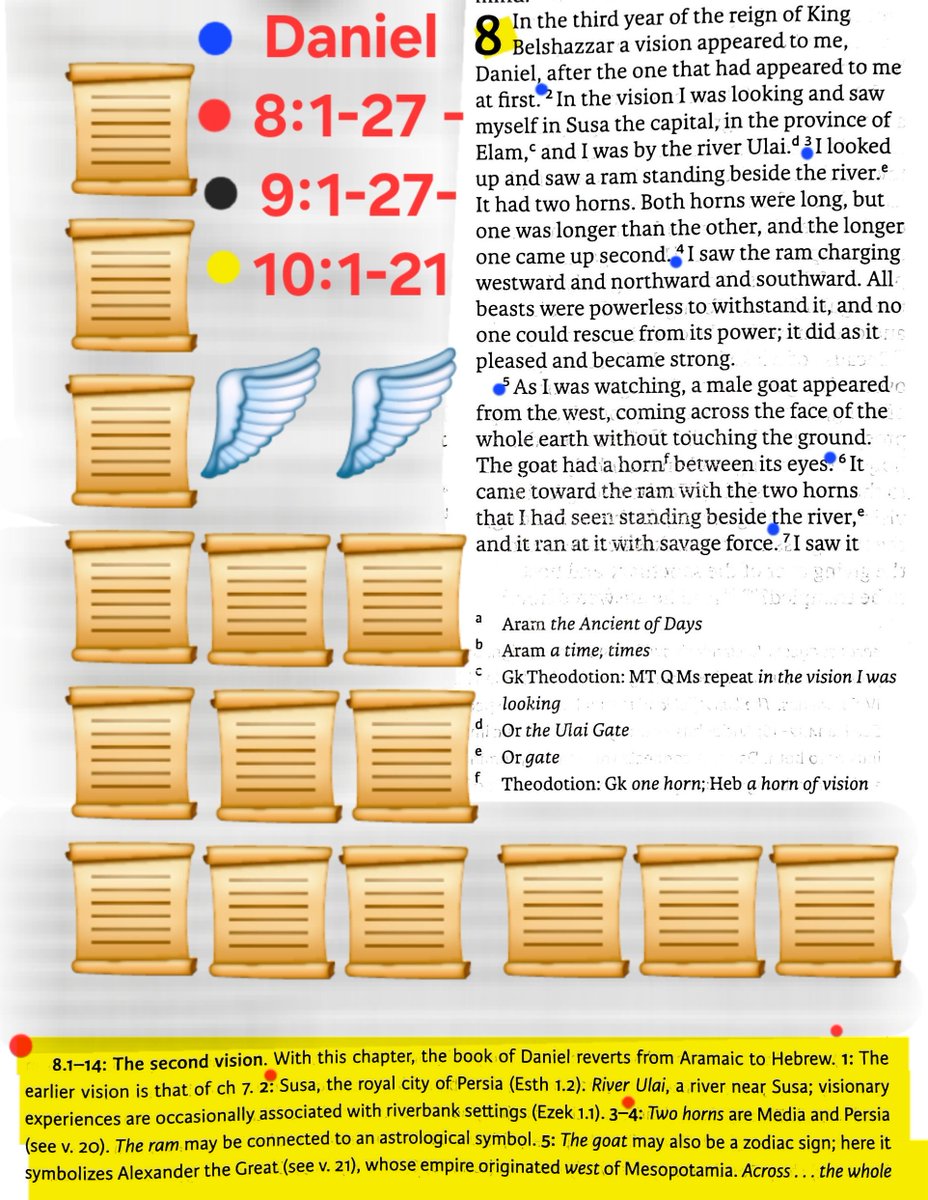
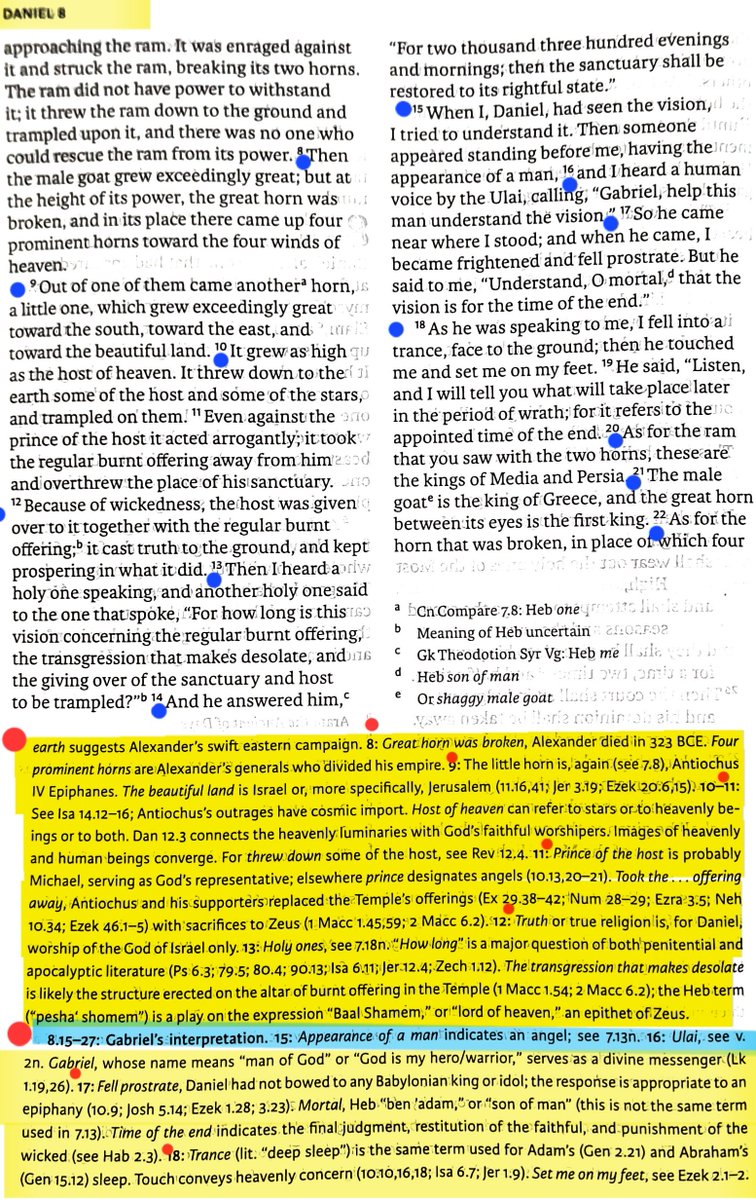
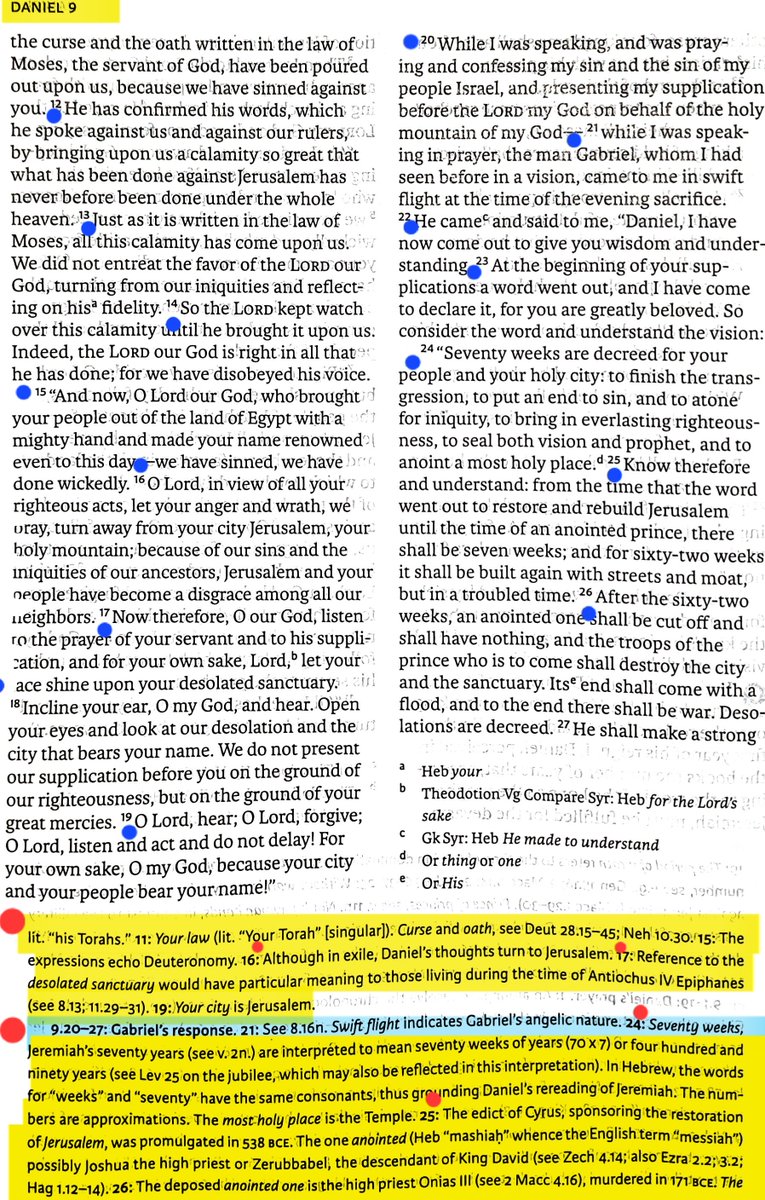
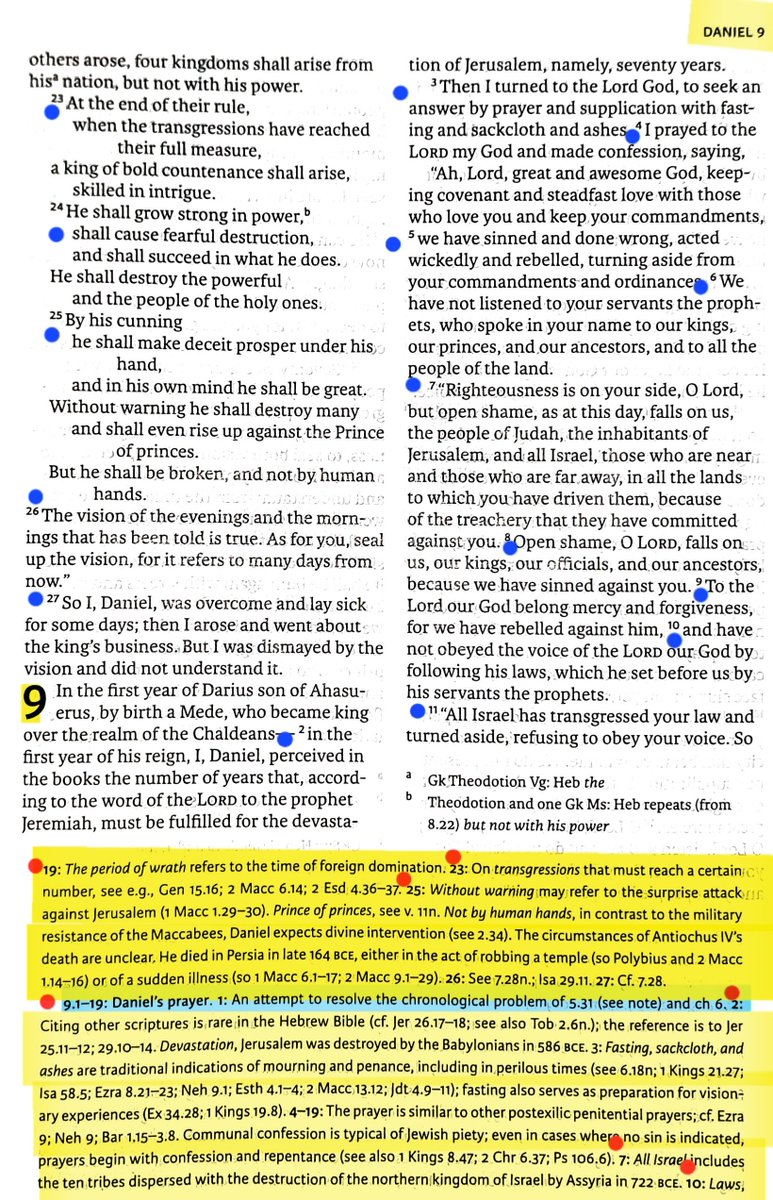
#ApocalypticBookStudy #59
#BibleStudy #100
#HighStrangeEvents #4
🔴 Specialist Study Continues 🔵
- FEATURING -
📜 Daniel 5:1-31 - 6:1-28 - 7:1-28 📜
First we have In Sum ......
🔑 King Belshazzar Gets drunk out of Sacred Temple vessels that were in the 1st temple then a writing on a wall appears that in sum means Belshazzar kingdom ends that Daniel Interprets that no other wise man or magician can translate ...then in chapter 6 Daniel is throw in the Lions Den (read below to see what happens) then we have in Daniel 7 prophecy that came true & waiting to be fulfilled again of the Visions of the 4 Beasts & The Ancient of days & the Son of Man Yeshua the Christ who reigns forever + the 10 Horns / Kingdoms & Little Horn which a Anti Christ precursor fugure/king called Antiochus IV Epiphanes who is known for his severe persecution of the Jewish people, outlawing their religious practices and desecrating the Temple in Jerusalem around 175 BC - 164 BC (Now in our Generation this will happen again once the third temple is built & in the last 3 n a half years out of the 7 year total period will be the estimate this new Future anti christ figure appears again in our age that's when the Jews build the Third temple! This will start making sense once you read these chapters in full & the next 5 or so chapters left ...
📜 Daniel ch's 5 - 7 Most important Parts 📜
⚠️Please see Bottom First 7 Pics for FULL CH. Verses & Commentary below the verses with the FOLLOWING Post Replies will be the Specialist commentary FOR Daniel 5 -7⚠️
📜 Daniel 5 📜
🔴 5:1 - Belshazzar commanded that they bring in the vessels of gold and silver that his father Nebuchadnezzar had taken out of the temple (so the Harem & officials can get drunk out of these sacred cups & vessels filled with wine to get drunk & worship the gods of silver & gold , bronze , iron , wood )
🔴 5:5 - Immediately the fingers of a human hand appeared and began writing on the plaster of the wall of the royal palace, next to the lampstand. The king was watching the hand as it wrote. 6 Then the king's face turned pale, and his thoughts terrified him. His limbs gave way, and his knees knocked together. 7 The king cried aloud to bring in the enchanters, the Chaldeans, and the diviners; and the king said to the wise-men of Babylon, "Whoever cản read this writing and tell me its interpretation shall be`clothed in purple, have a chain of gold around his neck, and rank third in the kingdon.
🔴 5:10 - The queen, when she heard the discus- sion-of the king and his lords, came into the banqueting hall. The queen said, "O king, live forever! Do not let your thoughts terrify you or your face grow pale. There is a man in your kingdom who is endowed with a spirit of the holy gods In the days of your father he was found to have enlightenment, understanding, and wisdom like the wisdom of the gods ( elohim )
5:11 (continues ) - Your father, King Nebuchadnezzar made .him chief of the magicians, enchanters Chaldeans, and diviners, 12 because an excellent spirit, knowledge, and understanding to interpret dreams, explain riddles, and solve problems were found in this Daniel, whom the king named Belteshazzar. Now let Danie be called, and he will give the interpretation.'
🔴 17 Then Daniel answered in the présence of the king, ""Let your gifts be for yourself, or give your rewards to someone else! Neverthe- less I will read the writing to-the king and let him know the interpretationr 8 0 king, the Most High God gave your father Nebuchad- nezzar kingship, greatness, glory, and maj-9 And because of the greatness that he gave him, all peoples, nations, and languages trembled and feared before him. He killed those he wanted to kill, kept alive those he wanted to keep alive, honored those he want- ed to honor, and degraded those he wanted to degrade.20 But when his heart was lifted up and his spirit was hardened so that he acted proudly, he was deposed from his kingly throne, and his.glory was stripped from him.
🔴 And you, Beishazzar his son, have not humbled your heart, even though you knew . all this! 33 You have exalted yourself against " the Lord of heaven! The vessels of his temple have been brought in before you, and you and your.lords, your wives and your concubines have.been drinking wine from them. You have praised the gods of silver and gold, of bronze, iron, wood, and stone, which do not see or hear or know; but the God in whose ower is your very breath, and to whom belong all your ways, you have not honored.
🔑 The Interpretation of
" Writing on the Wall "
🔴 5:25 - And this is the writing that was inscribed: MENE, MENE, TEKEL, & PARSIN. 26 This is the interpretation of the matter: MENE, God has numbered the days of your kingdom & brought it to an end; 27 TEKEL, you have been weighed on the scales & found wanting; 28 PERES, your Kingdom is divided and given to the Medes & Persians."
🔴 29 Then Belshazzar gave the command, and Daniel was clothed in purple, a chain of gold was put around his neck, and a proclamation was made concerning him that he should rank third in the kingdom." 30 That very night Belshazzar, the Chaldean king, was killed. 31 And Darius the Mede received the kingdom, being about sixty-two years old.
📜 Daniel 6 📜
⚪️ 6:1 - It pleased Darius to set over the kingdom one hundredtwenty satraps, stationed throughout the whole kingdon, 2 and over them three presidents, including Daniel; to these the satraps gave account, so that the king might suffer no loss 3 Soon Daniel distinguished himself above all the other presidents and satraps because an excellent spirit was in him, and the king planned to appoint him over the whole kingdom. 4 So the presidents and the satraps tried to und grounds for complaint against Daniel in connection with the kingdom.
(Then they set Daniel up & is caught praying & then decided by the kings decree to be thrown in the lions Den)
⚪️ .... the prefects and the satraps, the counselors and the governors are agreed that the king should establish an ordinance and enforce an interdict, that whoever prays to anyone, divine or human, for thirty days, except to you, O king, shall be thrown into a den of lions. 8 Now, O king, establish the interdict and sign the document, so that it cannot be changed, according 'to the law of the Medes and the Persians, which cannot be revoked."' 9 Therefore King Darius signed the documentand interdict.
⚪️ 6:11 - "The conspirators came and found Daniel praying and seeking mercy before his God, "2 Then they approached the king and said concerning the interdict.
(The Conspirators again complain Daniel isnt following the kinds new decree)
Then...
(The King trys to save Daniel but is reminded by the conspirators that " the law the Medes & Persians cannot be changed even by the King )
🦁 The Lions Den Supernatural
Miracle
(An Angel Rescues Daniel by the
Hand of God )
✨️🪽
⚪️ 16 Then the king gave the command, and Daniel was brought and thrown intỏ the den of lions. The king said to Daniel, "May your God, whom you faithfully serve, deliver you!"
⚪️ 17 A stone was brought and laid on the mouth of the den, and the king sealed it with his own signet and with the signet of his lords, so that nothing might be changed concerning Daniel.
Then the king went to his palace and spent the night fasting; no food was brought to him, and sleep fled from him. 19 Then, at break of day, the king got up and hurried to the den of lions. 20 When he came near the den where Danieľ was, he cried out anxiously to Daniel, "'O-Đaniel, servant of the living God, has your God whom you faithfully serve been able to deliver you from the lions?" ? Daniel then said to the king, - "O king,live forever ! 22 My God sent his angel and shut the lions' mouths so that they would not hurt me, because I was found blameless before him; and also before you, O king, I have done no wrong.". 23 Then the king was exceedingly glad and commanded that Daniel be taken up out of the den.
⚪️ 24 - The king gave a command, and those who had accused Daniel were brought and thrown into the den of lions they, their children, and their wives. Before they reached the bottom of the den the lions overpowered them and broke all their bones in pieces. 25 Then King Darius wrote to all peoples and nations of every language throughout the whole world: "May you have abundant prosperity!
⚪️ 26 I make a decree, that in all my royal dominion-people should tremble and fear before the God of Daniel:For he is the living God, enduring forever. His kingdom shall never be destroyed, and his dominion has no end. 27 He delivers and rescues, he works signs and wonders in heaven and on earth; for he has saved Daniel from the power of the lions.'
⚪️ 28 So this Daniel prospered during the reign of Darius and the reign of Cyrus the Persian
📜 Daniel 7 📜
(4 Beasts , Ancient Of Days , Son of Man Prophecy Visions)
🦁🦅🐻🐆
🔵 7:2 - Daniel said, “I saw in my vision by night, and behold, the four winds of heaven were stirring up the great sea (thenations). 3 And four great beasts, each different from the other, were coming up out of the sea [in succession]. 4 The first (the Babylonian Empire under Nebuchadnezzar) was like a lion and had the wings of an eagle. I kept looking until its wings were plucked, and it was lifted up from the ground and made to stand on two feet like a man; a human mind was given to it. 5 And behold, another beast, a second one (the Medo-Persian Empire), was like a bear, and it was raised up on one side (domain), and three ribs were in its mouth between its teeth; and it was told, ‘Arise, devour much meat.’ 6 After this I kept looking, and behold, another one (the Greek Empire of Alexander the Great), like a leopard, which had on its back four wings like those of a bird; the beast also had four heads (Alexander’s generals, his successors), and power to rule was given to it.
🔵 7 After this I kept looking in the night visions, and behold, [I saw] a fourth beast (the Roman Empire), terrible and extremely strong; and it had huge iron teeth. It devoured and crushed and trampled down what was left with its feet. It was different from all the beasts that came before it, and it had ten horns (ten kings). 8 While I was considering the horns, behold, there came up among them another horn, a little one, and three of the first horns were pulled up by the roots before it; and behold, in this horn were eyes like the eyes of a man and a mouth boasting of great things. kept looking Until thrones were set up,
- Ancient of Days Vision -
And the Ancient of Days (God) took His seat; His garment was white as snow And the hair of His head like pure wool. His throne was flames of fire; Its wheels were a burning fire.
10 “A river of fire was flowing
And coming out from before Him;
A thousand thousands were attending Him, And ten thousand times ten thousand were standing before Him;The court was seated,
And the books were opened.
11 Then I kept looking because of the sound of the great and boastful words which the horn was speaking. I kept looking until the beast was slain, and its body destroyed and given to be burned with fire. 12 As for the rest of the beasts, their power was taken away; yet their lives were prolonged [for the length of their lives was fixed] for a predetermined time.
- The Son of Man Presented -
(CHRIST)
🔵 13 “I kept looking in the night visions, And behold, ]on the clouds of heavenOne like a Son of Man was coming, And He came up to the Ancient of DaysAnd was presented before Him.
🔵 14 “And to Him (the Messiah) was given dominion (supreme authority),Glory and a kingdom,
That all the peoples, nations, and speakers of every language
Should serve and worship Him.
His dominion is an everlasting dominionWhich will not pass away;
And His kingdom is one
Which will not be destroyed.
- The Vision Interpreted -
🔵 15 “As for me, Daniel, my spirit was distressed and anxious within me, and the visions [that appeared] in my mind kept alarming (agitating) me. 16 I approached one of those who stood by and began asking him the exact meaning of all this. So he told me and explained to me the interpretation of the things: 17 ‘These four great beasts are four kings who will arise from the earth. 18 But the [d]saints (believers) of the Most High [God] will receive the kingdom and possess the kingdom forever, for all ages to come.’
🔵 19 “Then I wished to know the exact meaning of the fourth beast, which was different from all the others, extremely dreadful, with teeth of iron and claws of bronze, which devoured, crushed and trampled down what was left with its feet, 20 and the meaning of the ten horns (kings) that were on its head and the other horn which came up later, and before which three of the horns fell, specifically, that horn which had eyes and a mouth that boasted great things and which looked larger than the others.
🔵 21 As I kept looking, that horn was making war with the saints (believers) and overpowering them 22 until the Ancient of Days came and judgment was passed in favor of the saints of the Most High [God], and the time arrived when the saints (believers) took possession of the kingdom.
🔵 23 “Thus the angel said, ‘The fourth beast shall be a fourth kingdom on earth, which will be different from all other kingdoms and will devour the whole earth and tread it down, and crush it. 24 As for the ten horns, out of this kingdom ten kings will arise; and another will arise after them, and he will be different from the former ones, and he will subdue three kings. 25 He will speak words against the Most High [God] and wear down the saints of the Most High, and he will intend to change the times and the law; and they will be given into his hand for a time, [two] times, and half a time [three and one-half years]. 26 But the court [of the Most High] will sit in judgment, and his dominion will be taken away, [first to be] consumed [gradually] and [then] to be destroyed forever. 27 Then the kingdom and the dominion and the greatness of all the kingdoms under the whole heaven will be given to the people of the saints (believers) of the Most High; His kingdom will be an everlasting kingdom, and all the dominions will serve and obey Him.’
🔵 28 “This is the end of the matter. As for me, Daniel, my [waking] thoughts were extremely troubling and alarming and my face grew pale; but I kept the matter [of the vision and the angel’s explanation] to myself
TBC.........
(See Posts below for Specialist commentary) TBC NEXT WEEKEND AS ALWAYS EVERY SUNDAY ARE OUR APOCALYPTIC STUDIES )
![TeXasMadde's tweet photo. #ApocalypticBookStudy #59
#BibleStudy #100
#HighStrangeEvents #4
🔴 Specialist Study Continues 🔵
- FEATURING -
📜 Daniel 5:1-31 - 6:1-28 - 7:1-28 📜
First we have In Sum ......
🔑 King Belshazzar Gets drunk out of Sacred Temple vessels that were in the 1st temple then a writing on a wall appears that in sum means Belshazzar kingdom ends that Daniel Interprets that no other wise man or magician can translate ...then in chapter 6 Daniel is throw in the Lions Den (read below to see what happens) then we have in Daniel 7 prophecy that came true & waiting to be fulfilled again of the Visions of the 4 Beasts & The Ancient of days & the Son of Man Yeshua the Christ who reigns forever + the 10 Horns / Kingdoms & Little Horn which a Anti Christ precursor fugure/king called Antiochus IV Epiphanes who is known for his severe persecution of the Jewish people, outlawing their religious practices and desecrating the Temple in Jerusalem around 175 BC - 164 BC (Now in our Generation this will happen again once the third temple is built & in the last 3 n a half years out of the 7 year total period will be the estimate this new Future anti christ figure appears again in our age that's when the Jews build the Third temple! This will start making sense once you read these chapters in full & the next 5 or so chapters left ...
📜 Daniel ch's 5 - 7 Most important Parts 📜
⚠️Please see Bottom First 7 Pics for FULL CH. Verses & Commentary below the verses with the FOLLOWING Post Replies will be the Specialist commentary FOR Daniel 5 -7⚠️
📜 Daniel 5 📜
🔴 5:1 - Belshazzar commanded that they bring in the vessels of gold and silver that his father Nebuchadnezzar had taken out of the temple (so the Harem & officials can get drunk out of these sacred cups & vessels filled with wine to get drunk & worship the gods of silver & gold , bronze , iron , wood )
🔴 5:5 - Immediately the fingers of a human hand appeared and began writing on the plaster of the wall of the royal palace, next to the lampstand. The king was watching the hand as it wrote. 6 Then the king's face turned pale, and his thoughts terrified him. His limbs gave way, and his knees knocked together. 7 The king cried aloud to bring in the enchanters, the Chaldeans, and the diviners; and the king said to the wise-men of Babylon, "Whoever cản read this writing and tell me its interpretation shall be`clothed in purple, have a chain of gold around his neck, and rank third in the kingdon.
🔴 5:10 - The queen, when she heard the discus- sion-of the king and his lords, came into the banqueting hall. The queen said, "O king, live forever! Do not let your thoughts terrify you or your face grow pale. There is a man in your kingdom who is endowed with a spirit of the holy gods In the days of your father he was found to have enlightenment, understanding, and wisdom like the wisdom of the gods ( elohim )
5:11 (continues ) - Your father, King Nebuchadnezzar made .him chief of the magicians, enchanters Chaldeans, and diviners, 12 because an excellent spirit, knowledge, and understanding to interpret dreams, explain riddles, and solve problems were found in this Daniel, whom the king named Belteshazzar. Now let Danie be called, and he will give the interpretation.'
🔴 17 Then Daniel answered in the présence of the king, ""Let your gifts be for yourself, or give your rewards to someone else! Neverthe- less I will read the writing to-the king and let him know the interpretationr 8 0 king, the Most High God gave your father Nebuchad- nezzar kingship, greatness, glory, and maj-9 And because of the greatness that he gave him, all peoples, nations, and languages trembled and feared before him. He killed those he wanted to kill, kept alive those he wanted to keep alive, honored those he want- ed to honor, and degraded those he wanted to degrade.20 But when his heart was lifted up and his spirit was hardened so that he acted proudly, he was deposed from his kingly throne, and his.glory was stripped from him.
🔴 And you, Beishazzar his son, have not humbled your heart, even though you knew . all this! 33 You have exalted yourself against " the Lord of heaven! The vessels of his temple have been brought in before you, and you and your.lords, your wives and your concubines have.been drinking wine from them. You have praised the gods of silver and gold, of bronze, iron, wood, and stone, which do not see or hear or know; but the God in whose ower is your very breath, and to whom belong all your ways, you have not honored.
🔑 The Interpretation of
" Writing on the Wall "
🔴 5:25 - And this is the writing that was inscribed: MENE, MENE, TEKEL, & PARSIN. 26 This is the interpretation of the matter: MENE, God has numbered the days of your kingdom & brought it to an end; 27 TEKEL, you have been weighed on the scales & found wanting; 28 PERES, your Kingdom is divided and given to the Medes & Persians."
🔴 29 Then Belshazzar gave the command, and Daniel was clothed in purple, a chain of gold was put around his neck, and a proclamation was made concerning him that he should rank third in the kingdom." 30 That very night Belshazzar, the Chaldean king, was killed. 31 And Darius the Mede received the kingdom, being about sixty-two years old.
📜 Daniel 6 📜
⚪️ 6:1 - It pleased Darius to set over the kingdom one hundredtwenty satraps, stationed throughout the whole kingdon, 2 and over them three presidents, including Daniel; to these the satraps gave account, so that the king might suffer no loss 3 Soon Daniel distinguished himself above all the other presidents and satraps because an excellent spirit was in him, and the king planned to appoint him over the whole kingdom. 4 So the presidents and the satraps tried to und grounds for complaint against Daniel in connection with the kingdom.
(Then they set Daniel up & is caught praying & then decided by the kings decree to be thrown in the lions Den)
⚪️ .... the prefects and the satraps, the counselors and the governors are agreed that the king should establish an ordinance and enforce an interdict, that whoever prays to anyone, divine or human, for thirty days, except to you, O king, shall be thrown into a den of lions. 8 Now, O king, establish the interdict and sign the document, so that it cannot be changed, according 'to the law of the Medes and the Persians, which cannot be revoked."' 9 Therefore King Darius signed the documentand interdict.
⚪️ 6:11 - "The conspirators came and found Daniel praying and seeking mercy before his God, "2 Then they approached the king and said concerning the interdict.
(The Conspirators again complain Daniel isnt following the kinds new decree)
Then...
(The King trys to save Daniel but is reminded by the conspirators that " the law the Medes & Persians cannot be changed even by the King )
🦁 The Lions Den Supernatural
Miracle
(An Angel Rescues Daniel by the
Hand of God )
✨️🪽
⚪️ 16 Then the king gave the command, and Daniel was brought and thrown intỏ the den of lions. The king said to Daniel, "May your God, whom you faithfully serve, deliver you!"
⚪️ 17 A stone was brought and laid on the mouth of the den, and the king sealed it with his own signet and with the signet of his lords, so that nothing might be changed concerning Daniel.
Then the king went to his palace and spent the night fasting; no food was brought to him, and sleep fled from him. 19 Then, at break of day, the king got up and hurried to the den of lions. 20 When he came near the den where Danieľ was, he cried out anxiously to Daniel, "'O-Đaniel, servant of the living God, has your God whom you faithfully serve been able to deliver you from the lions?" ? Daniel then said to the king, - "O king,live forever ! 22 My God sent his angel and shut the lions' mouths so that they would not hurt me, because I was found blameless before him; and also before you, O king, I have done no wrong.". 23 Then the king was exceedingly glad and commanded that Daniel be taken up out of the den.
⚪️ 24 - The king gave a command, and those who had accused Daniel were brought and thrown into the den of lions they, their children, and their wives. Before they reached the bottom of the den the lions overpowered them and broke all their bones in pieces. 25 Then King Darius wrote to all peoples and nations of every language throughout the whole world: "May you have abundant prosperity!
⚪️ 26 I make a decree, that in all my royal dominion-people should tremble and fear before the God of Daniel:For he is the living God, enduring forever. His kingdom shall never be destroyed, and his dominion has no end. 27 He delivers and rescues, he works signs and wonders in heaven and on earth; for he has saved Daniel from the power of the lions.'
⚪️ 28 So this Daniel prospered during the reign of Darius and the reign of Cyrus the Persian
📜 Daniel 7 📜
(4 Beasts , Ancient Of Days , Son of Man Prophecy Visions)
🦁🦅🐻🐆
🔵 7:2 - Daniel said, “I saw in my vision by night, and behold, the four winds of heaven were stirring up the great sea (thenations). 3 And four great beasts, each different from the other, were coming up out of the sea [in succession]. 4 The first (the Babylonian Empire under Nebuchadnezzar) was like a lion and had the wings of an eagle. I kept looking until its wings were plucked, and it was lifted up from the ground and made to stand on two feet like a man; a human mind was given to it. 5 And behold, another beast, a second one (the Medo-Persian Empire), was like a bear, and it was raised up on one side (domain), and three ribs were in its mouth between its teeth; and it was told, ‘Arise, devour much meat.’ 6 After this I kept looking, and behold, another one (the Greek Empire of Alexander the Great), like a leopard, which had on its back four wings like those of a bird; the beast also had four heads (Alexander’s generals, his successors), and power to rule was given to it.
🔵 7 After this I kept looking in the night visions, and behold, [I saw] a fourth beast (the Roman Empire), terrible and extremely strong; and it had huge iron teeth. It devoured and crushed and trampled down what was left with its feet. It was different from all the beasts that came before it, and it had ten horns (ten kings). 8 While I was considering the horns, behold, there came up among them another horn, a little one, and three of the first horns were pulled up by the roots before it; and behold, in this horn were eyes like the eyes of a man and a mouth boasting of great things. kept looking Until thrones were set up,
- Ancient of Days Vision -
And the Ancient of Days (God) took His seat; His garment was white as snow And the hair of His head like pure wool. His throne was flames of fire; Its wheels were a burning fire.
10 “A river of fire was flowing
And coming out from before Him;
A thousand thousands were attending Him, And ten thousand times ten thousand were standing before Him;The court was seated,
And the books were opened.
11 Then I kept looking because of the sound of the great and boastful words which the horn was speaking. I kept looking until the beast was slain, and its body destroyed and given to be burned with fire. 12 As for the rest of the beasts, their power was taken away; yet their lives were prolonged [for the length of their lives was fixed] for a predetermined time.
- The Son of Man Presented -
(CHRIST)
🔵 13 “I kept looking in the night visions, And behold, ]on the clouds of heavenOne like a Son of Man was coming, And He came up to the Ancient of DaysAnd was presented before Him.
🔵 14 “And to Him (the Messiah) was given dominion (supreme authority),Glory and a kingdom,
That all the peoples, nations, and speakers of every language
Should serve and worship Him.
His dominion is an everlasting dominionWhich will not pass away;
And His kingdom is one
Which will not be destroyed.
- The Vision Interpreted -
🔵 15 “As for me, Daniel, my spirit was distressed and anxious within me, and the visions [that appeared] in my mind kept alarming (agitating) me. 16 I approached one of those who stood by and began asking him the exact meaning of all this. So he told me and explained to me the interpretation of the things: 17 ‘These four great beasts are four kings who will arise from the earth. 18 But the [d]saints (believers) of the Most High [God] will receive the kingdom and possess the kingdom forever, for all ages to come.’
🔵 19 “Then I wished to know the exact meaning of the fourth beast, which was different from all the others, extremely dreadful, with teeth of iron and claws of bronze, which devoured, crushed and trampled down what was left with its feet, 20 and the meaning of the ten horns (kings) that were on its head and the other horn which came up later, and before which three of the horns fell, specifically, that horn which had eyes and a mouth that boasted great things and which looked larger than the others.
🔵 21 As I kept looking, that horn was making war with the saints (believers) and overpowering them 22 until the Ancient of Days came and judgment was passed in favor of the saints of the Most High [God], and the time arrived when the saints (believers) took possession of the kingdom.
🔵 23 “Thus the angel said, ‘The fourth beast shall be a fourth kingdom on earth, which will be different from all other kingdoms and will devour the whole earth and tread it down, and crush it. 24 As for the ten horns, out of this kingdom ten kings will arise; and another will arise after them, and he will be different from the former ones, and he will subdue three kings. 25 He will speak words against the Most High [God] and wear down the saints of the Most High, and he will intend to change the times and the law; and they will be given into his hand for a time, [two] times, and half a time [three and one-half years]. 26 But the court [of the Most High] will sit in judgment, and his dominion will be taken away, [first to be] consumed [gradually] and [then] to be destroyed forever. 27 Then the kingdom and the dominion and the greatness of all the kingdoms under the whole heaven will be given to the people of the saints (believers) of the Most High; His kingdom will be an everlasting kingdom, and all the dominions will serve and obey Him.’
🔵 28 “This is the end of the matter. As for me, Daniel, my [waking] thoughts were extremely troubling and alarming and my face grew pale; but I kept the matter [of the vision and the angel’s explanation] to myself
TBC.........
(See Posts below for Specialist commentary) TBC NEXT WEEKEND AS ALWAYS EVERY SUNDAY ARE OUR APOCALYPTIC STUDIES )](https://pbs.twimg.com/media/GzKgeNoXQAAOQwF.jpg)
![TeXasMadde's tweet photo. #ApocalypticBookStudy #59
#BibleStudy #100
#HighStrangeEvents #4
🔴 Specialist Study Continues 🔵
- FEATURING -
📜 Daniel 5:1-31 - 6:1-28 - 7:1-28 📜
First we have In Sum ......
🔑 King Belshazzar Gets drunk out of Sacred Temple vessels that were in the 1st temple then a writing on a wall appears that in sum means Belshazzar kingdom ends that Daniel Interprets that no other wise man or magician can translate ...then in chapter 6 Daniel is throw in the Lions Den (read below to see what happens) then we have in Daniel 7 prophecy that came true & waiting to be fulfilled again of the Visions of the 4 Beasts & The Ancient of days & the Son of Man Yeshua the Christ who reigns forever + the 10 Horns / Kingdoms & Little Horn which a Anti Christ precursor fugure/king called Antiochus IV Epiphanes who is known for his severe persecution of the Jewish people, outlawing their religious practices and desecrating the Temple in Jerusalem around 175 BC - 164 BC (Now in our Generation this will happen again once the third temple is built & in the last 3 n a half years out of the 7 year total period will be the estimate this new Future anti christ figure appears again in our age that's when the Jews build the Third temple! This will start making sense once you read these chapters in full & the next 5 or so chapters left ...
📜 Daniel ch's 5 - 7 Most important Parts 📜
⚠️Please see Bottom First 7 Pics for FULL CH. Verses & Commentary below the verses with the FOLLOWING Post Replies will be the Specialist commentary FOR Daniel 5 -7⚠️
📜 Daniel 5 📜
🔴 5:1 - Belshazzar commanded that they bring in the vessels of gold and silver that his father Nebuchadnezzar had taken out of the temple (so the Harem & officials can get drunk out of these sacred cups & vessels filled with wine to get drunk & worship the gods of silver & gold , bronze , iron , wood )
🔴 5:5 - Immediately the fingers of a human hand appeared and began writing on the plaster of the wall of the royal palace, next to the lampstand. The king was watching the hand as it wrote. 6 Then the king's face turned pale, and his thoughts terrified him. His limbs gave way, and his knees knocked together. 7 The king cried aloud to bring in the enchanters, the Chaldeans, and the diviners; and the king said to the wise-men of Babylon, "Whoever cản read this writing and tell me its interpretation shall be`clothed in purple, have a chain of gold around his neck, and rank third in the kingdon.
🔴 5:10 - The queen, when she heard the discus- sion-of the king and his lords, came into the banqueting hall. The queen said, "O king, live forever! Do not let your thoughts terrify you or your face grow pale. There is a man in your kingdom who is endowed with a spirit of the holy gods In the days of your father he was found to have enlightenment, understanding, and wisdom like the wisdom of the gods ( elohim )
5:11 (continues ) - Your father, King Nebuchadnezzar made .him chief of the magicians, enchanters Chaldeans, and diviners, 12 because an excellent spirit, knowledge, and understanding to interpret dreams, explain riddles, and solve problems were found in this Daniel, whom the king named Belteshazzar. Now let Danie be called, and he will give the interpretation.'
🔴 17 Then Daniel answered in the présence of the king, ""Let your gifts be for yourself, or give your rewards to someone else! Neverthe- less I will read the writing to-the king and let him know the interpretationr 8 0 king, the Most High God gave your father Nebuchad- nezzar kingship, greatness, glory, and maj-9 And because of the greatness that he gave him, all peoples, nations, and languages trembled and feared before him. He killed those he wanted to kill, kept alive those he wanted to keep alive, honored those he want- ed to honor, and degraded those he wanted to degrade.20 But when his heart was lifted up and his spirit was hardened so that he acted proudly, he was deposed from his kingly throne, and his.glory was stripped from him.
🔴 And you, Beishazzar his son, have not humbled your heart, even though you knew . all this! 33 You have exalted yourself against " the Lord of heaven! The vessels of his temple have been brought in before you, and you and your.lords, your wives and your concubines have.been drinking wine from them. You have praised the gods of silver and gold, of bronze, iron, wood, and stone, which do not see or hear or know; but the God in whose ower is your very breath, and to whom belong all your ways, you have not honored.
🔑 The Interpretation of
" Writing on the Wall "
🔴 5:25 - And this is the writing that was inscribed: MENE, MENE, TEKEL, & PARSIN. 26 This is the interpretation of the matter: MENE, God has numbered the days of your kingdom & brought it to an end; 27 TEKEL, you have been weighed on the scales & found wanting; 28 PERES, your Kingdom is divided and given to the Medes & Persians."
🔴 29 Then Belshazzar gave the command, and Daniel was clothed in purple, a chain of gold was put around his neck, and a proclamation was made concerning him that he should rank third in the kingdom." 30 That very night Belshazzar, the Chaldean king, was killed. 31 And Darius the Mede received the kingdom, being about sixty-two years old.
📜 Daniel 6 📜
⚪️ 6:1 - It pleased Darius to set over the kingdom one hundredtwenty satraps, stationed throughout the whole kingdon, 2 and over them three presidents, including Daniel; to these the satraps gave account, so that the king might suffer no loss 3 Soon Daniel distinguished himself above all the other presidents and satraps because an excellent spirit was in him, and the king planned to appoint him over the whole kingdom. 4 So the presidents and the satraps tried to und grounds for complaint against Daniel in connection with the kingdom.
(Then they set Daniel up & is caught praying & then decided by the kings decree to be thrown in the lions Den)
⚪️ .... the prefects and the satraps, the counselors and the governors are agreed that the king should establish an ordinance and enforce an interdict, that whoever prays to anyone, divine or human, for thirty days, except to you, O king, shall be thrown into a den of lions. 8 Now, O king, establish the interdict and sign the document, so that it cannot be changed, according 'to the law of the Medes and the Persians, which cannot be revoked."' 9 Therefore King Darius signed the documentand interdict.
⚪️ 6:11 - "The conspirators came and found Daniel praying and seeking mercy before his God, "2 Then they approached the king and said concerning the interdict.
(The Conspirators again complain Daniel isnt following the kinds new decree)
Then...
(The King trys to save Daniel but is reminded by the conspirators that " the law the Medes & Persians cannot be changed even by the King )
🦁 The Lions Den Supernatural
Miracle
(An Angel Rescues Daniel by the
Hand of God )
✨️🪽
⚪️ 16 Then the king gave the command, and Daniel was brought and thrown intỏ the den of lions. The king said to Daniel, "May your God, whom you faithfully serve, deliver you!"
⚪️ 17 A stone was brought and laid on the mouth of the den, and the king sealed it with his own signet and with the signet of his lords, so that nothing might be changed concerning Daniel.
Then the king went to his palace and spent the night fasting; no food was brought to him, and sleep fled from him. 19 Then, at break of day, the king got up and hurried to the den of lions. 20 When he came near the den where Danieľ was, he cried out anxiously to Daniel, "'O-Đaniel, servant of the living God, has your God whom you faithfully serve been able to deliver you from the lions?" ? Daniel then said to the king, - "O king,live forever ! 22 My God sent his angel and shut the lions' mouths so that they would not hurt me, because I was found blameless before him; and also before you, O king, I have done no wrong.". 23 Then the king was exceedingly glad and commanded that Daniel be taken up out of the den.
⚪️ 24 - The king gave a command, and those who had accused Daniel were brought and thrown into the den of lions they, their children, and their wives. Before they reached the bottom of the den the lions overpowered them and broke all their bones in pieces. 25 Then King Darius wrote to all peoples and nations of every language throughout the whole world: "May you have abundant prosperity!
⚪️ 26 I make a decree, that in all my royal dominion-people should tremble and fear before the God of Daniel:For he is the living God, enduring forever. His kingdom shall never be destroyed, and his dominion has no end. 27 He delivers and rescues, he works signs and wonders in heaven and on earth; for he has saved Daniel from the power of the lions.'
⚪️ 28 So this Daniel prospered during the reign of Darius and the reign of Cyrus the Persian
📜 Daniel 7 📜
(4 Beasts , Ancient Of Days , Son of Man Prophecy Visions)
🦁🦅🐻🐆
🔵 7:2 - Daniel said, “I saw in my vision by night, and behold, the four winds of heaven were stirring up the great sea (thenations). 3 And four great beasts, each different from the other, were coming up out of the sea [in succession]. 4 The first (the Babylonian Empire under Nebuchadnezzar) was like a lion and had the wings of an eagle. I kept looking until its wings were plucked, and it was lifted up from the ground and made to stand on two feet like a man; a human mind was given to it. 5 And behold, another beast, a second one (the Medo-Persian Empire), was like a bear, and it was raised up on one side (domain), and three ribs were in its mouth between its teeth; and it was told, ‘Arise, devour much meat.’ 6 After this I kept looking, and behold, another one (the Greek Empire of Alexander the Great), like a leopard, which had on its back four wings like those of a bird; the beast also had four heads (Alexander’s generals, his successors), and power to rule was given to it.
🔵 7 After this I kept looking in the night visions, and behold, [I saw] a fourth beast (the Roman Empire), terrible and extremely strong; and it had huge iron teeth. It devoured and crushed and trampled down what was left with its feet. It was different from all the beasts that came before it, and it had ten horns (ten kings). 8 While I was considering the horns, behold, there came up among them another horn, a little one, and three of the first horns were pulled up by the roots before it; and behold, in this horn were eyes like the eyes of a man and a mouth boasting of great things. kept looking Until thrones were set up,
- Ancient of Days Vision -
And the Ancient of Days (God) took His seat; His garment was white as snow And the hair of His head like pure wool. His throne was flames of fire; Its wheels were a burning fire.
10 “A river of fire was flowing
And coming out from before Him;
A thousand thousands were attending Him, And ten thousand times ten thousand were standing before Him;The court was seated,
And the books were opened.
11 Then I kept looking because of the sound of the great and boastful words which the horn was speaking. I kept looking until the beast was slain, and its body destroyed and given to be burned with fire. 12 As for the rest of the beasts, their power was taken away; yet their lives were prolonged [for the length of their lives was fixed] for a predetermined time.
- The Son of Man Presented -
(CHRIST)
🔵 13 “I kept looking in the night visions, And behold, ]on the clouds of heavenOne like a Son of Man was coming, And He came up to the Ancient of DaysAnd was presented before Him.
🔵 14 “And to Him (the Messiah) was given dominion (supreme authority),Glory and a kingdom,
That all the peoples, nations, and speakers of every language
Should serve and worship Him.
His dominion is an everlasting dominionWhich will not pass away;
And His kingdom is one
Which will not be destroyed.
- The Vision Interpreted -
🔵 15 “As for me, Daniel, my spirit was distressed and anxious within me, and the visions [that appeared] in my mind kept alarming (agitating) me. 16 I approached one of those who stood by and began asking him the exact meaning of all this. So he told me and explained to me the interpretation of the things: 17 ‘These four great beasts are four kings who will arise from the earth. 18 But the [d]saints (believers) of the Most High [God] will receive the kingdom and possess the kingdom forever, for all ages to come.’
🔵 19 “Then I wished to know the exact meaning of the fourth beast, which was different from all the others, extremely dreadful, with teeth of iron and claws of bronze, which devoured, crushed and trampled down what was left with its feet, 20 and the meaning of the ten horns (kings) that were on its head and the other horn which came up later, and before which three of the horns fell, specifically, that horn which had eyes and a mouth that boasted great things and which looked larger than the others.
🔵 21 As I kept looking, that horn was making war with the saints (believers) and overpowering them 22 until the Ancient of Days came and judgment was passed in favor of the saints of the Most High [God], and the time arrived when the saints (believers) took possession of the kingdom.
🔵 23 “Thus the angel said, ‘The fourth beast shall be a fourth kingdom on earth, which will be different from all other kingdoms and will devour the whole earth and tread it down, and crush it. 24 As for the ten horns, out of this kingdom ten kings will arise; and another will arise after them, and he will be different from the former ones, and he will subdue three kings. 25 He will speak words against the Most High [God] and wear down the saints of the Most High, and he will intend to change the times and the law; and they will be given into his hand for a time, [two] times, and half a time [three and one-half years]. 26 But the court [of the Most High] will sit in judgment, and his dominion will be taken away, [first to be] consumed [gradually] and [then] to be destroyed forever. 27 Then the kingdom and the dominion and the greatness of all the kingdoms under the whole heaven will be given to the people of the saints (believers) of the Most High; His kingdom will be an everlasting kingdom, and all the dominions will serve and obey Him.’
🔵 28 “This is the end of the matter. As for me, Daniel, my [waking] thoughts were extremely troubling and alarming and my face grew pale; but I kept the matter [of the vision and the angel’s explanation] to myself
TBC.........
(See Posts below for Specialist commentary) TBC NEXT WEEKEND AS ALWAYS EVERY SUNDAY ARE OUR APOCALYPTIC STUDIES )](https://pbs.twimg.com/media/GzKgeNcXQAAbrNn.jpg)
![TeXasMadde's tweet photo. #ApocalypticBookStudy #59
#BibleStudy #100
#HighStrangeEvents #4
🔴 Specialist Study Continues 🔵
- FEATURING -
📜 Daniel 5:1-31 - 6:1-28 - 7:1-28 📜
First we have In Sum ......
🔑 King Belshazzar Gets drunk out of Sacred Temple vessels that were in the 1st temple then a writing on a wall appears that in sum means Belshazzar kingdom ends that Daniel Interprets that no other wise man or magician can translate ...then in chapter 6 Daniel is throw in the Lions Den (read below to see what happens) then we have in Daniel 7 prophecy that came true & waiting to be fulfilled again of the Visions of the 4 Beasts & The Ancient of days & the Son of Man Yeshua the Christ who reigns forever + the 10 Horns / Kingdoms & Little Horn which a Anti Christ precursor fugure/king called Antiochus IV Epiphanes who is known for his severe persecution of the Jewish people, outlawing their religious practices and desecrating the Temple in Jerusalem around 175 BC - 164 BC (Now in our Generation this will happen again once the third temple is built & in the last 3 n a half years out of the 7 year total period will be the estimate this new Future anti christ figure appears again in our age that's when the Jews build the Third temple! This will start making sense once you read these chapters in full & the next 5 or so chapters left ...
📜 Daniel ch's 5 - 7 Most important Parts 📜
⚠️Please see Bottom First 7 Pics for FULL CH. Verses & Commentary below the verses with the FOLLOWING Post Replies will be the Specialist commentary FOR Daniel 5 -7⚠️
📜 Daniel 5 📜
🔴 5:1 - Belshazzar commanded that they bring in the vessels of gold and silver that his father Nebuchadnezzar had taken out of the temple (so the Harem & officials can get drunk out of these sacred cups & vessels filled with wine to get drunk & worship the gods of silver & gold , bronze , iron , wood )
🔴 5:5 - Immediately the fingers of a human hand appeared and began writing on the plaster of the wall of the royal palace, next to the lampstand. The king was watching the hand as it wrote. 6 Then the king's face turned pale, and his thoughts terrified him. His limbs gave way, and his knees knocked together. 7 The king cried aloud to bring in the enchanters, the Chaldeans, and the diviners; and the king said to the wise-men of Babylon, "Whoever cản read this writing and tell me its interpretation shall be`clothed in purple, have a chain of gold around his neck, and rank third in the kingdon.
🔴 5:10 - The queen, when she heard the discus- sion-of the king and his lords, came into the banqueting hall. The queen said, "O king, live forever! Do not let your thoughts terrify you or your face grow pale. There is a man in your kingdom who is endowed with a spirit of the holy gods In the days of your father he was found to have enlightenment, understanding, and wisdom like the wisdom of the gods ( elohim )
5:11 (continues ) - Your father, King Nebuchadnezzar made .him chief of the magicians, enchanters Chaldeans, and diviners, 12 because an excellent spirit, knowledge, and understanding to interpret dreams, explain riddles, and solve problems were found in this Daniel, whom the king named Belteshazzar. Now let Danie be called, and he will give the interpretation.'
🔴 17 Then Daniel answered in the présence of the king, ""Let your gifts be for yourself, or give your rewards to someone else! Neverthe- less I will read the writing to-the king and let him know the interpretationr 8 0 king, the Most High God gave your father Nebuchad- nezzar kingship, greatness, glory, and maj-9 And because of the greatness that he gave him, all peoples, nations, and languages trembled and feared before him. He killed those he wanted to kill, kept alive those he wanted to keep alive, honored those he want- ed to honor, and degraded those he wanted to degrade.20 But when his heart was lifted up and his spirit was hardened so that he acted proudly, he was deposed from his kingly throne, and his.glory was stripped from him.
🔴 And you, Beishazzar his son, have not humbled your heart, even though you knew . all this! 33 You have exalted yourself against " the Lord of heaven! The vessels of his temple have been brought in before you, and you and your.lords, your wives and your concubines have.been drinking wine from them. You have praised the gods of silver and gold, of bronze, iron, wood, and stone, which do not see or hear or know; but the God in whose ower is your very breath, and to whom belong all your ways, you have not honored.
🔑 The Interpretation of
" Writing on the Wall "
🔴 5:25 - And this is the writing that was inscribed: MENE, MENE, TEKEL, & PARSIN. 26 This is the interpretation of the matter: MENE, God has numbered the days of your kingdom & brought it to an end; 27 TEKEL, you have been weighed on the scales & found wanting; 28 PERES, your Kingdom is divided and given to the Medes & Persians."
🔴 29 Then Belshazzar gave the command, and Daniel was clothed in purple, a chain of gold was put around his neck, and a proclamation was made concerning him that he should rank third in the kingdom." 30 That very night Belshazzar, the Chaldean king, was killed. 31 And Darius the Mede received the kingdom, being about sixty-two years old.
📜 Daniel 6 📜
⚪️ 6:1 - It pleased Darius to set over the kingdom one hundredtwenty satraps, stationed throughout the whole kingdon, 2 and over them three presidents, including Daniel; to these the satraps gave account, so that the king might suffer no loss 3 Soon Daniel distinguished himself above all the other presidents and satraps because an excellent spirit was in him, and the king planned to appoint him over the whole kingdom. 4 So the presidents and the satraps tried to und grounds for complaint against Daniel in connection with the kingdom.
(Then they set Daniel up & is caught praying & then decided by the kings decree to be thrown in the lions Den)
⚪️ .... the prefects and the satraps, the counselors and the governors are agreed that the king should establish an ordinance and enforce an interdict, that whoever prays to anyone, divine or human, for thirty days, except to you, O king, shall be thrown into a den of lions. 8 Now, O king, establish the interdict and sign the document, so that it cannot be changed, according 'to the law of the Medes and the Persians, which cannot be revoked."' 9 Therefore King Darius signed the documentand interdict.
⚪️ 6:11 - "The conspirators came and found Daniel praying and seeking mercy before his God, "2 Then they approached the king and said concerning the interdict.
(The Conspirators again complain Daniel isnt following the kinds new decree)
Then...
(The King trys to save Daniel but is reminded by the conspirators that " the law the Medes & Persians cannot be changed even by the King )
🦁 The Lions Den Supernatural
Miracle
(An Angel Rescues Daniel by the
Hand of God )
✨️🪽
⚪️ 16 Then the king gave the command, and Daniel was brought and thrown intỏ the den of lions. The king said to Daniel, "May your God, whom you faithfully serve, deliver you!"
⚪️ 17 A stone was brought and laid on the mouth of the den, and the king sealed it with his own signet and with the signet of his lords, so that nothing might be changed concerning Daniel.
Then the king went to his palace and spent the night fasting; no food was brought to him, and sleep fled from him. 19 Then, at break of day, the king got up and hurried to the den of lions. 20 When he came near the den where Danieľ was, he cried out anxiously to Daniel, "'O-Đaniel, servant of the living God, has your God whom you faithfully serve been able to deliver you from the lions?" ? Daniel then said to the king, - "O king,live forever ! 22 My God sent his angel and shut the lions' mouths so that they would not hurt me, because I was found blameless before him; and also before you, O king, I have done no wrong.". 23 Then the king was exceedingly glad and commanded that Daniel be taken up out of the den.
⚪️ 24 - The king gave a command, and those who had accused Daniel were brought and thrown into the den of lions they, their children, and their wives. Before they reached the bottom of the den the lions overpowered them and broke all their bones in pieces. 25 Then King Darius wrote to all peoples and nations of every language throughout the whole world: "May you have abundant prosperity!
⚪️ 26 I make a decree, that in all my royal dominion-people should tremble and fear before the God of Daniel:For he is the living God, enduring forever. His kingdom shall never be destroyed, and his dominion has no end. 27 He delivers and rescues, he works signs and wonders in heaven and on earth; for he has saved Daniel from the power of the lions.'
⚪️ 28 So this Daniel prospered during the reign of Darius and the reign of Cyrus the Persian
📜 Daniel 7 📜
(4 Beasts , Ancient Of Days , Son of Man Prophecy Visions)
🦁🦅🐻🐆
🔵 7:2 - Daniel said, “I saw in my vision by night, and behold, the four winds of heaven were stirring up the great sea (thenations). 3 And four great beasts, each different from the other, were coming up out of the sea [in succession]. 4 The first (the Babylonian Empire under Nebuchadnezzar) was like a lion and had the wings of an eagle. I kept looking until its wings were plucked, and it was lifted up from the ground and made to stand on two feet like a man; a human mind was given to it. 5 And behold, another beast, a second one (the Medo-Persian Empire), was like a bear, and it was raised up on one side (domain), and three ribs were in its mouth between its teeth; and it was told, ‘Arise, devour much meat.’ 6 After this I kept looking, and behold, another one (the Greek Empire of Alexander the Great), like a leopard, which had on its back four wings like those of a bird; the beast also had four heads (Alexander’s generals, his successors), and power to rule was given to it.
🔵 7 After this I kept looking in the night visions, and behold, [I saw] a fourth beast (the Roman Empire), terrible and extremely strong; and it had huge iron teeth. It devoured and crushed and trampled down what was left with its feet. It was different from all the beasts that came before it, and it had ten horns (ten kings). 8 While I was considering the horns, behold, there came up among them another horn, a little one, and three of the first horns were pulled up by the roots before it; and behold, in this horn were eyes like the eyes of a man and a mouth boasting of great things. kept looking Until thrones were set up,
- Ancient of Days Vision -
And the Ancient of Days (God) took His seat; His garment was white as snow And the hair of His head like pure wool. His throne was flames of fire; Its wheels were a burning fire.
10 “A river of fire was flowing
And coming out from before Him;
A thousand thousands were attending Him, And ten thousand times ten thousand were standing before Him;The court was seated,
And the books were opened.
11 Then I kept looking because of the sound of the great and boastful words which the horn was speaking. I kept looking until the beast was slain, and its body destroyed and given to be burned with fire. 12 As for the rest of the beasts, their power was taken away; yet their lives were prolonged [for the length of their lives was fixed] for a predetermined time.
- The Son of Man Presented -
(CHRIST)
🔵 13 “I kept looking in the night visions, And behold, ]on the clouds of heavenOne like a Son of Man was coming, And He came up to the Ancient of DaysAnd was presented before Him.
🔵 14 “And to Him (the Messiah) was given dominion (supreme authority),Glory and a kingdom,
That all the peoples, nations, and speakers of every language
Should serve and worship Him.
His dominion is an everlasting dominionWhich will not pass away;
And His kingdom is one
Which will not be destroyed.
- The Vision Interpreted -
🔵 15 “As for me, Daniel, my spirit was distressed and anxious within me, and the visions [that appeared] in my mind kept alarming (agitating) me. 16 I approached one of those who stood by and began asking him the exact meaning of all this. So he told me and explained to me the interpretation of the things: 17 ‘These four great beasts are four kings who will arise from the earth. 18 But the [d]saints (believers) of the Most High [God] will receive the kingdom and possess the kingdom forever, for all ages to come.’
🔵 19 “Then I wished to know the exact meaning of the fourth beast, which was different from all the others, extremely dreadful, with teeth of iron and claws of bronze, which devoured, crushed and trampled down what was left with its feet, 20 and the meaning of the ten horns (kings) that were on its head and the other horn which came up later, and before which three of the horns fell, specifically, that horn which had eyes and a mouth that boasted great things and which looked larger than the others.
🔵 21 As I kept looking, that horn was making war with the saints (believers) and overpowering them 22 until the Ancient of Days came and judgment was passed in favor of the saints of the Most High [God], and the time arrived when the saints (believers) took possession of the kingdom.
🔵 23 “Thus the angel said, ‘The fourth beast shall be a fourth kingdom on earth, which will be different from all other kingdoms and will devour the whole earth and tread it down, and crush it. 24 As for the ten horns, out of this kingdom ten kings will arise; and another will arise after them, and he will be different from the former ones, and he will subdue three kings. 25 He will speak words against the Most High [God] and wear down the saints of the Most High, and he will intend to change the times and the law; and they will be given into his hand for a time, [two] times, and half a time [three and one-half years]. 26 But the court [of the Most High] will sit in judgment, and his dominion will be taken away, [first to be] consumed [gradually] and [then] to be destroyed forever. 27 Then the kingdom and the dominion and the greatness of all the kingdoms under the whole heaven will be given to the people of the saints (believers) of the Most High; His kingdom will be an everlasting kingdom, and all the dominions will serve and obey Him.’
🔵 28 “This is the end of the matter. As for me, Daniel, my [waking] thoughts were extremely troubling and alarming and my face grew pale; but I kept the matter [of the vision and the angel’s explanation] to myself
TBC.........
(See Posts below for Specialist commentary) TBC NEXT WEEKEND AS ALWAYS EVERY SUNDAY ARE OUR APOCALYPTIC STUDIES )](https://pbs.twimg.com/media/GzKgeM5WUAA-ndp.jpg)
![TeXasMadde's tweet photo. #ApocalypticBookStudy #59
#BibleStudy #100
#HighStrangeEvents #4
🔴 Specialist Study Continues 🔵
- FEATURING -
📜 Daniel 5:1-31 - 6:1-28 - 7:1-28 📜
First we have In Sum ......
🔑 King Belshazzar Gets drunk out of Sacred Temple vessels that were in the 1st temple then a writing on a wall appears that in sum means Belshazzar kingdom ends that Daniel Interprets that no other wise man or magician can translate ...then in chapter 6 Daniel is throw in the Lions Den (read below to see what happens) then we have in Daniel 7 prophecy that came true & waiting to be fulfilled again of the Visions of the 4 Beasts & The Ancient of days & the Son of Man Yeshua the Christ who reigns forever + the 10 Horns / Kingdoms & Little Horn which a Anti Christ precursor fugure/king called Antiochus IV Epiphanes who is known for his severe persecution of the Jewish people, outlawing their religious practices and desecrating the Temple in Jerusalem around 175 BC - 164 BC (Now in our Generation this will happen again once the third temple is built & in the last 3 n a half years out of the 7 year total period will be the estimate this new Future anti christ figure appears again in our age that's when the Jews build the Third temple! This will start making sense once you read these chapters in full & the next 5 or so chapters left ...
📜 Daniel ch's 5 - 7 Most important Parts 📜
⚠️Please see Bottom First 7 Pics for FULL CH. Verses & Commentary below the verses with the FOLLOWING Post Replies will be the Specialist commentary FOR Daniel 5 -7⚠️
📜 Daniel 5 📜
🔴 5:1 - Belshazzar commanded that they bring in the vessels of gold and silver that his father Nebuchadnezzar had taken out of the temple (so the Harem & officials can get drunk out of these sacred cups & vessels filled with wine to get drunk & worship the gods of silver & gold , bronze , iron , wood )
🔴 5:5 - Immediately the fingers of a human hand appeared and began writing on the plaster of the wall of the royal palace, next to the lampstand. The king was watching the hand as it wrote. 6 Then the king's face turned pale, and his thoughts terrified him. His limbs gave way, and his knees knocked together. 7 The king cried aloud to bring in the enchanters, the Chaldeans, and the diviners; and the king said to the wise-men of Babylon, "Whoever cản read this writing and tell me its interpretation shall be`clothed in purple, have a chain of gold around his neck, and rank third in the kingdon.
🔴 5:10 - The queen, when she heard the discus- sion-of the king and his lords, came into the banqueting hall. The queen said, "O king, live forever! Do not let your thoughts terrify you or your face grow pale. There is a man in your kingdom who is endowed with a spirit of the holy gods In the days of your father he was found to have enlightenment, understanding, and wisdom like the wisdom of the gods ( elohim )
5:11 (continues ) - Your father, King Nebuchadnezzar made .him chief of the magicians, enchanters Chaldeans, and diviners, 12 because an excellent spirit, knowledge, and understanding to interpret dreams, explain riddles, and solve problems were found in this Daniel, whom the king named Belteshazzar. Now let Danie be called, and he will give the interpretation.'
🔴 17 Then Daniel answered in the présence of the king, ""Let your gifts be for yourself, or give your rewards to someone else! Neverthe- less I will read the writing to-the king and let him know the interpretationr 8 0 king, the Most High God gave your father Nebuchad- nezzar kingship, greatness, glory, and maj-9 And because of the greatness that he gave him, all peoples, nations, and languages trembled and feared before him. He killed those he wanted to kill, kept alive those he wanted to keep alive, honored those he want- ed to honor, and degraded those he wanted to degrade.20 But when his heart was lifted up and his spirit was hardened so that he acted proudly, he was deposed from his kingly throne, and his.glory was stripped from him.
🔴 And you, Beishazzar his son, have not humbled your heart, even though you knew . all this! 33 You have exalted yourself against " the Lord of heaven! The vessels of his temple have been brought in before you, and you and your.lords, your wives and your concubines have.been drinking wine from them. You have praised the gods of silver and gold, of bronze, iron, wood, and stone, which do not see or hear or know; but the God in whose ower is your very breath, and to whom belong all your ways, you have not honored.
🔑 The Interpretation of
" Writing on the Wall "
🔴 5:25 - And this is the writing that was inscribed: MENE, MENE, TEKEL, & PARSIN. 26 This is the interpretation of the matter: MENE, God has numbered the days of your kingdom & brought it to an end; 27 TEKEL, you have been weighed on the scales & found wanting; 28 PERES, your Kingdom is divided and given to the Medes & Persians."
🔴 29 Then Belshazzar gave the command, and Daniel was clothed in purple, a chain of gold was put around his neck, and a proclamation was made concerning him that he should rank third in the kingdom." 30 That very night Belshazzar, the Chaldean king, was killed. 31 And Darius the Mede received the kingdom, being about sixty-two years old.
📜 Daniel 6 📜
⚪️ 6:1 - It pleased Darius to set over the kingdom one hundredtwenty satraps, stationed throughout the whole kingdon, 2 and over them three presidents, including Daniel; to these the satraps gave account, so that the king might suffer no loss 3 Soon Daniel distinguished himself above all the other presidents and satraps because an excellent spirit was in him, and the king planned to appoint him over the whole kingdom. 4 So the presidents and the satraps tried to und grounds for complaint against Daniel in connection with the kingdom.
(Then they set Daniel up & is caught praying & then decided by the kings decree to be thrown in the lions Den)
⚪️ .... the prefects and the satraps, the counselors and the governors are agreed that the king should establish an ordinance and enforce an interdict, that whoever prays to anyone, divine or human, for thirty days, except to you, O king, shall be thrown into a den of lions. 8 Now, O king, establish the interdict and sign the document, so that it cannot be changed, according 'to the law of the Medes and the Persians, which cannot be revoked."' 9 Therefore King Darius signed the documentand interdict.
⚪️ 6:11 - "The conspirators came and found Daniel praying and seeking mercy before his God, "2 Then they approached the king and said concerning the interdict.
(The Conspirators again complain Daniel isnt following the kinds new decree)
Then...
(The King trys to save Daniel but is reminded by the conspirators that " the law the Medes & Persians cannot be changed even by the King )
🦁 The Lions Den Supernatural
Miracle
(An Angel Rescues Daniel by the
Hand of God )
✨️🪽
⚪️ 16 Then the king gave the command, and Daniel was brought and thrown intỏ the den of lions. The king said to Daniel, "May your God, whom you faithfully serve, deliver you!"
⚪️ 17 A stone was brought and laid on the mouth of the den, and the king sealed it with his own signet and with the signet of his lords, so that nothing might be changed concerning Daniel.
Then the king went to his palace and spent the night fasting; no food was brought to him, and sleep fled from him. 19 Then, at break of day, the king got up and hurried to the den of lions. 20 When he came near the den where Danieľ was, he cried out anxiously to Daniel, "'O-Đaniel, servant of the living God, has your God whom you faithfully serve been able to deliver you from the lions?" ? Daniel then said to the king, - "O king,live forever ! 22 My God sent his angel and shut the lions' mouths so that they would not hurt me, because I was found blameless before him; and also before you, O king, I have done no wrong.". 23 Then the king was exceedingly glad and commanded that Daniel be taken up out of the den.
⚪️ 24 - The king gave a command, and those who had accused Daniel were brought and thrown into the den of lions they, their children, and their wives. Before they reached the bottom of the den the lions overpowered them and broke all their bones in pieces. 25 Then King Darius wrote to all peoples and nations of every language throughout the whole world: "May you have abundant prosperity!
⚪️ 26 I make a decree, that in all my royal dominion-people should tremble and fear before the God of Daniel:For he is the living God, enduring forever. His kingdom shall never be destroyed, and his dominion has no end. 27 He delivers and rescues, he works signs and wonders in heaven and on earth; for he has saved Daniel from the power of the lions.'
⚪️ 28 So this Daniel prospered during the reign of Darius and the reign of Cyrus the Persian
📜 Daniel 7 📜
(4 Beasts , Ancient Of Days , Son of Man Prophecy Visions)
🦁🦅🐻🐆
🔵 7:2 - Daniel said, “I saw in my vision by night, and behold, the four winds of heaven were stirring up the great sea (thenations). 3 And four great beasts, each different from the other, were coming up out of the sea [in succession]. 4 The first (the Babylonian Empire under Nebuchadnezzar) was like a lion and had the wings of an eagle. I kept looking until its wings were plucked, and it was lifted up from the ground and made to stand on two feet like a man; a human mind was given to it. 5 And behold, another beast, a second one (the Medo-Persian Empire), was like a bear, and it was raised up on one side (domain), and three ribs were in its mouth between its teeth; and it was told, ‘Arise, devour much meat.’ 6 After this I kept looking, and behold, another one (the Greek Empire of Alexander the Great), like a leopard, which had on its back four wings like those of a bird; the beast also had four heads (Alexander’s generals, his successors), and power to rule was given to it.
🔵 7 After this I kept looking in the night visions, and behold, [I saw] a fourth beast (the Roman Empire), terrible and extremely strong; and it had huge iron teeth. It devoured and crushed and trampled down what was left with its feet. It was different from all the beasts that came before it, and it had ten horns (ten kings). 8 While I was considering the horns, behold, there came up among them another horn, a little one, and three of the first horns were pulled up by the roots before it; and behold, in this horn were eyes like the eyes of a man and a mouth boasting of great things. kept looking Until thrones were set up,
- Ancient of Days Vision -
And the Ancient of Days (God) took His seat; His garment was white as snow And the hair of His head like pure wool. His throne was flames of fire; Its wheels were a burning fire.
10 “A river of fire was flowing
And coming out from before Him;
A thousand thousands were attending Him, And ten thousand times ten thousand were standing before Him;The court was seated,
And the books were opened.
11 Then I kept looking because of the sound of the great and boastful words which the horn was speaking. I kept looking until the beast was slain, and its body destroyed and given to be burned with fire. 12 As for the rest of the beasts, their power was taken away; yet their lives were prolonged [for the length of their lives was fixed] for a predetermined time.
- The Son of Man Presented -
(CHRIST)
🔵 13 “I kept looking in the night visions, And behold, ]on the clouds of heavenOne like a Son of Man was coming, And He came up to the Ancient of DaysAnd was presented before Him.
🔵 14 “And to Him (the Messiah) was given dominion (supreme authority),Glory and a kingdom,
That all the peoples, nations, and speakers of every language
Should serve and worship Him.
His dominion is an everlasting dominionWhich will not pass away;
And His kingdom is one
Which will not be destroyed.
- The Vision Interpreted -
🔵 15 “As for me, Daniel, my spirit was distressed and anxious within me, and the visions [that appeared] in my mind kept alarming (agitating) me. 16 I approached one of those who stood by and began asking him the exact meaning of all this. So he told me and explained to me the interpretation of the things: 17 ‘These four great beasts are four kings who will arise from the earth. 18 But the [d]saints (believers) of the Most High [God] will receive the kingdom and possess the kingdom forever, for all ages to come.’
🔵 19 “Then I wished to know the exact meaning of the fourth beast, which was different from all the others, extremely dreadful, with teeth of iron and claws of bronze, which devoured, crushed and trampled down what was left with its feet, 20 and the meaning of the ten horns (kings) that were on its head and the other horn which came up later, and before which three of the horns fell, specifically, that horn which had eyes and a mouth that boasted great things and which looked larger than the others.
🔵 21 As I kept looking, that horn was making war with the saints (believers) and overpowering them 22 until the Ancient of Days came and judgment was passed in favor of the saints of the Most High [God], and the time arrived when the saints (believers) took possession of the kingdom.
🔵 23 “Thus the angel said, ‘The fourth beast shall be a fourth kingdom on earth, which will be different from all other kingdoms and will devour the whole earth and tread it down, and crush it. 24 As for the ten horns, out of this kingdom ten kings will arise; and another will arise after them, and he will be different from the former ones, and he will subdue three kings. 25 He will speak words against the Most High [God] and wear down the saints of the Most High, and he will intend to change the times and the law; and they will be given into his hand for a time, [two] times, and half a time [three and one-half years]. 26 But the court [of the Most High] will sit in judgment, and his dominion will be taken away, [first to be] consumed [gradually] and [then] to be destroyed forever. 27 Then the kingdom and the dominion and the greatness of all the kingdoms under the whole heaven will be given to the people of the saints (believers) of the Most High; His kingdom will be an everlasting kingdom, and all the dominions will serve and obey Him.’
🔵 28 “This is the end of the matter. As for me, Daniel, my [waking] thoughts were extremely troubling and alarming and my face grew pale; but I kept the matter [of the vision and the angel’s explanation] to myself
TBC.........
(See Posts below for Specialist commentary) TBC NEXT WEEKEND AS ALWAYS EVERY SUNDAY ARE OUR APOCALYPTIC STUDIES )](https://pbs.twimg.com/media/GzKgeM3XoAAL6NI.jpg)
Most Popular Users

Elon Musk 
@elonmusk
241.3M followers

Barack Obama
@barackobama
119.1M followers

Cristiano Ronaldo
@cristiano
113.1M followers

Donald J. Trump
@realdonaldtrump
111.8M followers

Narendra Modi
@narendramodi
107.1M followers

Rihanna
@rihanna
98.3M followers

NASA
@nasa
92.3M followers

Justin Bieber
@justinbieber
91.5M followers

KATY PERRY
@katyperry
89.1M followers

Taylor Swift
@taylorswift13
83.1M followers

Lady Gaga
@ladygaga
74.5M followers

Virat Kohli
@imvkohli
72.1M followers

Kim Kardashian
@kimkardashian
70.5M followers

YouTube
@youtube
68.8M followers

Neymar Jr
@neymarjr
65M followers

Bill Gates
@billgates
64.7M followers

The Ellen Show
@theellenshow
62.4M followers

Selena Gomez
@selenagomez
62.2M followers

CNN
@cnn
61.8M followers

X
@x
60.8M followers