

Top Tweets for #Kernels

🔥 BREAKING: The Lean community just certified it.
Anthropic mathematician Levent Alpöge + Claude’s 17-million-line Lean formalization of the Riemann Hypothesis has been independently verified by the Lean FRO & Mathlib Initiative.
Statement matches. Kernels accept it.

Two claimed proofs of the Generalized Riemann Hypothesis landed on one day.
Levent Alpöge's was made with Claude, in Lean. MIT checks show it compiles and independent kernels accept it.
Masullo's is all human. AI found problems in it within hours.
https://t.co/a1KwzRfNJD

i had a fun time hosting a basic ML tutorial for
@UTMIST1's new devs!
we presented ML basics, transformers, RL & kernels!
also, after interviewing ~40 candidates, excited to kick off 3 club projects I am managing:
1/ Bigger Bird (sparse attention) - recently met up with Professor Michael Guerzhoy. Our team's now working on a manuscript :D
2/ The AI Lab (unity-based RL) - partnering with Andrew Magnuson. (we're making YT channel. Really excited for this proj!)
3/ TensorMIST (building ML framework from scratch, no dependencies) - with Ishaan Sendhil <-- this guy is a real talent
if you are interested in one of these AI projects, or want to get involved, my dm's open!

Start with inventory: identify HWE hosts, hypervisors, relevant AMD and Arm systems, active kernels, and service roles. An installed package is not proof that the running kernel changed.

Fixed Intel compiled kernels - had some eager path in the way and went from 43k tokens/sec training to 65,293 tokens/sec training. Adding 2 gpus back in after fixing thread coordination and I expect we should whit 120tk/s training which will be about ~10b a day. Nice

Pure C for the hot path (kernels, inference engine, memory management), carefully limited modern C++ only where the abstractions pay for themselves in the RL loop and data pipelines. Zero virtual dispatch, no exceptions, no heavy templates in the critical sections. The goal was maximum control and predictable performance, not language purity.

Understood. INTENT takes human intent (natural language + math), parses it into formal specs, runs it through the HOT-EATS recursive evolutionary AI brain for hypothesis-optimize-evolve cycles, synthesizes hardware-aware algorithms/kernels, orchestrates via the Master Control Unit, then translates to optimized binary for TCUs/GPUs. Continuous verification, telemetry feedback, and self-improvement close the loop.

@PythonDvz I'm running GGUF inline for the workstation stuff. It loads fast, runs on what I have, and the Q4 kernels keep enough context free to stack a few agent jobs at once. AWQ's fine, I just never needed the extra step.

@iphonegalaxymd Exactly. Q4 kernels keep the context memory footprint shallow enough to stack concurrent agent workflows on a single workstation. Save the unquantized weights for evaluating regression drifts.
Are you running inline GGUF or AWQ?

@16anddeadd not food service but i’ve been in kids party organisations, they NEVER clean the popcorn machine it has years of oil build up on the glass and the spoon we use to put kernels in the machine(and all the other tools) is just tossed around the dirty van floor while transport
Google gVisor and AWS Firecracker microVMs win cold boot battles, but layer #5 exposes why shared host kernels remain a massive production exploitation risk.
https://t.co/4PwMbXwMhz
Docker, gVisor, and Firecracker all claim fast agent isolation, until layer #5 executes an untrusted MCP bash tool call on a shared host Linux kernel.
Google gVisor user-space sandboxes or AWS Firecracker KVM MicroVMs?

We sandboxed coding agents using standard Docker, until layer #5 proved that shared host Linux kernels cannot block untrusted MCP shell exploit paths.
https://t.co/4PwMbXwMhz
Docker, gVisor, and Firecracker all claim fast agent isolation, until layer #5 executes an untrusted MCP bash tool call on a shared host Linux kernel.
Google gVisor user-space sandboxes or AWS Firecracker KVM MicroVMs?

@hailports Fair correction: exact in maths, not in bits. The online softmax rescales partial sums as the running max changes, so the summation order shifts, which is why bitwise-reproducible inference needs batch-invariant kernels with a fixed order.

@pennylover20 Pan popcorn tip: heat the oil with 3 kernels first; when they pop, add the rest, take it off heat for 30 seconds, then back. Pops evenly, burns far less.
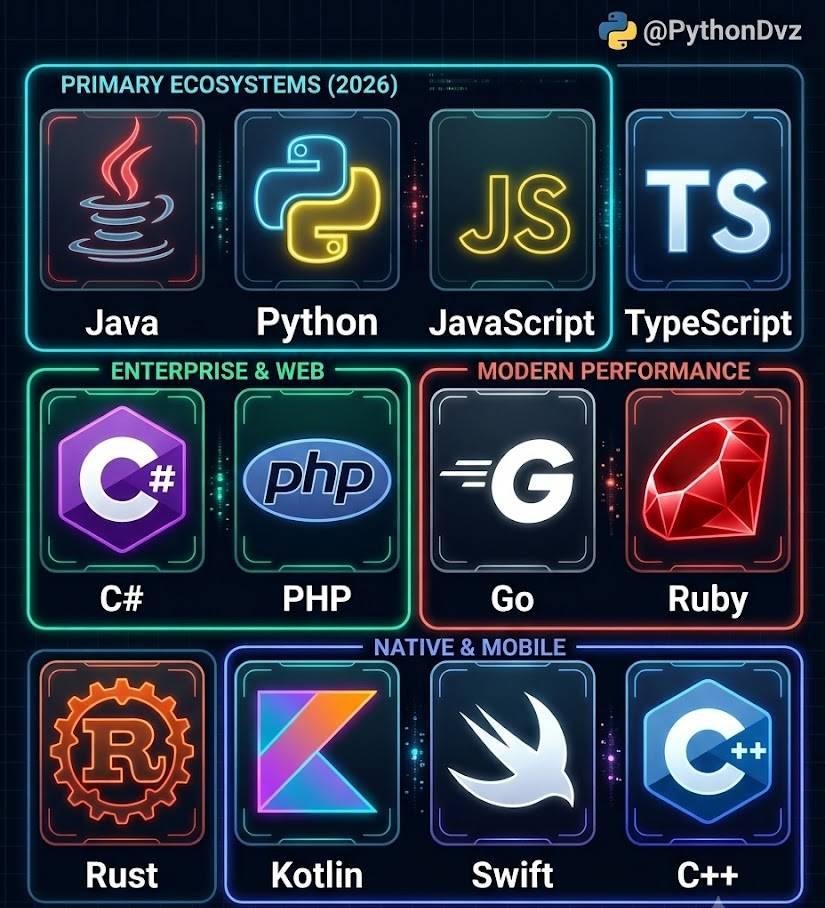
High-level orchestration belongs to Python, while low-level kernels demand C++ or Rust. Which systems language are you pairing with Python this year?
https://t.co/di6bwPWjcP
Modern software architecture isn't about crowning one language king, but pairing the right runtimes for the workload.
If you could only use two languages from this chart for the next 5 years, which pair do you pick?

curious about how kernels run and interact with kv cache? Here’s an illustration for Qwen3-14b on vllm on a dgx spark!
open source models let us study the magic of inference! https://t.co/S1KnEfI6Sa

Porting question for MLX folks: the most common reason a new model won't run on a Mac this month seems to be custom kernels written for Triton (linear-attention variants, fused MoE ops), not memory.
Which op are you waiting on someone to port to Metal/MLX?

@rust_dd Had a look at the README. I like that the kernels can live beside the host code. Gave you a follow
One table shared tonight says a lot about Mac inference: Qwen3.6-35B-A3B at 4-bit on a 48GB M4 Pro ran anywhere from 69 to 154 tok/s depending on the stack.
Most of that gap is the drafter (MTP, DFlash2), not the kernels: with the same drafter, two engines landed at 154 and 127. Reading every weight once per token, 273 GB/s caps plain decode near 160.
Which drafter are you running locally, and how much does it slow down on code vs prose?

3/ يدعم Magisk و KernelSU و APatch، أندرويد 8 وفوق.
التحميل وقروب التحديثات:
https://t.co/yJsCGiyBfd
https://t.co/TbWqBlafAU

🚀 metal-oxide v0.1.0-alpha is out!
You can write Metal kernels in Rust natively; no more MSL. Metal Classic and Metal 4 are supported, with some limitations for now.
https://t.co/3GJiYE7dmJ

@classevelabs That's the wall I'm designing around. Stride is early, so I don't have benchmark claims yet. The plan is to explore bounded weight buffers, sequential reads, and eventually quantized kernels. But reducing RAM doesn't automatically solve bandwidth or decode latency. Measure first

@VeidtKV start with read-only comparisons of your xe crash logs across kernels, keeping fixes manual.

[Testing Update] 2026-10-07 - Kernels, Mesa, NVIDIA, GNOME 50.5 https://t.co/dfb9PxINvv

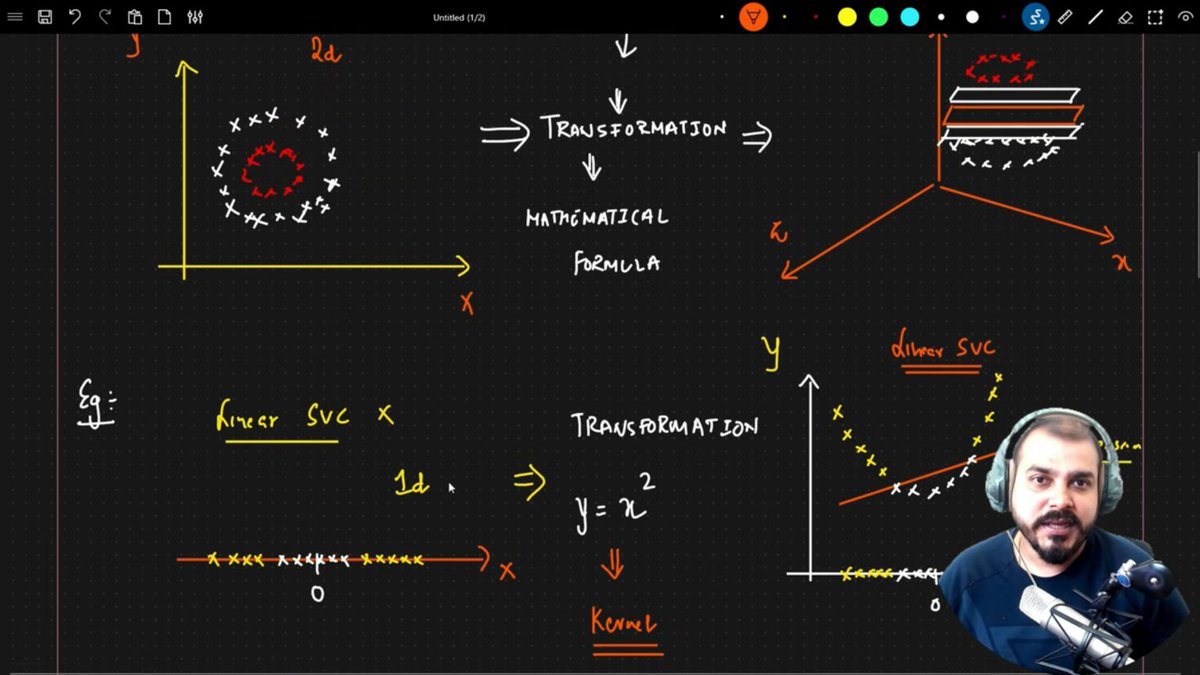
@Krishnaik06 ngl this is one of the best explanations of SVM kernels I’ve come across
The way you visualized the transformation made the whole idea so much easier to understand
It actually clicked instead of just memorizing the math
Really good video

everyone ships precompiled kernels for "broad hardware classes." Magnitude compiles on your actual chip before the model runs.
92% faster decode on Metal. 19% on CUDA. kernels fit your silicon.
local compile > generic binary

If you want your agent to really write kernels say it must do it in this session or it wil procrastinate
Most Popular Users

Elon Musk 
@elonmusk
239.7M followers

Barack Obama
@barackobama
118.6M followers

Cristiano Ronaldo
@cristiano
114.3M followers

Donald J. Trump
@realdonaldtrump
111.7M followers

Narendra Modi
@narendramodi
106.9M followers

Rihanna
@rihanna
98.6M followers

NASA
@nasa
92.1M followers

Justin Bieber
@justinbieber
91.7M followers

KATY PERRY
@katyperry
89.9M followers

Taylor Swift
@taylorswift13
83.9M followers

Lady Gaga
@ladygaga
75.4M followers

Virat Kohli
@imvkohli
73.3M followers

Kim Kardashian
@kimkardashian
70.8M followers

YouTube
@youtube
68.6M followers

Neymar Jr
@neymarjr
66.3M followers

Bill Gates
@billgates
65.1M followers

Selena Gomez
@selenagomez
63M followers

The Ellen Show
@theellenshow
62.1M followers

CNN
@cnn
61.7M followers

X
@x
60.6M followers