

Top Tweets for #LMUphysio

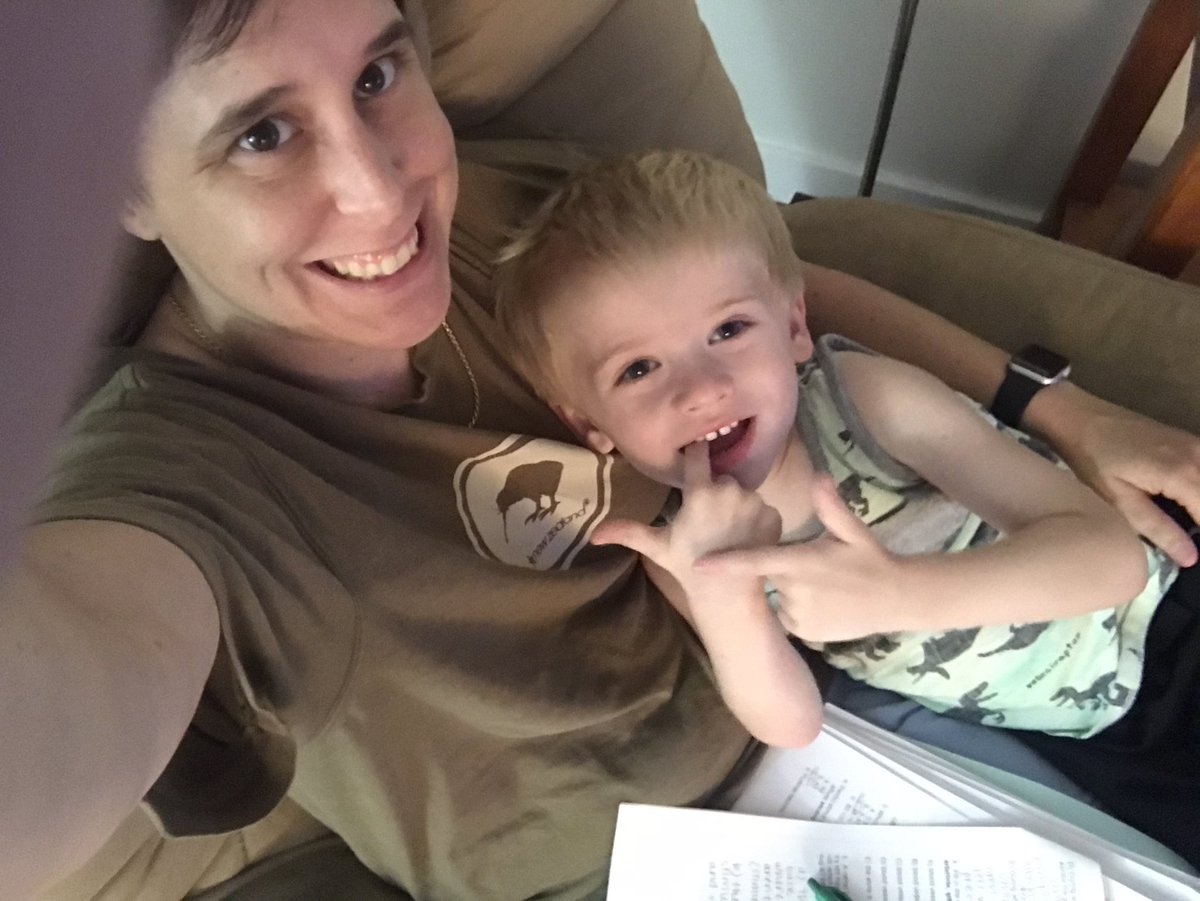
I had some assistants yesterday while recording video for #LMUphysio ‘s Dive Response lab. They very much enjoyed helping with the science!!


Comparative Animal Physiology Lab determined the osmoregularory ability of crayfish exposed to different environmental salinities. We found that they are hyperosmoric regulators below 500 mOsm and isosmotic conformers from 500-800 mOsm. #lmuphysio @LoyolaMarymount @SeaverLMU
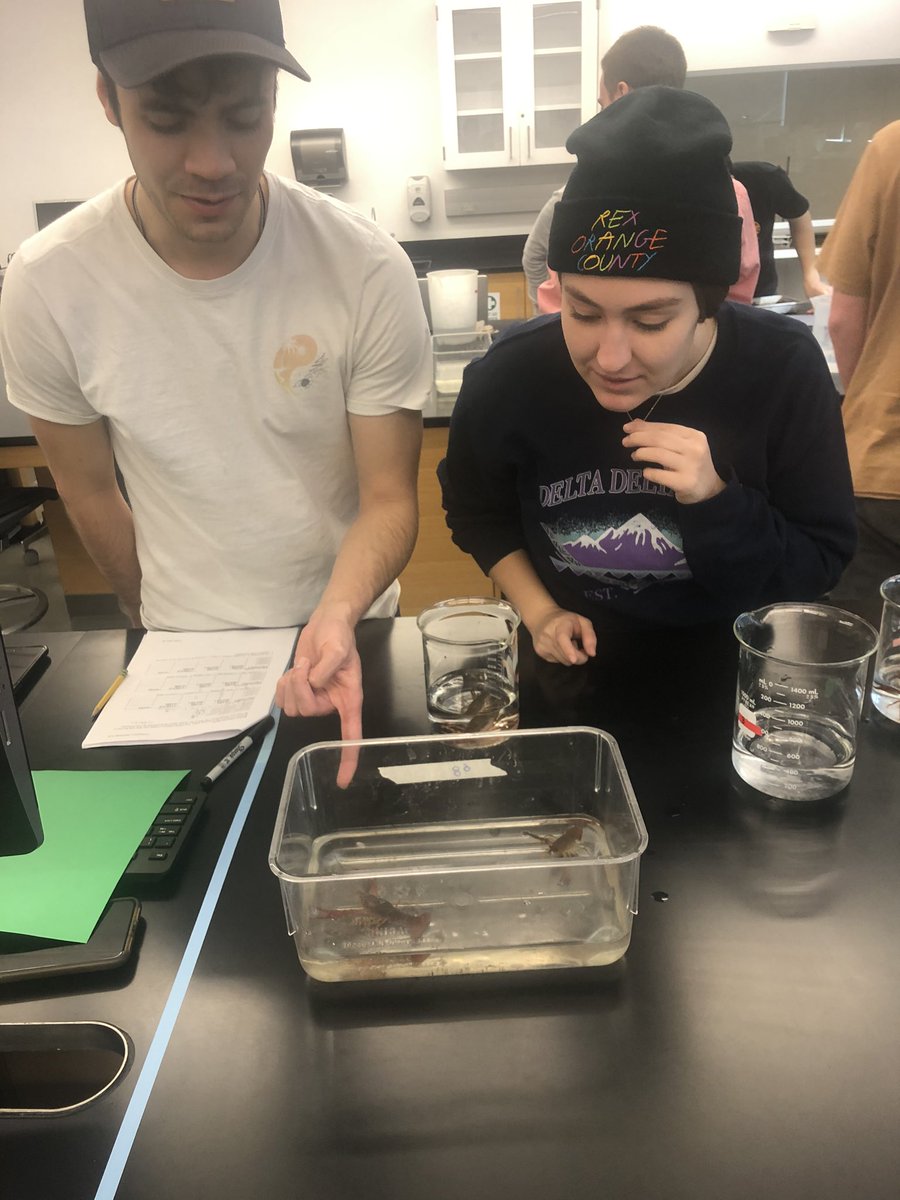


PS. Wish the #LMUphysio students luck & remind them to include cellular mechanisms in their answers!
Not sure where my head was last night. #LMUphysio exam is Wednesday (which is now tomorrow). My students keep me in check.
The #lmuphysio turned in their tweets so I doubt we will see any more action on this tag until next fall. But do check out the hashtag for so good tweets about what we learned this year in general physiology.
Also, exam is tomorrow so wish the students luck!
The #lmuphysio turned in their tweets so I doubt we will see any more action on this tag until next fall. But do check out the hashtag for so good tweets about what we learned this year in general physiology.
Also, exam is tomorrow so wish the students luck!
#LMUphysio lab is seeing if salivary Cortisol levels are influenced by competitions. So they are doing a competitive tournament of catch phrase.


Are you one of my former #CCbirds, #CCphysio, #LMUphysio, or #SMLbirds students? How was my incorporation of Twitter into the course beneficial? What were the cons of the assignment? Suggested improvements?
I’m looking at you @KelARobs726 @schwenkab @BridgetKyh0s @jacquiesagaSTUD

There are four types of gates: leaky, ligand, mechanically, and voltage. Leaky is always open. Ligand is open when there's a chemical response. Mechanically is open from physical deformation. Lastly, voltage is open from electrical changes. #LMUphysio
#LMUphysio students seem to be studying for this week's exam :)
Meanwhile I am writing said exam. If you want to give them a hint, I just wrote a question about a dysfunctional Na+/K+ATPase isoform.

The countercurrent multiplier system in the Loop of Henle allows for an overall decrease in the filtrate volume and establishes a vertical osmolarity gradient for the collecting duct, where final urine concentration occurs! #LMUphysio
Epinephrine, aka adrenaline, is secreted from the adrenal medulla that plays an important role not only as a neurotransmitter, but as a hormone, as well. It can be seen in being a part of the fight-or-flight response by increasing blood flow to the muscles. #LMUphysio

Osmolarity and Tonicity are two different things. Osmolarity describes the number of dissolved solute particles while Tonicity is a measure of the osmotic pressure gradient across a semipermeable membrane #LMUphysio
Giving my #LMUphysio final. Had them get up and stretch a the one-hour mark. Get that blood flowing!

Hemoglobin is responsible for carrying oxygen through the bloodstream and to the tissues, and is the body’s main source of iron. It also allows the blood to carry 70 times more O2 than if the O2 was just dissolved. #LMUPhysio
One key indicator of low oxygen levels is cyanosis. This is when the skin loses its color and becomes bluish. It usually occurs first in body parts with less blood flow, such the fingers, toes, and lips. #LMUPhysio
When our body is not getting enough oxygen from the air, our brain senses this and induces a long, deep breath. This is a yawn. The common notion that we yawn when we are bored/tired is still true though, since, when this happens, we don’t breath as deeply as normal. #LMUPhysio
We learned in class that hyperventilation decreases the levels of CO2 in the blood. Since the immediate urge to breathe occurs due to high levels of CO2 and not low levels of O2, free divers will actually use hyperventilation as a way to hold their breath longer! #LMUPhysio
There is always a small amount of air that stays in the lungs called residual volume. This essentially helps keep the lungs open to make breathing easier and prevents the alveoli from collapsing. We will never be able to consciously breathe it all out. #LMUPhysio
The diaphragm will sometimes spasm when something irritates it. This forces you to involuntarily and quickly suck in air, creating a hiccup! Common causes are eating too much/too quickly, stress, nerves, and carbonated beverages. #LMUPhysio
When hypoxia occurs, aerobic respiration slows, and ATP production decreases. This causes the Na+/K+ pumps to work inefficiently, leading to cell injury or even cell death. #LMUPhysio
Last Seen Hashtags on Sotwe
Most Popular Users

Elon Musk 
@elonmusk
241.6M followers

Barack Obama
@barackobama
119M followers

Cristiano Ronaldo
@cristiano
114.2M followers

Donald J. Trump
@realdonaldtrump
111.8M followers

Narendra Modi
@narendramodi
107.2M followers

Rihanna
@rihanna
98.7M followers

NASA
@nasa
92.4M followers

Justin Bieber
@justinbieber
91.8M followers

KATY PERRY
@katyperry
89.9M followers

Taylor Swift
@taylorswift13
83.8M followers

Lady Gaga
@ladygaga
75.3M followers

Virat Kohli
@imvkohli
73.1M followers

Kim Kardashian
@kimkardashian
70.8M followers

YouTube
@youtube
68.8M followers

Neymar Jr
@neymarjr
66.2M followers

Bill Gates
@billgates
65M followers

Selena Gomez
@selenagomez
62.9M followers

The Ellen Show
@theellenshow
62.3M followers

CNN
@cnn
61.8M followers

X
@x
60.7M followers