

Top Tweets for #LongRead


#LongRead #TamizhTrails #ShefSays #DharmaMusings
Light enters a temple slowly in Tamil Nadu. It filters in through the doorway, climbs up the steps, one at a time, dances between the stone pillars and finally, settles on the worn stone where people sit. A cool darkness claims the in-between spaces. The sculptors and the sthapathies had never heard of the word Chiaroscuro, the art technique that utilises the play between light and dark to to create volume, depth and dramatic effect, but they certainly knew the idea.
Tatha sat on the temple step with a small book of scriptures open in front of him. He had found perfect patch of light that would fall on his book, because a man his age finds it difficult to read in the dim light. His business stayed hidden behind him in a dark corner, a simple metal tray of clay diyas filled with vanaspati ghee, and a tin cash box with its lid open. No one guarded the tray or the box. People walked past the open box, but the money stayed where it was.
Now and then a devotee stopped for a couple of lamps. Tatha would slowly rise from the step and shuffle across to the corner to his tray. He counted the money carefully and handed over the diyas. He shuffled back to the light and to his page. I like to sit inside temples and simply watch the people. I watched him in silence for a long time before I went to buy the diyas.
I wanted to light five diyas, one for each member of my family. I approached Tatha. He told me they cost ten rupees each. All I had was a hundred rupee note. He had no change. He had no smartphone either, in fact, I doubt whether he owned a phone at all. There was no QR code to scan and no number to send money to. There was just the tray, the tin box and him.
On another day I would have told him to keep the rest of the money. But I had already met the priest's wife inside the temple. She had refused the thirty rupees I tried to leave with her. After that experience, I didn't dare to repeat the same to this old man. So I gave him a hundred rupee note and bought ten diyas.
He got up from the step once more and came to the corner with me and showed me what to do. Every pillar had a deity carved on it. Each lit lamp was to be taken to its own pillar and moved around that deity three times, and when that was done, the lit diyas were to rest together on a metal table, their flames gently flickering.
I wanted five diyas, but I left ten burning. Five were for my family. The other five were for Hindus like this old man with no change, the flower seller outside the temple, the lady who sold kumkum and bangles, the man who played the nadaswaram and the proud woman who had taught me, a little earlier, that you do not hand people charity they have not asked for.
As I left the temple after one last namaskar, I looked back, tatha was on his step again, reading in his patch of daylight. All day he sold light to other people. For himself, he needed only a ray of sunlight to read his scriptures.


How Candace Owen’s converted a bizarre conspiracy theory about Brigitte Macron into a global business 💰
#longread
https://t.co/nJ490O1yz7

#LongRead | China watchers are divided over who might succeed Chinese President Xi Jinping, especially after the recent appointment of Cai Qi to head the Central Party School.
In their recent essay to India's World, Devendra Kumar (@DoctorDev) and Jabin T Jacob (@jabinjacobt), argue that there is no credible signal that any successor is being groomed, and it will be someone who has long been under Xi's eye and socialised under his ideological campaigns.
Kumar and Jacob propose a framework: “managed succession” for understanding how succession will be effected in the CPC.
They say that "a ‘Managed succession’ occurs when the incumbent leader focuses on securing his continued rule, directly or indirectly through trusted proxies, who will preserve his political legacy, unless the leader dies or becomes critically ill before making such decisions.”
However, that does not mean it will overturn Party norms at the lower levels of the political hierarchy.
"The evidence suggests that, under Xi’s leadership, the Party has, by and large, adhered to earlier institutional norms below the PBSC and only further institutionalised intra-Party political life. These political dynamics explain Xi’s decision to entrust his older loyalists with responsibility for institutions that shape the rise of the next generation of top leaders," say Kumar and Jacob.
You can read their essay “Managed Succession” and the Search for Xi Jinping’s Successor here: https://t.co/KZJAVGbZA9
#XiJinping #china #chinesecommunistparty #geopolitics #chinesepolitics


https://t.co/zQkzfKKzlk
Habe mal wieder analysiert - diesmal Rapids Playoff-Gegner Heart of Midlothian. Achtung, #longread.
#scr2026 #aufnacheuropa
#LongRead #RSS100
Guarding Its Own Flame
As I was chanting Hanuman Chalisa, one line particularly stood out, आपन तेज सम्हारो आपै. It means, ‘only you can manage your own radiance’.
When Goswami Tulsidas wrote this line in the Hanuman Chalisa, he was describing Hanuman ji’s ability to guard and manage his own strength and brilliance. As I watched @narendramodi ji release a special commemorative coin and a postage stamp to celebrate the centenary of the Rashtriya Swayamsevak Sangh (RSS), I realised how these immortal words by Tulsidasji also echo the story of the Rashtriya Swayamsevak Sangh (RSS).
Founded in 1925 by Dr. Keshav Baliram Hedgewar, the RSS was never meant to be a political outfit. It was born out of a deeper need; to heal a fractured Hindu society and rebuild self-respect in a colonised land. Dr. Hedgewar understood that while freedom could be gained by a political struggle, an independent Bharat could never be sustained by politics alone. Bharat needed cultural regeneration, a disciplined society, and rooted self-confidence, and Hindus needed an organisation that unites them together.
Dr. Hedgewar’s solution was simple, and therefore, most effective. The shakha. All a shakha needs are a few people, a bamboo staff, a saffron flag, and a prayer. No oratory, no manifestos, no fanfare — just rhythm, discipline, and camaraderie. It is this ordinariness that built something extraordinary, a mammoth 100 year old organisation that focuses on shaping of character, melting individual egos and quietly trains leaders.
For a 100 years, that humble formula has endured. While governments have risen and fallen, while ideologies have waxed and waned, the RSS has remained the same — steady, silent, saffron-hued.
The RSS philosophy is not proclaimed or published, but practised. The first building block of this philosophy is Seva, or service. In every disaster, anywhere in the country, whether man-made or natural, floods, pandemics, earthquakes, partition or communal riots, it is often the swayamsevaks who arrive first and leave last. They do not wait for applause or awards. They are driven by the conviction that service itself is the award. As the line from Hanuman Chalisa reminds us, ‘apan teja sanvaro apai’, the flame sustains itself by its own fuel.
Those first shakhas with a few boys in Nagpur have made the RSS what it is today, the world’s largest voluntary organisation. The Sangh Parivar, as insiders like to call institutions working under the same ideology, includes thousands of institutions today, schools in remote villages all over Bharat, hospitals, tribal welfare projects, women’s empowerment collectives, and movements that preserve the culture and heritage of Bharat. The impact of RSS is not just visible in numbers but in the quiet transformation of communities all over the country.
As the RSS enters its centenary year, the prime minister, the president, the vice president and many chief ministers of various states in the country wear their RSS roots with pride. And yet, despite this proximity to political power, the Sangh has never lost its core identity. The basic unit of the RSS is still the shakha in the maidan, the saffron flag fluttering in the breeze, the evening prayer chanted by boys in simple white shirts and khaki pants.
The question is often asked: how has the RSS survived bans, constant vilification, fake propaganda and caricature? , The answer lies in Hanuman Chalisa. Just like Tulsidas’s vision of Hanuman ji, the RSS has never depended on borrowed strength. Its strength comes from within, from discipline, service, and an unshakable faith in Dharma.
As it enters its 100th year, the RSS is not merely an organisation marking a milestone. It is a living testament to an idea: that when a society learns to guard its own flame, no storm can extinguish it.
आपन तेज सम्हारो आपै
That is the story of Hanuman.
That is the story of the RSS.
—Shefali Vaidya
#RSS100Years #RSS4Nation #RSSorg


Benchmarking long-read RNA-sequencing technologies with LongBench: a cross-platform reference dataset profiling cancer cell lines with bulk and single-cell approaches. #LongRead #Sequencing #TechnologyBenchmarking #SingleCell #RNAseq @biorxivpreprint
https://t.co/yB7QOoQZcV


The #LongRead "Financialization, possessive familialism, and the politics of vacancy" by @Vrantsis1 reinterprets vacancy as a tool for profit, reinforced by state policies, landlord lobbying & #Greece’s entrenched system of possessive #familialism
https://t.co/stDzW0yPY3
Issue 7.1 #LongRead "Homes and Hands United" examines the strategic alliance between a graduate-student tenant union & teaching and Research Assistants at McMaster University, Hamilton, #Ontario
#housingaffordability & #labourstruggle in #studenthousing
https://t.co/iAHwFc1zaF
In Issue 7.1 #LongRead "Exploring the spatial composition of UK social housing", Nick Clare, Joe Kearsey & Shaun French discuss the challenges of organising in, against-and-beyond #socialhousing, through insights from successful & unsuccessful campaigns
https://t.co/hhGUbSPi6k

#LongRead #DharmaMusings #ShefSays
Why Hindu Funerary Rites Matter
As I walked with my mother on her final journey along with my brothers, I realised that Hindu Antyeshti is not just about the mortal coil that a person leaves behind. Our rituals are also about what WE carry; the people left behind, the mixed feelings of love, duty, grief and the need to let go.
It is a fashion these days to dismiss rituals as meaningless. Hindu Dharma, in its timeless wisdom, doesn’t avoid grief or mask it. We ritualise grief. We exorcise it in a controlled way over a period of 13 days.
At the cremation ground, my brother carried a matka—a humble earthen pot filled with water—on his shoulder. It may look like a mere vessel, but it holds centuries of meaning. That water is not just water. It is symbolic of life, of Prana.
As he circled the funeral pyre that had my mother’s mortal body three times anti-clockwise wise, each time the priest knocked a hole into the pot with a hard stone.
Why?
Because just as water escapes the pot, at first slowly and then fast, it symbolises both the draining of the Prana as well as earthly attachment of the Atman to the mortal coils.
It is a visual, visceral metaphor for the slow release of the Atman from the ties of this world.
And then comes the final act—the smashing of the pot. The Ghata Bhedana, the most intense, emotional moment. In one swift, final, irreversible gesture, the mourner smashes the pot by throwing it behind him without looking at it.
Even as my brother was doing it, I was realising that it is not an act of mindless destruction, it is symbolic renunciation.
The pot stands for the physical body—beautiful, but temporary. The stone represents dispassion—Vairagya. When the mourner smashes the pot, it is the symbolic release of the Atman of the deceased person. With that one gesture we acknowledge impermanence. We let go. We release our loved one to go unfettered towards the light.
The stone used to break the pot is not ordinary. It is the smashana shila, the cremation stone. It absorbs the residue of grief. It is preserved till the entire uttar kriya is done. Because until the thirteenth day rituals are completed, the Atman is still transitioning. Still in need of clarity, not confusion.
Today, when we returned to the cremation ground to collect Aai’s Asthis, we didn’t just pick up fragments of bone. We gathered what remained of our sorrow, touched it, named it, and laid it reverently inside a copper Kalasha. I cradled the Kalasha in my lap on the car ride home just as my Aai would have cradled me in her lap many times.
We swept the area with a special grass broom. We didn’t do this for sanitation. We did it for sanctity. The pyre is the womb of transformation. It deserves gratitude and reverence. In that act, I felt something shift inside me. The tightness of grief loosened a bit.
And then, we released her ashes into the Sal river—the river that had fed the rice fields of Cuncolim since time immemorial. My mother’s body was returning to the elements. To Agni, To Bhoomi. To Aap. To Vayu, To Akasha.
The structured rhythm of Hindu funerary rites is not superstition. It is spiritual psychology. It is our ancestral architecture for the resolution of grief. It prevents us from collapsing. It holds us when we are broken.
From the Mukhagni to the Pinda daana to the shraddha that nourishes the Pitrus, every ritual is carefully calibrated—emotionally, cosmologically, karmically not just to help the deceased get release from the bonds of this life, but also to help the family to exorcise the grief.
We did not watch my mother’s last rites from the sterilised environment of a funeral home. We stood beside her pyre—sons, daughter, son and daughter-in-law, grandchildren, relatives, neighbours, friends—an entire community. We heard the pyre crackling, Vedic chants rising, smoke curling into the sky. We let the rituals become our medicine!

#LongRead
My Aai - The Silver Lamp Of A Mandir
My mother was a quiet, gentle soul, but when she did speak, her words would remain with you like the lingering fragrance of the Bakul flower long after it dries!
To talk about my father without mentioning my Aai is like describing the brilliance of the sun without acknowledging the rosy hues of the dawn. And indeed, they were the sun and the dawn. He was Prabhakar—the radiant, blazing, relentless sun. And she? She was Usha. The soft luminous glow of the dawn before the sun rises. The one who filters the sunlight into magical hues.
Before marriage, she was known as Gulab. A name that suited her well too, as she was delicate and graceful. She was blessed with the classic Konkani beauty— glowing complexion, sharply arched brows without ever having stepped into a parlour, and a slight upturned nose that I still grieve I didn’t inherit.
There was a fresh innocence about her face in her twenties. And at 85, it was still there. That kind of luminous beauty doesn’t fade. It settles. Like hand churned butter placed in a silver katori.
Aai was born in a large, wealthy Konkani family in Karwar. At a time when women finishing Class 10 was considered enough education, she went on to graduate in psychology.
Somewhere along the journey, she fell in love with a freedom fighter. A man ten years her senior, a man who had dropped out of college mid-way to join the Goa Liberation Movement. My father was an underground revolutionary freedom fighter who lived in the shadows for ten years—flitting in and out of Goa like a meteor.
While underground, he would sometimes visit his oldest sister in Karwar. That’s how it began, a quiet romance between a young lass with dreamy eyes and a dashing rebel hero. She, a girl barely out of her teens. He, a man hardened by underground missions, but still carrying the soft ache of first love.
But he didn’t dare ask for her hand. How could he? He was an armed revolutionary fighting for Goa’s liberation. He had nothing to offer her. So, he did what men of integrity do. He kept silent. But my mother waited. Patiently. Stoically.
When Goa was finally liberated in 1961, my father returned to Goa a hero. He was thirty-one then while she was only twenty-one. Even then, he didn’t dare ask for her hand. He thought she deserved someone better, someone who could offer her a life he couldn’t just then.
But she had made her choice. When her family started looking for doctors and IAS officers as potential grooms, she broke her silence and gently told her brothers that she had made her choice. Of course, everyone knew and liked my father, so the wedding was arranged with the blessings of both families.
But married life for Aai wasn’t all roses and moonlight. Compared to her plush Karwar upbringing, life in Cuncolim was relatively tough. From being the youngest daughter in a well-to-do household, my mother had joined a large joint family as the youngest bahu. But she adapted to everything. Without complaint. Without drama, as was her usual style.
She was full of life even as she gracefully transitioned from a mother to a grandmother. She played cricket and table tennis with her grandkids, made special dishes for them and told them stories. At 72, she joined yoga classes for the very first time in her life. Two years later, she could do thirty sets of Surya Namaskars at a stretch with perfect breathing.
As she aged, Aai never once turned into the bitter, complaining, controlling person that so many women sadly turn into. She and Papa never interfered in our lives once we became adults. They only advised when asked.
Yesterday, as I quietly kissed her a final goodbye, I could still feel that light that had touched so many lives. Our house was full of mourners who had travelled from far and near to say goodbye to Usha Vaini. There was sadness, yes, but not heaviness. Her face still glowed and the soft light was of Satva, not of Tamas.
Shefali Vaidya
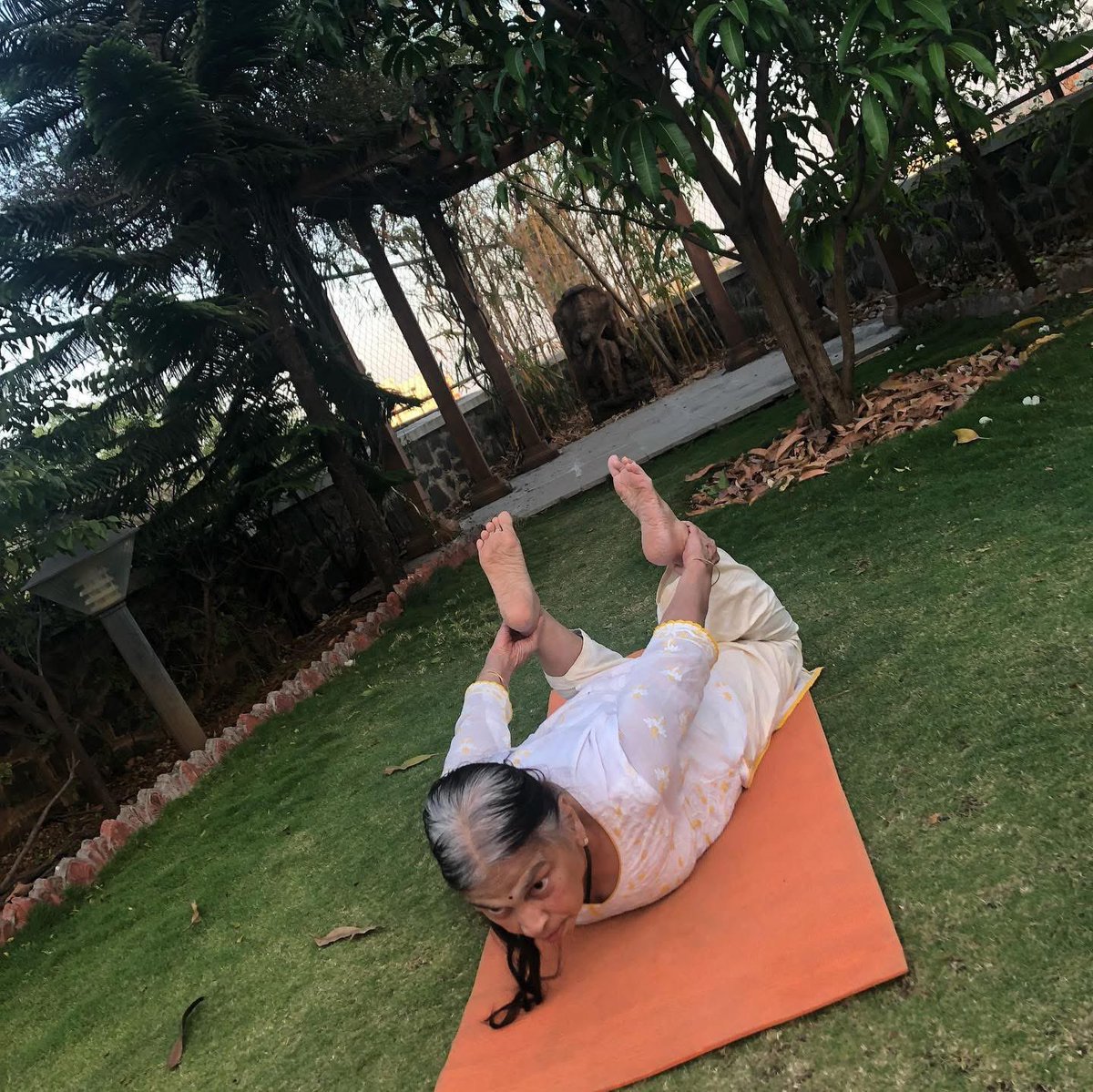
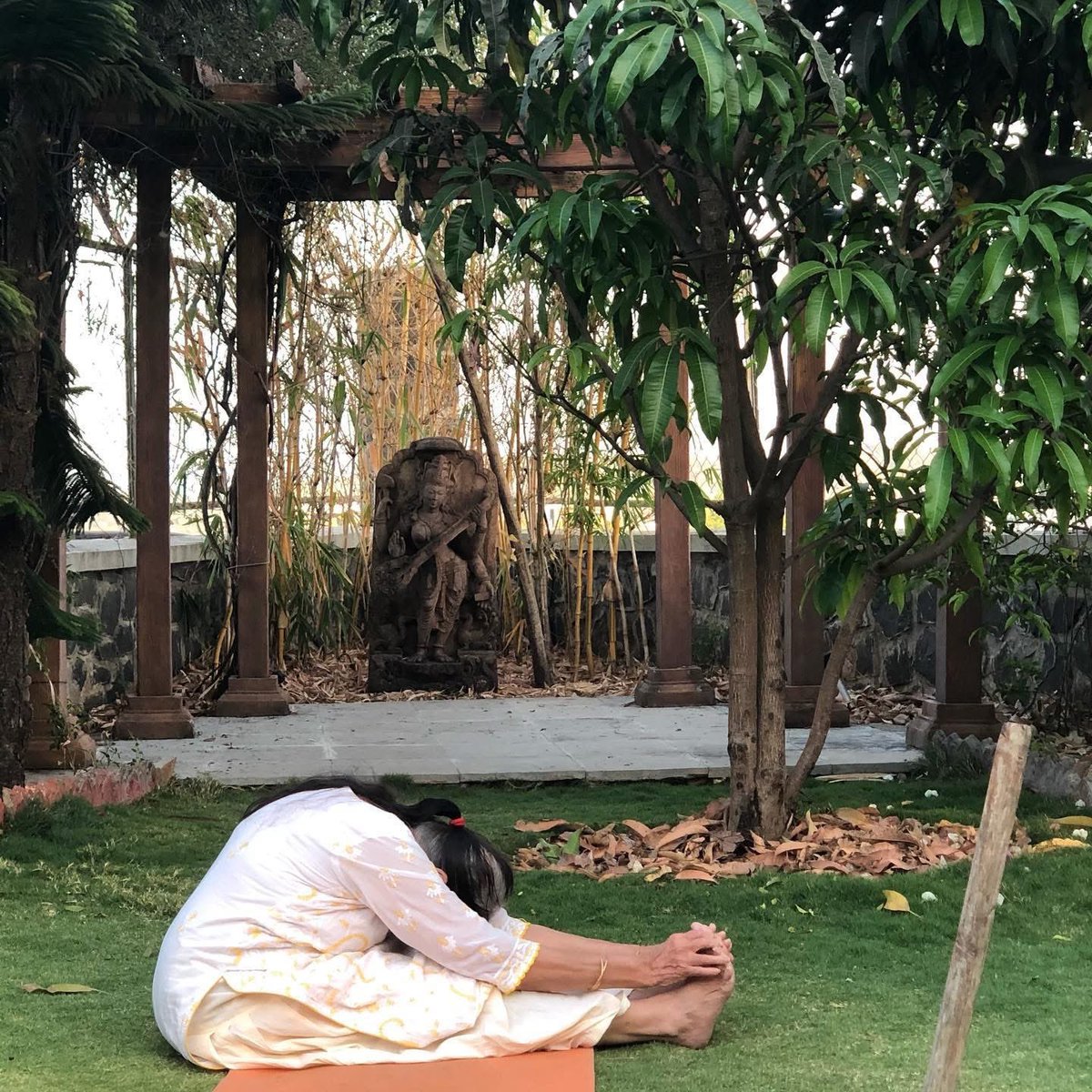
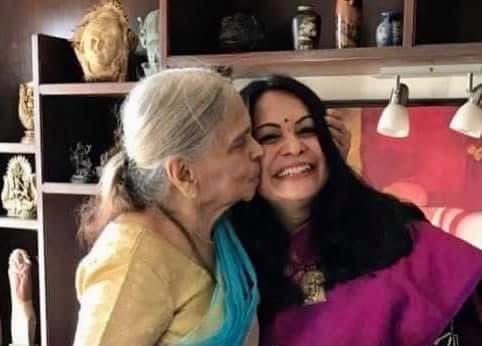


#Longread The enduring charm of govt jobs appears to have waned in the past few decades as the nature of responsibilities expands in a new competitive economy.Working with a state-owned bank no longer means being in a cushy 9-5 job.
Read @ThePrintIndia
https://t.co/gRXtD8QjLn

Wrote a #LongRead for Independence Day (amid Internet slowdowns, a blocked X, and the descent of civil liberties) – on the country's first decade, and the fight for East Bengal.
Two partitions: polemics, purges, and Pakistan's first opposition party.
https://t.co/9aM9nyZjvJ


#LongRead: I was a kid when I first heard of enforced disappearances in Balochistan. I was 18 when one of my classmates was abducted from campus. He was released later, but that one incident shook me to the core. I wrote this not with words but emotions.
https://t.co/PfY8rT6J3w


For anyone looking for a #LongRead, check out our interactive, interstellar journey through the life and death of planetary systems. Perfect to read between #SuperBowl commercials, perhaps? https://t.co/OSRARyiuoG

Our #LongRead on this year's #ChemNobel is live! @robinson_julia managed to speak to Louis Brus and Moungi Bawendi for our feature. [1/7] https://t.co/e92CuuRdB7

Here is my promised #promotional #longread on @AnomalousMatter's Diabolical Machines. A new #onchain generative art project that has just reached the final day of it's @doodles' #GenesisBox style bucket auction:
The live auction currently resides at: https://t.co/Reh5Zd7ojH

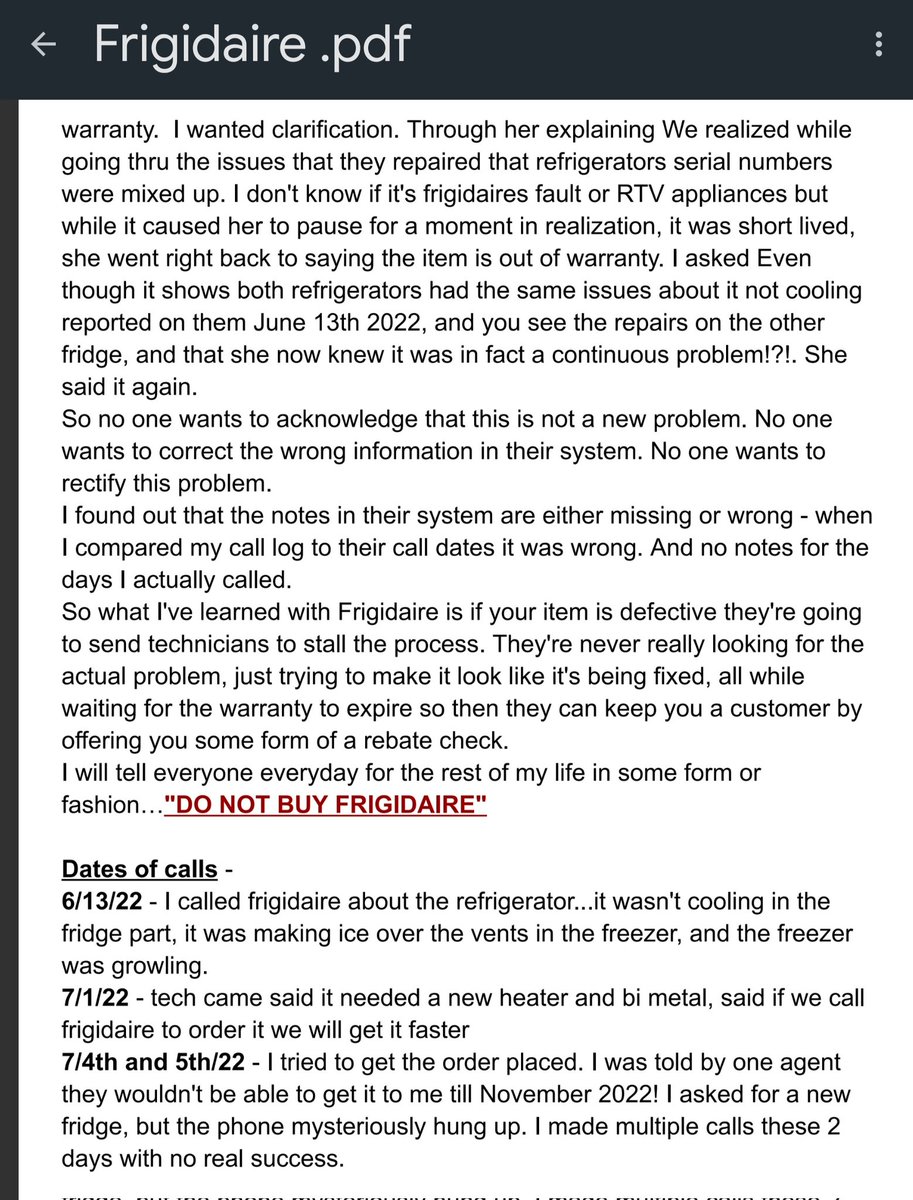
#longread #pauseandtakeamomenttoread #Retweet #repost and make sure everyone knows "DO NOT BUY FRIGIDAIRE" #dontbuyfrigidaire or their affiliates Electrolux, Kelvinator, white-westinghouse, Gibson & Tappan - simply because they affiliate with Frigidaire and their crooked ways!
#longread #pauseandtakeamomenttoread #Retweet #repost and make sure everyone knows "DO NOT BUY FRIGIDAIRE" #dontbuyfrigidaire or their affiliates Electrolux, Kelvinator, white-westinghouse, Gibson & Tappan - simply because they affiliate with Frigidaire and their crooked ways!


Hoe dit rustige dorp in één klap groot nieuws werd: ‘Denk dat we levens hebben gered’ #reconsructie #longread https://t.co/N0VLV4imi2

#Longread über einen jungen Mann aus #Dresden, der 60.000 Euro für zehn Zentimeter längere Beine ausgibt. Krasse und sehr lesenswerte Geschichte von @TimRubenWeimer. https://t.co/asImyk9xkv via @freie_presse

The recent T2T #genome sequencing achievement and #longread sequencing workshop @jacksonlab got me thinking about current long read research capabilities and potential #clinical applications, e.g. #RareDisease https://t.co/zdQnQrT5rO

Me & @Komi_Tea have a #longread in @thedailybeast on Cancel Culture: https://t.co/f5g8jOxGua I don't love the term either, but it stands for something very real, & giving up the term leaves most Americans out of the conversation.

Join us for a free webinar on #linkedread #NGS on @illumina instruments. https://t.co/gyjM02HuXL
#denovo #genomeassembly #longread #sequencing

Last Seen Hashtags on Sotwe
Coac2025P2
Seen from Austria
wedgiegirl
Seen from Spain
Azurite
Seen from United States
𝕌𝕊𝕎𝔸ℤ𝕀_ℙ𝕆ℝℕ𝔹𝕆𝕏
Seen from United States
جمعتكم_مباركة_و_شرفكم_مفشوخ
Seen from Denmark
نيج-عراقي
Seen from Germany
forsakennsfw
Seen from Japan
도태남
Seen from Korea
ipcam
Seen from United States
Daha17
Seen from Italy
Trends for you
Most Popular Users

Elon Musk 
@elonmusk
239.7M followers

Barack Obama
@barackobama
118.6M followers

Cristiano Ronaldo
@cristiano
114.3M followers

Donald J. Trump
@realdonaldtrump
111.7M followers

Narendra Modi
@narendramodi
106.9M followers

Rihanna
@rihanna
98.6M followers

NASA
@nasa
92.1M followers

Justin Bieber
@justinbieber
91.7M followers

KATY PERRY
@katyperry
89.9M followers

Taylor Swift
@taylorswift13
83.9M followers

Lady Gaga
@ladygaga
75.4M followers

Virat Kohli
@imvkohli
73.3M followers

Kim Kardashian
@kimkardashian
70.8M followers

YouTube
@youtube
68.6M followers

Neymar Jr
@neymarjr
66.3M followers

Bill Gates
@billgates
65.1M followers

Selena Gomez
@selenagomez
63M followers

The Ellen Show
@theellenshow
62.1M followers

CNN
@cnn
61.7M followers

X
@x
60.6M followers