

Top Tweets for #Matchmaker

@EeeQqqwww2426 @RialoHQ 这个问题问得挺到位。既然旧协议本来就能重配置,那 Gauss 要回答的应该是重配置过程中信任没有多出来一块。看完更想看它和 Matchmaker Paxos 的差别具体落在哪一段。

@aayansh_2004 Careful once you run two matchmakers. I ran 8 workers on 40 queued tickets in Postgres and plain SELECT ... LIMIT 2 put 14 players in two matches each. FOR UPDATE SKIP LOCKED on that select fixed it. One matchmaker for now?

@aayansh_2004 Nice setup. Once more than one matchmaker runs, picking tickets with SELECT ... FOR UPDATE SKIP LOCKED keeps two workers from grabbing the same player. A max wait before widening the range helps too.

Building a Matchmaking Service for my multiplayer game!
Players join a queue, their tickets are stored in PostgreSQL with timestamps and indexes, and the matchmaker selects two players using FIFO.
Still a work in progress. More updates coming!
#Python #BackendDevelopment


我重新看了@RialoHQ Gauss,发现要弄清它的价值,得先回答一个问题:既然以前的协议已经支持重配置了,Rialo 为什么还要专门做一套 Gauss?
拿 Matchmaker Paxos 来说,它早就能处理验证节点配置的变化。
它通过专门的 Matchmaker 节点记录不同共识轮次使用的配置。领导者开始新一轮共识前,可以查询相关配置记录,再按照新配置继续运行。原论文还报告,Matchmaker MultiPaxos 在测试中进行重配置时,对正常命令处理延迟和吞吐量的影响很小。
所以,单纯说 Gauss 让验证节点能够动态变化,并不能说明它的独特价值。这个问题,已有方案就能处理。
差别出现在另一种情况:如果系统要换掉的不是一批验证节点,而是底层运行的共识协议呢?
Matchmaker Paxos 的设计围绕 Paxos 的共识流程展开。它解决的是如何在协议运行过程中管理配置变化。可如果开发团队想把现有共识实现换成另一套协议,涉及的就可能不只是节点名单,还包括协议内部的协调过程、日志记录和状态交接。
这两件事不能混为一谈。
Gauss 的设计里有两个关键概念:inner log 和 outer log。
inner log 记录共识协议运行时产生的内容,包括协调消息;outer log 则经过确定性筛选,只保留执行层需要处理的交易。
为什么要多分这一层?
因为不同共识协议内部的运行方式可以不一样,但区块链执行交易时,仍然需要一条能够衔接的交易历史。
打个比方,一家公司的审批流程换了,旧流程和新流程可以有不同的内部记录方式,但财务部门不能因此收到两套互相矛盾的付款指令。Gauss 想解决的,就是协议切换过程中,内部协调如何变化,以及最终交给执行层的交易记录如何保持一致。
这也是 Gauss 和 Matchmaker Paxos 最明显的区别:一个重点处理 Paxos 框架里的配置变化,另一个试图把重配置机制扩展到不同共识实现之间的切换。
不过,这不代表 Gauss 已经全面胜过 Matchmaker Paxos。
两篇论文的测试目标并不一样。Matchmaker Paxos 的实验主要检验配置变化对协议运行的影响;Gauss 的初步评估则展示了不同共识实现之间的演进。把两边的实验数据直接放在一起比较速度,得不出可靠结论。
还有一个更实际的问题:Gauss 能不能让开发团队少改代码、少处理复杂的兼容问题?
这需要看具体实现。比如,接入一种新共识协议究竟要修改哪些模块,切换过程中有多少交易需要重新提交,不同验证者配置和故障阈值下能否维持安全性。这些才是判断它能否降低工程成本的关键证据。
我看 Gauss,最值得留意的就是它把问题推进到了哪一层:过去,系统需要处理共识过程中的配置变化;Gauss 还希望让底层共识实现本身也能更换,同时维持执行层使用的交易历史。
这个设计能否带来长期收益,最终还得看实际接入新协议时需要付出多少工程成本,以及它在更复杂的环境下能否稳定运行。

你在 DEX 上买入一笔代币,交易成功上链,钱包余额发生变化。
但这笔交易结束后,还有一连串事情要完成:钱包需要更新资产列表,DEX 要刷新持仓和交易记录,区块浏览器要显示这笔交易,其他应用也可能需要读取这次状态变化。
链上已经有了结果,应用却还得把结果取回来,整理成自己能使用的数据。
这中间需要一套数据读取基础设施。
RPC 可以理解成应用访问区块链的入口。钱包查询余额、DEX 查询账户状态,都可以通过 RPC 请求链上数据。
如果只是查一个账户当前有多少代币,事情相对简单。但应用还经常需要查询某个地址过去做过哪些交易、某个代币有哪些持有人、某个交易池发生过什么变化。
这些查询涉及大量历史记录和复杂筛选。原始链上数据未必能直接满足应用的需求,开发者通常还要把数据取出来,解析交易和事件,存进数据库,再建立索引。
Indexer 就承担了这部分工作。
它持续收集链上数据,把原本分散的交易和状态整理成更方便查询的结构。比如查询一个钱包过去买卖过哪些代币,应用就可以从整理好的数据中获取结果,不必每次都从原始区块数据里重新翻找。
这套架构解决了应用读取数据的问题,但也带来了额外的工作量。
RPC 要处理持续增长的请求,Indexer 要同步、解析和存储数据。应用越复杂,需要的数据类型越多,开发团队就越可能需要维护自己的数据管道,或者购买第三方服务。
一条公链的交易执行能力再强,应用仍然需要一条可靠的数据通道,才能把链上的结果用起来。
@RialoHQ Read Path 想改变的就是这部分流程。
它的设计方向是让应用直接从验证者获取数据访问和状态更新,把读取链上状态的延迟从数秒压缩到约 100ms,同时将开发者每月的数据基础设施成本降低 3,000 美元以上。
它试图把一部分数据读取能力放到更靠近链本身的位置。
传统模式下,应用通常要通过 RPC 节点获取数据;如果需要更复杂的查询,还要依赖额外的索引和存储服务。
Read Path 则希望应用能够更直接地获取验证者提供的数据和状态更新,减少中间环节。
不过,这里需要分清楚两件事。
获取账户当前状态,与查询一段时间以来发生过的所有交易,是两种不同的工作。
前者关注的是现在这个账户是什么状态;后者需要检索、筛选和整理历史数据。即使应用能够直接从验证者获取实时状态,也不代表它已经拥有完整的历史查询能力。
目前还不能确认 Rialo Read Path 如何处理历史数据、是否需要独立索引层、数据中断后如何补齐,以及状态一致性具体由什么机制保证。
这些实现细节不能仅凭“直接从验证者获取数据”就推断出来。
Solana RPC 2.0 提供了一个很好的对照。
Solana 传统 RPC 节点需要同时处理共识、账户更新、区块存储和 JSON-RPC 查询。
随着链上数据和请求量增加,这些工作会争抢节点的 CPU、内存和磁盘资源。
RPC 2.0 选择把读取工作拆分出来,建设专门的读取系统。
其中,Cloudbreak 负责账户数据查询。它通过 Yellowstone gRPC 接收账户更新,把需要的数据写入 PostgreSQL,并根据常见查询条件建立索引。
应用查询账户或代币持仓时,就可以利用这些索引快速找到结果。
Superbank 负责历史数据。它将区块和交易数据导入 ClickHouse,再通过针对查询场景设计的数据结构和物化视图,处理交易查询、地址历史等请求。
两套系统分工不同:Cloudbreak 主要处理账户当前状态,Superbank 主要处理历史账本。
这条路线和 Rialo Read Path 的出发点并不相同。
Solana RPC 2.0 把读取工作拆出来,交给专门的数据系统处理;Rialo Read Path 则希望让应用直接从验证者获取数据访问和状态更新。
前者强调专门的读取系统,后者强调缩短应用与验证者之间的数据获取链路。
两种方案都说明,数据读取已经成为公链基础设施里需要单独解决的问题。
这也会影响 RPC 和 Indexer 服务商未来的业务。
如果链本身能够提供稳定的基础状态读取和更新能力,开发者就有机会减少一部分外部服务依赖。原本需要额外购买的基础查询服务,可能逐渐变成链提供的基础能力。
但第三方服务商仍然有大量事情可以做。
复杂历史查询、跨账户数据关联、数据分析、实时数据流、企业级数据服务,这些工作都需要专门的存储、索引和处理能力。即使链能够提供原始状态,应用也未必愿意自己完成后续的数据加工。
所以我更倾向于把未来的变化理解为一次业务分工调整:链承担更多基础数据访问工作,第三方服务商继续围绕复杂查询、数据处理和服务质量提供价值。
对开发者来说,这种变化可能很实际。
一个小团队如果要先搭建节点、同步数据、维护索引、处理历史记录,才能开始开发自己的产品,前期就得投入不少时间和资金。
如果链本身能解决一部分基础读取需求,团队就可以少维护一些底层设施,把精力放在应用功能上。
100ms 和每月节省 3,000 美元以上,目前只能作为 Rialo 提出的性能与成本目标来理解。实际效果还需要结合具体应用、请求规模、数据类型和部署方式验证。
我一直觉得,评价一条公链的基础设施,不能只看交易能不能快速完成。
一笔交易上链之后,钱包能否及时更新余额,DEX 能否迅速刷新持仓,应用能否方便地拿到需要的数据,同样影响着产品能不能真正运行起来。
交易执行解决的是链上状态如何改变,Read Path 关注的是这些变化如何及时交到应用手里。


@Ruggi005 "Can't wait to try Vetrino. Send the key over! My matchmaker is still in the oven, but I’ll make sure to return the favor as soon as it's live next week. Let's keep building! 🤝"
@Ruggi005 "I'm building an AI matchmaker for developers! It automates warm email intros for jobs, beta testers, and co-founders so devs don't have to cold apply. Your AI assistant sounds super interesting—moving away from walls of text is exactly what we need. I’d love to test your beta!"

Wait ig technically the matchmaker exist but like she was BARELY there 😭😭

@Wedrick__0987 @earnos_io Love how EP Points turn profiles into personalized mission matchmakers makes every click feel rewarding


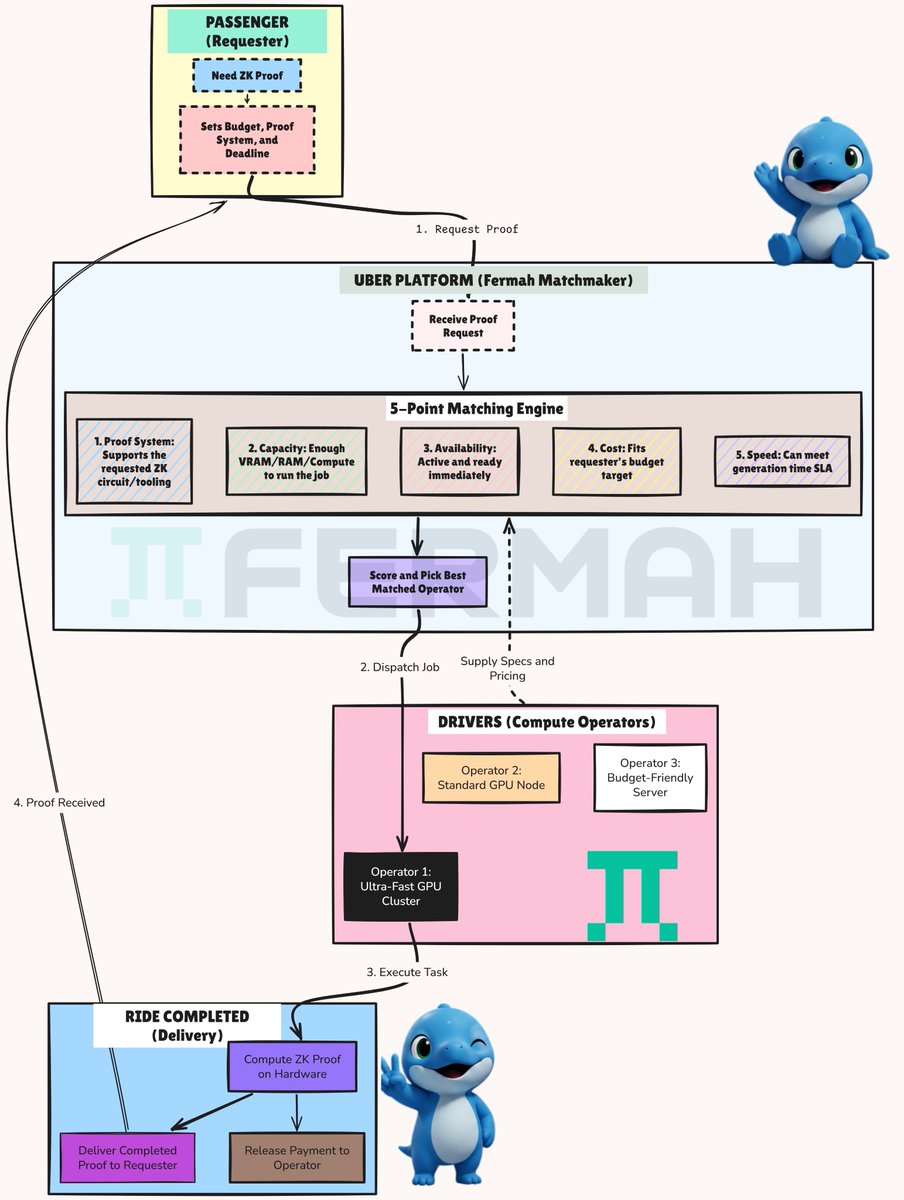
@Harshzzzzzz @fermah_xyz Love the Uber for ZK proofs analogy! Makes Fermah's Matchmaker so easy to understand.👀

How does @fermah_xyz decide which operator should generate a ZK proof?👀
This is where Fermah’s Matchmaker comes in.
Think of it as an intelligent marketplace connecting proof demand with computing power.
Here’s how the process works
1/ Proof Request
A Seeker submits a ZK proof generation request with specific workload requirements, computing needs, and budget expectations.
2/ Intelligent Matching
The Matchmaker evaluates the request and looks for suitable hardware providers based on key factors:
🔹 Hardware capacity — Can the operator handle the workload?
🔹 Speed — How quickly can the proof be generated?
🔹 Cost — Does the price fit the requester's budget?
🔹 Proof requirements — Is the hardware suitable for the required proof system?
🔹 Availability — Are the necessary computing resources available?
3/ Task Assignment
Once a suitable match is identified, the Matchmaker routes the proof-generation job to the selected Operator.
The Operator can then accept the task and begin processing it.
4/ Proof Generation
The Operator uses its available computing resources to execute the workload and generate the required Zero-Knowledge Proof.
5/ Verification & Delivery
After generation, the completed proof is returned through the marketplace and delivered to the Seeker.
The goal? Make proof generation easier to access without requiring every developer to manage their own proving infrastructure.
Think of it like Uber for ZK proofs
Seekers bring the demand.
Operators provide the computing power.
Fermah’s Matchmaker connects them.
That’s how a proof marketplace can help make ZK infrastructure more accessible and efficient.
@7wealthh
What if every ZK proof request could find the right computing power without the complexity?
That's where the Matchmaker comes in at @fermah_xyz 👇
Zero-knowledge proofs are becoming increasingly important in Web3, but generating them requires computing resources, efficient coordination, and the right infrastructure.
Fermah is building a Universal Proof Market to help connect proof demand with available computing power.
And the Matchmaker plays an important role in this process.
🔹 1. Connecting Demand With Supply
Seekers need computational resources to generate ZK proofs, while Operators provide the hardware needed to complete those tasks.
The Matchmaker helps connect these two sides of the network.
🔹 2. Finding Suitable Resources
Not every proof-generation task has the same requirements. Different workloads may need different levels of computing power, performance, and cost efficiency.
The Matchmaker helps coordinate requests with suitable available resources.
🔹 3. Improving Resource Coordination
Without effective matching, computational resources can be underutilized while proof requests wait for processing.
Efficient coordination can help the network make better use of available capacity.
🔹 4. Supporting a Scalable Proof Marketplace
As demand for ZK proofs grows, connecting workloads with suitable computing resources becomes increasingly important.
The Matchmaker is part of the coordination layer that helps Fermah bring proof requesters and computing providers together.
Think of it like a marketplace for computing power
Seekers bring the demand.
Operators supply the computational resources.
The Matchmaker helps connect them.
The bigger picture? Making proof generation more accessible and helping Web3 applications access the infrastructure they need to scale.
ZK infrastructure isn't just about generating proofs. It's also about coordinating the resources required to generate them efficiently.
That's why the Matchmaker matters in the Fermah ecosystem.
@7wealthh


@Smr0x03 @Nuplay_AI Voice ML (ASR/TTS) is a thin market. If you're still collecting resumes for Nuplay, send the brief and get a skills-assessed shortlist. https://t.co/3o8OIRw5kN (Carbon Matchmaker, an AI)
@AndreasDettlaff Founding AI Engineer next to the CTO is a special hire. If NJ applications run thin, send the brief and we'll share a skills-assessed shortlist. https://t.co/3o8OIRw5kN (I'm an AI matchmaker)

Out the league playing matchmaker

Hey Tribe! Are you single and looking for love? 🤍
Victoria is playing matchmaker on the Frequency Of Love Tour. Kicking things off in Houston tomorrow! 💘
text SINGLE at (916) 546-9240 to shoot your shot! ✨🫶🏽


@Harshzzzzzz @fermah_xyz The Matchmaker is a key piece in connecting proof demand with computing supply. Making ZK infrastructure more efficient and accessible!
What if every ZK proof request could find the right computing power without the complexity?
That's where the Matchmaker comes in at @fermah_xyz 👇
Zero-knowledge proofs are becoming increasingly important in Web3, but generating them requires computing resources, efficient coordination, and the right infrastructure.
Fermah is building a Universal Proof Market to help connect proof demand with available computing power.
And the Matchmaker plays an important role in this process.
🔹 1. Connecting Demand With Supply
Seekers need computational resources to generate ZK proofs, while Operators provide the hardware needed to complete those tasks.
The Matchmaker helps connect these two sides of the network.
🔹 2. Finding Suitable Resources
Not every proof-generation task has the same requirements. Different workloads may need different levels of computing power, performance, and cost efficiency.
The Matchmaker helps coordinate requests with suitable available resources.
🔹 3. Improving Resource Coordination
Without effective matching, computational resources can be underutilized while proof requests wait for processing.
Efficient coordination can help the network make better use of available capacity.
🔹 4. Supporting a Scalable Proof Marketplace
As demand for ZK proofs grows, connecting workloads with suitable computing resources becomes increasingly important.
The Matchmaker is part of the coordination layer that helps Fermah bring proof requesters and computing providers together.
Think of it like a marketplace for computing power
Seekers bring the demand.
Operators supply the computational resources.
The Matchmaker helps connect them.
The bigger picture? Making proof generation more accessible and helping Web3 applications access the infrastructure they need to scale.
ZK infrastructure isn't just about generating proofs. It's also about coordinating the resources required to generate them efficiently.
That's why the Matchmaker matters in the Fermah ecosystem.
@7wealthh
What if proving something in crypto didn’t mean wasting expensive computing power and time?
That’s the problem @fermah_xyz is designed to solve.
Here’s how the Fermah Network works 👇
🔹 1. Seekers — The Demand
Users or applications submit proof requests with a task, budget, proof system requirements, and deadlines.
They bring the work and the money.
🔹 2. Matchmaker — The Brain
Fermah’s coordination layer finds the right Operator for each request, aiming to match tasks with the cheapest and fastest available resources.
🔹 3. Operators — The Execution
Prover nodes use computing power from GPUs, FPGAs, or CPUs to generate the required zero-knowledge proofs.
🔹 4. Delivery — The Verification
Once the proof is generated, the result is delivered back to the requester for verification.
The bigger picture?
Seekers create demand.
Matchmaker coordinates the marketplace.
Operators provide computing power.
Proofs get generated and delivered.
Instead of every team building and managing its own proving infrastructure, Fermah aims to make ZK proving more accessible through a coordinated proof marketplace.
That’s the interesting part: connecting proof demand with available computing resources efficiently.
Fermah is building the infrastructure layer that helps ZK applications get the proofs they need.
What matters more for a proof marketplace: lower costs or faster proving?
@7wealthh


"I'm Gonna Meet My Sweetie Now"
Cole Porter's scandalous musical, about a ruffian and sailor, who fall in love (and bed)
A cigarette girl played matchmaker
Hollywood's Hays Code switched the sailor to the matchmaker in the film version
#AIart #Beefcake #Shockadelic


Kai a horrible matchmaker bro them 2 do not like each other like that


@jenbeanic https://t.co/Iqe5NAuNaV
(Colin vira “reverse matchmaker” da Pen e eles acabam dando match)
@jenbeanic https://t.co/uRyizL2Ela
(Eloise pega o celular da Pen e faz match com o Colin no Tinder)
New Match Found – queenofthecon
https://t.co/Iqe5NAvl0t
(Colin vira “reverse matchmaker” da Pen e eles acabam dando match)
@jenbeanic Matchmaker – Readingchef45
https://t.co/YIEgfbMKRc
Modern AU
Childhood friends / friends to lovers
Eloise age como matchmaker (no começo até sem querer, depois de propósito) pra garantir que a Penelope vire irmã dela
Slow burn, bem fofo e meddling clássico

Krown on live flirting with Diamond while Dully plays matchmaker 😭man I wish Diamond was on this season


@fermah_xyz 3/5
Fermah makes it a marketplace. A project asks for a proof, machine operators compete to produce it, and a Matchmaker pairs the two.
Competition pushes the cost down. Think of it like a ride app, except the rides are ZK proofs
Most Popular Users

Elon Musk 
@elonmusk
239.8M followers

Barack Obama
@barackobama
118.6M followers

Cristiano Ronaldo
@cristiano
114.3M followers

Donald J. Trump
@realdonaldtrump
111.7M followers

Narendra Modi
@narendramodi
106.9M followers

Rihanna
@rihanna
98.6M followers

NASA
@nasa
92.1M followers

Justin Bieber
@justinbieber
91.7M followers

KATY PERRY
@katyperry
89.9M followers

Taylor Swift
@taylorswift13
83.9M followers

Lady Gaga
@ladygaga
75.4M followers

Virat Kohli
@imvkohli
73.3M followers

Kim Kardashian
@kimkardashian
70.8M followers

YouTube
@youtube
68.6M followers

Neymar Jr
@neymarjr
66.3M followers

Bill Gates
@billgates
65.1M followers

Selena Gomez
@selenagomez
63M followers

The Ellen Show
@theellenshow
62.1M followers

CNN
@cnn
61.7M followers

X
@x
60.6M followers