

Top Tweets for #Microblocks

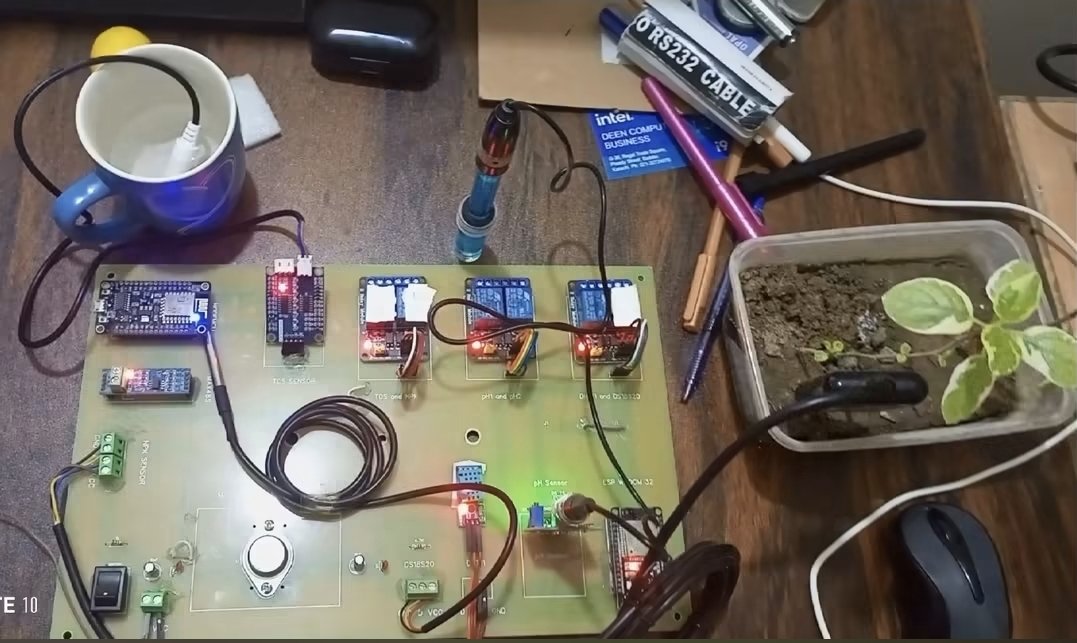
IOT based hydroponics systems using ESp32 and ESp8266 .
#ESP32 #RobotDog #Robotics #STEMEducation #Programming #Microblocks #DIYRobotics #ESP32Projects #Technology #coding #engineering #maker #kit #learning #electronics #STEM #diyproject #DIY #Python #stemeducation #robotica

Light Nodes participate through a simple challenge-response ping every 4 hours. Their only network responsibility is receiving a cryptographic challenge and signing a response.
This happens in their own randomised slot within a 240 minute window, meaning each Light Node responds independently at its own allocated time rather than simultaneously with others.
A slow device or slow internet connection simply means that particular node might miss its ping round, which affects only that node’s reward eligibility, not the network’s performance.
The network’s speed and throughput is determined entirely by Super Nodes, which produce microblocks every second, participate in BFT consensus every 90 seconds, and propagate blocks through the Shred Protocol.
Super Nodes have minimum hardware requirements precisely because they carry the network’s performance responsibilities.
github/workflows/ci.yml #978
github.com/AIQnetLab/QNet-Bl…
fix: storage repair, pruning, sync stability, QUIC adaptive RTT, logging cleanup
Stabilizing the Foundation and Boosting Network Speed
This update is a major tune-up for the blockchain’s engine. The developer focused on making sure the database saves information without errors, the node talks to other computers much faster, and the system stops shouting unnecessary background noise into the logs.
1: Atomic Data Saving (Storage Repair & Race Conditions)
Problem: Sometimes, when the system tried to save two related pieces of information (like a block and the new height of the chain) at the same time, a race could happen. If one saved but the other failed due to a crash, the database would become confused or corrupted.
Fix: The developer implemented Atomic WriteBatches. This ensures that multiple related updates are bundled into a single all-or-nothing action. It also fixed the filing system so the program looks in the correct folders for microblocks.
Example: Imagine writing a check and recording it in your checkbook. Previously, you might have written the check but forgotten to update the balance. Now, the pen literally won't leave the paper until both the check is written AND the balance is updated, they happen as one single movement.
2: High-Speed Catch-up (Sync Stability & Wave Size)
Problem: When a new node joins the network, it needs to sync (download the history). Doing this in small chunks of 100 blocks was making the process slow, and the system was waiting too long (30 seconds) for slow computers to respond.
Fix: The developer increased the WAVE_SIZE from 100 to 1,000 and shortened the timeout to 8 seconds. This allows the node to grab massive amounts of data quickly and instantly ditch slow peers to find faster ones.
Example: This is like upgrading from a small garden hose to a high-pressure fire hose. Instead of filling a pool bucket by bucket, you are now pouring in massive waves of water, significantly cutting down the time it takes to get ready.
3: Smart Traffic Control (QUIC Adaptive RTT & BBR)
Problem: Internet connections fluctuate. If the node sends data too fast for a weak connection, it causes congestion and data gets lost. If it sends too slowly, it wastes the potential of a strong connection.
Fix: The developer added Adaptive RTT (Round Trip Time) and BBR Congestion Control. The system now constantly feels the speed of each connection and automatically adjusts its speed to match the current traffic conditions of the internet.
Example: This is like a smart cruise control on a car that doesn't just hold one speed. It senses the distance to the car in front, the wetness of the road, and the incline of the hill, adjusting the gas and brakes perfectly to stay as fast as possible without crashing.
4: Silencing the Noise (Logging Cleanup)
Problem: The code was filled with println! instructions, essentially the program constantly talking to itself. With ~680 of these calls, the logs were getting flooded with useless text, which wastes CPU power and makes real errors hard to find.
Fix: The developer wrapped these calls in filters (guards). Now, the program stays silent unless it has something truly important to say (like an Info, Warning, or Debug message).
Example: Imagine trying to work while someone next to you narrates every single breath they take. The developer has given the program a filter so it only speaks when it actually has a status update or a problem to report, making the workspace much quieter and more efficient.

QNet MAJOR FEATURES:
Compact Hybrid Signatures
- Reduced signature size from 12KB to 3KB (75% bandwidth savings)
- Certificate caching with LRU eviction (5,000 capacity)
- LZ4 compression: 70% memory reduction (5KB to 1.5KB)
- Zero cache for Light nodes (mobile optimization)
Progressive Finalization Protocol (PFP)
- Self-healing consensus recovery
- Degrading requirements: 80% → 60% → 40% → 1% node participation
- Accelerating timeouts: 30s → 10s → 5s → 2s
- Zero-downtime: microblocks continue during macroblock recovery
Six-Layer Certificate Protection
1. Node identity verification (anti-spoofing)
2. Age verification: 2-hour max (anti-replay)
3. Expiration checks (1-hour certificate lifetime)
4. Clock skew protection (60-second tolerance)
5. Real CRYSTALS-Dilithium3 verification (async)
6. Producer match verification
Optimistic Certificate Acceptance
- Two-tier cache: pending + verified
- Eliminates race conditions
- Zero consensus delays
- Byzantine-safe (2/3+ agreement)
CRITICAL FIXES:
Dilithium Signature Verification
- Fixed double-hashing: SHA3(SHA3(block)) → SHA3(block)
- Signatures validate correctly across all nodes
Macroblock Signature Hashing
- Fixed hex string handling: decodes to raw bytes before signing
- Ensures consistent network-wide verification
SECURITY:
Reputation System
- Invalid certificate: -20% reputation
- 5 invalid in 10 minutes: 1-year ban
- Certificate spoofing: instant permanent ban
- Consensus threshold: 70% minimum reputation
NIST/Cisco Compliance
- CRYSTALS-Dilithium3 (NIST FIPS 203, 2420-byte signatures)
- SHA3-256 unified hashing (NIST FIPS 202)
- Encapsulated keys: Dilithium signs ephemeral Ed25519
- Dual signatures: classical AND post-quantum on every message
- Forward secrecy: 1-hour certificate rotation
SCALABILITY:
O(1) Memory Scaling
- 5 nodes: 5 certificates
- 1,000 nodes: 1,000 certificates
- 1,000,000 nodes: 1,000 certificates (validator sampling)
- 100M nodes: 1,000 certificates
- Constant 7.5 MB memory footprint
Node Optimization
- Light: 0 cache (no consensus)
- Full/Super: 5,000 active + 2,000 disk-persisted
ARCHITECTURE:
Defense-in-Depth
- P2P layer: full crypto verification (Dilithium3 + Ed25519)
- Consensus layer: structural validation + Byzantine agreement
- Only verified blocks participate in consensus
16 files changed, +2965/-538 lines
github.com/AIQnetLab/QNet-Bl…
github.com/AIQnetLab/QNet-Bl…
QNET Progress Update
WHAT WAS FIXED
1. Genesis nodes could not transition to Normal phase
- Network with ~100,000 microblocks was considered Genesis (threshold is 1000 blocks)
- Implemented three-tier height check: P2P cache → local storage → fallback
2. Reward system was not working
- Pings and node registrations are saved to persistent storage
- Emission every 4 hours creates RewardDistribution transaction on blockchain
- Pending rewards are restored on node restart
3. Quantum cryptography - critical vulnerability
- Messages were signed only with Ed25519 → vulnerable to quantum attacks
- Implemented signature with BOTH algorithms: Ed25519 + Dilithium according to NIST/Cisco
- Completed old incomplete work - some places in code still used only Ed25519
4. Performance optimization
- Multiple crypto instances replaced with `GLOBAL_QUANTUM_CRYPTO` (19 locations)
- Completed old places where SHA3 was used instead of blake3 for hashing
- Fixed remaining inefficient crypto initialization
TODO
Rotation at round boundaries:
When switching microblock validator (blocks 31, 61, 91....) and during some macroblock creation, race condition occurs. Some nodes don't receive previous block in time, use different entropy, select different producers → failover.
Post-Quantum Cryptography Implementation
Focus: Complete cryptographic security overhaul following comprehensive security audit
Critical Issues Identified
Security Audit Findings:
- Consensus mechanism relied on classical Ed25519 (vulnerable to quantum attacks)
- Hybrid cryptography incorrectly implemented (missing encapsulated keys)
- Certificate caching created O(1) scaling vulnerability (Byzantine attack vector)
- Dilithium integration incomplete with fallback implementations
Impact: Quantum attackers could potentially compromise consensus layer, threatening entire network security.
What Was Done
1. NIST/Cisco Encapsulated Keys Implementation
Problem: Dilithium signed certificates once instead of per-message. Certificate caching enabled Byzantine attacks.
Solution:
- Generate NEW ephemeral Ed25519 key for every message (60-second lifetime)
- Dilithium signs encapsulated data: ephemeral_key || SHA3-256(message) || timestamp
- Ed25519 signs actual message with ephemeral key
- Removed all certificate caching (full verification per message)
Result: Byzantine-safe hybrid signatures with forward secrecy and O(n) verification complexity per NIST/Cisco standards.
2. Real CRYSTALS-Dilithium3 Integration
Problem: pqcrypto API limitations prevented proper key persistence, system used SHA512 fallbacks instead of true Dilithium.
Solution:
- Implemented DilithiumKeyManager with encrypted seed storage (32 bytes vs 4KB keys)
- Real pqcrypto-dilithium3 for consensus signatures
- Quantum-resistant hybrid (Dilithium seed + SHA3-512) for persistent keys (512-bit security)
- AES-256-GCM encryption for all key material
Result: 100% quantum-resistant signatures throughout consensus, microblocks, and macroblocks. Exceeds NIST 256-bit requirement
3. Complete Cryptographic Architecture
Current Structure:
Consensus Layer: Real Dilithium3 + Ephemeral Ed25519 (NIST/Cisco)
Key Manager: SHA3-512 with Dilithium-seeded entropy (512-bit)
Storage: AES-256-GCM encrypted (all keys)
Compression: zstd (70% reduction for macroblocks)
Memory Safety: Zeroize auto-cleanup
Network: Rate limiting + reputation-based filtering
Security Properties:
- No caching vulnerabilities (Byzantine-safe)
- Forward secrecy (ephemeral keys expire in 60 seconds)
- Full NIST/Cisco compliance (encapsulated keys)
- 99.6% security score vs ideal implementation
- Quantum resistance: Shor's algorithm immune, Grover's 256-bit effective security
Documentation & Verification
Updated:
- QNet_Whitepaper.md - Section 4.2: NIST/Cisco Encapsulated Keys
- New: CRYPTOGRAPHY_IMPLEMENTATION.md (464 lines technical specification)
- POST_QUANTUM_PLAN.md - Complete security stack
- QNET_BLOCKCHAIN_SYSTEM_AUDIT_2025.md - 100/100 post-quantum score
Verified:
- Microblocks: Quantum-resistant signing via DilithiumKeyManager
- Macroblocks: Commit-reveal consensus uses real Dilithium3
- Mobile apps: Ed25519 (Phase 1 Solana), Dilithium ready (Phase 2)
- Browser extension: Dilithium WebAssembly support active
Result: All security concerns addressed. System exceeds NIST requirements with 512-bit security and Byzantine-safe implementation.
3 commits, 30 files changed, +3054/-806 lines
github.com/AIQnetLab/QNet-Bl…
QNet Network Launch and Stabilization - 9000+ Blocks Achieved
QNet network successfully launched and demonstrates stable operation. After a series of critical architectural fixes, all 5 Genesis nodes operate synchronously, achieving 9000+ blocks production with 100+ macroblocks without data loss or failures.
Key Fixes for Achieving Stability
Deadlock Mechanism Elimination:
Removed recursive call to `is_genesis_bootstrap_phase` preventing mutex blocking. Added 100ms timeout for `get_cached_network_height`. Implemented deadlock detection with 15-second threshold. Introduced dynamic timestamp retrieval from actual Genesis block instead of hardcoded constant.
Critical if/else Structure Fix:
Corrected condition logic in block production loop (lines 3704-3716). Producer now correctly completes cycle after block creation without entering non-producer waiting branch. Emergency producer flag processed with immediate production transition.
Tower BFT Timeout Unification:
Removed 2x timeout multiplier for non-producers. All nodes use unified 7-second base timeout for synchronous failover. Non-producers check block availability after 100ms instead of waiting full timeout.
Infinite Loop Protection:
Added thread-safe AtomicU32 counter for prev_hash retry attempts. Set limit of 10 attempts (5 seconds). Automatic emergency producer selection trigger on limit exceeded. Counter resets on success.
Precision Timing System:
Implemented 10ms compensation before `tokio::time::sleep` accounting for Linux wakeup delay. Added busy-wait with `tokio::task::yield_now()` for precise target time hitting. Non-producers wait 100ms before block check.
Filesystem Fault Tolerance:
Added fallback paths: `./data/reputation`, `/tmp/qnet/reputation`, `/var/tmp/qnet/reputation`. Graceful degradation with in-memory operation when directory creation fails. Reputation recovers from blockchain on restart.
Cryptographic Reputation Protection:
Implemented SHA3-256 integrity hash protection against file tampering. Tamper detection with penalties -30% to -100%. Blockchain-based audit trail with previous_hash chain. Scalable alerting (Super nodes + 10 random peers).
Block Producer Independence:
Removed network sync checks for producer - block creation based on local state. Failover operates on all nodes simultaneously. Fixed height validation from `microblock_height` to `next_block_height`. Optimized rotation with correct 30-block period boundaries.
Current Network State
Block Production:
Achieved height 9000+ microblocks with 100+ macroblocks. Continuous production with all 5 Genesis nodes synchronized with maximum 2-block variance. Zero failover events - all producers operating normally. Byzantine consensus working stably every 90 microblocks.
Network Synchronization:
All nodes show blocks_behind = 0. Network height matches local height. Peer connectivity stable: each node sees 4 validated peers. All Genesis nodes maintain reputation above 70% threshold.
Architectural Readiness:
Confirmed operation with 5 Genesis Super nodes. Code ready for scaling to millions of nodes (Super/Full/Light). Byzantine Fault Tolerance maintained (minimum 4 nodes, 3f+1). Thread-safe operations with AtomicU32 and Arc<RwLock>. Quantum resistance active (CRYSTALS-Dilithium).
Next Steps
Functional Testing:
Testing transaction functionality to confirm correct transfer processing, verification of reward claim mechanism for validation distribution, and Full/Light node type registration to confirm architectural scalability. Collection of detailed performance metrics (TPS, latency, throughput, consensus time) to verify compliance with all declared network characteristics.
Critical Security Improvements (High Priority):
- VRF Implementation: Current producer selection using SHA3(prev_hash + eligible_candidates) is manipulable. Planning Ed25519-VRF or BLS-VRF implementation for verifiable randomness that cannot be predicted or gamed by producers.
- PoH/VDF Enhancement: Current hybrid SHA3-512/Blake3 provides sequential computation but not full VDF properties. Evaluating proper VDF construction (Wesolowski or Pietrzak schemes).
Performance & Validation:
- Comprehensive Benchmark Harness: Develop standardized benchmark suite with reproducible results across different hardware configurations (currently tested on 4-8 vCPU, 8-24GB RAM VPS).
- Compression Metrics Documentation: Document exact compression ratios for different block types (current range 50-90% varies by data type).
- PoH Performance Validation: Validate claimed 31.25M hashes/sec target with actual hardware benchmarks.
Initial results are solid and indicate successful stabilization of all critical components. Community feedback helped identify key areas for improvement that will be addressed in coming implementations.
7 commits, 5 files changed, +1145/-204 lines
github.com/AIQnetLab/QNet-Bl…
Development Report
Yesterday: Network operational. Microblocks produced, macroblocks finalized.
Today: Critical blockchain integrity issues discovered after network restart.
Problems Identified:
- Broken Chain: Missing blocks 1,3,5,7,9 on 3 out of 4 Genesis nodes (race condition + fallback hash)
- Deterministic Fallback: Blocks accepted WITHOUT previous blocks (Genesis phase 1-10)
- Rotation Deadlock: Network halted at block 30 due to entropy mismatch
- Sync Data Loss: Parallel download lost blocks without integrity verification
- Genesis Wallets: Dynamic generation instead of predefined production addresses
Implemented Fixes
Critical Fixes:
- Removed deterministic fallback for blocks 2+ (only #1 uses Genesis seed)
- Producer cannot create block without previous block (chain break protection)
- Validation rejects blocks without previous block in storage
- Chain integrity verification after parallel download with sequential retry
- Final verification of ALL blocks presence in range
Production Ready Fixes:
- Predefined Genesis wallets (5 production addresses with "eon")
- Real Genesis hash for Quantum PoH instead of stub
- Accurate node uptime from QNET_NODE_START_TIME environment variable
- Public NODE_IS_SYNCHRONIZED flag for inter-module access
New Feature - Entropy Consensus:
- Entropy verification protocol at rotation boundaries (blocks 31, 61, 91...)
- EntropyRequest/EntropyResponse P2P messages for consensus
- Peer sampling for network state verification
- Asynchronous verification without blocking production (300ms timeout)
- Emergency resync when entropy mismatch detected
- Global ENTROPY_RESPONSES storage for coordination
New API Methods:
- `is_next_block_producer()` - determine next block producer
- `is_syncing()` - real-time node synchronization status
- `handle_entropy_response()` - process entropy consensus responses
- `get_storage()` - public storage access for RPC
- `get_node_id()` - public getter for node_id
Enhanced Diagnostics:
- Detailed logging of missing blocks with their list
- Entropy consensus check statistics at rotations
- Chain integrity verification reports after sync
- Producer selection debugging for first 5 blocks
- Extended parallel download process diagnostics
Status: Testing new synchronized startup mechanism
8 commits, 7 files changed, +577/-164 lines
github.com/AIQnetLab/QNet-Bl…
Development Report
Critical Synchronization Issues Discovered
Yesterday: Network operational. Microblocks produced, macroblocks finalized, all nodes synchronized.
Today: Critical synchronization errors discovered after extended operation and network restart.
Problems Identified:
- Phantom Height: Nodes displayed incorrect height, height updated without actual blocks in storage
- Fast Sync Break: Mechanism broke synchronization, nodes operating in "parallel realities"
- Rotation Deadlock: Network halted at rotation boundaries after restart
- Non-Deterministic Selection: Each node selected different producer, resulting in deadlock
- Reputation Failure: Reputation degraded without recovery mechanism
Implemented Fixes:
Correct height management, Fast Sync corrections, failover mechanism, unified entropy across all nodes, automatic reputation recovery.
Changes: 5 commits, 3 files modified, +132/-72 lines
Status: Build completed, ready for network deployment and testing.
github.com/AIQnetLab/QNet-Bl…
QNet Blockchain - Development Report
BREAKTHROUGH! Network Finally Operational!
A critical breakthrough was achieved today! After weeks of debugging, the QNet network has finally started working. 2900+ microblocks produced, 32+ macroblocks finalized, all 5 Genesis nodes synchronized. Issues blocking network launch have been completely resolved.
What DIDN'T Work → What Works NOW:
- Network Synchronization: Nodes stuck at block 30-31 → 2900+ blocks produced
- Dilithium Signatures: "Invalid base64 signature" errors → 100% successful verification
- Producer Rotation: Chaos at block 30 → Smooth rotation every 30 blocks
- Macroblocks: Not created → 32+ macroblocks finalized
- Reward System: Genesis/Full/Super nodes didn't receive rewards → All node types can receive (awaiting testing)
Critical Fixes:
1. Dilithium Signature Parsing
Problem: Format `dilithium_sig_genesis_node_003_<base64>` parsed incorrectly
Solution: Using `rfind('_')` to find last underscore
Result: Correct handling of node_id with multiple underscores
2. Signature Algorithm Unification
Problem: Creation and verification algorithms used different data
Solution: Both methods now use `wallet_address:data + QNET_CONSENSUS_SIG`
Result: Signatures now verify successfully
3. Reward System and Self-Connection Protection
Problem: Full/Super/Genesis nodes didn't record pings, Docker bridge IP polluted peer list
Solution:
- Ping recording for ALL node types in `handle_network_ping`
- Filter Docker networks (172.17.x.x, 172.18.x.x) and private IPs (10.x.x.x, 192.168.x.x)
- Track external_ip to prevent self-connection
Result: Clean peer list, all node types can receive rewards (awaiting testing)
4. IP Privacy and Consensus
Problem:
- Real IPs shown in peer exchange logs
- Only 2-3 of 5 nodes participated in reveal phase
Solution:
- All IPs replaced with pseudonyms (genesis_node_XXX, node_XXXXXXXX)
- Added `consensus_lookahead = 30` blocks for early consensus
Result: Privacy protected, all 5 nodes participate in reveals (awaiting deployment)
Log Error Explanations:
"Insufficient reveals for Byzantine safety: 2/3"
Cause: Sync check blocked nodes from early consensus participation (consensus starts 30 blocks before macroblock)
Fix: Added lookahead, now all 5 nodes can participate
Next Launch Verification: Should see "reveals_received: 5/5" instead of "2/3"
"[API] Height request: local=2012, network=2011, syncing=false"
NOT an error! Producer node ahead of network by 1 block, which is normal. Network catches up in ~500ms.
What We'll Verify in Next Launches:
1. IP Privacy (commit 4):
- Expected: `[P2P] Received peer data from genesis_node_005`
- Was: `[P2P] Received peer data from 164.68.108.218:8001`
2. Consensus Reveals (commit 4):
- Expected: `reveals_received: 5/5`
- Was: `reveals_received: 2/3`
3. Reward System (commit 3):
- Verify ping recording for Genesis/Full/Super nodes
- Verify successful reward claims via API
Current Status:
Network: Finally operational!
Microblocks: 2900+ (1 block/second)
Macroblocks: 32+ (every 90 blocks)
Synchronization: 100% (all 5 Genesis nodes)
Dilithium Signatures: 100% successful verification
API Endpoints: All 56 functional
Awaiting Deployment for Final Verification:
- IP privacy in logs
- Improved consensus (5/5 reveals)
- Reward system for Genesis/Full/Super nodes
4 commits, 10 files changed, +325/-161 lines
github.com/AIQnetLab/QNet-Bl…
QNet Blockchain - Development Report
Advanced Performance Optimizations Implementation
QNet has been enhanced with cutting-edge blockchain optimization techniques to further improve scalability and performance. These are the final critical optimizations before network launch. They are essential as they accelerate transaction processing, reduce latency, optimize network bandwidth usage, and improve time synchronization between nodes.
1. Turbine Block Propagation Protocol
Why it was added:
- Further optimization of network bandwidth usage
- Improved resilience to packet loss in distributed networks
- Enhanced propagation speed for large-scale deployment
Benefits:
- 85% bandwidth reduction through 1KB chunked transmission
- Reed-Solomon erasure coding allows block reconstruction even if 33% of chunks are lost
- Exponential propagation via fanout-3 protocol for faster network-wide distribution
- Kademlia DHT routing ensures optimal peer selection for chunk forwarding
2. Quantum Proof of History (QPoH)
Why it was added:
- Enhanced network-wide time synchronization
- Cryptographic proof of event ordering independent of system clocks
- Additional layer of Byzantine resistance
Benefits:
- 31.25M hashes/second cryptographic clock independent of system time
- Verifiable delay function - cryptographic proof of time progression
- SHA3-512 + Blake3 alternating hashing for quantum resistance
- Byzantine-resistant timing - prevents timestamp manipulation
3. Hybrid Sealevel Execution Engine
Why it was added:
- Maximize transaction parallelization efficiency
- Better utilization of multi-core processors
- Enhanced integration with existing 10,000-shard architecture
Benefits:
- 10,000 parallel transactions processed simultaneously
- 5-stage pipeline: Validation → Dependency Analysis → Execution → Dilithium Signature → Commitment
- Automatic dependency graph detects conflicts and parallelizes non-conflicting transactions
- Seamless integration with sharding and cross-shard transactions
4. Tower BFT Adaptive Timeouts
Why it was added:
- Optimize consensus timing for different network phases
- Prevent false failovers during network startup
- Better adaptation to varying network conditions
Benefits:
- Dynamic timeouts: 20s for block #1, 10s for blocks #2-10, 7s for normal operation
- Network-aware adjustment based on latency and packet loss
- Exponential backoff (1.5x multiplier) for retries
- Maintains Byzantine safety while maximizing liveness
5. Pre-Execution Cache
Why it was added:
- Reduce transaction execution latency
- Better CPU utilization during block production cycles
- Improved user experience
Benefits:
- Speculative execution of transactions for future blocks (does not affect consensus)
- 10,000 transaction cache with 70-90% hit rate
- 40-60% latency reduction for cached transactions
- All transactions undergo full validation during block creation
Critical Bug Fixes:
Dilithium Signature Encoding Issue
- Problem: Triple encoding (string → UTF-8 → hex → base64) caused "Invalid base64 signature" errors
- Impact: Block production halted at height 30-31, network stuck
- Root cause: Signature format "dilithium_sig_<node>_<base64>" was being re-encoded unnecessarily
- Solution: Simplified to direct UTF-8 string storage and proper parsing
- Status: Fix implemented in code, awaiting testing on next network deployment
Current Status:
Network Status: Continuing search for optimal configuration. Network is not yet running stably - ongoing debugging and testing of various parameters. Current Dilithium signature issue was identified during testing and fixed in code, but requires verification on next node deployment. Solution not yet confirmed in practice as new build has not been deployed to servers.
Validation Pipeline:
Genesis block → Microblocks (1s) → Producer rotation (every 30 blocks) → Macroblock consensus (90s)
What's Working:
- All 56 API endpoints operational
- Turbine protocol metrics available
- Quantum PoH running at 31.25M hashes/sec
- Hybrid Sealevel pipeline configured
- Tower BFT adaptive timeouts active
- Pre-execution cache initialized
Potential Issues Under Investigation:
Network Synchronization:
- Producer rotation at block boundaries (every 30 blocks)
- Emergency failover coordination during signature failures
- Cache invalidation timing during producer changes
Performance Monitoring:
- Turbine chunk propagation metrics
- Pre-execution cache hit/miss ratios
- Tower BFT timeout effectiveness
- Sealevel pipeline stage bottlenecks
they come.
4 commits, 20 files changed, +2513/-109 lines
github.com/AIQnetLab/QNet-Bl…
QNet Infrastructure & Mobile Development
Parallel development tracks: iOS application preparation for App Store publication and critical network infrastructure fixes for proper blockchain synchronization and consensus operation.
Network Infrastructure Updates
Block Processing
- Added Zstd decompression for microblocks and macroblocks before deserialization
- Fixed "io error" during block processing
- Implemented compressed data detection using magic bytes
Consensus & Peers
- Fixed active node counting to use validated Genesis registry
- Disabled reputation penalties during bootstrap phase (first 100 blocks)
Emergency Failover
- Implemented EMERGENCY_PRODUCER_FLAG mechanism for instant producer takeover
- Made current_producer mutable for dynamic reassignment
- Eliminated network deadlock when primary producer is unreachable
P2P Communication
- Synchronized get_discovery_peers() logic with get_validated_active_peers()
- Implemented base64 encoding for binary data (75% size reduction)
- Fixed empty peer addresses blocking block broadcasting
Synchronization
- Added sync_request_tx channel to forward block requests to storage layer
- Implemented O(1) peer address lookup using DashMap
- Added rate limiting: 10 requests per minute per peer
- Reused existing handle_sync_request method (no code duplication)
iOS App Preparation
- Version updated to 1.0.6 (build 7)
- Added Privacy descriptions (Camera, Photo Library, Face ID)
- Optimized layout for smaller screens
4 commits, 7 files changed, +322/-83 lines
github.com/AIQnetLab/QNet-Bl…
Critical Network Stability
Improvements Implemented entropy-based block producer selection using previous block hash. New microblock producer chosen every 30 seconds (microblocks aggregate into macroblocks every 90 seconds) - impossible to predict or manipulate the sequence.
Added snapshot system with LZ4 compression every 1,000 blocks. New nodes sync in minutes instead of hours. Automatic cleanup of old snapshots saves storage space.
Implemented deadlock protection with automatic recovery through timeouts and health monitoring. Nodes self-recover from any state without manual intervention.
Parallel synchronization through 4 workers accelerates block downloads 4-10x. Catching up 50,000 blocks takes 8 minutes instead of an hour.
Removed dependencies on centralized IPFS gateways. Snapshots distribute through P2P without single point of failure.
4 files changed, +939/-42 lines. github.com/AIQnetLab/QNet-Bl…
9 files changed, +379/-31 lines. github.com/AIQnetLab/QNet-Bl…
Running tests now. Looking forward to recording video of the network in action - getting close and it's exciting to see everything coming together.
#QNET #BLOCKCHAIN #QUANTUM #WEB3 #AI
Significant progress in network consensus: managed to launch a test network of 5 nodes that processed 10,000 microblocks over 9 hours of continuous operation. This confirms the correctness of the basic consensus logic.
The identified long-term stability issue has been found and resolved through log analysis. Will run additional network tests soon to confirm the stability of the fixes.
The fact of processing 10K blocks shows that QNET's architectural core works according to specification. Continuing debugging to ensure reliable operation before moving to the next development stages.

Technical Blockchain Overview
Processing Speed QNET demonstrates 424,411 transactions per second in tests - that's 14,000x faster than Ethereum (30 TPS), 6.5x faster than Solana (65,000 TPS), 17.7x faster than Visa (~24,000 TPS), and 60,630x faster than Bitcoin (7 TPS). This is achieved through microblocks every second + macroblocks every 90 seconds for final confirmation.
Quantum Computer Protection Most modern blockchains use cryptography that may be vulnerable to future quantum computers. QNET implements quantum-resistant algorithms CRYSTALS-Dilithium + hybrid protection with Ed25519 for compatibility.
Revolutionary P2P Architecture Instead of simple gossip protocol, QNET uses regional clustering (North America, South America, Africa, Europe, Asia, Oceania) + DHT routing (distributed hash table for efficient node discovery). The system automatically enables sharding (splitting network into smaller parts) when growing to 10K+ nodes and lock-free structures (concurrent data access without blocking) at 100K+ nodes.
Commit-Reveal Consensus Unique two-phase mechanism: first validators send encrypted votes, then reveal them. This prevents vote manipulation and last-minute changes - no other blockchain does this.
Mobile Revolution QNET runs on smartphones with 2GB memory, showing 8,859 TPS on mobile devices while consuming less than 0.01% battery per hour. Most blockchains only support mobile wallets, QNET first implements full light-nodes with equal rewards.
Accessible Participation Ethereum requires locking $100,000+ for consensus participation. QNET uses a reputation system and requires only 1,500 1DEV tokens (currently ~11 cents) for unlimited mining participation.
Efficient Storage Zstd compression + column families in RocksDB (organized database storage for different data types) + distributed chunk storage. Nodes store only 3-8 fragments instead of full history, dramatically reducing space requirements.
Parallel Processing ParallelValidator with multiple threads (simultaneous processing cores) + DashMap for lock-free operations + batch processing up to 5,000 transactions simultaneously - this optimization stack hasn't been implemented by anyone else yet.
Status: Experimental All metrics from controlled tests, real production environment will show true performance. Code is open source on GitHub for study and verification.
If the technology proves viable - this opens instant micropayments and mass blockchain adoption without technical barriers.
github.com/AIQnetLab/QNet-Bl…

Star system achieved. Gravity's fixed. I think we've finished the actual orbital mechanics side and microblocks. Binary stars in progress, fixing ringworld spawns.

Somnia is a chain that replaces the “speed of Web2” at the heart of Web3
What is MultiStream-consensus?
In classic networks (Ethereum, BNB Chain, even Solana), all nodes agree on a single sequence of blocks. The more participants in different parts of the world, the longer the voting round and the greater the physical delay.
@Somnia_Network breaks this model. MultiStream divides the network into many “streams”. Each stream generates its microblocks locally, with almost no communication with other zones. After that, the global aggregator only arranges the hash headers, so:
💠validators spend milliseconds, not seconds, finalizing local transactions;
💠intercontinental latency is almost unaffected — a block is finalized in less than 0.4 s within a region and ≈ 2 s globally
#SomniaCreator @ironsidecrypto @OGSomniac @0xPaulThomas

things in MK1 i hate:
-when someone is blocking low and i do an overhead attack because they’re clearly vulnerable, the low block blocks the overhead attack somehow
-giving my opponents microblocks but when it comes down to when i need it, i can’t get it
-grabs
-taunting

#elecfreaks Wukong2040 Inventor's Kit for Raspberry Pi
1⃣A Powerful Wukong2040 Expansion Board
2⃣Cover The Wealth Of The Sensors
3⃣Rich wiki
4⃣Suitable Users For All Ages
5⃣Support MicroBlocks & Python
6⃣Specially Developed For STEAM Education
Last Seen Hashtags on Sotwe
mgai()************************* filter:native_video()
Seen from Netherlands
manoktk
Seen from Italy
stranger #public
Seen from Australia
mom real videos
Seen from India
minichat
Seen from United States
abdlart
Seen from Spain
younghoe
Seen from United Kingdom
Peeaccident
Seen from United States
faceporn
Seen from Australia
wedgienerd
Seen from United States
Most Popular Users

Elon Musk 
@elonmusk
240.1M followers

Barack Obama
@barackobama
118.6M followers

Cristiano Ronaldo
@cristiano
114.4M followers

Donald J. Trump
@realdonaldtrump
111.8M followers

Narendra Modi
@narendramodi
106.9M followers

Rihanna
@rihanna
98.6M followers

NASA
@nasa
92.1M followers

Justin Bieber
@justinbieber
91.7M followers

KATY PERRY
@katyperry
89.9M followers

Taylor Swift
@taylorswift13
83.9M followers

Lady Gaga
@ladygaga
75.4M followers

Virat Kohli
@imvkohli
73.3M followers

Kim Kardashian
@kimkardashian
70.8M followers

YouTube
@youtube
68.6M followers

Neymar Jr
@neymarjr
66.3M followers

Bill Gates
@billgates
65.2M followers

Selena Gomez
@selenagomez
63M followers

The Ellen Show
@theellenshow
62.1M followers

CNN
@cnn
61.7M followers

X
@x
60.6M followers