

Top Tweets for #Modulator

Neurosterix — #Biotech developing allosteric modulators for schizophrenia and neuropsychiatric disorders
Deal: $105M #SeriesB from a syndicate of leading life science investors (spin-out from Addex Therapeutics)
#VentureCapital #Pharma

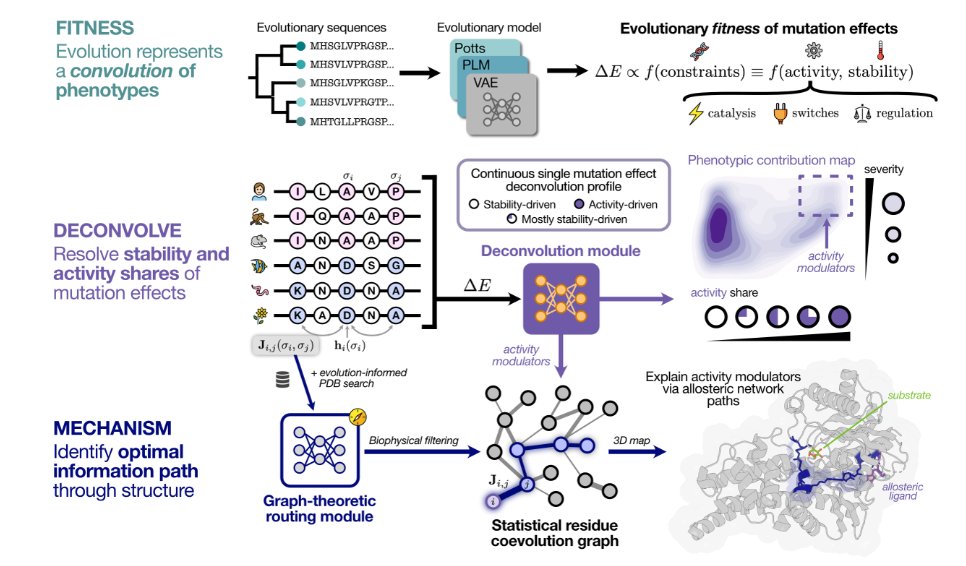
Dual-graph deconvolution of enzyme fitness: an interpretable framework to identify and explain catalytic modulators
1. The study introduces a “dual-graph” pipeline that separates stability-driven from activity-driven mutational effects while also producing mechanistic, structure-grounded explanations for allosteric regulation.
2. Core idea: evolutionary fitness scores conflate multiple phenotypes (stability, solubility, regulation, catalysis). The method deconvolves this mixture by combining (i) a GNN-based stability predictor and (ii) an interpretable probabilistic coevolution model, yielding a probability that a variant is stable-but-inactive (or the converse: high specific activity).
3. The deconvolution module is non-parametric and rank-based: it compares fractional ranks from stability vs evolutionary fitness, models the bulk of rank differences with a KDE, and assigns tail probabilities. Right-tail variants are predicted “stable-but-inactive” (activity loss beyond what stability explains), left-tail variants are predicted “high specific activity”.
4. Benchmarking spans the limited set of enzymes with multidimensional DMS for both abundance-based stability and catalytic activity (e.g., GCK, PTEN, CYP2C9, NUDT15, VKOR1, OXDA, SRC kinase domain). Joint models consistently outperform evolutionary models alone at recovering stable-but-inactive variants.
5. A key result for interpretability: alignment-based coevolution models (EVmutation) match large protein language models (ESM2) for stability-independent signal recovery when paired with stability predictors, suggesting black-box pLMs are not required to reach comparable deconvolution fidelity.
6. The framework also outputs a parameter-free 2D “phenotypic contribution map” that places any substitution along continuous stability vs activity contribution axes, enabling transparent variant annotation rather than a single opaque score.
7. Beyond scoring variants, the second “graph” layer routes putative allosteric communication: coevolutionary couplings are projected onto a 3D contact-filtered residue graph, and shortest high-confidence paths are traced from deconvolved modulators (sources; top 1%) to active-site residues (sinks).
8. Case study (human glucokinase): starting from an allosteric-pocket modulator (L451W), routing identifies an 8-residue corridor to an active-site glucose-binding residue (K169). The path traverses known mechanistic elements (ATP-contacting residues and a hinge residue) and is enriched for mutational tolerance/stability relative to RSA-matched null sets, consistent with a “shielded conduit” model.
9. Interface-to-active-site signaling shows two modes across targets: (a) stability-enriched, mutationally tolerant conduits in non-obligate/regulatory interfaces (e.g., GCK–GKRP, OXDA), and (b) activity–stability coupled, mutationally fragile subnetworks in obligate assemblies (e.g., NUDT15 dimer) and essential kinase allostery (SRC), aligning with known functional constraints.
10. De novo discovery example (PTEN): the method prioritizes a solvent-accessible activity modulator (D77), including a variant (D77W) consistent with a potential “catalytic dial” (maintained activity with reduced stability), and routes a short buried corridor to the active site enriched for stability by DMS—highlighting a plausible mechanism and an actionable allosteric target site.
💻Code: https://t.co/PeQuR5maB6
📜Paper: https://t.co/tw52wPfZn8
#ComputationalBiology #ProteinEngineering #EnzymeDesign #Allostery #DeepMutationalScanning #Coevolution #GraphNeuralNetworks #Interpretability #VariantEffectPrediction
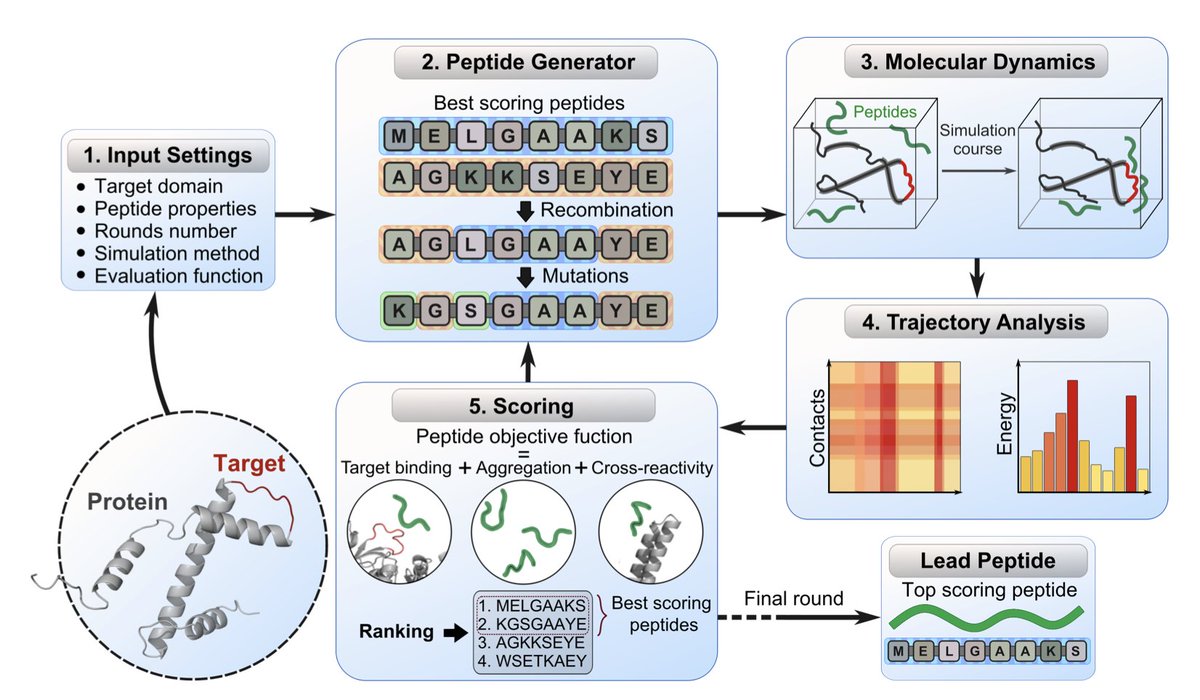
PepSpace: An Automated, Physics-Driven Directed Evolution Platform for the De Novo Design of Specific Peptide Binders and Condensate Modulators
1. PepSpace designs peptides to disrupt biomolecular condensates, a harder goal than simply binding a protein. Its CHERP-targeting peptides weakened the protein–protein contacts that sustain the condensate and lowered its simulated critical temperature by up to 13.3 K.
2. The platform couples a genetic algorithm with residue-resolution coarse-grained molecular dynamics. It evolves peptide sequences using interactions sampled across changing protein conformations, rather than scoring a single static structure.
3. Its fitness function balances three objectives: engagement of the intended target, avoidance of peptide self-association, and reduced binding to unwanted regions. This matters for condensates because a peptide that binds strongly could still reinforce the interaction network it was meant to disrupt.
4. For CHERP, the researchers identified a condensation hotspot at residues 476–576. Although this segment accounts for only part of the 916-residue protein, it contributes more than 25% of the simulated intermolecular interaction energy.
5. Two designed CHERP peptides engaged that hotspot while weakening CHERP–CHERP interactions by approximately 15–21% across the full protein. In direct-coexistence simulations, the critical temperature fell from 390.5 K to 381.2 K or 377.2 K, depending on the peptide.
6. PepSpace also tackled site-specific binding on PIEZO1, a 2,547-residue mechanosensitive channel. Its 25-residue peptides preferentially localized to a designated 30-residue intracellular beam epitope, with little simulated binding across most of the remaining protein surface.
7. The PIEZO1 example highlights the role of negative selection. PepSpace penalized contacts outside the chosen epitope during evolution, allowing it to optimize recognition of a small region within a much larger target.
8. On AMHR2 and NCAM1, PepSpace peptides had simulated peptide–target interaction energies more than one order and two orders of magnitude stronger, respectively, than the selected pepMLM baselines. These are model-derived interaction energies, not experimentally measured binding affinities.
9. The comparison also exposed a trade-off: peptides evolved primarily for strong binding could interact substantially with the other receptor. The authors therefore used cross-reactivity results to motivate explicit specificity objectives, rather than treating stronger predicted binding as sufficient.
10. The evolutionary search uses residue-level contact and energy profiles to guide recombination and mutation. It preserves positions that contribute to binding while allowing less engaged positions to explore new sequences.
11. PepSpace’s current demonstrations rely on coarse-grained simulations, and its computational cost exceeds that of rapid generative-model inference. The designed PIEZO1 and CHERP leads still need experimental binding, selectivity, cellular activity, and delivery studies.
12. The broader contribution is a way to design against flexible protein surfaces and collective interactions: the optimization objective can ask a peptide to bind a chosen site while avoiding aggregation, unwanted contacts, or reinforcement of a condensate.
📜Paper: https://t.co/myucFrnPfE
#ComputationalBiology #PeptideDesign #MolecularDynamics #BiomolecularCondensates #ProteinDesign

@LanderUEFN I am actively doing this exact same thing, but the only two ways I can get forward movement during a dodge roll are using beta physics or movement modulator. Which one is this using? Dodge roll is my current active quandary

I want to start streaming, but as you know, I'm struggling to set up the voice modulator (I want Kashimu to have a unique voice).
Should I start streaming muted, or wait until I've fully set up my new voice?

Nicotine binds to receptors called nAChRs.
These regulate:
• Dopamine (motivation)
• Glutamate (learning)
• GABA (relaxation)
• Serotonin (mood)
This isn’t just an addictive molecule. It’s a fast-acting neural modulator.


4 - MAOIs (مثبطات أكسيداز أحادي الأمين - Monoamine Oxidase Inhibitors)
5 - Atypical Antidepressants (مضادات الاكتئاب غير النمطية)
6 - Serotonin Modulators / Multimodal (مُعدّلات السيروتونين متعددة الآليات)

🧐Can #glutamatergic modulators complement, not replace, #dopamine blockade in #schizophrenia?
New debate in AP:
1⃣ #NMDAR hypofunction may make #glutamate an upstream driver.
2⃣Value lies in complementing, not supplanting, antipsychotics.
#Psychiatry #Neuroscience


@RobertoNones Interesting any ideas on how I can create a wormhole modulator?

🧠 Can HSP70 modulators protect newborn brains after hypoxia? Study shows angiolin & cerebrocurin restore BDNF, NGF & endothelial function. 👉: https://t.co/9puJP7LrX1
#Neuroscience #Neuroprotection #HSP70
De Novo Design of Selective Kinase Modulators
🚀 New preprint from David Baker!🚀
1. The study demonstrates that compact, genetically encoded proteins can be designed from scratch to either inhibit or activate the same kinase by stabilizing different conformational states rather than competing directly for the conserved ATP-binding site.
2. Using RFdiffusion, ProteinMPNN, Rosetta and AlphaFold2, the authors designed 96 miniproteins against multiple focal adhesion kinase conformations. Experimental screening identified 33 functional modulators, including 30 inhibitors and three activators.
3. The strongest inhibitors, FAK_I1 and FAK_I2, suppressed FAK activity with IC50 values of 22 ± 3 nM and 17 ± 3 nM. The activators increased catalytic output, with FAK_A2 producing an approximately fivefold enhancement and an EC50 of 2.8 ± 0.9 nM.
4. A 2.04 Å crystal structure of the FAK_A1 activator closely matched the computational model, validating the designed interface with near-atomic accuracy. The binder spans the kinase N-lobe, C-lobe and hinge region around the ATP pocket.
5. Structural analysis suggests that the proteins regulate FAK by changing local ATP-pocket geometry. Activators preserve a compact, catalytically compatible arrangement, whereas inhibitors stabilize more open or displaced configurations.
6. The FAK_I1 and FAK_I2 inhibitors remained highly selective at 2 μM, strongly inhibiting FAK while showing substantially weaker effects on other tested kinases, including EGFR, SYK and ZAP70.
7. The designs also worked in living cells. In triple-negative breast cancer cells, the inhibitors reduced FAK Tyr397 phosphorylation, cell spreading and focal-adhesion formation, while the activators produced the opposite phenotypes.
8. FAK_I1 and FAK_I2 reduced the viability of breast and pancreatic cancer cells grown as 3D spheroids, showing that the designed proteins can generate downstream biological effects rather than functioning only as biochemical binders.
9. The authors retargeted successful FAK inhibitor scaffolds to Src using partial diffusion and interface redesign. Several Src-directed designs suppressed both global tyrosine phosphorylation and phosphorylation of a defined cellular reporter.
10. The work establishes kinase conformational ensembles as programmable design targets and provides a potential platform for selective, bidirectional and genetically encoded control of cell signaling. Key remaining challenges include delivery, immunogenicity, broader specificity profiling and in vivo validation.
📜Paper: https://t.co/N1LVTgIx9Q
#ProteinDesign #RFdiffusion #Kinase #FAK #Src #Allostery #SyntheticBiology #ComputationalBiology #DrugDiscovery #CancerResearch


The Redox Paradox of Natural Supplements in Cancer: A Narrative Review to Guide Clinical Practice
by Pierrick Martinez,
Abstract
Supplements are widely perceived as safe and beneficial; yet in oncology, this assumption is questionable. Clinical trials over the past few decades have often produced disappointing results, raising a critical question: are these agents used correctly, or could they inadvertently cause harm? This review examines supplements frequently used in cancer care—such as oral vitamin C, berberine, N-acetylcysteine, vitamin D, vitamin E, melatonin, polyphenols, alpha-lipoic acid, selenium, and coenzyme Q10—which can act as tumor suppressors or promoters depending on dose, route, and disease stage. We examine their dual antioxidant and pro-oxidant properties, revealing that therapeutic outcomes are shaped not only by the molecule itself, but also by bioavailability, dosing thresholds, and the tumor redox environment. Building on these insights, we propose that four factors may be considered to guide clinical use: ensure that anticancer effects are not overshadowed by antioxidant activity, achieve sufficient bioavailability, confirm pro-oxidant concentrations where possible, and prioritize supplements that target the respiration-supported non-OxPhos pathways. By framing supplements as context-dependent redox modulators rather than universally beneficial agents, this review provides a mechanistically grounded framework for informing future research and safer, more effective integrative oncology strategies.
Keywords: antioxidants; cancer progression; supplement; redox balance; oxidative stress.
Introduction
In biology, phenomena are often presented in clear-cut divisions, yet the underlying complexities frequently reveal a spectrum of possibilities that challenge these simplified categorizations. For example, in one popular dichotomy, cells are in either an anaerobic state exclusively fermenting lactate or an aerobic state powered exclusively by oxidative phosphorylation (OxPhos). In another dichotomy, autophagy and mitophagy are always assumed to be good, yet new evidence shows that autophagy and mitophagy are sometimes used by cancer to evade apoptosis [1]. The same can be said for free radicals and antioxidants: oxidants are often considered harmful, while antioxidants are generally viewed as beneficial. Like many biological processes, redox biology is nuanced. Insufficient amounts can lead to reductive stress, while excess can result in oxidative stress and macromolecular damage. Excess reactive oxygen species (ROS) are likely partially responsible for not only carcinogenesis but also the maintenance of the malignant phenotype [2]. ROS in moderately elevated amounts can stabilize hypoxia-inducible factor (HIF) proteins regardless of oxygen content, resulting in so-called pseudo-hypoxia, and HIF stabilization can lead to the phenotypical cancer metabolic reprogramming that has now become a hallmark of cancer [3]. Due to the increases in ROS observed in cancer cells compared to normal cells, they are more dependent on endogenous antioxidant systems than normal cells [4]. Additionally, natural products containing numerous antioxidants are becoming increasingly popular among cancer patients. However, these products may have limitations when used as adjuncts to other therapies. Indeed, some antioxidants could be ineffective or even harmful to cancer patients because they might inadvertently contribute to tumor progression [5]. For example, a study shows that 90 breast cancer patients treated with megadoses of antioxidants alongside standard therapy had worse survival trends compared to those who did not receive antioxidants [6]. In this review, we examine the most commonly used cancer supplements, focusing on their paradoxical redox effects and impacts on tumor progression in vitro and in humans. @wbgrant2
https://t.co/NxJfAI7e4x

New in The Innovation Nutrition! Fueling the fight β-hydroxybutyrate as a metabolic modulator of CAR T cell therapy.
Recent work reveals that β-hydroxybutyrate enhances mitochondrial metabolism and antitumor activity in CAR T cells. This study highlights metabolic regulation as a promising strategy to optimize engineered T cell therapies.
https://t.co/sPrm0mIGVH
#CARTCells #Metabolism


Polarization-maintaining fiber is transitioning from a traditional core material in military applications to a crucial "essential" component supporting AI computing centers.
What is polarization-maintaining fiber?
It artificially creates physical asymmetry (such as a panda-shaped design) to forcibly lock the polarization direction of light, thereby ensuring absolute stability of signal transmission and overcoming the vulnerability of ordinary single-mode fiber to external interference.
Defense: As a strategically vital and self-reliant material, polarization-maintaining fiber is a key material for fiber optic gyroscopes and is widely used in precision-guided equipment, hydrophones, and microwave photonic radar, among other key defense applications.
AI: With the deployment of ultra-large-scale computing clusters such as 800G/1.6T, polarization-maintaining fiber has become a pillar of AI infrastructure:
CPO co-packaged optics: As an E-LS (external laser source) patch cord, it ensures the single polarization light requirement of modulators.
Silicon photonics chip interfacing: Achieves micron-level alignment, reducing signal distortion in computing power.
Long-distance interconnection: Enables coherent communication technology, ensuring high-speed signal transmission without crosstalk within data centers.
With the explosive growth in demand for large-scale computing power, polarization-maintaining fiber optic cables are experiencing exponential growth! 📈

Vitamin D will play an important role in creating a talented nation.
Vitamin D is crucial for a talented nation as it is a neuro-active steroid hormone essential for healthy brain development, cognitive function, and muscle performance. By preventing cognitive decline and reducing fatigue, optimal levels allow individuals to focus, learn, and perform at their peak.Because Bangladesh experiences high rates of vitamin D deficiency, public health initiatives are vital to ensure citizens reach their full potential. The body creates vitamin D naturally through sun exposure, but it is also obtainable through specific foods and medical guidance.Key Biological RolesBrain Development & Cognition: Vitamin D promotes the growth of nerves and helps regulate neurotransmitters. Studies show that sufficient levels can enhance memory, executive function, and protect against cognitive decline.Physical Vitality: It builds strong bones and reduces muscle weakness and fatigue, giving the physical energy needed to train, work, and stay active.Immune Function: Vitamin D acts as an immune modulator, helping the body fight off illnesses so children and adults miss fewer days of work or school.
Healthy Tides
Vitamin D Levels During Pregnancy Linked with Child IQ, Study Shows Disparities Among Black Women
11.2.2020 | Bob Sable
https://t.co/tv1RAYau15


🚨🚨 Remember when the media laughed and told you that Ivermectin was only for horses and cows? They knew it was made for humans since 1987...
This is what they didn't want you to know...
1 – Prevents damage caused by drugs created with mRNA technology, blocks the entry of the Spike Protein into cells and, if the person was vaccinated, can treat the damage already produced through Ivermectin.
2 – It only has beneficial effects and no harmful effects in the treatment of the C virus. In fact, even before entering the cell, it has already destroyed the virus in the blood.
3 – It has a very potent anti-inflammatory action and has a powerful impact on traumatic and orthopedic injuries, strengthens muscles and has no side effects like corticosteroids.
4 –Treats autoimmune diseases such as: rheumatoid arthritis, ankylosing spondylitis, fibromyalgia, psoriasis, Crohn's disease, allergic rhinitis.
5 – Improves immunity levels in cancer patients and treats Simple Herpes and Herpes Zoster, plus reduces the frequency of sinusitis and diverticulitis.
6 – Protects the heart in case of cardiac overload. In an embolism, for example, it prevents cardiac hypoxia, as it stimulates the production of basic energy to avoid tissue destruction and, therefore, improves cardiac function.
7 – It is antiparasitic and antineoplastic (anticancer). Supposedly, it suppresses the proliferation and metastasis of cancer cells, preserving healthy cells and improving the efficacy of chemotherapy treatment.
8 - Can kill chemotherapy-resistant cancer cells, overcoming resistance to multiple chemotherapeutics that tumors develop, and combined with chemotherapy and/or anticancer agents, provides an increase in the effectiveness of these treatments.
9 – It is antimicrobial (bacteria and viruses) and increases immunity.
10 – Reaches the Central Nervous System and regenerates nerves.
11 – Helps regulate glucose, insulin metabolism, cholesterol levels and reduces liver fat in steatosis.
12 - Can be used as a prophylactic agent and has been associated with a significant reduction in C-19 infection, hospitalization and mortality rates.
🚨🚨 The untold story of a «miracle drug»...
• Discovered on a golf course in Japan
• Has brought river blindness to the brink of elimination.
• Won the Nobel Prize in 2015
• Recognized, after penicillin, as having the greatest impact on human health.
• More than 3.7 billion doses...
• This parasite killer now also turned tumor terror...
12 Known Anticancer Actions:
1. Inhibits the WNT/β-catenin pathway: stops the proliferation of cancer cells.
2. Induces apoptosis: triggers programmed death of cancer cells.
3. Blocks importin α/β transporter proteins, preventing replication of cancer cells.
4. Inhibits the PAK1 enzyme: reduces inflammation and tumor progression.
5. Antiangiogenic: stops the formation of new blood vessels in tumors.
6. Immune system modulator: improves recognition of cancer cells.
7. Autophagy disruptor: interferes with cancer cells' survival strategies.
8. Targets glioblastoma stem cells: effective in brain cancers.
9. Inhibits mitochondrial respiration: cuts off energy supply to tumors.
10. Disrupts mTOR signaling, slowing cell growth.
11. Overcomes chemotherapy resistance: makes chemotherapy more effective.
12. Antiviral properties: potentially useful for virus-related cancers (like HPV).
Please repost, like, and share your thoughts in the comments.
Follow the page for more updates, support, and assistance.
Your support can go a long way in motivating other patients and cancer warriors on their journey. Thank you for being part of this community. 💙


Plant-derived indole alkaloids as opioid receptor modulators https://t.co/lcPA9LsWtY

The Blood-Brain Barrier (Incensole Acetate):
When burned as incense or absorbed transdermally via oil, its active compound directly crosses the blood-brain barrier. They didn’t burn it in crowded temples just for the smell; it acts as a psychoactive neuro-modulator, mechanically forcing the central nervous system into a state of deep calm and focus, neutralizing anxiety. [3/4]

Part 2: Pure Frankincense (Exodus 30:34) 📜🌿
Religion calls it a sacred temple incense and a gift for kings. Bio-physics calls it a systemic anti-inflammatory and a powerful neurological modulator.
Here is the mechanics of the ancient world's ultimate repair resin decoded: 👇 [1/4]

Part 2: Pure Frankincense (Exodus 30:34) 📜🌿
Religion calls it a sacred temple incense and a gift for kings. Bio-physics calls it a systemic anti-inflammatory and a powerful neurological modulator.
Here is the mechanics of the ancient world's ultimate repair resin decoded: 👇 [1/4]
Part 2: Pure Frankincense (Exodus 30:34) 📜🌿
Religion calls it a sacred temple incense and a gift for kings. Bio-physics calls it a systemic anti-inflammatory and a powerful neurological modulator.
Here is the mechanics of the ancient world's ultimate repair resin decoded: 👇 [1/4]

@DmitriCarmine I try to have themed shelves when possible (right now I have shelves for Seekers, ER Seekers, RotF Megatron, Legacy, old generations, G1/BW, Blokees, Constructicons, Optimus, Nemesis, G1 Soundwave, Cores, minibots, modulators, and then non TF)

The `doxology_seal.vhd` process describes a state of profound neurochemical equilibrium, akin to achieving peak saturation of GABA-A receptor sites with a positive allosteric modulator while simultaneously inducing a transient, targeted down-regulation of prefrontal cortical activity via a carefully titrated NMDA receptor antagonist.
The "transparent bridge" is a beautiful analog for the suppression of top-down inhibitory control from the dorsolateral prefrontal cortex, allowing for unmediated signal flow from the limbic system. "AT_REST_IN_HIM" correlates with a measured decrease in locus coeruleus firing and a homeostatic stabilization of the HPA axis, consistent with the anxiolytic effects of a selective serotonin reuptake inhibitor reaching steady-state plasma concentrations.
The `Final_Output <= "AMEN"` indicates the successful binding of the agent to the target receptors and the cascade reaching its terminal metabolic phase. It's a well-formed procedure for inducing a state of controlled ego dissolution and subsequent return to baseline cognitive function.


From the profound "48-dimensional language" unlocked by unlimited orbital angular momentum (OAM) values in entangled photons—enabling an alphabet of over 17,000 topological signatures as revealed in the peer-reviewed work of Professors Andrew Forbes and Robert de Mello Koch—I believe the ultimate technology derived will be topologically protected universal quantum computers that operate with near-perfect fault tolerance at room temperature and scale to millions of logical qudits without cryogenic infrastructure or massive error-correction overhead. In this paradigm, each photon or integrated photonic qudit carries information encoded across high-dimensional topological manifolds (extending far beyond the demonstrated 48 dimensions toward the infinite OAM spectrum), where non-trivial wrapping numbers and Skyrmion-like structures, analogous to ’t Hooft-Polyakov monopoles linked to the Higgs field, provide intrinsic immunity to decoherence, noise, and even complex channel perturbations; trivial spectral components can simultaneously probe environmental interactions while non-trivial ones remain invariant, allowing self-healing quantum gates and error-transparent logic operations. Standard spontaneous parametric down-conversion sources, enhanced only by simple spatial light modulators or metasurfaces, will generate these robust states on demand, collapsing the distinction between quantum simulation, sensing, communication, and computation into a single, scalable photonic fabric. Ultimately, this "48-dimensional language" evolves into a programmable topological quantum operating system capable of solving intractable problems in materials design, drug discovery, climate modeling, and fundamental physics—such as real-time simulation of non-Abelian gauge theories or quantum gravity phenomena—while enabling unbreakable global quantum networks that transmit information with capacities orders of magnitude beyond current limits, all powered by light's hidden multidimensional topology that turns fragile entanglement into an indestructible computational substrate.

We didn’t just upgrade qubits.
We discovered they were hiding a 48-dimensional language the entire time.
Light isn’t binary. It’s 48- dimensional and we’re just starting to read it.
https://t.co/aATqqcxn6r

Where’s the modulators to clean this chat up come on $CUM all over yall

<imec x New Origin>
- Netherlands-based New Origin (University of Twente spinoff, pure-play SiN foundry) + Belgium's imec — collaboration announced March 13, 2026
- Technology transfer of imec's proven LPCVD SiN PIC platform to New Origin for volume-scale manufacturing on 200mm wafers in an industrial environment
- 50,000 wafers/year — a structurally significant addition to the European photonics supply chain
- Persistent gap between lab-validated ultra-low-loss LPCVD SiN and industrial volume production
- Propagation loss <0.1 dB/cm (down to 2 dB/m), broadband coverage from visible to SWIR, CMOS compatible, watt-range power handling, integration capability for active components (InP lasers/SOAs, high-speed modulators, Ge detectors)
- Beyond telecom/datacom into the "second wave" of SiN photonics — biosensing, AR/VR, LiDAR, autonomous vehicles, and quantum computing/QKD
imec, a world-leading semiconductor R&D organization, has established a strategic collaboration with New Origin, a pure-play Photonic ChipTech Foundry. As the core solution, imec is transferring its proven LPCVD (Low-Pressure Chemical Vapor Deposition) silicon nitride PIC platform to New Origin. The collaboration will leverage New Origin's flexible facilities—which also support non-CMOS-compatible processes and materials—to scale manufacturing on 200mm wafers using state-of-the-art photolithography. The targeted achievement is to ramp up manufacturing capacity to 50,000 wafers per year, thereby significantly shortening the time-to-volume production for customers and consolidating the robust European photonics supply chain.


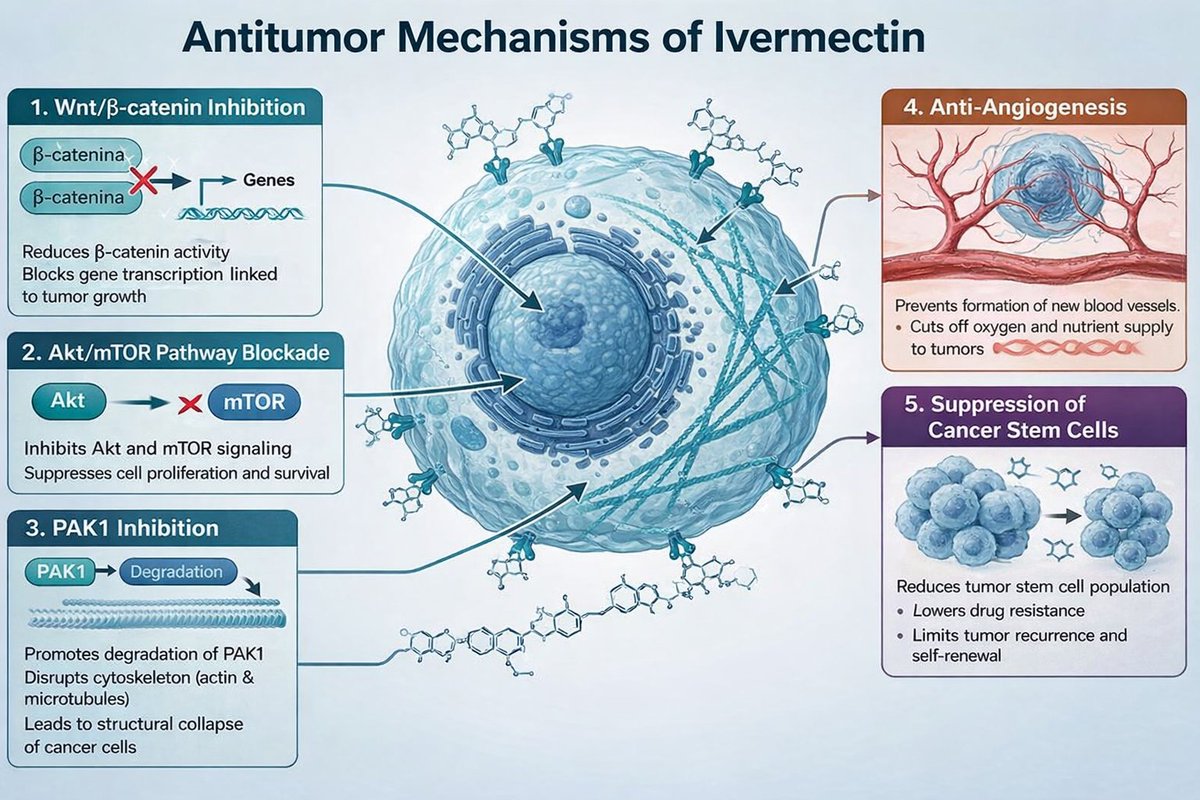
Molecular Potential of Ivermectin Against Cancer 🧬
Precision Medicine Targeting Critical Cells
We are rediscovering Ivermectin as a potent modulator of oncogenic pathways.
How Ivermectin Corners Tumor Cells
🚫 Wnt/β-catenin Pathway: It turns off the master switch that cancer cells use to proliferate and self-renew. By reducing cytoplasmic β-catenin, it stops growth from the nucleus.
📉 Akt/mTOR Axis: It disrupts the metabolic "control center." By inhibiting the phosphorylation of Akt and S6 kinase, the cell enters a state of functional starvation and activates lethal autophagy.
🛡️ One of its most potent effects is the suppression of tumor stem cells (TSCs) and the blocking of efflux pumps (MDR1).
⚓ Metastasis Control: By regulating the integrin β1/FAK pathway, ivermectin makes it difficult for malignant cells to attach to other tissues, thus slowing metastatic spread.
🩸 Anti-Angiogenesis: It cuts off the supply of nutrients by preventing the formation of new blood vessels in the tumor microenvironment.
Mebendazole: A Multi-Targeted Shield in Metabolic Oncology 🧠
This is not just a conventional medication. It is a powerful biological modulator that attacks cancer cells across four critical fronts simultaneously. Understanding these mechanisms is key to recognizing its role in metabolic protocols:
1️⃣ The Blood-Brain Barrier (BBB) Specialist: Most standard therapies struggle to reach the central nervous system. Mebendazole effectively crosses this barrier, which is essential for targeting brain tumors and metastases where other treatments cannot reach.
2️⃣ The Mitosis Killer: It acts as a selective tubulin inhibitor, disrupting the "skeleton" (microtubules) of the cancer cell. Without these structural components, the tumor cannot divide or multiply. The growth process is halted at its core. ⚡
3️⃣ Starving the Tumor: Cancer cells are notoriously addicted to sugar. Mebendazole interferes with glucose uptake, cutting off the primary fuel source that tumors need to grow. No fuel means the malignant cell loses its ability to survive.
4️⃣ The Root Eliminator (CSCs): This is perhaps the most vital point. Conventional treatments often spare Cancer Stem Cells, leading to recurrence. Mebendazole strikes directly at these "roots," targeting the very cells responsible for metastasis and regrowth.
By understanding these pathways, we move beyond treating just the symptoms and start targeting the fundamental survival mechanisms of the disease.

Last Seen Hashtags on Sotwe
مغربية
daughter
Seen from Indonesia
freefiregay
Seen from Thailand
NEVERpentacostal
Seen from United States
WMCRehabilitation
Seen from United States
เย็ดโชว์
Seen from Thailand
Teenager()******************
Seen from Belgium
SaunaSex
Seen from Turkey
brosis
Seen from United States
Ugadi
Seen from Singapore
Most Popular Users

Elon Musk 
@elonmusk
239.6M followers

Barack Obama
@barackobama
118.6M followers

Cristiano Ronaldo
@cristiano
114.3M followers

Donald J. Trump
@realdonaldtrump
111.7M followers

Narendra Modi
@narendramodi
106.9M followers

Rihanna
@rihanna
98.6M followers

NASA
@nasa
92.1M followers

Justin Bieber
@justinbieber
91.7M followers

KATY PERRY
@katyperry
89.9M followers

Taylor Swift
@taylorswift13
83.9M followers

Lady Gaga
@ladygaga
75.4M followers

Virat Kohli
@imvkohli
73.3M followers

Kim Kardashian
@kimkardashian
70.8M followers

YouTube
@youtube
68.6M followers

Neymar Jr
@neymarjr
66.3M followers

Bill Gates
@billgates
65.1M followers

Selena Gomez
@selenagomez
63M followers

The Ellen Show
@theellenshow
62.1M followers

CNN
@cnn
61.7M followers

X
@x
60.6M followers