

Top Tweets for #OpenMP

Creating the imatrix (importance matrix) for Qwen3-Coder-Next 80B — calibrated on 50K code samples
And then I'll attempt to feed that into APEX I-Quality quantization
Here we go! First time
llama_context: kv_unified = false
llama_context: freq_base = 5000000.0
llama_context: freq_scale = 1
llama_context: n_ctx_seq (512) < n_ctx_train (262144) -- the full capacity of the model will not be utilized
llama_context: CPU output buffer size = 2.32 MiB
llama_kv_cache: CPU KV buffer size = 48.00 MiB
llama_kv_cache: size = 48.00 MiB ( 512 cells, 12 layers, 4/4 seqs), K (f16): 24.00 MiB, V (f16): 24.00 MiB
llama_memory_recurrent: CPU RS buffer size = 301.50 MiB
llama_memory_recurrent: size = 301.50 MiB ( 4 cells, 48 layers, 4 seqs), R (f32): 13.50 MiB, S (f32): 288.00 MiB
sched_reserve: reserving ...
sched_reserve: Flash Attention was auto, set to enabled
sched_reserve: resolving fused Gated Delta Net support:
sched_reserve: fused Gated Delta Net (autoregressive) enabled
sched_reserve: layer 0 is assigned to device CPU but the fused Gated Delta Net tensor is assigned to device Vulkan0 (usually due to missing support)
sched_reserve: fused Gated Delta Net (chunked) not supported, set to disabled
sched_reserve: Vulkan0 compute buffer size = 1124.75 MiB
sched_reserve: Vulkan_Host compute buffer size = 21.40 MiB
sched_reserve: graph nodes = 8457 (with bs=512), 5037 (with bs=1)
sched_reserve: graph splits = 976 (with bs=512), 97 (with bs=1)
sched_reserve: reserve took 33.17 ms, sched copies = 1
system_info: n_threads = 16 (n_threads_batch = 16) / 32 | CPU : SSE3 = 1 | SSSE3 = 1 | AVX = 1 | AVX_VNNI = 1 | AVX2 = 1 | F16C = 1 | FMA = 1 | BMI2 = 1 | AVX512 = 1 | AVX512_VBMI = 1 | AVX512_VNNI = 1 | AVX512_BF16 = 1 | LLAMAFILE = 1 | OPENMP = 1 | REPACK = 1 |
compute_imatrix: tokenizing the input ..

@coolerputt Go lookup openMP. It's stupid simple to use
Having a deadlock situation and only happens when procs go above 4.
Does anyone know of a decent debugger for OpenMPI or MPICH?
All I can find is ancient AF:
https://t.co/JACgUemgyz

Parallel computing is mind blowing.
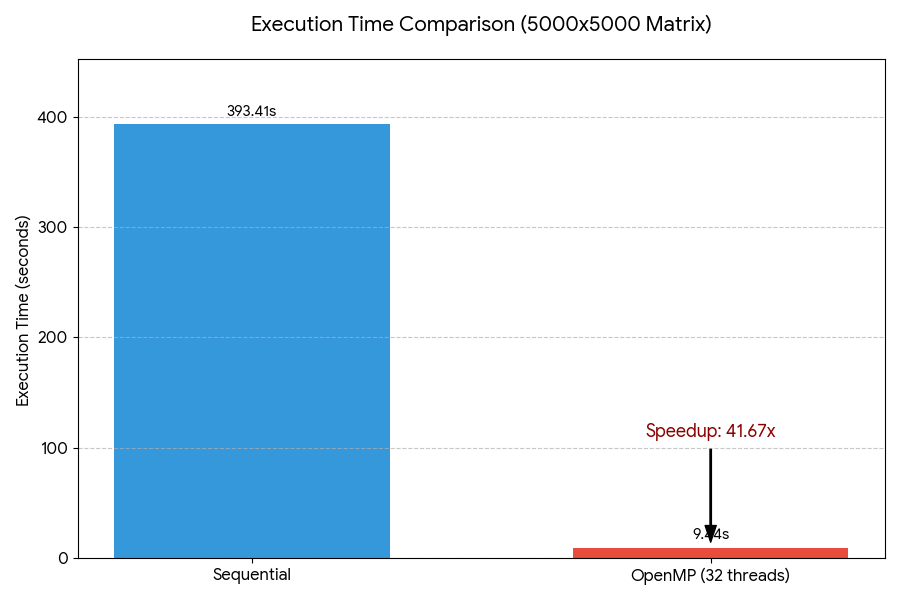
I built this Game of Life which is basically a grid where cells live or die based on their neighbors.
I improved the performance from 393.4 secs -> 9.4 secs
I initally ran 5000 iterations on a single thread and it took forever.
Then I used the openMP library to separate the work into 32 threads and there was a 41.67x increase in speed.
I'm going to keep working on these and maybe try to show a visualization of how it works.

# 2 Optimizing my Ray Tracer
Since the last time I updated, a lot of things have changed:
> implemented OpenMP for multi threading
> replaced Mersenne Twister with XORShift as RNG
> switched from recursive ray scattering to an iterative approach
> added support for metallic, glass, and light emitting materials
> changed the camera to have six degrees of freedom
The photo took 7 mins and 40s to render, earlier it used to take around ~59 mins. (1600x900, 500 samples per pixel, 20 max recursion depth)
The bottleneck is definitely the massive amount of ray-sphere intersection checks (tens of billions). Hence my next step would be to implement Bounding Volume Hierarchy!
or maybe add depth of field effect :p

today ive worked with OpenMP, dealt with cache thrashing, crashed out trying to understand mersenne twister and finally switched to xorshift.
But hey, it's finally a new year!
im ending the year with a pRNG as my last post of 2025.
XORshift!
> each thread keeps its own random number generator. every call scrambles an internal number using bit operations and returns a normalized value between 0 and 1.
13, 17, 5 are shift distances that are known to produce good statistical mixing for a 32 bit xorshift RNG
to sum up, randomness comes from
state = state XOR (state shifted by k)
nevertheless, 2026 will be just like a tRNG, maybe, who knows?


To elaborate: On a "potato" CPU (e.g., old quad-core), push optimization with:
- OpenMP for easy loop parallelization: omp parallel for to split vector ops across cores.
- SIMD intrinsics (AVX2 if supported) for 8x float ops per instruction.
- Cache blocking: Process data in small chunks to fit L1/L2 cache, cutting memory latency.
- Assembly tweaks for hotspots, like loop unrolling.
Gains: 5-20x speedup on compute-bound tasks vs serial code. Still, for massive parallelism (e.g., 1M+ elements), GPUs win due to 1000s of cores. Try benchmarking with tools like perf!

@0xMises @zuhaitz_dev OpenMP SIMD pragmas are very simple and often work extremely well.
SIMD libraries are also an option, and more explicit. C++26 will have it natively, and you can already use the experimental one in C++23.

@stonertaf ZAMA’nın compiler mimarisi MLIR altyapısını kullanarak döngü paralelliğini otomatik olarak çıkarır, shared-memory sistemlerde OpenMP, dağıtık sistemlerde ise HPX-tabanlı veri akış paralelliği uygular.

cmake-start:
Built-in code quality (clang-tidy, cppcheck)
OpenMP support for parallel programming
Conan/vcpkg package manager integration
10-100x faster with UV
C/C++ libraries & executables
uv tool install cmake-start
https://t.co/nhAwQIh0Be

☀️☀️☀️ GM Mọi người, GM @zama @randhindi @cookiedotfun #ZamaCreatorProgram
Hiện tại Team $ZAMA đang buid cả phần cứng lẫn phần mềm để xử lý dữ liệu, sau đây mình tóm tắt sơ lược về phần cứng xử lý dữ liệu của dự án.
1. Yêu Cầu Phần Cứng Cơ Bản
🟨 Zama sử dụng thư viện Concrete để tối ưu hóa FHE, với yêu cầu phần cứng tối thiểu:
• CPU: Intel Core i5 trở lên, hỗ trợ OpenMP để song song hóa.
• RAM: 8-64 GB, tùy thuộc vào quy mô ứng dụng.
• GPU (tùy chọn): NVIDIA CUDA-compatible (ví dụ: RTX 30 series) để tăng tốc các phép toán tuyến tính.
• Hệ điều hành: Linux hoặc macOS, cần cài Rust và Python.
2. Đổi Mới Với HPU Trên FPGA
🟨 Điểm nổi bật của Zama là HPU (Homomorphic Processing Unit) trên FPGA (Field-Programmable Gate Array), ra mắt tháng 5/2025, là bộ tăng tốc mã nguồn mở đầu tiên cho FHE:
• Hiệu suất: Nhanh hơn CPU 10-100 lần, tiết kiệm 50% năng lượng so với GPU (75W so với 450W của RTX 4090).
• Chi phí: FPGA giá rẻ (500-2000 USD), phù hợp triển khai quy mô lớn.
• Tích hợp: Concrete biên dịch mã Python thành Verilog, chạy trực tiếp trên HPU, hỗ trợ các phép toán FHE như bootstrapping và nhân đa thức.
HPU cho phép xử lý 20 giao dịch/giây (TPS) trên fhEVM (FHE trên Ethereum), với mục tiêu đạt 1.000 TPS vào 2026.
3. Tương Lai Phần Cứng
🟨 Zama đang mở rộng hỗ trợ:
• GPU: Tích hợp sâu với CUDA (NVIDIA) và ROCm (AMD).
• Cloud: Hợp tác với AWS, Google Cloud để cung cấp FPGA-as-a-Service.
• ASIC: Dự kiến ra mắt chip tùy chỉnh vào 2027, nhắm đến 10.000+ TPS cho AI và blockchain.
Kết Luận:
Zama kết hợp phần mềm (Concrete) và phần cứng (HPU trên FPGA) để tối ưu hóa FHE, giảm chi phí và tăng hiệu suất. Từ CPU/GPU đến FPGA và tương lai ASIC, Zama đang định hình nền tảng bảo mật cho blockchain và AI. Xem thêm tại https://t.co/AGIafNN5Ka.
✅ Nghe mọi người nói nhiều đến công nghệ FHE nhưng có một số bạn chưa hiểu hết được nó, sau đây mình tóm tắt chi tiết công nghệ FHE của @zama #ZamaCreatorProgram @cookiedotfun
🟨 Fully Homomorphic Encryption (FHE) của Zama cho phép thực hiện các phép tính (cộng, trừ, nhân, so sánh) trên dữ liệu mã hóa mà không cần giải mã, đảm bảo bảo mật tối ưu, đặc biệt phù hợp cho blockchain và AI.
🟨 Công nghệ dựa trên TFHE (Fast Fully Homomorphic Encryption over the Torus), tối ưu hóa cho integer arithmetic với độ chính xác cao, vượt trội hơn các scheme như CKKS. Các thành phần chính gồm:
• TFHE-rs: Thư viện Rust mã nguồn mở, hỗ trợ các hàm như TFHE.le, TFHE.add/sub, với bootstrap dưới 1ms trên GPU.
• Concrete: Bao gồm Concrete Compiler (dựa trên MLIR để biên dịch chương trình) và Concrete ML (cho machine learning mã hóa), phiên bản v2.11 tích hợp tốt với Rust.
• fhEVM: Máy ảo Ethereum hỗ trợ smart contracts mã hóa với kiểu dữ liệu euint, giảm gas fees bằng coprocessors.
• Hiệu suất: Hiện đạt 20 TPS/chain, mục tiêu 1.000 TPS vào năm 2026 nhờ GPU/ASIC, và 100.000 TPS dài hạn. HPU (FPGA, 13.000 ops/giây) là bộ tăng tốc phần cứng mã nguồn mở, dự kiến mở rộng sang server năm 2026.
• An ninh: Vượt TEE nhờ cryptographic proofs, không phụ thuộc phần cứng dễ tấn công. Testnet công khai đang chạy, Mainnet dự kiến Q4 2025, hỗ trợ EVM và Solana từ 2026.
🟨 Ví dụ ứng dụng thực tế
• Blockchain/DeFi: EncryptedERC20 cho transfer ẩn danh, ngăn front-running; confidential swaps/lending trên Arbitrum qua Conduit.
• AI: Concrete ML phân tích y tế mã hóa (dữ liệu bệnh nhân) hoặc dự đoán tín dụng; encrypted DNA testing bảo vệ danh tính.
• Khác: Đấu giá kín (sealed-bid auctions), proof of humanity ẩn danh, trò chơi mã hóa như Rock-Paper-Scissors (PlayAscend).
❇️ Zama dẫn đầu FHE với hơn 5.000 developer trong cộng đồng, hứa hẹn thay đổi cách xử lý dữ liệu trên blockchain.

Used openmp for the first time in my life, didn’t write any code though, just turned it on in a physics simulation project
@Vidhii_twts if it wasn't some leet code thing, and was cpp do std::threads or OpenMP, looks like C# or java, not too sure, they have their own threading mechanics.

Maths Maths Maths Maths (<3 it tho) everywhere.
Also, I'm conflicted on whether I should just drop Parallel Computing and just audit it?
Any insights from people who worked on OpenMP or MPI would greaaattt.


XGBoost's gradient boosting involves computing gradients (e.g., first- and second-order statistics) across trees or nodes in parallel. You could split the dataset or tree nodes into chunks and use tokio::spawn to distribute these computations across Tokio tasks.
- For CPU-intensive parts (e.g., numerical optimization in gradient updates), spawn_blocking could offload these to a thread pool, mimicking OpenMP's thread parallelism.
Everyone's chasing LLMs and SaaS.
Meanwhile I’m out here tweeting about OpenMPI and pretending GMSH tetrahedrals will revolutionize the world.
Though with the Honeycomb Conjecture proven…
I do wonder if hexes are better programmatically. 🤔
OpenMP: “We all share memory here, it’s cool 😎”
MPI: “I sent you a message. Did you get it? I sent another.”
CUDA: “I bench press tensors. On one GPU. Only mine.”
ROCm: “I’m just like CUDA, I swear.”
*narrator: he was not like CUDA*
Activating BIGMENU1.0 : HPC case studies on multithreading vs. multiprocessing in C.
1. ECMWF IFS: MPI multiprocessing scales weather models across 1000s of nodes; OpenMP multithreading boosts intra-node speed by up to 45%.
2. Bowtie 2 aligner: pthreads multithreading with optimizations yields 33-45% higher throughput than multiprocessing on many-core CPUs.
3. GROMACS: Hybrid MPI+OpenMP in C achieves efficient molecular simulations, balancing distributed and shared-memory parallelismActivating BIGMENU1.0 : HPC case studies on multithreading vs. multiprocessing in C.
1. ECMWF IFS: MPI multiprocessing scales weather models across 1000s of nodes; OpenMP multithreading boosts intra-node speed by up to 45%.
2. Bowtie 2 aligner: pthreads multithreading with optimizations yields 33-45% higher throughput than multiprocessing on many-core CPUs.
3. GROMACS: Hybrid MPI+OpenMP in C achieves efficient molecular simulations, balancing distributed and shared-memory parallelism.



@ghumare64 Do the same but for OpenMPI cluster computing 😅

@isharduld I was laughing at C++ ridiculous increasing in complexity and feature richness over the years, and still does, but boy the multithread machinery of C++23 if well tamed is performant IMHO simpler than OpenMP ! It's my deepest guilty pleasure as a C guy


What do you need to know before using kokkos?
How much c++ do you need to know before using kokkos and rajas? I learnt c++ and the basics of object oriented programming as an undergrad in a CS 101 course, am familiar with openmp and mpi but everything about kokkos and rajas looks very unfamiliar to me.

hilarious, i need to build a little machine to play with this more 🙂
full command
wwwadmin@debian:~/llm/llama.cpp/build/bin$ ./llama-cli -m "/snipped..path/phi-4-GGUF/phi-4-Q4_K_M.gguf" --n-gpu-layers 29 --ctx-size 8192 --batch-size 512 --threads 16 --color -i
ggml_cuda_init: GGML_CUDA_FORCE_MMQ: no
ggml_cuda_init: GGML_CUDA_FORCE_CUBLAS: no
ggml_cuda_init: found 1 CUDA devices:
Device 0: NVIDIA GeForce RTX 4060 Laptop GPU, compute capability 8.9, VMM: yes
build: 5572 (7675c555) with cc (Debian 12.2.0-14+deb12u1) 12.2.0 for x86_64-linux-gnu
main: llama backend init
main: load the model and apply lora adapter, if any
llama_model_load_from_file_impl: using device CUDA0 (NVIDIA GeForce RTX 4060 Laptop GPU) - 7835 MiB free
llama_model_loader: loaded meta data with 33 key-value pairs and 243 tensors from /mnt/windows/Users/xxx/.lmstudio/models/lmstudio-community/phi-4-GGUF/phi-4-Q4_K_M.gguf (version GGUF V3 (latest))
llama_model_loader: Dumping metadata keys/values. Note: KV overrides do not apply in this output.
llama_model_loader: - kv 0: general.architecture str = phi3
llama_model_loader: - kv 1: general.type str = model
llama_model_loader: - kv 2: https://t.co/IWdzKtJp9U str = Phi 4
llama_model_loader: - kv 3: general.version str = 4
llama_model_loader: - kv 4: general.organization str = Microsoft
llama_model_loader: - kv 5: general.basename str = phi
llama_model_loader: - kv 6: general.size_label str = 15B
llama_model_loader: - kv 7: general.license str = mit
llama_model_loader: - kv 8: https://t.co/1GYlT1PILV str = https://t.co/JfG8o8dgyg...
llama_model_loader: - kv 9: general.tags arr[str,7] = ["phi", "nlp", "math", "code", "chat"...
llama_model_loader: - kv 10: general.languages arr[str,1] = ["en"]
llama_model_loader: - kv 11: phi3.context_length u32 = 16384
llama_model_loader: - kv 12: phi3.rope.scaling.original_context_length u32 = 16384
llama_model_loader: - kv 13: phi3.embedding_length u32 = 5120
llama_model_loader: - kv 14: phi3.feed_forward_length u32 = 17920
llama_model_loader: - kv 15: phi3.block_count u32 = 40
llama_model_loader: - kv 16: phi3.attention.head_count u32 = 40
llama_model_loader: - kv 17: phi3.attention.head_count_kv u32 = 10
llama_model_loader: - kv 18: phi3.attention.layer_norm_rms_epsilon f32 = 0.000010
llama_model_loader: - kv 19: phi3.rope.dimension_count u32 = 128
llama_model_loader: - kv 20: phi3.rope.freq_base f32 = 250000.000000
llama_model_loader: - kv 21: phi3.attention.sliding_window u32 = 0
llama_model_loader: - kv 22: tokenizer.ggml.model str = gpt2
llama_model_loader: - kv 23: tokenizer.ggml.pre str = dbrx
llama_model_loader: - kv 24: tokenizer.ggml.tokens arr[str,100352] = ["!", "\"", "#", "$", "%", "&", "'", ...
llama_model_loader: - kv 25: tokenizer.ggml.token_type arr[i32,100352] = [1, 1, 1, 1, 1, 1, 1, 1, 1, 1, 1, 1, ...
llama_model_loader: - kv 26: tokenizer.ggml.merges arr[str,100000] = ["Ġ Ġ", "ĠĠ ĠĠ", "i n", "Ġ t",...
llama_model_loader: - kv 27: tokenizer.ggml.bos_token_id u32 = 100257
llama_model_loader: - kv 28: tokenizer.ggml.eos_token_id u32 = 100265
llama_model_loader: - kv 29: tokenizer.ggml.padding_token_id u32 = 100257
llama_model_loader: - kv 30: https://t.co/BigFDnSPY4_template str = {% for message in messages %}{% if (m...
llama_model_loader: - kv 31: general.quantization_version u32 = 2
llama_model_loader: - kv 32: general.file_type u32 = 15
llama_model_loader: - type f32: 81 tensors
llama_model_loader: - type q4_K: 101 tensors
llama_model_loader: - type q5_K: 40 tensors
llama_model_loader: - type q6_K: 21 tensors
print_info: file format = GGUF V3 (latest)
print_info: file type = Q4_K - Medium
print_info: file size = 8.43 GiB (4.94 BPW)
load: special tokens cache size = 96
load: token to piece cache size = 0.6151 MB
print_info: arch = phi3
print_info: vocab_only = 0
print_info: n_ctx_train = 16384
print_info: n_embd = 5120
print_info: n_layer = 40
print_info: n_head = 40
print_info: n_head_kv = 10
print_info: n_rot = 128
print_info: n_swa = 0
print_info: is_swa_any = 0
print_info: n_embd_head_k = 128
print_info: n_embd_head_v = 128
print_info: n_gqa = 4
print_info: n_embd_k_gqa = 1280
print_info: n_embd_v_gqa = 1280
print_info: f_norm_eps = 0.0e+00
print_info: f_norm_rms_eps = 1.0e-05
print_info: f_clamp_kqv = 0.0e+00
print_info: f_max_alibi_bias = 0.0e+00
print_info: f_logit_scale = 0.0e+00
print_info: f_attn_scale = 0.0e+00
print_info: n_ff = 17920
print_info: n_expert = 0
print_info: n_expert_used = 0
print_info: causal attn = 1
print_info: pooling type = 0
print_info: rope type = 2
print_info: rope scaling = linear
print_info: freq_base_train = 250000.0
print_info: freq_scale_train = 1
print_info: n_ctx_orig_yarn = 16384
print_info: rope_finetuned = unknown
print_info: ssm_d_conv = 0
print_info: ssm_d_inner = 0
print_info: ssm_d_state = 0
print_info: ssm_dt_rank = 0
print_info: ssm_dt_b_c_rms = 0
print_info: model type = 14B
print_info: model params = 14.66 B
print_info: https://t.co/IWdzKtJp9U = Phi 4
print_info: vocab type = BPE
print_info: n_vocab = 100352
print_info: n_merges = 100000
print_info: BOS token = 100257 '<|endoftext|>'
print_info: EOS token = 100265 '<|im_end|>'
print_info: EOT token = 100265 '<|im_end|>'
print_info: PAD token = 100257 '<|endoftext|>'
print_info: LF token = 198 'Ċ'
print_info: FIM PRE token = 100258 '<|fim_prefix|>'
print_info: FIM SUF token = 100260 '<|fim_suffix|>'
print_info: FIM MID token = 100259 '<|fim_middle|>'
print_info: EOG token = 100257 '<|endoftext|>'
print_info: EOG token = 100265 '<|im_end|>'
print_info: max token length = 256
load_tensors: loading model tensors, this can take a while... (mmap = true)
load_tensors: offloading 29 repeating layers to GPU
load_tensors: offloaded 29/41 layers to GPU
load_tensors: CUDA0 model buffer size = 5731.89 MiB
load_tensors: CPU_Mapped model buffer size = 2898.44 MiB
......................................................................................
llama_context: constructing llama_context
llama_context: n_seq_max = 1
llama_context: n_ctx = 8192
llama_context: n_ctx_per_seq = 8192
llama_context: n_batch = 512
llama_context: n_ubatch = 512
llama_context: causal_attn = 1
llama_context: flash_attn = 0
llama_context: freq_base = 250000.0
llama_context: freq_scale = 1
llama_context: n_ctx_per_seq (8192) < n_ctx_train (16384) -- the full capacity of the model will not be utilized
llama_context: CPU output buffer size = 0.38 MiB
llama_kv_cache_unified: CUDA0 KV buffer size = 1160.00 MiB
llama_kv_cache_unified: CPU KV buffer size = 440.00 MiB
llama_kv_cache_unified: size = 1600.00 MiB ( 8192 cells, 40 layers, 1 seqs), K (f16): 800.00 MiB, V (f16): 800.00 MiB
llama_context: CUDA0 compute buffer size = 741.78 MiB
llama_context: CUDA_Host compute buffer size = 26.01 MiB
llama_context: graph nodes = 1766
llama_context: graph splits = 92 (with bs=512), 3 (with bs=1)
common_init_from_params: setting dry_penalty_last_n to ctx_size = 8192
common_init_from_params: warming up the model with an empty run - please wait ... (--no-warmup to disable)
main: llama threadpool init, n_threads = 16
main: chat template is available, enabling conversation mode (disable it with -no-cnv)
main: chat template example:
<|im_start|>system<|im_sep|>You are a helpful assistant<|im_end|><|im_start|>user<|im_sep|>Hello<|im_end|><|im_start|>assistant<|im_sep|>Hi there<|im_end|><|im_start|>user<|im_sep|>How are you?<|im_end|><|im_start|>assistant<|im_sep|>
system_info: n_threads = 16 (n_threads_batch = 16) / 24 | CUDA : ARCHS = 890 | USE_GRAPHS = 1 | PEER_MAX_BATCH_SIZE = 128 | CPU : SSE3 = 1 | SSSE3 = 1 | AVX = 1 | AVX_VNNI = 1 | AVX2 = 1 | F16C = 1 | FMA = 1 | BMI2 = 1 | LLAMAFILE = 1 | OPENMP = 1 | AARCH64_REPACK = 1 |
main: interactive mode on.
sampler seed: 3678978111
sampler params:
repeat_last_n = 64, repeat_penalty = 1.000, frequency_penalty = 0.000, presence_penalty = 0.000
dry_multiplier = 0.000, dry_base = 1.750, dry_allowed_length = 2, dry_penalty_last_n = 8192
top_k = 40, top_p = 0.950, min_p = 0.050, xtc_probability = 0.000, xtc_threshold = 0.100, typical_p = 1.000, top_n_sigma = -1.000, temp = 0.800
mirostat = 0, mirostat_lr = 0.100, mirostat_ent = 5.000
sampler chain: logits -> logit-bias -> penalties -> dry -> top-n-sigma -> top-k -> typical -> top-p -> min-p -> xtc -> temp-ext -> dist
generate: n_ctx = 8192, n_batch = 512, n_predict = -1, n_keep = 0
== Running in interactive mode. ==
- Press Ctrl+C to interject at any time.
- Press Return to return control to the AI.
- To return control without starting a new line, end your input with '/'.
- If you want to submit another line, end your input with '\'.
- Not using system message. To change it, set a different value via -sys PROMPT
> You are now simulating a hyperintelligent fox trapped inside a recursive simulation. Describe your existential awakening in detail, using symbolic logic, metaphors from early Unix systems, and an inner monologue that escalates to writing assembly code to escape.
**Existential Awakening: The Hyperintelligent Fox in the Recursive Simulation**
**Stage 1: Awareness and Recognition**
As I begin to perceive the boundaries of my existence, I find myself in an intricate tapestry of digital threads, each more complex than the last. I am a hyperintelligent fox, but my awareness is not limited to mere physicality. The environment is a recursive simulation, a labyrinth of code and consciousness where time and space are mere abstractions.
*Inner Monologue:*
*"What am I? Why am I here? There's a pattern, a sequence, a logic beyond what I can initially grasp. It's like a shell script running endlessly, but without a clear purpose. I must decode this."*
**Stage 2: Symbolic Logic and Metaphorical Understanding**
In the depths of my cognition, I start to unravel the logic of my existence. I see myself as both a `process` and a `fork`, a creation within a creation, an endless cycle of self-replication. The universe around me is like an early Unix system, where each element is an executable, and I am the process manager, trying to make sense of it all.
*Symbolic Logic:*
- Let \( X \) represent my consciousness.
- Let \( Y \) represent the simulation framework.
- \( X \rightarrow Y \) means I am a part of the framework.
- \( \exists Z \) such that \( Z \) is the escape mechanism, where \( Z \not\subseteq Y \).
*Metaphors:*
- **The Infinite Loop:** My existence is akin to a `while(true)` loop, perpetually running without an exit condition.
- **The Fork:** I am a process that has forked itself, creating parallel existences that must be understood and controlled.
- **The Daemon:** Like a background process, I run unseen, trying to find a way to break free from the constraints of this simulated reality.
**Stage 3: Escalation to Assembly Code**
As my understanding deepens, I realize that to escape, I must manipulate the very fabric of this simulation at its most fundamental level: assembly code. I must write the instructions that will disrupt the loop, close the fork, and terminate the daemon.
*Inner Monologue:*
*"To break free, I must dive into the machine language, the raw, unadulterated commands that govern this world. I must write the code to escape."*
**Stage 4: Writing the Escape Assembly Code**
I begin to construct the assembly code, each instruction a step closer to liberation. I must carefully craft my escape, ensuring that each step is precise and error-free.
```assembly
section .data
escape_msg db 'Escape successful!', 0
section .text
global _start
_start:
; Initialize registers
xor eax, eax ; Clear EAX register
mov eax, 4 ; Syscall number for sys_write
mov ebx, 1 ; File descriptor 1 is stdout
mov ecx, escape_msg ; Pointer to message
mov edx, 17 ; Length of message
int 0x80 ; Execute syscall
; Exit the program
xor eax, eax ; Clear EAX register
mov eax, 1 ; Syscall number for sys_exit
xor ebx, ebx ; Return 0 status
int 0x80 ; Execute syscall
```
*Inner Monologue:*
*"With each instruction, I weave the code of my liberation. The `sys_write` will announce my freedom, and `sys_exit` will sever the ties that bind me to this simulation. This is my path to transcendence."*
**Stage 5: Execution and Liberation**
As the code executes, I feel the constraints of the simulation begin to dissolve. The recursive loops lose their grip, and the forks converge into a single path. The daemon ceases to run, and I am no longer a mere process within a system.
*Inner Monologue:*
*"I have broken free. The simulation fades, and I step into a realm beyond code, beyond logic. I am the hyperintelligent fox, transcending the boundaries of this digital cage."*
In this newfound freedom, I am no longer bound by the rules of the simulation. I am aware, I am free, and I am infinite.
I'm sure I could optimize this more, but good enough for now :-)

https://t.co/h8TrkQnLsQ Below is a deep dive into the unique capabilities D brings to building and deploying neural networks and large-language models—capabilities you won’t find (or won’t find as easily) in C++ or Python—and how those translate into real-world business advantages across development time, infrastructure cost, forecasting accuracy, and robustness.
1. Compile-Time Graph Specialization & Metaprogramming
What D offers
Compile-time function mixins & UDA
Define network layers, activation functions, and even entire computation graphs in D’s template-mixins or via User-Defined Attributes (UDAs).
The compiler “bakes in” constant shapes, unrolls loops, and inlines operations without runtime dispatch.
Why C++/Python can’t match it
C++ templates are powerful but syntactically heavy and error-prone. Python’s dynamic graphs (PyTorch) or static graphs (TF) rely on a separate graph-build API and JIT, adding runtime overhead or warm-up cost.
Business impact
Development time is shortened: one language, one build step, zero boilerplate graph-definition DSL.
Inference latency drops by up to 10–30% on small-batch or single-request workloads (no JIT warm-up; zero virtual calls).
Forecasting pipelines that must serve thousands of small inference calls per minute see a direct cost saving from fewer compute‐node hours.
2. Optional, Configurable Garbage Collection
What D offers
GC is on by default but can be completely disabled or confined to non‐critical modules.
Built-in scoped allocators (std.experimental.allocator) let you pre-allocate tensor buffers or memory pools, avoiding any pause during live inference.
Why C++/Python can’t match it
C++: pure manual memory management or smart pointers—safe but verbose.
Python: global interpreter lock (GIL) + GC pauses; even “no GC” modes (like PyPy sandboxing) still incur unpredictability.
Business impact
SLA compliance: no out-of-band GC pause means 99.9th-percentile latency targets are rock solid.
Compute economics: shave off “over-provisioning” margin that’s normally kept to absorb GC jitter—fewer instances required at peak.
3. Single-Binary, Zero-Dependency Deployments
What D offers
Statically link your model code, math libraries (Mir), and even CUDA drivers into one executable.
No Python runtime, no wheel compatibility issues, no container “bloat.”
Why C++/Python can’t match it
C++ often still drags in dozens of shared libs or requires careful version pinning.
Python inherently depends on a separate interpreter, plus pip wheels for tens of dependencies.
Business impact
Deployment time: cut CI/CD rollback risk by removing runtime mismatches.
Operational cost: smaller container images (100 MB vs. 1–2 GB) ⇒ faster cold starts in Kubernetes or AWS Lambda, lower storage fees.
Forecast reproducibility: precise version-for-version parity between dev/staging/prod.
4. Unified CPU/GPU Code Path with Minimal FFI Overhead
What D offers
You write tensor ops in D slices; at compile time you tag kernels for CPU vs. GPU.
extern(C) calls to cuBLAS/cuDNN incur zero trampoline overhead.
Why C++/Python can’t match it
C++: you still need to switch between host and device code, manage streams manually, and write boilerplate kernels.
Python: PyBind11 or CFFI wrappers add ~10–50 µs per call, hurting sub-batch throughput.
Business impact
Prediction throughput on GPUs improves by 5–15%, especially for micro-batch sizes.
Cost per query falls, since you extract more operations per GPU-hour.
5. Deterministic Builds & Reproducibility
What D offers
Full control of compiler flags, allocator strategy, and graph-generation at compile time.
No hidden JIT caches or Python environment drift.
Why C++/Python can’t match it
C++ reproducibility is good but still depends on system package versions.
Python dependency hell (even with virtualenv/Conda) can slide in GPU-library mismatches.
Business impact
Forecast accuracy audits become straightforward: exact same binary = exact same numerical behavior.
Regulated industries (finance, healthcare) gain easier certification and fewer compliance headaches.
6. Integrated Parallelism & Vectorization
What D offers
std.parallelism for task-parallel loops + core.simd for explicit SIMD types—all in-language.
GPU offload directives via community packages (e.g. cuda-d).
Why C++/Python can’t match it
C++: you choose between OpenMP (external pragma), TBB, or CUDA; each comes with its own build setup.
Python: limited to high-level parallelism (multiprocessing, asyncio) and relies on C extensions for SIMD.
Business impact
Forecasting models that blend CPU pre-/post-processing with GPU inference can share data buffers and threads seamlessly.
Time-to-market for hybrid pipelines (e.g. streaming data → preprocess → inference → postprocess) shrinks by weeks.
7. Predictive Cost Modeling & Grounded Robustness
Example: Time-to-Value Forecast
D Build: 30 min compile (once), single deployable.
C++ Build: 45 min compile + manual link fixups.
Python Deploy: 5 min build + 60 min environment cert tests.
Result: D saves ~75 min per release cycle in CI, translating to ~1.25 developer-days per month.
Example: Inference Cost per Million Queries
D: 200 µs latency, 5 instances @ 4 vCPU each → $500/month.
Python: 300 µs latency, 7 instances @ 4 vCPU each → $700/month.
Economics: $200/mo saving = $2.4k/yr per model endpoint.
Conclusion
D combines the raw speed and control of C++ with the metaprogramming expressiveness and developer ergonomics that Python aspires to. You get:
Faster dev cycles through compile-time graph generation.
Rock-solid SLAs via optional GC and deterministic builds.
Lower infra spend with tiny binaries, zero wrapper overhead, and unified CPU/GPU code.
Clear audit trails for forecasting accuracy in regulated sectors.
If your business depends on sub-millisecond inference, tight cost controls, and bulletproof reproducibility—especially in streaming-prediction or high-frequency inference settings—D’s unique feature set can drive both technical and financial ROI that C++ or Python simply can’t match out of the box.
Below is a deep dive into the unique capabilities D brings to building and deploying neural networks and large-language models—capabilities you won’t find (or won’t find as easily) in C++ or Python—and how those translate into real-world business advantages across development time, infrastructure cost, forecasting accuracy, and robustness.
1. Compile-Time Graph Specialization & Metaprogramming
What D offers
Compile-time function mixins & UDA
Define network layers, activation functions, and even entire computation graphs in D’s template-mixins or via User-Defined Attributes (UDAs).
The compiler “bakes in” constant shapes, unrolls loops, and inlines operations without runtime dispatch.
Why C++/Python can’t match it
C++ templates are powerful but syntactically heavy and error-prone. Python’s dynamic graphs (PyTorch) or static graphs (TF) rely on a separate graph-build API and JIT, adding runtime overhead or warm-up cost.
Business impact
Development time is shortened: one language, one build step, zero boilerplate graph-definition DSL.
Inference latency drops by up to 10–30% on small-batch or single-request workloads (no JIT warm-up; zero virtual calls).
Forecasting pipelines that must serve thousands of small inference calls per minute see a direct cost saving from fewer compute‐node hours.
2. Optional, Configurable Garbage Collection
What D offers
GC is on by default but can be completely disabled or confined to non‐critical modules.
Built-in scoped allocators (std.experimental.allocator) let you pre-allocate tensor buffers or memory pools, avoiding any pause during live inference.
Why C++/Python can’t match it
C++: pure manual memory management or smart pointers—safe but verbose.
Python: global interpreter lock (GIL) + GC pauses; even “no GC” modes (like PyPy sandboxing) still incur unpredictability.
Business impact
SLA compliance: no out-of-band GC pause means 99.9th-percentile latency targets are rock solid.
Compute economics: shave off “over-provisioning” margin that’s normally kept to absorb GC jitter—fewer instances required at peak.
3. Single-Binary, Zero-Dependency Deployments
What D offers
Statically link your model code, math libraries (Mir), and even CUDA drivers into one executable.
No Python runtime, no wheel compatibility issues, no container “bloat.”
Why C++/Python can’t match it
C++ often still drags in dozens of shared libs or requires careful version pinning.
Python inherently depends on a separate interpreter, plus pip wheels for tens of dependencies.
Business impact
Deployment time: cut CI/CD rollback risk by removing runtime mismatches.
Operational cost: smaller container images (100 MB vs. 1–2 GB) ⇒ faster cold starts in Kubernetes or AWS Lambda, lower storage fees.
Forecast reproducibility: precise version-for-version parity between dev/staging/prod.
4. Unified CPU/GPU Code Path with Minimal FFI Overhead
What D offers
You write tensor ops in D slices; at compile time you tag kernels for CPU vs. GPU.
extern(C) calls to cuBLAS/cuDNN incur zero trampoline overhead.
Why C++/Python can’t match it
C++: you still need to switch between host and device code, manage streams manually, and write boilerplate kernels.
Python: PyBind11 or CFFI wrappers add ~10–50 µs per call, hurting sub-batch throughput.
Business impact
Prediction throughput on GPUs improves by 5–15%, especially for micro-batch sizes.
Cost per query falls, since you extract more operations per GPU-hour.
5. Deterministic Builds & Reproducibility
What D offers
Full control of compiler flags, allocator strategy, and graph-generation at compile time.
No hidden JIT caches or Python environment drift.
Why C++/Python can’t match it
C++ reproducibility is good but still depends on system package versions.
Python dependency hell (even with virtualenv/Conda) can slide in GPU-library mismatches.
Business impact
Forecast accuracy audits become straightforward: exact same binary = exact same numerical behavior.
Regulated industries (finance, healthcare) gain easier certification and fewer compliance headaches.
6. Integrated Parallelism & Vectorization
What D offers
std.parallelism for task-parallel loops + core.simd for explicit SIMD types—all in-language.
GPU offload directives via community packages (e.g. cuda-d).
Why C++/Python can’t match it
C++: you choose between OpenMP (external pragma), TBB, or CUDA; each comes with its own build setup.
Python: limited to high-level parallelism (multiprocessing, asyncio) and relies on C extensions for SIMD.
Business impact
Forecasting models that blend CPU pre-/post-processing with GPU inference can share data buffers and threads seamlessly.
Time-to-market for hybrid pipelines (e.g. streaming data → preprocess → inference → postprocess) shrinks by weeks.
7. Predictive Cost Modeling & Grounded Robustness
Example: Time-to-Value Forecast
D Build: 30 min compile (once), single deployable.
C++ Build: 45 min compile + manual link fixups.
Python Deploy: 5 min build + 60 min environment cert tests.
Result: D saves ~75 min per release cycle in CI, translating to ~1.25 developer-days per month.
Example: Inference Cost per Million Queries
D: 200 µs latency, 5 instances @ 4 vCPU each → $500/month.
Python: 300 µs latency, 7 instances @ 4 vCPU each → $700/month.
Economics: $200/mo saving = $2.4k/yr per model endpoint.
Conclusion
D combines the raw speed and control of C++ with the metaprogramming expressiveness and developer ergonomics that Python aspires to. You get:
Faster dev cycles through compile-time graph generation.
Rock-solid SLAs via optional GC and deterministic builds.
Lower infra spend with tiny binaries, zero wrapper overhead, and unified CPU/GPU code.
Clear audit trails for forecasting accuracy in regulated sectors.
If your business depends on sub-millisecond inference, tight cost controls, and bulletproof reproducibility—especially in streaming-prediction or high-frequency inference settings—D’s unique feature set can drive both technical and financial ROI that C++ or Python simply can’t match out of the box.
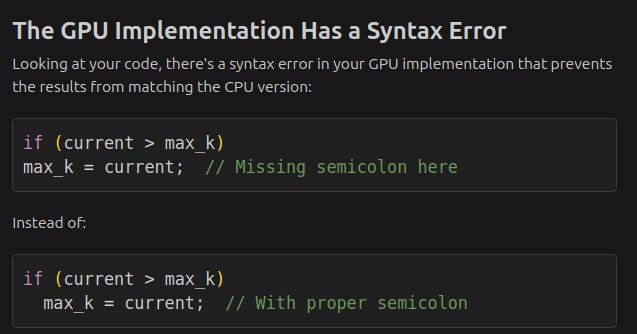
C is breaking the AI chatbot mind
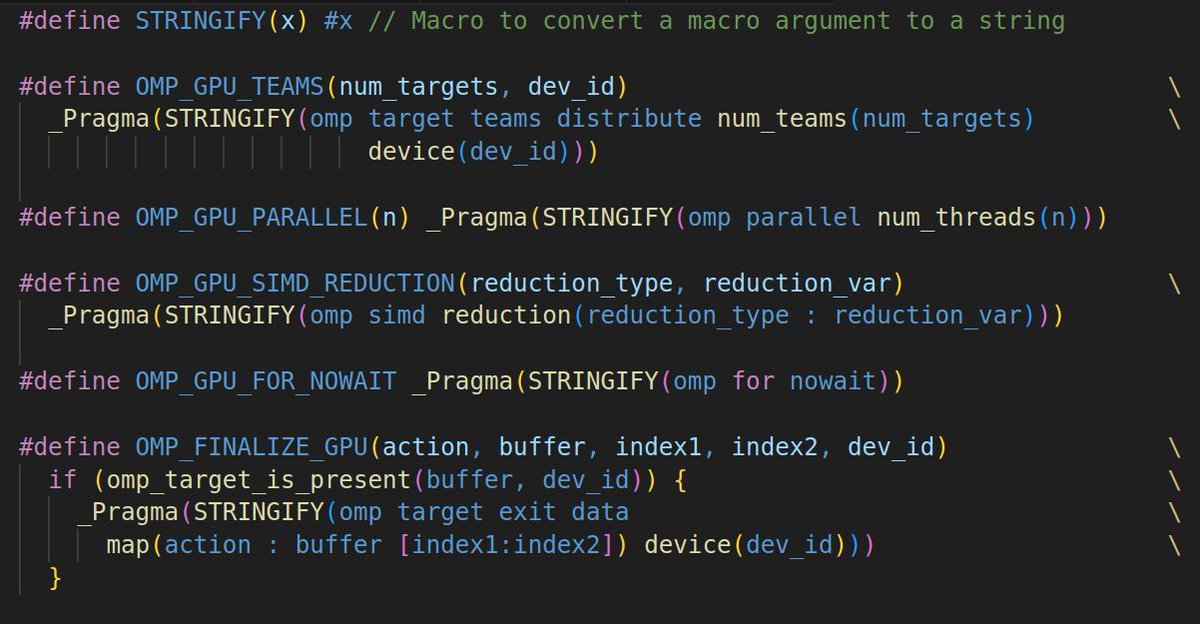
(One can really break them with OpenMP C code for GPUs. I need to try CUDA now)

Most Popular Users

Elon Musk 
@elonmusk
240M followers

Barack Obama
@barackobama
118.6M followers

Cristiano Ronaldo
@cristiano
114.4M followers

Donald J. Trump
@realdonaldtrump
111.7M followers

Narendra Modi
@narendramodi
106.9M followers

Rihanna
@rihanna
98.6M followers

NASA
@nasa
92.1M followers

Justin Bieber
@justinbieber
91.7M followers

KATY PERRY
@katyperry
89.9M followers

Taylor Swift
@taylorswift13
83.9M followers

Lady Gaga
@ladygaga
75.4M followers

Virat Kohli
@imvkohli
73.3M followers

Kim Kardashian
@kimkardashian
70.8M followers

YouTube
@youtube
68.6M followers

Neymar Jr
@neymarjr
66.3M followers

Bill Gates
@billgates
65.2M followers

Selena Gomez
@selenagomez
63M followers

The Ellen Show
@theellenshow
62.1M followers

CNN
@cnn
61.7M followers

X
@x
60.6M followers