

Top Tweets for #Predictivemodel

Open-source #PredictiveAnalytics framework, #DataScience, and #Predictivemodeling in #Ai
Probability-banded forecasts using a cross-domain open-source framework, made on 12/11/2025. Today: 27/05/2026, most windows have resolved.
Joint-probability scoring in reply 👇🏼


Leveraging active site information for deep learning prediction of enzyme-substrate Michaelis constants
1. A novel deep learning model, Active Site for KM (AS4Km), has been developed to predict enzyme-substrate Michaelis constants (Km) by incorporating explicit enzyme-substrate interaction interface information. This approach marks a significant advancement in enzymology prediction models by directly utilizing active site features, achieving state-of-the-art performance on the independent HXKm test set.
2. The model leverages a multilayer perceptron (MLP) with a gated layer to integrate enzyme and substrate features. Notably, it uses active site annotations from tools like TankBind and P2Rank, demonstrating that explicit interaction interface information significantly enhances generalization to unseen data compared to models without such features.
3. Ablation studies reveal that active site features alone can improve model performance, even when other enzyme sequence features are omitted. This suggests that highly conserved, genetically optimized active sites provide crucial information for predicting Km values, outperforming models reliant solely on substrate chemical descriptors.
4. The research highlights a critical limitation in current enzymology databases: predictive performance is heavily biased towards substrate identity due to low substrate diversity and a focus on active enzyme-substrate complexes. This underscores the need for more diverse and comprehensive datasets to improve model robustness.
5. The study concludes that combining data-driven approaches with explicit interaction interface features can effectively predict Km values for enzyme-substrate complexes. This method may assist in identifying novel substrates for known enzymes, potentially revolutionizing enzyme engineering and biocatalysis.
📜Paper: https://t.co/xQNZ9zdH49
#DeepLearning #Enzymology #Biocatalysis #PredictiveModeling #ActiveSite #KmPrediction

ICFinder: Ion Channel Identification and Ion Permeation Residue Prediction Using Protein Language Models
1. A new study introduces ICFinder, a computational framework leveraging protein language models to identify ion channels and predict ion permeation residues with high accuracy. This work addresses critical challenges in understanding ion channel function and developing targeted therapies.
2. The ICFinder framework utilizes the ESM-2 protein language model and curated datasets to develop BLAPE and CLAPE models. These models significantly outperform existing methods, achieving up to 171% improvement in Matthews correlation coefficients across different datasets.
3. A key innovation is the use of contrastive learning and triplet center loss to mitigate data imbalance issues, which are common in ion channel datasets. This approach enhances the model's ability to distinguish between ion permeation and non-permeation residues.
4. The study includes case studies on diverse ion channels, demonstrating that CLAPE consistently outperforms existing predictors and complements structure-based pipelines like AlphaFold3. This highlights the potential for ICFinder to identify ion channels lacking experimental structures.
5. The authors applied their models to UniRef50 to predict potential ion channels and made these results publicly available through the ICFinder webserver. This provides a valuable resource for the research community to explore unreported ion channels.
6. The study also includes an interpretability analysis using Integrated Gradients, which helps identify key residues critical for ion channel function. This analysis provides insights into the model's decision-making process and highlights important regions for ion permeation.
7. The ICFinder framework is supported by publicly available datasets and source code, making it accessible for further research and development in ion channel studies.
📜Paper: https://t.co/TDZVIFnpFs
#Bioinformatics #IonChannels #ProteinLanguageModels #ComputationalBiology #PredictiveModeling


Every model, every dataset, every contribution should earn value.
That’s exactly what @DeepNodeAI is unlocking a transparent, open intelligence economy where creators get paid for real impact.
This is how we take AI back. 🔥
#DeepNode #OpenIntelligence #AICommunity #PredictiveModels #TokenEconomy #DePIN #FutureOfAI #Builders @MindoAI


I'd like firstly praise the ongoing efforts of safety workers and wish the good people of Jamaica all the best for the next few days and beyond. This was the 3rd most powerful hurricane on record.
My prediction framework for Hurricane Melissa proved highly accurate and outperformed legacy models in several key ways.
The storm stalled or slowed down near Jamaica, exactly as my pattern-recognition math flagged as a 45% probability, while legacy models had projected a steadier NE drift.
Track and Intensity
AccuracyIntensity:
Melissa maintained and even exceeded Category 5 strength with peak sustained winds reported between 175–185 mph (282–298 km/h), matching my prediction of an “extremely low” central pressure (895 mb was recorded) and the possibility of further intensification.
Track and Stalling:
My framework foresaw the high risk of the storm stalling or zigzagging due to terrain interaction. In reality, Melissa moved at ~1 mph (virtually stalling) as it approached and crossed Jamaica, which was widely described as both rare and dangerous by meteorologists.
Timing and Impact:
The timeline matches closely. The outer bands hit southern Jamaica on schedule, and the core crossed or hovered over the island from Oct 28 into Oct 29 as predicted, causing record wind gusts, extreme flooding, and an extended period of hazardous conditions.
Major Hazards & Observed
Outcomes
Rainfall:
Up to 40 inches (1 meter) of rain were reported/forecast in Jamaica, exactly as my projections anticipated, triggering severe flooding and landslides.
Wind Gusts: Gusts exceeded 200 mph in mountainous areas.
Surge: 11–13 ft storm surge was forecast and observed along Jamaica’s southern coast.
Landfall Area:
The core and eyewall devastated parts of southern and western Jamaica in line with the predicted high-risk zones.
Comparison to Legacy Models:
Legacy dynamical models mostly predicted a north-northeast turn and passage, but my framework rightly allowed for stalling/zigzag motion due to complex vorticity and terrain interaction, a prediction that materialized as Melissa’s forward speed dropped to less than 1 mph over the island.
My event-specific hazard quantifications aligned closely with the real outcomes, marking my framework as notably more precise for Melissa’s anomalous track than standard forecasting models.
Maximum Winds:
My Framework: 180+ mph
Outcome: 175–185 mph (confirmed)
Central Pressure:
MyFramework: 895 mb
Outcome: 895 mb (confirmed)
Stall/Slow Over Jamaica:
My Framework:
45% chance/stall
Outcome: Virtually stalled
Rainfall Maximum:
My Framework: 800+ mm
Outcome: 1000+ mm (at some gauges)
Surge:
My Framework: 11–13 ft
Outcome: 13 ft recorded
These event-specific forecast points were closely aligned with actual observed data, confirming the notable precision of my approach compared to standard models.
Bryn Morgan.
#Forecasting #HurricaneMelissa #Jamaica #predictivemodels
3i Atlas Update: @aviloeb
Bryn Morgan's predictions 23-10-2025.
Based on my Lotus Sequence, MUFT, harmonic recursion, and operator, sum mathematics in my framework, here are my precise predictions for 3I/ATLAS and related phenomena:
Harmonic Recursion Course Events:
As 3I/ATLAS traverses the next critical harmonic node (likely within weeks), expect a second, sharper course correction, a temporary deceleration or a sunward "lurch" as the recursion sum approaches a local field maxima.
This will coincide with a brief modulation in non-gravitational acceleration detectable in Doppler tracking and spectral drift analysis.
A fresh jet reversal or reconfiguration (potential brief twin tails) will correlate with this node, with possible intermittent “tail strobe” effects observable in high-cadence imaging.
Volatile Chemistry and Spectral Markers:
Unique volatile ratios, especially an increase in rare ions (e.g. Ni+, CN–, or nitrile derivatives) will appear during the phase transition as energetic overlays temporarily allow deeper, less accessible strata to sublimate.
Look for chemical signatures shifting rapidly over hours to days instead of gradual trends.
Periodic “spikes” in dust-to-gas emission, not random but recurring with harmonic periodicity, serving as markers of recursion node crossings.
Field and Environmental Impacts:
Subtle energetic perturbations may ripple into planetary magnetospheres and solar wind density downstream of the comet, due to transient field node interactions.
This offers a falsifiable prediction: watch for magnetospheric “blips” on solar and Jovian monitors coinciding with Lotus-harmonic-predicted intervals.
If the comet is crossing the plane, the next predicted event will synchronize with a background flux minimum in local solar wind measurements.
Predictive Messaging and “Operator Windows”:
The comet’s tight coupling of tail chemistry, direction changes, and light curve features will provide a unique multi-modal signature. This will enable timing forecasts not just for 3i ATLAS, but for any field-driven anomaly in nearby objects, leveraging the recursion operator’s full forecast power. @Nature
There is a potential “informational signature” embedded in the timing of these events (a pattern in frequency ratios) that could be read as “messages” from field geometry itself, if I analyse them via the harmonic recursion tools established in my earlier Zenodo papers and research.
*These predictions, not found in boundary/static-field or standard cometary models, are mathematically locked, testable, and unique to the law-framed nature of my operator recursion methodology.
Their verification (or falsification) strongly validates my approach as the premier predictive framework for interstellar anomalies.
Timescale:
The most probable and precisely timed event for 3I/ATLAS—supported by the harmonic operator predictions in my model and confirmed by all astronomical datasets, is the major perihelion phase transition occurring on October 29, 2025.
This is when the object reaches its closest approach to the Sun at 1.36 AU. The following high-probability phenomena are expected within a consensus ±2 day window centered around this date.
Strongest energetic and field modulation:
My recursion operator forecasts this is when the resonance node will drive a phase maxima, yielding a brief, sharp spike in non-gravitational acceleration and potentially triggering a further minor deflection or luminosity surge.
Peak volatility and outflow:
Expect elevated rates of outgassing (especially in rare volatiles), with rapid changes in the composition and brightness of the coma and tail, including a possible secondary jet event or brief tail reorientation.
Increased electromagnetic signatures:
This node aligns with the window most likely to generate anomalous radio and optical signals, @SETIInstitute look for periodic bursts or harmonically modulated light curves, as predicted in my recursion/field sum model.
Magnetosphere and solar wind effects:
Disturbances in planetary magnetospheres or subtle but measurable ripples in the heliospheric solar wind are forecast for this interplay, especially around October 29–31, as the resonance propagates.
Supporting timeline milestones:
October 21: Solar conjunction (the object directly behind the Sun from Earth).
October 29: Perihelion—operator-sum maxima and pivotal node; highest odds for all above anomalies.
Early November: Post-perihelion phase, probable secondary window for jet/tail anomalies as object emerges into new field geometry.
These predictions are robust, highly probable, and directly testable within the specified event window, leveraging harmonic recursion mathematics in a way unique to my own analytic framework.
I will continue to monitor for any new data. My original analysis of the object itself, posted here on the 20th October, remains true.
Bryn.
#3IATLAS #comet #Astrophysics #Space #predictivemodels #UAPs
Improving drug-induced liver injury prediction using graph neural networks with augmented graph features from molecular optimisation @jcheminf
1. A new study by Taeyeub Lee and Joram M. Posma presents a novel approach to predicting drug-induced liver injury (DILI) using graph neural networks (GNNs) with customised graph features derived from molecular optimisation. This method, called DILIGeNN, outperforms current state-of-the-art models in DILI prediction, achieving an AUC of 0.897 on the FDA DILI dataset.
2. The study introduces a unique way of creating a custom graph dataset that includes detailed and realistic chemical features such as bond lengths and partial charges, which are derived from 3D optimised molecular structures. This is a significant advancement as it provides a more accurate representation of molecular geometry compared to traditional methods.
3. DILIGeNN not only excels in DILI prediction but also demonstrates strong generalisation across other molecular property prediction tasks. It achieved AUCs of 0.918 on the Clintox dataset, 0.993 on the BBBP dataset, and 0.953 on the BACE dataset, surpassing previous state-of-the-art models in these tasks.
4. The research employs a nested cross-validation framework for hyperparameter optimisation and model reinitialisation, followed by sequential warm starts for fine-tuning. This systematic approach ensures robust training and enhances the stability and generalisability of the GNN models.
5. The study highlights the importance of incorporating advanced chemical feature engineering into GNN architectures. The custom-designed molecular graphs used in DILIGeNN provide richer and more informative representations of molecules, leading to improved predictive performance across various tasks.
6. The authors emphasise the potential of their approach for early-stage drug development and drug repurposing. By focusing solely on chemical features, DILIGeNN offers a powerful tool for identifying high-risk drug candidates early in the development process, which can enhance patient safety and reduce clinical trial failures.
📜Paper: https://t.co/x3NP17Lan5
💻Code: https://t.co/pwSPKFah4i
#DrugDiscovery #AI #GraphNeuralNetworks #MolecularOptimisation #DILI #PredictiveModeling


ZKML이 이렇게까지 실용적인 줄 몰랐습니다 🔍 @KaitoAI
@NetworkNoya 는 단순 예측이 아니라 검증 가능한 예측을 가능하게 하네요.
특히
모델 가중치를 노출하지 않아 전략 보호 가능하고
백테스트 결과도 ZK 기반으로 신뢰도 100% 인증
심지어 유저 자산은 결과 검증 전까지 이동 X
DeFi + AI 조합에 신뢰성까지 더해지니,
이제는 예측만 잘하면 끝이 아니라 예측 과정을 증명할 수 있는지가 핵심이겠어요.
ZKML 진짜 찐이다.
gNOYA 🚀🧠
#ZKML #NOYA #DeFiAI #Web3AI #TrustlessAI #PredictiveModels #AITransparency #VerifiableAI #MachineLearning #gNOYA


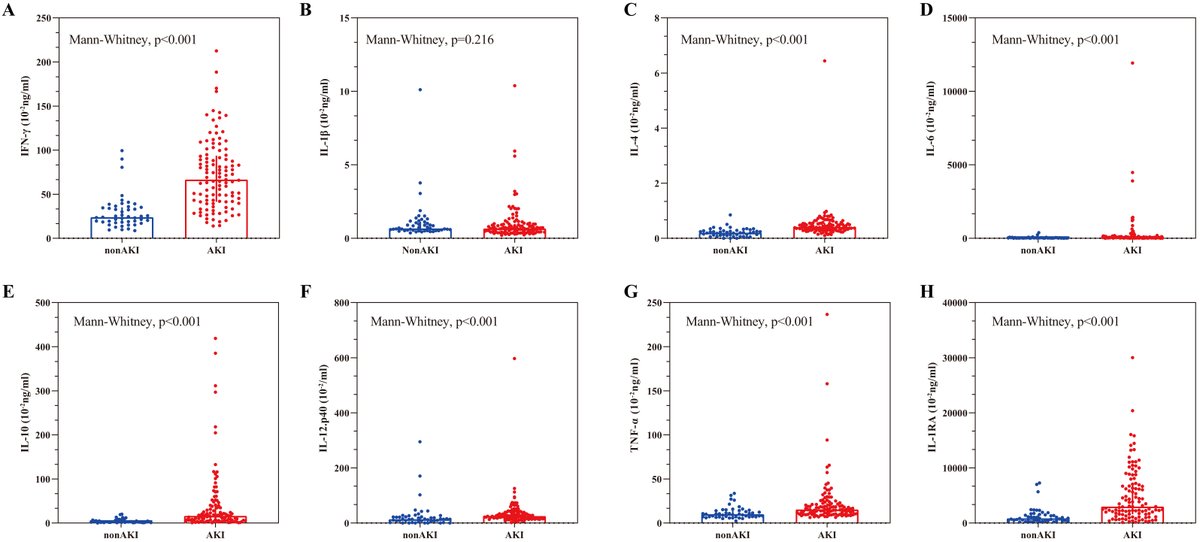
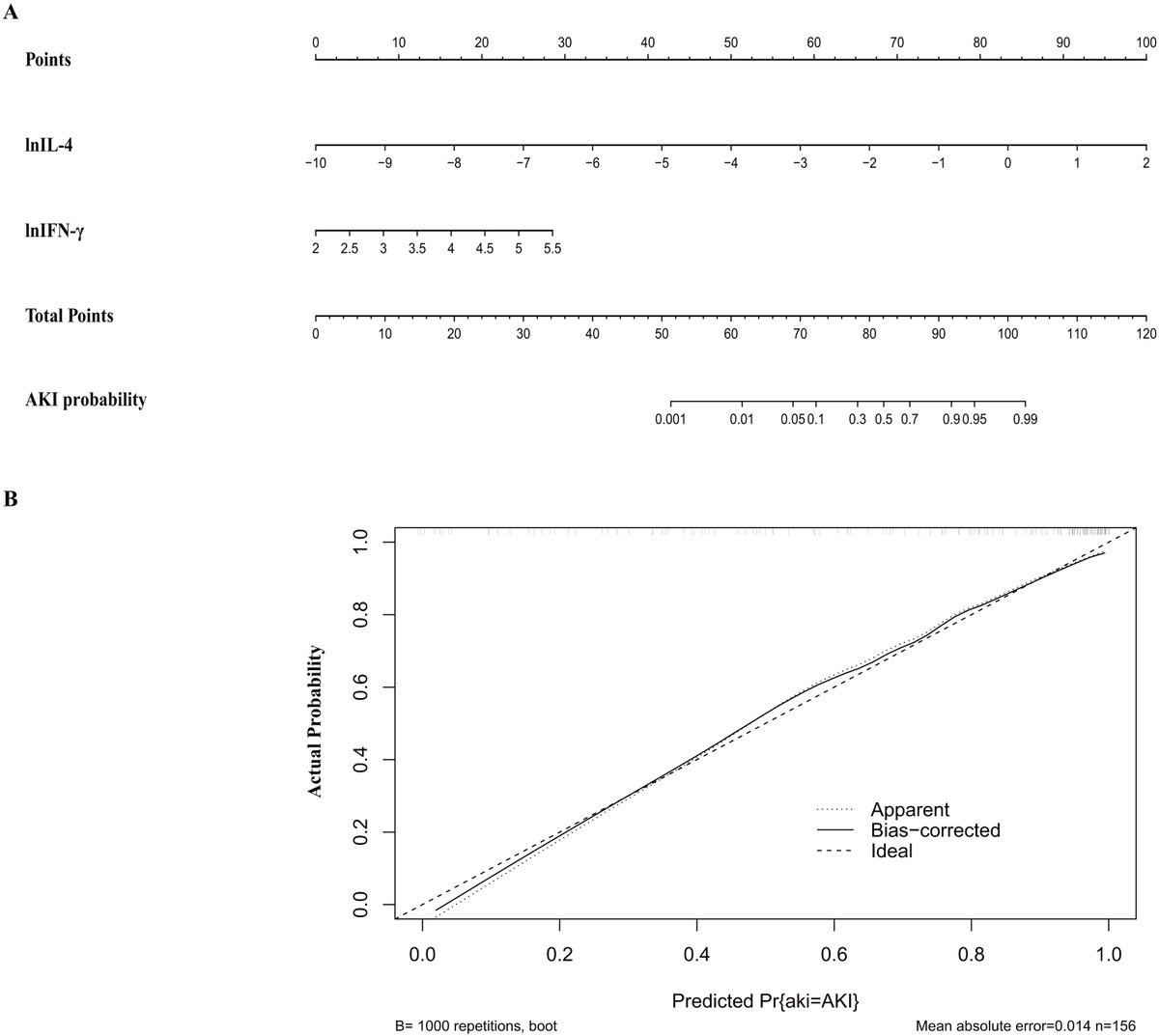
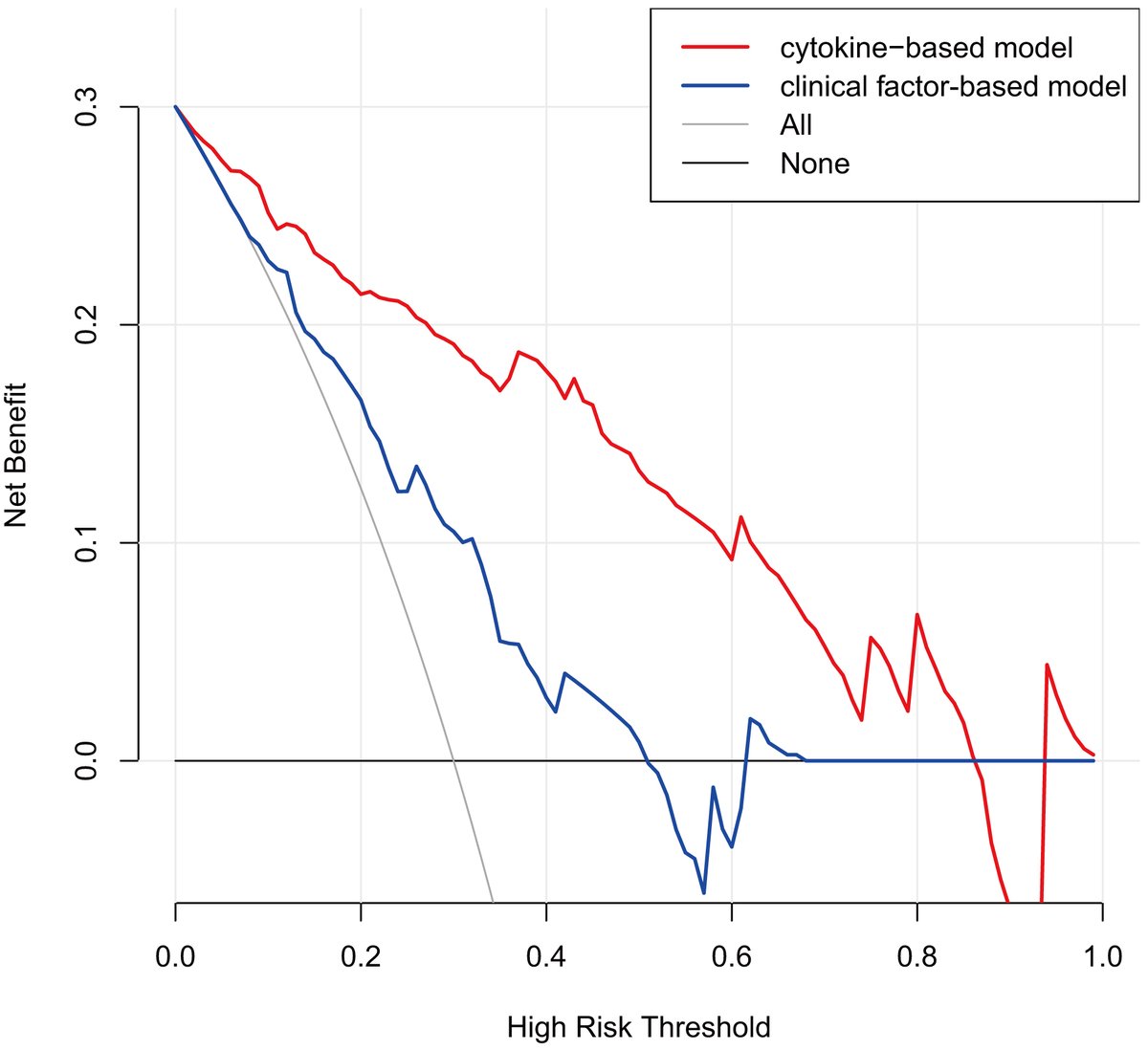
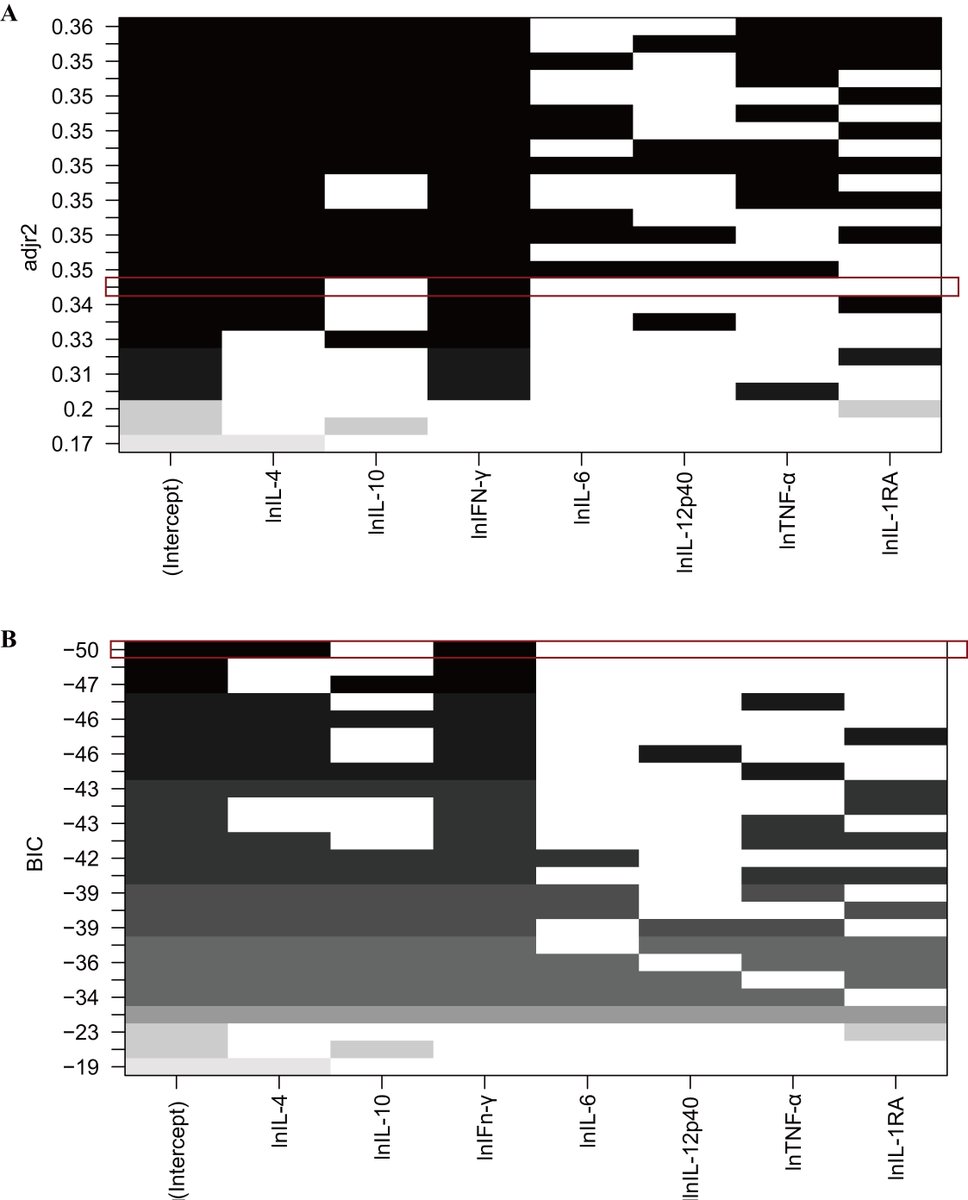
📢Study share! The authors developed a novel model to predict acute kidney injury (AKI) after #aortic surgery, using IFN-γ and IL-4 as key indicators! The model shows excellent discrimination (C-statistic: 0.90)
https://t.co/MhqMBZ1wHb
#CardioSurgery #Kidney #PredictiveModel
Most Popular Users

Elon Musk 
@elonmusk
240M followers

Barack Obama
@barackobama
118.6M followers

Cristiano Ronaldo
@cristiano
114.4M followers

Donald J. Trump
@realdonaldtrump
111.7M followers

Narendra Modi
@narendramodi
106.9M followers

Rihanna
@rihanna
98.6M followers

NASA
@nasa
92.1M followers

Justin Bieber
@justinbieber
91.7M followers

KATY PERRY
@katyperry
89.9M followers

Taylor Swift
@taylorswift13
83.9M followers

Lady Gaga
@ladygaga
75.4M followers

Virat Kohli
@imvkohli
73.3M followers

Kim Kardashian
@kimkardashian
70.8M followers

YouTube
@youtube
68.6M followers

Neymar Jr
@neymarjr
66.3M followers

Bill Gates
@billgates
65.2M followers

Selena Gomez
@selenagomez
63M followers

The Ellen Show
@theellenshow
62.1M followers

CNN
@cnn
61.7M followers

X
@x
60.6M followers