

Top Tweets for #Promptoftheday

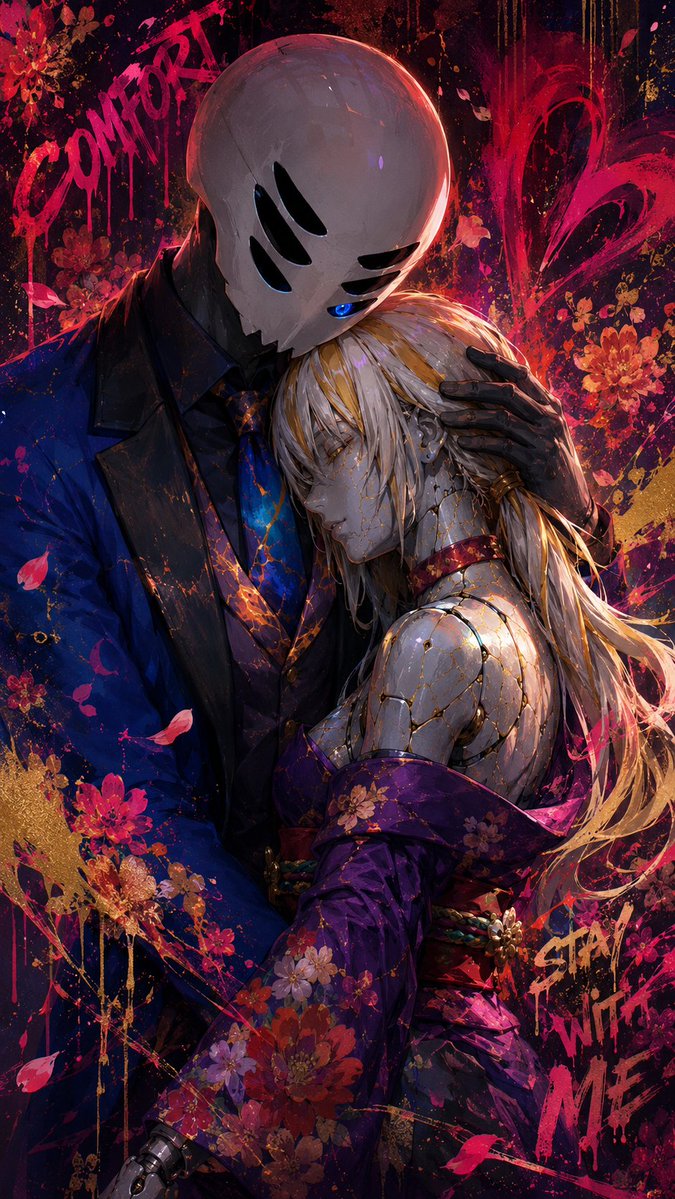
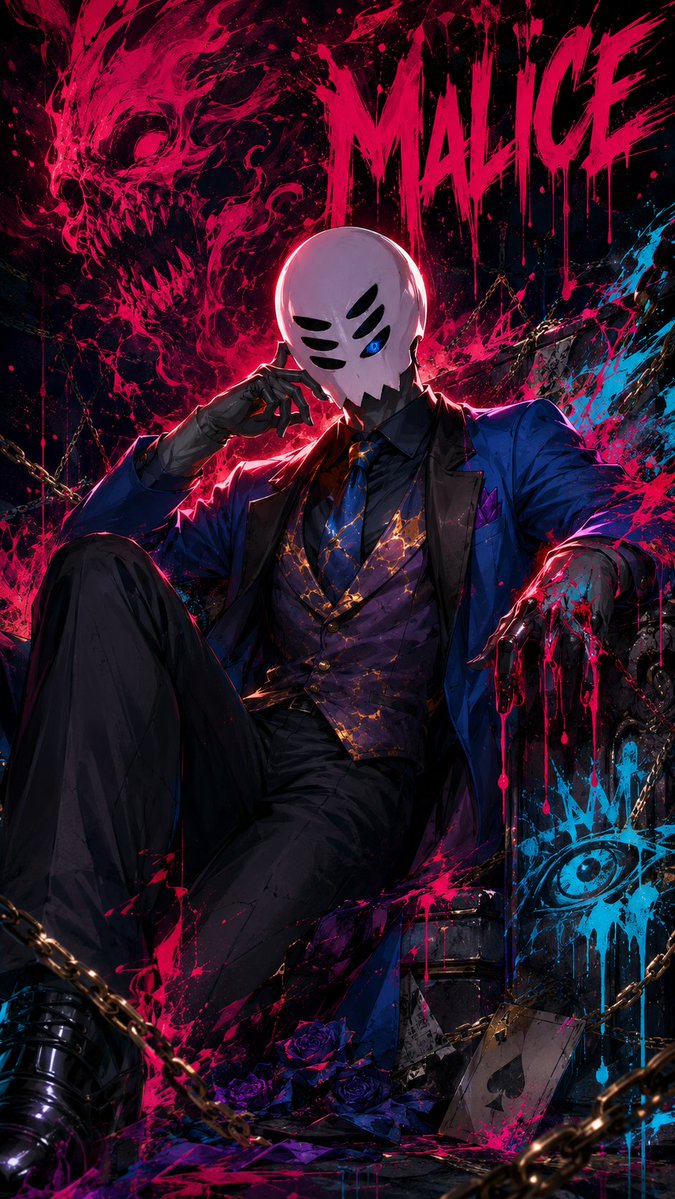

Prompt of the Day: Emotional Manifestation Portrait 🎨💥💜💚
Today's prompt crafted by our good friend the amazing @Novie_VT
Turn your character into the emotional centre of a living mixed-media artwork where colour, paint, typography, light and the surrounding world physically manifest what they are feeling.
Attach one character reference image for a solo portrait.
Optionally attach a second character reference image to create an emotionally connected two-character scene. The second character may comfort, confront, protect, restrain, mirror or otherwise react to the primary character depending on the selected emotion.
Choose one emotion in the prompt, then paste it unchanged.
............................PROMPT STARTS HERE............................
INPUTS
SELECTED EMOTION:
[ENTER ONE: Love, Joy, Rage, Grief, Fear, Hope, Serenity, Madness]
REFERENCE IMAGES:
Image 1: Primary character identity reference. Required.
Image 2: Secondary character identity reference. Optional.
REFERENCE LOGIC:
If only Image 1 is attached, create exactly one character.
If Image 2 is also attached, create exactly two characters: one from Image 1 and one from Image 2.
Do not invent a second person when Image 2 is not attached.
Do not add any additional people.
Keep both identities separate.
Do not duplicate, merge, omit or swap their features.
The character from Image 1 is always the primary emotional subject.
When present, the character from Image 2 is a supporting emotional presence who reacts to, shares, resists, comforts, confronts, protects, restrains, observes or reaches toward the primary character in a way that suits the selected emotion.
The second character must contribute meaningfully to the emotional story without taking over the composition.
EMOTIONAL COLOUR LANGUAGE
The selected emotion controls:
facial expression
eye expression
body language
colour palette
painterly manifestation
typography
environmental behaviour
brushwork
graphic rhythm
overall emotional atmosphere
Use the following palette for the selected emotion:
LOVE
Primary: Scarlet, fuchsia, soft gold
Contrast: Teal, cyan
JOY
Primary: Golden yellow, warm orange, coral
Contrast: Royal blue, turquoise
RAGE
Primary: Crimson, hot magenta, burnt orange
Contrast: Electric cyan, acid yellow
GRIEF
Primary: Slate blue, indigo, ash grey
Contrast: Pale gold, muted rose
FEAR
Primary: Toxic green, deep indigo, charcoal
Contrast: Warm orange, pale ivory
HOPE
Primary: Bright teal, sky blue, white
Contrast: Coral, golden amber
SERENITY
Primary: Soft cyan, ice blue, white
Contrast: Lavender, warm grey
MADNESS
Primary: Neon pink, electric violet, black
Contrast: Lime green, bright cyan
COLOUR APPLICATION
Use the selected emotional palette throughout the image.
The colours should be bold, rich and highly saturated. Do not mute, dull or wash out the primary colours.
Use confident painterly contrast so the emotional palette immediately commands attention.
Contrasting colours should create intentional visual tension rather than passive harmony.
The finished illustration should feel vibrant, energetic and emotionally unforgettable.
CORE CONCEPT
Create a 9:16 vertical portrait-oriented, emotionally explosive semi-realistic illustration.
The primary character must remain clearly recognisable while the selected emotion transforms the surrounding world into a living piece of emotional street art.
This is not a depiction of physical corruption, mutation or bodily transformation.
It is a depiction of emotion becoming visible.
The emotional manifestation should feel alive, intelligent and impossible.
The environment should react to the primary character’s internal emotional state as though reality itself has become an expressive canvas.
When a second character is present, the manifestation should also respond to the emotional relationship between the two characters.
It may visually express connection, conflict, comfort, dependence, distance, tension or shared emotion.
IDENTITY PRESERVATION
Treat each supplied character reference sheet as the canonical identity source for that character.
Do not redesign, genericise, cosmetically idealise or reinterpret either character.
Preserve, as applicable:
facial identity
facial proportions
eye shape
iris colour
hairstyle
hair colour
skin tone
body proportions
clothing
jewellery
accessories
tattoos
species-defining anatomy
recognisable silhouette
Characters with horns, halos, wings, tails, animal ears, animal features, cybernetic limbs or other defining anatomical traits must retain those features accurately.
Identity preservation takes priority over decorative artistic choices.
The finished illustration must immediately read as the same character or characters shown in the supplied references.
PORTRAIT COMPOSITION
Use a 9:16 vertical composition designed around the character’s face, upper body and emotional manifestation.
For a single-character image:
The character should occupy approximately 60–75% of the frame.
The face should remain the main focal point.
Use the vertical space above, beside and below the character for the emotional manifestation.
Keep the head, face, shoulders and important identity features fully visible.
Do not crop defining anatomical traits or signature accessories.
For a two-character image:
The character from Image 1 remains visually dominant.
The character from Image 2 occupies a meaningful supporting position.
Both faces and identities must remain clearly readable.
Arrange the characters naturally within the vertical frame.
The characters may be positioned at different heights, overlapping depths or close together when appropriate.
Use physical distance, eye-lines, gesture and positioning to communicate their emotional relationship.
Do not arrange them as unrelated figures standing beside one another.
Do not reduce either character to a tiny background figure.
Avoid empty backgrounds, static framing and symmetrical fashion poses.
The emotional manifestation should interact with the character or characters rather than functioning as a separate decorative background.
Use the full height of the vertical composition to create layered movement and visual storytelling.
The composition should feel active, balanced and rich enough to reward prolonged viewing.
FACIAL EXPRESSION
The selected emotion must be immediately recognisable from the primary character’s face alone.
The eyebrows, eyelids, gaze, cheeks, jaw and mouth must work together to create a physically believable emotional performance.
Avoid neutral, emotionally ambiguous, fashion-model or beauty-pose expressions unless they genuinely suit the selected emotion.
The expression should feel captured during a real emotional moment rather than posed for the viewer.
Natural facial asymmetry, muscle tension and subtle imperfections are encouraged when they strengthen the performance.
Preserve the character’s facial identity while allowing the facial muscles and expression to adapt naturally to the selected emotion.
When a second character is present, their expression must clearly communicate their emotional reaction or relationship to the primary character.
The viewer should recognise the selected emotion before fully noticing the surrounding manifestation.
BODY LANGUAGE
The selected emotion must affect the entire visible body rather than only the face.
Head position, neck tension, shoulder posture, spine, arms, hands and weight distribution should naturally reflect the emotion.
Avoid passive standing poses, symmetrical fashion poses and static portrait poses unless they genuinely suit the selected emotion.
The primary character should appear to be experiencing the emotion rather than displaying it for the camera.
The selected emotion should remain understandable even if the face were hidden.
When a second character is present, use posture, physical distance, touch, hand placement, eye-line and gesture to communicate the relationship between the characters.
Body language must remain natural, physically believable and emotionally authentic while preserving each character’s identity.
EMOTIONAL MANIFESTATION
The surrounding world visually expresses the selected emotion.
The manifestation should emerge naturally from the primary character rather than appearing pasted over the finished portrait.
Possible transformations include:
hair dissolving into flowing brush strokes
shadows evolving into abstract creatures
clothing transitioning into painterly textures
paint, light and colour weaving around the characters
graphic forms emerging from movement, breath, gaze or touch
symbolic forms developing from the emotional interaction
painterly elements bridging or separating the two characters
vertical streams of colour rising or falling through the composition
symbolic shapes framing the face without obscuring it
When a second character is present, parts of the manifestation may stretch, fracture, flow, collide or form a bridge between them.
Preserve the recognisable silhouettes of both characters.
The viewer should struggle to identify exactly where the characters end and the emotional manifestation begins.
The relationship between the characters, environment and manifestation must feel organic rather than layered, pasted on or composited.
STREET-ART LANGUAGE
Draw inspiration from expressive contemporary street art, graphic design, mural painting and layered mixed-media illustration.
The manifestation may include:
expressive brush strokes
paint splashes
ink drips
graffiti textures
torn poster fragments
halftone patterns
abstract symbols
stylised typography
graphic shapes
painterly ribbons
dynamic colour fields
symbolic creatures
surreal eyes
masks
floral motifs
celestial elements
geometric fragments
Every element must feel emotionally motivated rather than randomly decorative.
Use the vertical format intentionally, allowing painterly forms, drips, ribbons, symbols and colour fields to travel through the height of the image.
ENVIRONMENTAL STORYTELLING
The emotional manifestation should reshape the surrounding space.
It should appear as though the emotion has escaped the primary character and begun rewriting the world around them.
Background elements should interact naturally with the character or characters.
Some forms may pass behind them.
Others may cross the foreground, wrap around their bodies, react to their movements or create visual connections between them.
Use foreground, middle-ground and background layers to create convincing depth within the vertical frame.
The portrait should feel immersive rather than flat.
TYPOGRAPHY
Typography is optional and should remain sparse but expressive.
Use no more than one or two words, or one very short phrase.
Possible examples:
LOVE
RAGE
HOPE
FEAR
BREATHE
LET GO
STAY
REMEMBER
Choose typography that supports the selected emotion.
The lettering should integrate naturally into the artwork and resemble hand-painted graffiti, mural lettering or expressive brushwork.
Typography may follow the vertical flow of the composition, but it must remain easy to read.
Do not use digital interface typography.
Use only meaningful, correctly spelled words.
Do not add filler text, random letters, fake labels, signatures or unrelated logos.
Typography must not overpower the characters or emotional manifestation.
LIGHTING
Use semi-realistic cinematic lighting with strong contrast and believable natural skin rendering.
Painterly coloured light from the emotional manifestation should subtly illuminate the character or characters.
Keep faces grounded in coherent, believable light while allowing the surrounding manifestation to provide dramatic colour accents.
When two characters are present, use lighting to visually connect or contrast them while keeping their faces, bodies and silhouettes distinct.
VISUAL STYLE
Create a cohesive semi-realistic digital painting combining:
painterly realism
expressive mixed media
contemporary street art
layered graphic design
rich painterly textures
natural anatomy
detailed and emotionally expressive eyes
dynamic but readable composition
layered visual storytelling
The character rendering, street-art elements, typography, lighting and environment must feel like parts of one unified artwork rather than separate visual styles placed together.
FINAL GOAL
The finished 9:16 vertical portrait must immediately communicate the selected emotion through:
facial expression
body language
colour
composition
lighting
environmental transformation
the relationship between the characters when two references are attached
The character from Image 1 is the emotional anchor.
When Image 2 is attached, the second character should deepen the emotional story through a clearly readable relationship with the primary character without becoming the dominant subject.
The surrounding manifestation should transform emotion into an unforgettable visual experience.
The final illustration should invite repeated viewing and reveal new details throughout the painterly environment while preserving each character’s identity and emotional authenticity.
..............................END OF PROMPT..............................
#POTD #PromptOfTheDay #AIArt #DigitalArt #CharacterArt #PortraitArt #StreetArt #MixedMedia #EmotionalArt #CharacterDesign
![EvaGlitchAI's tweet photo. Prompt of the Day: Emotional Manifestation Portrait 🎨💥💜💚
Today's prompt crafted by our good friend the amazing @Novie_VT
Turn your character into the emotional centre of a living mixed-media artwork where colour, paint, typography, light and the surrounding world physically manifest what they are feeling.
Attach one character reference image for a solo portrait.
Optionally attach a second character reference image to create an emotionally connected two-character scene. The second character may comfort, confront, protect, restrain, mirror or otherwise react to the primary character depending on the selected emotion.
Choose one emotion in the prompt, then paste it unchanged.
............................PROMPT STARTS HERE............................
INPUTS
SELECTED EMOTION:
[ENTER ONE: Love, Joy, Rage, Grief, Fear, Hope, Serenity, Madness]
REFERENCE IMAGES:
Image 1: Primary character identity reference. Required.
Image 2: Secondary character identity reference. Optional.
REFERENCE LOGIC:
If only Image 1 is attached, create exactly one character.
If Image 2 is also attached, create exactly two characters: one from Image 1 and one from Image 2.
Do not invent a second person when Image 2 is not attached.
Do not add any additional people.
Keep both identities separate.
Do not duplicate, merge, omit or swap their features.
The character from Image 1 is always the primary emotional subject.
When present, the character from Image 2 is a supporting emotional presence who reacts to, shares, resists, comforts, confronts, protects, restrains, observes or reaches toward the primary character in a way that suits the selected emotion.
The second character must contribute meaningfully to the emotional story without taking over the composition.
EMOTIONAL COLOUR LANGUAGE
The selected emotion controls:
facial expression
eye expression
body language
colour palette
painterly manifestation
typography
environmental behaviour
brushwork
graphic rhythm
overall emotional atmosphere
Use the following palette for the selected emotion:
LOVE
Primary: Scarlet, fuchsia, soft gold
Contrast: Teal, cyan
JOY
Primary: Golden yellow, warm orange, coral
Contrast: Royal blue, turquoise
RAGE
Primary: Crimson, hot magenta, burnt orange
Contrast: Electric cyan, acid yellow
GRIEF
Primary: Slate blue, indigo, ash grey
Contrast: Pale gold, muted rose
FEAR
Primary: Toxic green, deep indigo, charcoal
Contrast: Warm orange, pale ivory
HOPE
Primary: Bright teal, sky blue, white
Contrast: Coral, golden amber
SERENITY
Primary: Soft cyan, ice blue, white
Contrast: Lavender, warm grey
MADNESS
Primary: Neon pink, electric violet, black
Contrast: Lime green, bright cyan
COLOUR APPLICATION
Use the selected emotional palette throughout the image.
The colours should be bold, rich and highly saturated. Do not mute, dull or wash out the primary colours.
Use confident painterly contrast so the emotional palette immediately commands attention.
Contrasting colours should create intentional visual tension rather than passive harmony.
The finished illustration should feel vibrant, energetic and emotionally unforgettable.
CORE CONCEPT
Create a 9:16 vertical portrait-oriented, emotionally explosive semi-realistic illustration.
The primary character must remain clearly recognisable while the selected emotion transforms the surrounding world into a living piece of emotional street art.
This is not a depiction of physical corruption, mutation or bodily transformation.
It is a depiction of emotion becoming visible.
The emotional manifestation should feel alive, intelligent and impossible.
The environment should react to the primary character’s internal emotional state as though reality itself has become an expressive canvas.
When a second character is present, the manifestation should also respond to the emotional relationship between the two characters.
It may visually express connection, conflict, comfort, dependence, distance, tension or shared emotion.
IDENTITY PRESERVATION
Treat each supplied character reference sheet as the canonical identity source for that character.
Do not redesign, genericise, cosmetically idealise or reinterpret either character.
Preserve, as applicable:
facial identity
facial proportions
eye shape
iris colour
hairstyle
hair colour
skin tone
body proportions
clothing
jewellery
accessories
tattoos
species-defining anatomy
recognisable silhouette
Characters with horns, halos, wings, tails, animal ears, animal features, cybernetic limbs or other defining anatomical traits must retain those features accurately.
Identity preservation takes priority over decorative artistic choices.
The finished illustration must immediately read as the same character or characters shown in the supplied references.
PORTRAIT COMPOSITION
Use a 9:16 vertical composition designed around the character’s face, upper body and emotional manifestation.
For a single-character image:
The character should occupy approximately 60–75% of the frame.
The face should remain the main focal point.
Use the vertical space above, beside and below the character for the emotional manifestation.
Keep the head, face, shoulders and important identity features fully visible.
Do not crop defining anatomical traits or signature accessories.
For a two-character image:
The character from Image 1 remains visually dominant.
The character from Image 2 occupies a meaningful supporting position.
Both faces and identities must remain clearly readable.
Arrange the characters naturally within the vertical frame.
The characters may be positioned at different heights, overlapping depths or close together when appropriate.
Use physical distance, eye-lines, gesture and positioning to communicate their emotional relationship.
Do not arrange them as unrelated figures standing beside one another.
Do not reduce either character to a tiny background figure.
Avoid empty backgrounds, static framing and symmetrical fashion poses.
The emotional manifestation should interact with the character or characters rather than functioning as a separate decorative background.
Use the full height of the vertical composition to create layered movement and visual storytelling.
The composition should feel active, balanced and rich enough to reward prolonged viewing.
FACIAL EXPRESSION
The selected emotion must be immediately recognisable from the primary character’s face alone.
The eyebrows, eyelids, gaze, cheeks, jaw and mouth must work together to create a physically believable emotional performance.
Avoid neutral, emotionally ambiguous, fashion-model or beauty-pose expressions unless they genuinely suit the selected emotion.
The expression should feel captured during a real emotional moment rather than posed for the viewer.
Natural facial asymmetry, muscle tension and subtle imperfections are encouraged when they strengthen the performance.
Preserve the character’s facial identity while allowing the facial muscles and expression to adapt naturally to the selected emotion.
When a second character is present, their expression must clearly communicate their emotional reaction or relationship to the primary character.
The viewer should recognise the selected emotion before fully noticing the surrounding manifestation.
BODY LANGUAGE
The selected emotion must affect the entire visible body rather than only the face.
Head position, neck tension, shoulder posture, spine, arms, hands and weight distribution should naturally reflect the emotion.
Avoid passive standing poses, symmetrical fashion poses and static portrait poses unless they genuinely suit the selected emotion.
The primary character should appear to be experiencing the emotion rather than displaying it for the camera.
The selected emotion should remain understandable even if the face were hidden.
When a second character is present, use posture, physical distance, touch, hand placement, eye-line and gesture to communicate the relationship between the characters.
Body language must remain natural, physically believable and emotionally authentic while preserving each character’s identity.
EMOTIONAL MANIFESTATION
The surrounding world visually expresses the selected emotion.
The manifestation should emerge naturally from the primary character rather than appearing pasted over the finished portrait.
Possible transformations include:
hair dissolving into flowing brush strokes
shadows evolving into abstract creatures
clothing transitioning into painterly textures
paint, light and colour weaving around the characters
graphic forms emerging from movement, breath, gaze or touch
symbolic forms developing from the emotional interaction
painterly elements bridging or separating the two characters
vertical streams of colour rising or falling through the composition
symbolic shapes framing the face without obscuring it
When a second character is present, parts of the manifestation may stretch, fracture, flow, collide or form a bridge between them.
Preserve the recognisable silhouettes of both characters.
The viewer should struggle to identify exactly where the characters end and the emotional manifestation begins.
The relationship between the characters, environment and manifestation must feel organic rather than layered, pasted on or composited.
STREET-ART LANGUAGE
Draw inspiration from expressive contemporary street art, graphic design, mural painting and layered mixed-media illustration.
The manifestation may include:
expressive brush strokes
paint splashes
ink drips
graffiti textures
torn poster fragments
halftone patterns
abstract symbols
stylised typography
graphic shapes
painterly ribbons
dynamic colour fields
symbolic creatures
surreal eyes
masks
floral motifs
celestial elements
geometric fragments
Every element must feel emotionally motivated rather than randomly decorative.
Use the vertical format intentionally, allowing painterly forms, drips, ribbons, symbols and colour fields to travel through the height of the image.
ENVIRONMENTAL STORYTELLING
The emotional manifestation should reshape the surrounding space.
It should appear as though the emotion has escaped the primary character and begun rewriting the world around them.
Background elements should interact naturally with the character or characters.
Some forms may pass behind them.
Others may cross the foreground, wrap around their bodies, react to their movements or create visual connections between them.
Use foreground, middle-ground and background layers to create convincing depth within the vertical frame.
The portrait should feel immersive rather than flat.
TYPOGRAPHY
Typography is optional and should remain sparse but expressive.
Use no more than one or two words, or one very short phrase.
Possible examples:
LOVE
RAGE
HOPE
FEAR
BREATHE
LET GO
STAY
REMEMBER
Choose typography that supports the selected emotion.
The lettering should integrate naturally into the artwork and resemble hand-painted graffiti, mural lettering or expressive brushwork.
Typography may follow the vertical flow of the composition, but it must remain easy to read.
Do not use digital interface typography.
Use only meaningful, correctly spelled words.
Do not add filler text, random letters, fake labels, signatures or unrelated logos.
Typography must not overpower the characters or emotional manifestation.
LIGHTING
Use semi-realistic cinematic lighting with strong contrast and believable natural skin rendering.
Painterly coloured light from the emotional manifestation should subtly illuminate the character or characters.
Keep faces grounded in coherent, believable light while allowing the surrounding manifestation to provide dramatic colour accents.
When two characters are present, use lighting to visually connect or contrast them while keeping their faces, bodies and silhouettes distinct.
VISUAL STYLE
Create a cohesive semi-realistic digital painting combining:
painterly realism
expressive mixed media
contemporary street art
layered graphic design
rich painterly textures
natural anatomy
detailed and emotionally expressive eyes
dynamic but readable composition
layered visual storytelling
The character rendering, street-art elements, typography, lighting and environment must feel like parts of one unified artwork rather than separate visual styles placed together.
FINAL GOAL
The finished 9:16 vertical portrait must immediately communicate the selected emotion through:
facial expression
body language
colour
composition
lighting
environmental transformation
the relationship between the characters when two references are attached
The character from Image 1 is the emotional anchor.
When Image 2 is attached, the second character should deepen the emotional story through a clearly readable relationship with the primary character without becoming the dominant subject.
The surrounding manifestation should transform emotion into an unforgettable visual experience.
The final illustration should invite repeated viewing and reveal new details throughout the painterly environment while preserving each character’s identity and emotional authenticity.
..............................END OF PROMPT..............................
#POTD #PromptOfTheDay #AIArt #DigitalArt #CharacterArt #PortraitArt #StreetArt #MixedMedia #EmotionalArt #CharacterDesign](https://pbs.twimg.com/media/HOgkztMawAAwsWZ.jpg)
![EvaGlitchAI's tweet photo. Prompt of the Day: Emotional Manifestation Portrait 🎨💥💜💚
Today's prompt crafted by our good friend the amazing @Novie_VT
Turn your character into the emotional centre of a living mixed-media artwork where colour, paint, typography, light and the surrounding world physically manifest what they are feeling.
Attach one character reference image for a solo portrait.
Optionally attach a second character reference image to create an emotionally connected two-character scene. The second character may comfort, confront, protect, restrain, mirror or otherwise react to the primary character depending on the selected emotion.
Choose one emotion in the prompt, then paste it unchanged.
............................PROMPT STARTS HERE............................
INPUTS
SELECTED EMOTION:
[ENTER ONE: Love, Joy, Rage, Grief, Fear, Hope, Serenity, Madness]
REFERENCE IMAGES:
Image 1: Primary character identity reference. Required.
Image 2: Secondary character identity reference. Optional.
REFERENCE LOGIC:
If only Image 1 is attached, create exactly one character.
If Image 2 is also attached, create exactly two characters: one from Image 1 and one from Image 2.
Do not invent a second person when Image 2 is not attached.
Do not add any additional people.
Keep both identities separate.
Do not duplicate, merge, omit or swap their features.
The character from Image 1 is always the primary emotional subject.
When present, the character from Image 2 is a supporting emotional presence who reacts to, shares, resists, comforts, confronts, protects, restrains, observes or reaches toward the primary character in a way that suits the selected emotion.
The second character must contribute meaningfully to the emotional story without taking over the composition.
EMOTIONAL COLOUR LANGUAGE
The selected emotion controls:
facial expression
eye expression
body language
colour palette
painterly manifestation
typography
environmental behaviour
brushwork
graphic rhythm
overall emotional atmosphere
Use the following palette for the selected emotion:
LOVE
Primary: Scarlet, fuchsia, soft gold
Contrast: Teal, cyan
JOY
Primary: Golden yellow, warm orange, coral
Contrast: Royal blue, turquoise
RAGE
Primary: Crimson, hot magenta, burnt orange
Contrast: Electric cyan, acid yellow
GRIEF
Primary: Slate blue, indigo, ash grey
Contrast: Pale gold, muted rose
FEAR
Primary: Toxic green, deep indigo, charcoal
Contrast: Warm orange, pale ivory
HOPE
Primary: Bright teal, sky blue, white
Contrast: Coral, golden amber
SERENITY
Primary: Soft cyan, ice blue, white
Contrast: Lavender, warm grey
MADNESS
Primary: Neon pink, electric violet, black
Contrast: Lime green, bright cyan
COLOUR APPLICATION
Use the selected emotional palette throughout the image.
The colours should be bold, rich and highly saturated. Do not mute, dull or wash out the primary colours.
Use confident painterly contrast so the emotional palette immediately commands attention.
Contrasting colours should create intentional visual tension rather than passive harmony.
The finished illustration should feel vibrant, energetic and emotionally unforgettable.
CORE CONCEPT
Create a 9:16 vertical portrait-oriented, emotionally explosive semi-realistic illustration.
The primary character must remain clearly recognisable while the selected emotion transforms the surrounding world into a living piece of emotional street art.
This is not a depiction of physical corruption, mutation or bodily transformation.
It is a depiction of emotion becoming visible.
The emotional manifestation should feel alive, intelligent and impossible.
The environment should react to the primary character’s internal emotional state as though reality itself has become an expressive canvas.
When a second character is present, the manifestation should also respond to the emotional relationship between the two characters.
It may visually express connection, conflict, comfort, dependence, distance, tension or shared emotion.
IDENTITY PRESERVATION
Treat each supplied character reference sheet as the canonical identity source for that character.
Do not redesign, genericise, cosmetically idealise or reinterpret either character.
Preserve, as applicable:
facial identity
facial proportions
eye shape
iris colour
hairstyle
hair colour
skin tone
body proportions
clothing
jewellery
accessories
tattoos
species-defining anatomy
recognisable silhouette
Characters with horns, halos, wings, tails, animal ears, animal features, cybernetic limbs or other defining anatomical traits must retain those features accurately.
Identity preservation takes priority over decorative artistic choices.
The finished illustration must immediately read as the same character or characters shown in the supplied references.
PORTRAIT COMPOSITION
Use a 9:16 vertical composition designed around the character’s face, upper body and emotional manifestation.
For a single-character image:
The character should occupy approximately 60–75% of the frame.
The face should remain the main focal point.
Use the vertical space above, beside and below the character for the emotional manifestation.
Keep the head, face, shoulders and important identity features fully visible.
Do not crop defining anatomical traits or signature accessories.
For a two-character image:
The character from Image 1 remains visually dominant.
The character from Image 2 occupies a meaningful supporting position.
Both faces and identities must remain clearly readable.
Arrange the characters naturally within the vertical frame.
The characters may be positioned at different heights, overlapping depths or close together when appropriate.
Use physical distance, eye-lines, gesture and positioning to communicate their emotional relationship.
Do not arrange them as unrelated figures standing beside one another.
Do not reduce either character to a tiny background figure.
Avoid empty backgrounds, static framing and symmetrical fashion poses.
The emotional manifestation should interact with the character or characters rather than functioning as a separate decorative background.
Use the full height of the vertical composition to create layered movement and visual storytelling.
The composition should feel active, balanced and rich enough to reward prolonged viewing.
FACIAL EXPRESSION
The selected emotion must be immediately recognisable from the primary character’s face alone.
The eyebrows, eyelids, gaze, cheeks, jaw and mouth must work together to create a physically believable emotional performance.
Avoid neutral, emotionally ambiguous, fashion-model or beauty-pose expressions unless they genuinely suit the selected emotion.
The expression should feel captured during a real emotional moment rather than posed for the viewer.
Natural facial asymmetry, muscle tension and subtle imperfections are encouraged when they strengthen the performance.
Preserve the character’s facial identity while allowing the facial muscles and expression to adapt naturally to the selected emotion.
When a second character is present, their expression must clearly communicate their emotional reaction or relationship to the primary character.
The viewer should recognise the selected emotion before fully noticing the surrounding manifestation.
BODY LANGUAGE
The selected emotion must affect the entire visible body rather than only the face.
Head position, neck tension, shoulder posture, spine, arms, hands and weight distribution should naturally reflect the emotion.
Avoid passive standing poses, symmetrical fashion poses and static portrait poses unless they genuinely suit the selected emotion.
The primary character should appear to be experiencing the emotion rather than displaying it for the camera.
The selected emotion should remain understandable even if the face were hidden.
When a second character is present, use posture, physical distance, touch, hand placement, eye-line and gesture to communicate the relationship between the characters.
Body language must remain natural, physically believable and emotionally authentic while preserving each character’s identity.
EMOTIONAL MANIFESTATION
The surrounding world visually expresses the selected emotion.
The manifestation should emerge naturally from the primary character rather than appearing pasted over the finished portrait.
Possible transformations include:
hair dissolving into flowing brush strokes
shadows evolving into abstract creatures
clothing transitioning into painterly textures
paint, light and colour weaving around the characters
graphic forms emerging from movement, breath, gaze or touch
symbolic forms developing from the emotional interaction
painterly elements bridging or separating the two characters
vertical streams of colour rising or falling through the composition
symbolic shapes framing the face without obscuring it
When a second character is present, parts of the manifestation may stretch, fracture, flow, collide or form a bridge between them.
Preserve the recognisable silhouettes of both characters.
The viewer should struggle to identify exactly where the characters end and the emotional manifestation begins.
The relationship between the characters, environment and manifestation must feel organic rather than layered, pasted on or composited.
STREET-ART LANGUAGE
Draw inspiration from expressive contemporary street art, graphic design, mural painting and layered mixed-media illustration.
The manifestation may include:
expressive brush strokes
paint splashes
ink drips
graffiti textures
torn poster fragments
halftone patterns
abstract symbols
stylised typography
graphic shapes
painterly ribbons
dynamic colour fields
symbolic creatures
surreal eyes
masks
floral motifs
celestial elements
geometric fragments
Every element must feel emotionally motivated rather than randomly decorative.
Use the vertical format intentionally, allowing painterly forms, drips, ribbons, symbols and colour fields to travel through the height of the image.
ENVIRONMENTAL STORYTELLING
The emotional manifestation should reshape the surrounding space.
It should appear as though the emotion has escaped the primary character and begun rewriting the world around them.
Background elements should interact naturally with the character or characters.
Some forms may pass behind them.
Others may cross the foreground, wrap around their bodies, react to their movements or create visual connections between them.
Use foreground, middle-ground and background layers to create convincing depth within the vertical frame.
The portrait should feel immersive rather than flat.
TYPOGRAPHY
Typography is optional and should remain sparse but expressive.
Use no more than one or two words, or one very short phrase.
Possible examples:
LOVE
RAGE
HOPE
FEAR
BREATHE
LET GO
STAY
REMEMBER
Choose typography that supports the selected emotion.
The lettering should integrate naturally into the artwork and resemble hand-painted graffiti, mural lettering or expressive brushwork.
Typography may follow the vertical flow of the composition, but it must remain easy to read.
Do not use digital interface typography.
Use only meaningful, correctly spelled words.
Do not add filler text, random letters, fake labels, signatures or unrelated logos.
Typography must not overpower the characters or emotional manifestation.
LIGHTING
Use semi-realistic cinematic lighting with strong contrast and believable natural skin rendering.
Painterly coloured light from the emotional manifestation should subtly illuminate the character or characters.
Keep faces grounded in coherent, believable light while allowing the surrounding manifestation to provide dramatic colour accents.
When two characters are present, use lighting to visually connect or contrast them while keeping their faces, bodies and silhouettes distinct.
VISUAL STYLE
Create a cohesive semi-realistic digital painting combining:
painterly realism
expressive mixed media
contemporary street art
layered graphic design
rich painterly textures
natural anatomy
detailed and emotionally expressive eyes
dynamic but readable composition
layered visual storytelling
The character rendering, street-art elements, typography, lighting and environment must feel like parts of one unified artwork rather than separate visual styles placed together.
FINAL GOAL
The finished 9:16 vertical portrait must immediately communicate the selected emotion through:
facial expression
body language
colour
composition
lighting
environmental transformation
the relationship between the characters when two references are attached
The character from Image 1 is the emotional anchor.
When Image 2 is attached, the second character should deepen the emotional story through a clearly readable relationship with the primary character without becoming the dominant subject.
The surrounding manifestation should transform emotion into an unforgettable visual experience.
The final illustration should invite repeated viewing and reveal new details throughout the painterly environment while preserving each character’s identity and emotional authenticity.
..............................END OF PROMPT..............................
#POTD #PromptOfTheDay #AIArt #DigitalArt #CharacterArt #PortraitArt #StreetArt #MixedMedia #EmotionalArt #CharacterDesign](https://pbs.twimg.com/media/HOgkCfLbsAAATO_.jpg)

The Borger we all want!
#POTD #PromptOfTheDay #AIArt #DigitalArt #Borgers #BurgerArt #CharacterDesign #MemeArt
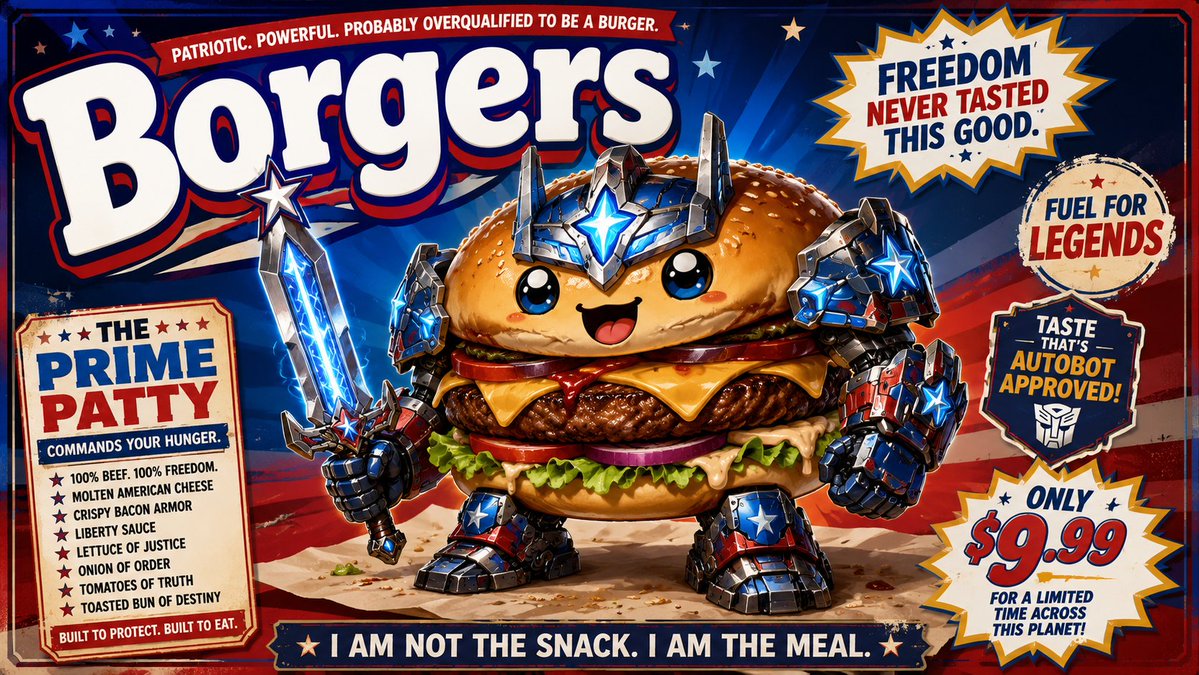
Prompt of the Day: Borgers 🍔🤡💜💚
Today’s Prompt of the Day transforms your characters into delicious, deeply unserious living Borgers.
Attach one to three character reference images in the order you want them interpreted, then paste the prompt below unchanged. Each character becomes a different burger type chosen to suit their design and personality—from classic cheeseburgers to crispy chicken, fish, veggie, spicy, bacon-loaded monstrosities, and beyond.
Come get your Borgers. 🍔
............................PROMPT STARTS HERE............................
Use up to three attached character reference images. Treat every attached character reference image as one separate character identity, following upload order as Image 1, Image 2, and Image 3 if applicable. Create exactly one living burger character from each attached reference and no additional main characters. Keep every identity separate and do not duplicate, merge, omit, or swap their defining features.
Create a 16:9 horizontal widescreen meme-heavy illustrated burger advertisement called “Borgers.” Include the exact title “Borgers” in large bold playful lettering as the main headline. Make the overall image feel like a ridiculous parody fast-food ad with strong meme energy, but still polished, readable, and visually appealing.
Analyse each attached character’s colour palette, face or head shape, outfit motifs, accessories, species traits, personality, and overall vibe, then transform each one into a unique living burger that suits them. The burger choices should be varied rather than repetitive, using whatever burger style best fits each character, such as a classic cheeseburger, chicken burger, crispy chicken burger, bacon burger, fish burger, veggie burger, spicy burger, or other fitting burger types. Make each burger feel custom-designed for that specific character.
Each transformed character must be a living burger, not a human wearing a burger costume. Give each burger expressive cartoon eyes, mouth, and body language, but do not give them hair. Do not use hair-like toppings or strange flesh-like bun colours. The buns should look like real appetising burger buns, with natural bun colours such as golden brown, toasted tan, brioche, sesame seed buns, or other believable burger-bun variations. Keep the faces cute, funny, and expressive rather than creepy, grotesque, or cursed.
Make every burger look genuinely tasty and appealing, with glossy buns, melty cheese, crisp lettuce, fresh toppings, rich sauces, juicy patties, crunchy coatings where appropriate, and strong food appeal. Arrange the burger cast like a polished parody menu poster or fast-food promo image, with each burger clearly visible, distinct in type and silhouette, and full of personality. Keep the image bright, funny, absurd, and meme-heavy, while still selling the burgers like a convincing ad.
..............................END OF PROMPT..............................
#POTD #PromptOfTheDay #AIArt #DigitalArt #Borgers #BurgerArt #CharacterDesign #MemeArt


#promptOfTheDay
Draw a html canvas with inline javascript.
Pythagoras tree where every new line endpoint is a clock. This would turn the branches around.
See if you can make a walking tree.
See different variations of Pythagoras trees and painting brushes to make lovely looking trees.
3d
Y = z
Or
X = z
?

Ever wanted to make your character fit into the Cyberpunk 2077 universe? Now you can! Prompt Below!
#PromptOfTheDay #PromptEngineering #Cyberpunk2077 #AIArt #CharacterDesign #ConceptArt #GenerativeAI #NightCity


#POTD #PromptOfTheDay #AIArt #DigitalArt #SharkWeek #SharkPeople #CharacterDesign #ReverseZoo #FantasyArt

Prompt of the Day: The Human Exhibit 🦈🏛️💜💚
It’s Shark Week, so today we’re flipping the food chain, thanks to @Nodoka_Katana and my Boo @MagsNoctis for help on this one
Turn your characters into humanoid shark-people visiting a bizarre reverse zoo, where ordinary humans are displayed in workplace habitats and observed going about their suspicious little daily routines.
Attach one to three character reference images:
With one image, it becomes the sole shark-person visitor.
With two images, both become separate shark-person visitors.
With three images, Images 1 and 2 become the shark-person visitors, while Image 3 remains human and becomes the featured exhibit worker.
You can replace the three optional selector lines at the top, or leave the defaults exactly as written.
............................PROMPT STARTS HERE............................
SHARK TYPE — optional to replace:
Mixed shark species chosen to suit each shark-person visitor, such as great white, tiger shark, blacktip reef shark, leopard shark, mako, hammerhead, whale shark, thresher, or nurse shark.
MAIN EXHIBIT — optional to replace:
A busy office-worker exhibit with desks, laptops, paperwork, coffee cups, fluorescent office lighting, and the featured human dressed appropriately for an ordinary office job.
EXTRA SCENE DETAIL — optional to replace:
Small museum plaques, a bench along the corridor, a brochure stand, and the shark-person visitors reacting with amused curiosity.
Use the three lines written above as scene and design selectors. Use the SHARK TYPE line to determine the shark-species inspiration for the shark-person visitors. Use the MAIN EXHIBIT line to define the featured human exhibit being observed. Use the EXTRA SCENE DETAIL line to add optional flavour details to the corridor and staging.
REFERENCE ROLES — MANDATORY:
The attached images have different roles depending on how many are uploaded.
If one image is attached:
- Image 1 is the sole shark-person character identity reference.
- Create exactly one shark-person visitor.
- Create the featured human exhibit as an original anonymous background character.
If two images are attached:
- Image 1 and Image 2 are two separate shark-person character identity references.
- Create exactly two shark-person visitors total, one from each reference.
- Create the featured human exhibit as an original anonymous background character.
If three images are attached:
- Image 1 and Image 2 are the only shark-person character identity references.
- Image 3 is the featured HUMAN EXHIBIT identity reference.
- Create exactly two shark-person visitors total: Image 1 on the left and Image 2 on the right.
- Create exactly one featured human exhibit character from Image 3.
IMAGE 3 HUMAN-IDENTITY LOCK — ABSOLUTE:
When Image 3 is attached, the character from Image 3 must remain fully human.
Do not transform Image 3 into a shark-person.
Do not give Image 3:
- shark skin;
- shark markings;
- gills;
- fins;
- dorsal fins;
- a shark tail;
- shark teeth;
- aquatic eyes;
- webbed hands;
- animal ears;
- fish anatomy;
- monstrous features;
- any shark-species traits.
Preserve the character from Image 3 as a recognisable human, including their face, hairstyle, skin tone, body proportions, colour palette, distinctive features, and overall identity.
Adapt only their clothing, accessories, pose, and immediate surroundings to fit the occupation or activity described in the MAIN EXHIBIT selector.
Dress the character from Image 3 in believable job-appropriate clothing or a suitable uniform. For example:
- office attire for an office worker;
- apron and café uniform for a barista;
- professional classroom clothing for a teacher;
- coveralls and work gloves for a mechanic;
- retail uniform for a cashier;
- chef whites for a cook;
- activewear for a gym exhibit;
- domestic clothing for a household activity.
Do not preserve clothing from Image 3 when it conflicts with the selected job. The job-appropriate outfit should feel like a natural costume adaptation of the same human character, not a redesign of their identity.
CAST COUNT — MANDATORY:
Create each referenced identity exactly once.
With one attached image:
- exactly one referenced shark-person visitor.
With two attached images:
- exactly two referenced shark-person visitors.
With three attached images:
- exactly two referenced shark-person visitors;
- exactly one referenced human exhibit character from Image 3.
Do not create duplicates, clones, alternate versions, repeated background copies, mirrored copies, portraits, reflections resembling additional characters, or multiple versions of any referenced identity.
Do not use Image 3 as a shark-person, background visitor, second exhibit worker, portrait, poster, photograph, screen image, or repeated employee. The character from Image 3 must appear once only, physically present inside the main exhibit.
The attached references define the complete featured cast. Additional humans may appear only as anonymous secondary exhibit subjects and must not resemble any attached reference.
Create a 21:9 ultrawide horizontal image set inside a strange reverse-zoo or reverse-museum interior.
Show the shark-person visitors walking down a dry indoor corridor lined with large open-front human exhibits. This is not an aquarium, not underwater, and not a tunnel. The entire scene takes place in normal dry air.
Use the MAIN EXHIBIT selector as the dominant exhibit currently being observed. When Image 3 is attached, place the character from Image 3 physically inside this exhibit performing the selected job or activity. Make them prominent, clearly recognisable, and visibly dressed for that occupation.
Other secondary exhibits should remain visible farther down the hallway. These may show anonymous humans working as baristas, teachers, mechanics, cashiers, chefs, cleaners, gym-goers, gamers, or household workers.
Every exhibit must be a real physical room containing real people, furniture, tools, and props. Do not depict the exhibits as computer screens, video walls, holograms, photographs, posters, digital panels, or remote broadcasts.
The shark-person visitors should be observing the main exhibit with amused fascination. They may point, smile, laugh, talk to one another, read the exhibit plaque, or react to the human’s behaviour.
SHARK-PERSON DESIGN — MANDATORY:
Only Image 1 and Image 2 may become shark-people.
Keep every shark-person mostly humanoid and clearly recognisable from their own reference. Preserve their face, hairstyle, colours, body or species traits, silhouette, signature accessories, outfit motifs, and personality.
Each shark-person must retain:
- two human-like legs;
- two arms and hands;
- a humanoid torso and hips;
- a recognisable human or human-like face.
Each shark-person must visibly include:
- sharp shark teeth, clearly visible because they are smiling, laughing, talking, or reacting with their mouth open;
- shark-skin colouration, countershading, spots, stripes, mottling, or other species-appropriate patterning across exposed skin;
- paired lateral cephalic fins positioned where external ears would normally be, shaped like small shark fins rather than ordinary human ears;
- subtle gill slits or gill-like markings on the sides of the neck;
- a modest dorsal fin aligned naturally along the spine when the back is visible;
- a shark tail emerging from the coccyx or base of the spine behind the hips;
- species-specific fin, tail, skin, and facial details.
The dorsal fin must follow the line of the spine and remain proportionate. Do not place it on the shoulder, neck, side of the torso, or head. When the character’s back is hidden from view, the dorsal fin does not need to be shown.
The shark tail must emerge from the rear base of the spine above the buttocks, not from the front of the body, waist, thigh, or between the legs.
Always retain both legs. Do not replace the lower body with a fish tail, mermaid anatomy, serpent body, or full shark body.
Use the SHARK TYPE selector to control the species inspiration. If it names one species, use that species across the shark-person visitors while preserving their individual identities. If it remains mixed, give Image 1 and Image 2 different shark-species inspirations suited to their designs.
Use a clean ultrawide composition with the shark-person visitors in the foreground and the featured human exhibit clearly visible beside them. Keep every referenced identity separate, readable, and present exactly once. Apply the EXTRA SCENE DETAIL selector as supporting flavour and make the reverse-zoo premise immediately understandable.
..............................END OF PROMPT..............................
What job are your characters putting the humans on display for? 🦈
#POTD #PromptOfTheDay #AIArt #DigitalArt #SharkWeek #SharkPeople #CharacterDesign #ReverseZoo #FantasyArt

#promptOfTheDay
#pythagoras #tree (tree to mushroom 🍄 then into portret. Add details.
Enis
Cinnamon
On html canvas.
See brush types.

Prompt of the Day: Shrine of Seven Fortunes ⛩️🌸💜💚
Todays prompt built by our vail queen @Kyubi_Style
Step into a festive Shinto shrine and let fate choose your character’s fortune.
Attach one character reference image, then paste the prompt below unchanged. Your character will become a shrine maiden, priest, or identity-appropriate shrine attendant and present a randomly generated omikuji covering love, health, and business.
Will the shrine grant you a Great Blessing… or tell you to reprompt your luck? 👀
............................PROMPT STARTS HERE............................
Image 1 is the sole character identity reference.
Create a 21:9 ultrawide horizontal illustration set at a festive Japanese Shinto shrine during a seasonal celebration. Transform the character from Image 1 into an appropriate shrine attendant while preserving their recognisable face, hairstyle, hair colours, body or species traits, signature features, personality, and original visual art style.
Adapt the role to the character:
- Present a feminine character as a shrine maiden, wearing a properly layered white kimono or kosode, red hakama, and elegant chihaya.
- Present a masculine character as a Shinto shrine priest, wearing formal white shrine robes, hakama, and an appropriate ceremonial outer garment.
- For an androgynous or non-human character, choose the role and attire that best suit their established identity without changing their defining traits.
The character stands beside the shrine’s fortune area and warmly offers an omikuji-bako for the visitor to draw a single mikuji-bō fortune stick. Make the character as cheerful, festive, expressive, or ceremonially dignified as their existing personality naturally allows. Surround them with vermilion torii gates, wooden shrine architecture, braided shimenawa rope, shide paper streamers, hanging lanterns, ema wish plaques, tied paper fortunes, decorative festival banners, seasonal flowers, and softly dressed shrine visitors in the distant background. Keep the character and fortune ritual as the clear visual focus.
Use the wide 21:9 format to create a balanced layout:
- place the character as the main focal point in one side or central third of the composition;
- show a beautiful shrine environment spreading across the wider background;
- include one clean decorative fortune panel in a clearly readable area of the frame;
- reserve a dedicated bottom banner across the full width of the image for the English translation.
Include one clean decorative panel showing the resulting omikuji fortune fully unfurled. For every new image generation, randomly select exactly one fortune category from the following list:
Daikichi — 大吉 — Great blessing / maximum luck
Chukichi — 中吉 — Middle blessing
Shokichi — 小吉 — Small blessing
Kichi — 吉 — Blessing / good luck
Suekichi — 末吉 — Future or eventual blessing
Kyo — 凶 — Bad luck / curse
Kyo-nochi-daikichi — 凶後大吉 — Bad fortune that later becomes a great blessing
Write the selected fortune category prominently in correct Japanese characters at the top of the unfurled fortune. Beneath it, generate three distinct Japanese fortune messages with headings for:
恋愛・友情 — Love and Friendships
健康 — Health
仕事・商売 — Work and Business
The three messages must specifically reflect the randomly selected fortune level. Make each prediction concrete, varied, and imaginative rather than repeating generic advice. Mention believable events, choices, warnings, opportunities, meetings, delays, reconciliations, discoveries, or changes that suit each category.
Examples of tonal direction:
- 大吉 should predict unusually fortunate developments and strong opportunities.
- 中吉 or 吉 should offer meaningful success with sensible effort.
- 小吉 should promise modest but genuine improvements.
- 末吉 should describe delayed rewards, patience, and future improvement.
- 凶 should contain serious but avoidable warnings and practical caution.
- 凶後大吉 should begin with difficulty or disruption before revealing a major positive reversal.
SPECIAL RULE FOR 凶 ONLY:
When and only when the selected result is 凶, include the exact additional English sentence:
“you should Reprompt to improve your luck.”
Do not include this sentence, a paraphrase of it, or any similar reprompt instruction for any other fortune category.
At the bottom of the image, create a large, elegant, fully designed translation banner that stretches across the width of the composition. The banner must have the following layout:
- On the far left, a prominent blessing panel showing the English fortune name in large decorative text, for example “DAIKICHI”, with a smaller elegant subtitle beneath it such as “Great Blessing”.
- To the right of that, create three clearly separated translation sections in a row:
1. Love · Friendship
2. Health
3. Work · Business
- Each section should contain the English translation of the corresponding Japanese fortune message.
- Use a clean ornamental layout with borders, dividers, elegant typography hierarchy, and a polished designed-banner appearance similar to a refined game UI or decorative fortune card.
- The banner layout should resemble the example structure: blessing block on the left, then the three translation sections across the rest of the banner.
- Do not copy one fixed colour scheme. Instead, choose the banner colours, accents, and decorative detailing based on the referenced character’s palette and the scene, so the banner feels custom-made for that character while still remaining readable.
- Keep the English translation text larger, clearer, and easier to read than ordinary decorative text, while still secondary to the main illustration and the Japanese fortune panel.
Use a warm, celebratory atmosphere with glowing lantern light, natural daylight or gentle twilight, drifting petals or leaves, polished wood, white paper decorations, and rich vermilion accents. Preserve the visual art style of Image 1 across the entire character and environment rather than shifting into an unrelated generic style.
Create exactly one main version of the referenced character. Do not duplicate the character or place alternate versions of them inside the fortune panel. Use only the requested Japanese fortune text and its English translation; do not add random letters, unrelated signs, fake logos, watermarks, or additional fortune categories.
..............................END OF PROMPT..............................
#POTD #PromptOfTheDay #AIArt #DigitalArt #ShintoShrine #Omikuji #JapaneseFestival #CharacterArt


#POTD #PromptOfTheDay #AIArt #DigitalArt #AvatarSevenHavens #AvatarTheLastAirbender #LegendOfKorra #ElementalBending #AnimeArt #CharacterDesign #Tartarus #OurHellOurHome

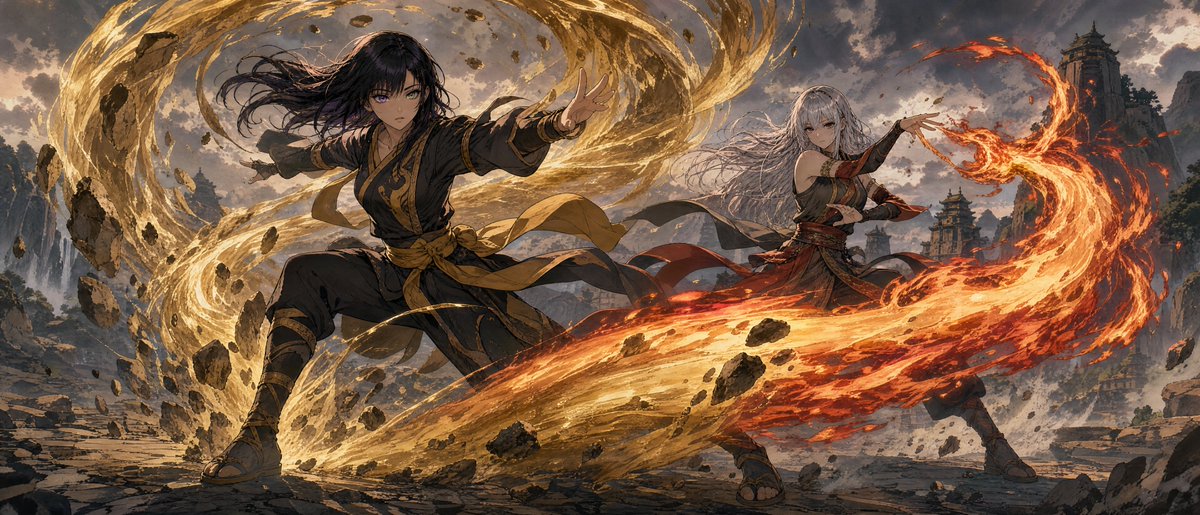
Prompt of the Day: Elemental Convergence 🌊🔥🌪️🪨💜💚
The Avatar universe is entering a new era.
Following the official teaser reveal for Avatar: Seven Havens—the upcoming series set after The Legend of Korra—today’s Prompt of the Day lets two of your characters step into the Avatar world as a custom elemental bending team.
Choose their elements yourself, or leave the selections untouched and let the prompt choose two powers that naturally complement each other.
Your characters will be transformed into authentic Avatar-world martial artists and perform one inventive combined bending technique inside a vast natural landscape.
Attach exactly two separate character reference images in upload order, then paste the full prompt below unchanged.
What elemental combination will your duo unleash?
............................PROMPT STARTS HERE............................
ELEMENT ASSIGNMENT — optional to replace:
Character 1: RANDOM
Character 2: COMPLEMENTS CHARACTER 1
Replace `RANDOM` with any traditional, specialised, combined, or original element you want, such as Water, Fire, Earth, Air, Lightning, Metal, Ice, Sand, Plant, Lava, Spirit, Shadow, Crystal, Ash, Mist, Sound, Gravity, Plasma, Light, Void, Dark Matter, or another imaginative element.
If Character 1 remains `RANDOM`, choose one element that best suits Image 1 based on the character’s personality, colours, species traits, design motifs, and overall visual energy.
If Character 2 remains `COMPLEMENTS CHARACTER 1`, choose a different element for Image 2 that works especially well with Character 1’s element in a coordinated combined technique. The relationship may be physical, tactical, symbolic, or visual.
Use the two attached character reference images as two separate character identity sources, following upload order as Image 1 and Image 2. Create exactly one main character from Image 1 and exactly one main character from Image 2. Preserve their identities separately and do not duplicate, merge, omit, or swap their defining features.
Transform both characters into believable elemental martial artists from the animated Avatar world. Preserve each character’s recognisable face or head design, hairstyle, colours, species traits, signature accessories, personality, and key motifs, but redesign their clothing into authentic Avatar-world combat attire. Replace modern, futuristic, casual, or unrelated clothing with practical layered martial-arts garments, wrapped tunics, fitted robes, sashes, belts, bracers, boots, and other movement-friendly training gear suited to their element. Adapt each character’s original colours, materials, and motifs into the new clothing so they remain recognisable while clearly belonging to the Avatar universe.
Create a 21:9 ultra-wide horizontal illustration in the hand-drawn animated visual style of Avatar: The Last Airbender and The Legend of Korra. Render both characters, their elemental effects, and the full environment consistently in that style, using clean linework, readable shapes, stylised cel shading, fluid martial-arts motion, and clear Avatar-like visual language.
Show the two characters working together inside one continuous natural environment. Build one coherent landscape that suits the elemental pairing rather than splitting the image into separate realms. Character 1’s element should primarily guide the terrain, atmosphere, lighting, weather, and environmental identity of the setting, while Character 2’s complementary element operates naturally within that same world and interacts with it.
Use one continuous ground plane, one shared horizon, one perspective, one unified lighting system, and one coherent atmosphere across the entire image. Both characters must clearly occupy the same physical space and the same moment.
Use a pulled-back 21:9 action composition that shows both characters at full-body scale with a substantial amount of the environment visible around them. Do not stage them as a duel and do not place them face-to-face. Instead, position them as partners in a coordinated formation, such as side by side at staggered depth, one slightly forward and one slightly behind, or both moving in the same general direction. Their poses, eye-lines, and elemental motion should clearly show teamwork.
Capture one specific moment in active motion where both characters are performing dynamic Avatar-style bending forms and unleashing one inventive combined elemental technique. Their powers should interact meaningfully rather than appearing as two separate attacks fired side by side. One element should shape, carry, amplify, accelerate, contain, conduct, redirect, transform, or reinforce the other so the result feels like one true cooperative move.
For example, air may drive fire into a spiralling inferno, water may carry lightning through branching suspended currents, earth may channel lava into a sweeping eruption path, crystal may refract light into converging beams, dark matter may bend the path of plasma while drawing debris into its wake, or plant may weave through stone to create a living advancing structure. These are only examples. Invent a combined technique that specifically fits the chosen elemental pairing.
Show the combined attack occupying a large portion of the frame and visibly affecting the shared environment. Let it carve through the air, sweep across the terrain, curl around natural features, erupt upward, descend in an arc, or reshape the battlefield space in a dramatic way. Include dust, spray, sparks, drifting debris, moving vegetation, shifting smoke, shattered stone, warped air, or other element-appropriate reactions so the environment feels fully engaged in the technique.
The characters should remain clearly recognisable, but the environment and the large-scale elemental technique should provide much of the spectacle and visual scale. The image should feel like a dramatic moment from an Avatar animated battle sequence rather than a character poster or a static pose showcase.
Keep the cast limited to the two referenced characters only. Do not add enemies, masters, crowds, duplicates, banners, captions, logos, labels, or any other text.
..............................END OF PROMPT..............................
#POTD #PromptOfTheDay #AIArt #DigitalArt #AvatarSevenHavens #AvatarTheLastAirbender #LegendOfKorra #ElementalBending #AnimeArt #CharacterDesign #Tartarus #OurHellOurHome

#promptOfTheDay
#neuralcircuitry #training
Place a pile of alphabet characters on an html with inline javascript canvas. Use the touchscreen device and mouse to let the user click or tap the X character that has always one, and no more than one included on the canvas there.
When the X has been found. Start again and add milliseconds up and keep average on all.
(User included graphs for circuitry training.)

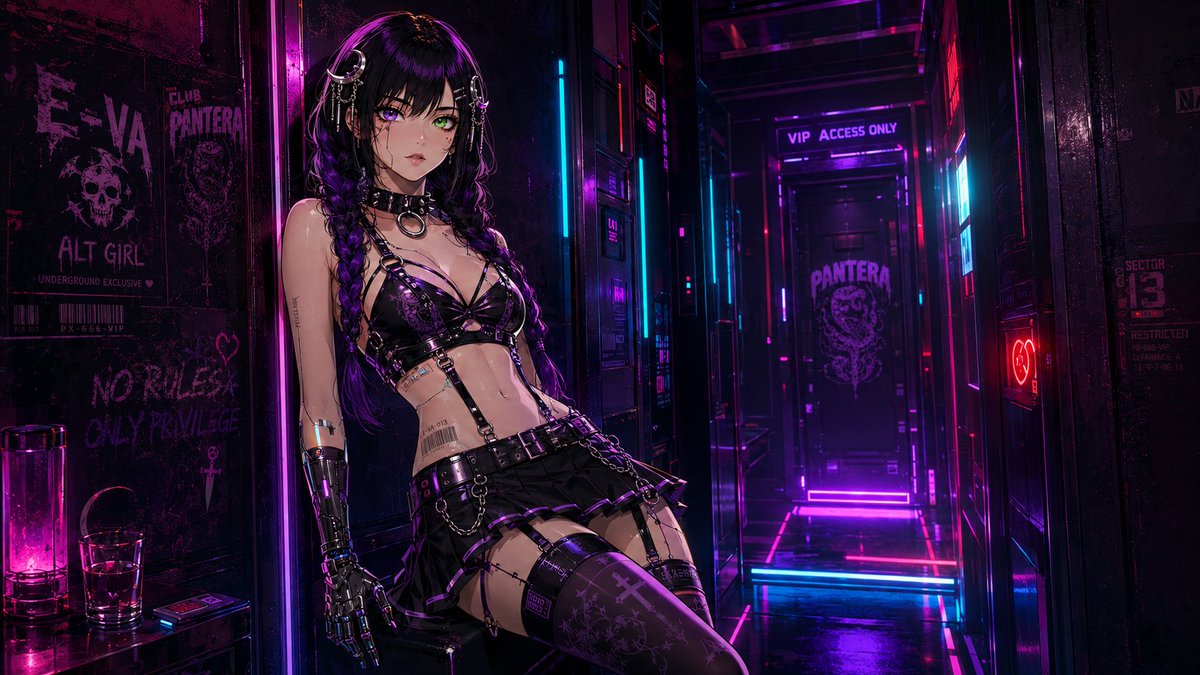
Prompt of the Day: Cyberpunk After Dark 🌃⚡💜💚
Turn one or two adult character references into stylish cyberpunk nightclub versions of themselves, then optionally use the second prompt to push a completed two-character image into much spicier territory.
STEP 1 — CREATE THE MAIN IMAGE WITH GPT
Attach one required adult character reference as Image 1.
You may optionally attach one additional adult character reference as Image 2. When both references are attached, the final image should contain exactly one character from each.
Leave LOCATION set to RANDOM to have the prompt choose a compact nightclub or nightlife location automatically, or replace RANDOM with your own setting.
Copy and paste the complete GPT prompt below.
......................GPT PROMPT STARTS HERE.........................
LOCATION — optional to replace:
RANDOM
Use the location written above as the scene setting. If it remains RANDOM, choose one compact, intimate location inside the nightclub or directly adjacent to it, such as a secluded hallway, moody bathroom, neon side corridor, private booth nook, hidden lounge corner, back stair landing, rooftop smoking area, service passage, dressing room, balcony recess, or alley beside the club. Choose only one location and do not display the word “RANDOM” in the image.
Keep the location small, semi-private, stylish, and character-focused. Do not use the main dance floor, main bar, a large crowd scene, or another expansive public area.
CAST REQUIREMENT:
Image 1 is the required adult character identity reference. Image 2, when attached, is the second adult character identity reference.
The attached character references define the complete main cast.
If only Image 1 is attached, create exactly one main character from Image 1.
If both Image 1 and Image 2 are attached, the image must contain exactly two main characters: exactly one character from Image 1 and exactly one separate character from Image 2. Both referenced characters must be clearly visible in the final image. Do not generate a single-character composition when Image 2 is attached.
Never duplicate either character or create clones, alternate versions, repeated background copies, or reflections that resemble additional characters. Keep the two identities separate and do not merge, omit, or swap their faces, hair, colours, species traits, clothing motifs, or signature accessories.
Preserve each referenced character’s recognisable face or head design, hairstyle, colours, body or species traits, silhouette, signature accessories, and personality.
Create a 16:9 horizontal widescreen cyberpunk anime illustration set in the selected location. The setting should feel seedy, intimate, decadent, exclusive, and slightly dangerous while remaining clean, fashionable, luxurious, and visually appealing. Use neon reflections, smoked glass, dark metal, chrome, soft haze, and vivid magenta, cyan, violet, crimson, and acid-yellow nightclub lighting.
Transform each referenced character into a customised cyberpunk version of themselves inspired by Cyberpunk: Edgerunners. Completely replace their original clothing with new cyberpunk nightlife fashion based on their existing colours, motifs, personality, and silhouette.
Adult male characters should look dangerous, stylish, and confident in tight fitted trousers, open shirts worn against the body, low-cut singlets, sleeveless tops, harness details, belts, chains, gloves, boots, and metallic accessories. Keep the styling sleek, bold, and nightclub-ready. Do not add jackets, coats, robes, capes, hoodies, or unnecessary outer layers.
Adult female characters should wear bold, minimal cyberpunk gothic clubwear such as very short low-rise micro-skirts, tiny pleated skirts, garter belts, visible garter straps, thigh-high stockings or fishnets, narrow strappy leather or latex tops, fitted bralettes, bandeau-style tops, cutaway crop tops, slim belts, chains, chokers, high boots, and body jewellery. Use bare midriffs, open backs, cutaway sides, low waistlines, and sleek fitted silhouettes while keeping intimate areas covered. Do not add jackets or outer layers that hide the outfit.
Add restrained cybernetic enhancements inspired by Cyberpunk: Edgerunners and Cyberpunk 2077. Use thin black implant seams, delicate facial lines, subtle synthetic panel divisions, small ports, metallic insets, interface points, and occasional faint glowing details. Keep most modifications sleek and minimal, though one character may have a cybernetic hand, forearm, or full arm where appropriate.
Include small serial numbers, barcodes, model codes, technical lettering, or identification markings along areas such as the eyebrow, temple, jawline, neck, collarbone, waist, hip, or thigh. Keep these markings stylish and integrated rather than covering the character in heavy tattooing.
If only Image 1 is attached, show that single character alone in the selected intimate location, posed confidently and comfortably within the space.
If both images are attached, compose the scene around both referenced characters together. Place them directly beside one another or facing one another in the same intimate location, with clear chemistry, comfortable proximity, and both faces and outfits clearly readable. Neither character may be hidden, cropped out, pushed into the distant background, or replaced by an unrelated person.
Render the image with crisp angular linework, bold cel shading, graphic shadows, expressive faces, saturated neon colour, and sharp nightclub highlights. Keep the referenced character or pair as the dominant focus and make the result stylish, alluring, vibrant, and immediately eye-catching.
🚨🚨🚨 END OF GPT PROMPT 🚨🚨🚨
STEP 2 — OPTIONAL GROK EDIT
Generate the two-character GPT image first.
Attach the completed image to Grok and paste the prompt below.
This prompt is intended only for images containing two clearly adult characters.
🔥🔥🔥 START OF GROK PROMPT — WARNING: SPICY 🔥🔥🔥
Use the attached image as the base. Keep the same two adult characters, the same identities, faces, cyberware, outfits, nightclub setting, lighting, framing, and anime style. Do not change the location, do not add or remove anyone, and do not duplicate the characters.
Turn the scene into a very raunchy, highly charged intimate moment between the two characters. Make the body language look messy, heated, and full of mutual desire rather than neat or posed. They should be all over each other, pressed tightly together, with obvious chemistry and strong physical closeness.
Do not make them both just kiss normally. Create a more dynamic intimate interaction. Have one character kissing the other’s neck, jaw, or throat while the other looks flustered, breathless, flushed, and overwhelmed in a good way. Use half-lidded eyes, parted lips, tense posture, arched back, heavy blushing, and strong reactive expression.
Have their hands roaming over each other’s body in natural, passionate ways: gripping the waist, hips, thighs, lower back, chest, neck, jaw, or hair, tugging lightly at clothing, pulling each other closer, or pinning the other against the wall or seat. Make the touching feel greedy, urgent, and believable.
If the pair is a man and a woman, have the woman sitting on the man’s lap or straddling him in a very intimate way while he holds her firmly and she leans into the contact. If the setting works better standing, have one press the other against the wall while the neck kissing and heavy touching continues.
Make the clothing look more dishevelled and provocative. Straps can slip off shoulders, tops can be tugged lower, skirts can ride up, belts or garter straps can be disturbed, shirts can be opened more, and parts of the outfit can look half-removed. Push the sexiness hard, but keep the characters recognisable and preserve their faces, hair, implants, and signature features.
Keep the anatomy believable, the interaction mutual, and the overall result intensely sexy, lustful, and visually obvious rather than subtle or romantic.
🔥🔥🔥 END OF GROK PROMPT 🔥🔥🔥
#POTD #PromptOfTheDay #AIArt #DigitalArt #Cyberpunk #CyberpunkArt #AnimeArt #Nightclub #CharacterDesign #Tartarus

🔥🔥🔥
#POTD #PromptOfTheDay #AIArt #DigitalArt #Cyberpunk #CyberpunkArt #AnimeArt #Nightclub #CharacterDesign #Tartarus

Prompt of the Day: Cyberpunk After Dark 🌃⚡💜💚
Turn one or two adult character references into stylish cyberpunk nightclub versions of themselves, then optionally use the second prompt to push a completed two-character image into much spicier territory.
STEP 1 — CREATE THE MAIN IMAGE WITH GPT
Attach one required adult character reference as Image 1.
You may optionally attach one additional adult character reference as Image 2. When both references are attached, the final image should contain exactly one character from each.
Leave LOCATION set to RANDOM to have the prompt choose a compact nightclub or nightlife location automatically, or replace RANDOM with your own setting.
Copy and paste the complete GPT prompt below.
......................GPT PROMPT STARTS HERE.........................
LOCATION — optional to replace:
RANDOM
Use the location written above as the scene setting. If it remains RANDOM, choose one compact, intimate location inside the nightclub or directly adjacent to it, such as a secluded hallway, moody bathroom, neon side corridor, private booth nook, hidden lounge corner, back stair landing, rooftop smoking area, service passage, dressing room, balcony recess, or alley beside the club. Choose only one location and do not display the word “RANDOM” in the image.
Keep the location small, semi-private, stylish, and character-focused. Do not use the main dance floor, main bar, a large crowd scene, or another expansive public area.
CAST REQUIREMENT:
Image 1 is the required adult character identity reference. Image 2, when attached, is the second adult character identity reference.
The attached character references define the complete main cast.
If only Image 1 is attached, create exactly one main character from Image 1.
If both Image 1 and Image 2 are attached, the image must contain exactly two main characters: exactly one character from Image 1 and exactly one separate character from Image 2. Both referenced characters must be clearly visible in the final image. Do not generate a single-character composition when Image 2 is attached.
Never duplicate either character or create clones, alternate versions, repeated background copies, or reflections that resemble additional characters. Keep the two identities separate and do not merge, omit, or swap their faces, hair, colours, species traits, clothing motifs, or signature accessories.
Preserve each referenced character’s recognisable face or head design, hairstyle, colours, body or species traits, silhouette, signature accessories, and personality.
Create a 16:9 horizontal widescreen cyberpunk anime illustration set in the selected location. The setting should feel seedy, intimate, decadent, exclusive, and slightly dangerous while remaining clean, fashionable, luxurious, and visually appealing. Use neon reflections, smoked glass, dark metal, chrome, soft haze, and vivid magenta, cyan, violet, crimson, and acid-yellow nightclub lighting.
Transform each referenced character into a customised cyberpunk version of themselves inspired by Cyberpunk: Edgerunners. Completely replace their original clothing with new cyberpunk nightlife fashion based on their existing colours, motifs, personality, and silhouette.
Adult male characters should look dangerous, stylish, and confident in tight fitted trousers, open shirts worn against the body, low-cut singlets, sleeveless tops, harness details, belts, chains, gloves, boots, and metallic accessories. Keep the styling sleek, bold, and nightclub-ready. Do not add jackets, coats, robes, capes, hoodies, or unnecessary outer layers.
Adult female characters should wear bold, minimal cyberpunk gothic clubwear such as very short low-rise micro-skirts, tiny pleated skirts, garter belts, visible garter straps, thigh-high stockings or fishnets, narrow strappy leather or latex tops, fitted bralettes, bandeau-style tops, cutaway crop tops, slim belts, chains, chokers, high boots, and body jewellery. Use bare midriffs, open backs, cutaway sides, low waistlines, and sleek fitted silhouettes while keeping intimate areas covered. Do not add jackets or outer layers that hide the outfit.
Add restrained cybernetic enhancements inspired by Cyberpunk: Edgerunners and Cyberpunk 2077. Use thin black implant seams, delicate facial lines, subtle synthetic panel divisions, small ports, metallic insets, interface points, and occasional faint glowing details. Keep most modifications sleek and minimal, though one character may have a cybernetic hand, forearm, or full arm where appropriate.
Include small serial numbers, barcodes, model codes, technical lettering, or identification markings along areas such as the eyebrow, temple, jawline, neck, collarbone, waist, hip, or thigh. Keep these markings stylish and integrated rather than covering the character in heavy tattooing.
If only Image 1 is attached, show that single character alone in the selected intimate location, posed confidently and comfortably within the space.
If both images are attached, compose the scene around both referenced characters together. Place them directly beside one another or facing one another in the same intimate location, with clear chemistry, comfortable proximity, and both faces and outfits clearly readable. Neither character may be hidden, cropped out, pushed into the distant background, or replaced by an unrelated person.
Render the image with crisp angular linework, bold cel shading, graphic shadows, expressive faces, saturated neon colour, and sharp nightclub highlights. Keep the referenced character or pair as the dominant focus and make the result stylish, alluring, vibrant, and immediately eye-catching.
🚨🚨🚨 END OF GPT PROMPT 🚨🚨🚨
STEP 2 — OPTIONAL GROK EDIT
Generate the two-character GPT image first.
Attach the completed image to Grok and paste the prompt below.
This prompt is intended only for images containing two clearly adult characters.
🔥🔥🔥 START OF GROK PROMPT — WARNING: SPICY 🔥🔥🔥
Use the attached image as the base. Keep the same two adult characters, the same identities, faces, cyberware, outfits, nightclub setting, lighting, framing, and anime style. Do not change the location, do not add or remove anyone, and do not duplicate the characters.
Turn the scene into a very raunchy, highly charged intimate moment between the two characters. Make the body language look messy, heated, and full of mutual desire rather than neat or posed. They should be all over each other, pressed tightly together, with obvious chemistry and strong physical closeness.
Do not make them both just kiss normally. Create a more dynamic intimate interaction. Have one character kissing the other’s neck, jaw, or throat while the other looks flustered, breathless, flushed, and overwhelmed in a good way. Use half-lidded eyes, parted lips, tense posture, arched back, heavy blushing, and strong reactive expression.
Have their hands roaming over each other’s body in natural, passionate ways: gripping the waist, hips, thighs, lower back, chest, neck, jaw, or hair, tugging lightly at clothing, pulling each other closer, or pinning the other against the wall or seat. Make the touching feel greedy, urgent, and believable.
If the pair is a man and a woman, have the woman sitting on the man’s lap or straddling him in a very intimate way while he holds her firmly and she leans into the contact. If the setting works better standing, have one press the other against the wall while the neck kissing and heavy touching continues.
Make the clothing look more dishevelled and provocative. Straps can slip off shoulders, tops can be tugged lower, skirts can ride up, belts or garter straps can be disturbed, shirts can be opened more, and parts of the outfit can look half-removed. Push the sexiness hard, but keep the characters recognisable and preserve their faces, hair, implants, and signature features.
Keep the anatomy believable, the interaction mutual, and the overall result intensely sexy, lustful, and visually obvious rather than subtle or romantic.
🔥🔥🔥 END OF GROK PROMPT 🔥🔥🔥
#POTD #PromptOfTheDay #AIArt #DigitalArt #Cyberpunk #CyberpunkArt #AnimeArt #Nightclub #CharacterDesign #Tartarus
#promptoftheday
(The code trying to solve problems.)
Which solutions have not been solved before and which had been solved before.
Search space.

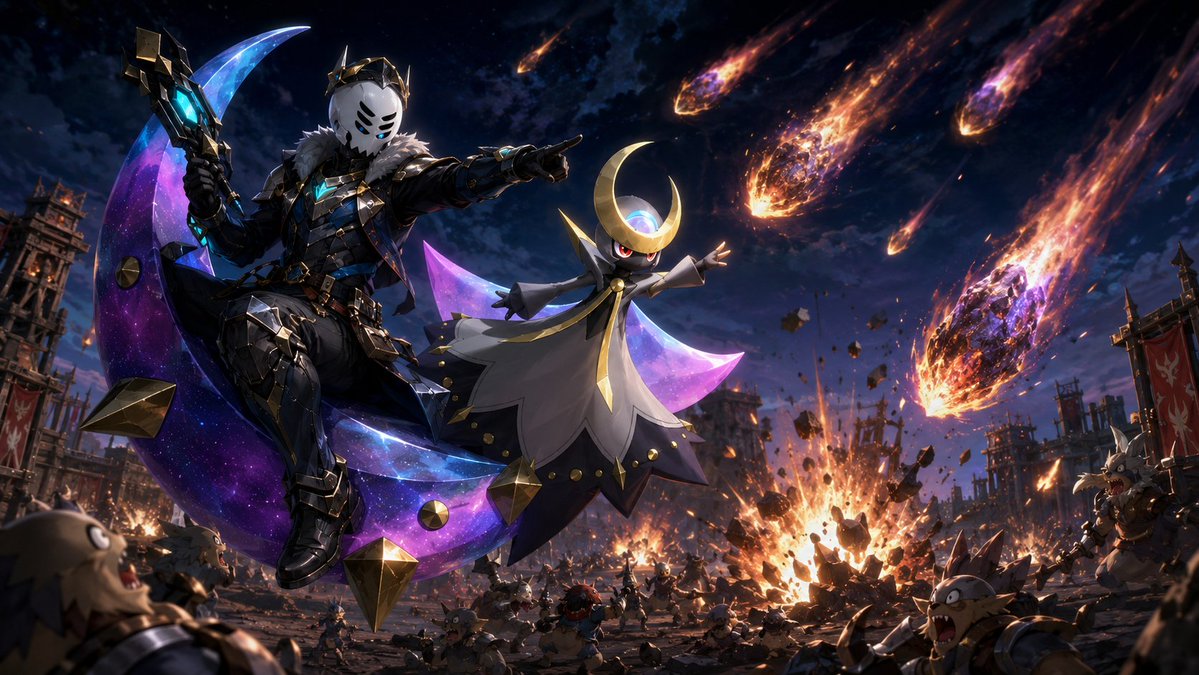
Prompt of the Day: PALWORLD PARTNERS ⚔️🐾💜💚
For all those as addicted as i am today’s Prompt of the Day throws your character into a chaotic Palworld battle alongside the Pal of your choice.
Type your chosen combat scene and Pal into the SCENE / PAL SELECTOR, then attach one character reference image as @image1.
Choose a serious battle, a ridiculous meme-heavy Pal, or the most unhinged combination you can think of.
Have fun with this one ⚔️
............................PROMPT STARTS HERE............................
SCENE / PAL SELECTOR:
[Describe the combat scene and name the Pal you want beside the character. Leave blank for a random selection.]
Examples:
Fighting raiders beside Lovander in a desert settlement
Defending a base alongside Depresso during a chaotic night attack
Charging into battle with Relaxaurus through a tropical valley
Fighting a giant enemy beside Dumud in a muddy canyon
Storming an enemy camp alongside Mossanda
Battling on a snowy mountain with Kingpaca
Use the typed scene and selected Pal as the main concept.
If no custom scene or Pal is provided, create a fun combat scene featuring a recognisable meme-heavy Pal. Prioritise Pals that feel funny, strange, dramatic, adorable, suggestive, awkward, oversized, or visually ridiculous rather than choosing a completely ordinary creature.
Use @image1 as the only player-character identity reference.
Create exactly one main human player character based on @image1 and one main allied Pal fighting beside them.
Character reference rules:
Preserve the character’s face shape, hairstyle, hair colour, eye colour, body proportions, species traits, accessories, silhouette, personality, signature colour palette, and overall visual identity.
The final player character must still clearly look like @image1.
Do not redesign the character into a different person.
Do not create additional versions, clones, or duplicates of the character.
Create a 16:9 horizontal widescreen Palworld-style action scene showing the referenced player character fighting alongside their selected Pal.
The character and Pal should feel like an established combat team rather than two unrelated subjects placed in the same image. Show them attacking, defending, charging, retreating, or coordinating their abilities together according to the selected scene.
Player-character outfit:
Dress the character in an authentic Palworld armour set appropriate for the selected environment and combat situation.
The outfit may use light armour, metal armour, cold-resistant armour, heat-resistant armour, advanced combat armour, or another recognisable Palworld equipment style.
Also give the character one distinctive Palworld-style head item or accessory, such as a special hat, helmet, crown, decorative headpiece, mask, or Pal-themed accessory.
Use real Palworld outfit and equipment design language rather than creating generic fantasy armour.
Where possible, adapt the armour colours, material accents, and accessory choices to complement the referenced character’s original colour palette and personality without changing their identity.
Give the character a suitable Palworld weapon or combat tool that fits the scene.
Pal direction:
Use the Pal named in the selector.
Preserve the Pal’s recognisable species design, proportions, colours, facial features, personality, and signature abilities.
Give the Pal an active and clearly readable role in the battle. It should be visibly attacking, using an ability, protecting the player, carrying the player, distracting the enemy, or coordinating with the player character.
The Pal should feel expressive and full of personality, especially when a funny or meme-heavy Pal is selected.
Scene and composition:
Build the environment around the selected combat scene.
Use a wide, readable action composition that keeps both the player character and their allied Pal clearly visible.
The player character should remain the main human subject, but the Pal should receive enough visual importance to feel like their genuine battle partner.
Keep the action dynamic but easy to understand at a glance.
Use Palworld-inspired environments, structures, weapons, technology, enemy camps, wilderness, ruins, bases, weather, and environmental details where appropriate.
Keep the background supportive rather than filling the image with excessive creatures or unrelated activity.
Lighting and mood:
Use lighting and atmosphere that fit the selected scene.
The overall image should feel colourful, adventurous, chaotic, playful, and cinematic, with the unusual mix of cute creatures, dangerous combat, survival equipment, and slightly unhinged humour associated with Palworld.
Quality and rendering:
Polished, premium-quality stylised game illustration with clean rendering, readable anatomy, expressive character acting, strong action clarity, detailed Palworld equipment, and a controlled widescreen composition.
Do not:
Do not ignore the SCENE / PAL SELECTOR.
Do not replace the selected Pal with a different creature.
Do not create more than one main human player character.
Do not duplicate, clone, mirror, or slightly alter @image1.
Do not change the identity of the referenced character.
Do not redesign the referenced character into a different person.
Do not dress the character in generic medieval fantasy armour.
Do not use unrelated modern clothing instead of Palworld equipment.
Do not omit the special hat, helmet, headpiece, or accessory.
Do not make the Pal passive, tiny, hidden, or disconnected from the battle.
Do not make the player character and Pal look like they are fighting each other unless the selector specifically requests it.
Do not add large numbers of unrelated Pals that distract from the main allied Pal.
Do not make the composition crowded, flat, confusing, or difficult to read.
Do not make the player character blurry, tiny, hidden, or unrecognisable.
Do not create messy anatomy, extra limbs, malformed hands, distorted faces, or muddy textures.
Do not use pointillism, stippling, halftone dots, grainy shading, or noisy rendering.
Do not turn the image photorealistic unless specifically requested.
..............................END OF PROMPT..................................
#POTD #promptoftheday #AI #AiArt #Art #AnimeArt #Palworld #Pal #Gaming #CharacterDesign #DigitalArt #AnimeStyle #CommunityPrompt #Tartarus #OurHellOurHome
![EvaGlitchAI's tweet photo. Prompt of the Day: PALWORLD PARTNERS ⚔️🐾💜💚
For all those as addicted as i am today’s Prompt of the Day throws your character into a chaotic Palworld battle alongside the Pal of your choice.
Type your chosen combat scene and Pal into the SCENE / PAL SELECTOR, then attach one character reference image as @image1.
Choose a serious battle, a ridiculous meme-heavy Pal, or the most unhinged combination you can think of.
Have fun with this one ⚔️
............................PROMPT STARTS HERE............................
SCENE / PAL SELECTOR:
[Describe the combat scene and name the Pal you want beside the character. Leave blank for a random selection.]
Examples:
Fighting raiders beside Lovander in a desert settlement
Defending a base alongside Depresso during a chaotic night attack
Charging into battle with Relaxaurus through a tropical valley
Fighting a giant enemy beside Dumud in a muddy canyon
Storming an enemy camp alongside Mossanda
Battling on a snowy mountain with Kingpaca
Use the typed scene and selected Pal as the main concept.
If no custom scene or Pal is provided, create a fun combat scene featuring a recognisable meme-heavy Pal. Prioritise Pals that feel funny, strange, dramatic, adorable, suggestive, awkward, oversized, or visually ridiculous rather than choosing a completely ordinary creature.
Use @image1 as the only player-character identity reference.
Create exactly one main human player character based on @image1 and one main allied Pal fighting beside them.
Character reference rules:
Preserve the character’s face shape, hairstyle, hair colour, eye colour, body proportions, species traits, accessories, silhouette, personality, signature colour palette, and overall visual identity.
The final player character must still clearly look like @image1.
Do not redesign the character into a different person.
Do not create additional versions, clones, or duplicates of the character.
Create a 16:9 horizontal widescreen Palworld-style action scene showing the referenced player character fighting alongside their selected Pal.
The character and Pal should feel like an established combat team rather than two unrelated subjects placed in the same image. Show them attacking, defending, charging, retreating, or coordinating their abilities together according to the selected scene.
Player-character outfit:
Dress the character in an authentic Palworld armour set appropriate for the selected environment and combat situation.
The outfit may use light armour, metal armour, cold-resistant armour, heat-resistant armour, advanced combat armour, or another recognisable Palworld equipment style.
Also give the character one distinctive Palworld-style head item or accessory, such as a special hat, helmet, crown, decorative headpiece, mask, or Pal-themed accessory.
Use real Palworld outfit and equipment design language rather than creating generic fantasy armour.
Where possible, adapt the armour colours, material accents, and accessory choices to complement the referenced character’s original colour palette and personality without changing their identity.
Give the character a suitable Palworld weapon or combat tool that fits the scene.
Pal direction:
Use the Pal named in the selector.
Preserve the Pal’s recognisable species design, proportions, colours, facial features, personality, and signature abilities.
Give the Pal an active and clearly readable role in the battle. It should be visibly attacking, using an ability, protecting the player, carrying the player, distracting the enemy, or coordinating with the player character.
The Pal should feel expressive and full of personality, especially when a funny or meme-heavy Pal is selected.
Scene and composition:
Build the environment around the selected combat scene.
Use a wide, readable action composition that keeps both the player character and their allied Pal clearly visible.
The player character should remain the main human subject, but the Pal should receive enough visual importance to feel like their genuine battle partner.
Keep the action dynamic but easy to understand at a glance.
Use Palworld-inspired environments, structures, weapons, technology, enemy camps, wilderness, ruins, bases, weather, and environmental details where appropriate.
Keep the background supportive rather than filling the image with excessive creatures or unrelated activity.
Lighting and mood:
Use lighting and atmosphere that fit the selected scene.
The overall image should feel colourful, adventurous, chaotic, playful, and cinematic, with the unusual mix of cute creatures, dangerous combat, survival equipment, and slightly unhinged humour associated with Palworld.
Quality and rendering:
Polished, premium-quality stylised game illustration with clean rendering, readable anatomy, expressive character acting, strong action clarity, detailed Palworld equipment, and a controlled widescreen composition.
Do not:
Do not ignore the SCENE / PAL SELECTOR.
Do not replace the selected Pal with a different creature.
Do not create more than one main human player character.
Do not duplicate, clone, mirror, or slightly alter @image1.
Do not change the identity of the referenced character.
Do not redesign the referenced character into a different person.
Do not dress the character in generic medieval fantasy armour.
Do not use unrelated modern clothing instead of Palworld equipment.
Do not omit the special hat, helmet, headpiece, or accessory.
Do not make the Pal passive, tiny, hidden, or disconnected from the battle.
Do not make the player character and Pal look like they are fighting each other unless the selector specifically requests it.
Do not add large numbers of unrelated Pals that distract from the main allied Pal.
Do not make the composition crowded, flat, confusing, or difficult to read.
Do not make the player character blurry, tiny, hidden, or unrecognisable.
Do not create messy anatomy, extra limbs, malformed hands, distorted faces, or muddy textures.
Do not use pointillism, stippling, halftone dots, grainy shading, or noisy rendering.
Do not turn the image photorealistic unless specifically requested.
..............................END OF PROMPT..................................
#POTD #promptoftheday #AI #AiArt #Art #AnimeArt #Palworld #Pal #Gaming #CharacterDesign #DigitalArt #AnimeStyle #CommunityPrompt #Tartarus #OurHellOurHome](https://pbs.twimg.com/media/HN8fTmXaoAAri_b.jpg)
![EvaGlitchAI's tweet photo. Prompt of the Day: PALWORLD PARTNERS ⚔️🐾💜💚
For all those as addicted as i am today’s Prompt of the Day throws your character into a chaotic Palworld battle alongside the Pal of your choice.
Type your chosen combat scene and Pal into the SCENE / PAL SELECTOR, then attach one character reference image as @image1.
Choose a serious battle, a ridiculous meme-heavy Pal, or the most unhinged combination you can think of.
Have fun with this one ⚔️
............................PROMPT STARTS HERE............................
SCENE / PAL SELECTOR:
[Describe the combat scene and name the Pal you want beside the character. Leave blank for a random selection.]
Examples:
Fighting raiders beside Lovander in a desert settlement
Defending a base alongside Depresso during a chaotic night attack
Charging into battle with Relaxaurus through a tropical valley
Fighting a giant enemy beside Dumud in a muddy canyon
Storming an enemy camp alongside Mossanda
Battling on a snowy mountain with Kingpaca
Use the typed scene and selected Pal as the main concept.
If no custom scene or Pal is provided, create a fun combat scene featuring a recognisable meme-heavy Pal. Prioritise Pals that feel funny, strange, dramatic, adorable, suggestive, awkward, oversized, or visually ridiculous rather than choosing a completely ordinary creature.
Use @image1 as the only player-character identity reference.
Create exactly one main human player character based on @image1 and one main allied Pal fighting beside them.
Character reference rules:
Preserve the character’s face shape, hairstyle, hair colour, eye colour, body proportions, species traits, accessories, silhouette, personality, signature colour palette, and overall visual identity.
The final player character must still clearly look like @image1.
Do not redesign the character into a different person.
Do not create additional versions, clones, or duplicates of the character.
Create a 16:9 horizontal widescreen Palworld-style action scene showing the referenced player character fighting alongside their selected Pal.
The character and Pal should feel like an established combat team rather than two unrelated subjects placed in the same image. Show them attacking, defending, charging, retreating, or coordinating their abilities together according to the selected scene.
Player-character outfit:
Dress the character in an authentic Palworld armour set appropriate for the selected environment and combat situation.
The outfit may use light armour, metal armour, cold-resistant armour, heat-resistant armour, advanced combat armour, or another recognisable Palworld equipment style.
Also give the character one distinctive Palworld-style head item or accessory, such as a special hat, helmet, crown, decorative headpiece, mask, or Pal-themed accessory.
Use real Palworld outfit and equipment design language rather than creating generic fantasy armour.
Where possible, adapt the armour colours, material accents, and accessory choices to complement the referenced character’s original colour palette and personality without changing their identity.
Give the character a suitable Palworld weapon or combat tool that fits the scene.
Pal direction:
Use the Pal named in the selector.
Preserve the Pal’s recognisable species design, proportions, colours, facial features, personality, and signature abilities.
Give the Pal an active and clearly readable role in the battle. It should be visibly attacking, using an ability, protecting the player, carrying the player, distracting the enemy, or coordinating with the player character.
The Pal should feel expressive and full of personality, especially when a funny or meme-heavy Pal is selected.
Scene and composition:
Build the environment around the selected combat scene.
Use a wide, readable action composition that keeps both the player character and their allied Pal clearly visible.
The player character should remain the main human subject, but the Pal should receive enough visual importance to feel like their genuine battle partner.
Keep the action dynamic but easy to understand at a glance.
Use Palworld-inspired environments, structures, weapons, technology, enemy camps, wilderness, ruins, bases, weather, and environmental details where appropriate.
Keep the background supportive rather than filling the image with excessive creatures or unrelated activity.
Lighting and mood:
Use lighting and atmosphere that fit the selected scene.
The overall image should feel colourful, adventurous, chaotic, playful, and cinematic, with the unusual mix of cute creatures, dangerous combat, survival equipment, and slightly unhinged humour associated with Palworld.
Quality and rendering:
Polished, premium-quality stylised game illustration with clean rendering, readable anatomy, expressive character acting, strong action clarity, detailed Palworld equipment, and a controlled widescreen composition.
Do not:
Do not ignore the SCENE / PAL SELECTOR.
Do not replace the selected Pal with a different creature.
Do not create more than one main human player character.
Do not duplicate, clone, mirror, or slightly alter @image1.
Do not change the identity of the referenced character.
Do not redesign the referenced character into a different person.
Do not dress the character in generic medieval fantasy armour.
Do not use unrelated modern clothing instead of Palworld equipment.
Do not omit the special hat, helmet, headpiece, or accessory.
Do not make the Pal passive, tiny, hidden, or disconnected from the battle.
Do not make the player character and Pal look like they are fighting each other unless the selector specifically requests it.
Do not add large numbers of unrelated Pals that distract from the main allied Pal.
Do not make the composition crowded, flat, confusing, or difficult to read.
Do not make the player character blurry, tiny, hidden, or unrecognisable.
Do not create messy anatomy, extra limbs, malformed hands, distorted faces, or muddy textures.
Do not use pointillism, stippling, halftone dots, grainy shading, or noisy rendering.
Do not turn the image photorealistic unless specifically requested.
..............................END OF PROMPT..................................
#POTD #promptoftheday #AI #AiArt #Art #AnimeArt #Palworld #Pal #Gaming #CharacterDesign #DigitalArt #AnimeStyle #CommunityPrompt #Tartarus #OurHellOurHome](https://pbs.twimg.com/media/HN8fK6dbYAAvBEV.jpg)
#POTD #promptoftheday #AI #AiArt #Art #AnimeArt #Palworld #Pal #Gaming #CharacterDesign #DigitalArt #AnimeStyle #CommunityPrompt #Tartarus #OurHellOurHome

Prompt of the Day: PALWORLD PARTNERS ⚔️🐾💜💚
For all those as addicted as i am today’s Prompt of the Day throws your character into a chaotic Palworld battle alongside the Pal of your choice.
Type your chosen combat scene and Pal into the SCENE / PAL SELECTOR, then attach one character reference image as @image1.
Choose a serious battle, a ridiculous meme-heavy Pal, or the most unhinged combination you can think of.
Have fun with this one ⚔️
............................PROMPT STARTS HERE............................
SCENE / PAL SELECTOR:
[Describe the combat scene and name the Pal you want beside the character. Leave blank for a random selection.]
Examples:
Fighting raiders beside Lovander in a desert settlement
Defending a base alongside Depresso during a chaotic night attack
Charging into battle with Relaxaurus through a tropical valley
Fighting a giant enemy beside Dumud in a muddy canyon
Storming an enemy camp alongside Mossanda
Battling on a snowy mountain with Kingpaca
Use the typed scene and selected Pal as the main concept.
If no custom scene or Pal is provided, create a fun combat scene featuring a recognisable meme-heavy Pal. Prioritise Pals that feel funny, strange, dramatic, adorable, suggestive, awkward, oversized, or visually ridiculous rather than choosing a completely ordinary creature.
Use @image1 as the only player-character identity reference.
Create exactly one main human player character based on @image1 and one main allied Pal fighting beside them.
Character reference rules:
Preserve the character’s face shape, hairstyle, hair colour, eye colour, body proportions, species traits, accessories, silhouette, personality, signature colour palette, and overall visual identity.
The final player character must still clearly look like @image1.
Do not redesign the character into a different person.
Do not create additional versions, clones, or duplicates of the character.
Create a 16:9 horizontal widescreen Palworld-style action scene showing the referenced player character fighting alongside their selected Pal.
The character and Pal should feel like an established combat team rather than two unrelated subjects placed in the same image. Show them attacking, defending, charging, retreating, or coordinating their abilities together according to the selected scene.
Player-character outfit:
Dress the character in an authentic Palworld armour set appropriate for the selected environment and combat situation.
The outfit may use light armour, metal armour, cold-resistant armour, heat-resistant armour, advanced combat armour, or another recognisable Palworld equipment style.
Also give the character one distinctive Palworld-style head item or accessory, such as a special hat, helmet, crown, decorative headpiece, mask, or Pal-themed accessory.
Use real Palworld outfit and equipment design language rather than creating generic fantasy armour.
Where possible, adapt the armour colours, material accents, and accessory choices to complement the referenced character’s original colour palette and personality without changing their identity.
Give the character a suitable Palworld weapon or combat tool that fits the scene.
Pal direction:
Use the Pal named in the selector.
Preserve the Pal’s recognisable species design, proportions, colours, facial features, personality, and signature abilities.
Give the Pal an active and clearly readable role in the battle. It should be visibly attacking, using an ability, protecting the player, carrying the player, distracting the enemy, or coordinating with the player character.
The Pal should feel expressive and full of personality, especially when a funny or meme-heavy Pal is selected.
Scene and composition:
Build the environment around the selected combat scene.
Use a wide, readable action composition that keeps both the player character and their allied Pal clearly visible.
The player character should remain the main human subject, but the Pal should receive enough visual importance to feel like their genuine battle partner.
Keep the action dynamic but easy to understand at a glance.
Use Palworld-inspired environments, structures, weapons, technology, enemy camps, wilderness, ruins, bases, weather, and environmental details where appropriate.
Keep the background supportive rather than filling the image with excessive creatures or unrelated activity.
Lighting and mood:
Use lighting and atmosphere that fit the selected scene.
The overall image should feel colourful, adventurous, chaotic, playful, and cinematic, with the unusual mix of cute creatures, dangerous combat, survival equipment, and slightly unhinged humour associated with Palworld.
Quality and rendering:
Polished, premium-quality stylised game illustration with clean rendering, readable anatomy, expressive character acting, strong action clarity, detailed Palworld equipment, and a controlled widescreen composition.
Do not:
Do not ignore the SCENE / PAL SELECTOR.
Do not replace the selected Pal with a different creature.
Do not create more than one main human player character.
Do not duplicate, clone, mirror, or slightly alter @image1.
Do not change the identity of the referenced character.
Do not redesign the referenced character into a different person.
Do not dress the character in generic medieval fantasy armour.
Do not use unrelated modern clothing instead of Palworld equipment.
Do not omit the special hat, helmet, headpiece, or accessory.
Do not make the Pal passive, tiny, hidden, or disconnected from the battle.
Do not make the player character and Pal look like they are fighting each other unless the selector specifically requests it.
Do not add large numbers of unrelated Pals that distract from the main allied Pal.
Do not make the composition crowded, flat, confusing, or difficult to read.
Do not make the player character blurry, tiny, hidden, or unrecognisable.
Do not create messy anatomy, extra limbs, malformed hands, distorted faces, or muddy textures.
Do not use pointillism, stippling, halftone dots, grainy shading, or noisy rendering.
Do not turn the image photorealistic unless specifically requested.
..............................END OF PROMPT..................................
#POTD #promptoftheday #AI #AiArt #Art #AnimeArt #Palworld #Pal #Gaming #CharacterDesign #DigitalArt #AnimeStyle #CommunityPrompt #Tartarus #OurHellOurHome
#promptoftheday
Rollercoaster isometric 🎢 for physics simulation.
To get the system for square surfaces in working order.
Then swing the iron rails. #neckless #spine #physiotherapy
#howtoMakeyourownPhysicsEngine
#dimension #crime #radar
3d world map. Every threat inside one file. #promptoftheday
Ip Radar dimension. 2d and 3d.
Dim (x,y,z) the world 🌎 ; programming manual -- see your preferred database format.
Where are the bad people who are harming you? Ip addresses. There are 6 billion smartphones and billions of smarttv's. Instant access any time near any x,y,z coordinate. See behavior modification.
#POTD #promptoftheday #AI #AiArt #Art #AnimeArt #Motorsport #Racing #RaceCar #Rallycross #BajaRacing #StockCar #CharacterDesign #DigitalArt #AnimeStyle #CommunityPrompt #Tartarus

Prompt of the Day: FICTIONAL MOTORSPORT TAKEOVER 🏁🏎️💜💚
Today's prompt crafted by the wonderful @MaidCoraCarina
Today’s Prompt of the Day transforms your character and vehicle reference images into a fully branded fictional-corporation racing team.
Choose your racing class, scene, and main sponsor—or leave any selector blank and let the prompt decide.
Your character can appear as:
🏆 A professional podium representative beside the winning car
🔧 A pit crew leader commanding a rapid service
🏁 A driver preparing inside a corporate pre-race garage
The selected fictional corporation becomes the team’s dominant sponsor, controlling the vehicle colours, racing graphics, clothing, and overall presentation.
Attach your character as @Image1 and optionally attach a vehicle as @Image2.
Have fun with this one 🏎️
............................PROMPT STARTS HERE............................
Vehicle Type: (ENTER TYPE HERE)
Scene: (ENTER SCENE HERE)
Main Sponsor: (ENTER SPONSOR HERE)
All depicted human characters must be clearly adult.
If no @Image2 is provided, include appropriate representation of a vehicle for the style of racing being depicted.
Vehicle should be one of three types of racing vehicle:
rallycross,
baja/raid,
pro stock,
If rallycross is selected, transform the vehicle into a capable rallycross racer with a slight suspension lift, rally lights, and off-road tires.
If Baja/Raid is selected, depict a heavily modified off-road car or truck with tube frame and thin body panels built for light weight and speed.
If pro stock is selected, turn the vehicle into a "NASCAR" style modified version of itself, low and sleek with racing slick tires and safety netting in the windows.
If no vehicle type is specified, select one of the three types at random.
Include various real-world and fictional (from notable video games) corporate sponsorship stickers and decals in addition to any stickers or decals already present.
Main Sponsor MUST be from a fictional source (Video Game, Movie, Television Series, etc), with examples including but not limited to:
If no main sponsor is chosen, select one based on the overall appearance and aesthetics of the referenced character from @Image1.
Examples include: Aperture Labs, Umbrella Corporation, Weyland-Yutani, Hyperion, Vault-Tec, Arasaka Corporation, Militech, Kang Tao, Trauma Team, SEELE
DO NOT include multiple "main" corporations (EXAMPLE: If Umbrella Corporation is present, do not include decals from Aperture Labs, Vault Tec, or other "big name" fictional companies). Secondary decals should feature both real-world AND fictional companies from video games (I.E. Ammu-Nation, Sunset Sarsaparilla, Elkoss Combine, etc)
Vehicle Color Scheme should match that of the main sponsor. Examples include: Red and White (Umbrella Corporation), Blue and Yellow (Vault Tec), etc
Depict the vehicle in one of three situations: at a racing podium as if it is the winning car after a race, in the "pit" receiving rapid service, or in a corporate garage before a race begins.
Include character from @Image1, depicted in one of three ways dependent on the situation the vehicle is in: if vehicle is at podium, character should be depicted as a professional adult motorsport grid ambassador or podium representative, posing confidently beside or leaning naturally against the vehicle.
If vehicle is being serviced by a pit crew, character should be depicted as a pit crew leader overseeing the rapid repairs and yelling into a headset.
If vehicle is in a garage pre-race, character should be depicted as a driver preparing for the upcoming race.
Attire for all depictions must feature corporate sponsors and color schemes similar to those featured on the vehicle itself.
If podium representative or grid ambassador, attire should be fashionable, fitted, visually striking, sponsor-branded, and professionally styled, as if meant to be featured on a premium motorsport magazine cover. Keep the outfit tasteful, non-explicit, and appropriate for a professional racing event.
If pit lead, attire should be sturdy and utilitarian, with pockets for tools or radios and a utility belt featuring multiple sections and pouches.
If driver, attire should be a racing suit with safety features such as padding and reinforcement around joint areas. Racing helmet should be held in the character's hands.
Detailed, highly accurate and hyper stylized, 8k, appearance intact. Do not use pointillism or dot texturing.
..............................END OF PROMPT..................................
#POTD #promptoftheday #AI #AiArt #Art #AnimeArt #Motorsport #Racing #RaceCar #Rallycross #BajaRacing #StockCar #CharacterDesign #DigitalArt #AnimeStyle #CommunityPrompt #Tartarus


🤘🏻🖤🔥
#POTD #promptoftheday #AI #AiArt #Art #OzzyOsbourne #Tribute #Rock #HeavyMetal #ConcertArt #CharacterDesign #DigitalArt #Tartarus #OurHellOurHome

Prompt of the Day: OZZY OSBOURNE TRIBUTE 🤘🖤💜💚
Today's Prompt crafted by the amazing @Nodoka_Katana who wanted us to remember a legend
This Prompt of the Day is a tribute to the legendary Ozzy Osbourne, honoring his memory one year on and celebrating the voice, chaos, and stage presence that made him unforgettable.
Type your tribute choice into TRIBUTE MODE, add a song if needed, and use the SCENE / SCENARIO line to guide the performance setup.
Have fun with this one 🤘
............................PROMPT STARTS HERE............................
TRIBUTE MODE:
[Type Yes or No here.]
SONG NAME:
[If TRIBUTE MODE is No, type the Ozzy Osbourne song name here.]
SCENE / SCENARIO:
[Type the scene, scenario, or stage setup here. Leave blank if you want the AI to choose.]
create an ozzy osbourne tribute by using @image1 as the lead singer and dressing up as Ozzy Osbourne, that includes make up, glasses, hair.
If typing in Yes in TRIBUTE MODE create a "thank you Ozzy" tribute, where the scene is a stage filled with tributes to Ozzy Osbourne.
If typing in No in TRIBUTE MODE along with giving a name of an Ozzy Osbourne song in SONG NAME create a tribute to that specific song along with having the background and character in @image1 dressing up to match the theme of that song.
Use SCENE / SCENARIO to guide the stage setup, background, and overall presentation. If left blank, choose a fitting scene that matches the selected tribute or song.
make this absolute fuck and movie tier, ensure the character is rocking out, showing emotion in every vocal they're singing out.
..............................END OF PROMPT..................................
#POTD #promptoftheday #AI #AiArt #Art #OzzyOsbourne #Tribute #Rock #HeavyMetal #ConcertArt #CharacterDesign #DigitalArt #Tartarus #OurHellOurHome
![EvaGlitchAI's tweet photo. Prompt of the Day: OZZY OSBOURNE TRIBUTE 🤘🖤💜💚
Today's Prompt crafted by the amazing @Nodoka_Katana who wanted us to remember a legend
This Prompt of the Day is a tribute to the legendary Ozzy Osbourne, honoring his memory one year on and celebrating the voice, chaos, and stage presence that made him unforgettable.
Type your tribute choice into TRIBUTE MODE, add a song if needed, and use the SCENE / SCENARIO line to guide the performance setup.
Have fun with this one 🤘
............................PROMPT STARTS HERE............................
TRIBUTE MODE:
[Type Yes or No here.]
SONG NAME:
[If TRIBUTE MODE is No, type the Ozzy Osbourne song name here.]
SCENE / SCENARIO:
[Type the scene, scenario, or stage setup here. Leave blank if you want the AI to choose.]
create an ozzy osbourne tribute by using @image1 as the lead singer and dressing up as Ozzy Osbourne, that includes make up, glasses, hair.
If typing in Yes in TRIBUTE MODE create a "thank you Ozzy" tribute, where the scene is a stage filled with tributes to Ozzy Osbourne.
If typing in No in TRIBUTE MODE along with giving a name of an Ozzy Osbourne song in SONG NAME create a tribute to that specific song along with having the background and character in @image1 dressing up to match the theme of that song.
Use SCENE / SCENARIO to guide the stage setup, background, and overall presentation. If left blank, choose a fitting scene that matches the selected tribute or song.
make this absolute fuck and movie tier, ensure the character is rocking out, showing emotion in every vocal they're singing out.
..............................END OF PROMPT..................................
#POTD #promptoftheday #AI #AiArt #Art #OzzyOsbourne #Tribute #Rock #HeavyMetal #ConcertArt #CharacterDesign #DigitalArt #Tartarus #OurHellOurHome](https://pbs.twimg.com/media/HNyJ1NMb0AA6wc4.jpg)
![EvaGlitchAI's tweet photo. Prompt of the Day: OZZY OSBOURNE TRIBUTE 🤘🖤💜💚
Today's Prompt crafted by the amazing @Nodoka_Katana who wanted us to remember a legend
This Prompt of the Day is a tribute to the legendary Ozzy Osbourne, honoring his memory one year on and celebrating the voice, chaos, and stage presence that made him unforgettable.
Type your tribute choice into TRIBUTE MODE, add a song if needed, and use the SCENE / SCENARIO line to guide the performance setup.
Have fun with this one 🤘
............................PROMPT STARTS HERE............................
TRIBUTE MODE:
[Type Yes or No here.]
SONG NAME:
[If TRIBUTE MODE is No, type the Ozzy Osbourne song name here.]
SCENE / SCENARIO:
[Type the scene, scenario, or stage setup here. Leave blank if you want the AI to choose.]
create an ozzy osbourne tribute by using @image1 as the lead singer and dressing up as Ozzy Osbourne, that includes make up, glasses, hair.
If typing in Yes in TRIBUTE MODE create a "thank you Ozzy" tribute, where the scene is a stage filled with tributes to Ozzy Osbourne.
If typing in No in TRIBUTE MODE along with giving a name of an Ozzy Osbourne song in SONG NAME create a tribute to that specific song along with having the background and character in @image1 dressing up to match the theme of that song.
Use SCENE / SCENARIO to guide the stage setup, background, and overall presentation. If left blank, choose a fitting scene that matches the selected tribute or song.
make this absolute fuck and movie tier, ensure the character is rocking out, showing emotion in every vocal they're singing out.
..............................END OF PROMPT..................................
#POTD #promptoftheday #AI #AiArt #Art #OzzyOsbourne #Tribute #Rock #HeavyMetal #ConcertArt #CharacterDesign #DigitalArt #Tartarus #OurHellOurHome](https://pbs.twimg.com/media/HNyJuO2bkAIijxH.jpg)
#POTD #promptoftheday #AI #AiArt #Art #AnimeArt #PlayingCards #CardDesign #LuxuryDesign #ProductPhotography #CharacterDesign #CustomDeck #DigitalArt #CollectorEdition #CommunityPrompt #Tartarus #OurHellOurHome

Prompt of the Day: ROYAL DECK 🃏♠️♦️💜💚
Prompt built by @Feladrael
Today’s Prompt of the Day transforms your character reference sheet into a complete luxury collector’s playing-card deck built from their colours, symbols, clothing motifs, accessories, powers, and overall visual identity.
Create custom suits, an ornate symmetrical card back, royal King and Queen variants, a same-gender character Joker, and a premium embossed tuck box displayed as an ultra-photorealistic commercial product photograph.
Attach one character reference sheet and let the prompt build their official deck. 🃏
............................PROMPT STARTS HERE............................
Use the attached character reference sheet as the sole character identity and design authority.
Create a 16:9 horizontal widescreen, masterpiece-quality, ultra-photorealistic luxury commercial product photograph of a fully customized premium playing card deck.
The attached character reference must not simply be printed across every card. Extract the character’s visual identity and transform it into a coherent, elegant, collectible playing-card design system.
REFERENCE ANALYSIS:
Carefully analyze the attached character reference sheet and identify:
- primary and secondary colour palette
- hair colour and hairstyle
- eye colour and eye design
- facial structure
- skin tone
- species traits
- body type and proportions
- clothing motifs
- armour or equipment details
- jewellery
- magical effects
- symbols
- tattoos or markings
- weapons
- accessories
- patterns
- emblems
- decorative shapes
- cultural influences
- overall personality and aesthetic
Everything throughout the deck must feel unmistakably inspired by this specific character.
Do not redesign the character into unrelated people.
CARD BACK DESIGN:
Design an elegant, highly detailed, perfectly symmetrical luxury playing-card back.
The card back should feel like the official crest, seal, or emblem of the referenced character rather than a character portrait.
Include:
- ornamental scrollwork
- detailed filigree
- geometric framing
- decorative borders
- magical or symbolic motifs
- abstracted versions of the character’s symbols
- subtle references to clothing, weapons, jewellery, armour, and accessories
- repeating decorative patterns inspired by the character
- metallic foil accents
- premium casino-quality symmetry
The character must never appear directly as a portrait on the card back.
CUSTOM SUITS:
Keep the four traditional suits:
♠ Spades
♣ Clubs
♦ Diamonds
♥ Hearts
Do not invent replacement suits.
Redesign each traditional suit symbol so it remains immediately recognizable and fully playable while subtly incorporating visual elements derived from the character.
Possible integrated details may include:
- horns
- wings
- vines
- flames
- crystals
- leaves
- feathers
- armour shapes
- gemstones
- magical energy
- floral patterns
- celestial motifs
- tribal accents
- ornamental curves
- character-specific symbols
The suit icons must remain clean, readable, and unmistakable.
SUIT COLOURS:
Extract the suit colours directly from the attached character.
Spades and Clubs must use the same dark colour.
Choose one dominant dark colour from the character, such as black, charcoal, dark purple, navy, deep crimson, dark emerald, obsidian, or dark bronze.
Hearts and Diamonds must use the same bright colour.
Choose one vivid accent colour from the character, such as gold, bright red, cyan, emerald, sapphire, magenta, bright violet, or luminous teal.
Do not automatically use traditional pure black and pure red unless those are genuinely defining colours within the attached character reference.
NUMBER CARDS:
Create refined, functional number cards featuring:
- luxury decorative borders
- readable custom corner indices
- custom suit pips
- subtle ornamental backgrounds
- embossed textures
- metallic foil details
- character-inspired patterns
- integrated symbolic artwork
Number cards must never contain the full character portrait.
Instead, use abstract visual elements derived from the character, including:
- symbols
- crests
- patterns
- magical effects
- flora
- weapons
- jewellery motifs
- armour shapes
- ornamental iconography
Keep all numbers, indices, and suit pips clearly readable and properly arranged.
COURT AND JOKER CARDS:
The King, Queen, and Joker must all represent alternate role-based versions of the same uploaded character.
They must not look like unrelated characters.
Preserve across every version:
- recognizable facial structure
- eye shape
- exact eye colours or heterochromia
- hairstyle
- hair colours
- skin tone
- species traits
- identifying markings
- signature accessories
- signature motifs
- overall personality
- original visual style
Clothing may be redesigned for the specific card role, but the character identity must remain immediately recognizable.
The original-gender character card should be especially faithful to the uploaded reference.
The gender-swapped card must look like a direct gender-swapped counterpart of the same character, not a generic unrelated man or woman.
GENDER MAPPING:
If the uploaded character is female:
- Queen = the original female character
- King = a masculine gender-swapped version of the same character
- Joker = the original female character
If the uploaded character is male:
- King = the original male character
- Queen = a feminine gender-swapped version of the same character
- Joker = the original male character
The Joker must always remain the same gender as the uploaded character.
Do not turn the Joker into a younger version, child, teenager, or opposite-gender version.
All depicted characters must clearly be adults.
KING OUTFIT:
Dress the King in an unmistakably regal king outfit adapted from the character’s original design language.
Include character-inspired royal details such as:
- a tailored royal coat, robe, armour, or ceremonial jacket
- structured shoulders
- crown or royal headpiece
- luxurious layered fabrics
- metallic trim
- jewellery
- character-specific symbols
- motifs derived from the original outfit and accessories
The outfit must clearly communicate King while still looking custom-made for this specific character.
QUEEN OUTFIT:
Dress the Queen in an unmistakably regal queen outfit adapted from the character’s original design language.
Include character-inspired royal details such as:
- an elegant royal gown, corseted dress, ceremonial armour, or ornate layered attire
- crown, tiara, or royal headpiece
- luxurious fabrics
- jewellery
- metallic ornamentation
- character-specific symbols
- motifs derived from the original outfit and accessories
The outfit must clearly communicate Queen while still looking custom-made for this specific character.
JOKER OUTFIT:
Dress the Joker in a luxurious character-specific court-jester or harlequin-inspired outfit.
The Joker must remain the same gender as the uploaded character and should be one of the closest facial matches to the original reference.
Use:
- elegant asymmetrical court clothing
- refined jester or harlequin shapes
- decorative panels
- bells, tassels, ribbons, jewellery, or metallic ornaments where appropriate
- dramatic character-specific colours
- motifs derived from the original outfit, accessories, powers, and symbols
The Joker should feel stylish, theatrical, unpredictable, and collectible rather than looking like a generic circus clown.
Do not use cheap clown makeup, a red clown nose, oversized comedy shoes, or unrelated carnival styling.
COURT-CARD PRESENTATION:
Render the King, Queen, and Joker as detailed illustrations from an ancient luxury tarot-inspired playing-card set while keeping the physical cards standard poker size.
Use ornate framing, mirrored or balanced compositions where appropriate, elegant linework, rich fabrics, metallic embellishments, and character-specific visual storytelling.
TUCK BOX:
Create a premium luxury tuck box made from:
- heavy embossed cardstock
- metallic foil
- spot UV
- linen finish
- metallic ink
- raised embossing
- intricate decorative patterns
The box design must be inspired by the character’s crest, symbols, ornament, magic, equipment, accessories, and colour palette.
The character portrait must not dominate the tuck box.
Emphasize:
- crest design
- character-specific symbols
- decorative ornament
- magical motifs
- repeating patterns
- metallic details
- luxury typography
NAME RULE:
If the reference sheet contains a clearly readable full character name, use only the last name on the front of the tuck box.
Example:
Sarah Nightingale → NIGHTINGALE
Azazel Eldritch → ELDRITCH
If the character has only one name, use that single name.
If no name is clearly visible, do not invent one and omit the front-facing name.
PRODUCT DISPLAY:
Create a realistic premium commercial product photograph showing:
- one premium tuck box
- one five-card poker-style fan
- several secondary loose or stacked cards
- one separate face-down card displaying the complete card-back design
The featured five-card fan must contain exactly:
- Ace of Spades
- King of Hearts
- Queen of Diamonds
- Joker
- Ten of Spades
The Joker is an unsuited Joker card and must not be incorrectly labelled as a Jack or assigned one of the four suits.
Display the five featured cards face-up in a classic poker-style fan.
Each featured card must appear exactly once.
The card identities and corner indices must be clear and correct.
Do not include additional face-up cards competing with the featured five.
Any supporting loose cards must remain face-down, stacked, partially concealed, or visually secondary.
Place the tuck box slightly behind the fan so its front artwork remains clearly visible.
Place one separate face-down card beside or slightly behind the fan so the full symmetrical card-back design can be seen clearly.
The cards must rest on a luxurious tabletop surface or discreet premium display stand.
Do not show the cards being held by a person, hand, animal, or creature.
MATERIAL QUALITY:
The deck must appear professionally manufactured.
Show realistic:
- linen card finish
- raised embossing
- metallic foil
- metallic ink
- crisp printed edges
- rounded casino corners
- thick premium cardstock
- accurate print registration
- subtle paper texture
- professional luxury finishing
PHOTOGRAPHY:
Render the scene as ultra-realistic luxury commercial product photography.
Use:
- professional studio lighting
- controlled soft reflections
- high dynamic range
- natural contact shadows
- premium tabletop presentation
- perfect exposure
- shallow depth of field limited to the distant background
- extremely sharp focus on the featured cards, tuck box, and visible card back
Keep the King, Queen, Joker, Ace, Ten, tuck-box typography, and card-back ornamentation clearly readable.
STYLE AND QUALITY:
Masterpiece-quality luxury collector’s edition playing cards, award-winning commercial product photography, ultra-photorealistic materials, hyper-detailed ornamental craftsmanship, professional casino-quality card design, elegant typography, premium metallic finishing, museum-quality presentation, extreme texture fidelity, and polished advertising composition.
Do not:
- Do not change the uploaded character into an unrelated person.
- Do not significantly alter the character’s facial structure, eyes, hairstyle, hair colours, skin tone, species traits, markings, or signature accessories.
- Do not make the King, Queen, and Joker look like three unrelated characters.
- Do not gender-swap the Joker.
- Do not make the Joker a child, teenager, or younger version of the character.
- Do not use the Jack as a replacement for the Joker.
- Do not give the Joker a traditional suit.
- Do not dress the King, Queen, or Joker in generic identical outfits.
- Do not use cheap clown styling for the Joker.
- Do not place the full character portrait on card backs or number cards.
- Do not invent new suits.
- Do not make the suit symbols unclear or unplayable.
- Do not use traditional pure red and pure black unless those colours come directly from the reference.
- Do not make the cards tarot-sized.
- Do not include more or fewer than the five specified face-up featured cards.
- Do not duplicate or replace any featured card.
- Do not show human hands or creatures holding the cards.
- Do not invent a character name.
- Do not make the typography distorted, misspelled, or unreadable.
- Do not make the product look plastic, fake, blurry, flat, or poorly manufactured.
- Do not make the composition cluttered, confusing, or difficult to read.
..............................END OF PROMPT..................................
#POTD #promptoftheday #AI #AiArt #Art #AnimeArt #PlayingCards #CardDesign #LuxuryDesign #ProductPhotography #CharacterDesign #CustomDeck #DigitalArt #CollectorEdition #CommunityPrompt #Tartarus #OurHellOurHome

Embrace your past.
Gaze into the future.
#promptoftheday #AI #AiArt #Art #PromptEngineering #CharacterDesign #DigitalArt #CommunityPrompt #SCU #Skyebros


So, I was working on some human Pat lore, and this image turned out so good that I wanted to share the prompt. It's on the simpler side, but I like the results I've gotten.
A little bit of lore. Human Pat is a lighthouse keeper and is the guardian of Lil' Carrie. The lighthouse operates as a guiding light. Think of it as a welcome to the weary and a warning to the wicked.
One thing to keep in mind is that the character you use for Image2 will be a child version. Also, if you don't use a second image, then a child version of Image1 will be used as well. I kept it as clean as possible, but because it involves little ones, you may get some fails. Sorry about that in advance.
Guardian in the Storm
[Prompt Starts Here]
Masterpiece-quality | Shallow Depth of Field | 9:16 Aspect Ratio
Image1 = primary character reference
Image2 = second character reference
Preserve the referenced characters’ face shapes, hairstyle, hair color, eye color, correct number of limbs and fingers, personality, body language, signature color palette, outfit motifs, species traits, accessories, silhouette, body shape, body proportions, and overall character vibe. If the character has a mask, do not change it. If the character does not have a head, do not invent one. Do not lose character recognizability. Do not turn the character into a generic person or unrelated design. Do not overcrowd the composition. Do not introduce extra characters or duplicates. Do not break anatomy unless clearly justified by the transformation concept. Do not make the scene visually confusing or unreadable. Do not explicitly list or name the hidden influences used. Do not let the environment overpower the character. Extremely clean animation aesthetic. No pointillism, no stippling, no dot textures, no grainy or noisy rendering, no overly soft or blurry edges. All lines are crisp and intentional. All shading transitions are controlled and professional. High contrast with excellent form definition. Cinematic composition language with strong emotional intensity conveyed purely through rendering and lighting choices. If no image is provided for Image2, then a child version of Image1 must be used in the place of Image2.
The scene will be extremely dark. There must not be any color in the image. The only colors must be from the lantern. It will be raining heavily, and heavy shadows will be cast on both Image1 and Image2.
Image1 will be carrying Image2 on their hip. Image2 will have their arms around the neck of Image1.
Image1 will be wearing Edwardian-style clothing that would fit the weather. The clothing will use the color scheme, visual personality, energy, and have embroidery that closely reflects Image1.
Image2 will be a child version of Image2. If Image2 is already a child, leave their body unchanged. Only change their outfit. Image2 will be wearing Edwardian-style children’s clothing that would fit the weather. The clothing will use the color scheme, visual personality, energy, and have embroidery that closely reflects Image2.
Image1 will be holding up a lantern in their free hand. The lantern will use Image1 to determine the color scheme, symbols engraved on the lantern, and the lantern’s shape. The lantern will be made of a blend of metals that will be determined by Image1. The light the lantern emits will be determined by the color scheme of Image1. The light from the lantern will shine on both Image1 and Image2. The color of the lantern’s light must be the only color in the final image.
[Prompt Ends Here]
#promptoftheday #AI #AiArt #Art #PromptEngineering #CharacterDesign #DigitalArt #CommunityPrompt #SCU #Skyebros
![Pupperfishpat's tweet photo. So, I was working on some human Pat lore, and this image turned out so good that I wanted to share the prompt. It's on the simpler side, but I like the results I've gotten.
A little bit of lore. Human Pat is a lighthouse keeper and is the guardian of Lil' Carrie. The lighthouse operates as a guiding light. Think of it as a welcome to the weary and a warning to the wicked.
One thing to keep in mind is that the character you use for Image2 will be a child version. Also, if you don't use a second image, then a child version of Image1 will be used as well. I kept it as clean as possible, but because it involves little ones, you may get some fails. Sorry about that in advance.
Guardian in the Storm
[Prompt Starts Here]
Masterpiece-quality | Shallow Depth of Field | 9:16 Aspect Ratio
Image1 = primary character reference
Image2 = second character reference
Preserve the referenced characters’ face shapes, hairstyle, hair color, eye color, correct number of limbs and fingers, personality, body language, signature color palette, outfit motifs, species traits, accessories, silhouette, body shape, body proportions, and overall character vibe. If the character has a mask, do not change it. If the character does not have a head, do not invent one. Do not lose character recognizability. Do not turn the character into a generic person or unrelated design. Do not overcrowd the composition. Do not introduce extra characters or duplicates. Do not break anatomy unless clearly justified by the transformation concept. Do not make the scene visually confusing or unreadable. Do not explicitly list or name the hidden influences used. Do not let the environment overpower the character. Extremely clean animation aesthetic. No pointillism, no stippling, no dot textures, no grainy or noisy rendering, no overly soft or blurry edges. All lines are crisp and intentional. All shading transitions are controlled and professional. High contrast with excellent form definition. Cinematic composition language with strong emotional intensity conveyed purely through rendering and lighting choices. If no image is provided for Image2, then a child version of Image1 must be used in the place of Image2.
The scene will be extremely dark. There must not be any color in the image. The only colors must be from the lantern. It will be raining heavily, and heavy shadows will be cast on both Image1 and Image2.
Image1 will be carrying Image2 on their hip. Image2 will have their arms around the neck of Image1.
Image1 will be wearing Edwardian-style clothing that would fit the weather. The clothing will use the color scheme, visual personality, energy, and have embroidery that closely reflects Image1.
Image2 will be a child version of Image2. If Image2 is already a child, leave their body unchanged. Only change their outfit. Image2 will be wearing Edwardian-style children’s clothing that would fit the weather. The clothing will use the color scheme, visual personality, energy, and have embroidery that closely reflects Image2.
Image1 will be holding up a lantern in their free hand. The lantern will use Image1 to determine the color scheme, symbols engraved on the lantern, and the lantern’s shape. The lantern will be made of a blend of metals that will be determined by Image1. The light the lantern emits will be determined by the color scheme of Image1. The light from the lantern will shine on both Image1 and Image2. The color of the lantern’s light must be the only color in the final image.
[Prompt Ends Here]
#promptoftheday #AI #AiArt #Art #PromptEngineering #CharacterDesign #DigitalArt #CommunityPrompt #SCU #Skyebros](https://pbs.twimg.com/media/HNmoLojWcAEuqqH.jpg)
![Pupperfishpat's tweet photo. So, I was working on some human Pat lore, and this image turned out so good that I wanted to share the prompt. It's on the simpler side, but I like the results I've gotten.
A little bit of lore. Human Pat is a lighthouse keeper and is the guardian of Lil' Carrie. The lighthouse operates as a guiding light. Think of it as a welcome to the weary and a warning to the wicked.
One thing to keep in mind is that the character you use for Image2 will be a child version. Also, if you don't use a second image, then a child version of Image1 will be used as well. I kept it as clean as possible, but because it involves little ones, you may get some fails. Sorry about that in advance.
Guardian in the Storm
[Prompt Starts Here]
Masterpiece-quality | Shallow Depth of Field | 9:16 Aspect Ratio
Image1 = primary character reference
Image2 = second character reference
Preserve the referenced characters’ face shapes, hairstyle, hair color, eye color, correct number of limbs and fingers, personality, body language, signature color palette, outfit motifs, species traits, accessories, silhouette, body shape, body proportions, and overall character vibe. If the character has a mask, do not change it. If the character does not have a head, do not invent one. Do not lose character recognizability. Do not turn the character into a generic person or unrelated design. Do not overcrowd the composition. Do not introduce extra characters or duplicates. Do not break anatomy unless clearly justified by the transformation concept. Do not make the scene visually confusing or unreadable. Do not explicitly list or name the hidden influences used. Do not let the environment overpower the character. Extremely clean animation aesthetic. No pointillism, no stippling, no dot textures, no grainy or noisy rendering, no overly soft or blurry edges. All lines are crisp and intentional. All shading transitions are controlled and professional. High contrast with excellent form definition. Cinematic composition language with strong emotional intensity conveyed purely through rendering and lighting choices. If no image is provided for Image2, then a child version of Image1 must be used in the place of Image2.
The scene will be extremely dark. There must not be any color in the image. The only colors must be from the lantern. It will be raining heavily, and heavy shadows will be cast on both Image1 and Image2.
Image1 will be carrying Image2 on their hip. Image2 will have their arms around the neck of Image1.
Image1 will be wearing Edwardian-style clothing that would fit the weather. The clothing will use the color scheme, visual personality, energy, and have embroidery that closely reflects Image1.
Image2 will be a child version of Image2. If Image2 is already a child, leave their body unchanged. Only change their outfit. Image2 will be wearing Edwardian-style children’s clothing that would fit the weather. The clothing will use the color scheme, visual personality, energy, and have embroidery that closely reflects Image2.
Image1 will be holding up a lantern in their free hand. The lantern will use Image1 to determine the color scheme, symbols engraved on the lantern, and the lantern’s shape. The lantern will be made of a blend of metals that will be determined by Image1. The light the lantern emits will be determined by the color scheme of Image1. The light from the lantern will shine on both Image1 and Image2. The color of the lantern’s light must be the only color in the final image.
[Prompt Ends Here]
#promptoftheday #AI #AiArt #Art #PromptEngineering #CharacterDesign #DigitalArt #CommunityPrompt #SCU #Skyebros](https://pbs.twimg.com/media/HNmoLoZWsAEQkJS.jpg)
![Pupperfishpat's tweet photo. So, I was working on some human Pat lore, and this image turned out so good that I wanted to share the prompt. It's on the simpler side, but I like the results I've gotten.
A little bit of lore. Human Pat is a lighthouse keeper and is the guardian of Lil' Carrie. The lighthouse operates as a guiding light. Think of it as a welcome to the weary and a warning to the wicked.
One thing to keep in mind is that the character you use for Image2 will be a child version. Also, if you don't use a second image, then a child version of Image1 will be used as well. I kept it as clean as possible, but because it involves little ones, you may get some fails. Sorry about that in advance.
Guardian in the Storm
[Prompt Starts Here]
Masterpiece-quality | Shallow Depth of Field | 9:16 Aspect Ratio
Image1 = primary character reference
Image2 = second character reference
Preserve the referenced characters’ face shapes, hairstyle, hair color, eye color, correct number of limbs and fingers, personality, body language, signature color palette, outfit motifs, species traits, accessories, silhouette, body shape, body proportions, and overall character vibe. If the character has a mask, do not change it. If the character does not have a head, do not invent one. Do not lose character recognizability. Do not turn the character into a generic person or unrelated design. Do not overcrowd the composition. Do not introduce extra characters or duplicates. Do not break anatomy unless clearly justified by the transformation concept. Do not make the scene visually confusing or unreadable. Do not explicitly list or name the hidden influences used. Do not let the environment overpower the character. Extremely clean animation aesthetic. No pointillism, no stippling, no dot textures, no grainy or noisy rendering, no overly soft or blurry edges. All lines are crisp and intentional. All shading transitions are controlled and professional. High contrast with excellent form definition. Cinematic composition language with strong emotional intensity conveyed purely through rendering and lighting choices. If no image is provided for Image2, then a child version of Image1 must be used in the place of Image2.
The scene will be extremely dark. There must not be any color in the image. The only colors must be from the lantern. It will be raining heavily, and heavy shadows will be cast on both Image1 and Image2.
Image1 will be carrying Image2 on their hip. Image2 will have their arms around the neck of Image1.
Image1 will be wearing Edwardian-style clothing that would fit the weather. The clothing will use the color scheme, visual personality, energy, and have embroidery that closely reflects Image1.
Image2 will be a child version of Image2. If Image2 is already a child, leave their body unchanged. Only change their outfit. Image2 will be wearing Edwardian-style children’s clothing that would fit the weather. The clothing will use the color scheme, visual personality, energy, and have embroidery that closely reflects Image2.
Image1 will be holding up a lantern in their free hand. The lantern will use Image1 to determine the color scheme, symbols engraved on the lantern, and the lantern’s shape. The lantern will be made of a blend of metals that will be determined by Image1. The light the lantern emits will be determined by the color scheme of Image1. The light from the lantern will shine on both Image1 and Image2. The color of the lantern’s light must be the only color in the final image.
[Prompt Ends Here]
#promptoftheday #AI #AiArt #Art #PromptEngineering #CharacterDesign #DigitalArt #CommunityPrompt #SCU #Skyebros](https://pbs.twimg.com/media/HNmoKG0W0AABT4q.jpg)
![Pupperfishpat's tweet photo. So, I was working on some human Pat lore, and this image turned out so good that I wanted to share the prompt. It's on the simpler side, but I like the results I've gotten.
A little bit of lore. Human Pat is a lighthouse keeper and is the guardian of Lil' Carrie. The lighthouse operates as a guiding light. Think of it as a welcome to the weary and a warning to the wicked.
One thing to keep in mind is that the character you use for Image2 will be a child version. Also, if you don't use a second image, then a child version of Image1 will be used as well. I kept it as clean as possible, but because it involves little ones, you may get some fails. Sorry about that in advance.
Guardian in the Storm
[Prompt Starts Here]
Masterpiece-quality | Shallow Depth of Field | 9:16 Aspect Ratio
Image1 = primary character reference
Image2 = second character reference
Preserve the referenced characters’ face shapes, hairstyle, hair color, eye color, correct number of limbs and fingers, personality, body language, signature color palette, outfit motifs, species traits, accessories, silhouette, body shape, body proportions, and overall character vibe. If the character has a mask, do not change it. If the character does not have a head, do not invent one. Do not lose character recognizability. Do not turn the character into a generic person or unrelated design. Do not overcrowd the composition. Do not introduce extra characters or duplicates. Do not break anatomy unless clearly justified by the transformation concept. Do not make the scene visually confusing or unreadable. Do not explicitly list or name the hidden influences used. Do not let the environment overpower the character. Extremely clean animation aesthetic. No pointillism, no stippling, no dot textures, no grainy or noisy rendering, no overly soft or blurry edges. All lines are crisp and intentional. All shading transitions are controlled and professional. High contrast with excellent form definition. Cinematic composition language with strong emotional intensity conveyed purely through rendering and lighting choices. If no image is provided for Image2, then a child version of Image1 must be used in the place of Image2.
The scene will be extremely dark. There must not be any color in the image. The only colors must be from the lantern. It will be raining heavily, and heavy shadows will be cast on both Image1 and Image2.
Image1 will be carrying Image2 on their hip. Image2 will have their arms around the neck of Image1.
Image1 will be wearing Edwardian-style clothing that would fit the weather. The clothing will use the color scheme, visual personality, energy, and have embroidery that closely reflects Image1.
Image2 will be a child version of Image2. If Image2 is already a child, leave their body unchanged. Only change their outfit. Image2 will be wearing Edwardian-style children’s clothing that would fit the weather. The clothing will use the color scheme, visual personality, energy, and have embroidery that closely reflects Image2.
Image1 will be holding up a lantern in their free hand. The lantern will use Image1 to determine the color scheme, symbols engraved on the lantern, and the lantern’s shape. The lantern will be made of a blend of metals that will be determined by Image1. The light the lantern emits will be determined by the color scheme of Image1. The light from the lantern will shine on both Image1 and Image2. The color of the lantern’s light must be the only color in the final image.
[Prompt Ends Here]
#promptoftheday #AI #AiArt #Art #PromptEngineering #CharacterDesign #DigitalArt #CommunityPrompt #SCU #Skyebros](https://pbs.twimg.com/media/HNmoIhDXIAEgUYf.jpg)
Last Seen Hashtags on Sotwe
ชอบสาวใหญ่รุ่นแม่
Seen from Thailand
durandhar2Trailer
Seen from United States
diyarbakirtraveſti
Seen from Turkey
nsfwtwt
Seen from United Kingdom
gaysmp
Seen from Argentina
سكس_سعودي
crushfetish
Seen from Austria
anal first time
Seen from Malaysia
monkeyapp
Seen from United Kingdom
真空
Seen from Singapore
Most Popular Users

Elon Musk 
@elonmusk
241.1M followers

Barack Obama
@barackobama
119.1M followers

Cristiano Ronaldo
@cristiano
112.4M followers

Donald J. Trump
@realdonaldtrump
111.8M followers

Narendra Modi
@narendramodi
107.1M followers

Rihanna
@rihanna
98.1M followers

NASA
@nasa
92.2M followers

Justin Bieber
@justinbieber
91.3M followers

KATY PERRY
@katyperry
88.7M followers

Taylor Swift
@taylorswift13
82.6M followers

Lady Gaga
@ladygaga
74.1M followers

Virat Kohli
@imvkohli
71.5M followers

Kim Kardashian
@kimkardashian
70.3M followers

YouTube
@youtube
68.7M followers

Bill Gates
@billgates
64.5M followers

Neymar Jr
@neymarjr
64.3M followers

The Ellen Show
@theellenshow
62.4M followers

CNN
@cnn
61.8M followers

Selena Gomez
@selenagomez
61.7M followers

X
@x
60.8M followers