

Top Tweets for #SkyOS

𝐍𝐈𝐎’𝐬 𝐂𝐨𝐫𝐞 𝐀𝐫𝐜𝐡𝐢𝐭𝐞𝐜𝐭𝐮𝐫𝐞: 𝐒𝐇𝐄𝐍𝐉𝐈 + 𝐒𝐊𝐘𝐎𝐒
Paired with #SKYOS, a bottom-up operating system designed to unify digital cockpit, autonomous driving, and vehicle control domains, $NIO has created a "brain and nervous system" that is uniquely powerful.
But the capabilities of this architecture extend far beyond the automotive use case.
ShenJi offers:
• Massive AI inference throughput for real-time perception and decision-making
• Low-latency deterministic performance required for safety-critical operations
• Energy efficiency essential for battery-powered or thermally constrained environments
• Security-hardened architecture suitable for systems that demand operational integrity
These are not merely automotive specifications — they are the universal requirements of embodied AI.
https://t.co/8H0Cbd7GoE
By opening its platform, $NIO invites a broader developer community to build on #SKYOS. More applications, more AI models, and more use cases will emerge, creating a virtuous cycle. Every licensee that adopts ShenJi and SKYOS contributes to the robustness, security, and feature set of the platform, benefiting all participants - including NIO’s own automotive division.
https://t.co/8H0Cbd7GoE

Indian Defence Ministry Awards $12 Million Anti-Drone Deal to Indrajaal
https://t.co/ooznf0ayiX
#Indrajaal #IndianDefence #AntiDrone #CounterDrone #AIDefence #SkyOS #MilitaryTechnology #IndianArmy #IndianNavy #DefenceContracts #AutonomousSystems #DroneSecurity #MakeInIndia #DefenceTech #BorderSecurity

Indrajaal Drone Defence Unveils Fully Mobile Anti-Drone Patrol Vehicle https://t.co/CGXuNBLLhI #IndrajaalDroneDefence #IndrajaalRanger
@IndrajaalCUAS
#AntiDronePatrolVehicle #ADPV #DroneSecurity #DronesForSecurity #DroneNeutralization #AITrackLock #SkyOS #Dronetech


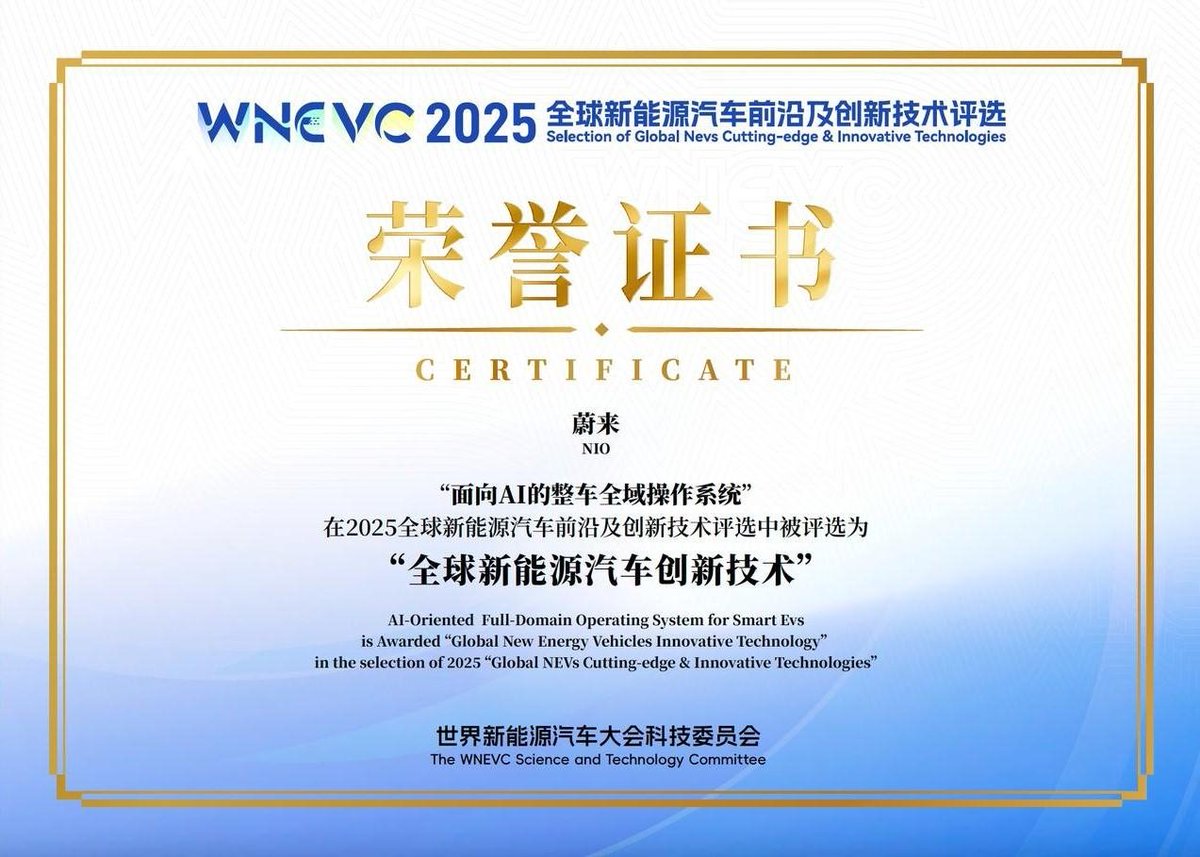
While the U.S. is tightening its chokehold on allies’ chip exports to China that only underscores how crucial it is for China’s EV and semiconductor ecosystem to develop its own home‑grown solutions, exactly where $NIO ’s #Shenji chip and #SkyOS come in.
Rising geopolitical risk strengthens China’s self‑reliance drive. As the U.S. moves to block Huawei‑style dominance by revoking waivers for Samsung, TSMC, and SK Hynix
China will double down on indigenous innovation. That gives NIO an opportunity to accelerate its internal chip/software agenda.
Import substitution is a national priority now. With U.S. export curbs hurting global suppliers in China, domestic players like NIO get a clearer runway to build sustainable, locally sourced platforms without relying on foreign tech.
SkyOS and Shenji align with Beijing’s vision. NIO’s efforts to create vertically integrated architecture, chips plus OS, directly mirror government goals: reducing dependence on Western IP chains.
Time to partner and scale. The U.S. restrictions ultimately shorten NIO’s “long way to go.” Rather than being a pipe dream, they shift the calculus in NIO’s favor when seeking strategic Chinese partners or state-backed acceleration.
The growing U.S. restrictions make China’s chip-software autonomy mission more urgent—and more likely to succeed. For NIO, that means Shenji and SkyOS are not just long shots, but potentially central to a government-supported transformation.
As for the US, they are ignorant and will eventually be losing this battle if not lost already.
If $NIO decided to license its proprietary #Shenji chip and #SkyOS platform to other EV makers at $1,500 per car, the revenue and profit potential would be extraordinary, especially as EV adoption surges worldwide.
Current Market Context
In 2024, around 12.87 million new energy vehicles (NEVs) were sold in China alone, and global EV sales will reach approximately 17 million. This market is expanding rapidly, making the opportunity for NIO to monetize its technology very real.
Full Market Potential (China vs. Worldwide)
If NIO licensed its chip and SkyOS to every EV in China:
12.87M × $1,500 = $19.3 billion in revenue
At an 80% gross margin (typical for licensing), gross profit would be about $15.4 billion.
If NIO licensed its tech at $1,500 per EV, here’s what different global market shares could mean:
10% market share (1.7M EVs) → $2.55 billion in revenue
20% market share (3.4M EVs) → $5.10 billion in revenue
50% market share (8.5M EVs) → $12.75 billion in revenue
80% market share (13.6M EVs) → $20.40 billion in revenue
And if NIO extended licensing to the global EV market:
17M × $1,500 = $25.5 billion in revenue
Adoption Scenarios (Global). Of course, NIO wouldn’t capture 100% market share overnight. But even modest adoption rates would translate into serious numbers:
Why This Makes Sense for NIO:
Licensing its tech stack, rather than relying solely on vehicle sales, would help NIO:
Diversify its income streams.
Capture a share of the global EV boom. Grow margins without large capital investments.
Build an ecosystem where other automakers depend on NIO's proven hardware/software platform.
And because SkyOS and NIO's in-house chips have already been road-tested across NIO's own fleet, this is a strong value proposition for other EV companies looking to simplify their technology stack and speed up development.
By licensing SkyOS and its Shenji chip design at $1,500 per car, NIO could earn tens of billions of dollars annually, with profit margins comparable to top software companies.
Even capturing a small percentage of global EV sales would transform NIO’s financial profile and position it as a true tech powerhouse in the electric mobility space.
#SkyOS is $NIO 's proprietary automotive operating system, and its key benefits really set NIO apart. Some of the biggest advantages include:
✅ Seamless integration across the vehicle. SkyOS unifies all hardware (powertrain, infotainment, ADAS, battery management, etc.) into one system. This enables smoother updates, faster responses, and consistent performance.
✅ Faster software updates and upgrades. With a single, modern OS, NIO can deploy OTA updates quickly to improve features, add new functionality, and enhance safety without hardware changes.
✅ Enabling autonomous driving & AI features. SkyOS is built to support advanced AI chips like NIO’s Shenji, ensuring better sensor fusion, real-time processing, and safer autonomous driving capabilities.
✅ Lower complexity and cost. A unified OS simplifies design and maintenance for NIO and reduces long-term costs compared to juggling multiple third-party systems.
✅ New business and licensing potential. NIO can monetize SkyOS by licensing it to other automakers or mobility companies, something legacy brands like Ford have tried and failed to achieve.
✅ Improved user experience. With SkyOS, drivers and passengers get a more consistent, responsive, and personalized in-car experience, from the dashboard to the driver-assistance features.
In short, SkyOS is more than software, it’s a strategic asset that enhances NIO’s innovation, scalability, and competitive edge.

🚘🇨🇳 BREAKING: Chinese EV giant Nio just leveled up the game!
They’ve built their own chipset & unveiled SkyOS — a full vehicle operating system that’s now OPEN SOURCE.
This isn't just innovation—it's domination.
Silicon meets the road. 🔥
#Nio #SkyOS #ChinaTech #EVRevolution #OpenSource #FutureIsElectric #TechNews


A-Thread
🚀 Breaking Barriers with NIO: From Self-Developed Chips to SkyOS Mastery, Here's Why #NIO is 3 Years Ahead of the Industry! 🌌 #NIOIN #SkyOS #TechLeadership
Yes, the 20 million yuan a year in royalties paid to #AUTOSAR could potentially be saved by #NIO through the development and implementation of their own operating system, SkyOS. Here's how:
- Cost Savings: By developing #SkyOS, NIO eliminates the need to pay annual licensing fees to AUTOSAR for each model, domain controller, and hardware change. Over time, these savings could accumulate to significant amounts, potentially equating to or exceeding the 20 million yuan spent annually on AUTOSAR royalties.
- Customization and Integration: SkyOS is tailored specifically for NIO's smart electric vehicles, allowing for better cross-domain integration which AUTOSAR couldn't efficiently provide. This bespoke system could reduce costs associated with adapting a generic system to fit specialized needs.
- Control Over Technology: Owning the operating system giveas NIO full control over the software stack, potentially reducing costs related to third-party dependencies, troubleshooting, and modifications. This control can lead to more efficient development cycles and quicker response to market needs or technological advancements.
- Revenue Generation: If SkyOS proves to be successful and scalable, NIO could potentially license it to other manufacturers or use it as a platform for additional services, turning a cost center into a revenue generator.
- Long-term Investment: While the initial development of SkyOS would require significant investment, the long-term financial strategy would be to amortize these costs over the lifespan of the product, eventually leading to cost savings once the system is fully operational and the development costs are recouped.
- Market Differentiation: SkyOS could provide NIO with a competitive edge in the market, potentially increasing sales due to unique features or better user experience, indirectly contributing to financial savings by improving market share and reducing the relative cost per vehicle sold.
However, it's worth mentioning that the transition to an in-house operating system like SkyOS would involve upfront development costs, potential teething issues, and the need for continuous updates and security measures. But if successfully implemented, as suggested by Wang Qiyan's calculations and NIO's strategic direction, the move could indeed result in substantial savings over time, surpassing the 20 million yuan mark in annual savings from royalty payments alone, not to mention other indirect financial benefits.

The development of #SkyOS by #NIO, like many proprietary operating systems developed by automotive companies, involves numerous stories and challenges that often remain behind the scenes. Here are some aspects and potential stories that might not be widely known:
1. Inception and Vision: The decision to develop SkyOS likely stemmed from broader industry trends where car manufacturers are increasingly becoming software companies. The vision might have been to create a unified software platform that could seamlessly integrate with all aspects of the vehicle, providing a unique user experience while ensuring data security and system efficiency.
2. Talent Acquisition: Developing an OS requires top-tier talent in software engineering, particularly in embedded systems, real-time operating systems (RTOS), and cybersecurity. NIO's journey would have involved attracting experts from around the globe, possibly including those with experience in other tech sectors or from competitors, which is always a story of negotiation, vision-selling, and sometimes, high-stakes recruitment.
3. Challenges in Development: Beyond the anecdote about network connectivity issues, there would be numerous technical hurdles:
- Hardware-Software Integration**: Ensuring that SkyOS could operate flawlessly across different hardware components, some of which might be sourced from various suppliers with differing standards and interfaces.
- Security: Automotive operating systems need robust security measures to prevent hacking, which could have life-threatening consequences. The development would involve constant battles against potential vulnerabilities.
- User Interface and Experience (UI/UX): Designing an OS that's not only functional but also intuitive and appealing to users involves countless iterations, user testing, and feedback loops.
4. Intellectual Property Battles: Developing core technologies often leads to navigating a minefield of existing patents. NIO's journey might include stories of how they either developed entirely new solutions or legally maneuvered through or around existing IP.
5. Cultural Shifts: Transitioning from a hardware-focused company to one that also emphasizes software requires a cultural shift within the company. There would be stories of resistance, adaptation, and the educational efforts to bring all employees on board with the new direction.
6. Collaborations and Partnerships: While NIO aimed to reduce dependency on suppliers like u-blox, there might be lesser-known stories about partnerships with tech companies, universities, or research institutions to overcome specific technical challenges or to innovate in areas like AI for autonomous driving features integrated into SkyOS.
7. Testing and Iteration: The real-world testing of SkyOS would involve not just technical testing but also real-life scenario testing in different environments, weather conditions, and usage patterns, leading to numerous adjustments and improvements.
8. Regulatory Compliance: Developing an OS for vehicles means meeting various international standards and regulations, which can differ significantly from one market to another. This aspect might involve stories of navigating regulatory landscapes, sometimes leading to significant changes in software architecture.
9. Market Reception and Feedback: After launch, how users and critics receive SkyOS would offer another layer of stories, from addressing unforeseen bugs to incorporating user feedback for future updates.
These stories collectively paint a picture of innovation, perseverance, and the strategic pivot of automotive companies towards becoming tech-centric entities, where software like SkyOS becomes as crucial as the physical vehicle itself.
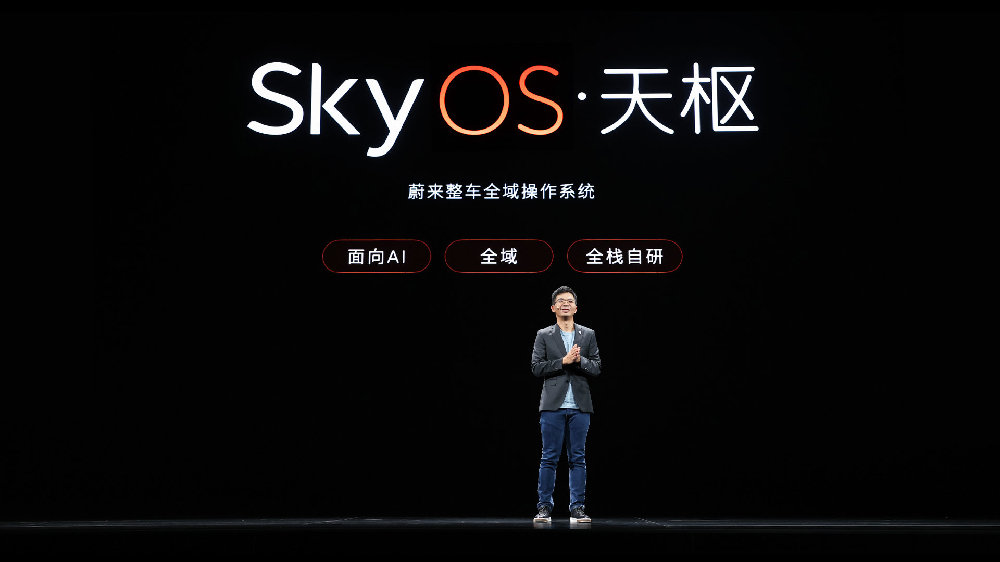


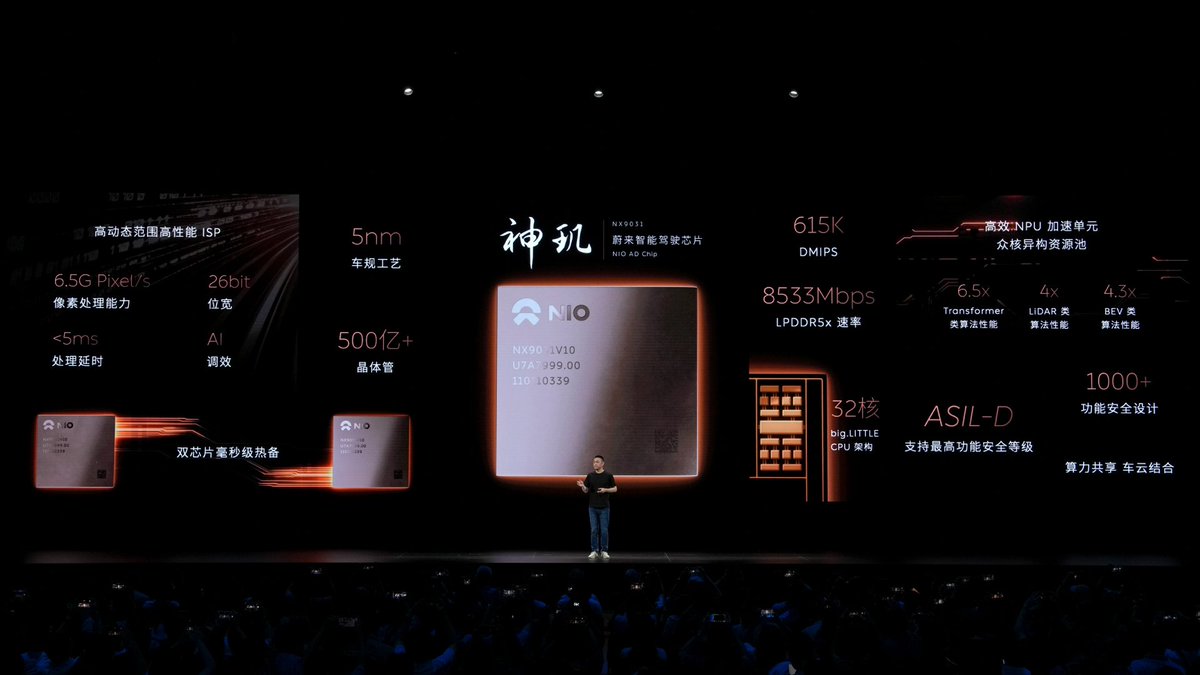


NIO's Li Bin stated that NIO is firmly against developing Robotaxi services, as it doesn't align with their vision. The value of autonomous driving, according to him, is not in eliminating the jobs of ride-hailing and taxi drivers, but in enhancing vehicle safety, freeing up mental effort, and reducing accidents. $NIO
Last Seen Hashtags on Sotwe
str8baited
Seen from United States
nolimit()** filter:videos()****
Seen from United States
omegle
Seen from United States
打腳底
Momson(((((((((())))))))))********************** filter:native_video
Seen from Netherlands
热播短剧
Seen from Singapore
SEGUNDADESSA
Seen from United States
รับงานคลองหลวง
Seen from Thailand
nolimit()*******
Seen from Turkey
92i suce
Seen from France
Most Popular Users

Elon Musk 
@elonmusk
241M followers

Barack Obama
@barackobama
119.2M followers

Cristiano Ronaldo
@cristiano
111.8M followers

Donald J. Trump
@realdonaldtrump
111.8M followers

Narendra Modi
@narendramodi
107M followers

Rihanna
@rihanna
98M followers

NASA
@nasa
92.2M followers

Justin Bieber
@justinbieber
91.2M followers

KATY PERRY
@katyperry
88.3M followers

Taylor Swift
@taylorswift13
82.2M followers

Lady Gaga
@ladygaga
73.7M followers

Virat Kohli
@imvkohli
70.9M followers

Kim Kardashian
@kimkardashian
70.1M followers

YouTube
@youtube
68.7M followers

Bill Gates
@billgates
64.2M followers

Neymar Jr
@neymarjr
63.8M followers

The Ellen Show
@theellenshow
62.4M followers

CNN
@cnn
61.8M followers

Selena Gomez
@selenagomez
61.4M followers

X
@x
60.8M followers