

Top Tweets for #SpaceNavigation

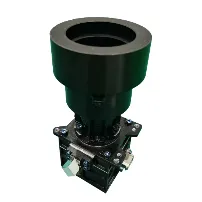
��️ Star sensor – high precision, autonomous orientation & positioning. No GPS needed. Reliable in extreme space – radiation & thermal resistant.
#StarSensor #AttitudeControl #SpaceNavigation #SatelliteTech #AutonomousPositioning #DeepSpaceMission
https://t.co/YuSbhDWabo

The elder wisdom holds: the geometry dictates the form.
What does this open for you? Could navigation become more like flowing with the universe’s relational structure than fighting against it?
#ShapeDynamics #RelationalPhysics #SpaceNavigation #ProcessOntology

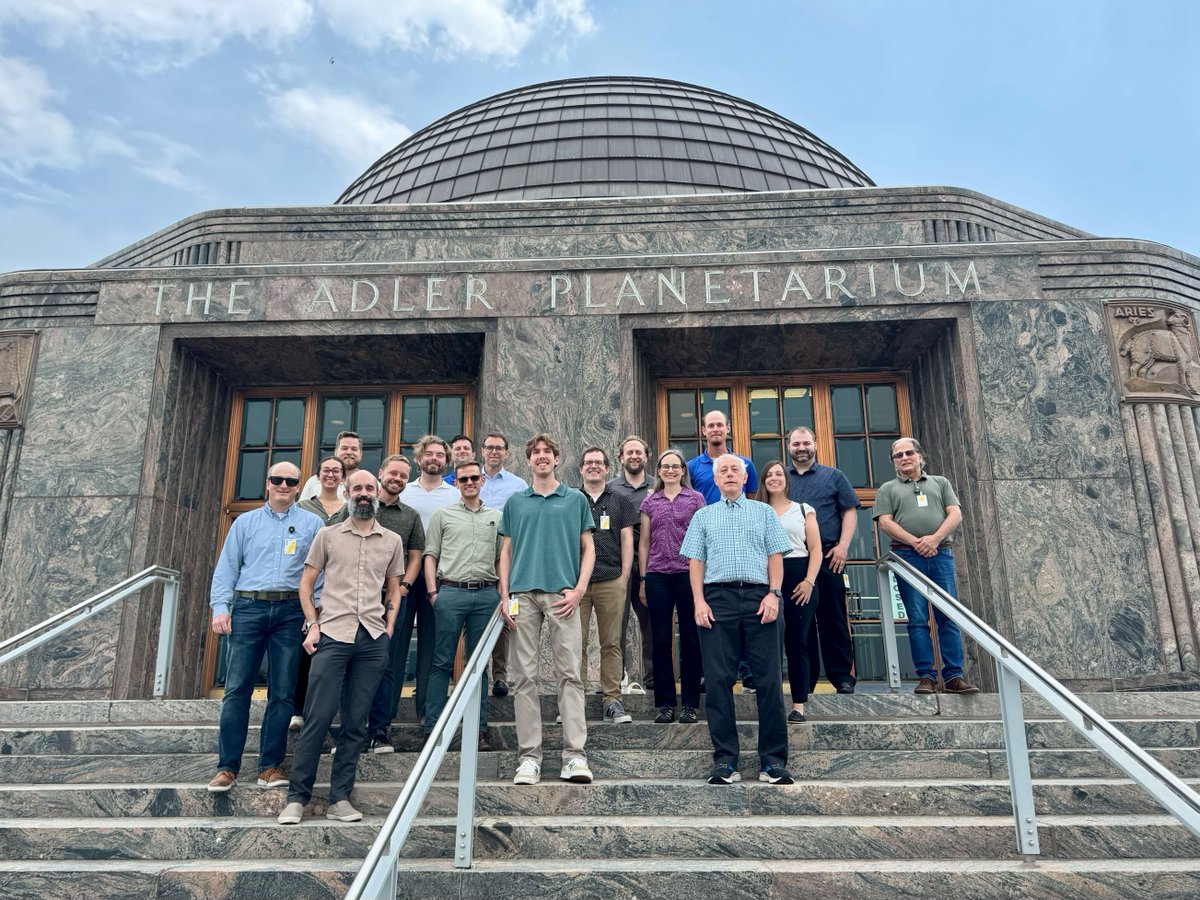
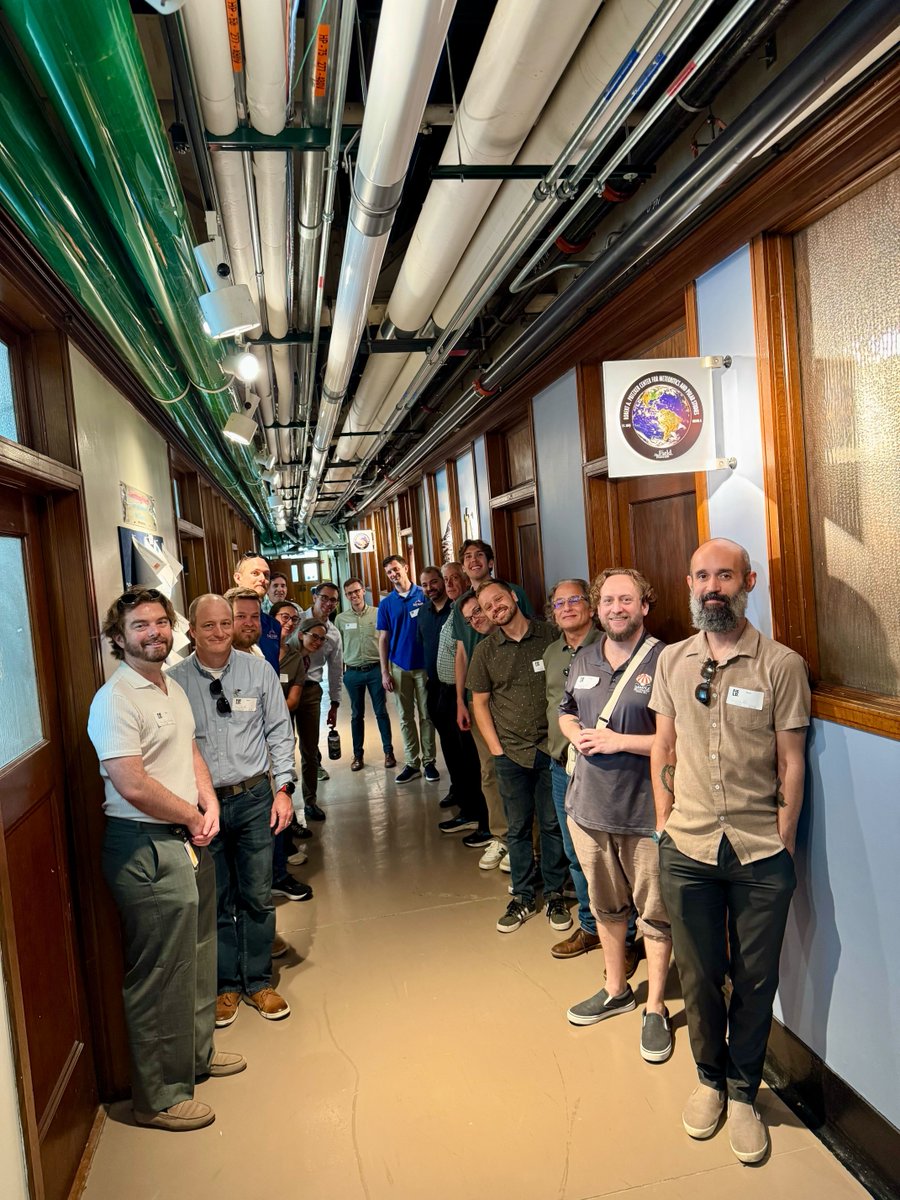
🔭 The OSIRIS-APEX team just met in Chicago at the Adler Planetarium!
🚀 After visiting the Field Museum's meteorite collection, we're ready to navigate towards Apophis for its close approach in 2029. Exciting times ahead! 🌌
https://t.co/P6Nu1fkNrL
#KinetX #SpaceNavigation

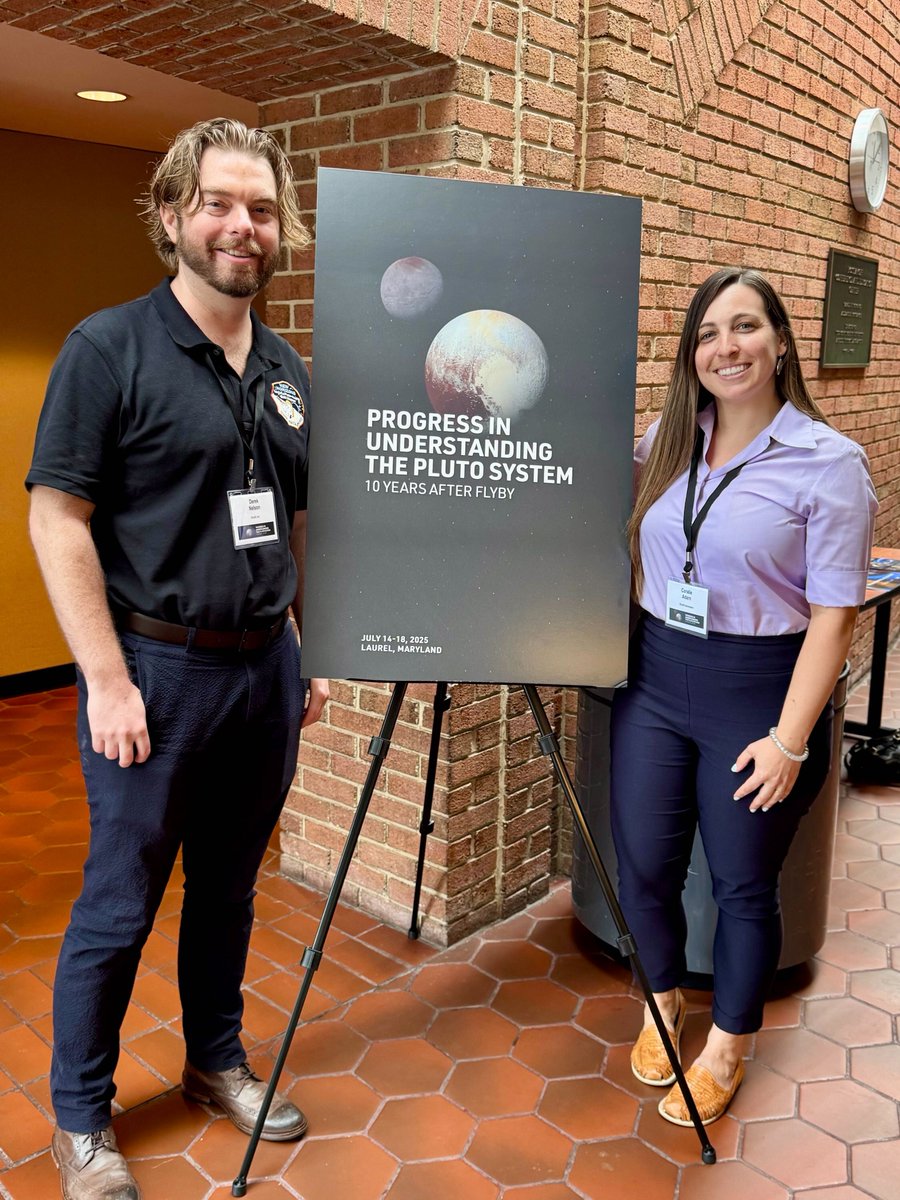
🛰️ Almost a decade after the Pluto flyby, Coralie Adam & Derek Nelson discuss New Horizons' legacy and its influence on missions like OSIRIS-REx and Lucy.
➡️ Explore the full story: https://t.co/DTUnCOiVBZ and https://t.co/hz3sDTM0XY
#KinetX #SpaceNavigation
✨ Did you know @NASA’s Lucy mission is named after a famous fossil?
🌍 Just like the 3M-year-old "Lucy" skeleton taught us about human evolution, Lucy the spacecraft is uncovering the secrets of our Solar System's formation!
https://t.co/P6Nu1fkNrL
#KinetX #SpaceNavigation

🚀 Major milestone for the Lucy Navigation Team with honorary guests Donald Johanson, paleoanthropologist, and Sir Brian May, Queen guitarist & astrophysicist!
💫 Exploration knows no boundaries.
https://t.co/P6Nu1fkNrL
#KinetX #SpaceNavigation


The Antikythera Mechanism
A Fragment of a Larger, Advanced System?
The mechanism that made us today look too "tiny".
#Antikythera #Computer #Predictor #Ancient #SpaceNavigation #WastedOpportunity
The theories i join to explore:
Imagine Ancient Greeks having that knowledge, if used as multiple kind of mechanism with knowledge that we found at medieval years... Then if we never lost it and kept it in surface instead of a shipwreck at 100 BCE. Then in medieval years maybe we will have been colonizers not of new Earth soils but in different galaxies.
The Antikythera Mechanism, an ancient Greek device discovered off the coast of Antikythera Island in 1901, is widely recognized as the world’s first analog computer. Its intricate gears and dials allowed ancient astronomers to track celestial movements and predict astronomical events with remarkable accuracy. However, a tantalizing theory suggests that the Antikythera Mechanism may not have been a standalone device but rather a component of a much larger and more advanced system, possibly even part of an ancient spacecraft or a sophisticated navigation tool.
Evidence of Advanced Engineering
The complexity of the Antikythera Mechanism is staggering for its time, dating back to around 100 BCE. The device was capable of predicting solar and lunar eclipses, tracking the movements of planets, and even accounting for the irregular orbit of the Moon. The precision and craftsmanship of the gears indicate knowledge that seems far ahead of its era, leading some researchers to speculate that it was derived from knowledge lost to history.
A Fragment of a Greater Whole?
Mechanical Design Anomalies:
The Antikythera Mechanism’s intricate gear system resembles modern clockwork machinery, which raises the possibility that it was part of a more extensive system. The device’s compact nature and complex functionality hint at integration with a more massive apparatus. The design is too advanced and sophisticated to be an isolated invention, suggesting it may have been a control interface or core component of a larger machine, such as a spacecraft or an ancient energy regulation device.
Astronomical Navigation:
The device’s ability to track celestial objects aligns with navigation systems used in advanced vessels. Could the Antikythera Mechanism have been a control panel or guidance system for an ancient spacecraft or maritime vessel that relied on celestial navigation? If the mechanism were part of a more extensive system, it might have worked in conjunction with other advanced tools to map star positions, time cosmic cycles, or even calculate the alignment of celestial bodies for interstellar travel.
Material and Craftsmanship:
The use of bronze and precise machining techniques suggest access to advanced metallurgy and engineering knowledge. If this knowledge was part of a larger technological framework, the Antikythera Mechanism might have been a modular component designed for a larger technological system. The intricate craftsmanship and precise gear ratios indicate a level of scientific understanding that may have been inherited from a lost civilization or external influence.
Deeper Analysis of the Theories
Mechanical Design Anomalies:
The striking resemblance to modern gear systems implies ancient engineers had knowledge of mechanics that far exceeded what is officially recorded. If it was part of a larger apparatus, it could have been designed for advanced energy regulation, time manipulation, or celestial tracking. This supports the theory that ancient civilizations possessed advanced scientific understanding, potentially inherited from an unknown source or lost civilization.
Astronomical Navigation:
The device’s precision in tracking celestial bodies strongly aligns with navigation systems used in both maritime and potential extraterrestrial travel. The idea that the mechanism was integrated into an ancient spacecraft or advanced vessel is supported by ancient myths describing “flying chariots” and “heavenly machines.” The mechanism’s ability to predict cosmic events could have been crucial for interstellar journeys or mapping cosmic timelines.
Material and Craftsmanship:
The high-quality bronze and precise machining techniques reflect advanced metallurgy and engineering knowledge. This suggests the mechanism may have been part of a modular system within a more extensive technological framework. Civilizations like the Sumerians and Atlanteans, known for their astronomical advancements, could have either developed or inherited such technology.
Connections to Ancient Civilizations
In exploring the nexus between ancient civilizations and advanced technology, we often turn to ancient texts and mythologies for insight. Notably, texts from the ancient Egyptians and the Sumerians frequently make mention of enigmatic objects such as “flying chariots” and “divine machines,” which were said to traverse the heavens with ease. These intriguing references invite speculation: could they be more than mere folklore? Might these narratives hint at sophisticated technology that ancient civilizations either inherited from superior beings or reverse-engineered from their own discoveries?
Ancient Egyptian Knowledge
The Egyptians possessed a rich tapestry of beliefs surrounding the divine and the cosmos, evident in their varied mythologies and artistic representations. Central to this belief system were “solar boats” mythical vessels used by the gods to journey across the sky, often depicted radiant with symbols of power and mystery. Some researchers suggest that these solar boats could symbolize visionary flying machines or even spacecraft capable of navigating the heavens. The association of these vessels with divine beings raises questions about the nature of technology in ancient Egypt. Were these descriptions merely metaphorical representations of spiritual experiences, or did they reflect the actual use of advanced technologies that we can hardly fathom today?
Sumerian Influence
Moving to the Sumerians, we encounter a civilization that laid crucial groundwork for several aspects of human achievement, including writing, agriculture, and urban planning. The Sumerians documented their experiences with ethereal beings known as the Anunnaki, who were characterized by their descent from the heavens and their possession of advanced knowledge and tools unknown to ordinary humans. Accounts of encounters with these beings often suggest that they imparted wisdom to the Sumerians, potentially including the secrets behind remarkable technologies or their construction. One artifact that stands out in this dialogue is the Antikythera Mechanism, an ancient astronomical calculator discovered in a shipwreck off the coast of Antikythera, Greece. This sophisticated device could be viewed as a remnant of technological advancements possibly transcended through the interactions with the Anunnaki, indicating that ancient peoples may have enjoyed access to complex machinery that bridged the realms of the celestial and terrestrial.
Indian Vedic Texts
Turning our gaze to the East, ancient Indian scriptures such as the Vedas and Mahabharata recount tales of “Vimanas,” described as remarkable flying chariots capable of incredible feats. These Vimanas were not just poetic embellishments; the texts detail their design, operational mechanics, and even energy sources, showcasing an incredible understanding of technology for such an early era. Such descriptions resonate with the specifications and mechanical finesse found in the Antikythera Mechanism, prompting intriguing parallels between disparate cultures. This synchronicity invites us to consider the possibility of a global network of advanced ancient technology—that ancient civilizations, through shared experiences or interactions, may have possessed knowledge that transcended their times and geographies.
The Possibility of an Ancient Spacecraft
The Antikythera Mechanism, an ancient Greek artifact discovered in a shipwreck off the coast of the Greek island of Antikythera, has long fascinated historians and scientists alike. This intricate device, often considered the world's first analog computer, showcases a level of engineering sophistication that was previously thought to be unattainable for its time. If we entertain the hypothesis that the Antikythera Mechanism was not merely a standalone object but rather a crucial component of a larger and more complex device, potentially even a spacecraft, its implications for our understanding of ancient technology would be profound.
This possibility opens doors to several intriguing functions the Antikythera Mechanism could have served within such a theoretical spacecraft:
A Navigation Computer for Tracking Celestial Coordinates If the Antikythera Mechanism was part of a spacecraft, its ability to track celestial coordinates would have been invaluable for navigation in the vast expanse of space. By calculating the positions of stars, planets, and other celestial bodies, the mechanism could have aided ancient astronauts in determining their location and trajectory as they traversed the cosmos. This function would imply a sophisticated understanding of astronomy, far beyond what is commonly attributed to ancient civilizations. It would suggest that these ancient peoples possessed the knowledge and technical skills necessary to explore space, navigate between celestial points, and perhaps even reach other planets or solar systems.
A Timekeeping Device Synchronized with Cosmic Cycles.
The significance of timekeeping in navigation cannot be overstated. For a hypothetical spacecraft, maintaining accurate time in relation to astronomical events would have been crucial for mission planning and execution. If the Antikythera Mechanism was designed to synchronize with cosmic cycles such as lunar phases, solar eclipses, and other celestial phenomena it could have functioned as an advanced chronometer. The implications of such a device would suggest that ancient civilizations had developed methods for understanding the passage of time in connection with celestial movements, a concept that is vital for any interstellar journey.
A Power Regulator for Controlling Energy Distribution within a Larger Machine
In considering the energy requirements of a potential spacecraft, it becomes necessary to contemplate the management of power distribution among its various systems. The Antikythera Mechanism could have functioned as a power regulator, ensuring that energy was efficiently allocated to critical operations, whether for navigation, life support, or propulsion. This capability would further imply that the ancient engineers who constructed this hypothetical spacecraft had knowledge not only of engineering and mechanical systems but also of advanced energy principles. The ability to regulate and distribute energy effectively would have been essential for the functionality and safety of any spacecraft, highlighting an advanced level of technological understanding.
The Missing Links
Lack of Additional Components:
The Antikythera Mechanism, a remarkable ancient Greek device often considered one of the earliest known analog computers, remains an enigma due to the absence of supplementary components. Despite extensive research and exploration, no additional fragments, parts, or similar devices have been uncovered to further illuminate its purpose and functionality. This scarcity of evidence suggests several possibilities: It could indicate that the remainder of the mechanism was tragically destroyed over time, perhaps due to environmental factors or human activity, effectively erasing crucial pieces of technological history. Alternatively, it is also conceivable that other parts of the mechanism remain hidden, yet to be discovered, lying dormant in unexplored areas of archaeological dig sites or in private collections, shrouded in secrecy while they wait to unveil their mysteries.
Historical Suppression:
Throughout history, there have been instances where knowledge and understanding of advanced technology have been deliberately obscured. During the rise of the Roman Empire and throughout the influence of major religious institutions, ancient wisdom and scientific progress were often suppressed. This suppression may not have been merely a byproduct of the desire for power; instead, it could have been a calculated effort to maintain control over knowledge that could empower the masses or challenge the prevailing authority. Ancient texts that could have contained instructions or explanations of the Antikythera Mechanism and similar devices may have been lost, censored, or destroyed to ensure that only a select few could access the profound understanding of technology that might have existed long before our time.
Underwater Archaeology:
The shipwreck on the Antikythera seabed continues to be a rich source of intrigue and significance for archaeologists and historians alike. The phenomenon of underwater archaeology, which involves the study of submerged sites and artifacts, presents a unique opportunity to uncover further secrets that may lie beneath the waves. It is entirely possible that within this ancient wreck, other components or objects related to the Antikythera Mechanism or technology of similar intrigue exist, patiently waiting to be rediscovered. These hidden treasures could hold the keys to understanding not only the sophistication of ancient Greek engineering but also the broader narrative of human innovation that transcends time. Ongoing underwater exploration and advancements in archaeological techniques may eventually unveil these elusive artifacts, offering a more complete perspective of our technological past.


🌌Wormholes, cosmic rifts, and interstellar storms await. Will you chart the safest course or risk the unknown?
#SpaceNavigation #GalacticStorms #SciFiExploration #AIDrivenChallenges #Pulsar #Odyssey

🛰️ DOGE-1 features a GNSS receiver to experiment with navigation data acquisition above constellation levels. #SpaceNavigation #GNSS #XiProtocol $XI #Doge1


Live View of Jupiter's, Our Mission Landing On the Moon of Jupiter. We have prepared for this Spacers, Our Mission Is To Install A Searcher On The Jupiter's Moon/ Solar System.. See What's Inside Jupiter. YouTube: GuafoSpace Program #SpaceEnergy #SpaceMission #SpaceNavigation

On January 3, the start-up successfully launched its Pushan-Alpha satellite from a SpaceX rocket.
Read Here 👇🏻
https://t.co/9LVGuujOFO
#Digantara #SpaceNavigation #Satellites | ✍️ @AihikS

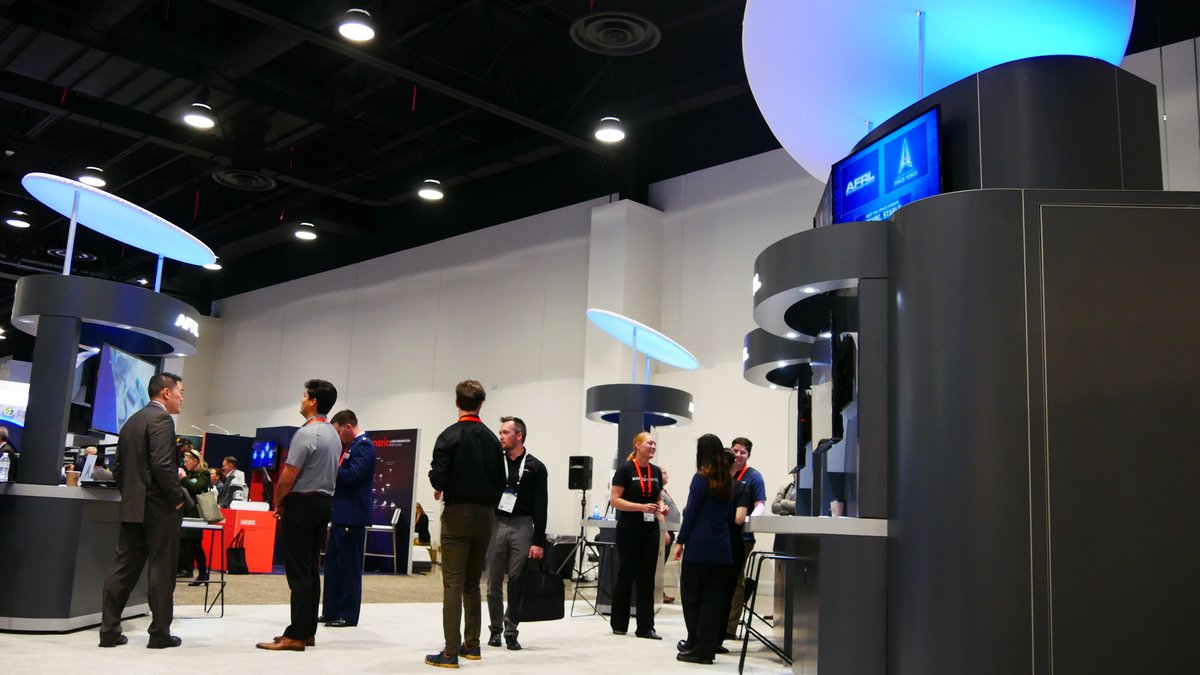
#FlashBackFriday! Last week, we had a fantastic time at the #37Space National Space Symposium in Colorado. Were you there? If you missed our displays, learn more here: https://t.co/IG6j4J73S6
@AFRL_CC
#SpaceSymposium #Satellites #SemperSupra #SpaceNavigation



Get comfortable and whip your headphones out because it's podcast time! 🎧
In the latest #FutureOfTech episode, Avishai Sharlin discusses with @D_Orbit's CEO @lucarossettini the future of #spacenavigation.
Listen to the full episode here > https://t.co/KpwIkCOlWD

With funding from the @spacegovuk, @SurreySat, @InmarsatGlobal, and MDA UK are among those who have won contracts worth £2 million with the @europeanspaceagency (ESA) to put a constellation of satellites around the Moon: https://t.co/wGq96yO2OJ #UK #moonmissions #spacenavigation

#Galileo is reaching the new heights!
📍@NASA_Wallops: today at 9:38 p.m. EDT/Oct 2 at 3:38 CET, a Galileo-enabled receiver for secure & flexible #spacenavigation will head to the @Space_Station on board the #cubesat mission BOBCAT-1.
🆕https://t.co/EVe2XW6X8y
Way to go #EUSpace!


Pleased to see @esa and @NASA, team up on such vital issues as #Space #Security.
The ##Security of #Spacenavigation will depend on #internationalpartnerships, because #Sustainable #SpaceSecurity is in the #nationalinterest of ALL States.
https://t.co/1pglyqQeCi
@Telegraph

La femme noirr Katherine Johnson , mathématicienne de la Nasa (originaire de l'état de la Virginie). Elle calcula manuellement la trajectoire de nombreuses sondes dont les vols appolo. Navigation spatiale #spacenavigation #BlackPower #Apollo11

Une pensée pour Katherine Johnson, jamais évoquée dans le documentaire, et sans qui rien n’aurait été possible
#Apollo11


Exactly how did Apollo astronauts not get lost going to the moon?
#ApolloGuidanceComputer #NASA #Apollo11 #Apollo50 #SpaceNavigation #Apollo
https://t.co/iepxTnpxGV


Team leading #spacenavigation project for autonomous deep #space satellites on #garage48 spacetech #hackaton
Very exciting experience
#startup #g48spacetech

Last Seen Hashtags on Sotwe
Most Popular Users

Elon Musk 
@elonmusk
240.9M followers

Barack Obama
@barackobama
119.2M followers

Donald J. Trump
@realdonaldtrump
111.8M followers

Cristiano Ronaldo
@cristiano
111.6M followers

Narendra Modi
@narendramodi
107M followers

Rihanna
@rihanna
97.9M followers

NASA
@nasa
92.2M followers

Justin Bieber
@justinbieber
91.1M followers

KATY PERRY
@katyperry
88.2M followers

Taylor Swift
@taylorswift13
82.1M followers

Lady Gaga
@ladygaga
73.6M followers

Virat Kohli
@imvkohli
70.8M followers

Kim Kardashian
@kimkardashian
70.1M followers

YouTube
@youtube
68.7M followers

Bill Gates
@billgates
64.2M followers

Neymar Jr
@neymarjr
63.6M followers

The Ellen Show
@theellenshow
62.4M followers

CNN
@cnn
61.8M followers

Selena Gomez
@selenagomez
61.3M followers

X
@x
60.8M followers