

Top Tweets for #SpaceNuggets


SpaceX has quietly stopped selling Falcon 9 slots past 2028, and everyone is scrambling. #Skyroot just sold two Vikram launches to a California startup and three to Kerala's HEX20. high demand
The American buyer said it out loud there is a real launch capacity shortage right now

🚀 ISRO’s GSLV-F18 is targeting October 30 to launch NVS-03, strengthening India’s NavIC navigation system. 🇮🇳
Beyond civilian navigation, NavIC provides independent positioning and timing capabilities critical for strategic operations, defence coordination and national security.
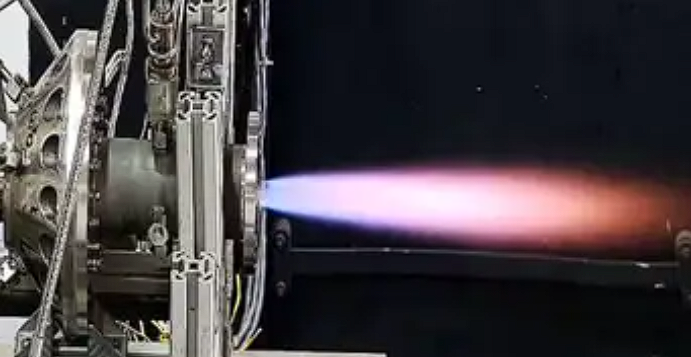

ISRO shares a detailed update on its LOX-Methane engine programme, the propulsion planned for the Next Generation Launch Vehicle (NGLV) and for the future heavy-lift vehicle for India's crewed lunar landing (target 2040).
Why methane?
- Clean combustion
- Low maintenance, which helps reusability
- Can be made on Mars from CO2 + water ice, which helps future Mars missions and human settlement
LM20-TD: the demonstrator (2019–2020)
- 20-tonne thrust technology demonstrator built from existing CE-20 cryogenic engine subsystems
- Converted to LOX-CH4 by modifying the propellant flow control and engine start-up systems
- Gas generator cycle, with thrust chamber, fuel-rich GG, LOX & fuel turbopumps, igniter, and a mixture ratio control valve with electric drive
- Test sequence worked out with an in-house mathematical model
- 1 cold flow + 5 hot tests at IPRC
- Gave key data on chill-down, ignition, engine start, combustion and rotor-dynamics
LME1100: the main engine (started 2023)
- 1100 kN thrust, Gas Generator Cycle
- Designed to be industry-friendly and cost-effective
- Over 70% of components made by additive manufacturing (3D printing) with industry partners across India
Gas Generator
- 3D printed, in qualification tests at IPRC
- Sub-scale GG tests worked out the ignition sequence with a spark torch igniter and tested the 3D-printed injector elements
- First ignition test of the full-scale GG on October 9, 2026, with more tests planned
Thrust Chamber
- Sub-scale hot test campaign at IPRC
- Proved the new manufacturing methods planned for the full-scale chamber
- Settled the best injector configuration
- Showed both oxidiser-rich and fuel-rich spark torch igniters working
Turbopumps
- LOX and methane turbopumps made by Indian industry
- 3D-printed LOX pump impeller spin-tested at LPSC up to its rated speed
- Seals and bearings in qualification at LPSC and IPRC
- Cold flow tests of the integrated turbopumps ongoing at IPRC
Ignition systems
- GOX-GCH4 spark torch igniters, oxidiser-rich and fuel-rich
- Semiconductor spark plug igniter (LPSC + VSSC + IIST)
- Laser ignition, demonstrated with GOX-GH2 and GOX-GCH4
What's next
- Integrated LME1100 engine ready by mid-2027, followed by a hot test series including different thrust throttling profiles
- Design completed for a 2400 kN Full Flow Staged Combustion Cycle (FFSCC) engine, meant for a future human-rated heavy-lift launch vehicle for crewed lunar landing missions
Source: https://t.co/sXzrx0ej9D
#ISRO #LOXMethane #LME1100 #NGLV #IndianSpace


India's first ever satellite refueling mission in Feb 2027!
Chennai-based OrbitAID's AayulSAT-1 ('Aayul' means 'life' in Tamil) rode the doomed PSLV-C62 in January 2026 but could not complete its mission because of the launch failure.
OrbitAID is now set to redo the mission in early November 2026. It will fly on board SSLV-L1, the SSLV's first operational flight, and will demonstrate fuel and power transfer.
Following that, OrbitAID plans to launch AayulSAT-2A and 2B in February 2027 on board an Indian launch vehicle. This mission will demonstrate rendezvous, proximity operations, docking, refuelling, and power transfer in two scenarios:
1) Refueling a satellite fitted with OrbitAID's SIDRP refueling interface.
2) Acting as a 'jetpack' satellite for spacecraft that lack SIDRP.
AayulSAT-2A and 2B will weigh about 70 kg each and will be inserted into low Earth orbit. The two spacecraft will then distance themselves.
The chaser will then perform several maneuvers and dock with the target satellite using OrbitAID's proprietary ARCAS docking mechanism, which can attach to any satellite's standard Launch Adapter Ring (LAR).
Their SIDRP robotic arm will then be used to refuel the target. After that, the chaser will act as a jetpack, using its own propulsion system to perform orbital-adjustment maneuvers, raising itself to a higher orbit and bringing it back to the original orbit, thus completing the mission.
After a successful demonstration, OrbitAID will build scaled-up versions for refuelling and servicing missions for GEO satellites.
This could be a game changer for GEO satellites. It extends their operational life, reduces the fuel they need to carry on board (and therefore their mass), and can even rescue satellites that get stuck due to an engine or valve failure.
Source: @ISROSpaceflight


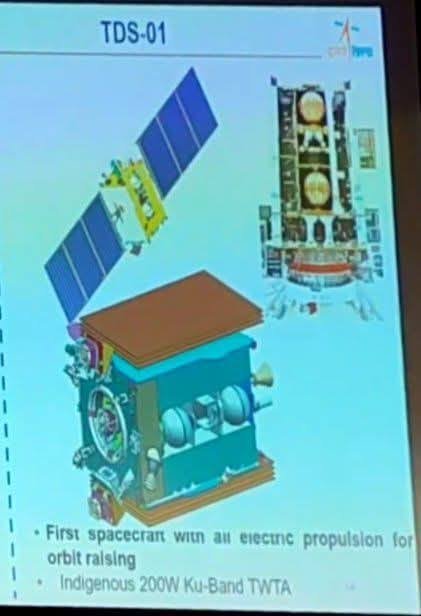
ISRO's LPSC director N Jayan says its 300 mN stationary plasma thruster, which ionises xenon or argon, has completed qualification and will fly on TDS-01 (PSLV-C63). Electric propulsion could cut a 5 t satellite to 3-3.5 t and nearly halve launch cost. TDS-02 is planned next.


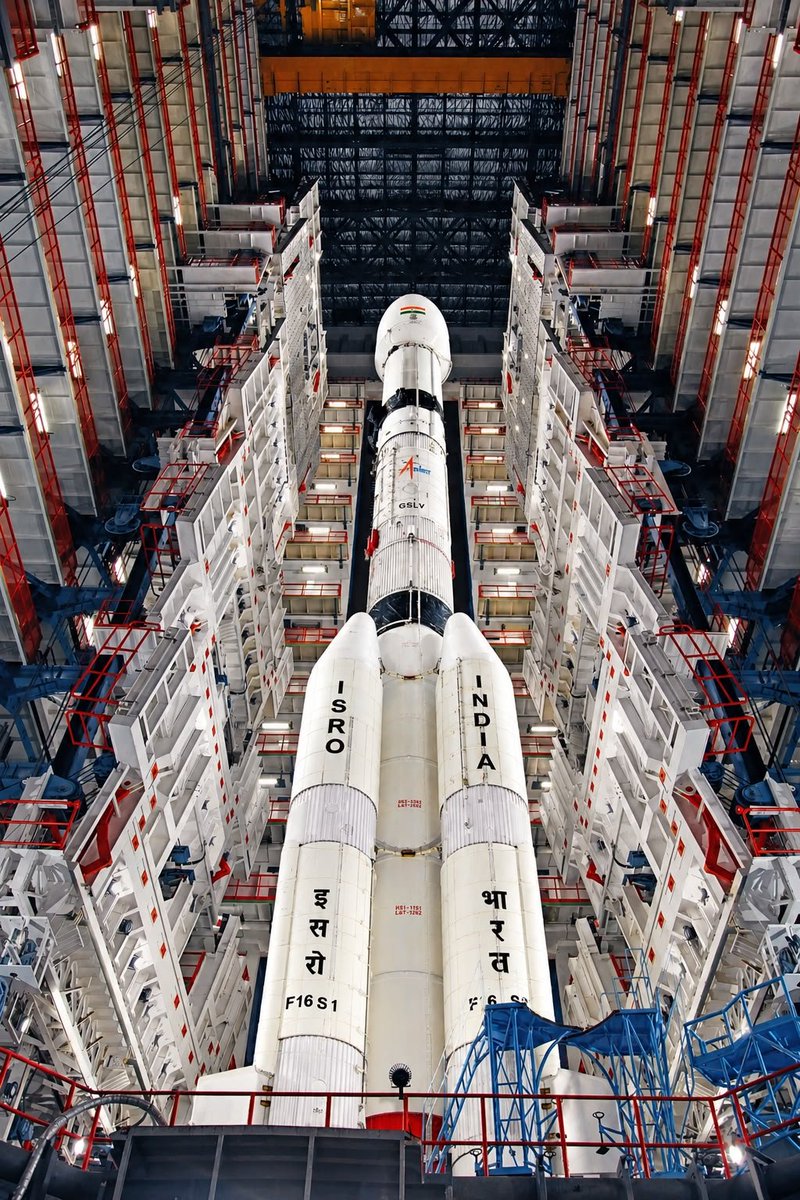
The L110 core stage of HLVM3 (Human Lift Vehicle Mark III).
It would definitely be a moment in history. Only 3 nations have put men in space. This will be 4th.


Satisfying video :)
ISRO to launch NVS-03 between October 15-20
ISRO is reportedly preparing to launch the NVS-03 (IRNSS-1L) navigation satellite between October 15 and 20 aboard GSLV-F18 from the Second Launch Pad at Sriharikota. This will be the 20th flight of the GSLV.
The mission is critical for NavIC. Right now only three satellites in the constellation are providing Position, Navigation and Timing (PNT) services: IRNSS-1B and IRNSS-1I from the first generation, and NVS-01 from the second generation. Any satellite navigation system needs a bare minimum of four satellites to calculate a user's position on its own, which means NavIC currently cannot provide standalone navigation.
Once NVS-03 reaches its orbital slot and completes in-orbit testing, NavIC will be back at four PNT-capable satellites, restoring its standalone positioning capability. NVS-04 and NVS-05 are expected to follow to rebuild the full seven-satellite constellation.
#ISRO #NavIC #NVS03 #GSLV #GSLVF18 #IRNSS #IndianSpace #Sriharikota

Most anticipated mission for me is the RLV ORV mission - where the ISRO will launch a spaceplane on a modified GSLV MK2.
Huge implications for defence & space experimentation if we crack this.
Cool to see similar hardware be displayed at BSX 2026.

#ISRO’s LME-1100 Methalox Engine 🇮🇳
The LME-1100 is a liquid oxygen–methane (LOX/CH₄) engine under development by @isro's Liquid Propulsion Systems Centre (#LPSC).
Rated at approximately 1,100 kN of thrust, it is being designed to power the first and second stages of India’s Next Generation Launch Vehicle (#NGLV).
Key features include deep throttling capability and multi-restart functionality, which are essential for enabling first-stage recovery and partial reusability.
The use of methane as fuel offers cleaner combustion, higher density impulse compared to liquid hydrogen systems, and improved operational handling.


BREAKING: For the first time in history, a space launch from continental Europe has successfully reached orbit.
@isaraerospace, the German space company, launched its Spectrum rocket from Andøya Spaceport in Norway today.
ISRO successfully hot tested the Semicryogenic Engine PHTA at full 200T thrust for the first time at IPRC Mahendragiri. 35s test, 5s at 100%. Ninth PHTA test. SE2000 will power the SC120 stage replacing L110 on LVM3. #ISRO #SE2000 #LVM3 #Semicryogenic


🚨 GSLV performs better than expected, EOS-05 mission life likely to increase! 🔥
GSLV-F17 was supposed to place EOS-05 into a transfer orbit with an apogee of 28,934 km. However, GSLV's cryogenic third stage performed better than expected, achieving an apogee of 31,026 km!
Being a Geostationary satellite, EOS-05 would ideally be launched into an elliptical 170 × 35,786 km Geostationary Transfer Orbit (GTO), from where it would use its own propellant and thrusters to raise its perigee and eventually enter a circular Geostationary Orbit (GEO).
However, at 2,367 kg, EOS-05 is heavier than the 2,250 kg maximum mass GSLV can deliver to GTO.
Therefore, for this mission, GSLV's third stage was made to fire until all propellant is exhausted (burn to depletion), sending the satellite the furthest it could.
ISRO had estimated an apogee of 28,934 km i.e. lower than GTO altitude, hence the term Sub-GTO. EOS-05 would then use its own propulsion system to raise its apogee to GTO altitude before continuing its journey to GEO.
But GSLV achieved an apogee +2,092 km higher than expected!
This means EOS-05 will need to use less of its own propellant to reach GTO, leaving more propellant available once it reaches GEO.
This extra propellant can then be used for stationkeeping and attitude control, likely extending EOS-05's planned 10-year mission life!


🚨 “We have given Skyroot 300 acres in Space City near Tirupati at ₹5 lakh per acre. They will build their entire launch vehicle there, while the rockets will be launched from Sriharikota.”
- Andhra Pradesh minister Nara Lokesh.

I really cannot wait until ISRO starts realising the NGLV family which will potentially start with the ADMIRE VTVL tests - mostly next year.
We figured out private launchers, now need to focus on reusable launchers and allied technologies - that’s where the future lies.


First look at EtherealX’s Pegasus Mk2 80 kN upper-stage semi-cryogenic FSCC reusable engine! 🚀🇮🇳
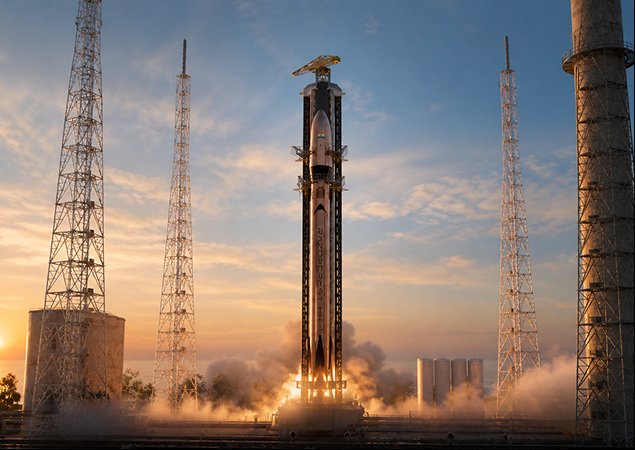
15 such engines will power the upper stage of Razor Crest Mk1.
Hot-fire test scheduled for November 14, 2026.


The future of Indian spaceflight is looking BRIGHT! 🚀✨
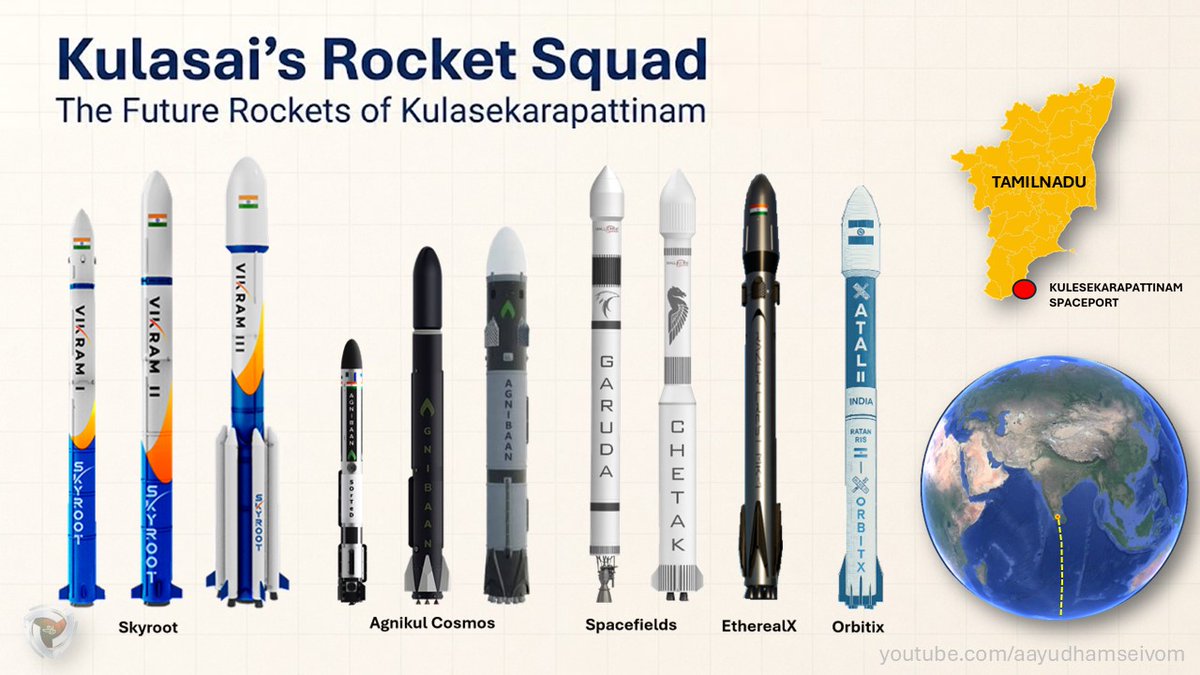
Thanks to its strategic geography, Kulasekarapattinam is set to become a bustling hub with launches scheduled every few weeks. Meet Kulasai’s Rocket Squad! 🛰️
We’re producing a full deep-dive video covering:
1️⃣ The birth of the Indian private space industry.
2️⃣ Why private companies are crucial to scaling India's space economy.
3️⃣ How Kulasekarapattinam solves the trajectory equation for small launchers.
📺 Follow us for more updates and to watch the full video!
We do make lot of science videos too :) ..
So #EtherealX is joining tje FFSC race with #AstroBase
That too at a massive scale.
#AtmanirbharBharatTech
#SpaceNuggets
Payload above LVM3 category!!!!

🇮🇳 Indian spacetech startup @theguildworld is advancing development of the Razor Crest Mk-1, a fully reusable medium-lift rocket designed for 24.8 t to LEO and 10.8 t to GTO. The company says both the booster and upper stage are being designed for recovery and reuse. 🚀

Last Seen Hashtags on Sotwe
minichatt
Seen from Canada
امطار_المدينه
Seen from United States
teenageers
Seen from Kuwait
momsonn()********************************************************** filter:native_video()
Seen from Belgium
amongusnsfw indigo x green
Seen from Vietnam
くすぐり
Seen from Canada
brosis
Seen from Turkey
short porn
Seen from Indonesia
少女
Seen from Germany
raylene
Seen from India
Trends for you
Most Popular Users

Elon Musk 
@elonmusk
241.5M followers

Barack Obama
@barackobama
118.8M followers

Cristiano Ronaldo
@cristiano
114.5M followers

Donald J. Trump
@realdonaldtrump
111.9M followers

Narendra Modi
@narendramodi
107.1M followers

Rihanna
@rihanna
98.7M followers

NASA
@nasa
92.3M followers

Justin Bieber
@justinbieber
91.8M followers

KATY PERRY
@katyperry
90M followers

Taylor Swift
@taylorswift13
84M followers

Lady Gaga
@ladygaga
75.5M followers

Virat Kohli
@imvkohli
73.5M followers

Kim Kardashian
@kimkardashian
70.9M followers

YouTube
@youtube
68.8M followers

Neymar Jr
@neymarjr
66.5M followers

Bill Gates
@billgates
65.3M followers

Selena Gomez
@selenagomez
63.1M followers

The Ellen Show
@theellenshow
62.2M followers

CNN
@cnn
61.7M followers

X
@x
60.7M followers