

Top Tweets for #Space_Weather

#Special_Issue #callforpapers
🎀Advances in Solar–Terrestrial Relationships: Understanding Space Weather Impacts and Their Physical Basis
Lead by: Dr. Maria A. Sergeeva and Dr. Pedro Corona-Romero
Deadline: 30 June 2027
👉https://t.co/r9kRptHqeP
#Space_Weather #disturbances


#Space_weather Forecast verification — August 8, 2026
Back in advance of this event, I issued an outlook for heightened geomagnetic activity around August 8, based on my statistical space-weather forecasting approach.
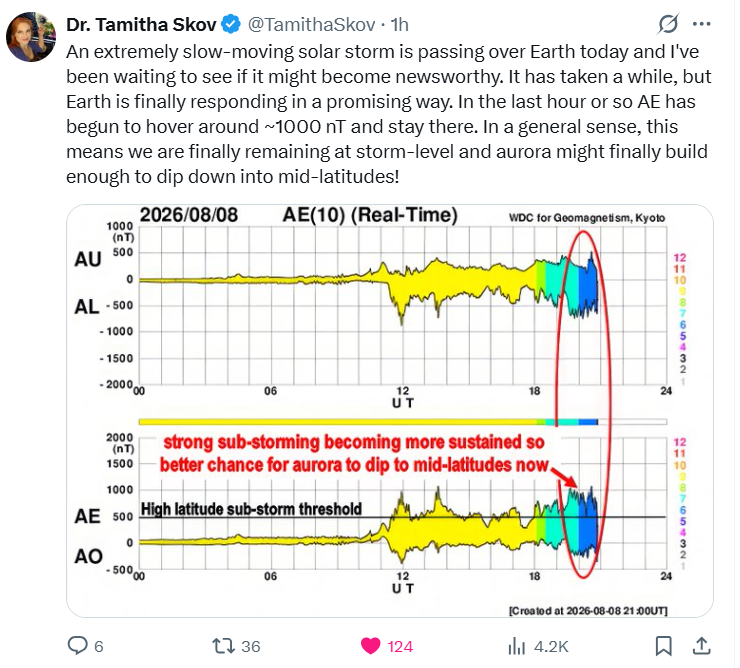
Today, the expected increase in geomagnetic activity materialized, with NOAA/SWPC confirming G2 (moderate) geomagnetic storm conditions following the arrival of a suspected slow-moving CME.
Tamitha Skov has now also highlighted the unusually slow-moving storm and the sustained increase in auroral-electrojet activity, with AE approaching ~1000 nT.
This is now roughly nine months of publicly posted space-weather forecasts and verification for me. The purpose of these posts isn't to claim perfection - it is to demonstrate that a statistical forecasting approach can provide useful advance guidance on periods of enhanced geomagnetic activity.
I have repeatedly posted my outlooks publicly and have also shared them directly in the comments under established space-weather accounts. Including @TamithaSkov and @Vincent_Ledvina as well as NOAA space weather accounts @NWSSWPC .
Interestingly, despite the forecasts subsequently verifying, there has been little or no acknowledgment of them.
That's perfectly fine. Forecast verification does not depend on whether someone chooses to acknowledge the forecast.
The timestamps, forecasts and observations speak for themselves.
I will continue documenting the forecasts before the events occur and then objectively assessing how they perform afterward.
Forecast first. Verification second. No rewriting the timeline.
@Statisticizer

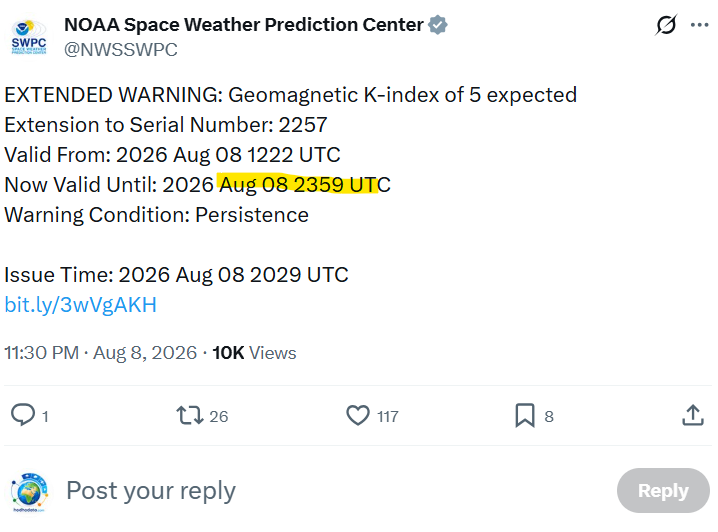
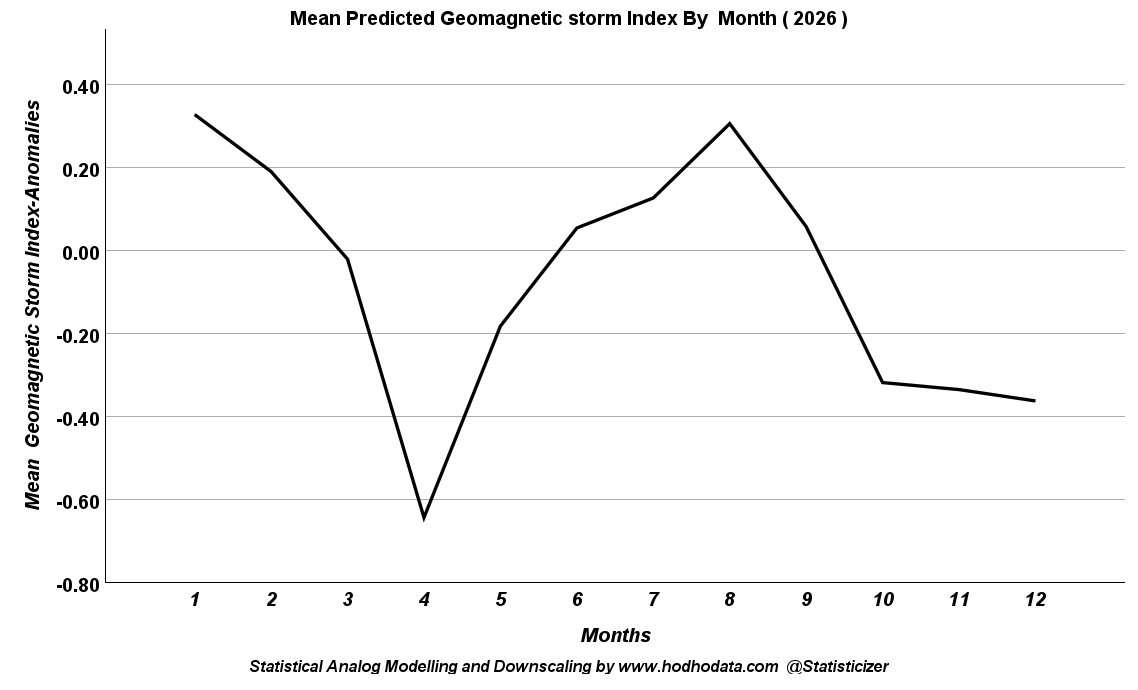
🚨🛰️ #Space_weather Geomagnetic Storm and Solar Flare Outlook – August 2026 .
Based on long-range statistical analogue modelling, the August–September 2026 period is projected to exhibit an elevated likelihood of solar flare activity, geomagnetic disturbances, and enhanced auroral displays compared with climatological expectations .
For the month of August ( #days ) , several periods of increased geomagnetic activity are indicated.
🔜The first enhancement is projected between 4–6 August, followed by a more pronounced surge during 8–13 August, with another active interval extending into 13–16 August.
⚡️▶️According to the statistical model, these peaks exceed the long-term August climatological mean (≈0.17 standardized anomaly units) by approximately fivefold or more, indicating a substantially heightened level of geomagnetic activity relative to a typical August.
As with all long-range statistical forecasts, the timing of individual events ( #Peaks ) may shift by approximately ±1–4 days.
▶️Additional clusters of enhanced geomagnetic activity are suggested during the 19–23 August and 25–28 August periods, indicating that elevated space-weather conditions may recur through the latter half of the month.
Should these statistically derived active periods verify, they may be accompanied by an increased likelihood of moderate to strong geomagnetic storms, enhanced auroral activity, and periods of heightened space-weather conditions that could affect the near-Earth environment.
While some scientific studies have explored possible statistical associations between elevated geomagnetic activity and changes in seismicity ( #earthquakes ) or volcanic unrest, these relationships remain an active area of research and should not be interpreted as direct evidence of a direct causal relationship or as a predictive tool for earthquakes or volcanic eruptions. But In general, enhanced solar flares are often associated or accompanied by major earthquakes-from an observational perspective.
Overall, despite the gradual decline toward the latter stages of Solar Cycle 25, the statistical model suggests that August 2026 may remain an active month for space-weather events, particularly during the highlighted intervals.
This forecast is based on long-range statistical analogue modelling and harmonic analysis of historical solar–geomagnetic variability and should be regarded as a probabilistic outlook rather than a deterministic prediction of individual solar flares or geomagnetic storm events.
NB/The statistical Model utilized solar dynamics indices, space weather historical events and astronomical factors for predictions.
Statistical Analogue Modelling and Downscaling by:
Mohammad Alkhateeb (Statisticizer)
Al-Hodhod Data Analysis & Forecasting | https://t.co/4PftHqD0mL | @Statisticizer

🚨🛰️ #Space_weather Geomagnetic Storm and Solar Flare Outlook – August 2026 .
Based on long-range statistical analogue modelling, the August–September 2026 period is projected to exhibit an elevated likelihood of solar flare activity, geomagnetic disturbances, and enhanced auroral displays compared with climatological expectations .
For the month of August ( #days ) , several periods of increased geomagnetic activity are indicated.
🔜The first enhancement is projected between 4–6 August, followed by a more pronounced surge during 8–13 August, with another active interval extending into 13–16 August.
⚡️▶️According to the statistical model, these peaks exceed the long-term August climatological mean (≈0.17 standardized anomaly units) by approximately fivefold or more, indicating a substantially heightened level of geomagnetic activity relative to a typical August.
As with all long-range statistical forecasts, the timing of individual events ( #Peaks ) may shift by approximately ±1–4 days.
▶️Additional clusters of enhanced geomagnetic activity are suggested during the 19–23 August and 25–28 August periods, indicating that elevated space-weather conditions may recur through the latter half of the month.
Should these statistically derived active periods verify, they may be accompanied by an increased likelihood of moderate to strong geomagnetic storms, enhanced auroral activity, and periods of heightened space-weather conditions that could affect the near-Earth environment.
While some scientific studies have explored possible statistical associations between elevated geomagnetic activity and changes in seismicity ( #earthquakes ) or volcanic unrest, these relationships remain an active area of research and should not be interpreted as direct evidence of a direct causal relationship or as a predictive tool for earthquakes or volcanic eruptions. But In general, enhanced solar flares are often associated or accompanied by major earthquakes-from an observational perspective.
Overall, despite the gradual decline toward the latter stages of Solar Cycle 25, the statistical model suggests that August 2026 may remain an active month for space-weather events, particularly during the highlighted intervals.
This forecast is based on long-range statistical analogue modelling and harmonic analysis of historical solar–geomagnetic variability and should be regarded as a probabilistic outlook rather than a deterministic prediction of individual solar flares or geomagnetic storm events.
NB/The statistical Model utilized solar dynamics indices, space weather historical events and astronomical factors for predictions.
Statistical Analogue Modelling and Downscaling by:
Mohammad Alkhateeb (Statisticizer)
Al-Hodhod Data Analysis & Forecasting | https://t.co/4PftHqD0mL | @Statisticizer

. #Space_Weather
. #Thrilling_Auroras
Severe G4 geomagnetic storm sparks jaw-dropping northern lights worldwide (photos)
https://t.co/dLRgpjmKHR

Earth is entering one of its most active space-weather phases �
An extreme auroral event is reshaping the night sky into flowing pillars of light — a reminder that our planet is far more dynamic than it appears
United States North Carolina
#auroraborealis #northernlights
🎉 Welcome to Read!
👉Recent Advances in Ionosphere Observation and Investigation (2nd Edition)
Huge thanks to guest editors & all authors for making it a success! 🥳
🔍 More information: https://t.co/i3mSzKjSiO
#ionosphere #space_weather


The Sun this morning, with regular seeing, from @Observatori de Pujalt (#Barcelona)
#astronomy #Astrophotography #space_weather #solaractivity
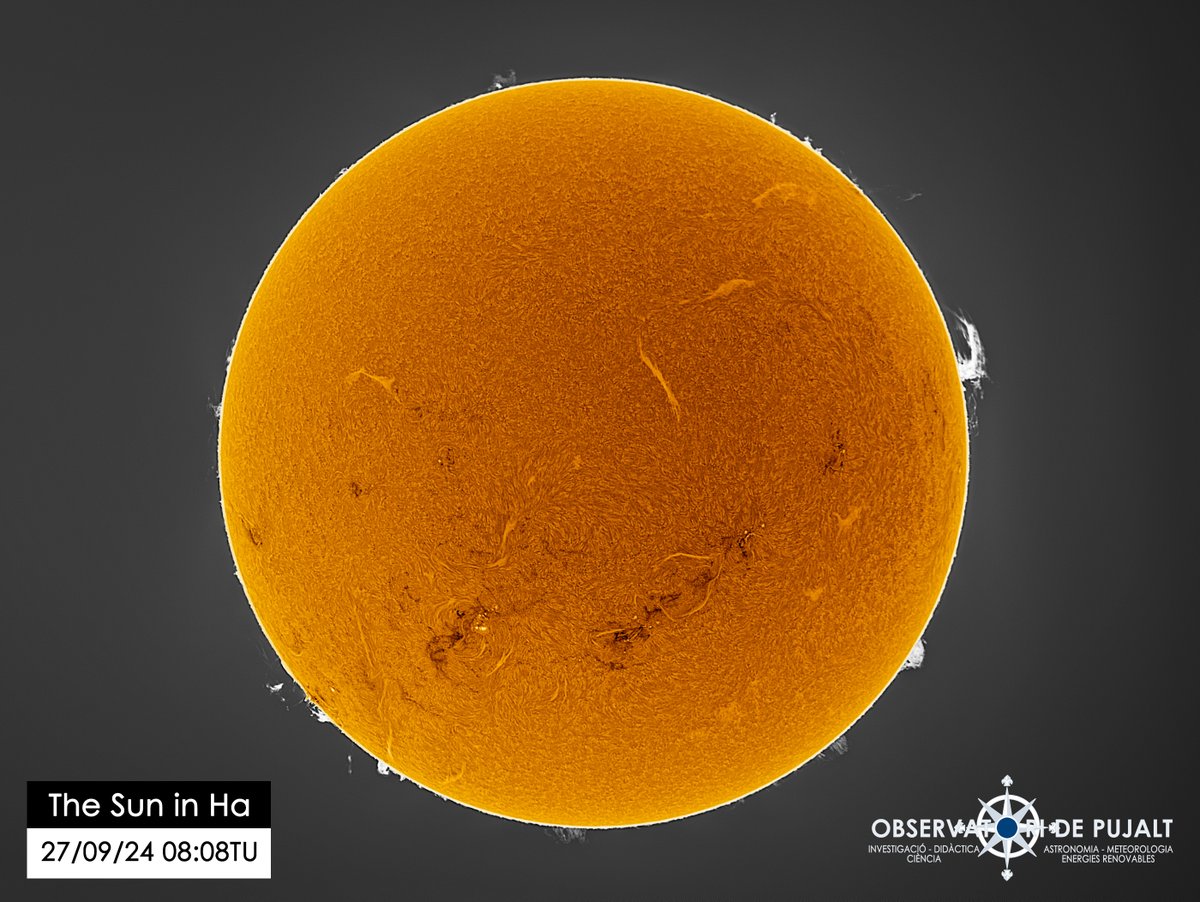
Timelapse solar capturat ahir a la tarda des del Parc Astronòmic de Pujalt (@Observatori).
En total son 180 frames i dos hores de gravació.
El Sol sempre mostrant la seva millor cara...
I Love Space Weather.
#Astrophotography #cielosESA #astronomy #space_weather

🚨#Space_weather: A large coronal mass ejection from the Sun that appears to be linked to volcanic activity and so far appears to be heading away
from our #planet.
📑#SolarHam
🗓️22-07-2024

Daily solar photograph taken at 08:41 UT
🔭Lunt LS100tHa BF1800
📷Atik Horizon II
📍@Observatory de Pujalt
#Astrophotography #astronomy #space_weather
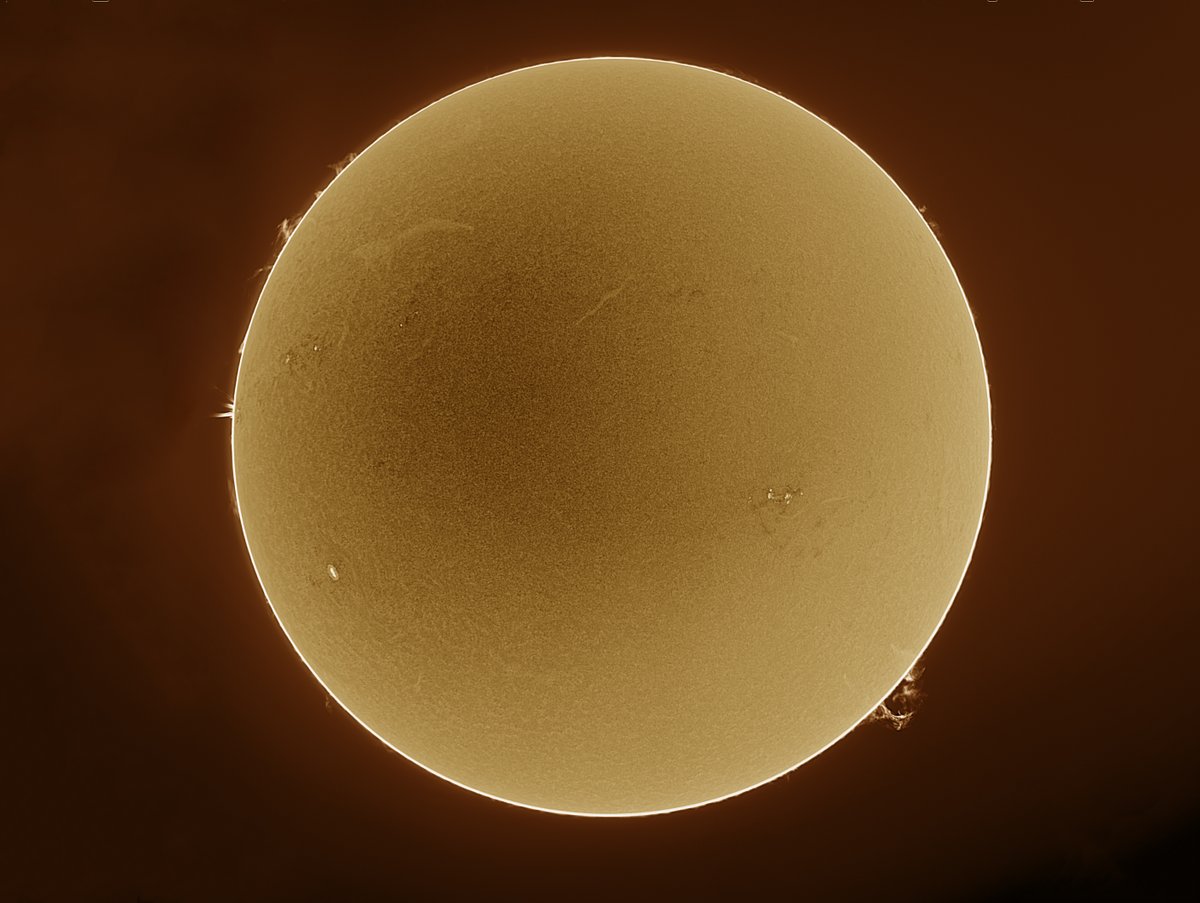
Daily solar photograph taken at 12:10 UT
🔭Lunt LS100tHa BF1800
📷Atik Horizon II
📍@Observatori de Pujalt
#Astrophotography #astronomy #space_weather
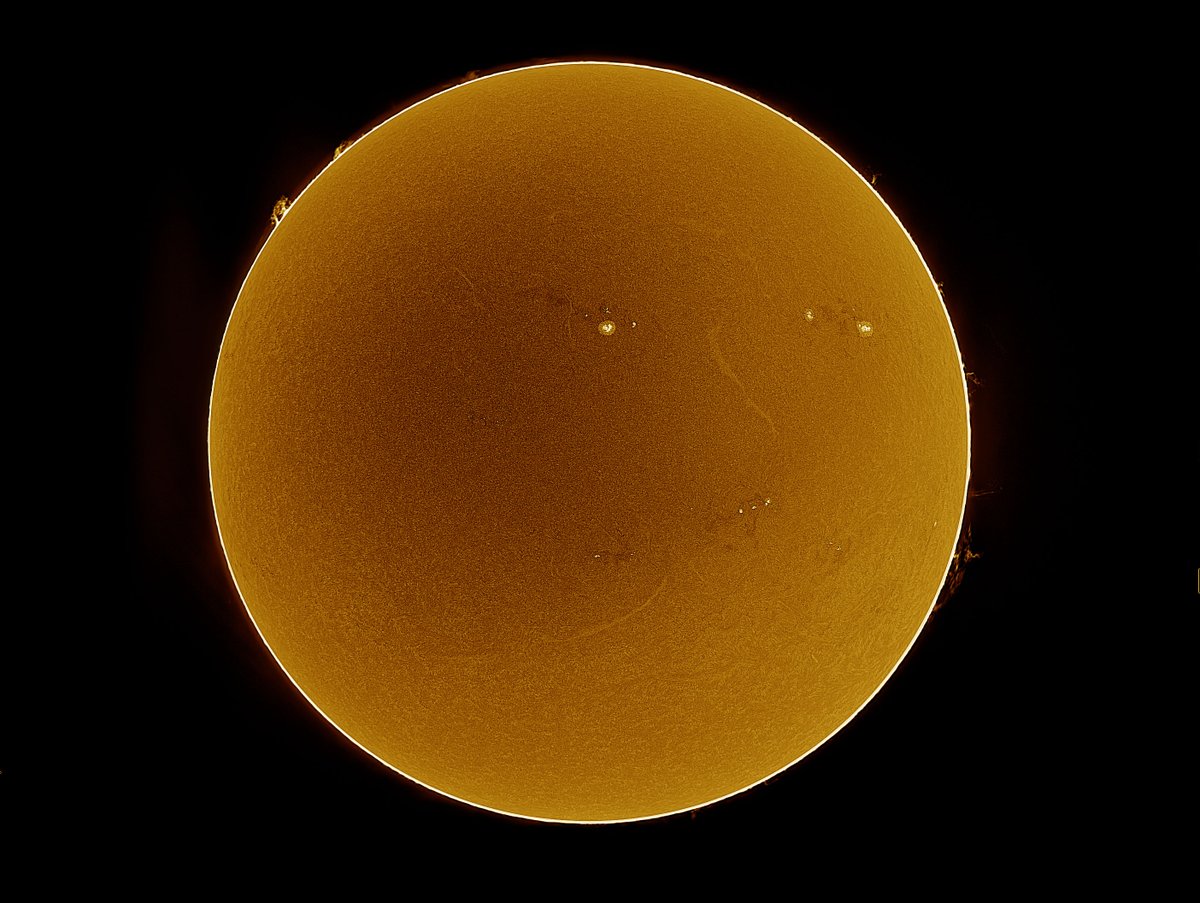
The Christmas Day Sun, captured this afternoon from the @Observatori de Pujalt (#Barcelona).
🔭 Lunt LS100tHa BF1600
📸 ZWO Asi2600mm
#astronomy #Astrophotography #space_weather

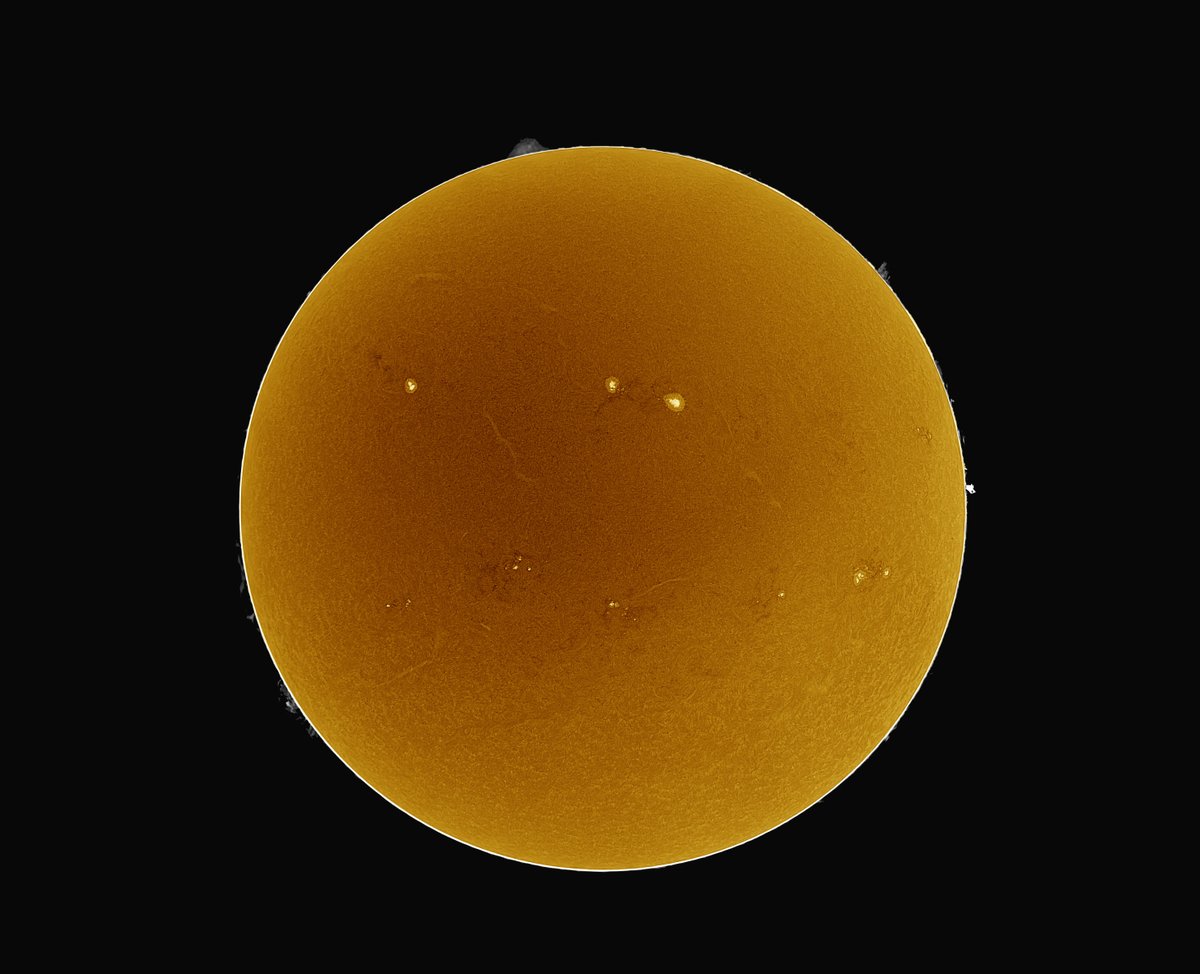
Daily solar photograph taken at 14:25 UT
🔭Lunt LS100tHa BF1800
📷Atik Horizon II
📍@Observatori de Pujalt
#Astrophotography #astronomy #space_weather
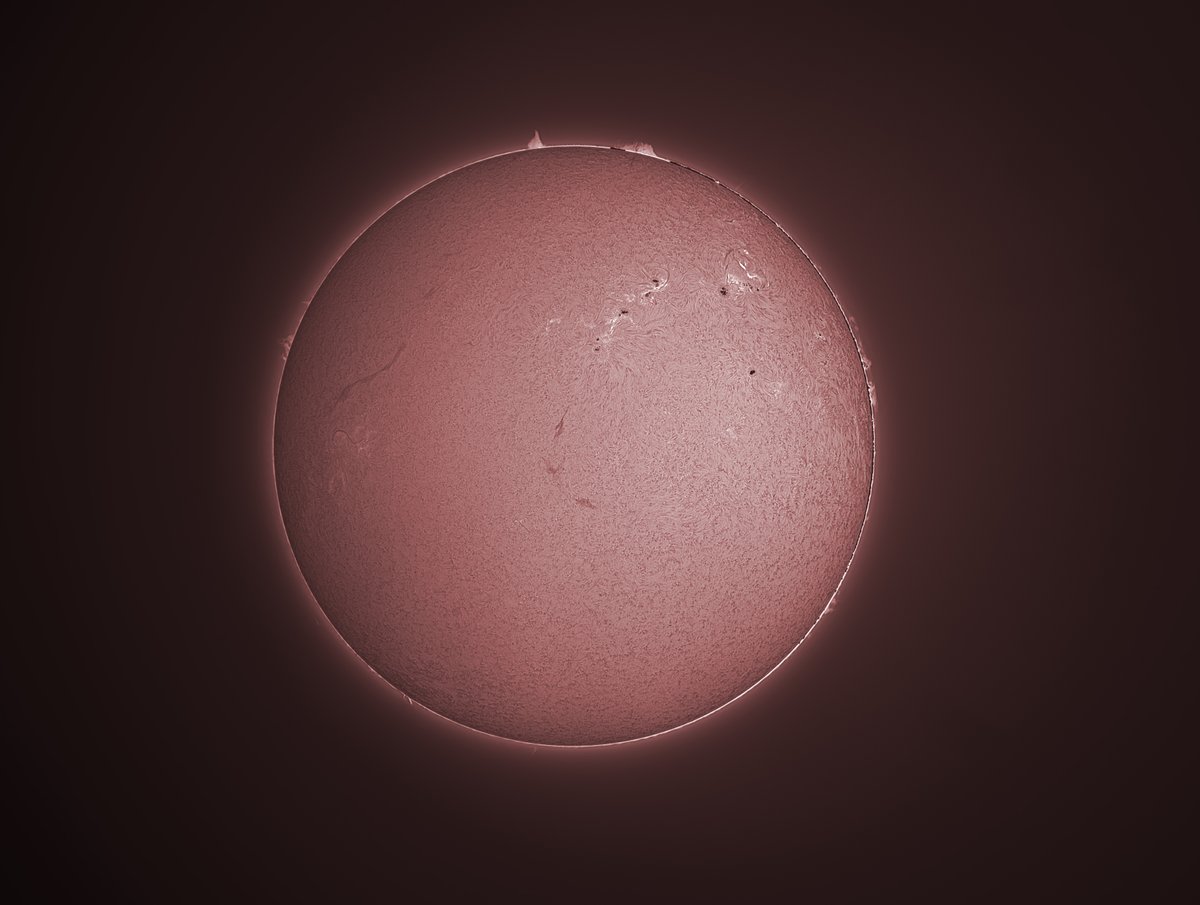
Daily solar photograph taken at 1:28 p.m. UT
🔭Lunt LS100tHa BF1800
📷Atik Horizon II
📍@Observatori de Pujalt
#Astrophotography #astronomy #space_weather

The ISS (International Space Station) passing in front of the Sun and captured from the Pujalt Observatory @observatori at 17:59 UT.
Telescope: Lunt Ls100Ha BF1800
Camera: Atik Horizon II
#astronomy #Astrophotography #iss #sun #space_weather

SDO/AIA solar data of today + AI background generation = best birthday postcard for my scientific advisor
#sdo #slace_weather #adobe_firefly #space_weather
Small solar flare captured this morning from the Parc Astronòmic de Pujalt (@Observatori ).
⏰ 08.10TU to 11:05TU
🔭 @LuntSolar LS100Ha BF1800
#astronomy #astrophotography #space_weather
Daily solar photography along with a small M category flare
📅05/05/2023
⏰07:05TU
🔭 @LuntSolar LS100Ha BF1600
📍Parc Astronòmic de Pujalt (@Observatori)
@Josep_Trigo @Astroanoia @spaceweather
@Trizbangtheory @NASASun @TheSunToday
#astronomy #space_weather #Astrophotography
Considerable increase in sunspots, observed this morning
📅 03/05/2023
⏰ 07:25TU
🔭 @LuntSolar LS100Ha BF1600
📍 Parc astronòmic de Pujalt (@Observatori)
@Josep_Trigo @Astroanoia @spaceweather @Trizbangtheory @NASASun @TheSunToday
#astronomy #space_weather #Astrophotography


1/4 ""It is important for people to have some personal #resilience to loss of #electricity," he added."
#electrical #grid #vulnerabilities
#geomagnetic #excursion #space_weather #climate
https://t.co/Bl5bu7fFa0
Last Seen Hashtags on Sotwe
Trends for you
Most Popular Users

Elon Musk 
@elonmusk
241.3M followers

Barack Obama
@barackobama
119.1M followers

Cristiano Ronaldo
@cristiano
113M followers

Donald J. Trump
@realdonaldtrump
111.8M followers

Narendra Modi
@narendramodi
107.1M followers

Rihanna
@rihanna
98.3M followers

NASA
@nasa
92.3M followers

Justin Bieber
@justinbieber
91.5M followers

KATY PERRY
@katyperry
89.1M followers

Taylor Swift
@taylorswift13
83M followers

Lady Gaga
@ladygaga
74.5M followers

Virat Kohli
@imvkohli
72M followers

Kim Kardashian
@kimkardashian
70.5M followers

YouTube
@youtube
68.8M followers

Neymar Jr
@neymarjr
65M followers

Bill Gates
@billgates
64.6M followers

The Ellen Show
@theellenshow
62.4M followers

Selena Gomez
@selenagomez
62.2M followers

CNN
@cnn
61.8M followers

X
@x
60.8M followers