

Top Tweets for #TELLMEASTORY


In 1995, inside a small Massachusetts hospital, a pair of newborn premature twins fought the hardest battle of their tiny lives. Born far too early, Kyrie and Brielle weighed barely enough to fill a nurse’s hands. Both fragile… but one fading faster than anyone expected.
Kyrie, the stronger twin, slowly gained strength.
But Brielle — so tiny, so exhausted — was slipping away. Her breathing stuttered. Her oxygen levels dipped again and again. Her skin turned a worrying shade of blue. Doctors prepared the family for the unthinkable: she may not make it through the night.
And then came a moment of quiet courage.
A nurse named Gayle Kasparian, guided not by procedure but by pure human instinct, made a decision that defied the rules of the time. Back then, premature babies were always kept in separate incubators.
But she believed something else.
She believed that love — even the smallest kind — had power.
Gently, she lifted Kyrie and placed her beside her struggling sister in the same incubator. Two tiny hearts, side by side. Two tiny bodies, skin to skin, just like they had been in the womb.
What happened next brought the entire neonatal unit to tears.
Within minutes, Brielle’s monitors changed.
Her oxygen levels rose… higher… higher.
Her heartbeat steadied — strong and sure.
Her frantic breathing calmed.
Color returned to her cheeks.
And then, in a moment that seemed almost like a whisper from heaven, Kyrie lifted her tiny arm and wrapped it around Brielle… as if she was holding her sister here on earth.
The nurses stood frozen.
Doctors rushed in.
No one could explain it — but no one could deny it.
That single embrace didn’t just save Brielle’s life…
It changed medical care forever.
Because of these twins — because of one nurse who simply followed her heart — “co-bedding” premature babies is now used in hospitals around the world.
All because two sisters reminded us of something simple and profound:
Sometimes the greatest medicine
is love in its purest form.


Carol Burnett rang a CBS vice president over the holidays in 1966 to say she wanted to use a clause in her contract. He asked her what clause she was talking about.
Four years earlier she had signed a ten-year deal with the network that guaranteed her one hour-long special a year and two guest spots on their sitcoms. It was steady, comfortable work.
Her agent had put in one more line. Within the first five years, if Burnett decided she wanted an hour-long comedy variety show, CBS had to put thirty of them on the air, pay or play, whether the network wanted to or not.
Nobody expected her to use it, including her. She had spent years on somebody else's variety programme and doubted she could carry one of her own, so the clause sat there unused while the deadline came closer.
In the final week of the fifth year she and her husband looked at each other and decided to make the call. She was 33.
The executive had to send lawyers to find the clause. He rang back the next day and told her that comedy variety was a man's game, then listed the men who owned it, from Sid Caesar and Jackie Gleason through Milton Berle to Dean Martin. Then he offered her the alternative the network had lined up, a sitcom called Here's Agnes.
She said she did not want to be Agnes. She wanted sketches, guest stars, a repertory company, a 28-piece orchestra and the costume changes that went with all of it.
The contract was the contract, so they put it on the air. The Carol Burnett Show ran eleven years, 279 episodes and 25 Emmys, and she got it by reading a contract back to a man who had forgotten he signed it.
https://t.co/BxPcWFbtwM
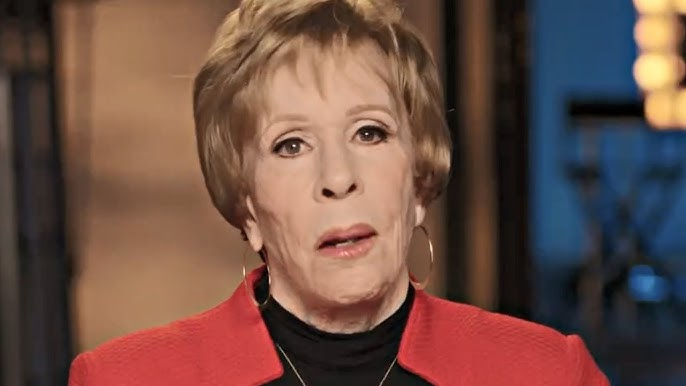

Christopher Plummer, who was a concert standard pianist with a fine musical ear, was furious when his singing voice was dubbed in “The Sound Of Music” (1965), and went on a drunken rampage through Salzburg. (He told me in an interview that the dubbing incident was one of the reasons he was rude about the film.) This is Plummer’s original vocal performance of “Edelweiss” - a chance to hear the song as he recorded it.
A self-taught nurse in rural Queensland was called to a child with polio around 1910 and had no idea what the standard treatment was, so she made one up.
The standard treatment was plaster. Splint the limbs, immobilise them, sometimes for a year, on the reasoning that rest protects damaged muscle.
Elizabeth Kenny looked at a child in pain with limbs pulling inward and decided the muscles were in spasm. So she wrapped them in hot woollen cloths to relax them, then moved the joints gently, then got the child moving as soon as possible. She also made her patients learn the names of their own muscles and how each one worked.
Doctors told her she was violating the accepted rules of treatment. In 1938 a Royal Commission in Queensland investigated her and reported that abandoning immobilisation was a grievous error, fraught with great danger, and would be particularly damaging in young children. Her patients kept getting better anyway.
She went to America in 1940 with a reputation for being difficult and wrong. Minneapolis took her seriously, the university adopted her techniques, and by 1942 there was an institute with her name on it.
In a 1951 poll Americans named her the most admired woman in the world. Immobilisation is gone now, and her principles of applying heat and re-educating the muscle became the basis of modern physiotherapy for these cases.
She was a bush nurse with no formal training who happened to be right, and it took the profession thirty years to catch up with her.
https://t.co/f1PwzFpHzT


In the dead of night at Bergen-Belsen concentration camp, a garbage truck stopped behind a women’s barracks. Its cargo was not trash.
One by one, 54 children were dumped into the freezing mud before the truck drove away, leaving them crying in the darkness.
Inside the barracks, 26-year-old Luba Tryszynska heard the commotion through the thin walls. A former nurse from Kamenets-Litovsk, she had arrived at Bergen-Belsen only weeks earlier. When she stepped outside, she found terrified children between the ages of four and twelve.
Earlier that day, their mothers had been separated from them and transported to another camp near Hamburg. The children had been loaded onto a different vehicle, driven around for hours while officials decided their fate, and ultimately abandoned like unwanted cargo.
For Luba, the sight was unbearable.
Two years earlier, at Auschwitz, she had been forced to watch her own family disappear. During the selection process, an SS guard noticed her young son, Isaac. Knowing mothers with small children were often sent directly to the gas chambers, Luba’s mother-in-law pulled the boy from her arms in a desperate attempt to save her life.
Isaac, her husband Hersch, and her mother-in-law were all taken away. None returned.
Luba survived, but the loss haunted her every day. She often wondered why she had been spared when the people she loved most had not.
That night at Bergen-Belsen, standing before dozens of abandoned children, she finally found a purpose for her survival.
Without hesitation, she gathered the children and brought them inside. The other prisoners were terrified. Sheltering children could have resulted in severe punishment or death for everyone in the barracks.
Luba did it anyway.
She arranged bunks for them, tucked the youngest children into the safest corners, and reassured them with quiet words:
“You’re safe now. Stay quiet, and I’ll take care of you.”
Then she took an even greater risk.
Luba approached Fritz Klein, an SS doctor at the camp, and told him directly that she intended to keep the children hidden and under her care. Against all expectations, Klein agreed and allowed her to use a separate wooden hut.
Why he consented remains unclear.
With that small concession, Luba created something almost unimaginable inside one of the most horrific places on earth: a refuge for children.
Over the next four months, she and a handful of other women worked tirelessly to keep them alive. Hermina Krantz, a Slovak prisoner, helped clean and prepare whatever scraps of food could be found. Dr. Ada Bimko, another prisoner, cared for the sick and injured.
Luba became the heart of the operation.
Every day she searched for food, traded possessions, begged for supplies, and sometimes stole whatever was necessary to feed the children. Bread, water, bits of soup, and occasionally milk became precious treasures.
Remarkably, some German guards even began assisting her. They quietly provided firewood, extra bread, and on one occasion, an entire bucket of fresh milk.
As the months passed, more orphaned children arrived.
By April 1945, Luba was caring for 94 children, including an infant less than a year old.
Then, on April 15, British troops liberated Bergen-Belsen.
The soldiers entered a camp filled with death, disease, and starvation. Everywhere they looked were bodies and prisoners barely clinging to life.
But when they opened the door to Luba’s hut, they encountered something extraordinary.
Inside were dozens of children who had survived.
A British officer reportedly asked who was responsible for them.
Luba stepped forward and answered simply:
“I am.”
Thanks to her determination, nearly all of those children lived through the war.
After liberation, she personally helped return many of the children to their home countries. Some were escorted back to the Netherlands, while others were taken to safety in Sweden.
Eventually, Luba married fellow survivor Sol Frederick and settled in Washington, D.C., where she built a new life far from the horrors she had endured.
Yet the children never forgot her.
In 1995, fifty years after the war, many of those she had saved gathered in Amsterdam for a reunion. They arrived as adults—doctors, teachers, engineers, parents, and grandparents.
One after another, they embraced the woman who had protected them when no one else would.
The child Luba lost at Auschwitz could never be replaced. The pain of that loss stayed with her forever.
But through her courage, compassion, and refusal to look away, nearly one hundred other children were given the chance to grow up, build families, and live full lives.
Luba Tryszynska passed away in 2009 at the age of 91.
Her story remains one of the most powerful reminders that even in humanity’s darkest moments, a single act of love can become a lifeline for countless others.


Kale became a superfood because a publicist in New York invented a trade association that did not exist.
Before all that, the biggest kale buyer in America was Pizza Hut. Not for the menu. They bought it by the ton, fourteen thousand pounds of it in 2012, and laid it round the salad bar to hide the ice. Nobody was meant to eat it. It was the doily.
Then a PR firm called My Young Auntie went to work. Hermès on the client list, Givenchy, and kale. She chalked it onto boards around Manhattan. Got it onto the menu of a restaurant she already represented. Had T-shirts printed, because obviously. And she set up the American Kale Association, website, Facebook page, thousands of followers, and then rang journalists to tell them she had been hired by the American Kale Association. Actual farming bodies said they had never heard of it. They had never heard of it because it was her, at a desk, in New York. She owned up in 2015 and called it the proudest campaign of her career, which is fair enough.
It went off like a rocket. Bon Appétit declared 2012 the Year of Kale. Dr Oz got hold of it. Paltrow made the chips on television. Beyoncé wore the word on a sweatshirt in a video, Michelle Obama ate the chips on Fallon, and Whole Foods was shifting twenty two thousand bunches a day.
A leaf that was hiding ice in 2011 was a moral position by 2014.
And the noble heritage everyone assumes it has is fodder. Kale is Brassica oleracea, same as cabbage, broccoli, cauliflower and sprouts, all of them the same wild cliff cabbage bent into different shapes over centuries. Kale is the one nobody bothered improving, because it was never for people. Britain grew it by the acre and called it cow cabbage. Fed it to stock to get them through winter. In Scotland it was so profoundly unremarkable that kail just meant dinner and the vegetable patch was the kailyard.
Then the nutrition, which is where it falls apart completely. A hundred grams is thirty five calories. You could eat a kilo of the stuff, which would take you most of an afternoon and do something permanent to your jaw, and still not catch up with two eggs. The iron is the non-haem sort your gut mostly turns away at the door. And the whole superfood case runs on nutrients per calorie, a ratio that automatically flatters anything containing no calories, so the winner is always going to be something nobody could live on. Congratulations to the kale.
The word means nothing, incidentally. Banned off packaging across Europe since 2007 unless you can back it with an authorised health claim, and nobody can, so it lives on menus and in headlines where the rules cannot reach.
It is also so unpleasant raw that somebody had to invent a technique. You massage it. Grown adults stand at a worktop giving a hand rub to a leaf until it is theoretically chewable, then eat it anyway, because a woman with a fashion client list decided in 2012 that they should.
Pizza Hut had it right the first time. It was decoration.


PRINCIPAL FORCED TO RESIGN AFTER HELPING A HOMELESS STUDENT
Rob Burnside, the former principal of Lakota East High (@EAST_HAWKS) in Ohio, was REMOVED from his position after he housed a 16-year-old homeless student so he could keep attending school.
The teen’s home life was unstable, and he was forced to sleep in a car. His dad’s trailer didn’t have heat, and his mom moved outside the district.
When Rob found out, he took the boy into his home so he could continue attending school.
When the school found out, they threatened Rob with termination.
The student offered to leave the school and his home to protect Rob's job, but Rob REFUSED.
Rob decided NOT to cave to the school's threats, and sacrificed his career to continue supporting Hayes.
Rob and his wife are now Hayes' legal guardians.
Rob and his wife have 6 other children, including 2 adopted ones.
The boy has since graduated and is now working toward becoming an aviation mechanic.


In May 2016, 15-year-old Karinya “Yaya” Chen was in hospice care in Austin, Texas after years of fighting cancer. She had tickets to see Florence The Machine, but by the night of the concert, she was simply too sick to go.
So the people at Hospice Austin reached out to the band.
And Florence Welch came to her.
Florence and guitarist Rob Ackroyd walked into Karinya’s room and gave her the concert she couldn't make it to. They sang “Shake It Out” and “Dog Days Are Over,” with Karinya singing and harmonizing right alongside them.
A few months later, Karinya lost her battle with cancer at just 15 years old.
But for one afternoon, none of that seemed to matter.
There was just a young girl, one of her favorite singers, a guitar, a room full of people who loved her... and music.
Sometimes the smallest act of kindness can become one of the biggest moments of someone's life.
This is what being human is supposed to look like.🙏


Blessing your timeline with Natalie Alyn Lynd 😍 #NatalieAlynLynd #TheGifted #Gotham #TheGoldbergs #BigSky #TellMeaStory #Daybreak #DuttonRanch #MarkedMen #HalloweenStore #JusticeLeaguexRWBYSuperHeroesandHuntsmen #PetSemataryBloodlines #beautiful


🇺🇸 | Tell Me A Story (US)
🔢 | Temporada 02 • Episódio 03
🎬 | Family Business
#TellMeAStory | #MeConteUmaHistória


🇺🇸 | Tell Me A Story (US)
🔢 | Temporada 01
🎬 | Capítulo 5: Loucura
#TellMeAStory | #MeConteUmaHistória


Arindam's car stopped moving months ago. The puddle of thick oil under the engine probably had something to do with it. He still had it washed every day though. Like Newton would have said, there was no external unbalanced force to change the inertia of his life. +

The POTENTIAL of Jack/Carly/Val is mouthwatering. I hope it gets the energy Drillow erroneously got 🙏 #TellMeAStory

We want this two iconic music videos remastered on @HilaryDuff’s official @YouTube channel! #ICantWait #TellMeAStory @DisneyMusic @HollywoodRecs @AtlanticRecords



@A_AMilne Imagine
Christopher Robin
and Pooh
the one doing the
telling
(about Kings and things)
the other
listening
as you do
#tellmeastory x
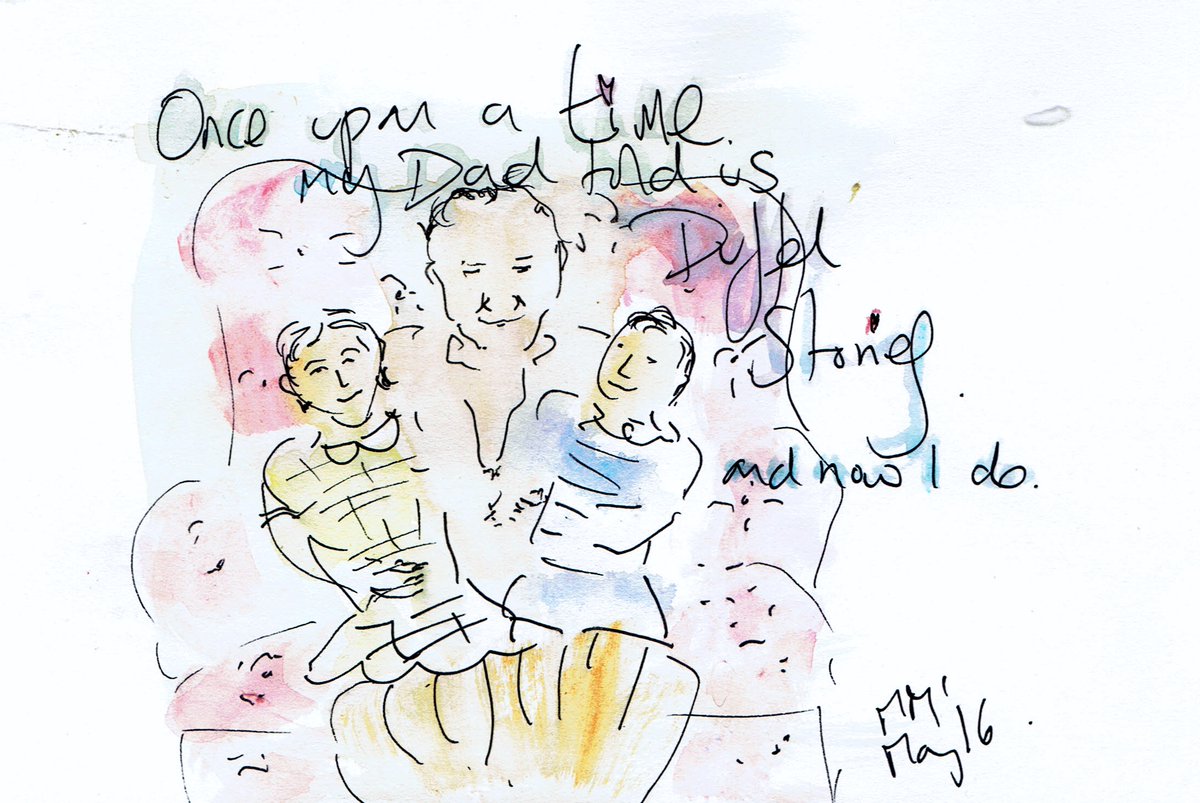
Here's my old Dad x
telling me and my
brother stories
(the Duffel stories)
treasure indeed 💖✨🌺
Last Seen Hashtags on Sotwe
Trends for you
Most Popular Users

Elon Musk 
@elonmusk
241.5M followers

Barack Obama
@barackobama
119M followers

Cristiano Ronaldo
@cristiano
114M followers

Donald J. Trump
@realdonaldtrump
111.8M followers

Narendra Modi
@narendramodi
107.2M followers

Rihanna
@rihanna
98.7M followers

NASA
@nasa
92.4M followers

Justin Bieber
@justinbieber
91.8M followers

KATY PERRY
@katyperry
89.8M followers

Taylor Swift
@taylorswift13
83.7M followers

Lady Gaga
@ladygaga
75.2M followers

Virat Kohli
@imvkohli
73M followers

Kim Kardashian
@kimkardashian
70.8M followers

YouTube
@youtube
68.8M followers

Neymar Jr
@neymarjr
66M followers

Bill Gates
@billgates
65M followers

Selena Gomez
@selenagomez
62.9M followers

The Ellen Show
@theellenshow
62.3M followers

CNN
@cnn
61.8M followers

X
@x
60.7M followers