

Top Tweets for #TheMatildaEffect

I’m over the moon that last wk, the KS2 English Reading paper #SATs, taken by approx 650,000 Year 6s across the country, used an extract from my book #TheMatildaEffect. I honestly feel like Michael Morpurgo. But good luck kids, I’ve no idea why I wrote half the things I wrote 🙈


Thank Margaret Rossiter @Cornell for naming this - #TheMatildaEffect - the 'rubbing out' of the contribution of women in #science history! Thanks for sharing @MrPitbull07

She kept finding women in laboratory photographs from the 1800s. Then she read the published papers—and every single woman had vanished. Someone had erased them from history.
Yale University, 1969.
Margaret Rossiter was a graduate student studying the history of science. She was one of very few women in her program.
Every Friday afternoon, students and faculty gathered for beers and informal conversation. One week, Margaret asked a simple question: "Were there ever any women scientists?"
The faculty answered firmly: No.
Someone mentioned Marie Curie. The group dismissed it—her husband Pierre really deserved the credit.
Margaret didn't argue. But she also didn't believe them.
So she started looking.
She found a reference book called "American Men of Science"—essentially a Who's Who of scientific achievement. Despite the title, she was shocked to discover it contained entries about women. Botanists trained at Wellesley. Geologists from Vermont.
There were names. There were credentials. There were careers.
The professors had been wrong.
But Margaret's discovery was just the beginning. Because as she dug deeper into archives across the country, she found something far more disturbing.
Photograph after photograph showed women standing at laboratory benches, working with equipment, listed on research teams.
But when she read the published papers, the award citations, the official histories—those same women had disappeared. Their names were missing. Their contributions erased.
It wasn't random. It was systematic.
Women who designed experiments watched male colleagues publish results without giving them credit. Women whose discoveries were assigned to supervisors. Women listed in acknowledgments instead of as authors. Women passed over for awards that went to male collaborators who contributed far less.
Margaret realized she was witnessing a pattern that stretched across centuries.
Women had always been present in science. The record had simply pushed them aside.
She needed a name for what she was documenting.
In the early 1990s, she found it in the work of Matilda Joslyn Gage—a 19th-century suffragist who had written about this exact phenomenon in 1870.
In 1993, Margaret published a paper formally naming it: The Matilda Effect.
The term captured something that had been hidden in plain sight for generations. Once you knew the term, you saw it everywhere.
Her dissertation became a lifelong mission.
For more than 30 years, Margaret researched and wrote her landmark three-volume series: Women Scientists in America. She examined letters, institutional policies, individual careers. She gathered undeniable evidence that women in science had been consistently under-credited and structurally excluded.
Her work faced resistance. Many dismissed women's history as political rather than academic. Others insisted she was exaggerating.
Margaret didn't argue emotionally. She presented data. Documented cases. Patterns repeated across decades and institutions.
Eventually, the evidence became undeniable.
Her research helped restore recognition to scientists who had been erased:
Rosalind Franklin, whose X-ray work revealed DNA's structure—credit went to Watson and Crick.
Lise Meitner, who explained nuclear fission—omitted from the Nobel Prize.
Nettie Stevens, who discovered sex chromosomes—received little credit.
Cecilia Payne-Gaposchkin, who discovered stars are made of hydrogen—initially dismissed.
And countless others whose names had nearly vanished.
Margaret changed the narrative. Science was no longer just the story of solitary male geniuses. It became a story of collaboration that included women who had been written out.
The Matilda Effect became standard terminology. Scholars used it to examine how credit is assigned, how authors are listed, who receives awards, who gets left out.

Margaret W. Rossiter, Wrote Women Scientists Into History #obitpix #margaretwrossiter #historian #thematildaeffect #artofinstagram #brushdrawing #illustration #portraitdrawing


This video I wish to educate people on the Matilda effect #TheMatildaEffect #ThatIsSoRio #NowThisRio #Comedy #Lol


It’s St Matilda's Day today, patron saint of large families, parents and difficult marriages, so I’m taking this opportunity to post a roll of honour for the women scientists whose achievements were either overlooked or attributed to their male colleagues: the Matilda Effect.
Margaret Rossiter, historian, coined the phrase in 1993 and named it for the pioneering suffragist Matilda Joslyn Gage (1826-1898) of Cicero, New York, who first identified the phenomenon in her 1883 essay ‘Woman as Inventor’.
This list is by no means exhaustive but once you see the Matilda Effect, you see it everywhere.
Maria Christina Bruhn (1732-1808) of Stockholm was Sweden's first female inventor in the field of military technology and the first woman anywhere to be granted a patent. In 1780, she invented gunpowder cartridges used by the Swedish Army for several generations but wasn’t awarded the patent until 1786. It took three dogged years of legal action against the man who stole her design and claimed the credit.
Margaret Knight (1838-1914) of Maine, the female Edison, held 26 patents for a wide range of inventions but when she tried to register her square-bottomed paper bag in 1870 - a grocery bag still used today - it was too late. In a 19th century case of industrial espionage, a man stole her idea and claimed it. It took a 16-day hearing costing Margaret $100 a day in legal costs (£1832 per day in today’s sterling) but she won.
Biologist and geneticist Nettie Stevens (1861-1912) of Vermont discovered the chromosomes we now know as X and Y, and published a research paper in 1905 establishing that XX chromosomes = female and XY = male. The credit went to a man who changed his own research paper to incorporate her findings. A second man was awarded the Nobel Prize in 1933 "for his discoveries concerning the role played by the chromosome in heredity" but Nettie only got a posthumous mention.
Physicist Lise Meitner (1878-1968) of Vienna, the first woman to become a full professor of physics in Germany, worked out the physics of nuclear fission - she named it - after correctly interpreting the experimental date of her male colleagues but did not share the 1944 Nobel Prize for its discovery. She lost her post as a professor because of the anti-Jewish Nuremberg Laws, her Austrian citizenship because of the Anschluss in 1938. Nominated 49 times for the Physics and Chemistry Nobel Prizes, she never won.
Physicist and a pioneer in the field of radioactivity, Marietta Blau (1894-1970) of Vienna, nominated several times for Nobel Prizes in both physics and chemistry, was also forced to flee Austria during the Anschluss. Her innovative use of nuclear emulsions launched the field of particle physics. A man adapted her methods and was awarded the Nobel Prize in Physics in 1950.
Physicist Chien-Shiung Wu (1912-1997) of China discovered parity violation which provides a way to operationally define left and right in experimental physics. Her male colleagues were awarded the 1957 Nobel Prize in Physics for her discovery, leading one Nobel laureate to call it “the biggest mistake in the Nobel Committee's history.
Chemist and X-Ray crystallographer Rosalind Franklin (1920-1958) of London, the Dark Lady of DNA, took Photo 51, the first known X-ray image of the double helix, in 1952 and worked out that the structure of DNA had two chains. Two weeks later, Crick and Watson built their now celebrated model of DNA as a double helix after being shown her unpublished evidence without her knowledge. In 1962, they shared the Nobel Prize for Medicine and Physiology with the man who showed them.
Would you like a more recent example of the Matilda Effect? All right then.
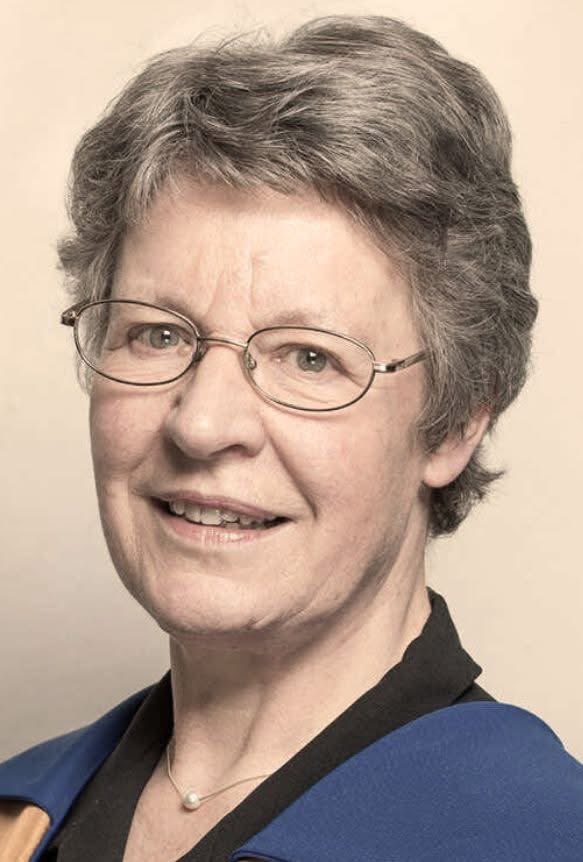
Astrophysicist Jocelyn Bell Burnell (born in 1943 in Northern Ireland) discovered the first radio pulsars in 1967 when she was a postgraduate student. Her thesis supervisor was sceptical - but he collected the Nobel Prize in Physics for it in 1974 with another man.
The last word goes to Margaret Rossiter:
“It is important to note early that women’s historically subordinate ‘place’ in science was not a coincidence and was not due to any lack of merit on their part. It was due to the camouflage intentionally placed over their presence in science.”


"Throughout history, half the population [women] has been more than ignored by historians: they’ve been erased."
#TheMatildaEffect #HiddenFigures

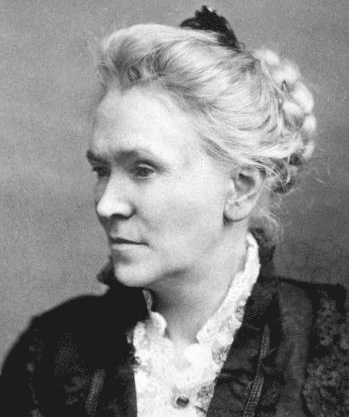
Woman of the Day pioneering suffragist and abolitionist Matilda Joslyn Gage of Cicero, New York, died OTD 1878, aged 71. The Matilda Effect - when the achievements of women scientists are attributed to their male colleagues - is named for her because she first identified the phenomenon in her 1883 essay Woman as Inventor.
Matilda worked with Susan B. Anthony and Elizabeth Cady Stanton to found the National Woman Suffrage Association in 1869 and collaborated with them on writing the History of Woman Suffrage(1881–1887) and the Declaration of the Rights of Women. She published and edited the National Citizen, a paper devoted to the cause of women.
The fight against inequality was in her blood. Born into an abolitionist family, Matilda and her husband offered their home as a station on the Underground Railroad despite the risk of harsh penalties and imprisonment. She described herself as "born with a hatred of oppression” and was a staunch advocate for Native Americans, publicly criticising their treatment by the federal government.
In 1870, Matilda wrote “Woman as Inventor” promoting the work of female inventors including Sarah Mather who invented the deep-sea telescope and Margaret Knight who invented a machine that created flat-bottomed paper bags. She pointed out that society disapproved of women inventors thus suppressing their talents, deterring them from learning about mechanics and patenting their inventions under the names of their husbands to evade insults and ridicule.
She wrote: “In not a single State of the Union is a married woman held to possess a right to her earnings within the family; and in not one-half of them has she a right to their control in business entered upon outside of the household. Should such a woman be successful in obtaining a patent, what then! Would she be free to do as she pleased with it? Not at all. She would hold no right, title, or power over this work of her own brain.”
Widely regarded as an excellent speaker and writer, Matilda also took direct action. In 1871, she organised several women to an attempt at voting in New York. In 1872, she tried and failed to vote in the presidential elections but she actively supported Susan B. Anthony who was arrested and tried at court for successfully casting a ballot. When the Statue of Liberty was unveiled in 1886, she led a protest arguing that it was hypocritical to depict Liberty as a woman when real American women were denied political and social rights.
Writing about laws which allowed a man to leave his children in his will to a guardian unrelated to their mother, she said, “It is sometimes better to be a dead man than a live woman.”
Christianity especially drew her ire. “The most stupendous system of organized robbery known has been that of the church towards woman, a robbery that has not only taken her self-respect but all rights of person; the fruits of her own industry; her opportunities of education; the exercise of her own judgment, her own conscience, her own will.”
It was this contention in Woman, Church and State published in 1893 that struck a chord with me. The parallels with today are striking.
“The witch was in reality the profoundest thinker, the most advanced scientist of those ages. The persecution which for ages waged against witches was in reality an attack upon science at the hands of the church. As knowledge has ever been power, the church feared its use in woman's hands, and levelled its deadliest blows at her.”

Here it is. My first review of The Matilda Effect. The new book by Fiona Crawford about the history, growth and social impact of Women’s World Cups and the many individuals who made it all possible.
#TheMatildaEffect

Through first-hand accounts and perspectives from the board rooms, and changerooms to the stands, Fiona Crawford's new book shows how football can bring about positive societal change.
via @kaptinyap
#BeyondGreatness #FIFAWWC
https://t.co/GCOSAOi8Dj

پیشنهاد میکنم اولین قسمت پادکست #دانستن_و_زیستن با موضوع #اثر_ماتیلدا را در کست باکس بشنوید
قدمی برای فهم نابرابری جنسیتی
@norouzi_more
#theMatildaEffect


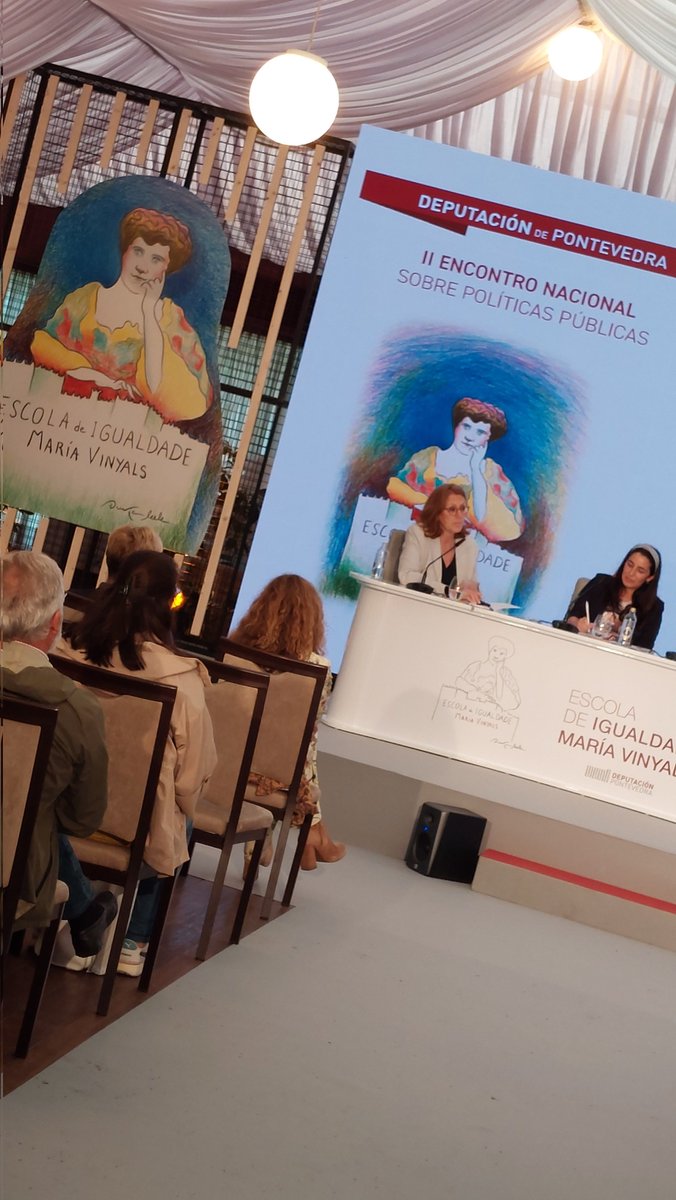
#EscolaMaríaVinyals
@Rosasansegundo: "Non existe segregación explícita pero si desigualdades: o espazo social segue sendo segregador. Temos máis formación pero:
👉 chan pegañento
👉 teito de cristal/de cemento
👉 precipicio de cristal
👉 #TheMatildaEffect
👉 tubaxe con fugas"
When asked to draw a scientist only 28% of children drew a woman. Here’s to changing that! And here’s to Jocelyn Bell Burnell, Rosalind Franklin, Katherine Johnson, Tu Youyou, Margaret Rossiter & all the amazing female scientists who inspired #TheMatildaEffect #WomeninScienceDay
Over the moon with the Chinese edition of The Matilda Effect! It was published in April 2020 but this is the first author copy I’ve received! 🎉🎉
#ChildrensBooks #TheMatildaEffect #China #CiticPress


“The Matilda Effect”: How Pioneering Women Scientists Have Been Denied Recognition and Written Out of Science History
https://t.co/epUNPO3IAC
#TheMatildaEffect #PioneeringWomen #WomenInSTEM #WomenScientists

Super proud of Beech Class at Asfordby Hill Primary School who created a dance routine inspired by #TheMatildaEffect - they entered it into a local dance competition and came 2nd 🎉🎉🎉 I really do love my job.

Wow!!!! What an amazing start to a book, couldn’t have chosen a more perfect book for my space crazy 🪐science crazy 🧬 inquisitive young lady! @Ellie_Irving @StTeresasRCP #thematildaeffect #stemgirls #inspiringreads


Delighted that L’Effet Matilda has made this list of 20 Feminist reads for the summer. Merci! 👇💪🙌
#TheMatildaEffect #STEM #childrensbooks
Delighted that L’Effet Matilda has made this list of 20 Feminist reads for the summer. Merci! 👇💪🙌
#TheMatildaEffect #STEM #childrensbooks

Sélection faite par @SarahSauquet et @Colette_Bargain , à retrouver juste ici !
https://t.co/mpLyZnpvSP

There's something called The MatildaE ffect. In short, it describes how the contribution of women scientists are often forgotten or attributed to men. It's actually worse than that.
#STEM #girlsinSTEM #womeninSTEM #GirlsWhoCode #TheMatildaEffect


Their next book is The Matilda Effect by @Ellie_Irving and the children can't wait to start reading it! The first question they asked was: 'Is it linked to Roald Dahl's Matilda?' They will soon find out! #lovereading #homelearning #virtualbookclub #thematildaeffect


@MVEG001 @WomenSciAUST #TheMatildaEffect Men always get credit for women’s inventions—and there’s a term for that by @ReimannCometh https://t.co/DnfT82BK50
Last Seen Hashtags on Sotwe
namorada
Seen from Brazil
çanakkalegay
Seen from Turkey
lionsmating
Seen from France
xxx bride
Seen from Pakistan
บ่าวอีสานใต้
Seen from Thailand
anxiouspanda
Seen from Japan
nsfwtwt
Seen from United States
momsonn (*filter:videos)()()()
Seen from Colombia
minichat ()filter:native_video
Seen from Turkey
rus porno
Seen from Turkey
Trends for you
Most Popular Users

Elon Musk 
@elonmusk
241.7M followers

Barack Obama
@barackobama
119M followers

Cristiano Ronaldo
@cristiano
114.4M followers

Donald J. Trump
@realdonaldtrump
111.9M followers

Narendra Modi
@narendramodi
107.2M followers

Rihanna
@rihanna
98.7M followers

NASA
@nasa
92.4M followers

Justin Bieber
@justinbieber
91.8M followers

KATY PERRY
@katyperry
90M followers

Taylor Swift
@taylorswift13
83.9M followers

Lady Gaga
@ladygaga
75.4M followers

Virat Kohli
@imvkohli
73.4M followers

Kim Kardashian
@kimkardashian
70.9M followers

YouTube
@youtube
68.8M followers

Neymar Jr
@neymarjr
66.4M followers

Bill Gates
@billgates
65.2M followers

Selena Gomez
@selenagomez
63.1M followers

The Ellen Show
@theellenshow
62.3M followers

CNN
@cnn
61.8M followers

X
@x
60.7M followers