

Top Tweets for #morphologically

Trichosporeae is the most #species-rich, systemically complex, and #morphologically diverse tribe in the Old World Gesneriaceae. Liu et al. report 5 new genera based on molecular #phylogenetic and #morphological evidence.
💐https://t.co/qqCc6LOMf8
@WileyEcolEvol #systematics


On the #harvestman #Odiellus #spinosus (#Phalangiidae, #Opiliones, #Arachnida, Chelicerata), which is originally #native to #southernEurope but is increasingly #spreading northward and eastwards and can be found, for example, in #Berlin.
The species is #morphologically clearly distinguishable from other harvestmen. Only it has three horn-shaped #spikes in front of the eyes. With a body length of approximately 10 mm in females, O. spinosus is a rather #large species. In comparison, the legs appear quite short, which gives the harvestman a stocky appearance.
O. spinosus is active as an adult from July to December and can be found in warm forests, where it prefers dry areas. I found the individual in my photo series under the bark of a #deadwoodlog in Berlin in #October 2025 and photographed it there.
The harvestman can also occur #synanthropically near human dwellings.
#Variousspecies that originally occur in the Mediterranean region have spread to Berlin either independently or through human intervention. I have documented several such species
:*The striped bug Graphosoma italicum (distributed itself northwards: biological colonization) https://t.co/5zeLFIDcXI * The locust Calliptamus italicus (originally distributed throughout Europe, common in Southern Europe) https://t.co/LyreGa4pSt
*The hoary footman moth Eilema caniola (biological colonization, known from Berlin since 2017) https://t.co/nysJW563Tb*
*The snail Monacha cartusiana (neozoon) https://t.co/W0RG8miamd* *The white-spotted rose beetle Oxythyrea funesta (biological colonization, recently) https://t.co/9IIimUVcXd
*The Mediterranean June beetle Mimela junii (seemingly at least partly dispersed via human transport, neozoon)
https://t.co/on8eaHrQ9W
In their study, the authors S. Van de Poel et al. (2021) examined the spread of O. spinosus in #Belgium. It was known that the species had reached Western Europe and Belgium since around 1990. A sufficiently large amount of #data on the current distribution of the harvestman was only possible through the use of #citizenscience data, primarily provided by the free app Obsidentify, which uses AI to identify species from photographs. Thus, even laypeople with little biological experience were able to correctly identify this rather large harvestman.
Because the increase in data on the current distribution of O. spinosus coincides with the availability of certain identification tools such as Obsidentify, the actual rate of the species' spread in Belgium remains unknown. However, a drastic increase in the harvestman's population density is now documented.
Harvestmen, as non-flying arthropods, have less potential to spread independently over remarkable distances than, for example, flying insects. The authors also infer that #humanintroduction (#neozoon) originally enabled the colonization of Western and Central Europe, for example, when the authors point to localities with new findings that they interpret as the direct result of human introduction without the species indeed being already permanently established there.
The authors R. Rozwałka & P. Sienkiewicz (2010) summarize the early spread history of O. spinosus to Western, Central, and Eastern Europe and place the first findings outside its original distribution area starting in the 1970s. They name the first finding of the harvestman in Poland as the #easternmost record in #CentralEurope of the species, which was discovered in the #WartaRiver valley near Mosina.
© #StefanFWirth Berlin October 2025
References
S. Van de Poel et al. (2021)
https://t.co/kvmK71CMet
R. Rozwałka & P. Sienkiewicz (2010)
https://t.co/4mY0a0VjyQ
Photos:
Odiellus spinosus exposed from under the bark of a deadwood log and directly photographed on site in a small open forest area in urban park Rehberge in Berlin, October 2025, © Stefan F. Wirth


The #Mediterranean #Junebeetle #Mimela #junii (#Scarabeidae) occurs in #Berlin, but is not native to Central Europe and rather a #neozoan. About its #biology, native #distribution, human made distribution and its #thanatosis #behavior. Other originally #Mediterraneanspecies in Berlin are named.
When species appear outside their original range, this is usually due either to spontaneous spread beyond the original distribution boundaries or to introduction by humans. If the species succeeds in establishing itself permanently in a new area in the latter case, it is referred to as a #neobiota, in this case specifically as a neozoan.
This version seemingly also applies to the Mediterranean June beetle. The beetle is originally distributed in southern #France and northern #Italy up to the Swiss border. In #Germany, the species can be found primarily in the north, for example, in Berlin. I was originally unfamiliar with this strikingly colorful, iridescent neozoan. Therefore I was surprised to find a specimen on my bicycle saddle one evening in the Schöneberg district of Berlin. I was immediately convinced that this couldn't be a native scarab. And rightly so.
Adult beetles of Mimela junii are warmth loving and #feed on various grass species, but are not specialized on specific plant hosts and will also feed on the foliage of various shrubs. The beetles can also be found on elderflowers.
The larvae unfurl in #sandy #soil, where they feed on the roots of herbaceous plants. This makes them members of #psammophilous species communities. Psammophilous species are organisms adapted to life in sandy environments.
M. junii exhibits conspicuous #thanatosisbehavior when it feels threatened. Thanatosis describes a behavior in which an animal pretends to be dead to mislead predators, as many predators disdain dead prey.
Thanatosis behavior, in which the #hindlegs are usually splayed upward while the abdomen is slightly erect, is quite common in Scarabaeidae. It may be an original character trait within this beetle family. The Mediterranean June beetle I observed exhibited a particularly frequent and conspicuous thanatosis behavior, which it repeatedly performed with continued stimulation, not only clearly splaying its hind legs but also raising its #abdomen so high that it almost performed a headstand (see photos).
But can we really generalize that this is the typical thanatosis behavior of the species? It may be necessary to observe more individuals, as the authors G. Natta et al. (2023) demonstrated, using the scarabaeid dung beetle #Copris #umbilicatus, that #individualism occurs not only in vertebrates but also in #insects. The Italian researchers were able to distinguish between #bolder and #fearful #individuals that practiced shorter or longer thanatosis and showed more or less #locomotionactivity, respectively.
Various species that originally occur in the Mediterranean region have spread to Berlin either independently or through human intervention. I have documented several such species:
*The striped bug #Graphosoma #italicum (distributed itself northwards: biological colonization) https://t.co/kKX8EBN0p8
*The Italian locust #Calliptamus #italicus (originally distributed throughout Europe, common in Southern Europe) https://t.co/Noqx7yDatm
*The hoary footman moth #Eilema #caniola (biological colonization, known from Berlin since 2017) https://t.co/Ej4s9F4Ebg
* The snail #Monacha #cartusiana (neozoon) https://t.co/YtECHVvvJz
* The white-spotted rose beetle #Oxythyrea #funesta (biological colonization, recently) https://t.co/dSXyzyuXWL
Thomaes, A. et al. (2022) demonstrated, using Belgium, that Mimelia junii spread to Central/Western #Europe likely due to #humantransport, making the species a neozoon.
© #StefanFWirth Berlin July 2025
References:
G. Natta et al. (2023):
https://t.co/buxRUj7Kuh
Thomaes, A. et al. (2022):
https://t.co/AakNqon03S
#Photos:
Mimelia junii in Berlin, found district Schöneberg © S.F. Wirth, July 2025


"As the discovery of cryptic species has increased in frequency, there has been an interest in whether geometric #morphometric data can detect fine-scale patterns of variation that can be used to #morphologically diagnose such species.."
Borroughs et al
https://t.co/WwlOqLIkEO
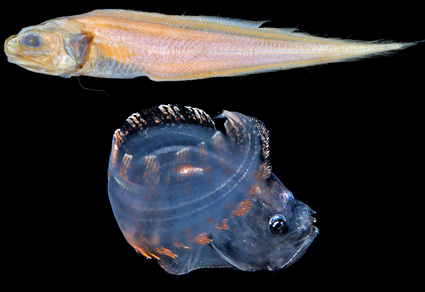
Anyone who works scientifically with #fish living in the #deepsea (blackwater) is taxonomically often dependent on the information provided by dead material: material preserved in museums conditions can be studied #morphologically and also molecular-#genetically. However, living breeding under laboratory conditions is not easy with deep-sea fish. Therefore, the taxonomist has often only limited information without different developmental stages or different genders of a species available, especially young stages of development are often missing.
Matthew G. Girard et al. (2023) were, by chance, not only able to describe a #newspecies of the genus #Monomitopus (#Ophidiidae), but were even able to assign a #larva to the adult. But as if that were not enough, behavioral information on larvae of this genus could also be described, which refers to available #blackwater #photographs of Monomitopus. For the first time, the special larval behavior could be described, in which larvae coiled into what looked like a tight ball.
It's about species from the area around #Hawaii. A new species could be described, because blackwater divers recently brought back a larva that was not molecular-genetically identical to any of the six species previously sequenced. Ultimately, the larva could be morphologically matched with an unidentified museum preparation of an adult from 1872, which, in combination with knowledge of the larval behavior, led to a particularly meaningful description of the species.
This text StefanFWirth Berlin 2023
sources: https://t.co/3bKzod3HPt

#Newspecies of Monomitopus (#Ophidiidae) from Hawaiʻi, with the description of a larval coiling behavior
https://t.co/Jchc9mPbRt
#taxonomy

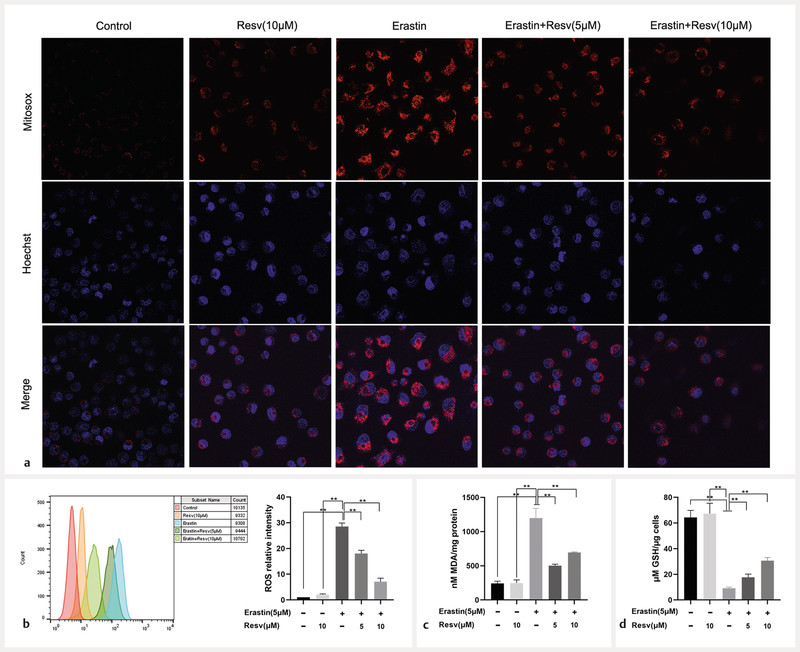
#Ferroptosis is a newly discovered type of #celldeath that is different from other types of cell death #morphologically and #biologically.
https://t.co/q9hhzHFvR8
#plantamedica #biochemistry #Thieme #biomedicine

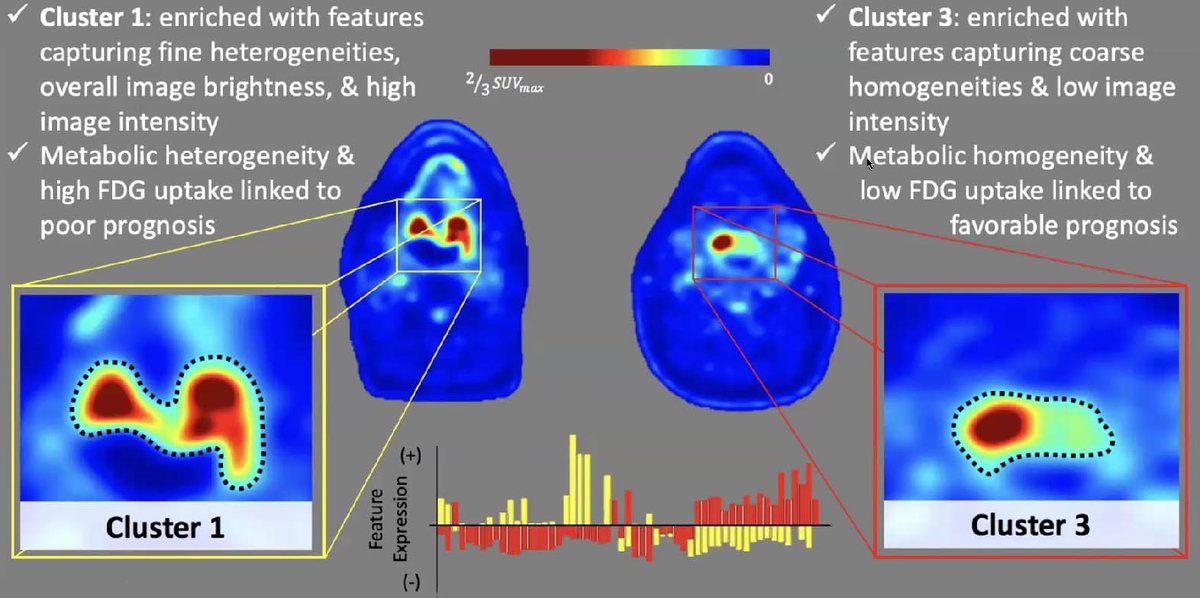
At #SIAMMDS22, @KyleLafata of @DukeU introduced novel #data-driven strategies that model head and neck #cancers across space and time. Specifically, he examined the way in which #tumors change #morphologically and #metabolically in response to treatment. https://t.co/CW2W3XjZdz

Described as the ‘Swiss army knife’ of #robots, DyRET (Dynamic Robot for Embodied Testing) is thought to be the first #quadruped that can #morphologically adapt its structure in-situ to efficiently traverse different outdoor environments: https://t.co/Lm5haDb9zs
#AI #robotics

In the 2nd paper in #JSAL vol 11, @Hilary_Wynne and her colleagues show in a series of #processing tasks that #phonologically similar words in #Bengali do prime each other, but only if they are #morphologically related or of the same #prosodic shape.
https://t.co/sTBxSS4ikz


One thing I learned this week is how we know less about how middle school students use strategies for unknown words. It is important to break down the importance of #Morphologically complex words and how to teach our students strategies when they come across them.

@MNFruitLady #Morphologically, a lot of Iowa #showchoir kids are similar to #cornstalks—tall thin and a bit stiff at the hips. Yet, they always have visually stunning shows with knock-your-socks-off, wall-of-sound vocals. They may not take best choreo but they took everything else. #Opinion

@LingVanguard's going strong - another new article available!
Eric Rosen on "Predicting semi-regular patterns in #morphologically complex words"
Read now!
https://t.co/zPe3hA8XYv

Artist, creator is the new #minister. Ministers of #Imagination in creating a better #morphologically sophisticated, be it #creative #world.


#ClinAnat #Nerves in the #intersphincteric space #morphologically similar to #Auerbach's #plexus in inferior #rectum https://t.co/RrVxW7Jbel

5. #Morphologically, oral #Lactobacillus reuteri significantly reduced tissue #inflammation in #scurfy mice.
https://t.co/fqmBbE5cEQ


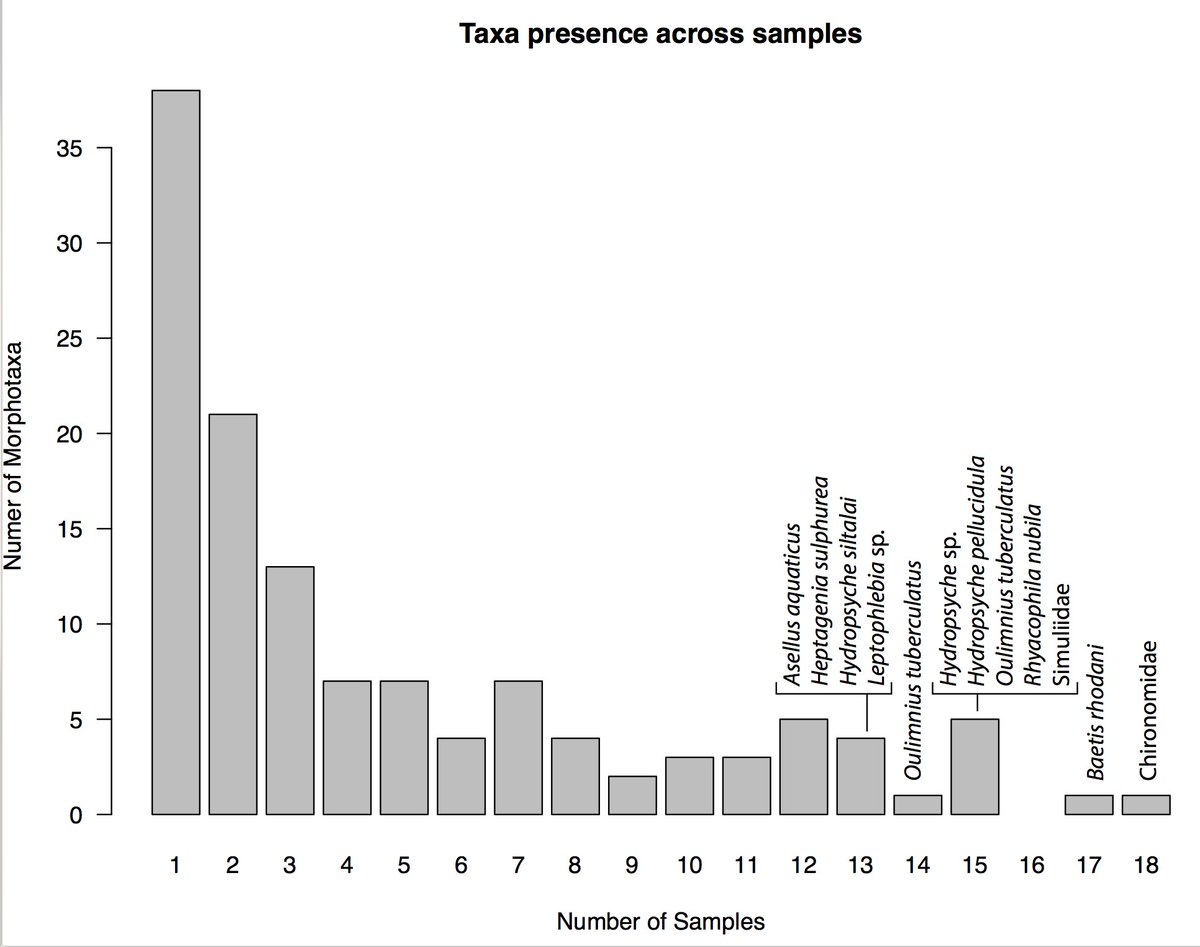
#Finnland samples: 126 #morphologically identified taxa in 18 samples = a total of 18388 (!) specimens. Now we look with DNA #metabarcoding!

@axisshow Favs! @harMonicaDesign @MulleinSparrow @FLOSSGLOSS #Morphologically & @JuliaCameronJMC #gratitude bracelet


Mood elevation, body and mind clearer. #PaloSantoWood #Stockup #BUSTcraftacular from #Morphologically


Last Seen Hashtags on Sotwe
somno somno*
Seen from Spain
teenie
Seen from United States
cuckold Threesome
Seen from Brazil
nolimit nolimit
hugecockworship
Seen from United States
tiktokerleakvideo
Seen from Pakistan
strapon #pegging
Seen from Turkey
sislitravesti
Seen from Turkey
ChinaSex
Seen from Indonesia
hugedicktinychick
Seen from United States
Trends for you
Most Popular Users

Elon Musk 
@elonmusk
240.2M followers

Barack Obama
@barackobama
119.3M followers

Donald J. Trump
@realdonaldtrump
111.6M followers

Cristiano Ronaldo
@cristiano
109.3M followers

Narendra Modi
@narendramodi
106.9M followers

Rihanna
@rihanna
97.4M followers

NASA
@nasa
92.1M followers

Justin Bieber
@justinbieber
90.6M followers

KATY PERRY
@katyperry
87M followers

Taylor Swift
@taylorswift13
80.8M followers

Lady Gaga
@ladygaga
72.4M followers

Kim Kardashian
@kimkardashian
69.5M followers

Virat Kohli
@imvkohli
68.9M followers

YouTube
@youtube
68.6M followers

Bill Gates
@billgates
63.5M followers

The Ellen Show
@theellenshow
62.5M followers

CNN
@cnn
61.9M followers

Neymar Jr
@neymarjr
61.5M followers

X
@x
60.9M followers

Selena Gomez
@selenagomez
60.1M followers