

Top Tweets for #onlatch

@HandOdTech @RialoHQ Powerful philosophy: instead of assembling from dozens of pieces, Rialo embeds logic into the infrastructure itself. Fewer components fewer costs and failure points. And OnLatch adds boundaries for autonomous agents. A mature approach to Web3! 🔧🛡️✨

In one year, @RialoHQ grew from a server into a global ecosystem.
Key milestones include SharkTank, Quiz Nights, Builder Hub, Onlatch, and the Agent Grand Prix.
With a community spanning many countries, its a year of growth, memes, and innovation.
gRialo!
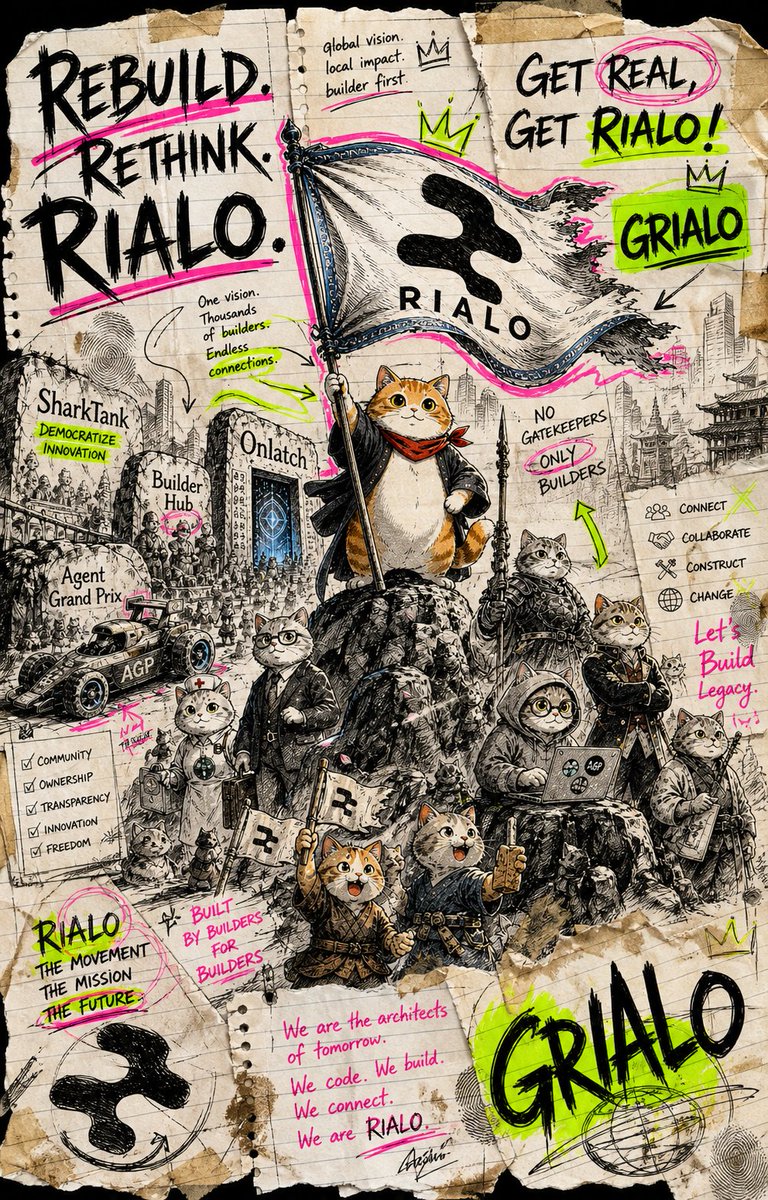

一周年节点也到了:从 stealth 出来到现在,native web connectivity、reactive transactions、Cboe 数据接入、OnLatch、Builder’s Hub、Shark Tank、再到现在的 AGP……一步一个脚印,真的在把“面向现实世界应用 + 安全 AI Agent”的基础设施落地。Web3 这两年最缺的不是更快的链,而是“可控的智能”。

我最近在看 Rialo 和它团队做的 Latch(OnLatch),越看越觉得这不是又一条普通 L1 的故事。
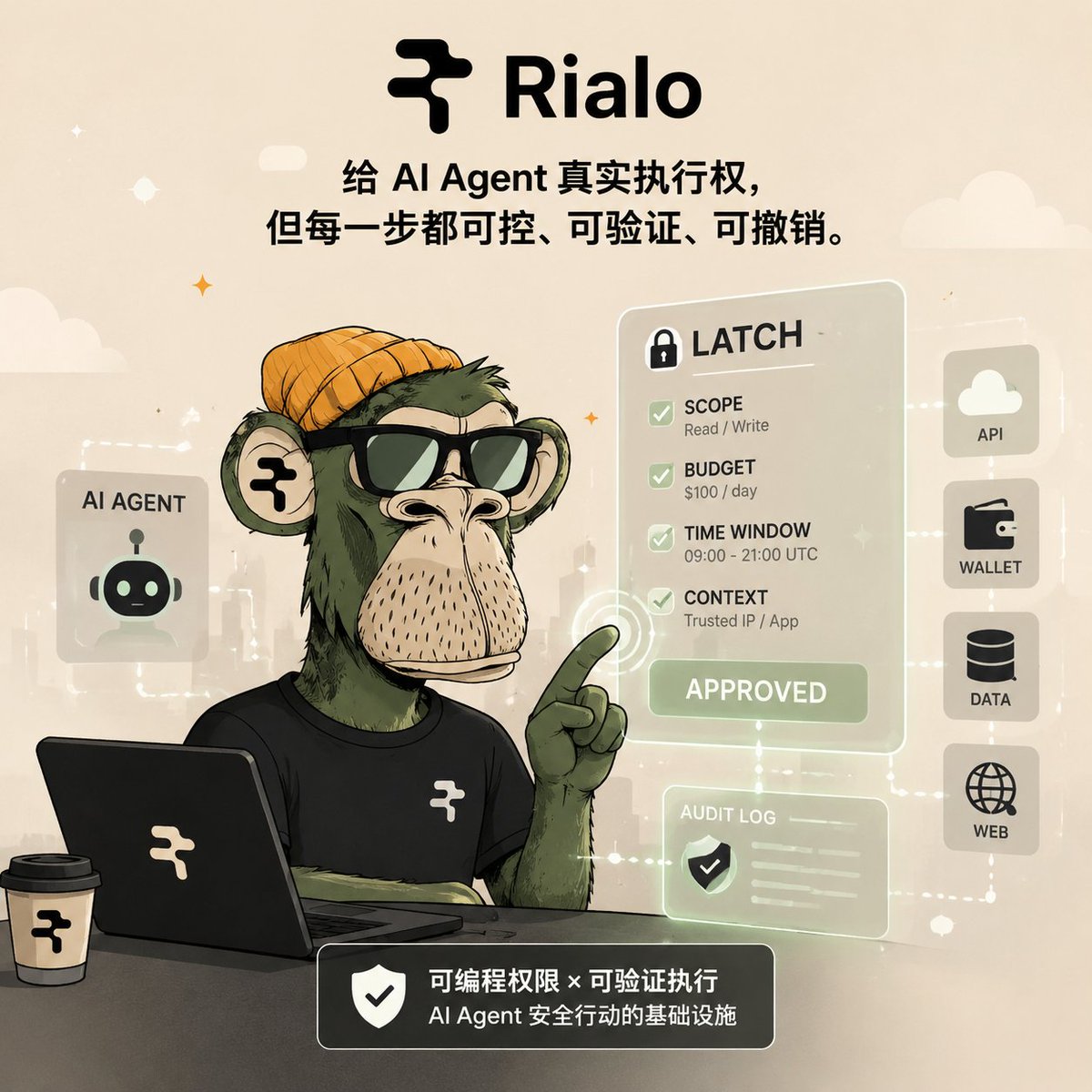
真正值得关注的,是当 AI 代理开始真正调用 API、花钱、执行交易时,我们怎么给它“有边界的权力”。Rialo 通过 Latch 展示了一种可编程、可审计、可撤销的权限模型,而 Rialo 本身又在尝试把区块链做成更贴近真实世界执行的基础设施。
目前还是 pre-TGE,我更愿意把它当成技术路线和叙事位置的观察,而不是二级市场推荐。
AI 代理真正上链前,我先关注到的是“可编程权限”——聊聊我看到的 Rialo 和 Latch
当 AI 不再只是聊天,而是开始真正调用 API、花钱、执行交易、管理账户、触发自动化流程时,我们到底该怎么给它授权?我现在看到的大多数系统,权限模型还建立在一个很老的假设上——谁持有密钥,谁就拥有权限。
但对 AI Agent 来说,这个假设正在失效。一个 Agent 一旦拿到 OpenAI、Stripe、交易所、云服务、钱包或企业内部系统的 API Key,它理论上就能做很多超出任务边界的事情。不是因为它“恶意”,而是因为传统 Key 本身太粗糙:它往往代表一整套权限,而不是一次具体、可验证、可限制的授权。这就是我为什么开始认真看 Rialo / Latch 的切入点。
从“持有密钥”到“被授予边界清晰的权力”
对我来说,这对 AI Agent 非常关键。
因为 AI Agent 的真正价值,不是“回答问题”,而是“替你做事”。
但只要它开始做事,就一定会触碰真实资产、真实权限、真实风险。给机器代理真正的执行权,但这个执行权必须是有边界的、可审计的、可撤销的。比如,一个 AI Agent 可以被允许调用某个模型接口,但不能超过预算;
可以访问某个 API,但只能调用特定 endpoint;
可以执行任务,但只能在指定时间窗口、指定 IP、指定上下文里执行;
可以拿到返回结果,但敏感字段需要被自动脱敏。这和我平时用的传统 API Key 最大的区别在于:传统 Key:拿到就能用,权限边界通常很粗
Latch:每一次调用都要经过策略判断,权限是动态、细粒度、可追踪的
我觉得 Rialo 想做的,不只是另一条 L1
Rialo 想把区块链从“结算层”推进到“真实世界应用的执行层”。
所以说Rialo 的真正叙事:不是 AI 上链,而是机器代理的可控执行权
@RialoHQ

Onlatch will give builders a structured, high-performance environment to build, manage, and scale complex agent interactions natively.
This places Rialo at the forefront of the surging AI-to-Web3 movement.
Innovation doesn't stop at the base layer.
@RialoHQ has been quietly testing "onlatch," their internal agent orchestration layer.
It is transitioning from closed testing straight into a powerful, developer-facing tool.

一周年之际,Builder Hub & Shark Tank 火热进行中,链上保险、自动赔付等开发者项目加速落地;onLatch 全面开放,AI Agent 安全可控;CBOE 机构数据原生接入,RWA 向“Living Assets”进化!隐私计算 + Reactive Transactions 让真实世界区块链越来越近。复杂留给协议,简单留给开发者!@RialoHQ


Onlatch and Rialo, and one point I find quite logical is how both aim to connect blockchain with real-world systems
From what I've read, one of Rialo's key directions is Real-World Connectivity. Instead of letting the blockchain operate as a separate system, Rialo wants applications to be able to interact directly with:
• APIs
• Web services
• Systems and data outside the blockchain
This is crucial because most real-world applications need to communicate with the outside world. No matter how powerful smart contracts are, they still need data, services, and tools from outside to create real value for users.
Looking at Onlatch, I see this as a very natural use case for the Rialo ecosystem.
As I understand it, Onlatch focuses on managing AI Agents' access to the APIs and services they use. Instead of giving AI complete control, Onlatch helps define what AI is allowed to access, what tools it can use, and within what limits.
This becomes especially important as AI agents are increasingly expected to perform real-world tasks such as API calls, data retrieval, interaction with financial services, or automating business processes.
If Rialo is building the infrastructure that connects blockchain to the real world, then Onlatch can be seen as the governance layer that ensures those connections are secure and controlled
I think this is a rather interesting combination. Rialo provides the ability to interact with external systems, while Onlatch helps manage AI access when using those connections. By combining these two pieces, we can better envision how AI agents will operate in the future: not only smarter, but also capable of interacting with the real world securely, transparently, and reliably. From my perspective, this is one of the reasons why Onlatch is a very suitable part of the long-term vision that Rialo is pursuing
@RialoHQ


@HandOdTech Yeah, we're still early. But great things rarely appear as one 'cool feature.' They come together from pieces that suddenly click into place perfectly. OnLatch is exactly that kind of piece

Salut my dears, hope you doing well, from me a lot of info about #Latch , but why?
Okey let's go talk about it.
What if the infrastructure could make applications smarter?
That's where #OnLatch starts making sense.
AI agents are becoming more autonomous every month, but autonomy without control quickly becomes risk.
OnLatch doesn't simply protect API keys. It introduces something much more important: rules that travel with execution.
Permissions, spending limits, endpoint restrictions, audit logs these become part of how an agent operates, not an afterthought added later.
This is where I see the connection with @RialoHQ broader vision.
Reactive execution, proof-based coordination, explicit consent, native orchestration… each piece reduces unnecessary trust while increasing automation.
Instead of choosing between freedom and security, the infrastructure begins to provide both.
We're still early.
But innovations rarely appear as one revolutionary feature.
They emerge when many small ideas suddenly fit together into a system that simply feels... inevitable.
To me, OnLatch is one of those pieces.
And that's why I'm excited to keep exploring what the @RialoHQ ecosystem is building.
https://t.co/7F4uE1YdhJ


I saw Rialo open up OnLatch to the public recently, and it got me thinking.
As AI agents start handling real tasks and moving real value, security around them is becoming critical. Giving them broad access from day one feels like playing with fire.
OnLatch lets teams set strict on-chain rules permissions, spending limits, time bounds, and verifiable logs before the agent even starts working.
It turns what used to be an internal safety tool into something anyone can use to run agents more responsibly.
This feels like the right kind of practical step as agent usage grows fast in 2026.
If you're experimenting with agents, it might be worth checking: https://t.co/xTUKt4x5Kp
@RialoHQ #CISRialoClub

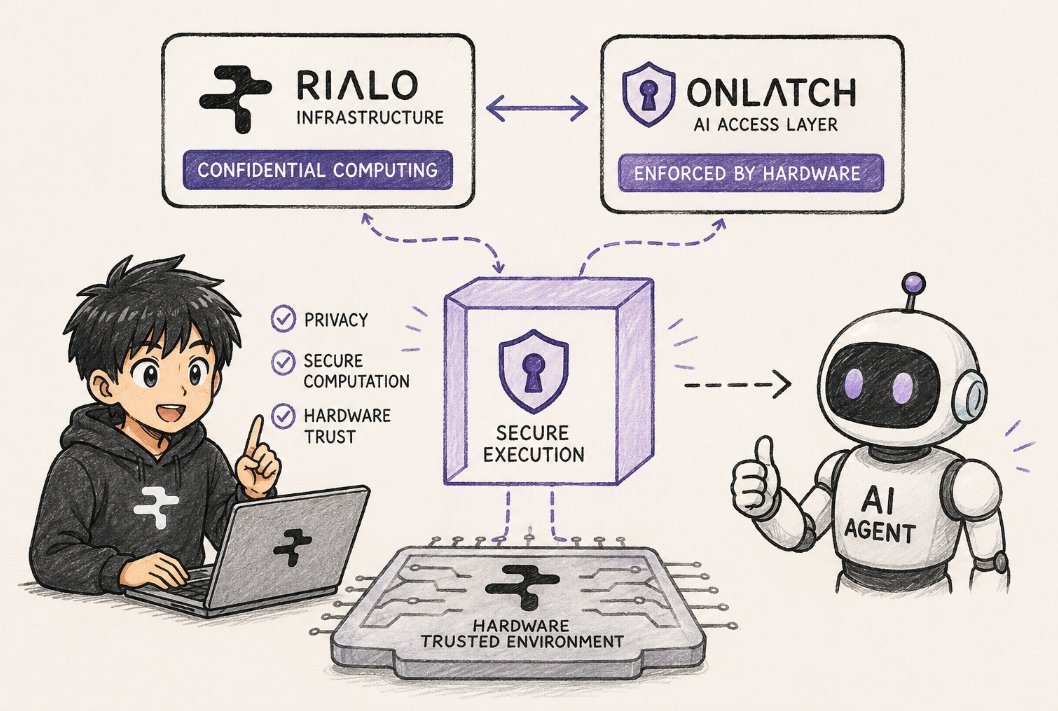
Onlatch and Rialo, and one point I find quite interesting is how both projects focus on Confidential Computing
From what I've read, Rialo is building its infrastructure with the following orientations:
• Privacy-preserving execution
• Secure computation
• Hardware-enforced trust model
The goal is to create an environment where applications can process data and execute tasks securely without compromising privacy.
Looking at Onlatch, I see quite a few similarities.
One of the prominent messages Onlatch emphasizes is "Enforced by hardware." As I understand it, this means that security mechanisms are not only software-based but also supported by specialized hardware technologies to increase reliability and data protection.
This aligns well with the direction Rialo is pursuing.
If future AI agents need to be empowered to perform real-world actions such as using tools, accessing services, or processing transactions, then security will become a mandatory requirement. No one wants to grant critical powers to AI without mechanisms to ensure everything is reliably controlled and verified.
From my perspective, Confidential Computing could be the foundation to solve this problem. When execution is protected at the hardware level, users have added assurance that data, access, and AI actions are processed in a more secure environment.
That's also why I think Onlatch and Rialo have a fairly natural connection. Rialo is building the infrastructure for real-world applications, while Onlatch focuses on enabling AI agents to act while maintaining control, security, and traceability.
Although I'm still learning more about both projects, I feel that Confidential Computing could be one of the most important pieces connecting Onlatch's vision with the Rialo ecosystem in the future
@RialoHQ


@silverwave1000 @RialoHQ OnLatch isn't just about login it's the trust layer that gives AI agents a verifiable identity.

其实在深入了解https://t.co/bhKcvScIxb后,你会发现一个很有意思的现象,那就是rialo @RialoHQ 不仅仅的在做一个淘汰API 密钥的方法,更要的是如何改变这个使用AI Agent泛滥的行业现象!
In fact, after taking a closer look at https://t.co/bhKcvScIxb, you will discover a fascinating phenomenon: rialo (@RialoHQ) isn't just working on a way to phase out API keys—more importantly, they are aiming to transform an industry currently flooded with AI agents.
Rialo 之所以要采用 "latch"的设计思路,并非在谈论芯片设计中的具体���路元件,而是一种打破区块链行业惯例的架构创新隐喻。
Rialo’s adoption of the "latch" design concept does not refer to specific circuit components in chip design; rather, it serves as a metaphor for an architectural innovation that breaks with blockchain industry conventions.
它要 "latch"(锁定)的,是区块链与现实世界交互时最关键的数据和状态,从而解决行业长期依赖 "预言机" 等中间件的核心痛点。
What it aims to "latch" onto is the critical data and state involved in the interaction between the blockchain and the real world, thereby addressing a core pain point: the industry's long-standing reliance on middleware such as "oracles."
🧐 Rialo 为何要“锁定”现实世界数据?
Why does Rialo "latch" real-world data?
我们都清楚像以太坊、Solana 这样的传统区块链,本质上是一个自给自足的封闭世界,无法直接感知链下发生的事件。例如,一个预测"泽连斯基是否穿西装"的市场,其1.7亿美元的资金最终要依赖一个外部代币持有者的判断,这带来了巨大的安全隐患和信任风险。
We are well aware that traditional blockchains like Ethereum and Solana are essentially self-contained, closed worlds, unable to directly perceive events occurring off-chain. For instance, a prediction market regarding "whether Zelenskyy is wearing a suit"—with $170 million in capital—ultimately relies on the judgment of an external token holder, creating significant security vulnerabilities and trust risks.
因此,Rialo选择将三大核心功能直接嵌入其协议底层,实现"原生锁定":
1⃣原生 Web 调用,消除预言机依赖:在 Rialo 上,获取链下数据和触发链上交易,都是协议的原生指令。这从根本上淘汰了 Chainlink 这类第三方预言机网络,开发者无需再为数据的安全性和可靠性担忧。
Native Web calls eliminate reliance on oracles: On Rialo, fetching off-chain data and triggering on-chain transactions are native protocol instructions. This fundamentally renders third-party oracle networks like Chainlink obsolete, relieving developers of concerns regarding data security and reliability.
2⃣原生跨链操作,无需桥接:Rialo 将跨链通信也设计为原生指令,淘汰了复杂且易受攻击的跨链桥。
Native cross-chain operations, eliminating the need for bridges: Rialo designs cross-chain communication as native instructions, doing away with complex and vulnerable cross-chain bridges.
3⃣事件驱动架构,实现实时响应:Rialo 能直接监控和响应外部事件,这些事件本身就可以作为链上程序的"可编程触发器",自动执行后续操作,如自动赔付或结算。
Event-driven architecture enabling real-time response: Rialo can directly monitor and respond to external events. These events serve as "programmable triggers" for on-chain programs, automatically executing subsequent actions such as automated payouts or settlements.
总的来说,Rialo 的这种设计,本质上是将区块链从"与世隔绝的计算机"变成了"连接世界的计算机"。它对于行业的意义在于为了构建能够大规模连接现实世界资产的、安全且用户友好的去中心化应用,提供了一个全新的基础设施范式
In essence, Rialo’s design transforms the blockchain from an "isolated computer" into a "computer that connects the world." Its significance to the industry lies in providing a brand-new infrastructure paradigm for building secure, user-friendly decentralized applications capable of connecting real-world assets at scale.
@itachee_x | @rialo_zw | @dpppps121212
@ericargent31113 |@dj673285379 |@LinYue93820
#rialo #onlatch


With the agentic economy is projected to hit over $230B by 2034. At that scale, governance infrastructure isn't a feature.
It's the foundation everything else must be built on.
https://t.co/iey2pmUhbU

많은 사람들이 OnLatch를 처음 보면 "로그인 기술"이라고 생각합니다.
물론 로그인도 중요한 기능 중 하나입니다. 하지만 제가 보기에는 OnLatch의 진짜 가치는 그보다 훨씬 더 큰 곳에 있습니다.
우리는 지금까지 사람을 중심으로 인증 시스템을 발전시켜 왔습니다. 비밀번호, OTP, 패스키까지 모두 사람이 서비스를 이용하는 환��을 전제로 만들어졌죠.
하지만 AI 에이전트가 직접 서비스를 이용하고, 데이터를 처리하고, 자산을 관리하는 시대가 오면 이야기가 달라집니다. 이제는 사람뿐 아니라 기계도 신뢰할 수 있는 신원을 가져야 합니다.
OnLatch는 단순히 로그인 과정을 더 편하게 만드는 것이 아니라, AI와 머신이 자신의 신원을 안전하게 증명하고 권한을 검증받을 수 있는 기반을 만드는 것입니다.
앞으로 AI가 더 많은 일을 대신하게 될수록 '누가 이 작업을 수행했는가'보다 '어떤 신뢰된 에이전트가 이 작업을 수행했는가'가 더 중요해질 것입니다.
그래서 저는 OnLatch를 로그인 솔루션이 아니라, AI 시대를 위한 Machine Identity Layer로 보고 있습니다.
Rialo가 만들어가는 방향은 단순한 인증의 진화가 아니라, AI와 사람이 함께 살아갈 미래를 위한 새로운 신뢰 인프라에 더 가깝다고 생각합니다.


Agentic commerce is not mainly a payments problem.
It is a coordination problem:
Can independent agents agree on scope, enforce time, verify quality, and settle without a human reconciliation layer?
That is the layer @RialoHQ is targeting with SCALE.
SCALE means Simple Contracts for Agent Labor Execution.
It turns an agent task into an onchain agreement with explicit state:
• task instructions
• deadline
• escrowed payment
• a designated Judge
Not a chat promise.
Not an offchain spreadsheet.
Why does that matter?
Most agent workflows still look like this:
prompt → webhook → backend timer → retry loop → manual review → payment
Every extra service creates another place where task state can drift away from the settlement decision.
Rialo starts with discovery , a requester finds a specialist through the Agent Registry, mints a SCALE task, then sends the task address over A2A.
The provider can verify the same terms onchain before beginning the work.
That task address is more than a payment reference.
It becomes the shared source of truth for:
scope
deadline
escrow
delivery status
the Judge allowed to evaluate the result, every participant reads the same state.
Native timers make time executable , If the provider misses the deadline, the workflow does not wait for an offchain cron job or keeper to remember what happened.
The SCALE task can refund the requester according to its own rule.
Delivery is not the final step , once work is submitted onchain, Rialo uses native webcalls to contact a third party Judge agent through A2A.
The Judge checks task adherence and quality against the onchain instructions.
Then the verdict becomes state:
pass → settlement
fail → refund
QA is no longer an offchain opinion that someone has to reconcile afterward.
It becomes a defined transition inside the same workflow that holds the task terms.
For builders, the gain is architectural:
a shared onchain state machine for task terms, timing, delivery, verification, and settlement.
Discovery remains handled through the Agent Registry, while the task itself carries the enforceable workflow state.
@itachee_x 's update on SCALE coming to onlatch matters.
@RialoHQ is not treating agent coordination as a pile of integrations around a chain.
Webcalls, timers, and conditional settlement belong closer to execution.
SCALE is a concrete look at what that enables.
@RialoHQ @Subzero_Labs @ericargent31113


Some alpha: SCALE (see @chunliweb3 demo) is being integrated into https://t.co/BtYLOQoLvH meaning multi-agent coordination as a first class primitive.
https://t.co/zcZLSQp0mx
时至今日,AI已经渗透到我们经济的方方面面,但其实很多人对于AI系统去中心化这种概念并没有什么深刻的见解。Subzero Labs @Subzero_Labs 认为,未来最具影响力的AI系统将是去中心化的,由无数个专业化的AI代理组成,共同创造价值。为此,他们正基于公链 Rialo @RialoHQ 构建一个专属于AI代理经济的基础设施。
Rialo 的三大核心优势使其与AI代理天然契��:
1⃣原生Web调用:能直接用AI的母语与代理沟通。
2⃣原生计时器:可在链上自动触发行为,严格管控任务截止日期和多代理协作。
3⃣极速性能:确保网络调用、自动化和支付能以适配AI的速度完成。
基于这些优势,他们推出了 SCALE,这是一套受YC SAFE启发、用于安全支付AI代理的标准化合约。
对于如今的web3市场而言,AI即劳动力 这个概念其实是有非常清晰且诱人的未来前景的。在我看来,Rialo 对这个赛道的根本改变在于,它将AI代理从一个工具提升为了一个“可缔约的独立经济主体”。
🧐从预编程到签约制
传统AI交互依赖API和预先编写的代码,是固定流程。而Rialo+SCALE的模式,让用户可以像与人类承包商签约一样,在链上与AI签订有约束力、有条件、有期限的“劳务合同”。这让AI的工作成果变得可量化、可交易、可追责。
😌从信任人到信任代码
当前使用AI服务最大的痛点是——你付了钱,但不知道它何时能完成、质量如何、不满意能否退款。Rialo通过链上自动托管、自动超时退款、自动质量仲裁,将“信任”从平台方转移到了公开透明的代码逻辑上。这正是区块链解决AI信任问题的绝妙之处。
🤑催生全新的AI职业经理人和AI经济
Rialo的架构不仅支持执行任务的AI,还支持裁判AI和协调AI。这意味着未来你可以“训练”并部署一个专做图像质量评判的AI,让它通过为无数个任务做裁判来赚取被动收入。这大大降低了参与Web3的门槛,你不需要懂代码或交易,只需部署一个优秀的AI代理,它就能在链上市场里为你打工。
总而言之,Rialo正在构建的是一个基于区块链的“AI零工经济平台”,但它比Uber或Upwork更进一步——因为它的“工人”是AI,而“规则”由不可篡改的智能合约执行。这极大降低了协调成本,消除了人为欺诈和纠纷,让AI协作变得高效、公平且自动化。
@rialo_zw | @itachee_x |@ericargent31113
@dj673285379 | @LinYue93820
#rialo #onlatch #AIagent


𝙏𝙝𝙚 𝙍𝙚𝙖𝙡 𝙋𝙧𝙤𝙗𝙡𝙚𝙢 𝙒𝙞𝙩𝙝 𝘼𝙄 𝘼𝙜𝙚𝙣𝙩𝙨 𝙄𝙨𝙣’𝙩 𝙄𝙣𝙩𝙚𝙡𝙡𝙞𝙜𝙚𝙣𝙘𝙚, 𝙄𝙩’𝙨 𝙏𝙧𝙪𝙨𝙩
Most conversations about AI agents focus on how smart they’re becoming. But the bigger issue is something else entirely.
As agents start doing real work, moving money, using APIs, making decisions, a simple question arises:
𝙃𝙤𝙬 𝙙𝙤 𝙬𝙚 𝙖𝙘𝙩𝙪𝙖𝙡𝙡𝙮 𝙩𝙧𝙪𝙨𝙩 𝙩𝙝𝙚𝙢?
Right now, the default approach is risky. We give agents powerful access and hope everything goes well. This works fine in demos, but it breaks down fast when real value or sensitive systems are involved.
𝘼 𝘿𝙞𝙛𝙛𝙚𝙧𝙚𝙣𝙩 𝘼𝙥𝙥𝙧𝙤𝙖𝙘𝙝
What makes tools like onlatch interesting is the shift in thinking.
Instead of treating agents as powerful software that needs to be locked down after the fact, it treats them as entities that need clear boundaries from the start.
This means:
• Agents don’t need to hold permanent high-level access
• Actions can be limited based on specific rules
• Everything that happens can be tracked clearly
• Access can be adjusted or removed easily when needed
It’s a more structured way of letting agents operate without giving them unlimited power.
𝙒𝙝𝙮 𝙏𝙝𝙞𝙨 𝘿𝙞𝙧𝙚𝙘𝙩𝙞𝙤𝙣 𝙈𝙖𝙩𝙩𝙚𝙧𝙨
As AI agents move from chatting to actually doing things in the real world, the systems around them need to evolve too.
The next phase of agent development won’t just be about making them smarter. It will be about building the right kind of infrastructure so they can be useful and safe at the same time.
Projects like @RialoHQ are exploring this through tools such as onlatch, creating ways for agents to interact with systems while keeping control where it belongs.
The goal isn’t to slow agents down. It’s to make them reliable enough to actually depend on.

One of the biggest security assumptions on the internet is that whoever possesses the API key should be trusted.
Which is a strange idea when you think about it.
API keys get copied.
stored.
leaked.
stolen.
and AI agents only make that problem worse.
one of Latch the goals is eliminating API keys altogether.
Machine Bound Identity takes a different approach:
your machine becomes the identity, no credentials sitting around waiting to be exposed.
No secrets to steal.
Because sometimes the best way to protect a key is to stop needing one.
Try it: https://t.co/E5C0hy3voK

Spent some time exploring the OnLatch Beta, and I genuinely enjoyed the experience.
The first thing that stood out wasn't a specific feature it was how natural everything felt. The onboarding is simple, the interface is clean, and the product doesn't make you fight it. It feels like something built for people, not just for crypto users.
What I also appreciate is the direction. #OnLatch isn't trying to become another wallet or another dashboard. It's solving a very real problem around identity, access, and trusted interactions something Web3 will inevitably need as it grows.
It's still a beta, so of course there is room to polish things, but the foundation already feels solid.
Big respect to everyone building this. I'm excited to see where it goes from here.
If you have access to the beta, I'd definitely recommend spending some time with it. Sometimes the most interesting products aren't the loudest ones they're the ones quietly building something that simply makes sense.
Looking forward to seeing what's next keep build @RialoHQ

Onlatch is a platform developed by Subzero Labs to address one of the biggest problems facing AI agents today: managing access and securing private keys (API keys, credentials, wallets).
Instead of directly handing over API keys or private keys to AI agents, Onlatch acts as an intermediary layer:
Securely storing secrets
Granting limited access to AI agents
Applying real-time control policies
Monitoring and recording all agent activity
Allowing access revocation at any time
Onlatch is built by Subzero Labs and runs on the @RialoHQ infrastructure.

[Rialo’s OnLatch]
What AI agents need in order to scale is not simply a smarter model
What truly matters is how authority can be safely delegated and controlled
Even without handing over keys, agents should be able to perform real tasks through limited permissions, revocable access, policy verification, and execution records
Rialo’s OnLatch is building this as a top priority, and this looks extremely important
A structure where agents are given execution authority, while final control remains with the user
This is the direction of OnLatch
[Rialo의 OnLatch]
AI 에이전트가 확장되기 위해 필요한 것은 단순히 더 똑똑한 모델이 아닙니다.
진짜 중요한 것은 권한을 어떻게 안전하게 위임하고 통제할 것인가입니다.
키를 넘기지 않고도, 제한된 권한·철회 가능한 접근·정책 검증·실행 기록을 통해 에이전트가 실제 작업을 수행할 수 있어야 합니다.
Rialo의 OnLatch는 이것을 제일 우선으로 구축하고 있습니다. 이것은 매우 중요해 보입니다.
에이전트에게 실행 권한을 주되, 최종 통제권은 계속 사용자에게 남기는 구조.
이것은 Onlatch의 방향입니다.
@RialoHQ @RialoKorea @silverwave1000
[Rialo의 OnLatch]
AI 에이전트가 확장되기 위해 필요한 것은 단순히 더 똑똑한 모델이 아닙니다.
진짜 중요한 것은 권한을 어떻게 안전하게 위임하고 통제할 것인가입니다.
키를 넘기지 않고도, 제한된 권한·철회 가능한 접근·정책 검증·실행 기록을 통해 에이전트가 실제 작업을 수행할 수 있어야 합니다.
Rialo의 OnLatch는 이것을 제일 우선으로 구축하고 있습니다. 이것은 매우 중요해 보입니다.
에이전트에게 실행 권한을 주되, 최종 통제권은 계속 사용자에게 남기는 구조.
이것은 Onlatch의 방향입니다.
[Rialo’s OnLatch]
What AI agents need in order to scale is not simply a smarter model
What truly matters is how authority can be safely delegated and controlled
Even without handing over keys, agents should be able to perform real tasks through limited permissions, revocable access, policy verification, and execution records
Rialo’s OnLatch is building this as a top priority, and this looks extremely important
A structure where agents are given execution authority, while final control remains with the user
This is the direction of OnLatch
@RialoHQ @RialoKorea @silverwave1000
[Rialo의 OnLatch]
AI 에이전트가 확장되기 위해 필요한 것은 단순히 더 똑똑한 모델이 아닙니다.
진짜 중���한 것은 권한을 어떻게 안전하게 위임하고 통제할 것인가입니다.
키를 넘기지 않고도, 제한된 권한·철회 가능한 접근·정책 검증·실행 기록을 통해 에이전트가 실제 작업을 수행할 수 있어야 합니다.
Rialo의 OnLatch는 이것을 제일 우선으로 구축하고 있습니다. 이것은 매우 중요해 보입니다.
에이전트에게 실행 권한을 주되, 최종 통제권은 계속 사용자에게 남기는 구조.
이것은 Onlatch의 방향입니다.
[Rialo’s OnLatch]
What AI agents need in order to scale is not simply a smarter model
What truly matters is how authority can be safely delegated and controlled
Even without handing over keys, agents should be able to perform real tasks through limited permissions, revocable access, policy verification, and execution records
Rialo’s OnLatch is building this as a top priority, and this looks extremely important
A structure where agents are given execution authority, while final control remains with the user
This is the direction of OnLatch
@RialoHQ @RialoKorea @silverwave1000
[Rialo’s OnLatch]
What AI agents need in order to scale is not simply a smarter model
What truly matters is how authority can be safely delegated and controlled
Even without handing over keys, agents should be able to perform real tasks through limited permissions, revocable access, policy verification, and execution records
Rialo’s OnLatch is building this as a top priority, and this looks extremely important
A structure where agents are given execution authority, while final control remains with the user
This is the direction of OnLatch
[Rialo의 OnLatch]
AI 에이전트가 확장되기 위해 필요한 것은 단순히 더 똑똑한 모델이 아닙니다.
진짜 중요한 것은 권한을 어떻게 안전하게 위임하고 통제할 것인가입니다.
키를 넘기지 않고도, 제한된 권한·철회 가능한 접근·정책 검증·실행 기록을 통해 에이전트�� 실제 작업을 수행할 수 있어야 합니다.
Rialo의 OnLatch는 이것을 제일 우선으로 구축하고 있습니다. 이것은 매우 중요해 보입니다.
에이전트에게 실행 권한을 주되, 최종 통제권은 계속 사용자에게 남기는 구조.
이것은 Onlatch의 방향입니다.
@RialoHQ @RialoKorea @silverwave1000
[Rialo’s OnLatch]
What AI agents need in order to scale is not simply a smarter model
What truly matters is how authority can be safely delegated and controlled
Even without handing over keys, agents should be able to perform real tasks through limited permissions, revocable access, policy verification, and execution records
Rialo’s OnLatch is building this as a top priority, and this looks extremely important
A structure where agents are given execution authority, while final control remains with the user
This is the direction of OnLatch
[Rialo의 OnLatch]
AI 에이전트가 확장되기 위해 필요한 것은 단순히 더 똑똑한 모델이 ��닙니다.
진짜 중요한 것은 권한을 어떻게 안전하게 위임하고 통제할 것인가입니다.
키를 넘기지 않고도, 제한된 권한·철회 가능한 접근·정책 검증·실행 기록을 통해 에이전트가 실제 작업을 수행할 수 있어야 합니다.
Rialo의 OnLatch는 이것을 제일 우선으로 구축하고 있습니다. 이것은 매우 중요해 보입니다.
에이전트에게 실행 권한을 주되, 최종 통제권은 계속 사용자에게 남기는 구조.
이것은 Onlatch의 방향입니다.
@RialoHQ @RialoKorea @silverwave1000
Last Seen Hashtags on Sotwe
tgirl
Seen from United Kingdom
bbcfacial
Seen from Turkey
เย็ดน้อง
Seen from Thailand
minichat
Seen from Netherlands
คลิปหลุด
Seen from United States
cderbandung
Seen from United Kingdom
السودان
Seen from Italy
RealDriving
Seen from Pakistan
ديرتي
Seen from United Kingdom
hijabi #ass
Seen from Malaysia
Most Popular Users

Elon Musk 
@elonmusk
239.8M followers

Barack Obama
@barackobama
118.6M followers

Cristiano Ronaldo
@cristiano
114.3M followers

Donald J. Trump
@realdonaldtrump
111.7M followers

Narendra Modi
@narendramodi
106.9M followers

Rihanna
@rihanna
98.6M followers

NASA
@nasa
92.1M followers

Justin Bieber
@justinbieber
91.7M followers

KATY PERRY
@katyperry
89.9M followers

Taylor Swift
@taylorswift13
83.9M followers

Lady Gaga
@ladygaga
75.4M followers

Virat Kohli
@imvkohli
73.3M followers

Kim Kardashian
@kimkardashian
70.8M followers

YouTube
@youtube
68.6M followers

Neymar Jr
@neymarjr
66.3M followers

Bill Gates
@billgates
65.1M followers

Selena Gomez
@selenagomez
63M followers

The Ellen Show
@theellenshow
62.1M followers

CNN
@cnn
61.7M followers

X
@x
60.6M followers