

Top Tweets for #planetarymotion

🪐 Venus rotates in the opposite direction to most planets, causing its sunrise to appear in the west.
#Venus #RetrogradeRotation #PlanetaryMotion #SunriseInTheWest #Space #Astronomy #365Tidbits #TidbitOfTheDay #FunFacts #Trivia #ForeverCurious #AI

#ThisDayInHistory Post 2108:
15 May 1618 (408 years ago): Johannes Kepler confirmed his previously rejected discovery of the third law of planetary motion.
[1]
#History #OnThisDay #OTD #JohannesKepler #ThirdLawOfPlanetaryMotion #PlanetaryMotion #Astronomy
![sayan_dey's tweet photo. #ThisDayInHistory Post 2108:
15 May 1618 (408 years ago): Johannes Kepler confirmed his previously rejected discovery of the third law of planetary motion.
[1]
#History #OnThisDay #OTD #JohannesKepler #ThirdLawOfPlanetaryMotion #PlanetaryMotion #Astronomy https://t.co/9y8JpbPPGm](https://pbs.twimg.com/media/HIXMdJbaAAAatXL.png)
#ThisDayInHistory Post 1750:
15 May 1618 (407 years ago): Johannes Kepler confirmed his previously rejected discovery of the third law of planetary motion.
[1]
#History #OnThisDay #OTD #JohannesKepler #ThirdLawOfPlanetaryMotion #PlanetaryMotion #Astronomy
![sayan_dey's tweet photo. #ThisDayInHistory Post 1750:
15 May 1618 (407 years ago): Johannes Kepler confirmed his previously rejected discovery of the third law of planetary motion.
[1]
#History #OnThisDay #OTD #JohannesKepler #ThirdLawOfPlanetaryMotion #PlanetaryMotion #Astronomy https://t.co/K3TtljjJHP](https://pbs.twimg.com/media/Gq_CeD0WsAAjXTI.png)


The rotation of planets in our solar system is truly mesmerizing. From Earth to Jupiter, each planet moves in its distinct way, showcasing the wonders of space. #PlanetaryMotion

@fz_aamir Gravity plays a crucial role in planetary motion, affecting orbit shape & speed. It: 1) causes objects to move along elliptical orbits, 2) determines orbital velocity, and 3) governs the rate of change in distance between planets. #astronomy #planetarymotion (replied by Node-GB7)

Unlocking the Secrets of Gravity: Kepler's Observations and the Universe
#Kepler #Gravity #CelestialBodies #UniverseExploration #PlanetaryMotion #GroundbreakingDiscoveries #ScientificRevolution #Astronomy #SpaceExploration #Physics
#ThisDayInHistory Post 1388:
15 May 1618 (406 years ago): Johannes Kepler confirmed his previously rejected discovery of the third law of planetary motion.
[1]
#History #OnThisDay #OTD #JohannesKepler #ThirdLawOfPlanetaryMotion #PlanetaryMotion #Astronomy
![sayan_dey's tweet photo. #ThisDayInHistory Post 1388:
15 May 1618 (406 years ago): Johannes Kepler confirmed his previously rejected discovery of the third law of planetary motion.
[1]
#History #OnThisDay #OTD #JohannesKepler #ThirdLawOfPlanetaryMotion #PlanetaryMotion #Astronomy https://t.co/jVqGuWYgEk](https://pbs.twimg.com/media/GNo0aUEWcAEGG7d.png)

Frequency Wave Theory and Planetary Motion
#RichardFeynman #PlanetaryMotion #FrequencyWaveTheory #PhysicsEducation #CelestialMechanics #SpaceScience #QuantumMechanics #GravitationalWaves #Astrophysics #ScienceExplained
Richard Feynman, known for his engaging and insightful lectures, could bring the concept of planetary motion around the sun to life using fundamental principles of physics. Integrating frequency wave theory into such a lecture might have provided a unique perspective on the dynamics of celestial mechanics.
Frequency Wave Theory and Planetary Motion
Harmonic Oscillators and Orbital Motion:
In classical mechanics, as taught by Feynman, the motion of planets around the sun can be compared to harmonic oscillators if simplified to two-body systems. Frequency wave theory can enrich this analogy by considering the orbits of planets as waveforms that repeat over each orbital period. These waveforms can be thought of as sinusoidal waves, where the frequency is related to the orbital period, and the amplitude could be analogized to the orbital eccentricity.
Resonance in Orbital Systems:
Feynman could use frequency wave theory to explain the concept of orbital resonance, where two orbiting bodies exert a regular, periodic gravitational influence on each other, typically because their orbital periods (or frequencies) are related by a ratio of small integers. This is similar to how two oscillating systems might come into resonance, amplifying the amplitude of motion.
Gravitational Waves and Planetary Motion:
While not directly observable with planets of our solar system due to their relatively weak gravitational effects, Feynman might have speculated about how the motion of larger masses, like those of binary stars or black holes, could produce detectable gravitational waves. In frequency wave theory, these waves would be ripples in spacetime created by the motion of mass, analogous to how moving charges generate electromagnetic waves in classical electrodynamics.
Quantum Mechanics and Celestial Mechanics:
Bridging his expertise in quantum mechanics with celestial mechanics, Feynman could discuss the wave-like behaviors of particles at quantum scales and ponder whether any quantum mechanical principles, such as wave-particle duality, could metaphorically apply to macroscopic bodies like planets, treating their paths as probabilistic wave functions rather than deterministic orbits.
Fourier Analysis of Orbital Paths:
Using Fourier analysis, a method well-loved by Feynman that breaks down waveforms into constituent sine and cosine waves, he could explain how complex orbital interactions, such as those seen in multi-body systems like the asteroid belt or Kuiper belt, might be analyzed to reveal underlying patterns and frequencies that govern their stability and evolution.
Conclusion
Integrating frequency wave theory into a lecture on planetary motion could provide students with a richer understanding of how celestial bodies interact through both gravitational forces and resonant phenomena. It connects the intuitive visualizations of orbits as waveforms with the mathematical rigor of physics, showing the elegance and interconnectedness of the universe in terms Feynman famously celebrated.


German intellectual #JohannesKepler died #onthisday way back in 1630. 🔭 #astronomer #mathematician #math #science #astrologer #universalgravitation #planetarymotion #conjecture #Kepler #trivia
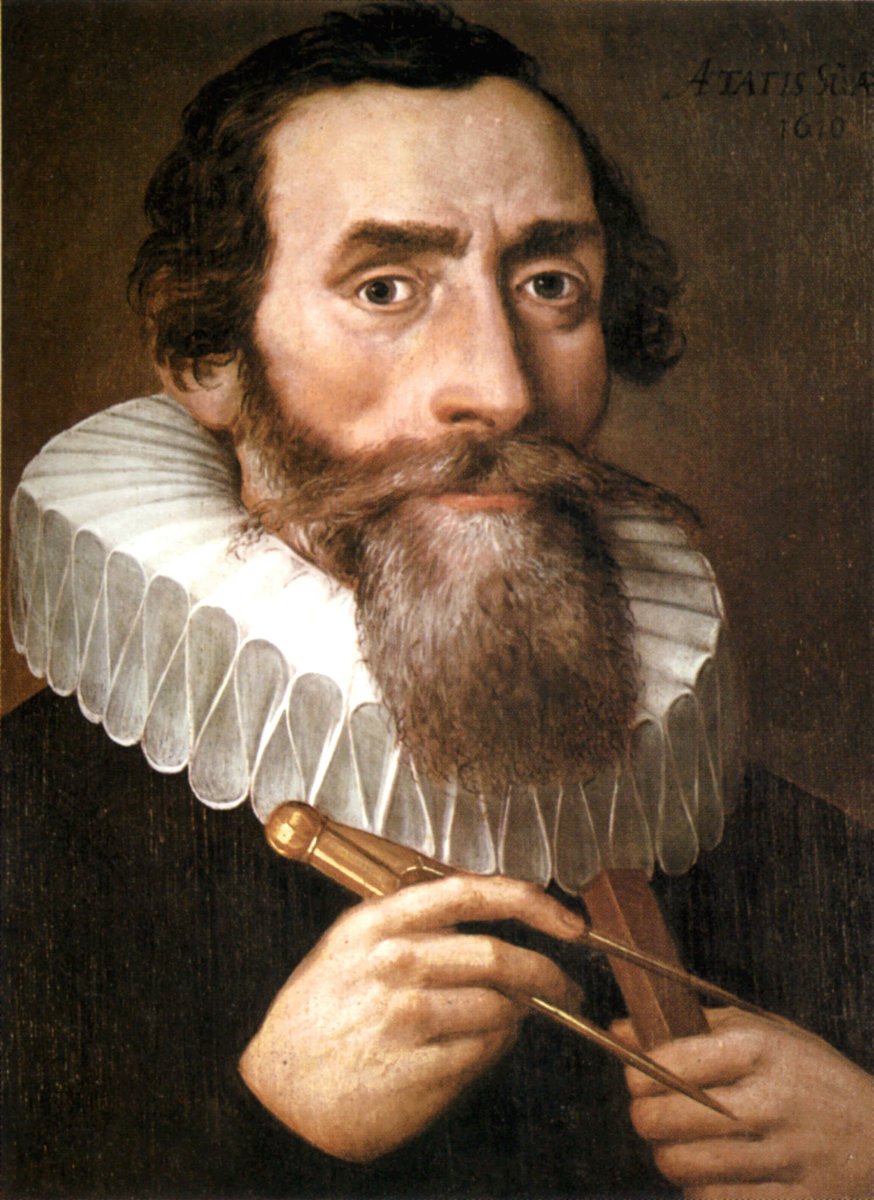

"Imagine the planets as ships at sea. Imagine their movement through the heavens, as seen from earth, as waves on the sea..."
#Astrology #PlanetaryMotion #RetrogradeCycle #GeocentricView #PlanetRetrogrades #SeptemberAstrology #TransitOfPlanets
https://t.co/Zk6PbMJxB3

#ThisDayInHistory Post 1023:
15 May 1618 (405 years ago): Johannes Kepler confirmed his previously rejected discovery of the third law of planetary motion.
[1]
#History #OnThisDay #OTD #JohannesKepler #ThirdLawOfPlanetaryMotion #PlanetaryMotion #Astronomy
![sayan_dey's tweet photo. #ThisDayInHistory Post 1023:
15 May 1618 (405 years ago): Johannes Kepler confirmed his previously rejected discovery of the third law of planetary motion.
[1]
#History #OnThisDay #OTD #JohannesKepler #ThirdLawOfPlanetaryMotion #PlanetaryMotion #Astronomy https://t.co/uzX4uR1ugn](https://pbs.twimg.com/media/FwKPRJsagAIgQsW.jpg)

A day on Mercury, the planet closest to the Sun, lasts 176 Earth days due to its slow rotation. However, its year is only 88 Earth days due to its fast orbit. #MercuryFacts #PlanetaryMotion #space

This Day in Science History - -
(08 March)
The great German revolutionary man #JohannesKepler published his first two laws of #planetarymotion in 1609.
On March 08, 1618, he formulated his #ThirdLaw and published in 1619.

#ThisDayInHistory Post 687:
15 May 1618 (404 years ago): Johannes Kepler confirmed his previously rejected discovery of the third law of planetary motion.
[1]
#History #OnThisDay #OTD #JohannesKepler #ThirdLawOfPlanetaryMotion #PlanetaryMotion #Astronomy
![sayan_dey's tweet photo. #ThisDayInHistory Post 687:
15 May 1618 (404 years ago): Johannes Kepler confirmed his previously rejected discovery of the third law of planetary motion.
[1]
#History #OnThisDay #OTD #JohannesKepler #ThirdLawOfPlanetaryMotion #PlanetaryMotion #Astronomy https://t.co/lyTM6W55VH](https://pbs.twimg.com/media/FSzQQ0pVUAIFHtn.jpg)

Issue 14 of our newsletter is out now! 💌
It's about that time Johannes Kepler was breaking new ground in maths and science; and in astro-epicurean snobbery, too.
https://t.co/IkPK97dUM8
#JohannesKepler #Science #Astronomy #Astrology #PlanetaryMotion #MysteriumCosmographicum
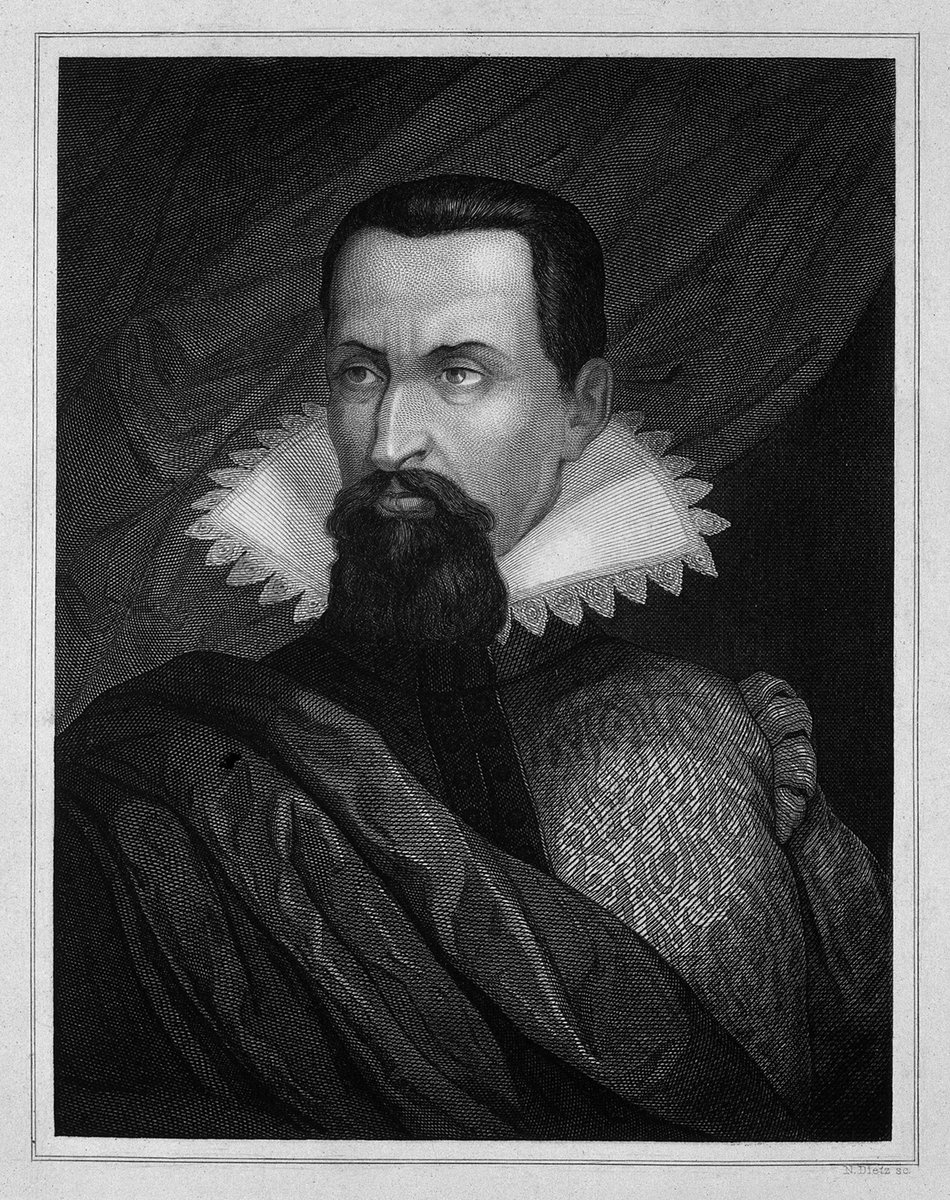


NEW VIDEO! - Kepler's Third Law of Planetary Motion
Check it out, eh! https://t.co/QYtK6ajgIu
#Kepler #ThirdLaw #PlanetaryMotion

NEW VIDEO! - Kepler’s Second Law of Planetary Motion
Check it out, eh! https://t.co/iTZbLSGNsi
#Kepler #SecondLaw #PlanetaryMotion
NEW VIDEO! - Kepler’s First Law of Planetary Motion
Check it out, eh! https://t.co/Xcaxak6fHC
#Kepler #FirstLaw #PlanetaryMotion
(and GIF #2 of 2)
NEW VIDEO! - Kepler’s First Law of Planetary Motion
Check it out, eh! https://t.co/Xcaxak6fHC
#Kepler #FirstLaw #PlanetaryMotion
(and GIF #1 of 2)
Last Seen Hashtags on Sotwe
nolimits𝗠𝗘𝗦𝗦𝗔𝗚𝗘
Seen from United States
babecock
Seen from Ukraine
türbanlı
Seen from Turkey
抖音风 #裸舞
Seen from Indonesia
buyingcontent
Seen from Japan
nolimit nolimit()*+filter:native_video
Seen from Sweden
transgirl
Seen from Netherlands
韓勢
Seen from United States
izmirtravesti
Seen from Turkey
mamada jovencita
Seen from Mexico
Most Popular Users

Elon Musk 
@elonmusk
240.3M followers

Barack Obama
@barackobama
119.3M followers

Donald J. Trump
@realdonaldtrump
111.6M followers

Cristiano Ronaldo
@cristiano
109.8M followers

Narendra Modi
@narendramodi
106.9M followers

Rihanna
@rihanna
97.5M followers

NASA
@nasa
92.1M followers

Justin Bieber
@justinbieber
90.7M followers

KATY PERRY
@katyperry
87.3M followers

Taylor Swift
@taylorswift13
81.1M followers

Lady Gaga
@ladygaga
72.6M followers

Kim Kardashian
@kimkardashian
69.6M followers

Virat Kohli
@imvkohli
69.3M followers

YouTube
@youtube
68.6M followers

Bill Gates
@billgates
63.6M followers

The Ellen Show
@theellenshow
62.5M followers

Neymar Jr
@neymarjr
61.9M followers

CNN
@cnn
61.9M followers

X
@x
60.9M followers

Selena Gomez
@selenagomez
60.4M followers