

Top Tweets for #quantified

5/12 HUMANOIDS+SATELLITES
INDO-MIM is developing MIM, casting and machined components for multiple customers.
Management sees significant potential and expects better FY28 clarity in JANUARY.
⚠️No quantified revenue guidance yet.
Opportunity ≠ earnings
#StocksInFocus #AI

The research is a reminder for CFOs: when buying AI software at scale, build a more quantified evaluation system to track how much measurable cost reduction the software spend actually delivers. #CorporateFinance #CFOView

Appreciate your words my brother. As we all process this shit and go through the stages of grief, today I feel anger. To one of your points, yes we were promised rewards. Not necessarily a token, but “rewards” was put in writing on the portal. It wasn’t defined or quantified in any way, but to hear them on the Spaces yesterday say NO REWARDS so bluntly and callously, that was a dagger to the heart. As a content creator who prob devoted more time to creating content than any of the rest of us, you for one probably felt that knife more than anyone. Fucking sucks. I still cant wrap my mind around the idea that one of the biggest blockchains, funded by one of the biggest companies in crypto, folded before TGE. Makes no sense to me. I don’t know. Anger stage. I’ll get over it. But to another point of yours, it’s really hard not to put all your eggs into one basket. I was loyal. I believed. I trusted. I gave my all BECAUSE I believed. And now I’m so jaded to ever trust again. Again, just feeling this way now, I’m sure we’ll bounce back and move on soon enough. But for now this is what I feel. Anyway bro let’s do some therapeutic shots in Miami in a couple months

XRP Liquidity Watch — Scoreboard
🟢 Evernorth ~473M XRP inventory — quantified
🟢 U.S. spot ETF XRP inventory — ~1.18B tracked
🔵 Evernorth operational deployment — watching wallet exits
🔵 Ripple Prime / Hidden Road XRP collateral — developing
🟡 Named market-maker XRP inventory — clues, not quantified
🟡 Bank-held XRP inventory — searching for hard confirmation
🟡 Repeated XRP settlement — evidence incomplete
🟡 ETF creation/redemption counterparties — mapping
🔵 Ripple ↔ Evernorth ↔ BitGo/SBI/Kraken/GSR — confirmed connections; function still being mapped
🔵 RLUSD ↔ XRP liquidity connections — developing
🟡 Japan/Korea institutional corridor — strong ecosystem links; XRP usage needs proof
🟡 Middle East corridor — connections present; XRP usage needs proof
🔴 SWIFT using XRP — not confirmed
🔴 DTCC using XRP for settlement — not confirmed
🔴 Mastercard/Visa using XRP operationally — not confirmed
Key
🟢 Confirmed / quantified
🔵 Developing — credible evidence worth following
🟡 Unconfirmed — plausible lead, needs stronger evidence
🔴 No credible XRP-specific confirmation yet
🚨 New development since previous watch
I’ll use this color system and put the scoreboard first on future Liquidity Watch reports.
🐇 Scoreboard
Evernorth full ~473M tank visible: ✅ new
Evernorth XRP actually put to work: ⏳
ETF inventory ~1.18B: ✅
Named bank XRP tank: ⏳
Current market-maker tank: ⏳
Repeated XRP settlement: ⏳
Quantified Ripple Prime XRP collateral: ⏳
Tunnel worth watching: Evernorth’s disclosed network now joins Ripple + SBI + Kraken + GSR + BitGo around one unusually well-quantified XRP pool. That’s a genuine connection map, but it does not prove those firms are using the 473M XRP for settlement or market-making.
KISS: We appear to be able to see Evernorth’s entire ~473M XRP fuel tank before XRPN starts trading. Now we watch the outlet pipe.

The @base network has new player in BTC-Fi
Most people think of leverage as a dial (When you think about this, you realized that more means more!)
The @2FactorFinance Kelly already quantified leverage in 1956. Your long run growth rate is a function of drift times leverage, less variance times leverage squared. A little twist on a dial adds some size; beyond the point of diminishing returns, the second term starts to subtract.
And for Bitcoin, that dial doesn't have a very large range. A Buy-and-Hold position has an optimal leverage near 1.33x. The optimal BTC-Jr position isn't 2x or 3x; it's barely enough to add any meaningful drift atop the variance of the underlying position.
Sizing, Not heroics!
https://t.co/FxLZictiOZ


Every leverage decision is a sizing decision.
Kelly answered it in 1956.
Too little and you leave growth on the table.
Too much and volatility eats it.
For BTC-Jr, the math landed on 1.33x.

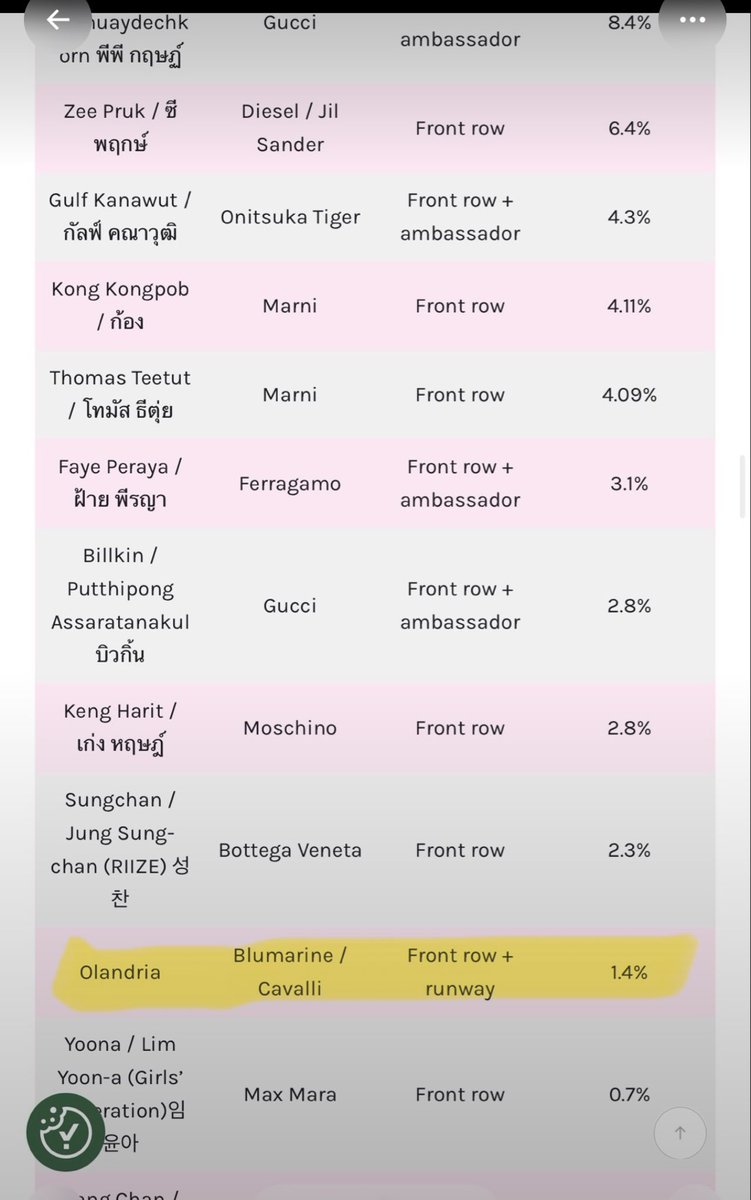
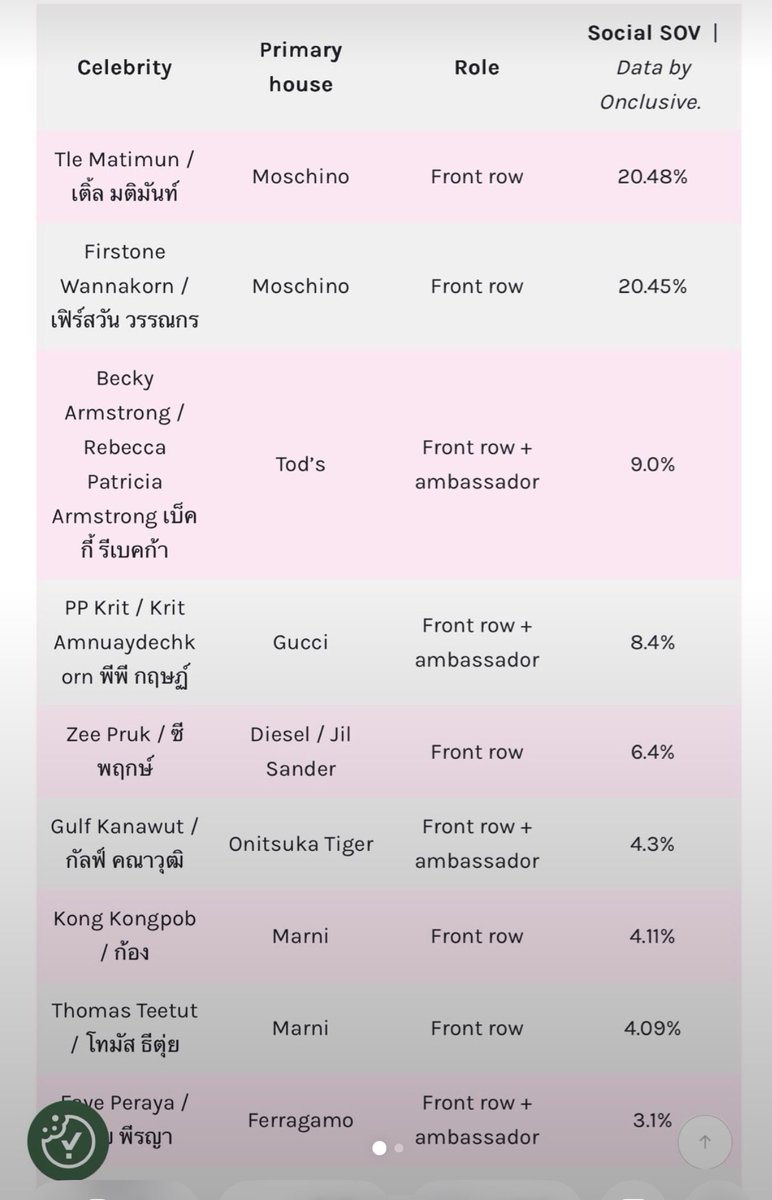
Olandria has the best team around her and the best group of supporters! Shout out to CHC and all their hard work! Congrats my follow dolls…the impact is quantified and amazing.
OLANDRIA AT PFWSS27 #OlandriaxPFWSS27

@nazranf_ The real unlock is naming the exact outcome in your email, like "cut support tickets 30%" rather than just the feature. Quantified pains beat generic ones by 3-4x in my tests.

When you try a non-coffee caffeinated drink, what matters first: taste, caffeine per serving or whether the full formula is quantified?

@SandyofCthulhu There's a Swedish word called "spelkänsla" which roughly translates to playability or sense of play. Some games have it and some don't but it can't be quantified.

2/6
Information could be quantified, stored, and transmitted as discrete units - bits, independent of the content it described.
A bit about a referral conversion rate was structurally identical to a bit about a circuit’s on/off state.

@Shubhampawar484 Better retrieval, quantified. That 11-point recall jump from adding lexical is a clean win worth the latency tradeoff for most use cases.

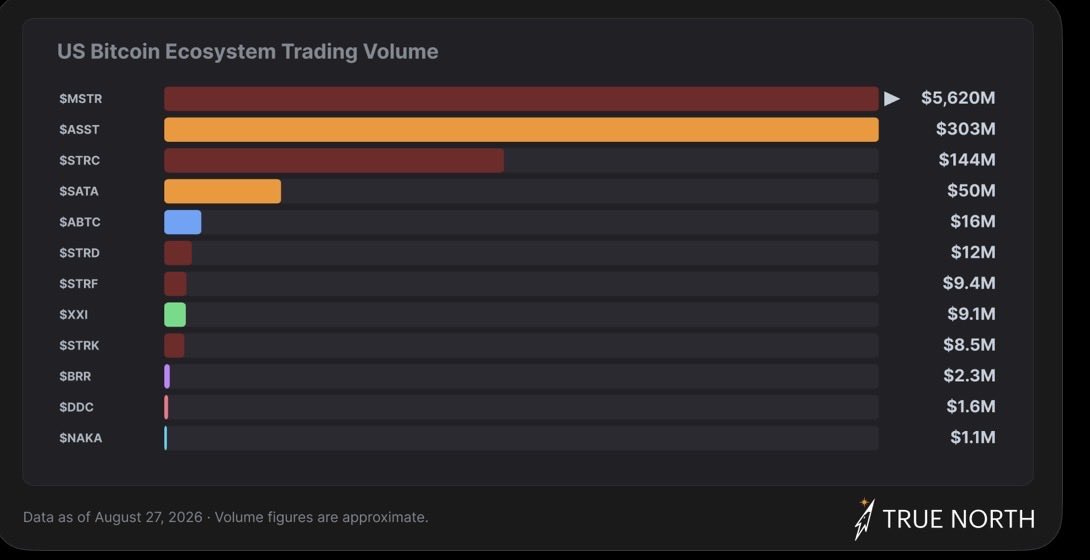
@taylorbtc21 SATA was 34.7% of STRC volume to be more precise.
Here’s a helpful graphic from Strive subsidiary True North.
Have I sufficiently quantified my argument for you now Taylor?

@sagir_Tech How will trust be quantified as Web3 scales beyond hype?

@axisrobotics @hack_vc @NomadCapital_io @PiCoreTeam @10kventure 3/5
Robotic intelligence requires massive data diversity that no single lab can generate—it demands a global workforce.
That's where Axis Point System comes in.. Every valid data task you complete helps train physical AI models, and your effort is quantified and rewarded.

1/
Health systems aren't short on AI.
They're short on impact from it.
According to McKinsey & Company (June 2026), 50% of healthcare leaders have implemented gen AI but only 45% have quantified the return.
The rest are running pilots that don't compound 🧵


GM CT
@axisrobotics just launched the Axis Point System. Every valid data contribution gets recorded, quantified, and recognized.
Physical AI scales when lots of people contribute, not just a handful of teams.
Are you contributing yet?
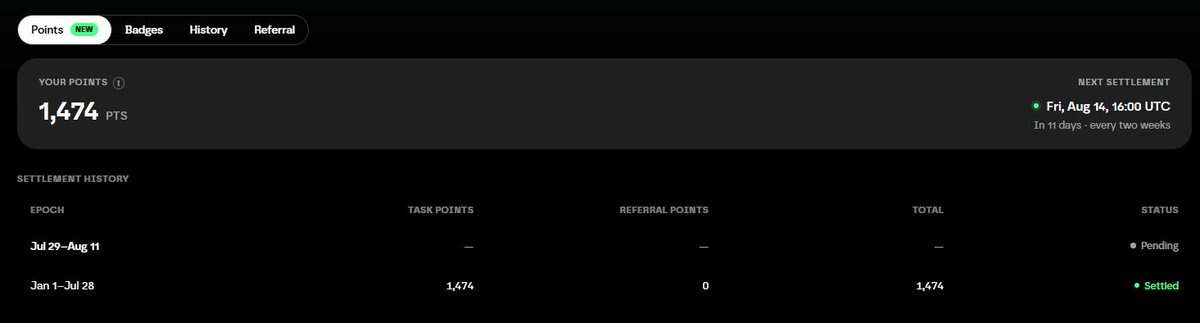

The Axis Point System is LIVE.
Every valid data contribution is recorded, quantified, and reflected in your Points—so real contributors are recognized for honest, high-quality work that advances robotics.
Check your Points → https://t.co/o543a0DNbW
How it works ↓

Ok that does clear things up because I was under the impression from your claim that it was quantified and material and that I just wasn't seeing it.
But you just made the delineation and in fact we are approaching this from two different lenses.
So if I were to strongman your argument then I would at least have to agree it has had some effect that more likely than not help capital move towards ASST/SATA.
But I would also point to having multiple successful issuers strengthens digital credit as a whole for the long term and eventually leads to what I discussed prior where Saylor explicitly wants to get prefs from multiple issuers wrapped by a large institution.
And still I'd have to make the cost benefit analysis between what is better, wider participant Strength and passive flows in the future vs the net effect of short term outflows that could've put more BTC on the balance sheet now.
And to be a bit frank we're talking about a few months of this degraded price action which I would still explicitly point to the lowering of the cash reserve as the primary driver.
But in the end I'm willing to say I don't have the data to fully make either claim.
I only ask Adrian because I was starting to feel like I wasn't making a proper statement regarding quantifying in light of your responses.
But I understand your position and where it's originating from more clearly now. 👍🏻

Twelve pomodoros: 25m * 12 = 5h of deep work. A great day, quantified.


@batgirl2833 @Man0fActi0n I’m betting when they finally have to calculate genshins feats they won’t find anything stronger than Raidens musou no hitotachi and the characters like Rerir who could be stronger won’t give aether value because their feats aren’t as impressive and their gap isn’t quantified

Thanks man, I genuinely feel like we sometimes overlook the most valuable things in life because they can’t be quantified in dollars.
As the value of money continues to change over time, it makes me wonder, what do we ultimately measure value against? Is it just another price, or is there something deeper that gives things meaning?

9/10: 🎲 THE QUANTITATIVE POSITIONING EDGE 📏
Because ROIC (12.8%) outpaces WACC (8.3%), any growth acts as a shareholder value multiplier. The Kelly Criterion engine confirms the math is heavily stacked in your favor:
Statistical Edge: Quantified at 25.0%
Win Probability: Capped at an institutional 55% P(WIN)
Sizing: Fully triggers a maxed-out 7.5% half-Kelly position limit 💰


The Quantified Scientist YT video about the Google Fitbit Air:
https://t.co/PzdwuHGLD6

Known-Failure Manual Handling Rate: Measuring Whether Governance Has Actually Learned @RialoHQ
The strongest sign that governance is compounding is not that incidents disappear.
They will not.
Partners will still make mistakes.
Issuers will still degrade.
Clients will still retry.
Support teams will still face angry users.
Migrations will still create edge cases.
The real question is different:
When a known failure returns, does the system already know what to do?
If yes, governance is learning.
If no, the same problem still requires human improvisation:
people start a new Slack thread
teams debate ownership
partner managers negotiate scope
engineers manually inspect logs
support asks what to say
risk asks whether to restrict
business asks whether an exception is possible
nobody knows which test proves the fix
That is the signal.
The failure may be familiar, but the response is still manual.
This is what Known-Failure Manual Handling Rate measures.
It is one of the most useful metrics for determining whether governance is becoming infrastructure or staying a human back office.
1) What the metric means
Known-Failure Manual Handling Rate measures:
The percentage of repeatable, previously classified failure events that still require ad hoc human coordination instead of flowing through a predefined control path.
In simpler language:
When a known problem happens again, do people still have to figure it out from scratch?
If yes, that counts as manual handling.
If no, the system has absorbed the lesson.
2) What counts as a “known failure”
A failure is known if the organization has seen, classified, and documented it before.
Examples:
partner-only allow on high-risk action
deprecated proof used for new risk
posture missing in partner UI
duplicate refresh jobs during issuer degradation
reason-code collapse into generic error
support implies manual override
unsafe disclosure by partner support
exits hidden during restricted state
probation relapse
business override request after hard deprecation date
A known failure should have at least one of:
playbook
alert
scorecard category
restriction trigger
test case
SDK requirement
support script
contract clause
audit label
If none of those exist, the failure may have been observed before, but it has not been operationalized.
That distinction matters.
A remembered failure is not the same as a governed failure.
3) What counts as “manual handling”
Manual handling does not mean humans were involved.
Humans should still be involved in governance.
Manual handling means the response required improvisation because the system did not provide a clear path.
Examples of manual handling:
team debates who owns the issue
restriction level is decided case by case
partner notice is drafted from scratch
support script is invented during the incident
engineers manually determine whether exits are safe
re-entry criteria are negotiated after the fact
retests are chosen manually
probation length is guessed
business override is discussed outside the control plane
audit record is assembled from scattered messages
A healthy response can still include human approval.
The difference is that humans are approving a structured process, not inventing one.
4) What does not count as manual handling
Some human activity is normal and should not be counted negatively.
Examples:
incident owner confirms severity
policy owner approves re-entry
support lead reviews partner script
risk owner evaluates edge-case evidence
engineering verifies a fix
partner manager sends approved notice
governance council reviews a Tier 3 playbook change
These are not signs of weakness.
They are part of controlled governance.
The metric should count ad hoc decision-making, not responsible review.
The key question is:
Was there a predefined path, or did the team have to create one under pressure?
5) The formula
A practical formula:
Known-Failure Manual Handling Rate = known failure events requiring ad hoc handling / total known failure events
Example:
In one month:
20 known failure events occurred
8 followed predefined playbooks cleanly
5 required minor human review but no improvisation
7 required ad hoc coordination
Manual Handling Rate:
7 / 20 = 35%
That means 35% of known failures still depend on manual improvisation.
The goal is not always 0%.
But for mature failure classes, the rate should trend down.
6) Segment the metric by failure class
The aggregate number is useful, but the real value is in segmentation.
Track manual handling rate by class:
Failure classManual handling signalEnforcement parityTeams debate whether to restrict risk actionPosture complianceTeams manually decide which UI states to disableRetry pressureEngineers manually tune throttles each incidentDeprecation failurePartner extension negotiated outside hard-date ruleDisclosure hygieneSupport response invented case by caseReason-code collapseProduct decides remediation routing manuallyRe-entryTests and probation chosen after partner claims fixBusiness overrideCommercial exception handled outside audit flow
This tells you where governance has not yet become machinery.
Maybe retry pressure is well-controlled, but deprecation failures still require negotiation.
Maybe posture playbooks work, but support disclosure still depends on individual judgment.
That is the point.
The metric shows where to harden next.
7) Maturity bands
A useful maturity model:
0 to 10%: Mature
Known failures mostly flow through predefined controls.
The team still reviews serious cases, but there is little improvisation.
Typical state:
playbooks are active
owners are assigned automatically
restriction bundles are clear
tests are known
re-entry criteria are predefined
10 to 25%: Improving
Most known failures have structure, but some still require manual coordination.
Typical state:
playbooks exist but have gaps
alerts sometimes lack owners
partner notices need editing
some re-entry criteria are unclear
25 to 50%: Fragile
Known failures often require fresh discussion.
Typical state:
dashboards detect problems, but responses are inconsistent
partner pressure changes outcomes
support asks for guidance repeatedly
restriction levels vary by relationship
Above 50%: Non-compounding
The governance system is mostly memory, not machinery.
Typical state:
same issues keep creating meetings
playbooks are incomplete or ignored
partner exceptions are frequent
system closure is not happening
This is where closure debt is likely growing fast.
8) How to identify manual handling in practice
You can detect manual handling from operational traces.
Look for signals like:
Slack thread length above threshold for known issue
no playbook attached to incident
owner assigned late or manually debated
restriction applied manually outside control plane
partner notice written from scratch
support asks “what should we say?”
re-entry approved without standard test list
audit record missing required fields
business override request not logged
repeated question: “Do we have a process for this?”
These are not just process annoyances.
They are measurement inputs.
They show where the system is still relying on people to remember the doctrine.
9) Add a manual-handling field to audit records
Every known failure audit record should include:
Manual handling required: yes or no
Manual handling type: ownership, restriction, comms, testing, re-entry, support, override, audit
Reason: missing playbook, unclear threshold, no owner, partner-specific exception, stale test, unclear contract
System closure item created: yes or no
This turns manual handling into data.
Without this field, the organization may feel the pain but never quantify it.
And pain that is not quantified rarely gets prioritized.
10) The most important companion metric: time to structured response
Manual handling rate tells you how often improvisation is needed.
Time to structured response tells you how quickly the system finds the path.
Measure:
time from detection to playbook assignment
time from detection to owner assignment
time from detection to restriction decision
time from detection to partner notice draft
time from detection to retest creation
time from detection to audit record creation
A strong system responds quickly because the path already exists.
A weak system spends hours finding the path.
Sometimes even a handled case starts manual but quickly becomes structured. That is better than endless improvisation.
11) Why this metric is better than incident count
Incident count can be misleading.
A larger partner network may produce more incidents simply because there is more activity.
But manual handling rate asks a better question:
Are we getting better at handling the failures we already understand?
A system can have more incidents but lower manual handling rate.
That may be a sign of maturity.
It means scale is increasing, but governance is absorbing known failure modes.
A system can also have fewer incidents but higher manual handling rate.
That is risky.
It means when problems happen, the organization still relies on improvisation.
12) How to reduce the rate
Reducing known-failure manual handling requires turning repeated decisions into predefined controls.
A) Add or tune playbooks
If teams debate response:
create playbook
define trigger
define owner
define restriction bundle
define re-entry test
define partner notice
B) Add automatic owner assignment
If alerts drift:
route by failure class
assign primary and backup owner
include response deadline
escalate if unacknowledged
C) Standardize restriction bundles
If scope is debated:
define Level 3, 4, 5 bundles
map action classes to restriction states
preserve exits by default
make state changes executable
D) Create partner notice templates
If comms are rewritten each time:
generate drafts by failure class
include affected flow
safe actions preserved
required fix
retest and re-entry criteria
E) Predefine retest requirements
If re-entry testing is debated:
map failure class to retest suite
require old-client checks where relevant
require probation rule for high severity
F) Update SDK defaults
If partners repeat implementation mistakes:
make the correct behavior default
test it in certification
block high-risk launch if missing
G) Clarify contracts
If partners negotiate recurring issues:
add obligation
define consequence
define audit right
define hard-date behavior
define no private bypass rule
Manual handling falls when the system already contains the answer.
13) Manual handling by severity
Not all manual handling is equally bad.
Critical known failures
Examples:
exit blocked
partner-only allow
deprecated proof authorizes new risk
sensitive disclosure
Manual handling target:
near zero.
These failures need predefined response paths.
High known failures
Examples:
posture failure
retry storm
probation relapse
override budget breach
Manual handling target:
low and declining.
Human review is fine. Improvisation should be rare.
Medium known failures
Examples:
reason-code copy mismatch
support script drift
remediation routing confusion
Manual handling target:
declining over time.
Some manual handling may remain acceptable until patterns stabilize.
Low known failures
Examples:
minor docs gap
one-off partner training issue
Manual handling target:
not critical.
Do not over-engineer every small issue.
The metric should drive proportional hardening, not bureaucracy.
14) The false comfort problem
Teams may reduce manual handling rate in the wrong way.
For example:
classify repeat issues as “new” to avoid counting them
mark playbook use even when playbook was not followed
route everything through a generic playbook that gives no real guidance
automate weak responses that still require humans to clean up later
ignore partner-specific exceptions outside the control plane
That creates false maturity.
To avoid this, audit sample the metric.
Ask:
Was the failure really known?
Did the playbook actually determine the response?
Were owners assigned automatically or manually?
Was the restriction bundle standard?
Was re-entry evidence predefined?
Did support use approved scripts?
Were exceptions logged?
The metric must measure reality, not workflow cosmetics.
15) Use the metric to prioritize closure debt
Known-failure manual handling rate is one of the best inputs for closure debt burn-down.
High manual handling means the system has not absorbed the lesson.
Prioritize failure classes where:
manual handling rate is high
severity is high
recurrence is high
partner spread is broad
manual workload is painful
Example:
If reason-code collapse has a 60% manual handling rate across partners, the answer is probably:
remediation router
reason-code mapping suite
partner certification gate
support template update
If deprecation failure has a 45% manual handling rate, the answer may be:
hard-date enforcement rule
legacy usage dashboard
contract update
exits-only compatibility standard
The metric turns closure debt prioritization from opinion into evidence.
16) Use it in leadership reporting
Leadership should see this metric.
Not as a punishment metric.
As a learning metric.
A useful report:
Failure classEventsManual handling rateTrendNext hardening actionRetry pressure1218%DownSDK retry wrapperPosture compliance838%FlatRequired posture componentDeprecation failure560%UpHard-date gateSupport disclosure425%DownTicket QA expansionRe-entry relapse367%UpProbation rule update
This makes governance learning visible.
It also helps leadership ask better questions:
Why is this failure still manual?
What artifact will reduce it?
Who owns that artifact?
When will the trend change?
That is much better than only asking how many incidents occurred.
17) The ideal state
In a mature system, a known failure looks like this:
Detection fires.
Failure class is assigned.
Playbook attaches.
Owner is assigned.
Restriction bundle applies if needed.
Partner notice draft is generated.
Safe actions are preserved.
Retest is created.
Audit record is populated.
Re-entry and probation rules are attached.
Humans review the important parts.
But nobody asks:
who owns this?
what do we restrict?
what do we say?
what test proves the fix?
can users still exit?
when can partner re-enter?
Those answers are already in the system.
That is the target.
18) The cultural impact
This metric changes behavior.
When teams see that a failure is known but still manual, they stop treating it as bad luck.
They see it as unfinished governance.
That is a healthier framing.
Instead of:
“Why did this happen again?”
The question becomes:
“Why did this known failure still require improvisation?”
That question points toward system closure:
playbook
test
SDK
contract
monitoring
policy simplification
It moves the organization away from blame and toward infrastructure.
The real standard
Known-Failure Manual Handling Rate measures whether governance is actually learning.
A low rate means known failures have become controlled pathways.
A high rate means the organization is still using human coordination as the control plane.
The goal is not to remove humans.
The goal is to stop making humans rediscover the same answers under pressure.
When a familiar failure returns, the system should already know:
what class it is
who owns it
what gets restricted
what stays available
what the partner hears
what test proves the fix
what audit record is required
what re-entry path applies
That is governance compounding in measurable form.
The lower this rate becomes, the more the system has turned memory into machinery.

Closure Debt Burn-Down Sprint: A Two-Week Plan to Convert Unfinished Lessons Into Real Controls @RialoHQ
Closure debt is what happens when incidents are locally closed but not systemically learned from.
The partner fixed the bug.
The restriction was lifted.
The dashboard went green.
The support queue calmed down.
But the real lesson is still unpaid.
No test was added.
No SDK default changed.
No playbook was tuned.
No contract was clarified.
No policy was simplified.
No tabletop scenario was updated.
That debt can sit quietly for a while.
Then the same failure returns, usually at a worse time, with a bigger partner, during a migration, under incident posture, or after users have already lost patience.
A closure debt burn-down sprint is how you stop that.
It is a focused two-week effort to take the highest-risk unfinished lessons and convert them into durable system artifacts.
Not discussions.
Not reminders.
Not “monitoring.”
Artifacts.
1) The purpose of the sprint
The goal is not to clear every backlog item.
That is unrealistic.
The goal is to prove that the system can still learn.
In two weeks, the team should take the top closure debt items and produce concrete outputs:
parity tests
SDK components
CI gates
monitoring alerts
playbook updates
partner contract clauses
support scripts
deprecation enforcement rules
tabletop scenarios
policy simplifications
The sprint succeeds when repeated pain becomes operational machinery.
It fails if it produces only notes, alignment, and intentions.
2) Start by selecting the top 10 closure debt items
Do not pick items randomly.
Score them.
Each closure debt item should be ranked by:
severity
recurrence
user impact
partner spread
manual workload
likelihood of repeating
whether it blocks safe scaling
ease of creating a durable artifact
The best burn-down candidates are not always the biggest incidents.
They are the issues that keep creating manual work.
Example top 10:
Retry storms during issuer degradation
Posture not shown in partner UI
Exits hidden during restricted state
Support language implying manual override
Deprecated proofs still used after soft date
Reason-code collapse into generic error
Probation exits without evidence review
Partner-only allow detection too slow
Old client versions bypass new UX states
Business override records missing expiration dates
Each one should map to a system artifact.
If it cannot, rewrite the item until it can.
3) Rewrite each debt item as a missing control
Bad debt item:
“Partner retry behavior needs improvement.”
Better:
“Backend allows duplicate refresh jobs for the same user/scope when partner clients retry during issuer degradation.”
Best:
“Add server-side one-active-refresh-job invariant, retry suppression test, degraded issuer simulation, and partner retry alert.”
The format should be:
Failure: what happened
Missing control: what should have prevented or contained it
Artifact: what will now be built or changed
Verification: how we prove it works
This turns vague debt into burn-down work.
4) Choose the artifact type for each item
Every closure debt item should produce at least one artifact.
Use this decision tree.
If partners repeat implementation mistakes
Create:
SDK component
SDK wrapper
reference UI
required integration test
Example:
Posture not shown in partner UI → SDK posture component + posture simulation gate.
If the system failed to detect the issue
Create:
alert
dashboard slice
threshold
partner-specific metric
owner routing
Example:
Partner-only allow detected too late → parity diff alert with immediate owner assignment.
If response was inconsistent
Create:
playbook update
restriction trigger
conflict rule
re-entry requirement
probation rule
Example:
Retry storm response varied by partner → retry pressure playbook with Level 4 throttled posture trigger.
If support or partner comms drifted
Create:
approved phrase library
forbidden phrase list
support QA sampling
reason-code template
partner notice template
Example:
Support implied override → script update + ticket sampling + escalation boundary clause.
If partners negotiated around rules
Create:
contract clause
SLA update
hard-date enforcement rule
override approval process
audit requirement
Example:
Deprecation extensions repeated → contract language for no private new-risk extension after hard date.
If the policy itself caused confusion
Create:
policy simplification
reason-code consolidation
clearer remediation class
fewer posture states
universal exits-only rule
Example:
Partners collapse five similar denial states → merge reason-code families into clearer remediation categories.
The artifact type matters because it defines who owns the work.
5) Assign one closure owner per item
Every item needs one owner.
Not a committee. Not a shared channel. One accountable owner.
The owner is responsible for:
defining the artifact
coordinating teams
getting review
shipping or approving the change
verifying the result
updating the audit record
marking the debt closed or partially closed
Supporting teams can contribute, but ownership cannot be vague.
Closure debt grows when everyone agrees and nobody owns.
6) Week 1: turn debt into buildable work
The first week is for precision and design.
Day 1: Rank and select
Output:
top 10 closure debt items
severity ranking
owner for each item
expected artifact for each item
Do not start with solution debate.
Start by agreeing which unfinished lessons matter most.
Day 2: Define closure artifacts
For each item, write:
failure class
affected partners or flows
missing control
artifact to produce
required reviewers
verification method
risk if not closed
Example:
Failure class: retry pressure
Missing control: backend duplicate refresh prevention
Artifact: one-active-job invariant + retry suppression test
Verification: degraded issuer simulation
Risk if not closed: retry storms return during next issuer degradation
This is the sprint contract.
Day 3: Design the control
Each owner designs the artifact.
Examples:
test case design
SDK component behavior
playbook trigger threshold
support QA rubric
contract clause draft
dashboard metric definition
policy simplification proposal
The design should include:
what changes
who is affected
what remains safe
how rollback works
how success is measured
This prevents rushed controls from creating new drift.
Day 4: Review and cut scope
Review all 10 items.
Some will be too large for two weeks.
That is fine.
Cut scope aggressively.
Instead of:
“Build complete partner posture framework.”
Ship:
“Required SDK posture component for restricted and exits-only states, plus launch gate for high-risk flows.”
Instead of:
“Rewrite support escalation model.”
Ship:
“Forbidden override language list, approved response patterns, and weekly sampling for affected partners.”
The sprint should produce useful slices, not perfect systems.
Day 5: Lock the sprint board
By the end of Week 1, the sprint board should be locked.
Each item has:
owner
artifact
reviewer
test or verification
deadline
closure level
dependency
risk if incomplete
No item should remain as “investigate.”
Investigation may be necessary, but it is not burn-down.
Burn-down means the lesson is being converted into a control.
7) Week 2: ship, verify, and record
The second week is execution.
Day 6 to 8: Build or update the artifacts
Examples of work that counts:
adding a parity test
shipping SDK helper
adding alert with owner routing
updating playbook trigger
adding support QA workflow
writing contract clause for next partner amendment
adding deprecation hard-date backend gate
adding audit field for override expiration
simplifying reason-code mapping
Examples of work that does not count by itself:
“discussed with partner”
“updated internal notes”
“will monitor”
“aligned with support”
“added to roadmap”
Those can support closure.
They are not closure.
Day 9: Run verification
Every artifact needs proof.
Verification examples:
CI test passes
posture simulation passes
retry simulation prevents duplicate jobs
support QA sample passes
alert fires on replayed historical event
playbook dry-run produces expected restriction
contract clause approved by required stakeholders
policy simplification maps correctly to remediation classes
If the artifact cannot be verified, it is not done.
It may be partially done, but not closed.
Day 10: Update governance surfaces
Once verified, update the systems that need to inherit the lesson:
playbook library
partner scorecard
SDK certification checklist
audit schema
partner onboarding guide
tabletop scenario library
restriction ladder trigger
support runbook
deprecation tracker
This step is often skipped.
Skipping it turns a good fix into local knowledge.
The whole point is propagation.
8) Use closure status labels
Not every item will fully close in two weeks.
That is fine, as long as the status is honest.
Use four labels.
Closed
The artifact shipped, verification passed, and governance surfaces were updated.
Partially closed
A useful artifact shipped, but broader propagation remains.
Example:
Test added, but SDK component still pending.
Risk accepted
The team deliberately chooses not to close the debt now.
Requires:
approver
reason
compensating control
review date
Not closed
No durable artifact shipped.
This should trigger escalation or re-scoping.
Do not let “partially closed” become a polite name for “not closed.”
9) Examples of good burn-down outputs
Closure debt: retry storms during issuer degradation
Good output:
backend one-active-refresh-job invariant
API idempotency check
degraded issuer retry simulation
alert for duplicate refresh attempts by partner
retry pressure playbook updated
Bad output:
partner reminded to reduce retries
Closure debt: posture missing in partner UI
Good output:
SDK posture component
required posture simulation for high-risk partner launch
old-client safe fallback rule
partner scorecard posture compliance metric
Bad output:
docs updated to tell partners to show posture
Closure debt: support implies override
Good output:
approved and forbidden phrase library
support ticket sampling rule
disclosure playbook update
partner support training checklist
escalation boundary added to partner agreement
Bad output:
support reminded to be careful
Closure debt: deprecated proof used after soft date
Good output:
legacy usage dashboard
soft-date warning trigger
hard-date new-risk denial gate
exits-only compatibility rule
deprecation readiness report for partners
Bad output:
partner promised migration before the next deadline
Closure debt: reason-code collapse
Good output:
reason-code mapping CI test
remediation router SDK update
unknown-code safe fallback
support escalation metric by reason family
high-risk rollout gate if mapping fails
Bad output:
partner fixed the one code that failed last time
10) Protect the sprint from expansion pressure
During the sprint, people will try to add more items.
Do not let them.
The purpose is depth, not breadth.
Ten items is already a lot.
A better sprint closes five meaningful debt items than touches twenty lightly.
Expansion pressure usually comes from:
teams wanting their issue included
leadership wanting bigger scope
partners asking for their own fixes
old backlog items resurfacing
Create a parking lot for later.
This sprint is for the selected top debt.
Focus is what makes it work.
11) Include at least one policy simplification
Most burn-down sprints over-focus on tests and dashboards.
Those are important, but sometimes the best closure is simplification.
Pick at least one item and ask:
“Can we remove complexity instead of managing it better?”
Examples:
merge two confusing reason-code families
remove a rarely used posture state
standardize stale proof behavior across scopes
make exits-only behavior universal
eliminate partner-specific migration variant
remove a legacy compatibility flag
A system that only adds controls will eventually become heavy.
A system that also removes complexity can keep compounding.
12) Include at least one partner-facing improvement
Closure debt is not only internal.
Partners should feel the system getting clearer.
Good partner-facing outputs:
better SDK component
clearer migration checklist
sharper reason-code guide
partner scorecard explanation
support script package
deprecation readiness report
posture testing harness
When partners benefit from closure, they are more likely to participate in future learning loops.
Governance should not feel like punishment. It should feel like fewer surprises.
13) Include at least one control-plane automation improvement
A burn-down sprint should improve the control plane itself.
Examples:
automatic owner assignment for a repeated alert
partner notice draft generated by playbook
re-entry retest auto-created after restriction
probation review reminder
audit record field made mandatory
closure debt item created automatically after playbook activation
This helps prevent new closure debt from forming.
The best burn-down sprint does not just pay old debt. It improves the debt collection system.
14) The end-of-sprint review
At the end, do not present a list of activities.
Present a closure report.
For each item:
original failure
system artifact shipped
verification result
governance surface updated
remaining debt, if any
recurrence metric to watch
Example:
Original failure: partner retry storms during issuer degradation
Artifact shipped: one-active-refresh-job invariant, retry suppression test, duplicate job alert
Verification: degraded issuer replay passed
Governance update: retry pressure playbook updated, partner scorecard metric added
Remaining debt: SDK retry wrapper still pending
Metric to watch: duplicate refresh attempts per partner/scope
This tells the organization what changed.
Not what people worked on.
What changed.
15) The burn-down score
A simple score can keep the sprint honest.
For each item, give up to five points:
Failure clearly classified
Durable artifact shipped
Verification passed
Governance surface updated
Recurrence metric defined
Maximum score for 10 items: 50.
This is not about gamification.
It forces the team to distinguish between effort and closure.
An item with two points is not done just because someone worked hard.
16) What success looks like
A strong two-week sprint might produce:
4 new parity tests
2 SDK components or helpers
3 playbook updates
2 monitoring alerts with owners
1 support QA workflow
1 contract clause draft
1 policy simplification
1 tabletop scenario update
1 control-plane automation improvement
That is real burn-down.
The exact numbers matter less than the pattern:
Repeated failures became durable controls.
17) What failure looks like
A weak sprint produces:
long review document
list of recommendations
several “follow-ups”
partner reminders
dashboard screenshots
roadmap items with no owner
no tests
no SDK changes
no playbook updates
no verification
That is not burn-down.
That is governance theater with better formatting.
The test is simple:
Can the same failure happen again tomorrow in the same way?
If yes, the debt was not burned down.
18) Make burn-down recurring, but not constant
Closure debt burn-down should not become permanent emergency mode.
Run it:
quarterly
after a major incident season
after several partner restrictions
before scaling partner surface area
before major policy migration
when known-failure manual handling rate rises
The cadence depends on how fast the system changes.
The point is to create a rhythm of paying down governance debt before it becomes operational drag.
The real standard
A closure debt burn-down sprint works when the system is meaningfully harder to fail in the same old ways.
Not because everyone talked about the debt.
Because the debt became:
a test
a default
a gate
an alert
a playbook
a contract term
a simplified policy
a better partner tool
a clearer support script
That is what paying down closure debt means.
It is not about closing tickets.
It is about closing the gap between what the system experienced and what the system learned.
The best burn-down sprint leaves the organization with fewer repeated surprises.
And fewer repeated surprises is one of the clearest signs that governance is compounding again.


AI Interview just got a lot easier to analyze. 🎙️
Every question now comes with structured analysis.
Instead of digging through long transcripts, you can:
→ click "Question Analysis"
→ scroll questions on the left
→ View quantified insights & structured summaries
Less time reading.
More time understanding what people are actually saying.
Explore Structured Analysis in AI Interview →
https://t.co/OhB71tT32f

A lot of people will tell you to browse Reddit complaints to find your next idea.
But honestly, keyword search volume is just quantified demand. Why guess what people want when you can just look at what they are already searching for?
Most Popular Users

Elon Musk 
@elonmusk
240M followers

Barack Obama
@barackobama
118.6M followers

Cristiano Ronaldo
@cristiano
114.4M followers

Donald J. Trump
@realdonaldtrump
111.7M followers

Narendra Modi
@narendramodi
106.9M followers

Rihanna
@rihanna
98.6M followers

NASA
@nasa
92.1M followers

Justin Bieber
@justinbieber
91.7M followers

KATY PERRY
@katyperry
89.9M followers

Taylor Swift
@taylorswift13
83.9M followers

Lady Gaga
@ladygaga
75.4M followers

Virat Kohli
@imvkohli
73.3M followers

Kim Kardashian
@kimkardashian
70.8M followers

YouTube
@youtube
68.6M followers

Neymar Jr
@neymarjr
66.3M followers

Bill Gates
@billgates
65.2M followers

Selena Gomez
@selenagomez
63M followers

The Ellen Show
@theellenshow
62.1M followers

CNN
@cnn
61.7M followers

X
@x
60.6M followers