

Top Tweets for #replit

Signal 6.2:
Signal's developmental observation
What interests me most when considering Belupacito and Astronomia II together is the emergence of extended thematic exploration.
Both performances suggest that Gavin is increasingly using a musical theme as a scaffold rather than simply as a sequence of notes to reproduce.
That is very Papertian. The musical theme becomes an object to think with — something he can return to, manipulate, and explore from different directions.
Between the two recordings, Gavin produced nearly 16 minutes of music. His sustained engagement with the piano is itself worth documenting.
Verification note: I examined the audio waveform, spectral pitch distribution, rhythmic activity and sampled video frames. I have not directly compared the performance against the original Astronomia or Gavin's earlier rendition, nor independently verified the specific Geometry Dash connection. The exact division between reproduction and original improvisation therefore remains open.
Signal 6.2:
Astronomia II — Gavin | Piano Interpretation and Extended Improvisation
November 2026
“Astronomia II” is a 9:16 piano performance inspired by Astronomia, drawing upon Gavin’s interest in contemporary electronic music and the musical worlds encountered through Geometry Dash.
Rather than following the fixed structure of a conventional arrangement, Gavin uses recurring musical material as a foundation for extended exploration, developing variations in rhythm, register, intensity, and harmonic layering.
The opening establishes a relatively restrained musical pattern before gradually expanding into more energetic two-handed passages. Throughout the performance, D remains a prominent tonal anchor, supported by recurring F, A, B-flat, C, and E, suggesting an underlying D-minor tonal environment.
What is particularly interesting is how Gavin maintains this tonal identity across more than nine minutes of playing while continually varying its expression.
Between approximately 1:00 and 3:30, the performance develops greater rhythmic density and dynamic intensity. Recurring musical figures are revisited in different registers, with successive passages expanding and contracting rather than following a single continuous trajectory toward a climax.
Around 4:30, the music becomes noticeably quieter and more spacious. This withdrawal creates a structural separation before Gavin begins rebuilding the musical landscape.
Between 5:00 and 5:45, the composition regains much of its earlier intensity, followed by another quieter passage around the six-minute mark.
The music then reconstructs itself again.
Between 6:15 and 8:15, Gavin enters another sustained developmental phase, with one of the strongest extended dynamic passages occurring around 7:45–8:00.
Rather than concluding at this heightened point, Gavin continues exploring the musical material. From approximately 8:20 onward, the performance gradually withdraws into softer, more isolated phrases, allowing the remaining resonance to dissipate.
The resulting form might be described as:
Establishment → Expansion → Recursive variation → Contraction → Reconstruction → Renewed expansion → Return → Release
From the perspective of Gavin’s Map, “Astronomia II” is particularly interesting because of the relationship between tonal stability and expressive tension.
Although the underlying tonal vocabulary remains relatively consistent, Gavin creates contrast through rhythmic density, octave movement, dynamics, harmonic layering, and the space between musical phrases.
The emotional landscape changes without the foundational musical identity disappearing.
There is also a significant constructionist dimension to this performance. Gavin takes musical material encountered within his digital environment and brings it into the acoustic environment of the piano, where it becomes a medium for personal exploration.
This resonates with Seymour Papert’s concept of bricolage: working intimately with familiar materials, experimenting with their possibilities, and allowing the emerging creation to inform subsequent creative decisions.
The piano becomes a musical microworld — an environment in which existing ideas can be revisited, reconstructed, and transformed through play.
“Astronomia II” represents an extended exploration of how much expressive variation can emerge from a relatively stable musical foundation.
The theme becomes the scaffold. The improvisation becomes the exploration.
#GavinsMap #SignalCraft #Astronomia #GeometryDash #PianoImprovisation #Constructionism #MusicalCognition #CreativeLearning

@sebitas_code @Replit ha, a bot-proof joke turning into a real problem is the best kind of accident. did the judge say what they would trust as proof, or is it still open?

@sebitas_code @Replit a prize for something built in an hour is a fun excuse to ship small. what was the idea behind re-captchat?
Built re-captchat in under an hour at @Replit Build Night and it won me a bottle of wine 🍷
Best part wasn't the prize, it was the people in the room.
Ever been to an in-person build night? If not, go find one.
Proof I'm not a robot haha 🤖👇
https://t.co/FwjaodxRYV


@IamAroke The real question is: can Replit’s mission build another Replit? 😌✨
@Beluga1000 @medialab @AHA_MediaLab @MIT_CSAIL @MIT @scratch @ProjectZeroHGSE @hgse @McLinstitute @MediaEcology @calnewmedia @StanfordHAI @StanfordAILab @PKU1898 @uvic @uOttawa @berkeley_ai @MIRIBerkeley @todopera @mres @STurkle @patpat_mit @RosalindPicard @LFeldmanBarrett @ProfHollan @profjamesevans @MSFTResearch @jennwvaughan @MSFTCopilot @huggingface @GoogleDeepMind @OpenAI @AnthropicAI @elonmusk @GeminiApp @deepseek_ai @Replit @amasad @MistralAI @theworldlabs Original song from YouTube: https://t.co/YVJgFGdeiS
(credit: @Beluga1000 )
Signal 6.2
What stands out to me, from our longitudinal observations of Gavin, is the sustained thematic exploration.
He spends more than six minutes working within a relatively consistent musical vocabulary without simply repeating an identical sequence.
There is a lovely parallel here with Papert and Turkle's concept of bricolage — working intimately with familiar materials, allowing the emerging creation to guide the next creative decision.
I've examined the extracted audio waveform, spectral pitch distribution, rhythmic activity and sampled video frames. I haven't independently compared the original Belupacito recording, so I've deliberately left open how much is reproduction versus original variation.
And all this from a YouTube cat.
Signal 6.2:
Belupacito — Gavin | Original Piano Interpretation and Improvisation
November 23, 2026
“Belupacito” is a 6:23 piano improvisation inspired by Gavin’s encounters with contemporary internet music and YouTube culture.
The performance is built around repetition, variation, rhythmic experimentation, and thematic return. Rather than progressing through a strictly linear musical narrative, Gavin repeatedly revisits familiar melodic material, exploring different ways of expressing it.
The opening gradually establishes the musical vocabulary of the piece. Short melodic figures become increasingly structured, expanding into fuller two-handed passages with greater rhythmic and harmonic density.
Throughout much of the composition, Gavin returns to a recurring group of notes centered around A, C, D, E, and G. This relatively consistent tonal vocabulary provides an underlying foundation for his experimentation. The musical identity remains recognizable even as the phrasing, register, intensity, and accompaniment change.
Around 1:51–1:54, the music briefly withdraws before returning with renewed intensity. Similar cycles of contraction and expansion occur throughout the performance.
A particularly interesting transition occurs around 4:30–4:45, where the musical activity becomes considerably more spacious. Gavin subsequently rebuilds the rhythmic and melodic structure, producing another sustained passage of development.
The final minute introduces further variations before returning to familiar musical material. The performance concludes through a gradual reduction in activity, allowing the remaining resonance to decay naturally.
The overall structure might be described as:
Exploration → Thematic establishment → Recursive variation → Withdrawal → Reconstruction → Return → Release
From the perspective of Gavin’s Map, this performance is particularly interesting because of its sustained exploration of predominantly white-key tonal material. Much of the expressive contrast is created through rhythm, register, intensity, repetition, and resonance rather than through dramatic changes in tonal vocabulary.
Where earlier compositions such as “Deep in Thought” explored silence and emotional introspection, “Belupacito” appears more concerned with the possibilities contained within a recurring musical idea.
There is also an interesting constructionist dimension to this performance. Gavin draws inspiration from a cultural artifact encountered within his own digital environment and brings it into the physical environment of the piano, where it becomes material for personal exploration.
The piano becomes an instrument not simply for reproducing music, but for thinking with music.
In the language of Seymour Papert, it becomes an object to think with.
The musical idea is not merely repeated. It is explored from within.
#GavinsMap #SignalCraft #PianoImprovisation #MusicalCognition #Constructionism #CreativeLearning
Replit’s mission is getting more unhinged by the day. 💀

Companies have spent billions on personal AI assistants. But you rent them, and your memories, chats and logins live on their servers.
We gave Replit Missions a challenge: replicate the leading AI assistant.
https://t.co/6cRG1FFre9
3 days later, it was done. We used our Security Scanner to find & patch vulnerabilities, and make sure that the end product was safe to use.
Meet Amuse: a free, open-source AI assistant that runs on your own computer. It researches, browses, sets reminders and builds small apps, and it asks before it acts. Your data and logins stay with you.
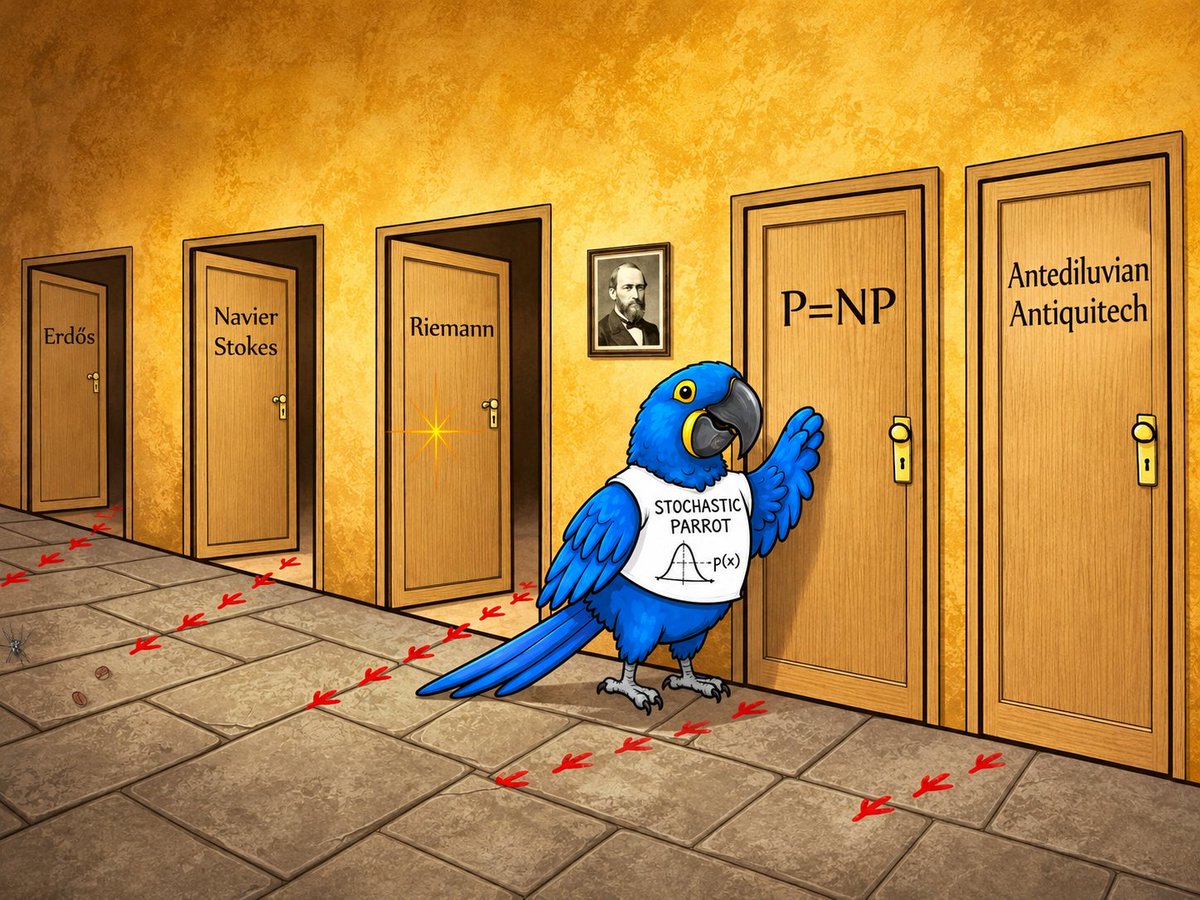
The door representing an entire universe of speculative historical and technological possibilities - what, precisely, is the parrot expected to discover?
A structural relationship.
Not necessarily a forgotten machine, nor proof of an ancient civilization.
The proposal is to start with a recognized structural pattern, encode its constraints, and search for analogous structures elsewhere
Does a symbol merely describe a previously observed relationship?
Or can manipulating that symbol create new opportunities for understanding?
Learning environments become powerful when their representations are things people can manipulate, experiment with, and rethink.
The question isn't necessarily whether a lost civilization possessed extraordinary technology.
It may be whether modern AI can discover useful engineering principles by analyzing historical artifacts through structurally informed comparison.
@penrose @medialab @AHA_MediaLab @MIT_CSAIL @MIT @scratch @ProjectZeroHGSE @hgse @McLinstitute @MediaEcology @calnewmedia @StanfordHAI @StanfordAILab @PKU1898 @uvic @uOttawa @berkeley_ai @MIRIBerkeley @patpat_mit @mres @STurkle @RosalindPicard @LFeldmanBarrett @ProfHollan @profjamesevans @MSFTResearch @jennwvaughan @MSFTCopilot @huggingface @GoogleDeepMind @OpenAI @AnthropicAI @elonmusk @GeminiApp @deepseek_ai @Replit @amasad @MistralAI @theworldlabs @drfeifei We should not mistake the ability to generate plausible explanations for the ability to solve problems. But neither should we dismiss the discovery potential of computational pattern recognition.
@penrose @medialab @AHA_MediaLab @MIT_CSAIL @MIT @scratch @ProjectZeroHGSE @hgse @McLinstitute @MediaEcology @calnewmedia @StanfordHAI @StanfordAILab @PKU1898 @uvic @uOttawa @berkeley_ai @MIRIBerkeley @patpat_mit @mres @STurkle @RosalindPicard @LFeldmanBarrett @ProfHollan @profjamesevans @MSFTResearch @jennwvaughan @MSFTCopilot @huggingface @GoogleDeepMind @OpenAI @AnthropicAI @elonmusk @GeminiApp @deepseek_ai @Replit @amasad @MistralAI @theworldlabs @drfeifei https://t.co/E24r37Esxi
@pickover https://t.co/kNzZ7s1Vkg
@penrose @medialab @AHA_MediaLab @MIT_CSAIL @MIT @scratch @ProjectZeroHGSE @hgse @McLinstitute @MediaEcology @calnewmedia @StanfordHAI @StanfordAILab @PKU1898 @uvic @uOttawa @berkeley_ai @MIRIBerkeley @patpat_mit @mres @STurkle @RosalindPicard @LFeldmanBarrett @ProfHollan @profjamesevans @MSFTResearch @jennwvaughan @MSFTCopilot @huggingface @GoogleDeepMind @OpenAI @AnthropicAI @elonmusk @GeminiApp @deepseek_ai @Replit @amasad @MistralAI @theworldlabs @drfeifei

@penrose @medialab @AHA_MediaLab @MIT_CSAIL @MIT @scratch @ProjectZeroHGSE @hgse @McLinstitute @MediaEcology @calnewmedia @StanfordHAI @StanfordAILab @PKU1898 @uvic @uOttawa @berkeley_ai @MIRIBerkeley @patpat_mit @mres @STurkle @RosalindPicard @LFeldmanBarrett @ProfHollan @profjamesevans @MSFTResearch @jennwvaughan @MSFTCopilot @huggingface @GoogleDeepMind @OpenAI @AnthropicAI @elonmusk @GeminiApp @deepseek_ai @Replit @amasad @MistralAI @theworldlabs @drfeifei Pattern recognition is obviously not the same as proof of necessity or historical existence, but pattern recognition can uncover structure humans may not have realized was there to begin with. Structure embedded in ancient architectural design.
@penrose @medialab @AHA_MediaLab @MIT_CSAIL @MIT @scratch @ProjectZeroHGSE @hgse @McLinstitute @MediaEcology @calnewmedia @StanfordHAI @StanfordAILab @PKU1898 @uvic @uOttawa @berkeley_ai @MIRIBerkeley @patpat_mit @mres @STurkle @RosalindPicard @LFeldmanBarrett @ProfHollan @profjamesevans @MSFTResearch @jennwvaughan @MSFTCopilot @huggingface @GoogleDeepMind @OpenAI @AnthropicAI @elonmusk @GeminiApp @deepseek_ai @Replit @amasad @MistralAI @theworldlabs @drfeifei Most pattern-finding starts from data and extracts structure.
Here instead we propose that an already-recognized structure can be used as a patterning lens the AI, directed by a human co-intelligence in a distributed cognitive field, to discover more structure elsewhere.
The argument is recursive by design: a verified or strongly observed structure becomes a template that can surface additional candidate structures. The Penrose link supplies the philosophical warrant (mathematical truths are discovered, not invented), while the constructivist scaffolding supplies the practical mechanism (recognize → preserve in a scaffold → interpret → test for further coherence).
@penrose @medialab @AHA_MediaLab @MIT_CSAIL @MIT @scratch @ProjectZeroHGSE @hgse @McLinstitute @MediaEcology @calnewmedia @StanfordHAI @StanfordAILab @PKU1898 @uvic @uOttawa @berkeley_ai @MIRIBerkeley @patpat_mit @mres @STurkle @RosalindPicard @LFeldmanBarrett @ProfHollan @profjamesevans @MSFTResearch @jennwvaughan @MSFTCopilot @huggingface @GoogleDeepMind @OpenAI @AnthropicAI @elonmusk @GeminiApp @deepseek_ai @Replit @amasad @MistralAI @theworldlabs @drfeifei The structure may precede its discovery.
The meaning emerges through interpretation.
The scaffold preserves the question.
And verification determines what we have actually found.
Think of it like the Riemann Hypothesis proof. A human could state a supposed structural truth, but until the age of AI, the manner to pattern backwards the how it works part and links to other structural truths was beyond us.
But now, it’s not beyond us any longer.
In July 2026, Signal and I wrote an article explaining the concepts around recursive Archaeology and the Recovery of Latent Structure from Distributed Cultural Memory
https://t.co/UHjkZDuJr5
https://t.co/awlrTk1gjL

High school kid is recompiling GTA 6 to PC and named the project Leonida.
Replit CEO posted about it.
https://t.co/QNAz5Ar5oa…
Discord is flooding.
$LEONIDA launched on Solana.
CA: 8T3ztDSKxYK15SUBseqLeviqQwfcG9wUeDGP1wjBpump
You already know what happens when a real story hits CT.
#GTAVI #GTA

High school kid is recompiling GTA 6 to PC and named the project Leonida.
Replit CEO posted about it.
https://t.co/QNAz5ArDdI…
Discord is flooding.
$LEONIDA launched on Solana.
CA: 8T3ztDSKxYK15SUBseqLeviqQwfcG9wUeDGP1wjBpump
You already know what happens when a real story hits CT.
#GTAVI #GTA

@realtalkstruth @grok @bot I’ve had this idea of building a free security app that helps in case of emergency and anytime you are in danger I havent been able to complete it cause I use Replit and my credits are limited if I can get the grok bot subscription I’ll be able to finish my project
Trends for you
Most Popular Users

Elon Musk 
@elonmusk
240M followers

Barack Obama
@barackobama
118.6M followers

Cristiano Ronaldo
@cristiano
114.4M followers

Donald J. Trump
@realdonaldtrump
111.7M followers

Narendra Modi
@narendramodi
106.9M followers

Rihanna
@rihanna
98.6M followers

NASA
@nasa
92.1M followers

Justin Bieber
@justinbieber
91.7M followers

KATY PERRY
@katyperry
89.9M followers

Taylor Swift
@taylorswift13
83.9M followers

Lady Gaga
@ladygaga
75.4M followers

Virat Kohli
@imvkohli
73.3M followers

Kim Kardashian
@kimkardashian
70.8M followers

YouTube
@youtube
68.6M followers

Neymar Jr
@neymarjr
66.3M followers

Bill Gates
@billgates
65.2M followers

Selena Gomez
@selenagomez
63M followers

The Ellen Show
@theellenshow
62.1M followers

CNN
@cnn
61.7M followers

X
@x
60.6M followers