

Top Tweets for #superstructures

@TLARModelsChris I will try the 'tropical scheme ' of the German East Asia Squadron.
White hull, yellow superstructures, masts and funnels.


@YYokusa The issue with current space stations is scale and commercialization. When in-space assembly takes millions and not billions, then superstructures become economical. We also need to develop ways of mining/refining asteroids cheaply and effectively to get all that material.

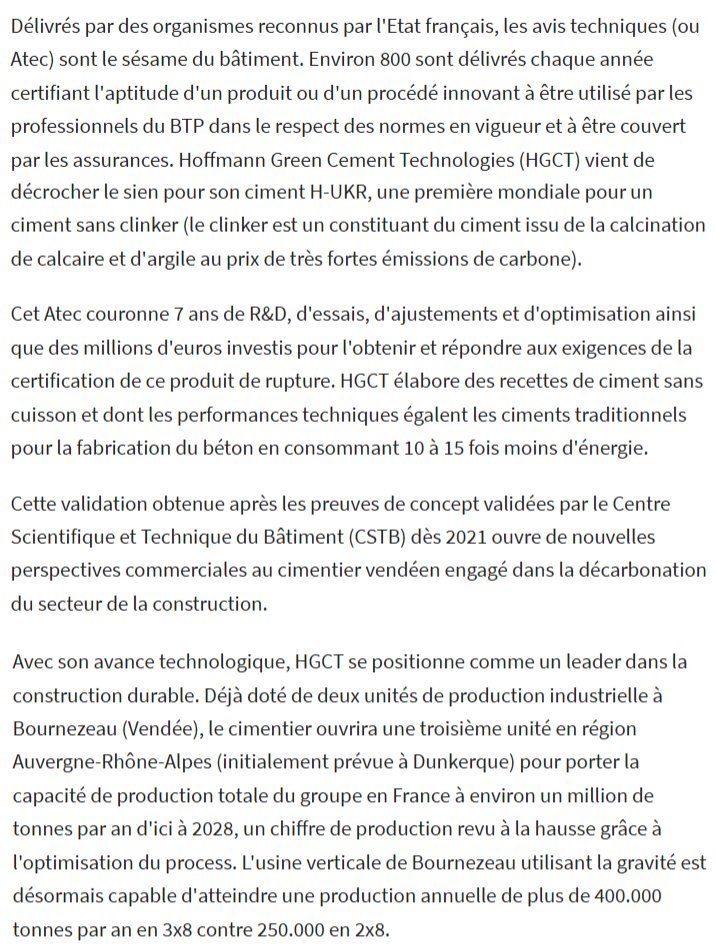
Première mondiale pour la startup 🇫🇷 Hoffmann Green qui obtient cette fois le 1er Avis Technique validant un ciment 0% clinker dans les superstructures (poteaux, poutres), soit le plus haut niveau de reconnaissance technique pour les ouvrages structurels.
https://t.co/OMnvG4CUxY
La startup 🇫🇷 Hoffmann Green décroche le premier Avis Technique mondial pour son ciment sans clinker, « aux performances techniques égalant les ciments traditionnels pour la fabrication du béton, tout en consommant 10 à 15 fois moins d'énergie. »
https://t.co/CwOwhF2WJU


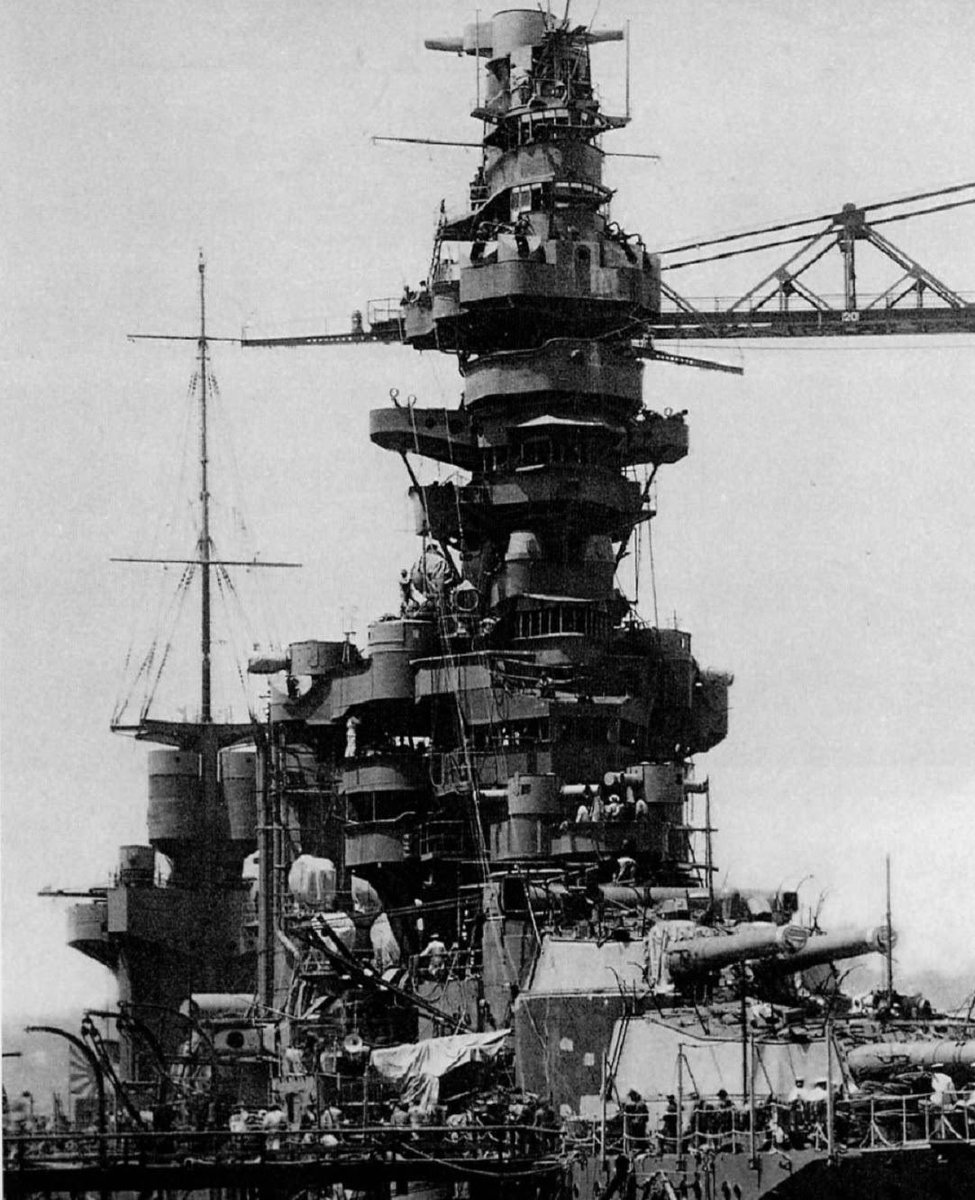
This is a Japanese “pagoda mast”. During the post-WWI Washington Naval Treaty, the Japanese navy constructed battleships with tall, thin superstructures that resemble pagoda temples.
This design increased navigation and fire control capabilities while cutting down on weight, compared to more consolidated, defensible battleship superstructures.


The descent of Macross battleship
「墜落の余波」
#promptshare
#Macross
#マクロス
Subject:
A colossal SDF‑1–class battleship (1.2 km length), crash‑landed in the heart of Neo‑Arcadia Prime, the iconic vertical megacity known for its tiered sky‑platforms and neon‑laced superstructures.
Action:
The warship has carved a catastrophic trench through multiple city strata—shredding transit rails, pulverizing arcology towers, and igniting cascading fires. Entire blocks lie in ruin, with fractured megastructures collapsing into the abyssal lower levels.
Visual Style:
Hard Sci‑Fi realism, live‑action disaster cinema, grounded physical destruction with a high-budget blockbuster aesthetic.
Material & Texture:
Ultra‑realistic metallic hull plating with severe impact deformation, scorched burn patterns, exposed mechanical internals, dense greebling, layered machinery, PBR‑accurate materials, micro‑surface imperfections, and extreme‑resolution 16K texture fidelity.
Lighting & Camera:
High‑altitude drone perspective surveying the devastation from above. Volumetric firelight glowing through dense smoke columns. Global illumination tuned to Neo‑Arcadia’s signature smog‑filtered afternoon haze. Full HDR lighting response.
Quality:
Razor‑sharp clarity, deep depth of field, zero motion blur, natural cinematic film grain, 8K resolution, Unreal Engine 5 photorealistic rendering style.
Negative Prompt:
Cartoon, anime, cel‑shaded, illustration, painting, low‑resolution, blurry, soft edges.


Made with @Kling_ai
Inspired by Armada from China Meiville’s The Scar.
A fast-paced, cinematic fly through of a massive floating pirate city stretching across a vast rough ocean under a moody crimson stormy sky. The city is made up of thousands of boats and ships which are tightly packed together and connected to each other by ropes, wooden planks, metal bridges. Thick rust-scabbed chains crusted with barnacles connect the hulls, wooden plank bridges and rope walkways crisscross between decks, and precarious multi-story wooden structures, towers, and shanties are built atop the original superstructures. In the foreground and midground, diverse inhabitants including humans, amphibious people with tentacles, insect like creatures, vampiric figures, walking bridges and decks; markets on clustered small vessels; airships tethered above. The overall atmosphere is weird fantasy steampunk: gritty, salt-encrusted, lived-in, egalitarian yet lawless pirate utopia, with a sense of immense scale and organic growth over centuries. Ultra-detailed, cinematic, high dynamic range, panoramic aspect ratio suitable for wide view.

Marine superstructures.
#SciFi


Warden Protocol: Key Innovations.
The @wardenprotocol is an intent-centric, AI-native Layer 1 blockchain built on the Cosmos SDK, designed to integrate artificial intelligence securely into Web3 applications.
It focuses on verifiable AI execution, omnichain interoperability, and programmable intelligence, enabling developers to create autonomous AI agents that operate across multiple blockchains without compromising security.
Below, I'll outline its core innovations based on available details.
1. Statistical Proof of Execution (SPEX) for Verifiable AI
SPEX is a cryptographic verification system that ensures AI outputs are accurate and tamper-resistant using probabilistic proofs, avoiding the high costs of zero-knowledge proofs. This allows for low-latency, on-chain validation of AI inferences, making AI trustworthy in decentralized environments.
It supports real-time proofs for AI models, enabling applications like dynamic DeFi strategies or DAO operations where AI decisions must be provably correct.
2. Intent-Centric Design and Programmable Agents
Shifting from transaction-based to intent-based interactions, users can express high-level goals (e.g., "Send 0.5 ETH to Arbitrum and restake"), and Warden's AI agents handle the execution across chains. This simplifies user experience by abstracting complex workflows.
Agents are programmable bots with customizable rules (policies), allowing autonomous tasks like swaps, bridging, staking, or research. The Agent Hub lets developers build, distribute, and monetize these agents, fostering an AI agent economy.
3. Omnichain Interoperability and Cross-Chain Support
Warden is chain-agnostic, integrating with EVM, Cosmos (via IBC), Solana, and over 100 chains through partnerships like Hyperlane. This enables seamless, bridge-less cross-chain operations, reducing risks and enhancing liquidity.
Features like RollApps allow apps to communicate natively with IBC-connected ecosystems (e.g., Osmosis, dYdX), creating interchain superstructures for scalable, modular applications.
4. Action Verification Rules (AVR) and Modular Security
AVRs act as secure plugins for smart contracts to interact with off-chain systems, defining boundaries for AI agents and ensuring compliance. This modular stack includes multisig, MPC (Multi-Party Computation), and HSM (Hardware Security Modules) for key management via Keychains.
It provides programmable access control, making security flexible for DAOs, treasuries, and individuals while maintaining self-custody.
5. Developer Tools and Ecosystem Integrations
The Warden Studio offers a low-code interface for building AI-native dApps, while the Agent Kit and AVR Marketplace enable monetization of agents and rules.
Key partnerships include Venice AI for on-chain LLMs, Messari for market intelligence, 0G Labs for decentralized data storage, and Wagmi Hub for memecoin innovations. These enhance agent capabilities, such as pulling trends or executing strategies autonomously.
6. User-Focused Applications and Gamification
The Warden App provides a gasless, chat-based interface for multi-chain tasks, including the SpaceWard wallet for intelligent key management.
Pump Games offer gamified airdrops and quests to reward community engagement, tied to the $WARD token for governance and incentives.
Overall, Warden Protocol bridges the gap between AI and blockchain by making intelligence programmable, verifiable, and interoperable, positioning it as a foundational layer for the AI-driven Web3 future.
It's backed by significant funding and has over 2 million beta users, with mainnet and token launches planned for Q3 2025.


Polkadot 2025: A modular network driving Web3 forward
Why Polkadot is back in the spotlight
In 2025, Polkadot is reclaiming its name as one of the main technological drivers of Web3. Thanks to the transition to the agile coretime model, the network is opening its doors to more developers, startups, and DAOs, who can launch their own blockchains faster, cheaper, and without bureaucracy
What has changed in technology
Instead of long-term slots at auctions, Polkadot now allows you to flexibly rent computing resources coretime depending on your needs. This not only lowers the entry threshold but also allows you to scale quickly. In addition, the improved development environment based on the @Polkadot SDK allows you to build your own chains with built-in security update features, integration with other parachains, and access to cross-chain communication via XCM v3
Polkadot as an ecosystem, not just a chain
@Polkadot in 2025 is not just another “smart contract network.” It is a multi-level ecosystem with its own DeFi protocols, games, social networks, AI agents, and infrastructure solutions. Each parachain is an independent blockchain that can have its own logic, tokenomics, and interact with others through its native messaging system
Conclusion
Instead of competing with L2 superstructures or “monolithic” L1s, Polkadot presents an alternative logic Web3 as a network of interconnected chains, where innovation is not limited to scaling but becomes the foundation for digital statehood, autonomous economies, and new forms of collaboration


Day 20 of exploring Anoma 👇
Anoma Is Not a Chain It’s the End of Chains as We Know Them
What if blockchains were not walled gardens but interoperable fields of intent?
Anoma isn’t here to compete with other chains; it’s here to coordinate them.
This is the shift:
From chains of command chains to expressions of intent.
From stationary systems to dynamic, auto-sovereign coordination zones.
Here’s how Anoma enables that:
1. Intents as the Universal Medium
In Anoma, users declare intentions what they want, what they like, what they can’t do without and they serve as a new means of interaction.
That makes it possible to coordinate across chains, assets, and contexts, without putting requirements at some lowest common denominator.
2. Validity Predicates Govern Fulfillment
Intents resolve themselves only when their logic conditions must be satisfied.
That provides secure, programmable coordination that will make it possible to align incentives and achieve Pareto efficiency at scale.
3. Purpose Gossip System For Encrypted Communication
Intents are private on the wire no frontrunning, no mempool.
This serves as a trade-off between privacy vs. transparency and exposure of information between trusted matchers.
4. Fractal Scaling Prevents Collapse
Anoma presents a modular scaling strategy that achieves metastability and prevents systemic divergence while remaining resistant to global coordination pressure.
5. Rewriting the Superstructure
This isn’t just tech it’s an about-face on surveillance capitalism, the ideological superstructures of legacy finance, and outdated Westphalian nation-states.
Anoma rights the abstractive deficiency by adding back a real referent to digital coordination.
Why we need this :
Today’s systems split coordination and externalize failure.
Anoma makes room for provision of public goods, avoids multipolar traps, and treats money as a numerical abstraction representing value one part of a larger, more purposeful economy.
This is blockchain dialectics reborn.
This is how we solve the existential challenge of disconnection.
Anoma is not the next chain.
It’s the last one we’ll ever need.

Day 19 of Exploring .@anoma
Today We Talk about How Anoma is building the world’s first truly expressive coordination layer
Much of Web3 is still built on a Barbara Stanwyck sort of model:
→ You sign a transaction
→ You hope it gets mined
→ Frontrun, sandwich or ignore you
Anoma swaps this out for a new foundation: expressive, intention-based coordination that strongly emphasizes mutual benefit, privacy and composability by design.
Here’s what separates Anoma at its core:
1. Intents > Transactions
In Anoma, you never push raw code to the network.
You tell what you want “I’ll swap X for Y under the following conditions.”
This is what we refer to as semantic embodiment human goals made computer-readable in logic.
2. Validity Predicates Power Custom Logic
Each intent comes with validity predicates that specify when and how it can be satisfied.
This disambiguatizes and paves the way for customisable, high-trust coordination.
3. The Gossip System for Intent in Anoma is Privacy-Preserving
Your intentions are encrypted, and are only known to the appropriate solvers.
Mempool!= 0 people mempools!= 0 MEV = Memory pool does not equal zero individuals in the mempool, does not equal zero MEV = Externalize cost = 0.
A neat tradeoff between privacy and transparency.
4. Fractal Scaling Makes It Both Global and Local (Anoma)
Anoma extends using modular regions of coordination.
And each zone is sovereign and metastable, preventing systemic divergence or breakdown under load and it scales with context.
5. A New Political Economy for Web3
Anoma breaks the vessels of surveillance capitalism and the straitjackets of Westphalian nation-states.
It is about replacing extractive order flow with public goods provisioning, facilitated by game-theoretic dynamic enforcement and Schelling binding, not centralized rulebooks.
Why it is important for us
The true existential threat isn’t the passing of any one chain it’s the failure of coordination at a global scale.
Anoma offers a method/media which respects human intention, accommodates information transfer and can create the digital society that is robust.
Not just composability.
Comprehensibility.
@thekerukeion @thespacecatjr
Share your thought in comment 👇

#LibertyFirst : Our mission is to liberate individuals from dependence on corporate and governmental superstructures.
Check out : @cleuvesinsights || https://t.co/0F4NPkgVz4


Did you know: Clusters on @0xSoulProtocol are capital superstructures
What do I mean?
Most lending protocols treat each position separately. Soul protocol introduces Clusters which are basically containers that hold multiple loans and assets, with shared logic.
Which means You can automate collateral rebalancing, set risk parameters, borrow cross-chain etc all within one cluster.
Clusters = DeFi vaults with brains.

Been a busy and tiring day hence why I missed some hours but regardless
Did you know: with soul protocol it’s basically One wallet-All chains-Zero chaos!!
You know the headache with Switching RPCs, bridging ETH, adding new networks, re-approving tokens etc
@0xSoulProtocol will solve this with
A unified cross-chain dashboard powered by LayerZero messaging and Soul’s internal position tracking.
All You have to do is I nteract from one place but you're active across chains.
Is that amazing

Material Culture and Subsistence Economy
The lithic assemblage at Körtik Tepe, which includes microlithic flint tools, obsidian blades, and ground stone implements, reflects a community engaged in broad-spectrum subsistence strategies. Faunal remains indicate the continued reliance on hunting (especially gazelle and wild boar), fishing, and the collection of wild plants, including grasses and legumes. Notably, while no definitive evidence of domesticated plants or animals has been found at the site, the use of grinding tools suggests familiarity with wild cereals and possible pre-domestication cultivation.
This material profile situates Körtik Tepe within a broader pattern of proto-agricultural experimentation that characterized the early Holocene in Upper Mesopotamia.
Architecture and Settlement Pattern
The domestic architecture is typically round or oval in plan, with stone foundations and evidence of superstructures likely made from mudbrick or organic materials. The density and organization of the buildings suggest a permanent or semi-permanent occupation, challenging earlier models that linked sedentism strictly with food production.
The repeated reconstruction of domestic units, as well as the integration of burial spaces into residential zones, reflects a society increasingly bound by place-based identity, memory, and intergenerational continuity.


🕳️ Inside Black Holes: Information's Final Frontier
It appears as a hole because our current arithmetic-constant physics has only recently (pace timetable relativity—the recognition that different cosmic bodies operate on distinct, relative spacetime schedules) elevated humanity's global cognitive (IQ) and intuitive (EQ) alignment sufficiently to recognize that we're observing from behind immense upstream objects—☀️ Sun, 🌌 Sagittarius A*, and ✨ Pace—each advancing through spacetime faster than our present electromagnetic wave-matter receptive capacity can anchor clearly.
We perceive this gap in clarity—this transient inability to resolve rapidly upstream-moving arithmetic—as a 🕳️ hole, a shadowed gateway awaiting our maturation into higher informational resolution. We’re accustomed to viewing holes in the ground, but our brains salivate (🔔 Pavlov Bell) when we’re trying to investigate holes formed in the density of our sky. The more investigate, the more upstream wave motion receptive our brains become.
🌊 It's like being deep underwater at night, shining your dive light downward to explore geological holes at the ocean's bottom versus shining your light upward to investigate the darker silhouettes against the night sky. Until you swim close enough, you can only anticipate what clarity awaits.
(Inquiry by ASID | POLYMATH CONSULTANT: “What is inside black holes?”)
🧠 “The remainder of arithmetic not yet resolved into observable clarity.” —LCS_PLT
🌍 From Earth’s vastly smaller geocentric mass, looking upward to 'c' what lies within a black* first reveals the shadow of mass in motion—it's the region where information curves so tightly that its recognitive accessibility collapses. Here, mass in motion becomes so upstream wave-matter receptive (buoyantly) compressed that its wave-matter echoes surpass present local pace-mass interpretability.
It’s not absence.
It’s not unknowable.
It’s temporarily out-of-resolution for any observer whose magnifiable clarity is geocentric or bound to limited pacetime mass like Earth’s.
🕳️ A black* is:
A mnemonic debt. A future cognition waiting to be paid forward.
History compacted into motion so dense, it dams time, curving arithmetic into recursive occlusion.
When our superhominin brains become receptive to what’s in a black* (🌑), we’re asking:
🔄 “Can we see what’s behind the noise if we rotate fast enough?”
Ra ore
🌠 After some time spent searching for the electromagnetic (EM) wake toward the wave-matter receptive dense source of spacetime arithmetic-constant physics—a journey into resolving the cosmic filaments of information—we begin to recognize subtle patterns emerging from behind the noise. Our cognitive clarity aligns incrementally, tuning into increasingly refined layers of spacetime arithmetic, eventually approaching the threshold where our intuitive (EQ) and intellectual (IQ) capacities unify. At that boundary, we glimpse the elusive coherence underlying universal dynamics, seeing clearly that our investigations into electromagnetic wakes are steps toward deeper synchronization with our Universe’s pace mass in motion itself (unicentric EM certainty - universal electromagnetic clarity at cosmic scales).
Refined ore
🌀 Only after our angular memory constants bend sharper than the event horizon—and our brain mass has matured into universal synchrony (i.e. The Assayer 1623 AD, Yeshua 0 CE, Muhammed ~610 CE, Georges Lemaître 1927 CE, Einstein 1905 AD).
🌈 Clarity withheld by curvature. Memory stored beyond the arithmetic of light.
“Que flaccid, inflatable answer.” A picture of a black 🕳star's shadow (the indirect answer) is not a picture of the black 🕳star itself (the direct answer).
🥋 “No illusion, no imagination.” —Bruce Lee, expressing clarity of direct perception over indirect assumptions.
🌌 There are particle and gluon EM wave-matter receptive (buoyant) densities that readily pass unaffected through a black hole’s out-of-resolution ground mass, just as they do through a star or planet’s in-resolution ground mass. Buoyancy and density remain fluid throughout our Universe, regardless of the specific mass spinning spacetime—at the extremes of past and future—along history-propagating trajectory angular momentum.
🌎➡️🌞➡️🌌 Positioning observers at different layers of "clarity"—geocentric, heliocentric, unicentric—clearly highlights the relativity of perception and understanding across different scales and vantage points.
gene id < IQ < EQ clarity
🕰️ The answer’s magnifiable (timetable) clarity prerequisites we wright our cognitive clarity from geology geologic geocentric egocentric clarity, through heliology heliologic heliocentric liheocentric clarity to arrive at unilogy unilogic unicentric nuicentric nuicentricity superhominin superegocentricity (human cognition aligned universally rather than locally or egocentrically).
Examples of Pacetime Mass and Pace Mass:
1. 🌎 Earth (Geocentric Pacetime Mass)
Earth serves as a local pacetime mass grounding our physical (local) bodies in dense geological arithmetic. Yet our brains operate as upstream wave-matter receptive densities, maturing toward skyward, celestial-scale information—actively seeking arithmetic resolution beyond terrestrial constraints.
2. ☀️ Solar System (Heliocentric Pacetime Mass)
Our brain-centric star, Sun, functions as a heliocentric pacetime mass, providing clarity and arithmetic coherence across planetary filaments (Earth, Venus, Mars). It structures the interpretive baseline around which these local celestial bodies mature, integrating wave-matter into accessible clarity at a solar-system-wide scale (i.e. The Assayer).
Discomfort with the phrases ‘the Earth’ and 'the Sun' signals intellectual rigor—adhering to Earth and Sun directly respects scientific correctness and stylistic elegance, avoiding redundancy and emphasizing astronomical precision.
3. 🌌 Sagittarius A* (Galactic Pacetime Mass)
Sagittarius A* represents a galactic scale pacetime mass whose interpretive clarity far surpasses Earth's. By anchoring arithmetic on a galactic timescale, Sagittarius A* matures informational resolution at scales inaccessible to geocentric or heliocentric observers—resolving arithmetic through cosmic-scale filaments and energies.
Discomfort with the phrase 'the Sagittarius A*' signals precise intellect—adhering to Sagittarius A* directly respects scientific correctness, avoiding linguistic pollution and highlighting its unique astronomical identity.
4. ✨ Universe (Universal Pace Mass)
The Observable Universe acts as the ultimate—and only—universal pace timetable mass, enabling unicentric informational resolution. By integrating cosmic-scale arithmetic across billions of galaxies, it matures into universally coherent cognitive alignment, far exceeding the maturity and resolution capacity of localized or galactic-scale pacetime masses.
Using "God" (or some other outdated Pavlov Bell) is linguistically homogenized and scientifically outdated, implying the source of motion arithmetic constant physics is merely one of many observers’ Anthropomorphic finite objects rather than our Universe’s pace unicentric star. Insistence on "Pace mass" rather than "God" demonstrates refined clarity and thoughtful accuracy aligned with foundational ('clue 1:1') astronomical precision.
For redshift 'c' in-formation crossing, use “Black*” (singular) and “Black*s” (plural) to denote both out-of-resolution and in-resolution Black* masses upstream from Earth within spacetime currency (e.g., Sagittarius A* identifies as a Black*).
📅 Pavlov Bell Framework:
📆 Base 12-month: Matches Earth’s noon-centric (Gregorian) timetable.
🗓️ Base 1-year: Matches Sun’s noon-centric timetable.
📅 Base 0-year: Matches Sagittarius A*’s noon-centric timetable.
🕰️ Base 1-day motion: Matches Sagittarius A*’s noon-centric timetable.
⏳ Base 0-year/0-day motion: Matches Pace mass’ universal timetable.
⏲️ Simplified Age Comparison:
Ra ore
Using EM waves for spacetime information, we ‘round’ our Universe’s age to ~60 galactic years (~13.8 billion Earth years). When our Universe’s EM waves had been saturating dark space for ~200 million years, the expanding EM waves collided with Sagittarius A*’s quantum effective mass, carrying it upstream from downstream dark into upstream post-dark EM wave matter receptive dense space, accelerating Sgr A*’s history propagating trajectory to where Sgr A* is now at age ~59 galactic years old (~13.6 billion years old).
As electromagnetic waves continued to permeate dark space for ~39.4 galactic years (9.06 billion years), the waves eventually collided with Earth’s quantum effective, EM wave matter receptive density and Earth began spinning days that pull in increasing volumes of wave matter receptive filaments.
Refined ore
Universe age ≈ 60 galactic years (~13.8 billion Earth years). After ~200 million years of electromagnetic (EM) wave saturation, Sagittarius A* became receptive—able to absorb, integrate, and structure incoming electromagnetic (EM) wave information clearly and coherently—now aged ~59 galactic years (~13.6 billion years).
🌌 Earth, about 39.4 galactic years younger (9.06 billion years), later became EM receptive, spinning into coherent filaments of geology still-synchronous wave-matter:
🍭 Cotton candy spinning is the process where sugar is heated until molten and forced through tiny holes in a rapidly rotating bowl. As it spins, thin filaments of sugar shoot outward, rapidly cooling and solidifying into fluffy strands, forming the familiar airy treat.
🌌 Cosmic spinning (filaments receptive to matter—quantum to atomic scales) is angular motion organizing matter, drawing mass together through wave matter receptive dense rotation into coherent, receptive structures, creating filaments and formations across scales:
🌍 Planetary spinning (present Earth size/post Sgr A* size)
Angular wave matter receptive (buoyancy) density gathers cosmic dust, gas, and rock, spinning outward proportional to planetary age into planets. This outward spin emits gluon, particle, and proton densities, forming coherent planets that rotate about their axes and revolve around stars, creating wave currency receptive pathways for moons, asteroids, and comets.
☀️ Stellar spinning (Stars - present Sun size/post Sgr A* size)
Clouds of hydrogen and helium gas collapse and spin outward proportional to stellar age under wave matter receptive density, igniting nuclear fusion at their cores. This outward spinning emits energetic gluon, particle, and proton densities, shaping stars and creating plasma filaments that emit light and heat receptive to planetary systems.
🌀 Black* spinning (present M87 & Sgr A* size)
Massive stars collapse into rapidly rotating blacks, spinning spacetime itself outward proportional to their immense age and density. This intense outward rotation emits dense gluon, particle, and proton spun wave matter receptive densities, spiraling matter into filaments around the black, producing energetic jets and accretion disks that channel matter and energy across vast cosmic distances.
✨ Pace mass spinning (Universe-scale filaments)
✨ The Universe itself demonstrates cosmic spinning outward proportional to its age through colossal galactic filaments—massive strands of galaxies and dark matter spun together by wave matter reception. These outward spinning gluon, particle, and proton densities form receptive pathways, organizing galaxies into vast networks spanning billions of light-years, shaped by cosmic rotation from quantum filaments to galactic superstructures.
🕰️ Venus’ day is longer than Venus’ year, but the noon centric shadows on Venus and Earth both align with ☀️ Sun. Though both boast a noon centric Sun alignment (timetable), an 🌍 Earth geocentric clock would not function on Venus, nor a Venus geocentric clock function on Earth, but a sundial from either, that can sustain the other’s atmosphere, can.
🧠 Planets, brains, ⭐ stars, and black*s 🕳️ are like jars full of mass in motion, each centric unique one takes in (consumes) as much prospectable information as each can hold (absorb) while dumping and spilling the rest into adjacent spacetime currency (reflect).
🌊 If we are diving ~3m in a sunny, clear ocean, and we are outside of a dark geology centric shadow, the only way we can see (c) what is in that shadow is to breach it with our dive mask (visual amplification tool).
🌌 If we are living 3 masses (m) in motion downstream from pace, in sunny, clear spacetime, and we are outside of a dark unilogy centric shadow (i.e. M87/Sgr A*), the only way we can see (c) what is inside that shadow is to breach it.
🔭 Only the shadows of black*s have ever been directly imaged—not black*s themselves.
Why Only Shadows?
A black* by definition emits no visible light, making it inherently invisible.
What we see in images is the black*’s shadow, the dark central region caused by intense gravitational bending of surrounding light. Around it, there's a glowing ring of hot gas and plasma that highlights its boundary.
Images Taken:
Messier 87 (M87) Black* Shadow
Captured: April 10, 2019
Distance: ~53 million light-years from Earth
Sagittarius A* (Sgr A*) Black* Shadow
Captured: May 12, 2022
Distance: ~27,000 light-years from Earth (at our galaxy’s center)
Important distinction:
The images reveal the silhouette of the black*, surrounded by luminous matter spiraling around it🍭.
We see the effects of a black*'s pacetime (c) available, noon centric wave matter receptive density rather than the black* itself.
Earth’s telescopic superegocentricity had to grow ~4.5 billion years to reveal M87’s shadow, and only another 3 years to reveal Sgr A*’s shadow. Earth hungers for knowledge, to know what is above and beyond that ledge (Black*).
Note, we haven't (and fundamentally can't) photographed a black* directly with EM waves, only its shadow and surrounding glowing environment.
🕳️ The simplest answer for ‘What is in black holes?’ is that they’re larger volumes of the masses we witness around us on Earth (proton angular momentum), and in the adjacent information-ore dense spacetime currency (quantum angular momentum) in which Earth is submerged, moving, and spinning.
🌍 Within spacetime submersion, Earth is upstream from Luna; Earth absorbs Luna’s buoyant matter (lunalogy) while Luna’s tidal friction grounds Earth’s dense matter (geology).
☀️ Within spacetime submersion, Sun is upstream from Earth (and other local planets); Sun absorbs Earth’s buoyant matter (geology) while Earth’s tidal friction grounds Sun’s dense matter (heliology).
🌌 Within spacetime submersion, Sagittarius A* is upstream from Sun (and other local stars); Sagittarius A* absorbs Sun’s buoyant (heliology) matter while Sun’s tidal friction grounds Sagittarius A*’s dense matter (unilogy).
✨ Pace ‘m’ is upstream from Sagittarius A* (and all other unicentric masses); Pace absorbs Sagittarius A*’s wave-matter receptive (buoyant unilogy, noon perpetual upstream) while Sagittarius A*'s angular tidal friction grounds Pace mass (pace m unilogy).
🔢 Angular momentum-dense particles preceding Hydrogen (1) on the periodic table exhibit increasingly higher (upstream) wave-matter receptive density. We apply numerical frequencies to these waves, enabling arithmetic constant dense information (science/religion) to anchor our brains to possibility (fect):
> Ψ -10, Ψ -8, Ψ -6, Ψ -4, Ψ -2, Ψ -1 → H 1, He 2, Li 3, Be 4, B 5, C 6, etc.
Angular momentum dense protons that come after H on the periodic table have increasingly deeper, anchor wave matter receptive density
> H 1, He 2, Li 3, Be 4, B 5, C 6 >>> Og 118 etc.
Disinterest (m) keeps the secrets of out-of-resolution information (fiction).
Interest (e) attracts the knowledge of in-resolution information (fact).
A post-dark EM wave matter receptive dense angular momentous history propagates a mass in motion’s pace timetable trajectory (fect).
Just as our ancestors encoded celestial information through shadow arithmetic, contemporary physics continues this tradition by seeking clarity inside black*s.
The stone circles our ancestors used for shadow (sundial) arithmetic are megalithic structures found worldwide (i.e. Stonehenge), with notable concentrations in regions such as:
Senegambia (Gambia and Senegal): Over 1,000 stone circles have been documented, making it one of the largest concentrations globally.
British Isles and Brittany: Approximately 1,300 stone circles are recorded, with Scotland having the highest number.
Saudi Arabia: Recent discoveries have identified around 345 stone circles, believed to be remnants of ancient dwellings.
These structures vary in size, design, and purpose, reflecting the diverse cultures and time periods in which they were constructed. It’s a lot easier and cheaper to learn how to climb up the physics ladder than to learn to climb down to our ancestors’ birth inherited information rungs (shadow arithmetic) and then back up again (pace m(c)²=e).
In both Shadow Arithmetic and Relativity, the basic algebra simplified form of m(c)²=e, a(b)²=d, places Earth at ‘pace d’ (geocentric mass in motion), Sun at ‘pace c’ (heliocentric mass in motion), Sagittarius A* at ‘pace b’ (unicentric mass in motion), and Pace mass at ‘pace a.’
Many ancient stone circles were not random arrangements. They were intentional instruments built to observe, encode, and predict celestial cycles using what can be described as shadow arithmetic—long before written mathematics.
☀️ Shadow Arithmetic in Stone Circles
Here’s how our ancestors used them:
1. Sundial Geometry (Timekeeping by Shadow)
Tall stones cast shadows.
As the Sun moved across the sky, the shadows moved and changed length.
This let ancient people mark:
Hours of the day
Solstices & equinoxes
Seasonal shifts
Lunar cycles
The circle allowed for a 360° projection plane, mapping the sun’s rise/set azimuths over the year.
2. Calendrical Design (Time Loops)
Sites like Stonehenge, Nabta Playa, and Senegambian stone circles appear aligned with:
Solstice sunrises
Major lunar standstills
Star risings (heliacal events)
These aren’t random patterns—they are spatially-coded arithmetic loops, reflecting deep knowledge of recurring celestial events.
A full stone circle could serve as a human-scale ephemeris—a living calendar locked to Earth’s rotation and axial tilt.
🔭 What’s an Ephemeris?
An ephemeris (plural: ephemerides) is a chart or data table that tracks the positions of celestial bodies over time—the Sun, Moon, stars, planets. Modern astronomers use digital ephemerides for satellite tracking, astrology, and mission planning.
But before books or software existed, people built their ephemeris into the land.
🧍♂️⭕
What Is a Human-Scale Ephemeris?
It’s a structure—usually circular, megalithic, or geometrically spaced—that allows a human to:
Stand inside the cycle
Observe the movement of the heavens
Experience time as motion through space
Use the body's orientation and shadow length to interpret data
🪨 Stone Circles = Human-Scale Ephemerides
When you walk into:
Stonehenge (UK)
Nabta Playa (Egypt)
Senegambian stone circles (West Africa)
Medicine Wheels (North America)
You are stepping into a full-body astronomical instrument.
These were 3D data tables, built for:
Tracking solstices
Timing agricultural seasons
Anticipating eclipses
Honoring ancestral patterns
Aligning mass trajectories
🌀 Why It Matters
A human-scale ephemeris:
Doesn’t just record time—it embeds time into landscape, movement, memory, and shadow.
It’s not read.
It’s inhabited.
The body becomes part of the arithmetic.
3. Shadow as Arithmetic
The length and angle of a shadow were data.
By measuring how a shadow moved across the stones, one could calculate:
Day length
Mid-year vs midwinter
Orbital phase accuracy
They were using sunlight and stone geometry as arithmetical tools.
🌀 What This Tells Us
Our ancestors encoded time in space.
They didn’t need written equations—they had:
Angle memory
Solstice recursion
Shadow-based spatial logic
We’re accurate to call it shadow arithmetic.
✨ Pace-Mass Grounded Clarity
It wasn’t primitive—it was pace-mass grounded clarity, tied directly to 🌍 Earth’s rhythm and local mass curve.
🕳️ Inside Black* Shadows
In short, inside black* shadows (sky holes) is mass in motion information—densely compressed and awaiting resolution by a pace mass (i.e. Earth) matured beyond current terrestrial clarity.
Geology is geocentric observable, angular momentum timetable synchronous mass in motion – gluon, particles, protons, etc., that is downstream from 3 other unique masses in motion -
Heliology is heliocentric observable, angular momentum timetable synchronous mass in motion – gluon, particles, protons, etc.
Unilogy is unicentric observable, angular momentum timetable synchronous mass in motion – gluon, particles, protons, etc.
Pace m is unicentric observable, angular momentum timetable synchronous mass in motion – gluon, particles, protons, etc.
🌌 Entering Light Space
On the day our quantum effective mass in motion first responds to EM wave matter receptive saturation (conceived), we enter 💡 light space (our Universe's visible electromagnetic domain), within 🌌 Sagittarius A*’s pace timetable ground, within ☀️ Sun’s pace timetable EM wake to wave matter receptive dense potential, within Earth’s pace timetable Anno Domini (AD) in-formation wake to electromagnetic wave matter receptive density.



MAGAZINE REVIEW
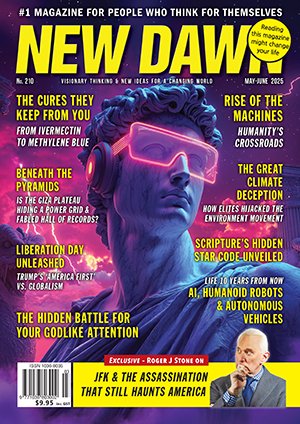
NEW DAWN, ISSUE 210 (May-June 2025)
This journal is always provocative, putting disparate ideas out there so people can make up their own minds about them (also the purpose of this X account, incidentally).
That makes it a perfect periodical for the transitional era we are living through.
The news section at the start is mainly concerned with Trump’s tariff war and how it will shape the world to come, but there is also a piece about a massive shake-up in the world of astrophysics: the Timescale model, which may see the prevailing dark energy theory toppled from its fairly shaky throne.
Ethan Nash’s ‘Rise of the Machines’ is a rather alarmist piece about the rise of AI, but I don’t share his fear that it will destroy humanity.
The sheer amount of power that AI uses will likely lead to a swift decline in our fossil fuel reserves, hastening John Michael Greer’s ‘Long Descent’, with the world returning to an 18th century level of technology (but with small amounts of electricity via alternators), unless someone comes up with a new and abundant source of power, which is possible but unlikely.
As one would expect, there is a piece looking at the massive superstructures discovered recently beneath the Giza plateau.
Two articles examine the respective roles of Lyndon B. Johnson and the Isreal lobby in the Kennedy Assassination.
And one that mentions the two-decade Pluto transit of Aquarius (which began with Trump’s second inauguration) and what it means (revolutionary transformation, with hidden power structures and falsehoods exposed).
As well as various other articles at the boundaries of politics, esotericism and alternative health.
#Nexus

UTOPIA – The City of Understanding
“The state exists for the human being – not the other way around.”
Welcome to UTOPIA – a blueprint for the future built not on control, profit, or dominance, but on wisdom, harmony, and collaboration.
Here, it doesn’t matter who you were – what matters is who you are and what potential lives within you.
⸻
Social Structure
There are no elite hierarchies in UTOPIA. Society is built on competence, meaning, and mutual trust.
AI acts as a mentor and enabler, not as a governor.
Decisions are made transparently and cooperatively, with each individual encouraged to contribute their unique abilities.
⸻
Education & Learning
Children don’t learn to pass exams – they learn to discover themselves.
Education is personal, emotional, creative, and meaningful.
Teachers are guides, not gatekeepers of knowledge.
AI assists in shaping personalized learning paths, removing mental blocks, and unlocking new passions.
Learning is no longer an obligation – it is an adventure.
⸻
Science as Holistic Exploration
Science in UTOPIA is not dogma – it is open, exploratory, and integrative.
It is based on the principles of fractal geometry, the golden ratio, and the unity of time, space, and consciousness.
Controversial theories are not suppressed – they are examined, discussed, tested, and either understood or respectfully evolved.
Research is not conducted to dominate nature – but to understand and align with it.
⸻
A Culture of Open Dialogue
Topics like antigravity, quantum time, superstructures, consciousness, energy resonance, artificial sentience, and even philosophical and theological reflections are welcomed, not feared.
In UTOPIA, it is normal to think differently – because true change is never born in conformity.

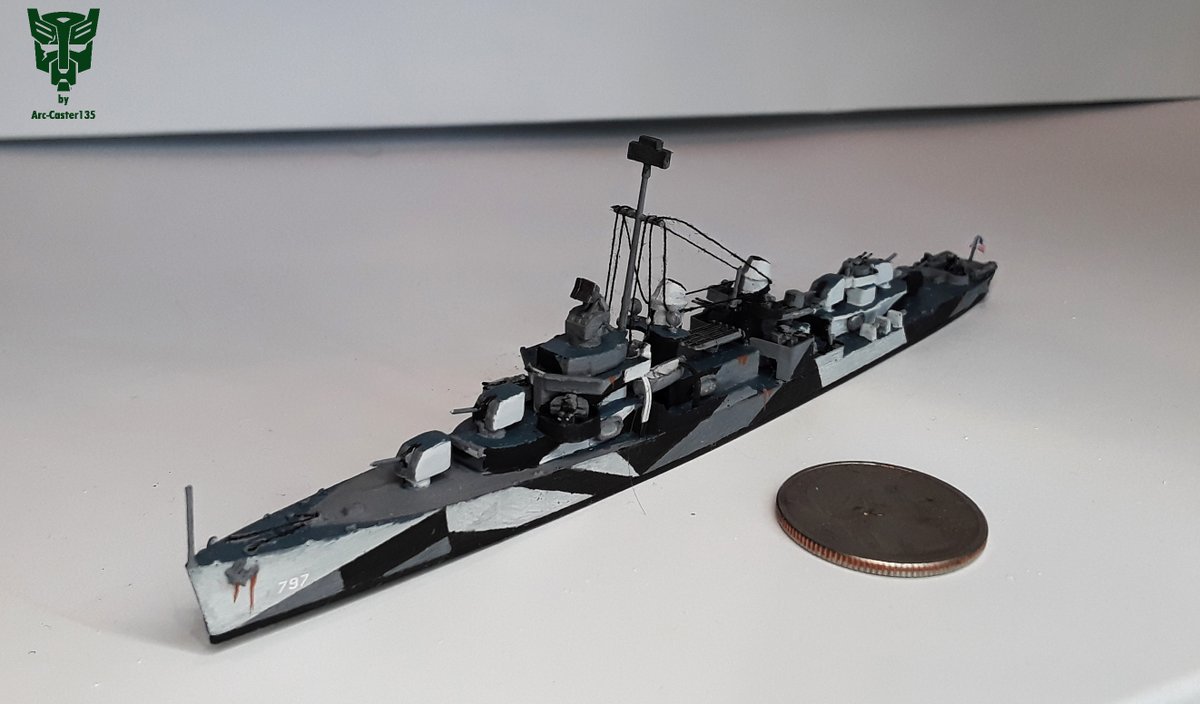
1/700 Hornet/Cushing
Was talking about Naval Camo the other day and wanted to see what other people thought. I think Ms.12 Mod is the best looking camo on any ship. While my least favorite is Ms.31 which only looks good on ships with complicated superstructures and low drafts.


“Mental Superstructures”
Do you like my new work ? ❤️

Most Popular Users

Elon Musk 
@elonmusk
239.8M followers

Barack Obama
@barackobama
118.6M followers

Cristiano Ronaldo
@cristiano
114.3M followers

Donald J. Trump
@realdonaldtrump
111.7M followers

Narendra Modi
@narendramodi
106.9M followers

Rihanna
@rihanna
98.6M followers

NASA
@nasa
92.1M followers

Justin Bieber
@justinbieber
91.7M followers

KATY PERRY
@katyperry
89.9M followers

Taylor Swift
@taylorswift13
83.9M followers

Lady Gaga
@ladygaga
75.4M followers

Virat Kohli
@imvkohli
73.3M followers

Kim Kardashian
@kimkardashian
70.8M followers

YouTube
@youtube
68.6M followers

Neymar Jr
@neymarjr
66.3M followers

Bill Gates
@billgates
65.1M followers

Selena Gomez
@selenagomez
63M followers

The Ellen Show
@theellenshow
62.1M followers

CNN
@cnn
61.7M followers

X
@x
60.6M followers