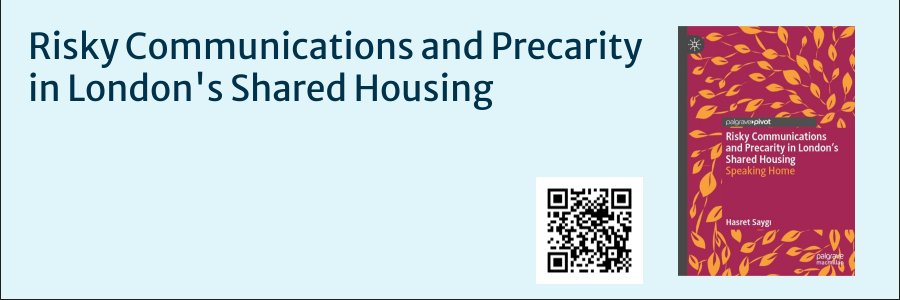
Feeling proud and grateful to have been invited to speak on a panel inspired by my book, Risky Communications and Precarity in London's Shared Housing, at Migration Linguistics Conference in Singapore and Malaysia. Wonderful discussions on linguistic and spatial precarity!
Working on migration and language? Our study with Turkish adolescents in London explores how family responsibilities shape language learning through brokering, and how young people turn demanding encounters into learning opportunities.
S. Young & H. Saygı
https://t.co/ZE7NlyMQFy
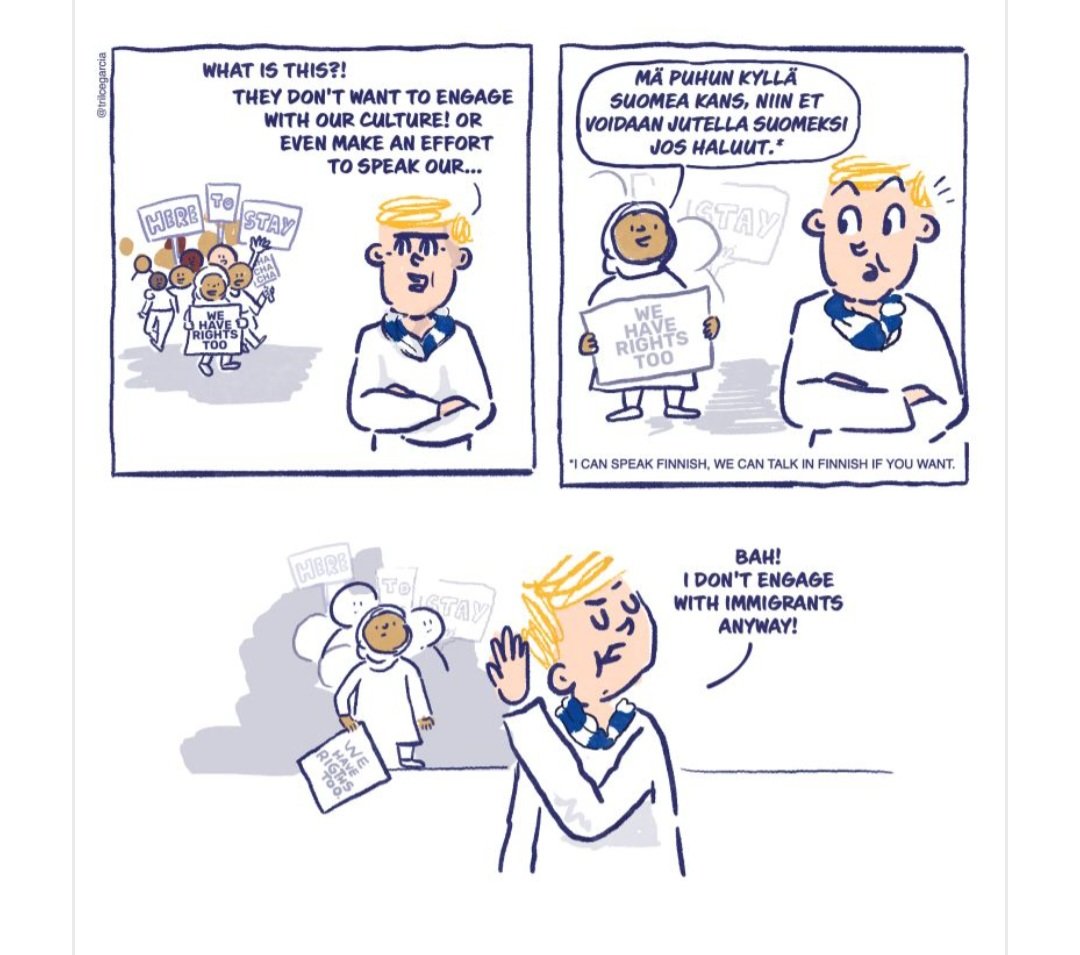
🚨If language is “the key to integration,” what happens when people have the key but are still not allowed through the door?
My new article explores this through the politics of legitimate speakership and Arabic in Turkey.
⬇️
https://t.co/E3osLWf6uI
Visual credit: @trilcegarcia
At #AAAL2026 in Chicago, I spoke about my book, which examines the housing crisis through a sociolinguistic lens. I specifically focused on how language shapes access to housing and how unequal linguistic capital and migrancy produces precarity in shared homes.
Great to meet @hasretsaygi yesterday and chat about all things #housing. Her new book on shared housing in London’s toxic private rental sector is a fascinating analysis of household dynamics, precarious and anxieties. Well worth reading!
My book is about London’s single millennials sharing houses with strangers. It examines how “home” is built through everyday interaction in London’s shared houses. It treats housing precarity as a communicative and social crisis.
https://t.co/kSjrTsOUoE
A brilliant conversation today with @PaulWatt1232 on how housing crises are lived and negotiated in everyday life. My book frames shared housing as a communicative crisis, while Paul’s work offers powerful insights into regeneration and social mixing. Excited about the overlaps.
@yeelondra ev sahipliğinde, @LondraEgitim işbirliğiyle İngiltere'de görev yapan öğretmenlerimize eğitim semineri gerçekleştirdik. Londra'da göçmen ailelerle ikidillilik ve kimlik üzerine UCL'den Dr. Sara Young ile yürüttüğümüz çalışmamızın bulgularını öğretmenlerimizle tartıştık
Join us on January 14th for an important educational seminar focused on supporting Turkish as a heritage language in the UK.
🔗 Register here:
https://t.co/2etoQiqKak
🗣️ The seminar will be conducted primarily in Turkish.
@Nick_Ashdown That resonates with what we saw in our London fieldwork: a newer Turkish diaspora clustering in Richmond (a high-income borough). Even when it strains their budgets, the location helps maintain familiar class boundaries, privileges and networks. https://t.co/9cm46d4uLc
Also had time to reflect on forced migration to Turkey, through two co-authored Turkish articles
• Heritage language education of Syrian children in Istanbul https://t.co/clpPnFmfyR
• Shifting values of Arabic in TR as it becomes associated with refugees https://t.co/qpXW8S9ufq
As 2025 comes to an end, I’ve been reflecting on how much I learned and grew through the projects I worked on. A major turning point was publishing my first book on London's shared houses, genuinely the most exciting milestone for me. https://t.co/kSjrTsPsec
Another highlight was my collaboration with Dr. Sara Young. We looked at how Turkish families integrate into the British education system and their educational migration processes, everyday challenges they face around schooling, language, and belonging. https://t.co/9cm46d4uLc
📢 My open-access article with Dr. Sara Young is out in JMMD. We explore the growing trend of Turkish middle-class families migrating to the West for their children’s education, framing it as both a sacrifice and an aspiration. @tandfonline@WeAreTandF
https://t.co/LDtK4zUCPn
@isilresearch@tandfonline@WeAreTandF Thanks a lot hocam! We also worked with children and explored their language brokering practices as well as the English support (EAL) they received from local schools in London after moving to the UK and starting school as 1.5-generation migrants. Those findings are forthcoming😊
Yet, migration often comes with hidden costs: downward mobility for parents, pressure on children to “succeed,” and family tensions around language, identity, and belonging.
Mothers’ stories reveal both hope and hardship in this pursuit of the “British dream.”
Drawing on in-depth interviews with mothers in London, we examine how families invest emotionally, linguistically, and financially in their children’s futures, idealising Western schooling as a path to global opportunity and belonging.