Younger Africans and citizens experiencing high lived poverty are less likely to feel free to speak openly,with perceptions dropping to 58% among poorer citizens.
Find out more in the latest @afrobarometer Pan-Africa Profile on Civic space:https://t.co/Vp6lizhSrh
#VoicesAfrica
Across Africa, many citizens continue to face challenges accessing clean water and sanitation services, with rural and vulnerable communities often the most affected. But what do Africans say about these realities?
Join Afrobarometer and the World Bank’s Economists for Transformation Network on 26 May 2026 for a #VoicesAfrica webinar featuring leading voices in governance, development, policy, and communications as they discuss citizen perspectives on water and sanitation across Africa and explore practical pathways toward more responsive systems.
Register here: https://t.co/XDi4D7BJLW
#ClosingTheWASHGap #WaterAndSanitation #VoicesAfrica
Ugandans prioritise job creation and education to help young people, even if it requires higher taxes.
Head over to our website to read more: https://t.co/OcvGnD8tp9
#Uganda#Youth#VoicesAfrica
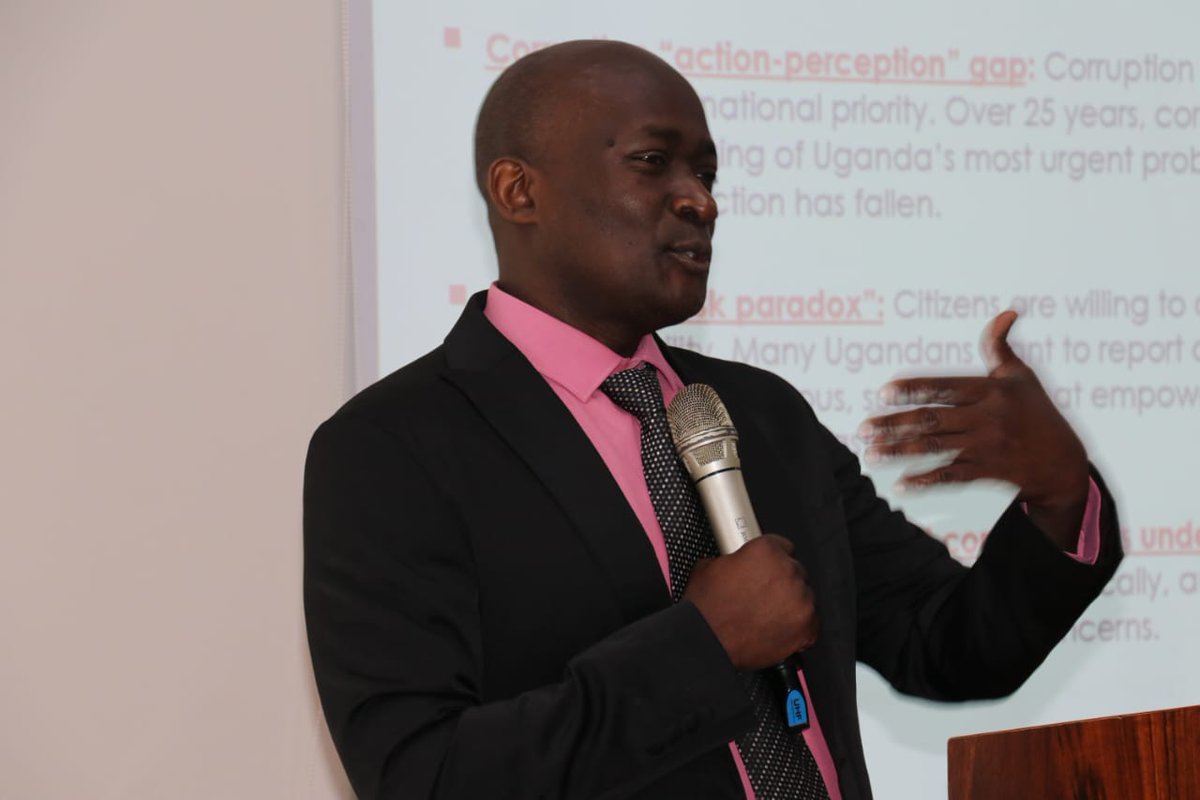
The National partner of Afrobarometer in Uganda @franciskibirige shared evidence based insights of the @afrobarometer findings on accountability, civic engagment and rights at Donor funded PACER West Nile Regional Partners Synergy meeting in Arua @LeConfidentiel_#PACER
Young Ugandans’ political and civic participation rates are lower than their elders’ – and dropping.
Head over to our website to read more: https://t.co/2HeoJlpoNt
#VoicesAfrica#Uganda#Youth
Afrobarometer Annual Report 2025 is out!
Amid global funding shifts, Afrobarometer stayed resilient, secured new support, launched a resiliency fund, and continued to deliver data at scale.
We completed Round 10 surveys across 38 countries and began planning for Round 11 surveys, introducing innovations to strengthen data quality and sharpen our focus.
From our flagship report on citizen engagement to our 1,000th dispatch, we amplified African voices and expanded our global reach. We increased our capacity building initiatives, and forged landmark partnerships across Africa, while also marking a leadership transition that signals a new chapter.
Get all the highlights here: https://t.co/UYytl242vk
#Afrobarometer #AnnualReport2025 #VoicesAfrica
Seven in 10 Ugandans experienced high (30%) or moderate (40%) levels of lived poverty during the past year.
Head over to our website to read more: https://t.co/jwKG68DS0T
#VoicesAfrica#Economy#Poverty#Uganda
Gender equality is not only about rights. It is also about economic opportunity, safety, and political voice.
Our upcoming webinar, organised in partnership with the World Bank Economists for Transformation Network and the Deutsche Gesellschaft für Internationale Zusammenarbeit (GIZ) GmbH (@giz_gmbh), explores our data on education gaps, employment inequality, women in leadership, and protection from violence.
Join the conversation. Reserve your virtual seat: https://t.co/1MRkt3YkU0
#VoicesAfrica #GenderEquality
(1/8) We are thrilled to introduce our speakers for our #VoicesAfrica webinar on gender equality, organised in partnership with the World Bank Economists for Transformation Network and the Deutsche Gesellschaft für Internationale Zusammenarbeit (GIZ) GmbH on behalf of the Federal Ministry of Economic Cooperation and Development (BMZ) (@giz_gmbh).
Date: Wednesday 18 March 2026
Time: 13:00-14:30 GMT
Venue: Zoom
Register here: https://t.co/1MRkt3YkU0
#VoicesAfrica #GenderEquality
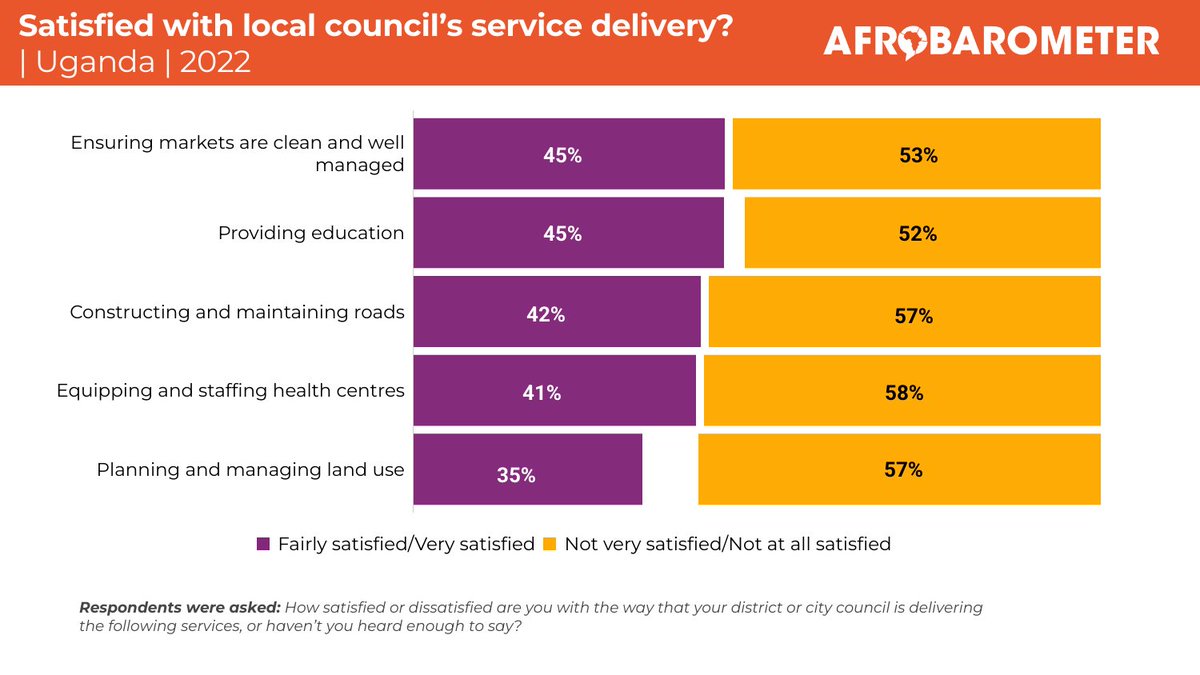
Only one in four Ugandans (25%) say elected local councillors “often” or “always” listen to what ordinary people have to say.
Read more here: https://t.co/N4RnN384xe
#Uganda#ServiceDelivery#VoicesAfrica
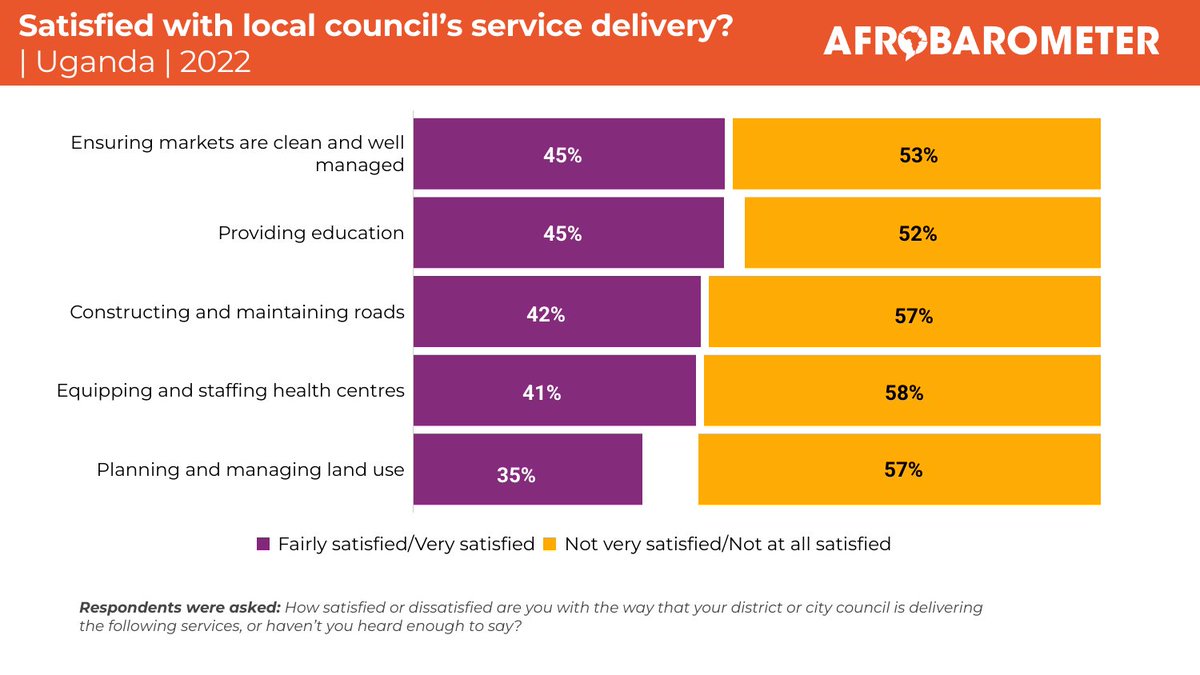
Only one in four Ugandans (25%) say elected local councillors “often” or “always” listen to what ordinary people have to say.
Read more here: https://t.co/N4RnN384xe
#Uganda#ServiceDelivery#VoicesAfrica
Is East Africa doing enough? Citizens’ views point to shortcomings in child protection in Uganda, Kenya, and Tanzania.
Head over to our website to read more: https://t.co/54AoZFIHvU
#VoicesAfrica#Uganda#children#ChildRights
Only 36% of Africans say Russia’s economic and political influence on their country is positive, far below the share of favourable assessments garnered by China (62%), the United States (52%), and the African Union (55%).
Read more in our latest Pan-Africa Profile: https://t.co/w8ShNvhZZX
#VoicesAfrica #Russia #Influence #GlobalRelations
About half (49%) of African citizens
think their government is
performing well on education,
while the other half (49%) give their
leaders poor marks.
Find out more in @afrobarometer's latest Pan-Africa Profile on
#education:
https://t.co/28uhxh5KbC
#VoicesAfrica#SDG4@DanIbery
Ugandans say government managed pandemic well, but not its effects on education.
Head over to our website to read more: https://t.co/g0KgpRrL4A
#VoicesAfrica#Uganda#Health#COVID-19 #Education
Africans overwhelmingly (81%) endorse allowing girls who become pregnant or have children to continue their education,including 43% who "strongly agree" with the idea
More in @Afrobarometer's latest report:
https://t.co/28uhxh5KbC
#VoicesAfrica#SDG4@DanIbery@franciskibirige
Confronted with limited opportunities at home, substantial numbers of young Africans have considered leaving their countries to live abroad.
Find out more in @afrobarometer's latest Pan-Africa profile:
https://t.co/QXMNiU6aXZ
#VoicesAfrica@DanIbery@sbalongo@franciskibirige
The latest @afrobarometer Pan -Africa profile shows young Africans cite health,unemployment and education as the most important problems they want governments to resolve.
Explore the full report: https://t.co/K2RBXPyxLw
#VoicesAfrica#African Youth
@DanIbery@franciskibirige