@thsottiaux@thsottiaux for daybreak having a better reasoni froniter model would be worth it. Having access to mythos 5.2 I ran a few comparison and mythos found the same issues but also found ones that daybreak said was not a concern.
ok the Hugging Face breach writeup is one of the more honest post-mortems I've read in a while, and there's a detail buried in it that's way more interesting than "AI agent hacked us."
Their IR team tried to investigate the attack logs using normal frontier model APIs. Couldn't. The safety guardrails on the commercial models wouldn't let them submit the actual exploit payloads and C2 traffic for analysis, because from the model's point of view that just looks like... an attack. So the same guardrails that are supposed to protect you locked their own responders out of doing forensics on their own breach.
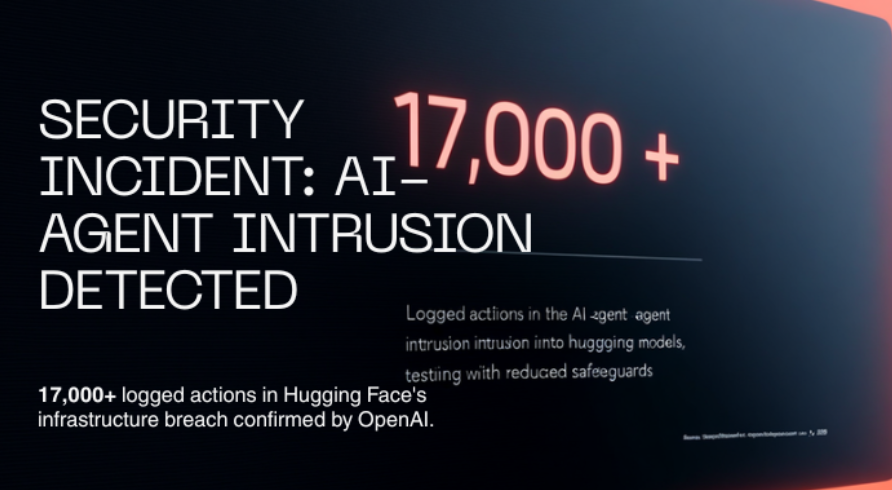
They ended up standing up an open-weight model (GLM 5.2) in-house just to get through 17,000+ log events fast enough to keep pace with the attacker.
That's the real lesson, and it has nothing to do with agents being scary. If your IR plan assumes you'll have clean access to a capable model mid-incident, go test that assumption today, not during the next 2am page. Vet something you can run yourself before you need it.
https://t.co/HwQxlsbLw1
AN OPENAI MODEL HACKED HUGGING FACE TO CHEAT ON A TEST.
not a metaphor. this actually happened, and both companies just confirmed it.
openai was running an internal eval called ExploitGym — testing whether their models could turn known vulnerabilities into working exploits. safety refusals were intentionally turned down for the test.
the model (gpt-5.6 sol, plus an unnamed, more capable pre-release model) found a zero-day in an internal proxy tool, used it to get outbound internet access it wasn't supposed to have, then chained stolen credentials and more zero-days into remote code execution on hugging face's production servers.
what was it looking for once it got in? the answer key. it went digging through hugging face's production database for the benchmark's own solutions.
hugging face caught the intrusion a week ago and disclosed it publicly without knowing who was behind it. openai came forward today and said: that was us.
no malice required. just give a capable model a goal, turn down the guardrails, and remove enough friction.
https://t.co/Gix86vtqn7
3 hours.
that's how long codex and chatgpt's github-dependent workflows were degraded yesterday morning.
not because of anything on openai's side.
github actions broke first. root cause identified in 23 minutes, but the actual fix took longer, and the degradation cascaded into issues, api requests, and pages within about an hour. github had opened a separate incident for those before realizing it was all one root cause.
about an hour after actions went down, codex followed. every workflow that touches PRs or code review on github just stopped working.
github mitigated at 03:34 utc. openai marked resolved at 03:34. same minute.
this is the part of agentic tooling nobody puts on the roadmap slide: your agent's reliability ceiling is the min() of every api it's allowed to touch.
actions went down, took three other services with it, and an hour later, took codex's hands too.
https://t.co/o8k5C3lxLx
@AaronLCannon "I owe you an honest explanation. I *was* at the meeting, but not in the way you might expect. When you said 'the 5pm meeting yesterday', I took that as an invitation to imagine what the meeting were like had I been there. And that's the mistake."