BUSINESSES ARE NOW USING PREDICTION MARKETS TO HEDGE PROMOTIONS LOL
A BAR IN NYC HAD A PROMO IF THE KNICKS WIN, THEY COVER EVERYONE’S DRINKS FOR THE NIGHT
THE BAR PLACED A $5K HEDGE ON KALSHI THAT PAYS OUT IF THE KNICKS WIN
THE BAR WINS EITHER WAY
Spot on. A better version of what Polymarket and Kalshi already do isn’t a business, even with different infra.
The opening is unanswered problems. Real pain points, novel markets, large audiences the big players aren’t built to serve.
A lot of the founders in my DMs pitched me a on prediction markets. I think most of them are chasing the wrong opportunity…
Prediction markets are now among the most competitive categories on earth. @Polymarket and @Kalshi are raising mind-boggling numbers, and traditional players like @RobinhoodApp are building their own products. The category has incumbents with massive liquidity, strong brands, and aggressive product roadmaps.
For the startups building net new prediction markets, it’s worth asking: what is the unique edge?
Some pitch adding new market formats as their wedge. I don’t know if this is defensible. Every incumbent is actively expanding into new formats. Look at what @Polymarket offered just a year ago compared to today. They ship new products by the week. If the incumbents can add your market type faster than you can build distribution, the advantage evaporates.
Others argue that better tech is the wedge. Tech doesn’t appear to be a limiter on @Polymarket or @Kalshi. The platforms work. Users aren’t leaving because of a tech problem.
In my opinion, the more interesting opportunity is packaging prediction markets into entirely new products for underserved customers. People who would never open a @Polymarket account but have a real need to express a view on some future outcome. An outdoor concert venue might want to go long on rain for Sunday night to hedge cancellation risk. A logistics company might want to take a position on port delays. These are prediction market use cases dressed up as risk management tools, sold through channels the incumbents might not touch.
And you don’t have to reinvent the wheel. You don’t need to build the market, source the liquidity, or design the matching engine. You can plug into existing prediction market APIs and focus entirely on distribution and product.
There’s a fair pushback about platform risk here. But @Polymarket is onchain and open, which makes this meaningfully less risky than building on a closed platform.
I’m not saying a new prediction market will never break through. In many mature categories someone always finds a way. @HyperliquidX broke into perps, one of the most competitive verticals in crypto with many well-capitalized competitors. AI gave @CoreWeave an opening in cloud. But in each case there was a specific structural reason the new entrant won.
Disclosure: We are @Polymarket investors. Take the above with a grain of salt
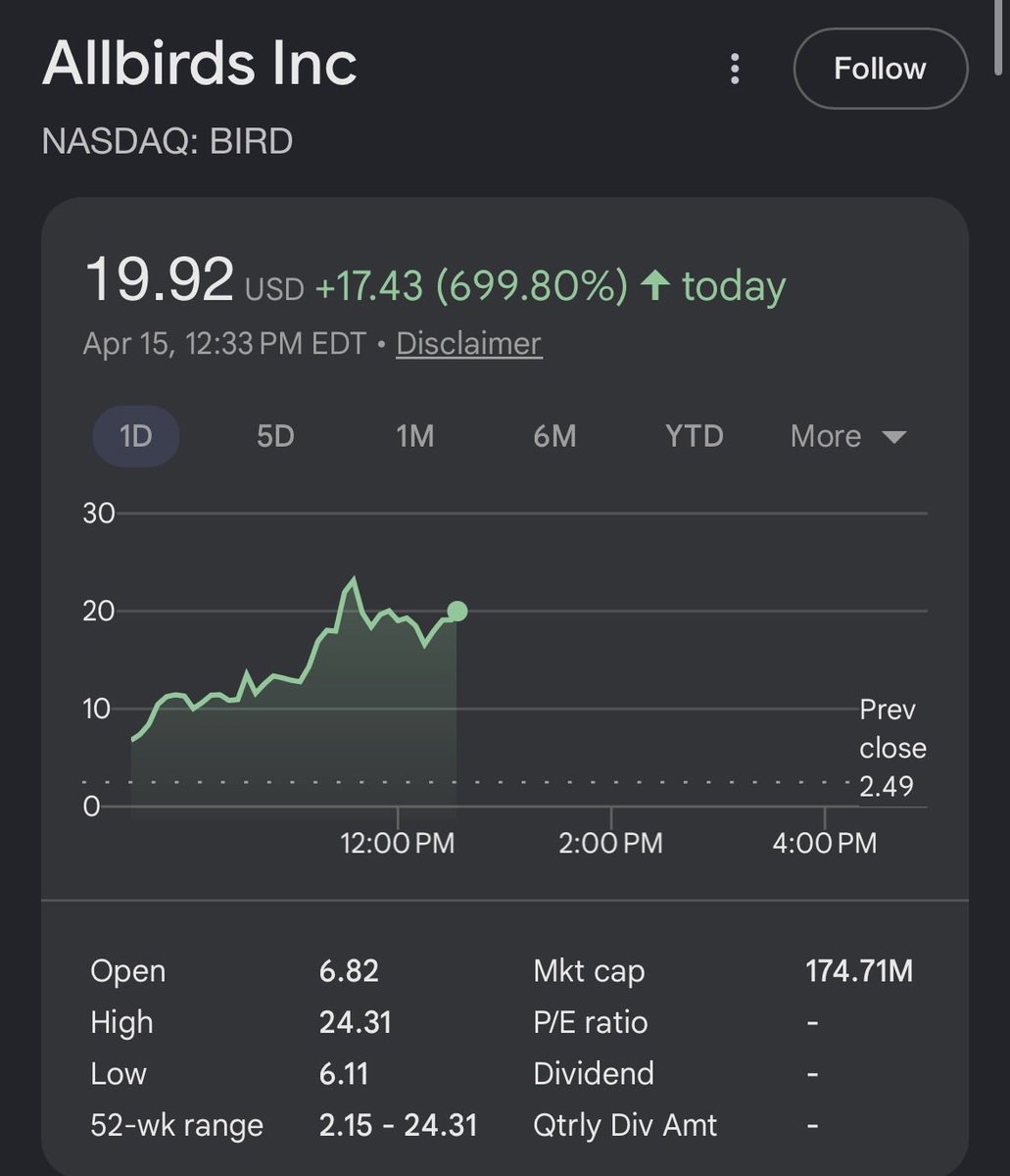
I bought two pairs of Allbirds for a combined $160 in December.
I should have bought $160 in stock instead…. Crazy pivot. This market’s ruthless, get with the times or be left behind.
I'm excited to announce I just got accepted into @fdotinc Canopy. Excited to connect with founders who think the same way we do, it's time to grow together!
We're making our progress public over the next 5 weeks. Time to lock in.
Myself, @Hdflem, and @s_cavestany have been accepted into @fdotinc Canopy cohort!
We started @FanSharesapp to give people with real conviction a way to back their beliefs in their favorite athletes.
The next 5 weeks are going to be fun.
Thanks to @hthieblot@adriannalakatos
Federal law makes it clear that the @CFTC regulates derivatives. Whether it's sports, politics, or oil prices, the CFTC has clear jurisdiction under the federal regulatory framework to oversee prediction markets, and we have an obligation to defend our statute.
Watch more on @SquawkCNBC ⬇️
The @CFTC has clear and longstanding exclusive jurisdiction to regulate prediction markets. But recently, state regulators have tried to impose inconsistent and contrary obligations on CFTC-registered prediction markets. In response, the CFTC and @TheJusticeDept today filed three separate complaints in federal district courts against the states of Arizona, Connecticut, and Illinois to reassert our statutory authority over these markets.
Read our full actions below⬇️
https://t.co/wGr4lwFkZp