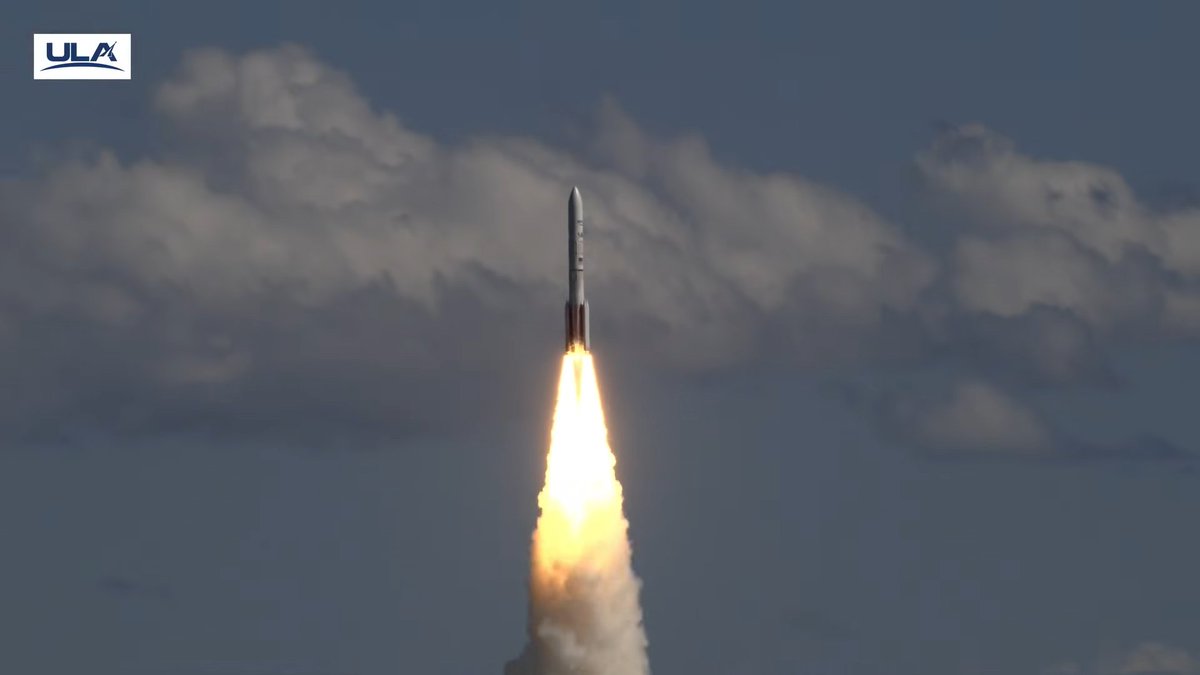
Based on data received by our Launch Director, we confirm that the Vulcan vehicle launched from Space Launch Complex 41 suffered an anomaly 10 minutes into the flight and failed to deliver the Amazon mission to orbit.
Every flight generates data, and every flight teaches us something. Since the anomaly just occurred, we don’t have any specific data yet to understand what occurred today.
ULA exists to provide assured access to space for our nation and for the customers who depend on us. That purpose is why we take on some of the hardest missions in spaceflight, and why we hold ourselves to the standard of mission success. Today, we did not meet that standard.
We will work closely with our customer and other appropriate organizations to find the cause, determine the appropriate corrective action, and return to flight as quickly as possible.
ULA is committed to full transparency with our customers, and they will have visibility into the investigation process, which utilizes rigorous methodology and corrective action.
We will provide further updates when new information becomes available.
Meet some of the people behind Neutron and take a look across our sites for engine builds and hot fires, production of our largest carbon composite structures, and flight hardware testing on the launch mount at Launch Complex 3.
ECHEC du cinquième vol du lanceur Vulcan de ULA. La cause serait a priori un dysfonctionnement de l'un des deux moteurs BE-4 de @blueorigin, qui n'aurait pas pu être compensé par l'étage supérieur Centaur 5.
Essas primeiras espaçonaves e foguetes estão tecnicamente ultrapassados em relação aos projetosque se encontram em produção ou bancadas de testes. Por esse motivo, a perda deste não altera o cronograma para uma elevada frequência de voos da Starship com reutilização completa.
...a chama verde é causada pela queima de cobre proveniente do esgotamento do combustível no circuito de refrigeração regenerativa, combinada com uma condição de mistura rica em oxigênio (mais próxima da temperatura estequiométrica) na câmara principal de combustão.
trabalho que já está em andamento com o Raptor V3.2, além de ajustar o software de voo para antecipar o corte dos motores principais (MECO1) em aproximadamente um segundo, garantindo propelente suficiente para as manobras de retorno e pouso.