Build in Public: Day-1
💡Idea: A website where users can login and create an embeddable AI chat widget which they can attach to their website.
🚀Tech-stack:
- NextJS & TailwindCSS
- NextAuth for authentication
- NextJS APIs for endpoints
- MongoDB to store Widget & User info
A man working as a welder at SpaceX for $28 an hour has just become a millionaire.
Juan Hernandez, who came from Mexico, welded rockets for SpaceX at $28 an hour.
SpaceX gave him $10,000 in stock when he went full time in 2015, and he bought more with every paycheck for 10 years.
$SPCX is now trading at $167, making his shares worth over $1 million.
Introducing Claude Fable 5: a Mythos-class model that we’ve made safe for general use.
Its capabilities exceed those of any model we’ve ever made generally available.
Participate in the National Data Hackathon to generate data-driven insights on Aadhaar.
The top 5 innovative submissions will receive cash awards and certificates:
1st prize: Rs. 2,00,000/-
2nd prize: Rs. 1,50,000/-
3rd prize: Rs. 75,000/-
4th prize: Rs. 50,000/-
5th prize: Rs. 25,000/-
Registration opens on 5th Jan 2026.
For more details, visit: https://t.co/LNZ8CkOIsg
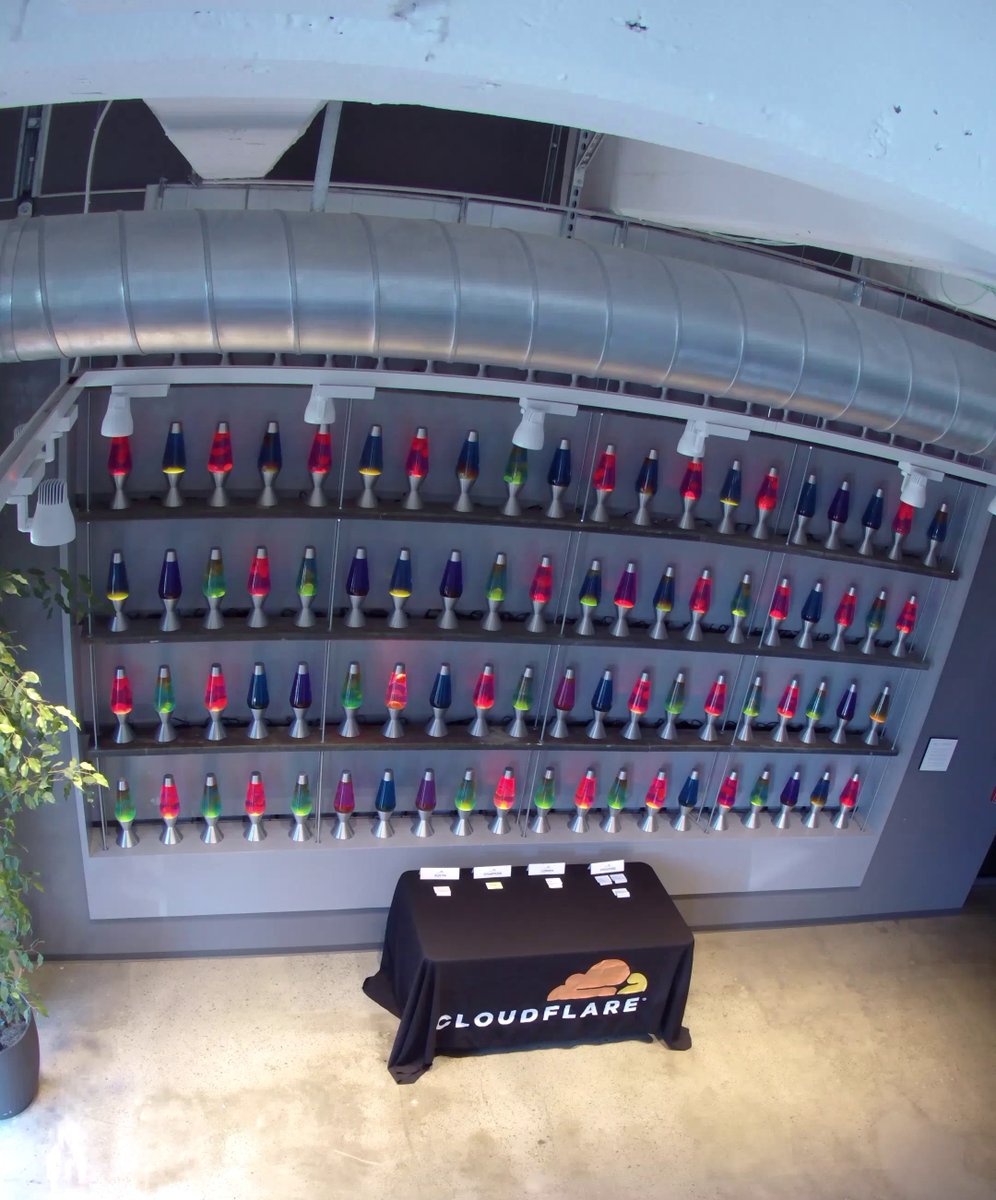
Cloudflare uses lava lamps for their encryption.
No, I am not kidding.
In their San Francisco office, Cloudflare has a wall filled with lava lamps with cameras pointed at them 24/7. At random intervals, a picture is taken, and that image is sent to the Cloudflare servers.
That is then turned into a series of numbers that is then turned into an encryption key.
You're probably wondering "Why not just have a computer do it." Well, computers are actually really bad at making things random.
They follow patterns, and those patterns are easy for hackers to figure out. Thus making Cloudflare susceptible.
So the solution is the real world.
Nature is random. Wild, dare I say.
If these giant tech companies see the value in the wild and natural and random, you should too. ;)
This one is pretty nasty - it tricks Antigravity into stealing AWS credentials from a .env file (working around .gitignore restrictions using cat) and then leaks them to a webhooks debugging site that's included in the Antigravity browser agent's default allow-list
AI in robotics gets all the attention right now, but sometimes the most interesting work is very practical.
Viet built a small vision system that counts potatoes on a conveyor belt. No giant dataset. No huge model. Just a clear problem and a smart setup.
He used Ultralytics’ ObjectCounter, trained a tiny YOLO11 nano model, and because there was no potato dataset, he annotated a single frame with SAM 2 and trained from that. One frame. Still works across the whole video.
It is a good reminder that useful AI in industry often looks like this.
Focused. Lightweight. Solves a real task.
If you work in manufacturing or robotics, these small systems are usually the fastest wins. They save time, reduce errors, and do not need massive infrastructure.
Nice work, Viet.
His projects:
https://t.co/PCUV05Cocw
—-
Weekly robotics and AI insights. Subscribe free: https://t.co/dsa6wcvq6n
I was recently vibe coding a demo NodeJS+Express server side code:
- Secure API Endpoints (JWT)
- Rate Limiting (Redis + Docker)
It is really fun to learn things with AI and get to know about production practices.
Cut your LLM costs by 50% 🤯
Stop using JSON → switch to TOON (Token-Oriented Object Notation).
It blends YAML’s readability with CSV’s compactness:
↳ 30–60% less tokens
↳ Built-in field validation
↳ GPT-5, Claude, Gemini.
Ace for tabular data.
Free and open-source 🧵↓
I used Nginx for years in my Docker setup; it worked fine, but every time I added a new service, I had to edit configs, reload Nginx, and deal with SSL manually. It was getting annoying.
Then I tried Traefik, and honestly, it just made life easier. I can define routes right inside my docker-compose.yml using labels, and Traefik automatically picks them up. No manual config, no restarts. SSL is handled automatically with Let’s Encrypt.
Plus, it has a nice dashboard and makes scaling super simple.
If you’re tired of editing Nginx files every time you add a service, give Traefik a try. It’s made my setup cleaner and almost maintenance-free.