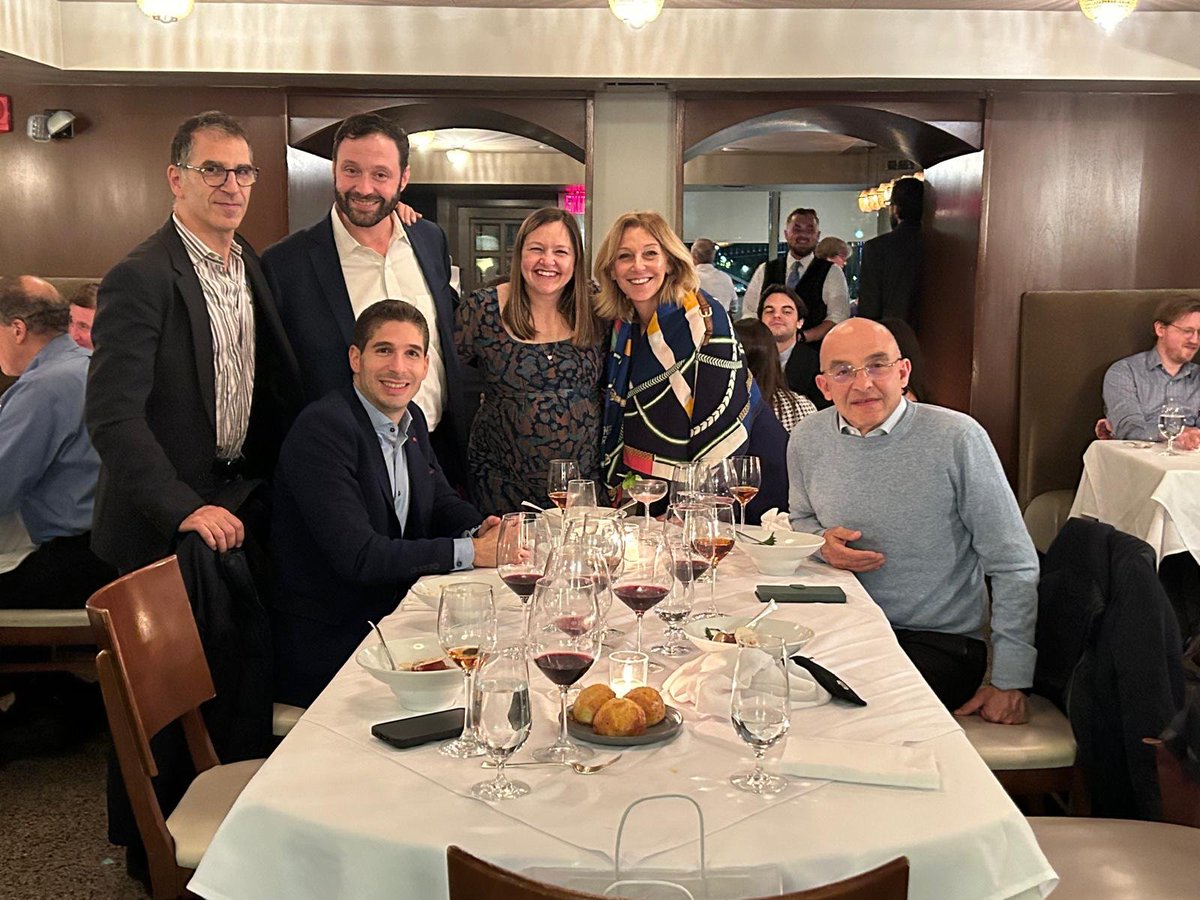
What an honor to work with the amazing team that has turned @IJGConline into an academic powerhouse! @pedroramirezMD, thank you for your mentorship and for being our captain years. @RParejaGineOnco, so excited for your leadership going forward!
Our latest lead by Dr. Katy Abel. More evidence that underutilization of NACT is associated with worse post-operative outcomes, without any hint of long-term benefit, even in high-volume centers.
For patients with advanced-stage ovarian cancer, higher utilization of neoadjuvant chemotherapy at high-volume centers was associated with the lowest 90-day surgical mortality and longest 60-month survival. https://t.co/NvOIMK7ZET
Our 15-year cohort study explores trends in surgical de-escalation in gynecologic oncology. These findings are transforming patient care but raise important questions about the preparation of fellows in surgical training.
@headofmelon@dviverosc@RauhHainMD@NiteckiRoni
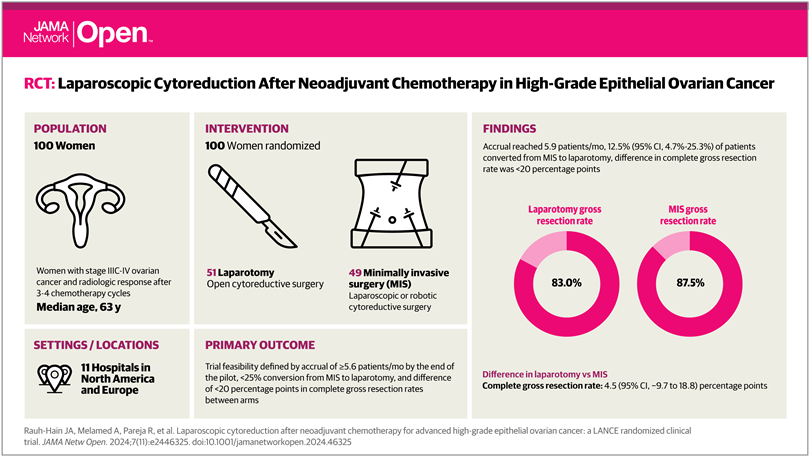
LANCE RCT: A minimally invasive surgery for advanced ovarian cancer after neoadjuvant chemotherapy is feasible and may reduce postoperative complications compared to laparotomy. https://t.co/ZfEn4aamYF
Cool picture of a adenosarcoma assocaited uterine inversion which we treated laparoscopically. Nice work by Baran Vardar and @AlexBercowMD getting these pictures into the literature.
https://t.co/D6Yy7Erjpp
NACT and interval cytoreductive surgery edges out primary cytoreductive surgery as the most frequent treatment for advanced-stage ovarian cancer in the US. 11 years after Vergote et al. It really does take a decade.
Since 2021, neoadjuvant chemotherapy followed by interval cytoreductive surgery has become the most prevalent approach of upfront treatment for patients with advanced epithelial ovarian cancer in the US. https://t.co/O7VL0HmlaF
Since 2021, neoadjuvant chemotherapy followed by interval cytoreductive surgery has become the most prevalent approach of upfront treatment for patients with advanced epithelial ovarian cancer in the US. https://t.co/O7VL0HmlaF