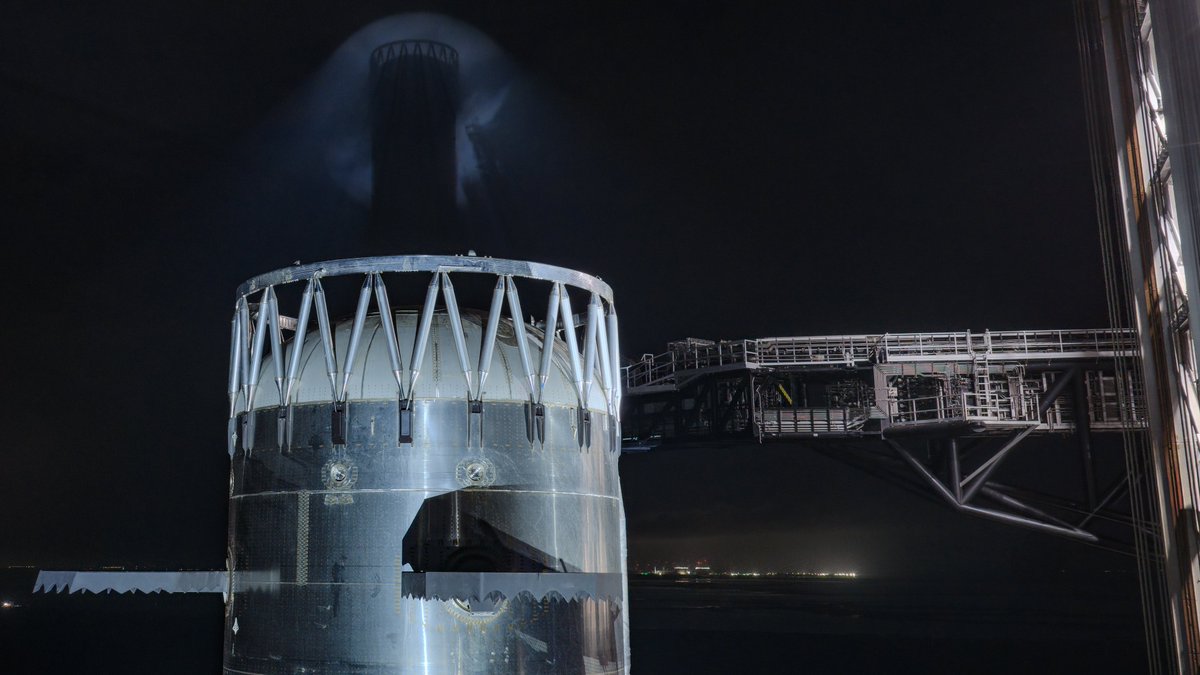
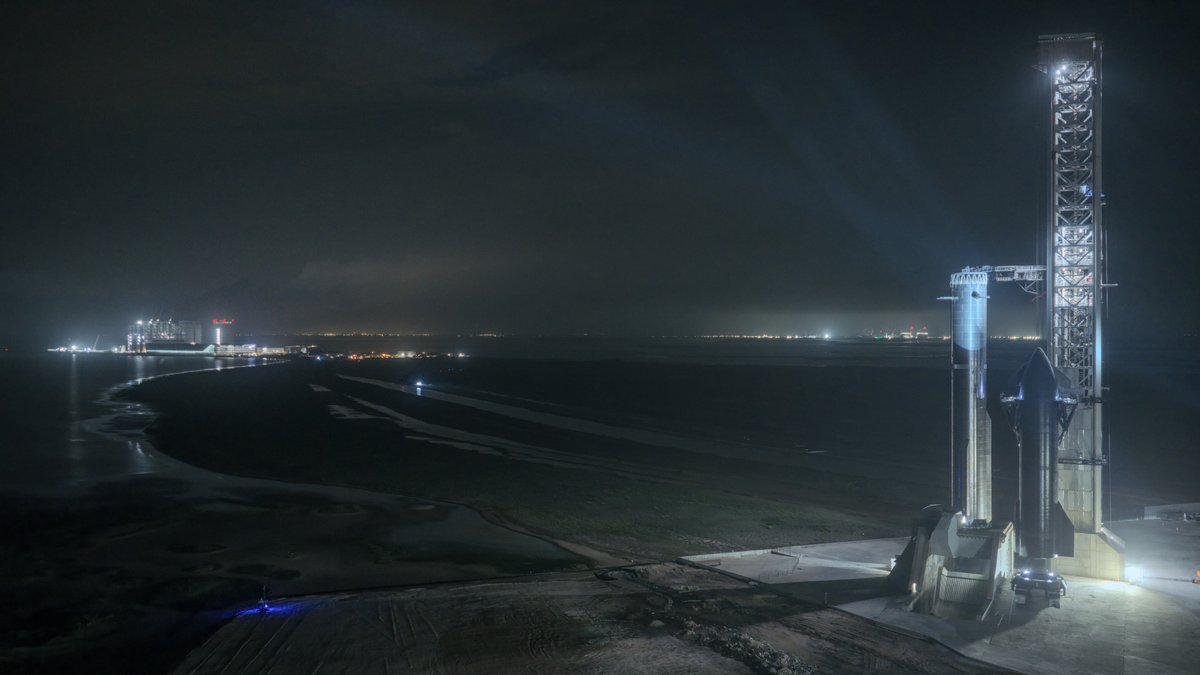
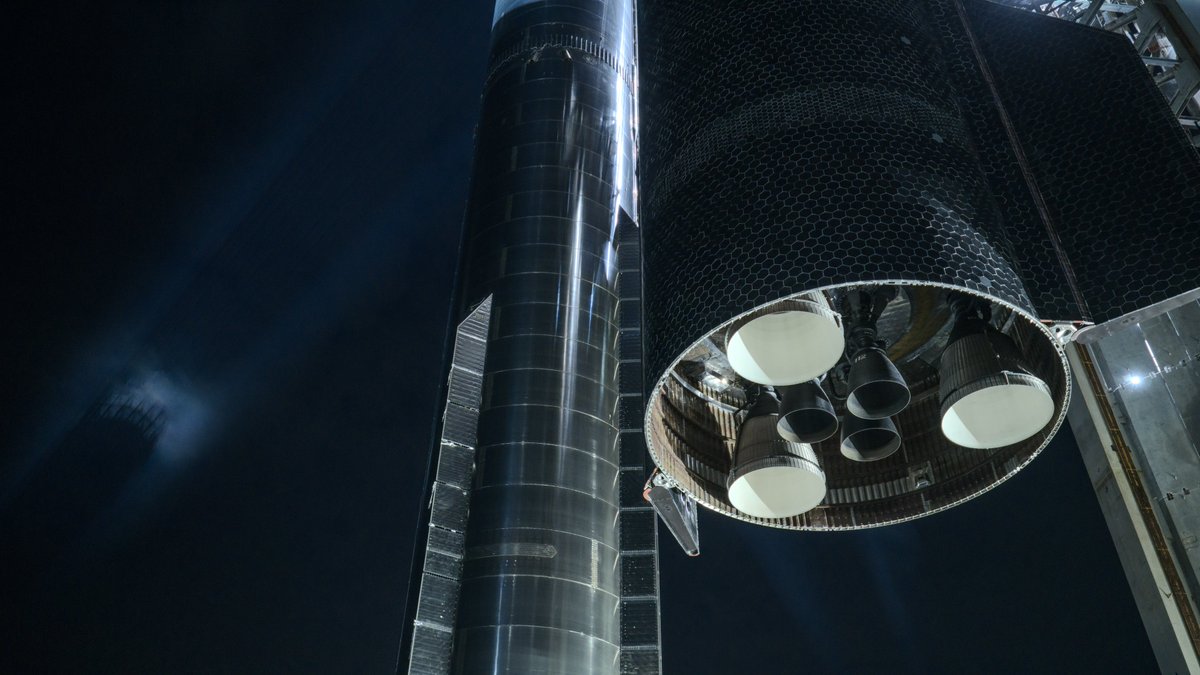
Yesterday I posted about engineering opportunities at the Cape. @SpaceX is rapidly scaling infrastructure across Florida, Tennessee, and Texas. If building massive infrastructure inspires you, don’t hesitate to check out the career page and apply. The size of our infrastructure is truly 🤯
https://t.co/yobQ3T97BM
The Cape Gigabay is getting closer to being ready for Starship! Teams recently installed the 420-ton crane – which we’ll use to break over and move Starships and Super Heavy boosters preparing for flight. One step closer to the Moon and Mars 🚀🚀🚀
After taking some time to reflect on the last week, wanted to share my SpaceX story.
In the last four years my family has:
1. Lost our firstborn daughter 38 hours after birth due to a rare genetic condition
2. Navigated another rare condition with our second born, who required a 10-hour surgery when she was 3 months old and was in the ER every 4-6 weeks for her first 18 months of life
3. Lost the dog who got us through the above 2 bullets unexpectedly at 6 years old
Amidst all of that, I took a risk (at the time) to pick up my family’s life to join SpaceX in Florida. The past week was the most incredible of my career and man it feels good to get back in the win column. SpaceX has changed my life.
For those going through the valley, stay the course. Sometimes the highest peaks are just on the other side.
Starting with some energy, and my inability to write brief updates, I am just extremely proud of the NASA crew, our industry, and our international partners. We are getting into a rhythm here at NASA. Earlier this year, setbacks put the Artemis II rocket back in the VAB for repairs, and we determined it was necessary to add another mission, Artemis III in 2027. Since then, we have unveiled the Ignition plans to build a Moon Base and nuclear-powered spaceships, launched a highly successful mission around the Moon, brought the crew home safely, and now watched the torch pass to Artemis III. There will be no shortage of major milestones to celebrate in the months ahead as we build the Moon Base and launch the Nancy Grace Roman telescope. I am beyond proud of the team and all the momentum and excitement around the space program.
I do want to take this moment to address two of the questions I have been seeing since the crew announcement.
Why are there no women assigned to Artemis III?
I have seen reactions ranging from disappointment to outrage. I have personally been to space twice with 50% female crews. My closest advisors and some of the smartest engineers I know are women. In our latest NASA leadership organization, nearly 50% of the Center Directors and Mission Directorate leadership are women. The last astronaut candidate class selected under this Administration was majority female because they were the best of the best, including one astronaut I previously went to space with.
In a world with so much controversy, I hope this can be a moment where we celebrate the astronauts selected, respect the integrity of the process, and recognize the extraordinary depth of talent across the entire corps. The crew selection does not involve any political appointees. The Astronaut Office assigns the crew that gives the mission the best chance of meeting its objectives, taking into account many factors, including the background and expertise of the astronauts, such as test pilot experience, development work on specific programs, and availability. For example, those raising this concern may not be aware of the pipeline of crews already preparing to launch to the Space Station, or those who have been undergoing lunar-specific training that would be a better fit for a future surface mission.
The Artemis III astronauts are experienced, qualified, and deserve to be celebrated for the mission they have been assigned, just as the crews that follow will be celebrated when their time comes. We have an extraordinary astronaut corps, and every mission and every crew is part of a larger campaign to get America back to the Moon and to build the future we all dreamed about as children.
What are the objectives for Artemis III if both landers will not be fully ready?
Coming off a highly successful lunar mission like Artemis II, it is not surprising that the bar is set high for Artemis III. I think it is important to understand how difficult and dangerous it is to land astronauts on the Moon. We have not done it in a very long time, and we want to draw from a past playbook for success. That means getting into a cadence of launching, learning, and rolling improvements into the next mission.
First and foremost, it is imperative for SLS to be flying with some frequency for operational currency and, honestly, safety. Earlier this year, it was very clear across NASA leadership that an additional mission was necessary in 2027. It is also imperative to gain interoperability data from rendezvous and docking with landers in Earth orbit. We do not need those landers that are still in development to be fully capable and certified for landing on the Moon on Artemis III, but we do need to test certain systems and controllability. Not to mention, we are moving quickly into a future where we do not require a single rocket to bring everything necessary for a mission to space, and as such, gaining experience with multi-launch campaigns and on-orbit assembly is directionally correct.
The Blue Origin test lander for Artemis III will incorporate many of the most important systems and subsystems that have not previously been operated by the provider, including ECLSS in a crew cabin, and other avionics. With SpaceX, they have demonstrated many of those capabilities continuously on Crew Dragon, but other controllability tests are important based on the negative-X axis acceleration that will be necessary when Starship undertakes the TLI burn to the Moon with a docked Orion.
After Artemis III, we will learn a lot and roll in further improvements, be that hardware, software, or procedural updates, as both providers undertake end-to-end uncrewed demonstrations to the surface in 2028, in advance of Artemis IV, where NASA astronauts will finally complete the grand return to the Moon.
As I said in my remarks yesterday, when Gene Cernan left the lunar surface on Apollo 17, he said, “We leave as we came, and, God willing, we shall return, with peace and hope for all mankind.” We are returning, and we are doing so with the fire carried forward from Apollo, the lessons learned from Artemis II, the crew of Artemis III, and all those who will follow. NASA will send the very best crews for the right missions. If the composition of our astronaut corps and our latest class of candidates says anything, it is that we have exactly the talent required to get the job done.
Godspeed Artemis III, and all those who will follow.
I respectfully have a different take...
A major vendor, @UnionPacific, decided to paint one of its locomotives in patriotic colors to celebrate America’s 250th birthday as it transports components of a NASA rocket. They also decided to paint “45 47” on the train to recognize the sitting President during this important anniversary. Now, I understand if someone served in a different administration, from a different political party, there may be a bias, but through my lens, what Union Pacific is doing is patriotic.
We also happen to be celebrating a lot of NASA’s “meaningful achievements,” including the giant Saturn V, the Moon landing, and other historical moments projected on the Washington Monument during America’s 250th birthday. We similarly have those accomplishments displayed at NASA centers to recognize these historic and world-changing achievements, but it is unlikely we can ask vendors to paint them on every locomotive.
Last night, I made a simple request on X. I asked if anybody visiting Arlington National Cemetery for Memorial Day would stop by Alan’s grave and leave a photo for our family.
What happened next honestly caught me off guard.
By this afternoon, dozens of Americans from all walks of life had made the walk to Section 60 to visit SSG Alan W. Shaw. Veterans. Families. Complete strangers. People who had never met Alan, but chose to honor him anyway.
For one day on social media, people put aside the constant noise and negativity and came together for something bigger than themselves. My notifications filled with photos, kind messages, prayers, and stories from people honoring not just Alan, but so many of our fallen heroes.
I don’t think people fully understand what moments like this mean to Gold Star families. The fear is never just losing them. It’s losing them slowly over time as the world moves on and fewer people remember their name.
But today showed me that Alan will never be forgotten.
After years of watching social media reward some of the worst parts of humanity, today gave me a reminder that the good is still out there too.
Thank you to every single person who stopped by to visit Alan today, said his name, shared his story, or took a moment to honor the fallen.
This right here is the America Alan knew and loved enough to fight and die for.
And today, y’all showed us all that it’s still here and it’s still worth fighting for. 🇺🇸
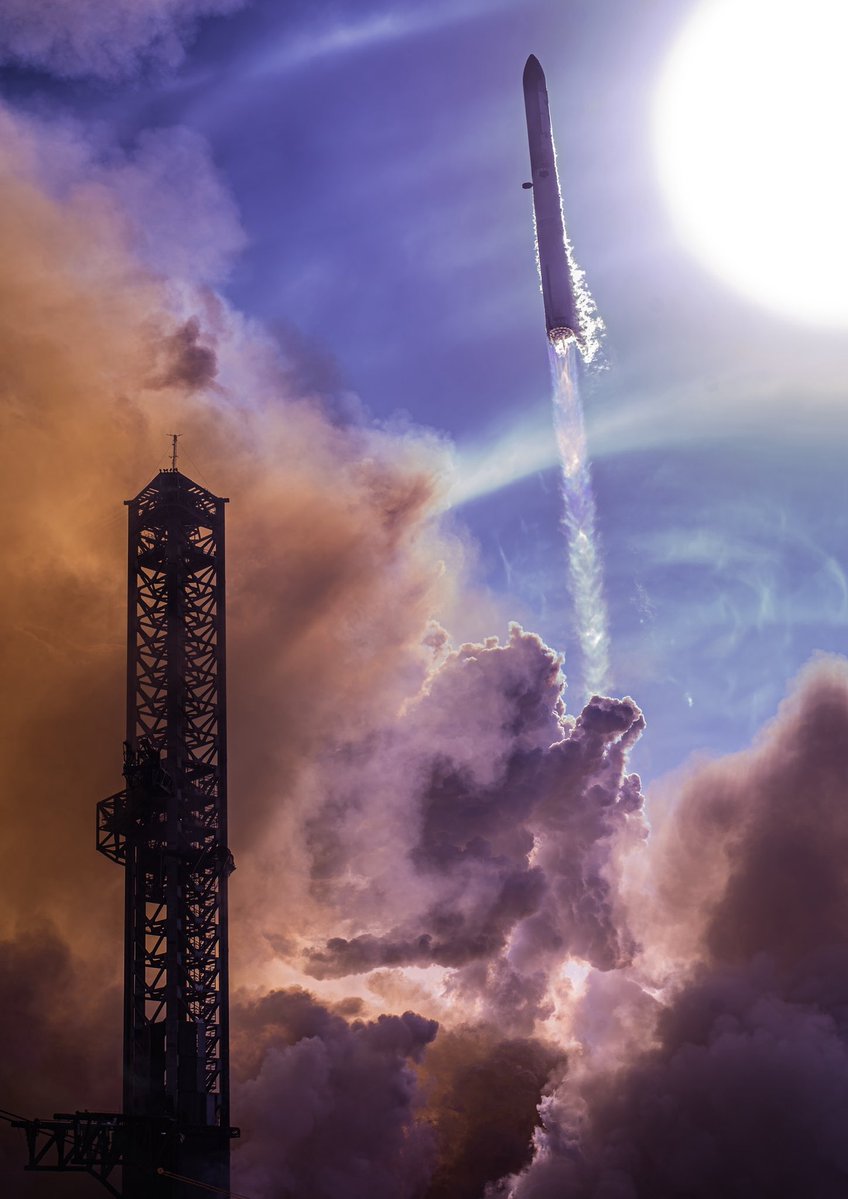
My favorite photo from yesterday: A powerful sight as the latest iteration of Starship climbs through Texan skies. Captured via a sound-triggered camera, this camera captured the chaotic scene far better than I could from a safe distance.
Prints available in the reply.
Three years since the first flight of Starship, the next generation is here. New ship. New booster. New engines. New pad and new test site. SpaceX engineers are working to solve one of the most difficult engineering challenges in history: developing a fully, rapidly reusable rocket
@elonmusk Thank you, @elonmusk - the four of us glimpsed the red hues of Mars far in the distance as the sun slipped behind the Moon and there was zero doubt in our minds that the creative genius of our greatest minds will have us there very soon. LETS GO
Our Lithium Refinery ushers in energy independence for North America
Regionalized access to critical battery minerals brings jobs, cuts emissions & helps accelerate our mission
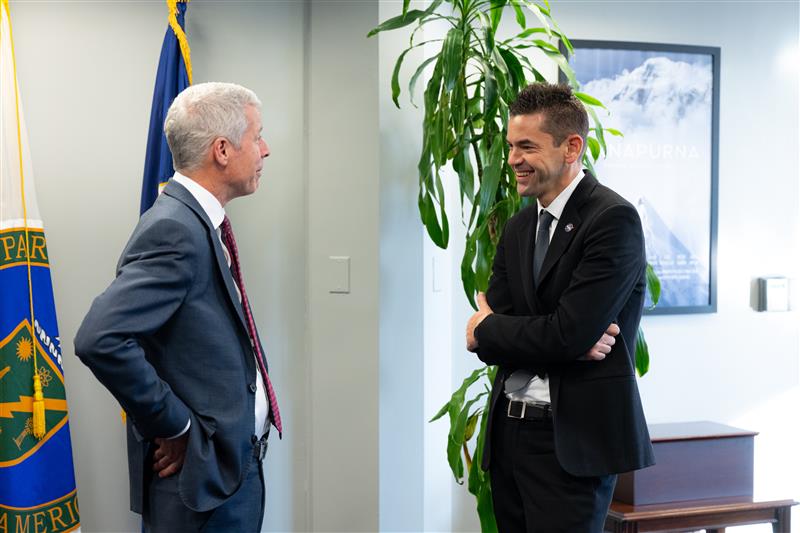
We have news! We're partnering with @ENERGY to get a lunar nuclear reactor ready by 2030. Continuous, reliable power means we stay, build infrastructure, and push to Mars.
We are following through on the President's directive in the national space policy through American leadership in exploration, security, and a thriving space economy.
History proves when we team up on big challenges, we win. @NASAAdmin & @SecretaryWright are doing just that. 🇺🇸