This #RareDiseaseDay we’re highlighting how open data sharing supports diagnosis, research & families living with rare conditions.
Watch to find out how access to rare disease data can help families better understand their children’s rare conditions
@Unique_charity@GeneticAll_UK
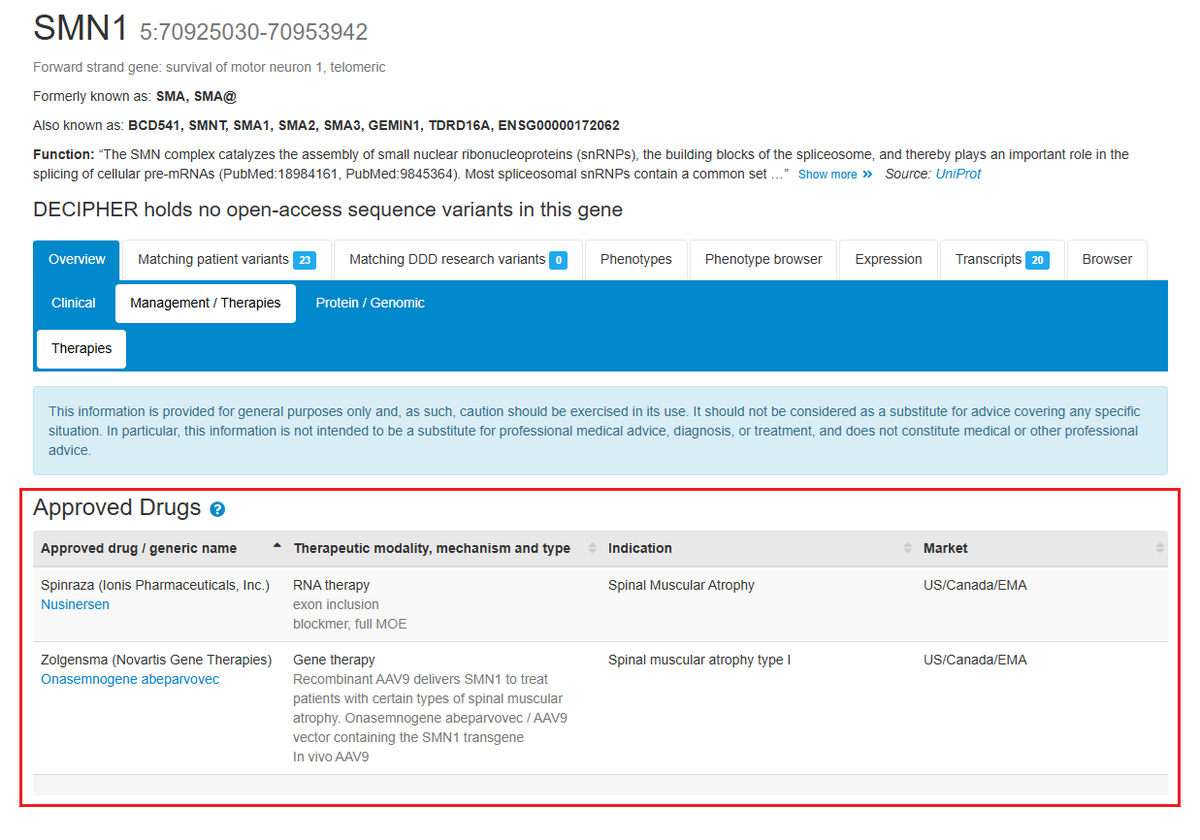
Approved genetic drugs/therapies, from the @N1Collaborative, N1C Gene Registry are now displayed in DECIPHER on a new Therapies tab - available from gene pages and patient records.
I'm excited to be speaking at #FOGLondon this January.
Have a question you'd like me to answer during my session? Drop it in the comments or message me, I'd love to hear your thoughts.
Further information: https://t.co/PpLfaSPEhp
#FOGLondon#genomics#biodata
🎙️ Extra episode from the Centre for Personalised Medicine podcast!
We look back at the highlights for the CPM in 2024-25, and look forward to the next year.
🎧Listen:
Apple: https://t.co/rvlZ15F6vB
Spotify: https://t.co/vvSFAxQDJ6
Mitochondrial gene predictive scores are now displayed on gene pages which indicate the observed depletion or enrichment of specific variants classes in @gnomad_project compared to a mitochondrial genome constraint model under neutrality selection @NicoleLake
ClinGen Variant Curation Expert Panel Recommendations are now displayed more clearly on gene pages and in the pathogenicity evidence interface, especially for genes with recommendations for more than one disease @ClinGenResource@TheACMG
The bespoke PubMed search on gene pages is now displayed in bold. This link opens a browser tab with a PubMed search displaying publications that include the gene of interest @NIH
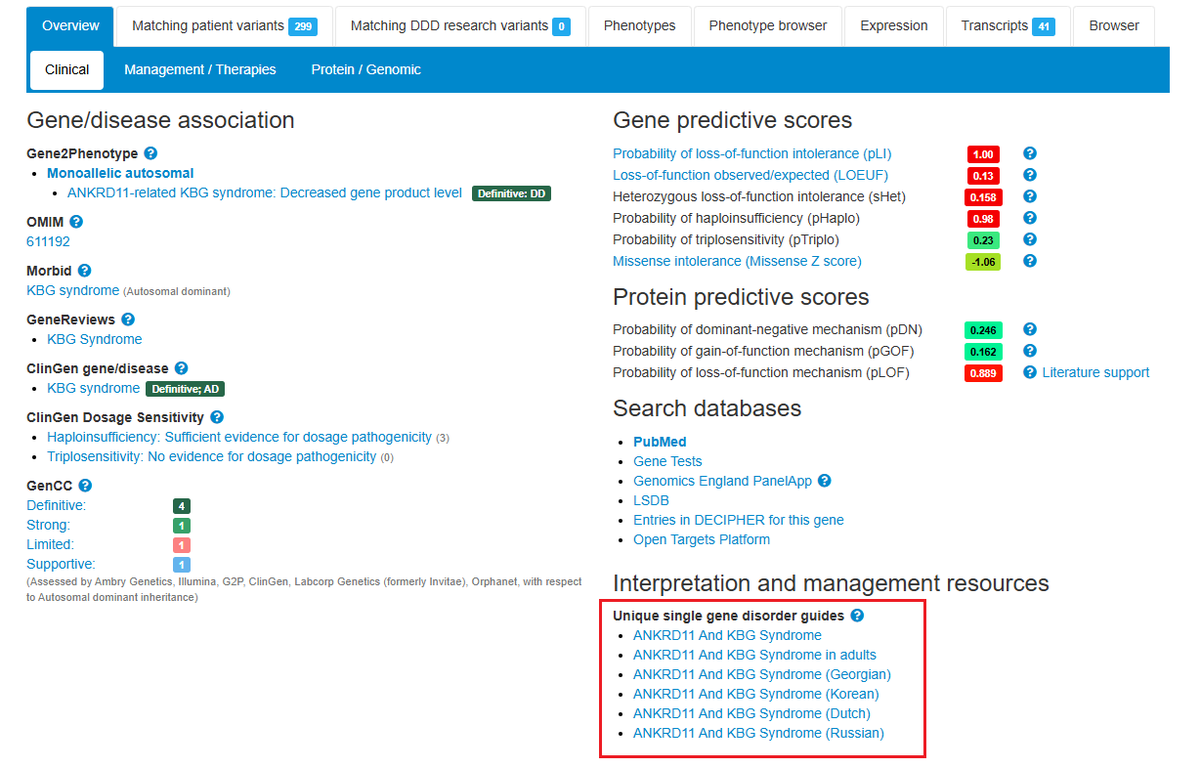
Descriptive names for gene and protein predictive scores are now displayed on gene pages to assist in demystifying these scores and making them easier to understand.
18 additional @gnomad_project short tandem repeats are now displayed; 9 recently discovered and 9 which are not currently linked to rare diseases but have historically appeared in various catalogs as suspected disease-causing loci.
Kym Boycott #ESHG2025
What is matchmaking
One? Two? Zero? sided
Why do we do it (see the photo below ☺️)
👍👍@deciphergenomics.bsky.social second largest contributor to MatchMaker Exchange
❓sadly, 94% of genematcher entries have no phenotype DECIPHER is much better
Cancer case frequency data compiled by the National Disease Registration Service from diagnostic laboratories in England is now displayed on the protein browser. Data is available for ~4,500 variants in 13 cancer susceptibility genes including BRCA1, BRCA2, MSH2, PTEN and SMAD4.
Human Developmental Cell Atlas (HDCA) expression data is now displayed. Expression is displayed in 12 sections of a 6-7 post-conception week human embryo, alongside a sagittal view which displays the region of the embryo represented by each section @HaniffaLab@Muzz_Haniffa
Come and join us @StAnnesCollege on Tuesday 29th April at 17:30 for an evening of talks on the discovery of ReNU syndrome, from the key people involved. Register here for your free place: https://t.co/ht5oJ7PpEi
It's Undiagnosed Children’s Day! 🙌 🎈
Many families spend years searching for answers, living with the unknown, without a name for their child’s condition. Please consider sharing this post, taking part in a fundraiser, or donating to support SWAN UK’s work.
#SWANUK
We're so pleased to share the winners and finalists from our latest art competition, which focused on the theme of how personalised medicine affects our planet.
Huge thank you to everyone who entered and congratulations to the winners and finalists!
https://t.co/iQgBDgcmsr
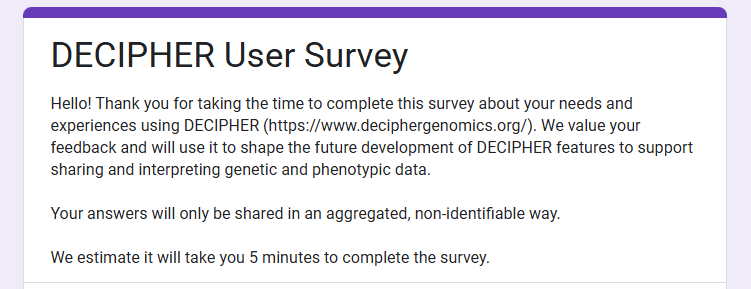
Can you spare 5 minutes to help shape the future development of DECIPHER?
Your views are extremely important to us.
Please access our user survey here: https://t.co/Y84zPWSSGj
CAN YOU HELP US REACH 5K TONIGHT?
If you think health & social care settings should have clean air and new PPE standards to better protect patients & staff from airborne infections, please sign the petition below:
✍🏻 https://t.co/Ie1c1HL1qP