A kid from Singapore who grew up training to be a concert pianist became one of the most important AI researchers alive, quit Google to start a frontier AI lab with 20 people and $60 million, built a model that competed with GPT-4 in a year, then walked away from the unicorn he created and went back to Google to lead the team that just won the International Math Olympiad with an AI.
His name is Yi Tay. Almost nobody outside the AI research world knows it.
Here is the story.
Yi grew up in Singapore. He earned a classical piano performance diploma from Trinity College London in 2012 and almost became a professional musician. He went into computer science instead, did his PhD at Nanyang Technological University, and joined Google Brain as a research scientist. There were almost no Singaporean researchers in frontier AI at the time. He used to say he was on an uncharted path.
At Google he became the co-lead of PaLM-2, the brain behind Google's entire AI stack. He invented UL2, a pretraining method now used across the industry. He invented Differentiable Search Indexes. His work shipped inside Google Assistant, YouTube, and Search.
When ChatGPT launched in late 2022, Yi made a decision that shocked the research community. He left Google.
In 2023 he co-founded Reka with researchers from DeepMind and Meta. The headquarters was in San Francisco, but the team was scattered across Asia, Europe, and the US. They had no big-tech backing. They had 20 people total. They had $60 million in funding.
For context, OpenAI had around 600 people working on GPT-4. Google Gemini had 950 co-authors on the technical report. Reka had fewer than 5 people on pretraining.
Yi lived nocturnally for 639 days. Five cups of coffee a day. Takeout twice. He gained 15 kilograms. He had a newborn baby. He worked across time zones his entire team was spread across. He built infrastructure from scratch in places Google had taken for granted.
In May 2024 Reka Core debuted at number 7 on the LMSYS leaderboard. The only GPT-4 class model on the planet that was not trained by OpenAI, Google, Anthropic, or Meta. A 20-person company with 5 people on pretraining had just shipped a frontier model. Alibaba Cloud, NVIDIA, and Oracle became partners. The company hit a $1.3 billion valuation.
Then in November 2024 Yi did something nobody expected.
He walked away.
He posted a quiet note on his blog titled "Returning to Google DeepMind." After 639 days of building one of the most respected frontier labs outside the big four, he went back to the company he had left. He wrote that he had learned more than he ever thought possible. He did not explain much else.
Google made an extraordinary bet on him. They let him build something nobody else in the industry has, a DeepMind lab in Singapore. Yi runs it with Quoc Le. The team focuses on reasoning, reinforcement learning, and post-training for Gemini. It started with a dozen researchers. It now has over 300.
Last summer, Yi's team led the effort that won the International Math Olympiad gold medal with Gemini Deep Think. The model solved IMO problems in a live competition, the kind that fewer than a hundred humans on Earth can solve under time pressure. His team also drove the work behind Gemini's ICPC 2025 gold medal.
Yi still lives in Singapore. He still plays piano when he has time. He calls himself a global citizen who does not identify with any local AI scene. He has been at Google for nearly 14 years if you count the Reka detour. He says the Singapore lab is just getting started.
A pianist from Singapore co-led the model that powered Google AI, left to build a frontier lab with 20 people and beat models trained by armies, walked back into Google, and is now running the team that just taught a machine to win Math Olympiad gold.
The most influential AI researcher you have never heard of is sitting in a Singapore office right now, training the next generation of models that think.
I accidentally broke my brain reading about Nobel Prize winners last month.
There's this thing called "Janusian thinking" that basically explains why some people's minds work like magic while the rest of us think in straight lines. Named after Janus, the Roman god with two faces pointing opposite directions.
The psychologist who discovered it, Albert Rothenberg, was trying to figure out what made breakthrough thinkers different. He interviewed dozens of Nobel laureates, major artists, revolutionary scientists. What he found sounds impossible.
These people can hold two different ideas in their mind at the same time. They can explore both without switching back and forth or forcing a quick comparison. They can consider “yes” and “no” to the same question simultaneously and stay clear-headed.
Einstein too talked about this when he described his relativity breakthrough. He was imagining riding alongside a beam of light while also standing perfectly still. Both perspectives at once. Mozart said he could hear an entire symphony "all at once," every note, every contradiction, every resolution happening in a single moment of awareness.
Your average person's mind works like a courtroom. Evidence comes in, you weigh it, you reach a verdict. Case closed. But Janusian minds work more like... I don't know, like a quantum computer that can process multiple realities simultaneously until something new emerges from the overlap.
I've started noticing it in conversations. When someone can genuinely see both sides of something without needing to pick one, it drives people nuts. They want you to land somewhere definite. The ability to live in that tension space reads as wishy-washy or indecisive.
Most creative advice tells you to "think outside the box." But Janusian thinking is weirder than that. It's being inside and outside the box at the same time. It's thinking the box exists and doesn't exist simultaneously.
Which explains why truly creative people seem slightly unhinged. They think they're choosing between realities. But, they're inhabiting multiple realities at once, mining the contradictions for insights the rest of us never see.
Sadly, most of us have trained ourselves out of this ability. We've learned that holding contradictions feels unstable, so we rush toward resolution. We've been taught that changing your mind means you were wrong before, so we defend positions instead of exploring them.
But the people changing the world have kept that childlike ability to hold impossible thoughts without needing them to make sense immediately.
We just need to live in the questions everyone else is too scared to ask.
🍓 Ichigo-llama3.1: Local Real-Time Voice AI
We bring 2 key improvements to Ichigo:
- It can talk back (Yes!)
- It recognizes when it can't comprehend input
You can now run this little strawberry on your device! Demo on a single @nvidia 3090 GPU.
1/10
Heyo, the @homebrewltd speech model `llama3-s` is the top space on @huggingface !
Try it out:
ZeroGPU Demo 👉 https://t.co/lYr68EbjKJ
Hosted on our 4090 👉 https://t.co/TrwuGxJwbL
Faster open-source voice AI processing?
llama3-s vs. traditional cascaded (transcription-first) approach:
- 13x faster processing (skips transcription step)
- Efficiency gap widens with longer audio
- More responsive real-time interactions
@manwey@cortex_so thanks for testing Cortex @manwey!
Can you share any errors from ~/cortex/cortex.log?
Possible but needs verifying - we've seen this 500 error with an insufficient VRAM. Also helps to kill any cortex processes on port 1337 (pending bugfix to kill dangling processes)
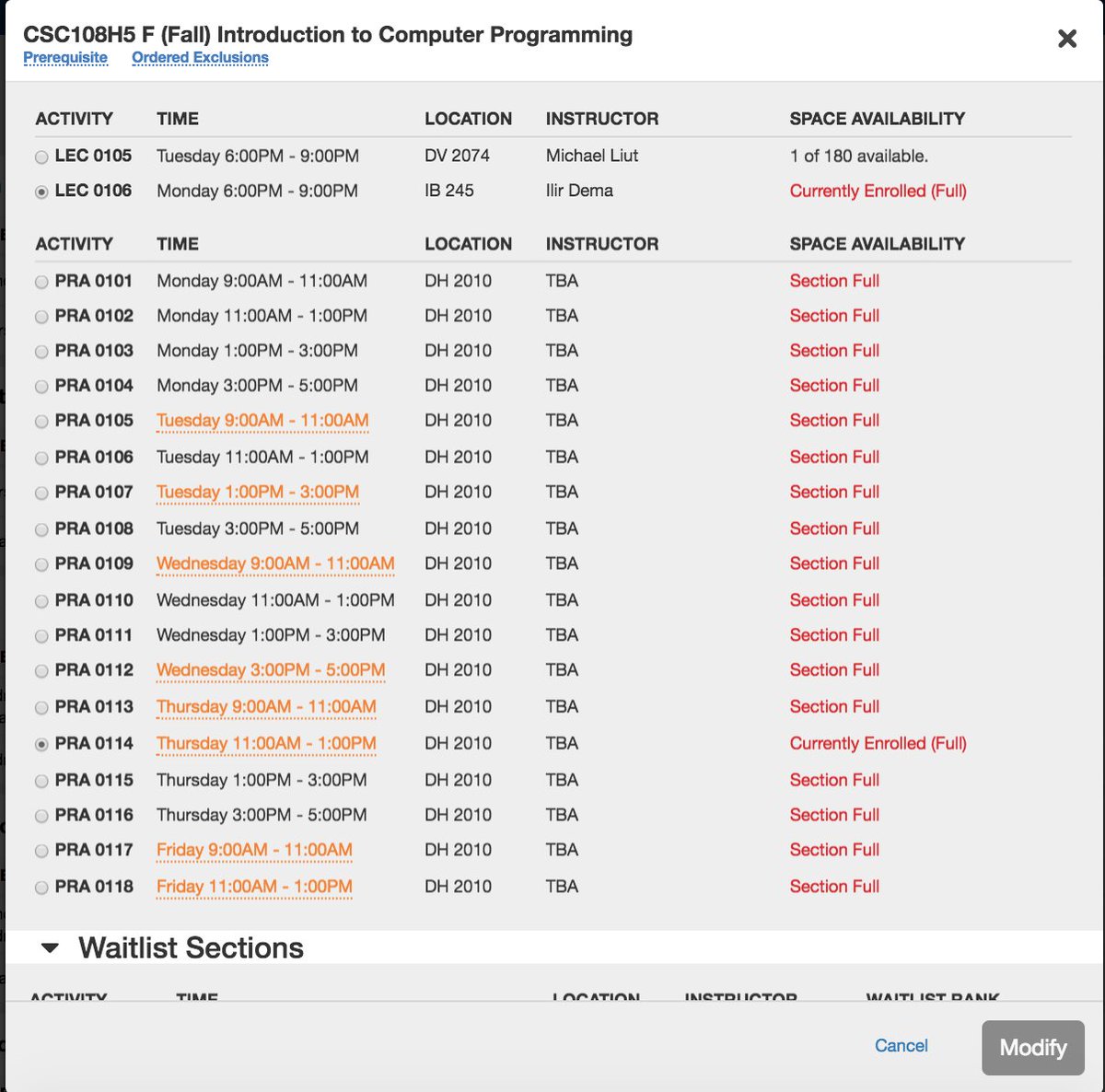
@UTMRegistrar Hey UTM Registrar! I'll like to change my tutorial timing but all the sections are full. So anyone trying to swop is stuck in this situation where no changes can be made. Is there anyway around it?