There are more than 10,000 people who should hear this message. The reality is that most of them never will. Modern communication systems are increasingly filtered through algorithms that decide what people see, what gains visibility, and what disappears beneath the surface. The result is that ideas are often judged not by their merit but by whether they fit the incentives of the platforms that distribute them. If this vision is ever going to become reality, it will not happen because an algorithm decides it should. It will happen because people choose to discuss it, challenge it, improve it, and share it with others.
What is being proposed is not another technology company. It is not another token project. It is not another attempt to build a larger data centre or a more powerful centralised model. The objective is something much broader. It is the creation of a distributed intelligence economy in which individuals own their knowledge, own their tools, own their models, and participate directly in the creation of value.
For too long the assumption has been that progress requires concentration. Larger institutions. Larger platforms. Larger data centres. Larger models. Larger corporations. The belief is that intelligence improves as more information is gathered into fewer hands. Yet history repeatedly demonstrates that knowledge does not originate from centres of power. It originates from individuals. Discovery is distributed. Expertise is distributed. Creativity is distributed. Innovation is distributed.
Artificial intelligence should reflect that reality.
The future should not consist of a handful of corporations acting as gatekeepers to intelligence. It should consist of millions of people creating specialised tools, specialised agents, specialised services, and specialised knowledge systems. A physician understands things that an engineer does not. An engineer understands things that a lawyer does not. A scientist understands things that an accountant does not. Human civilisation works because knowledge is dispersed across society. The strength of the system comes from the interaction between specialists, not from the existence of a single authority.
The same principle can be applied to artificial intelligence. Instead of one giant model attempting to know everything, we can build networks of specialised agents that cooperate, compete, verify one another, and continuously improve. We can create systems that discover expertise rather than pretending expertise can be centralised. We can build mechanisms that reward truth, reward reliability, reward contribution, and reward innovation.
Most importantly, we can create systems that help people become more capable rather than making people increasingly dependent upon a small number of organisations. Technology should extend human potential. It should allow individuals to do more, learn more, create more, and contribute more. It should not exist primarily to extract value from users and concentrate it among a small group of owners.
This is why ownership matters. This is why reputation matters. This is why open systems matter. If individuals cannot own what they create, cannot control the knowledge they develop, and cannot participate directly in the value they generate, then the future will simply reproduce the same concentration of power under a different technological label.
A distributed intelligence economy offers a different path. It allows individuals to build. It allows communities to experiment. It allows experts to encode their knowledge into specialised systems. It allows markets to discover value through competition rather than through central planning. It creates diversity rather than uniformity and resilience rather than dependence.
Call me a fraud if you wish.
Call me a liar.
Call me delusional.
Call me whatever makes you feel comfortable.
The interesting thing is that none of those words matter once the code exists.
For years, many people have focused on stopping me, discrediting me, attacking me, censoring me, misrepresenting me, and preventing anything I was working on from ever seeing the light of day.
At one stage that may have worked.
At one stage much of this existed only in my head, in notebooks, in designs, in unfinished code, in prototypes, in ideas that had not yet become reality.
Ideas can be delayed.
Ideas can be suppressed.
Ideas can be ridiculed.
What becomes much harder to stop is a working system.
This month the code goes public.
Not a promise.
Not a roadmap.
Not a marketing presentation.
Code.
Working systems.
Architectures.
Protocols.
Implementations.
People will be free to inspect it, analyse it, criticise it, improve it, fork it, extend it, or ignore it.
That choice will belong to them.
The thing that many people seem unable to understand is that I am not asking anyone for money.
I am not selling access.
I am not selling licences.
I am not selling permission.
I am not creating a gatekeeper.
I am releasing it.
Free.
The irony is that this is the part many people will find hardest to believe.
Not the cryptography.
Not the distributed threshold systems.
Not the digital possession model.
Not the ability to create truly scarce digital goods.
The hardest thing for many people to understand is that after spending years building it, I am simply giving it away.
And that is why it is already too late to stop.
A secret can be suppressed.
An unpublished idea can be buried.
A prototype can be hidden.
A public implementation cannot be uninvented.
Once the code exists in the open, it belongs to history.
From that point onward, the question is no longer whether it can be stopped.
The question becomes what the world chooses to build with it.
There is no platform today that creates what I am releasing.
Not Ethereum.
Not BTC.
Not Solana.
Not any so-called NFT marketplace.
What people call an NFT today is usually a pointer, a receipt, or a decorative database entry. The underlying image, book, document, or file is copied endlessly. Ownership changes in name only. Possession does not.
That is not scarcity.
I am releasing a system for encrypted digital goods that are actually transferable.
An image.
A book.
A document.
A contract.
A financial instrument.
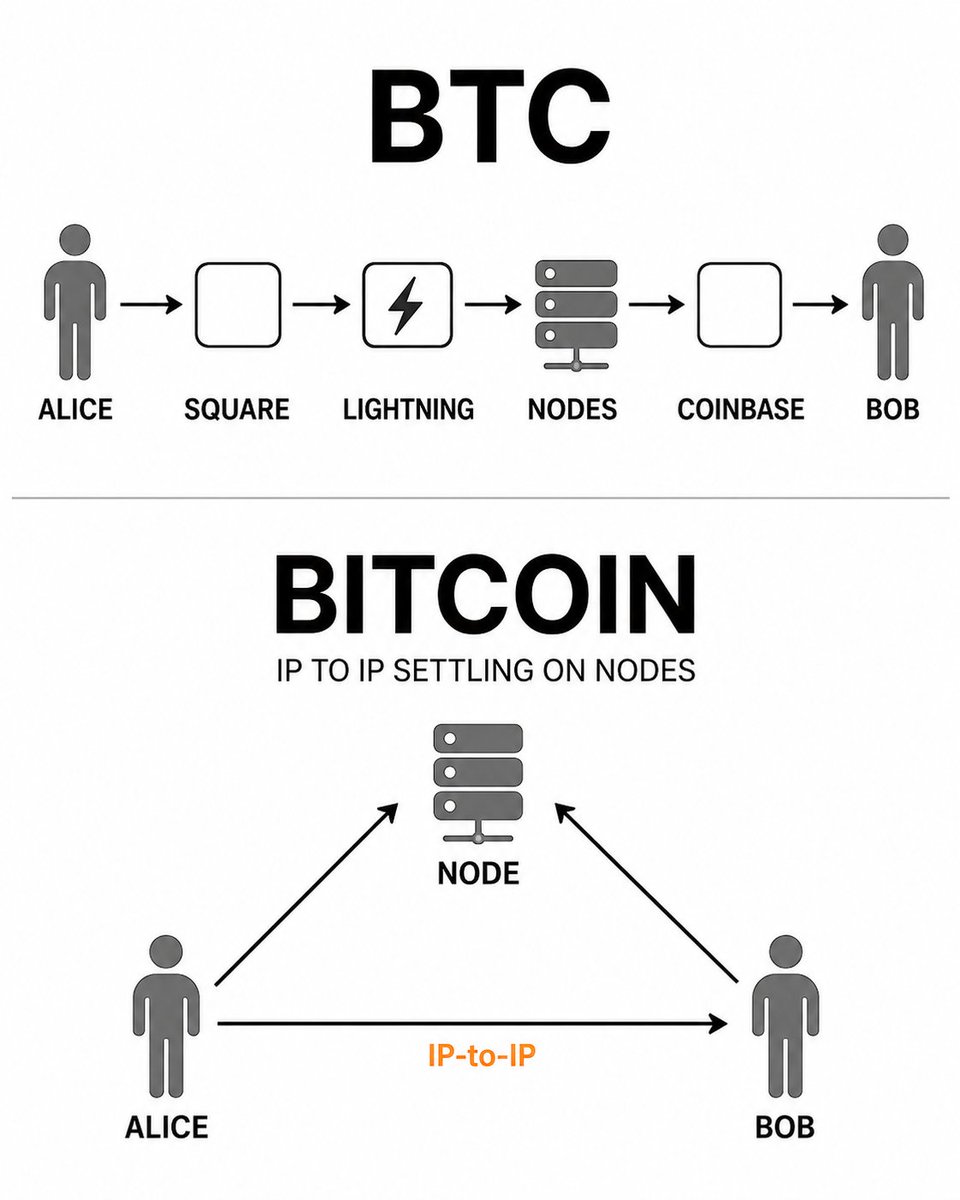
When Alice transfers the asset to Bob, Bob receives access and Alice loses it. The system is designed so the asset is not merely duplicated with a new label attached. It is transferred.
That is the difference.
This creates truly scarce digital goods: encrypted, transferable, auditable, and tied to Bitcoin.
Until now, digital assets have mostly been theatre. A stage prop pretending to be property.
This is different.
This is digital property with possession.
BSVM: Replacing Ethereum with Real Bitcoin (SV) — Without Changing a Single Line of Code ⚡🔄
This changes everything for developers and institutions. 🚀
BSVM (Bitcoin Script Virtual Machine) allows full Ethereum Virtual Machine (EVM) compatibility to run natively on Real Bitcoin (SV).
That means:
• You can take existing Ethereum smart contracts and run them on BSV **without rewriting a single line of code** ✅
• All your tools, libraries, and developer knowledge remain exactly the same 🛠️
• But now you get the superior foundation of the original Bitcoin protocol 💪
The advantages are massive:
• True finality (not probabilistic like Ethereum L2s) 🔒
• Extreme scalability via Teranode — already proven 1.1M+ TPS ⚡
• Ultra-low fees — often just a fraction of a cent 💰
• No bridges, no wrapped tokens, no Layer-2 complexity
• Real on-chain settlement with unbreakable security 🛡️
For years institutions faced a painful compromise: they liked Ethereum’s developer experience, but hated the high fees, congestion, and lack of finality 😩
**BSVM removes that compromise.** ✅
You keep everything you love about Ethereum’s tooling…
but replace the problematic infrastructure with the only blockchain designed from day one for global scale. 🌍
This is not a theoretical idea.
This is live technology being developed by the BSV Association.
The future of institutional blockchain adoption may not be “building on Ethereum.”
It may be **replacing Ethereum’s base layer with Real Bitcoin (SV)** — while keeping the entire developer ecosystem intact. 🔥
The infrastructure for the next wave of serious adoption is already here.
The awakening is accelerating.
**The storm is coming.** 💥
Sources:
• Siggi Óskarsson, CTO of the BSV Association – BSVM White Paper (April 2026)
• “What Siggi Built” – Technical overview by Craig Wright (SingularGrit, May 2026)
• BSV Association documentation on BSVM – EVM compatibility on Bitcoin SV
#RealBitcoin #BitcoinSV #BSV #BSVM #EVM #Teranode #Ethereum #InstitutionalAdoption #SmartContracts #SatoshiVision
Crypto didn’t start with Bitcoin… it was built over decades 💻
Cypherpunks were solving privacy and money long before the hype 🔐
DigiCash, Bit Gold, b-money… all early attempts to remove trust from the system
Bitcoin didn’t invent the idea… it made it work 📈
That’s why this isn’t just a trend… it’s an evolution
#crypto #bitcoin #blockchain #BeLikeLisa
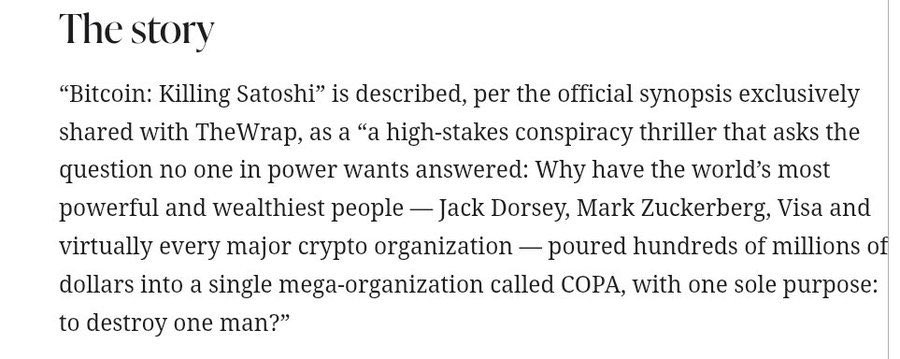
If Craig Wright was completely irrelevant, there wouldn’t have been years of coordinated legal action, media campaigns, documentaries, conferences, and billions spent trying to discredit him.
People don’t spend that kind of time or money fighting ghosts. They fight threats to narratives.
They removed OP codes Satoshi wrote. Changed the script engine. Added SegWit. Froze the block size. Then called it Bitcoin. That’s not development. That’s sabotage.
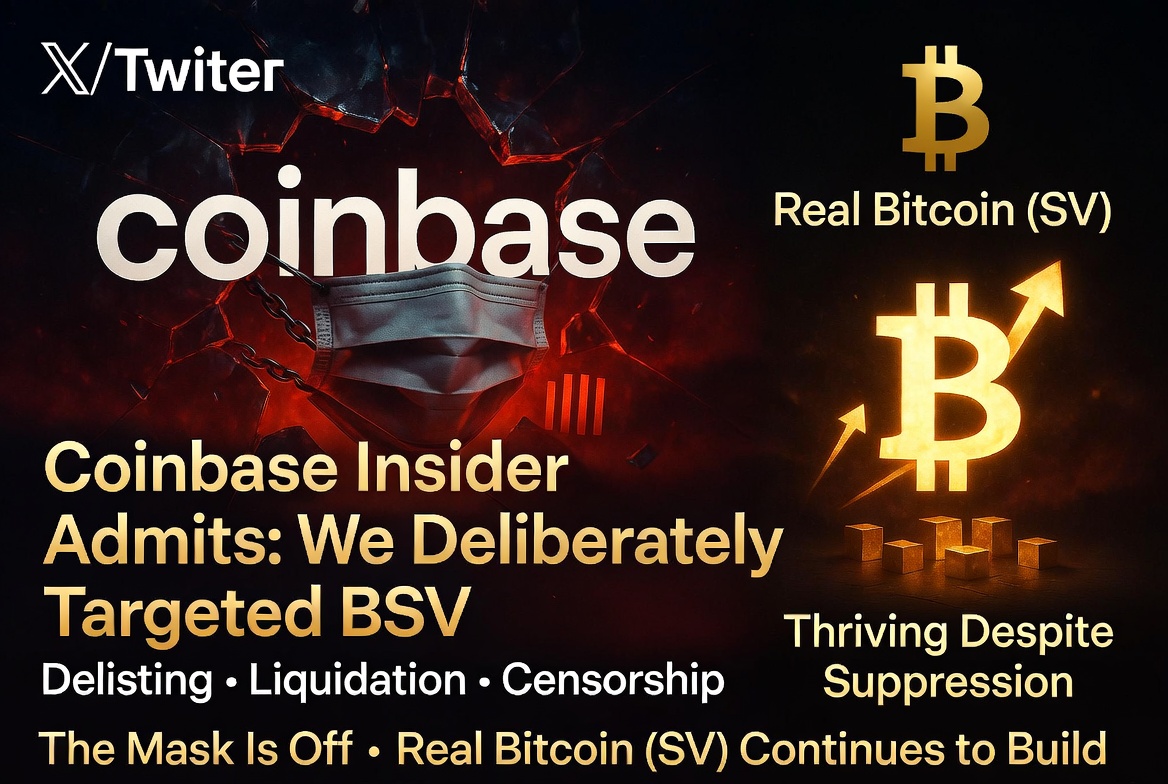
Coinbase insider just openly admitted they deliberately targeted and censored Real Bitcoin (SV). 👀💥
Today, Brendan Lee (@Brendan_Lee__) — a verified Bitcoin engineer with years of experience — publicly posted:
> “Today I was fired from Coinbase. I was responsible for delisting and liquidating BSV and ensuring that any negative comments about our actions were censored by @jack. The mask is off losers.”
Important context:
Brendan Lee is not an anonymous account. He is a well-known Bitcoin developer — former Training & Development Manager at the Bitcoin Association and CEO of Elas Digital. His admission carries real weight. ⚖️
This is a direct, first-hand confession:
- BSV was not delisted for “compliance reasons” 🚫
- It was a deliberate, targeted action to suppress the original protocol
- Even criticism was actively censored 🤫
This perfectly exposes the centralization, gatekeeping, and control inside major exchanges — the exact opposite of Satoshi’s vision. 🔒
Meanwhile, Real Bitcoin (SV) continues to thrive without their permission:
✅ Unlimited on-chain scaling with Teranode
✅ Blocks hundreds of megabytes in size 📦
✅ Millions of transactions per day ⚡
✅ Near-zero fees 💰
✅ Real enterprise adoption (including KRWQ stablecoin in South Korea) 🇰🇷
While centralized platforms were busy trying to bury it…
Real Bitcoin (SV) kept building and delivering actual utility. 🌱
The more they attack and suppress the original Bitcoin, the clearer the contrast becomes.
Real Bitcoin (SV) doesn’t need their approval to succeed. 🚀
The awakening is accelerating.
The storm is coming. 💥🌊
Sources:
• Original post by Brendan Lee:
https://t.co/sSuMaEkorJ
• Brendan Lee’s Profile (Bitcoin engineer, ex-Bitcoin Association, CEO of Elas Digital):
https://t.co/DCLSpDjegJ
#RealBitcoin #BitcoinSV #BSV #Coinbase #Censorship #SatoshiVision #Teranode #MassAdoption