Blessed are the ones who have the feeling of pure love and devotion 🥹😍
See this beautiful video of @Gurudev cutting the cake of a devotee on her birthday 🎂
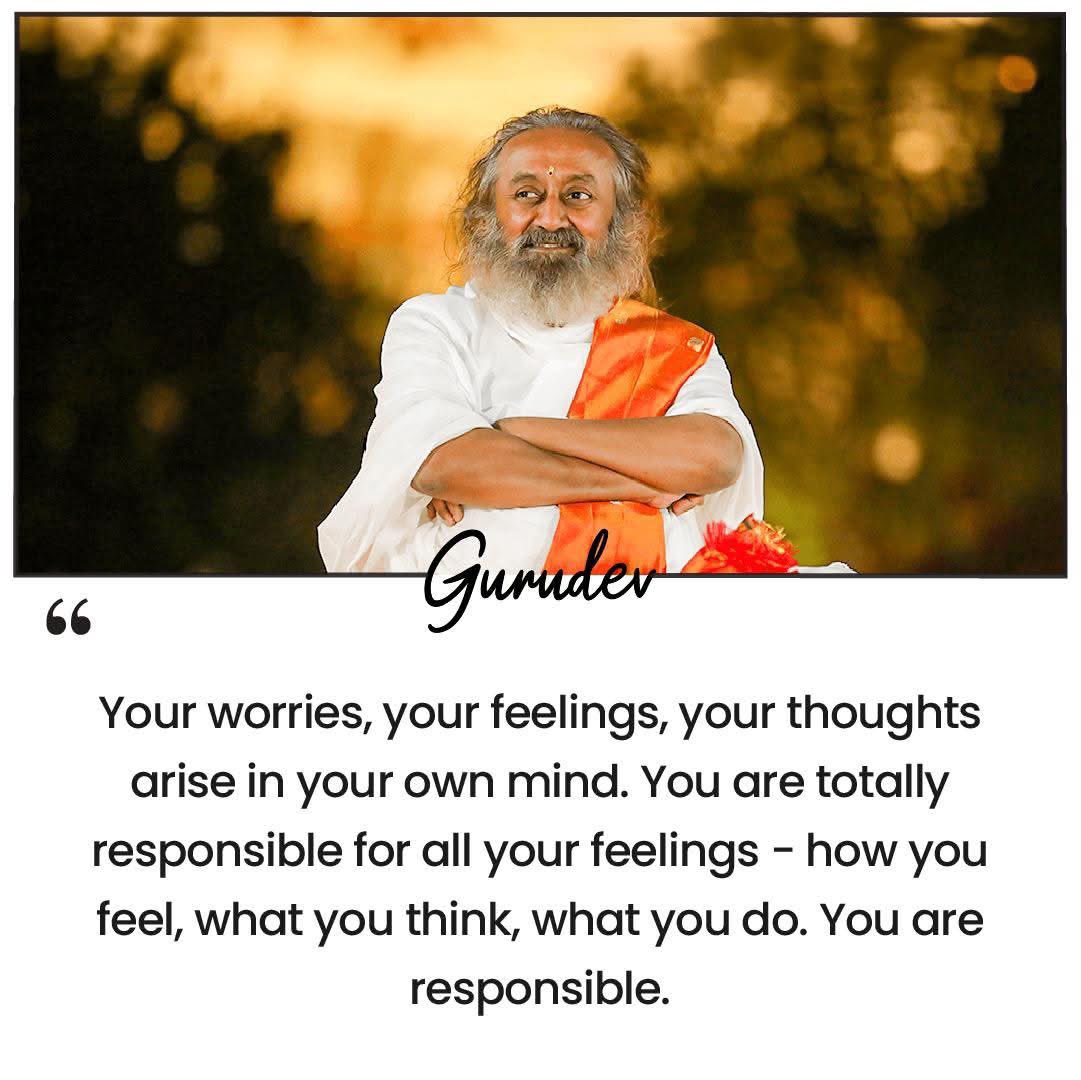
Your worries, your feelings, your thoughts arise in your own mind. You are totally responsible for all your feelings - how you feel, what you think, what you do. You are responsible.
Pujya @Gurudev Ji
The motto of the @ArtofLiving is to realize that life is a celebration, and the whole world is one family.
~ @Gurudev Sri Sri Ravi Shankar
---
🌍 One Smile... Uniting Millions of Hearts. ❤️
From one Heart to Another, Gurudev's love is reaching every corner of the world. Together, we are building a more peaceful, joyful, and compassionate planet. 🙏✨
Gurudev's compassion is uniting humanity beyond borders, cultures, and languages
.
Love is spreading. Hearts are awakening. The world is becoming One Family. 🌍🙏💙
You are made up of love and love is God. So you are made up of God! Do not think God is sitting somewhere in heaven. God is here and now.
~ @Gurudev Sri Sri Ravi Shankar
Bhagavad Gita's Guide to Overcoming Tamas
To shift out of laziness, despair, and procrastination, the text offers actionable strategies:
1) Fix Your Diet: Consume Sattvic foods (fresh, juicy, nourishing) rather than Tamasic foods (stale, tasteless, putrid) to boost mental clarity (Ch. 17, V. 8-10).
2) Regulate Daily Habits: Balance your sleep, waking hours, work, and recreation; extremes breed inertia (Ch. 6, V. 16-17).
3) Detach from Results: Focus purely on your immediate duty (Karma), not the future outcome; this cures the anxiety that causes procrastination (Ch. 2, V. 47).
4) Use Steady Intellect: Employ Buddhi (higher intellect) to rule over the wandering mind and senses (Ch. 3, V. 42).
The Eight Characteristics of a Tamasic Worker
1) Ayuktah (Undisciplined)
Unable to concentrate or remain committed.
The mind constantly wanders and lacks purpose.
2) Prakritah (Unrefined)
Governed by lower instincts rather than higher values.
Acts impulsively without refinement or discrimination.
3) Stabdhah (Stubborn)
Arrogant and unwilling to learn.
Rejects advice even when it is beneficial.
4) Shathah (Deceitful)
Uses dishonesty, manipulation, or hypocrisy for personal gain.
Truth is sacrificed for convenience.
5) Naishkritikah (Malicious)
Takes pleasure in harming, insulting, or obstructing others.
Instead of uplifting, such a person spreads negativity.
6) Alasah (Lazy)
Avoids effort and responsibility.
Prefers comfort over growth.
7) Vishadi (Despondent)
Habitually pessimistic, gloomy, and discouraged.
Rather than seeking solutions, remains trapped in hopelessness.
8) Dirgha-sutri (Procrastinating)
Constantly postpones important work.
Simple tasks become prolonged due to indecision and inertia.
Practical Application
Recognize Your Dominant Tendencies
Everyone experiences moments of Tamas.
Ask yourself:
1) Do I delay important work?
2) Do I avoid responsibility?
3) Do I blame circumstances instead of improving myself?
Awareness is the first step toward transformation.
Replace Inertia with Purpose
Even small, consistent actions weaken Tamas.
Examples:
1) Wake up at a fixed time.
2) Exercise daily.
3) Complete one important task before checking distractions.
4) Maintain regular spiritual practice.
5) Action gradually replaces inertia.
Choose Uplifting Company
Our environment influences our Gunas.
Seek the company of people who inspire discipline, wisdom, and positivity.
@Gurudev Sri Sri explains that Tamas is not our true nature but a temporary cloud covering the mind. Laziness, negativity, and procrastination increase when prana (life energy) is low. Through regular meditation, Sudarshan Kriya, Seva, proper food, and disciplined living, Tamas gradually transforms into enthusiasm, clarity, and joy. Spiritual practices increase energy, making right action effortless.
Swami Vivekananda's Insight
Swami Vivekananda repeatedly warned against inertia, calling it one of the greatest obstacles to spiritual and worldly progress. He taught that weakness, laziness, and constant complaining are not spirituality but signs of stagnation. His message was, "Arise, awake," encouraging every seeker to cultivate strength, energy, fearlessness, and purposeful action as essential steps toward realizing the divinity within.
The Gita’s Formula for Mind Control
To shift your intellect toward the Sattvic state and conquer a lazy, procrastinating mind, Chapter 6 (Verses 25–26) provides a direct, two-step practice:
1. Abhyasa (Constant Practice)
You must train the mind repeatedly. Whenever the restless and unsteady mind wanders away due to its fleeting nature, you must gently but firmly pull it back and bring it under the control of the Self.
2. Vairagya (Detachment)
You must practice dispassion toward distractions. Procrastination usually happens because the mind seeks immediate gratification (scrolling, resting) over long-term duties. Vairagya is the mental strength to say "no" to temporary impulses.
In the midst of life's constant movement, give yourself the gift of stillness | Advanced Meditation Program at the Art of Living International Center, Bengaluru. 🧘
Date: 23 - 26 Jul. 2026
👉 Register: https://t.co/nqbJ8plmSS
For Dr. Dakshata Padhye, parent of Isha and Ira Padhye, SSRVM has been more than a school. It has been a nurturing community.
From supporting her daughter through health challenges to encouraging her journey in academics, sports, and spirituality, the teachers and mentors walked alongside her every step of the way.
It is this balance of care, values, and holistic development that makes the learning journey truly meaningful.
Breathing holds the secret to a healthy life; @Gurudev explains the true and scientific meaning of perfect health exclusively on @HindiNews18
Read more
https://t.co/Ru5hPxUa0c
🚀 Empower your teen to thrive! The YES! Program builds confidence, resilience and leadership through yoga, breath-work and life skills. Register today!🌟 https://t.co/Xk59NLbMr3 😌🧘 #YES#Teens#Meditation#Yoga#Breath
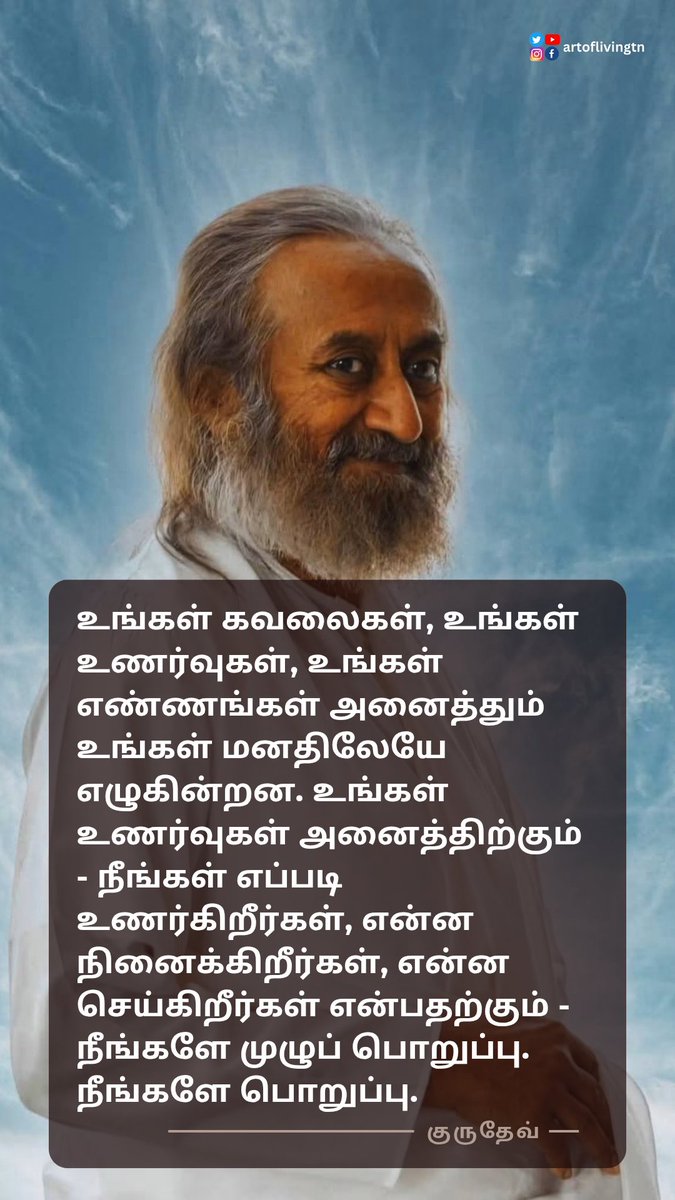
உங்கள் கவலைகள், உங்கள் உணர்வுகள், உங்கள் எண்ணங்கள் அனைத்தும் உங்கள் மனதிலேயே எழுகின்றன. உங்கள் உணர்வுகள் அனைத்திற்கும் - நீங்கள் எப்படி உணர்கிறீர்கள், என்ன நினைக்கிறீர்கள், என்ன செய்கிறீர்கள் என்பதற்கும் - நீங்களே முழுப் பொறுப்பு. நீங்களே பொறுப்பு.
-@Gurudev@ArtofLiving