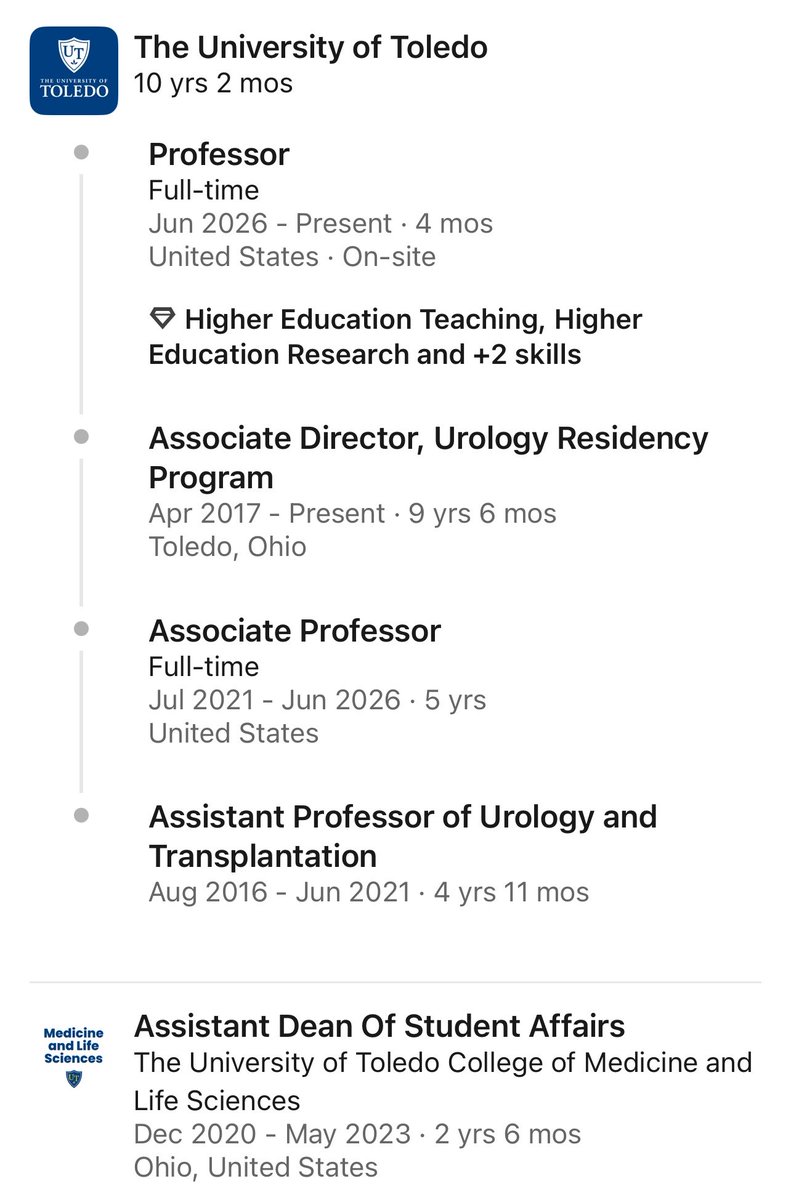
Update: RCCG’s Urologist, Prof. Obi Davies Ekwenna, completes surgery on a patient in Abuja, all the way from Redeemers Health Village in Mowe, Ogun State.
Marking Nigeria & West Africa’s first ever tele-robotic surgery. Training at the ₦5.4bn facility begins October 22, 2026.
We join Nigerians and the global creative community in mourning legendary actor Olu Jacobs.
From international cinema, including American productions, to becoming one of the defining voices of Nigerian film, his extraordinary talent crossed borders and generations.
His legacy lives on in the stories he told and the generations of artists he inspired.
Rest in peace, Olu Jacobs.
Image Credit: https://t.co/EKUmREmAVd
I want to be fair to @PeterPsquare . He is not wrong that French opens doors Igbo does not. He is not wrong that parents get to decide how they raise their own children. But I guess he underestimates the fact that he is not just any parent. P-Square is a name millions of Igbo people grew up admiring, their success made them proud to be who they are. People all over the world sang their songs using Igbo words. So when a voice like that says Igbo is not worth passing on, it does not land like one man’s private choice. It gives permission for a belief a lot of people were already quietly carrying, that English and French, in short anything foreign, sits above Igbo, that their native language is something to graduate out of rather than something to hold onto.
I am not Igbo. I am Swiss. But my husband made it clear from the beginning that our children would speak Igbo, and I have never once seen that as a burden or a complication. Our children speak Swiss German, English, and Igbo at home, German at school, and now French as well, since that is part of their school curriculum too. Five languages, and none of them fighting each other for space. That is the part people forget when they frame this as a choice. Children do not need to pick one language to be strong in. They can navigate several at once, easily.
It is adults who turn language into a competition. Children just absorb what is spoken to them and grow fluent in all of it.
A language is not only a tool for getting ahead. It is also a rooting tool, the place where love, memory, and belonging live. It is the specific way a grandmother scolds you and forgives you in the same breath. It is a joke that only works in the original. Lose the language, and you do not just lose a skill. You lose a room in your own house, one you can still visit as a guest but never quite live in again. That is what worries me most in this conversation. A child who cannot speak their father’s or mother’s language will, at some point, stand in that homeland and feel like a stranger. Not unwelcome, not unloved, just outside something that was supposed to be theirs by birth.
One day, my sons will be handed a kola nut, and in that moment, no one should have to do it for them. They should know how to receive it, how to speak over it, how to break it themselves, not pass it along to someone else because they never learned the words or the meaning behind them. That is such a small moment, and yet it says everything. It is the difference between being someone’s guest and being someone’s own.
So when I hear “Igbo is useless,” what I actually hear is a wound that has not healed.
From the outside, I have watched how often English or French get treated as the languages worth keeping, while Igbo gets treated as the one you can afford to let go of. That preference did not come from nowhere. It is a colonial hierarchy that convinced generations of people that closeness to their own culture was a limitation rather than a foundation. I don’t say this to shame anyone, least of all a man raising his own family the best way he knows how. I say it because the people who shape how we see ourselves carry a weight beyond their own households, whether they asked for it or not.
My hope is simple. That we stop treating our children’s languages as a competition with only one winner. That we let them have both the world and their roots, and trust that they are capable of holding both without ever having to choose.
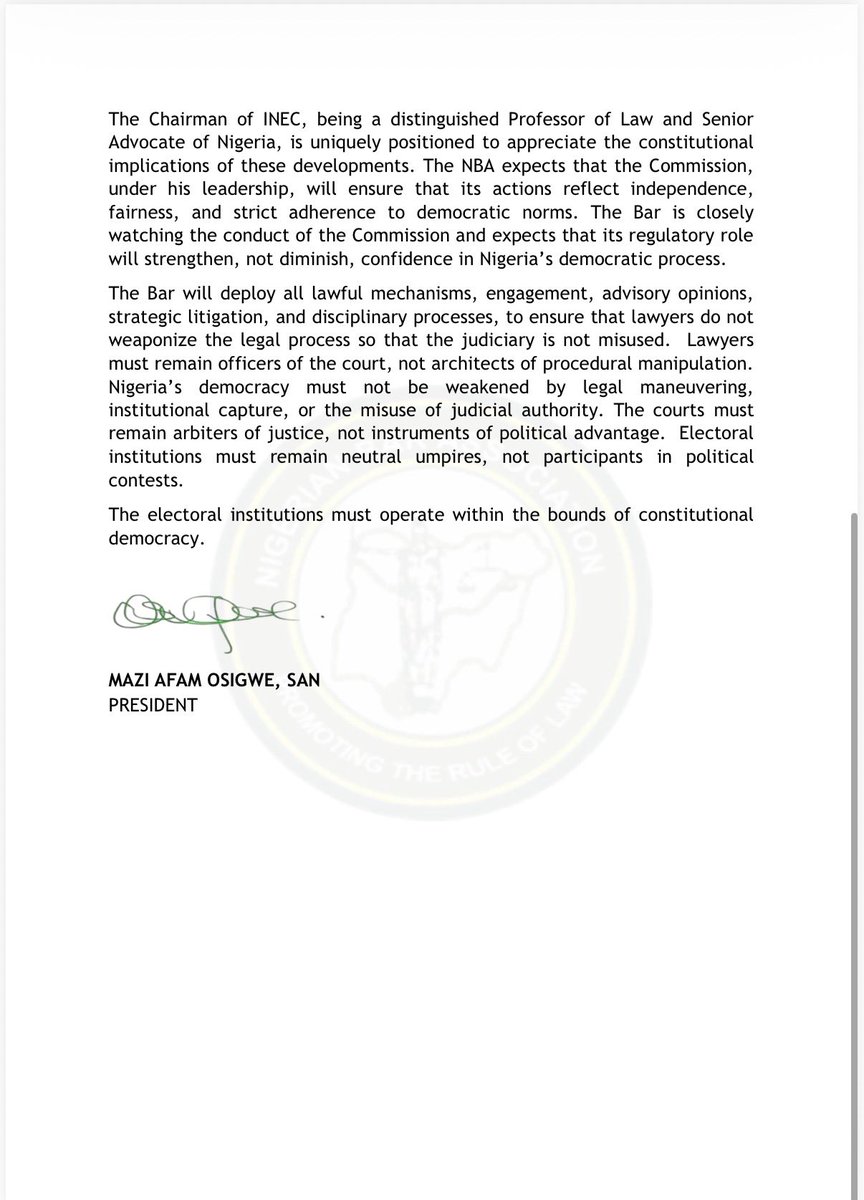
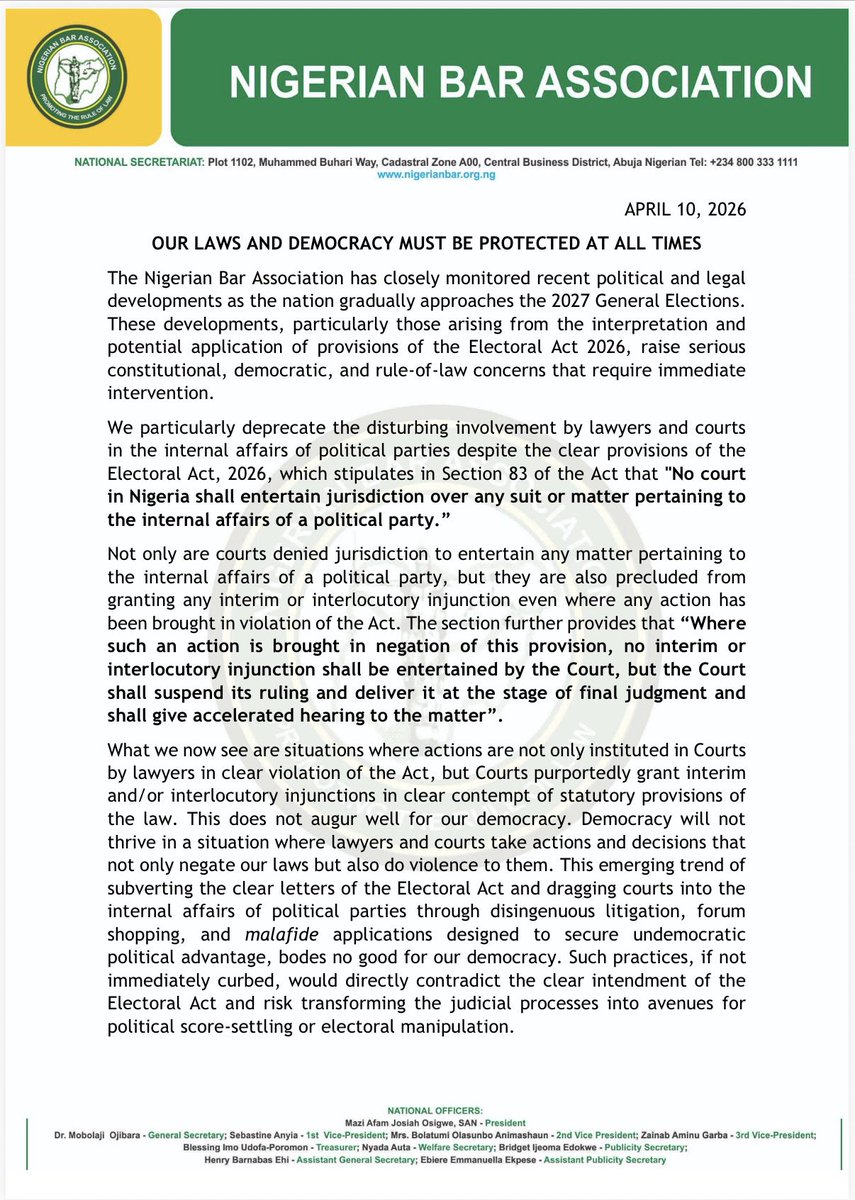
OUR LAWS AND DEMOCRACY MUST BE PROTECTED AT ALL TIMES
The Nigerian Bar Association has closely monitored recent political and legal developments as the nation gradually approaches the 2027 General Elections. These developments, particularly those arising from the interpretation and potential application of provisions of the Electoral Act 2026, raise serious constitutional, democratic, and rule-of-law concerns that require immediate intervention.
We particularly deprecate the disturbing involvement by lawyers and courts in the internal affairs of political parties despite the clear provisions of the Electoral Act, 2026, which stipulates in Section 83 of the Act that “No court in Nigeria shall entertain jurisdiction over any suit or matter pertaining to the internal affairs of a political party.”
Not only are courts denied jurisdiction to entertain any matter pertaining to the internal affairs of a political party, but they are also precluded from granting any interim or interlocutory injunction even where any action has been brought in violation of the Act. The section further provides that “Where such an action is brought in negation of this provision, no interim or interlocutory injunction shall be entertained by the Court, but the Court shall suspend its ruling and deliver it at the stage of final judgment and shall give accelerated hearing to the matter”.
What we now see are situations where actions are not only instituted in Courts by lawyers in clear violation of the Act, but Courts purportedly grant interim and/or interlocutory injunctions in clear contempt of statutory provisions of the law. This does not augur well for our democracy. Democracy will not thrive in a situation where lawyers and courts take actions and decisions that not only negate our laws but also do violence to them. This emerging trend of subverting the clear letters of the Electoral Act and dragging courts into the internal affairs of political parties through disingenuous litigation, forum shopping, and malafide applications designed to secure undemocratic political advantage, bodes no good for our democracy. Such practices, if not immediately curbed, would directly contradict the clear intendment of the Electoral Act and risk transforming the judicial processes into avenues for political score-settling or electoral manipulation.
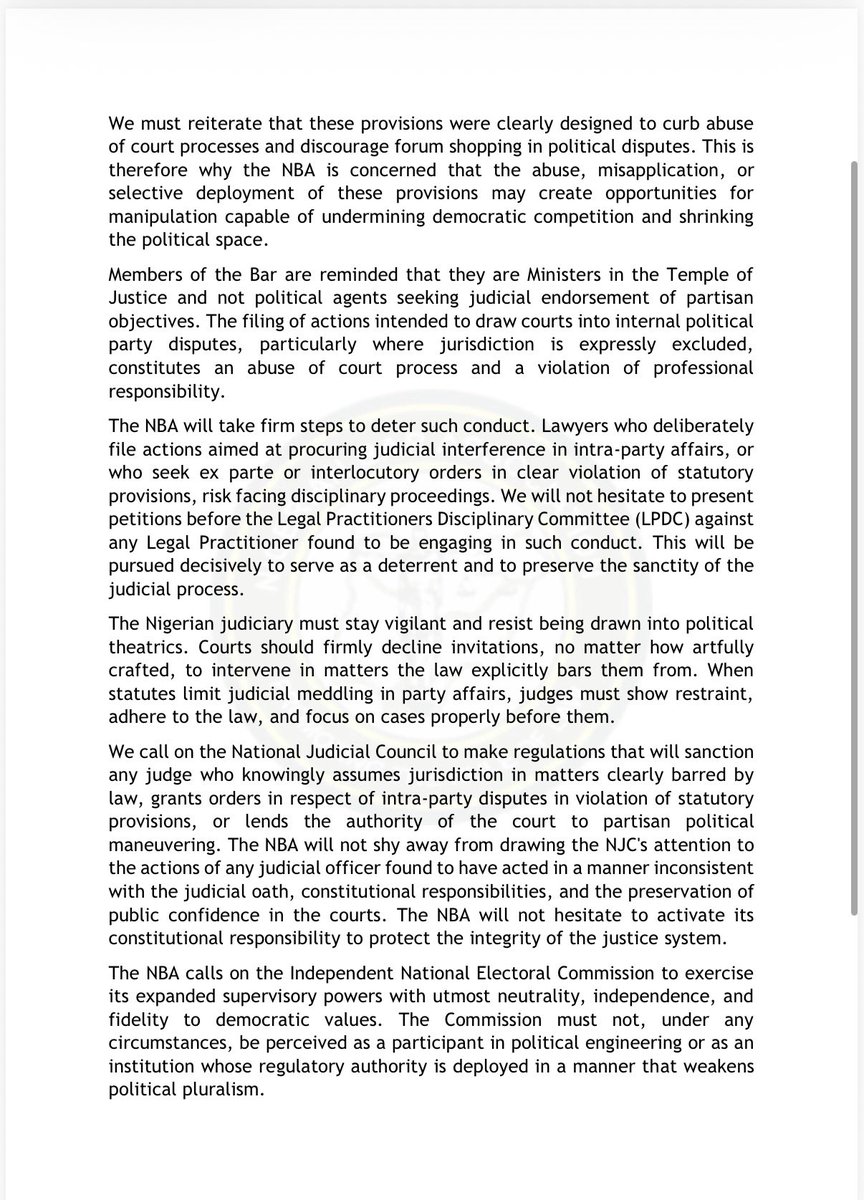
We must reiterate that these provisions were clearly designed to curb abuse of court processes and discourage forum shopping in political disputes. This is therefore why the NBA is concerned that the abuse, misapplication, or selective deployment of these provisions may create opportunities for manipulation capable of undermining democratic competition and shrinking the political space.
Members of the Bar are reminded that they are Ministers in the Temple of Justice and not political agents seeking judicial endorsement of partisan objectives. The filing of actions intended to draw courts into internal political party disputes, particularly where jurisdiction is expressly excluded, constitutes an abuse of court process and a violation of professional responsibility.
The NBA will take firm steps to deter such conduct. Lawyers who deliberately file actions aimed at procuring judicial interference in intra-party affairs, or who seek ex parte or interlocutory orders in clear violation of statutory provisions, risk facing disciplinary proceedings. We will not hesitate to present petitions before the Legal Practitioners Disciplinary Committee (LPDC) against any Legal Practitioner found to be engaging in such conduct. This will be pursued decisively to serve as a deterrent and to preserve the sanctity of the judicial process.
The Nigerian judiciary must stay vigilant and resist being drawn into political theatrics. Courts should firmly decline invitations, no matter how artfully crafted, to intervene in matters the law explicitly bars them from.