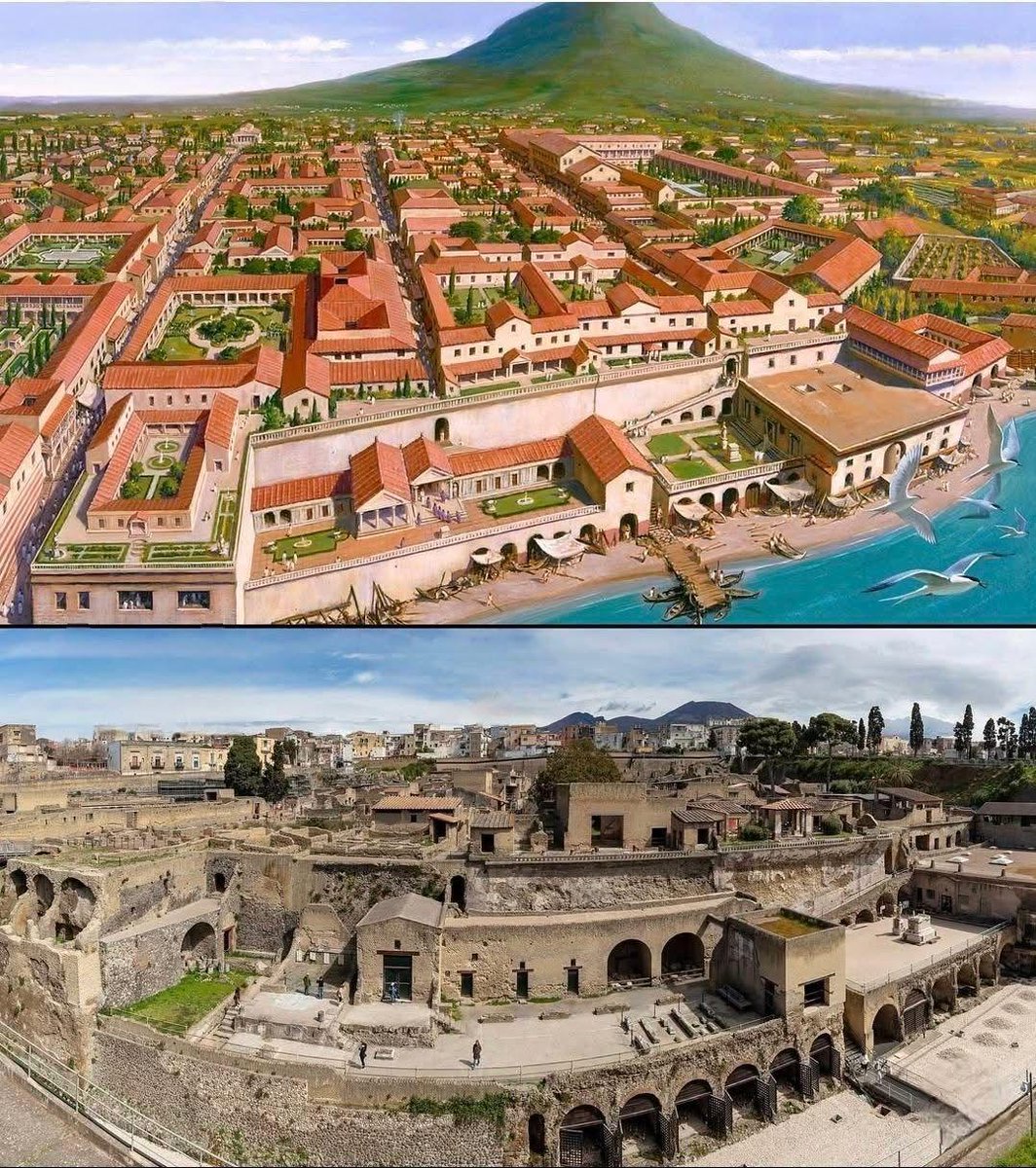
Herculaneum as it may have looked in AD 79 and how it looks today. Creator: Progetto KatatexiLux (Associated Architects Studio) — a Rome-based visualization studio specializing in archaeological reconstructions.
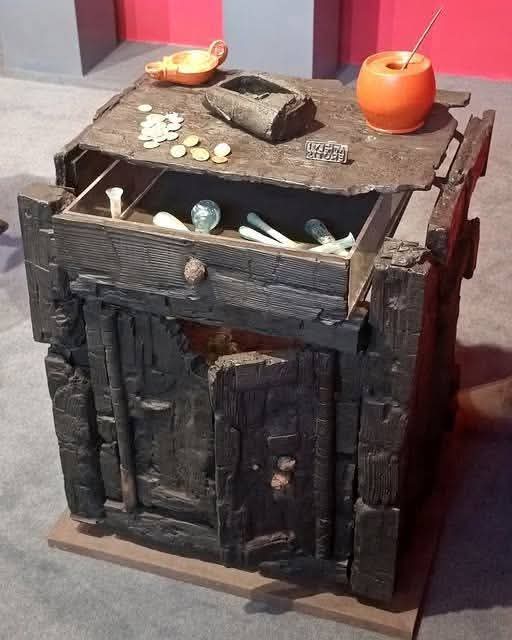
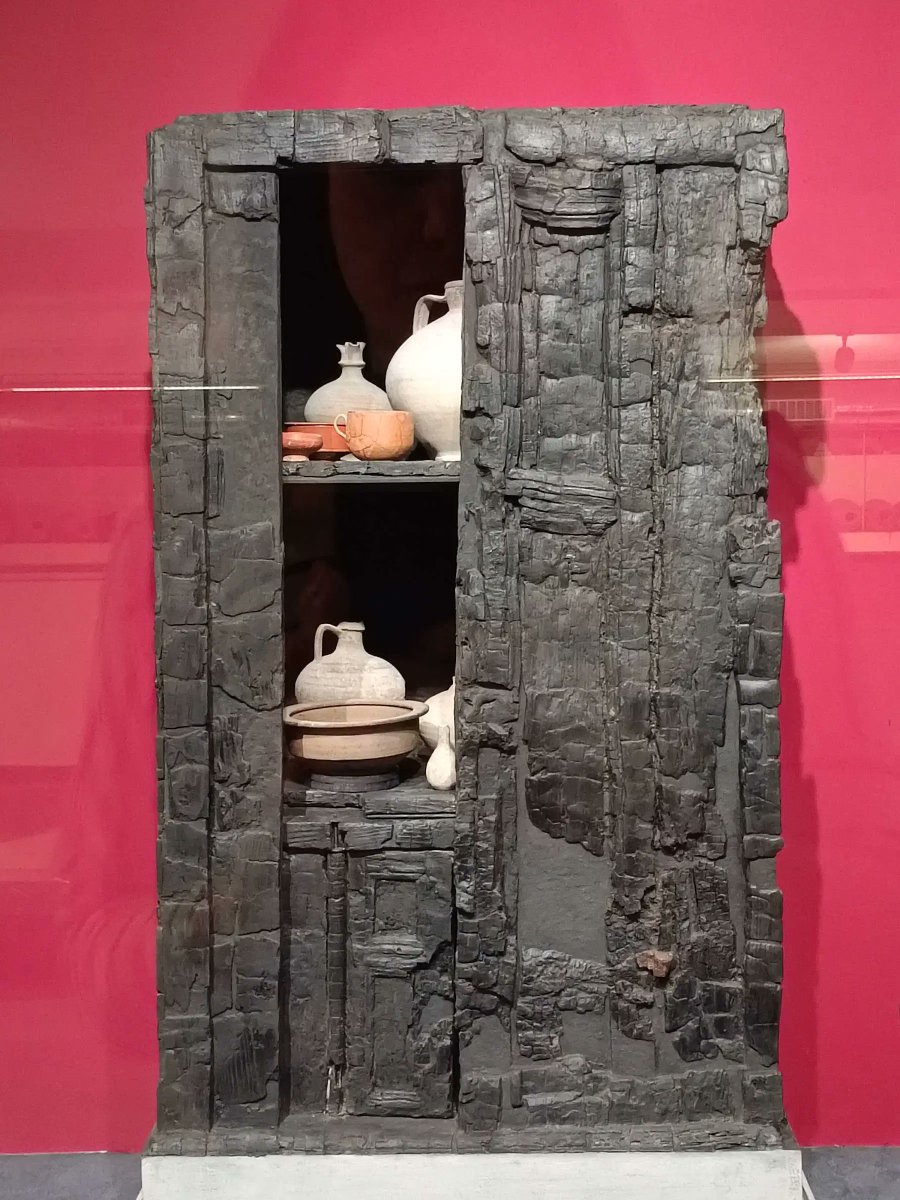
A perfectly preserved Wooden Cupboard, from Herculaneum...
One of the wooden furniture pieces and instruments remained miraculously preserved despite the effects of the eruption.
The intense heat from the volcanic explosion carbonized the wood, effectively freezing it in time and preventing its decay over nearly two millennia. It was discovered with its contents intact during excavations in 1937 next to the Bicentennial House in Herculaneum.
Inside, archaeologists found various domestic items like cups, glasses, and pots, offering a rare glimpse into daily life in ancient Roman Italy. The artifact is a unique archaeological treasure because wooden furniture from antiquity seldom survives.
Antiquarium of Herculaneum
#drthehistories
High-fidelity capture in ancient Herculaneum with the #PIX4Dcatch mobile scanning app! Intricate details on this monument, incl. molding, are perfectly reproduced ✨ Viewed with the #GaussianSplatting output in #PIX4Dcloud 🏛️ #3DMonday
To PIX4Dcatch: https://t.co/dik72ezTF9
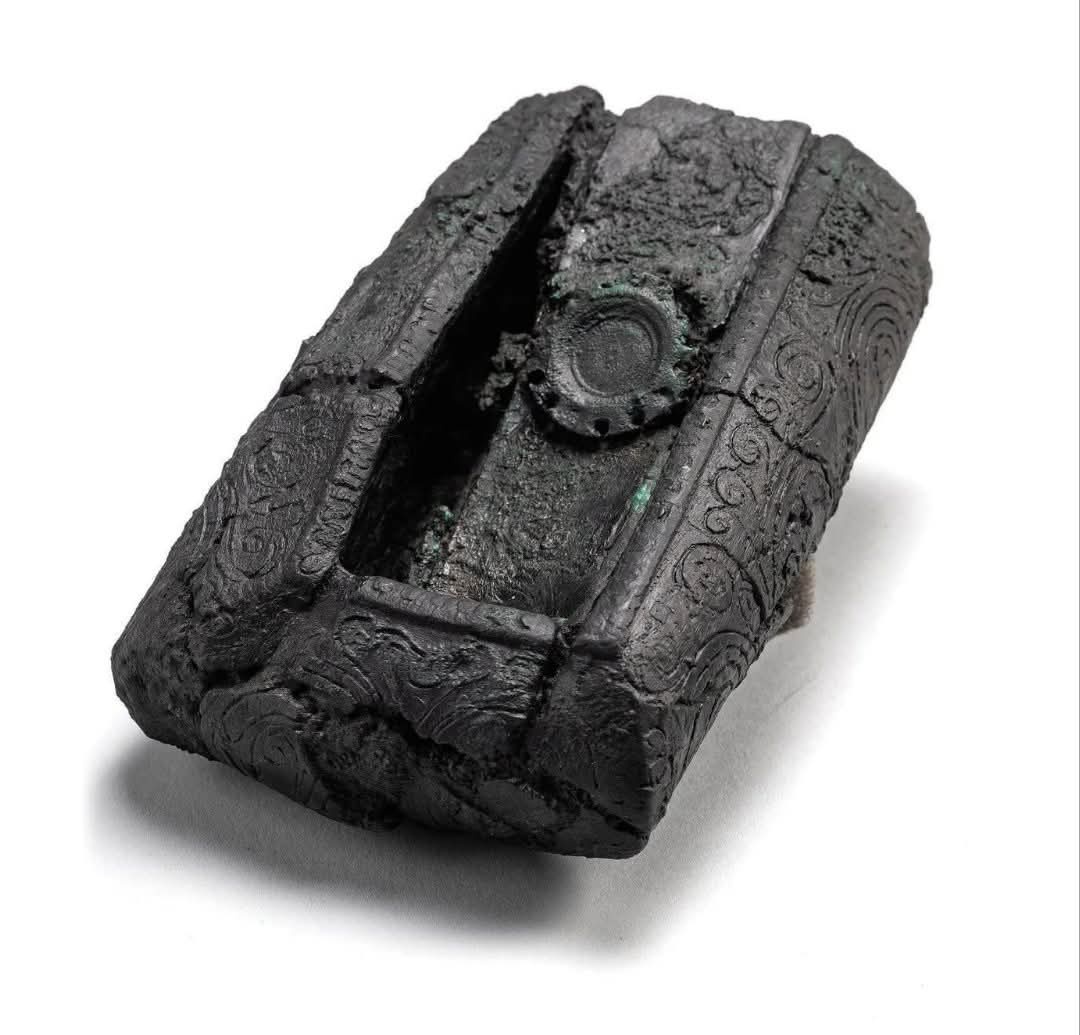
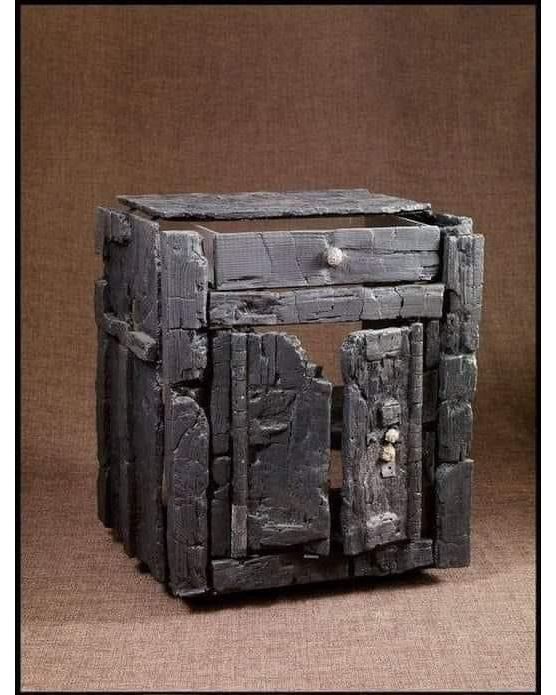
The catastrophic eruption of Mount Vesuvius in October 79 AD, which engulfed the Roman towns of Pompeii and Herculaneum, provides an unparalleled glimpse into ancient daily life. Among the remarkably preserved artifacts unearthed from Herculaneum is a wooden money purse, carbonized by the superheated pyroclastic flows that swept through the town. This particular purse, originating from the House of the Double Atrium and dating to 1st Century AD, is invaluable not only for its survival but also for its very existence.
Prior to the discoveries at Pompeii and Herculaneum, such decorated wooden purses with sliding lids were largely unknown in the historical record. Their perishable nature meant they rarely survived the passage of time, leaving archaeologists and historians with little evidence of their form or function. The intense heat of the Vesuvius eruption, however, paradoxically preserved these delicate items through carbonization, effectively creating charcoal replicas that withstood millennia. A number of these purses have been found, some even containing their original coins, offering tangible proof of their widespread use.
The Herculaneum money purse thus stands as a testament to the destructive power of Vesuvius and the incredible preservation it afforded. It illuminates a previously unseen aspect of Roman material culture, demonstrating the craftsmanship involved in everyday items and the practicalities of financial transactions in 1st Century AD. These discoveries underscore the immense archaeological significance of Pompeii and Herculaneum, continually revealing new details about a civilization thought to be thoroughly documented.
#archaeohistories
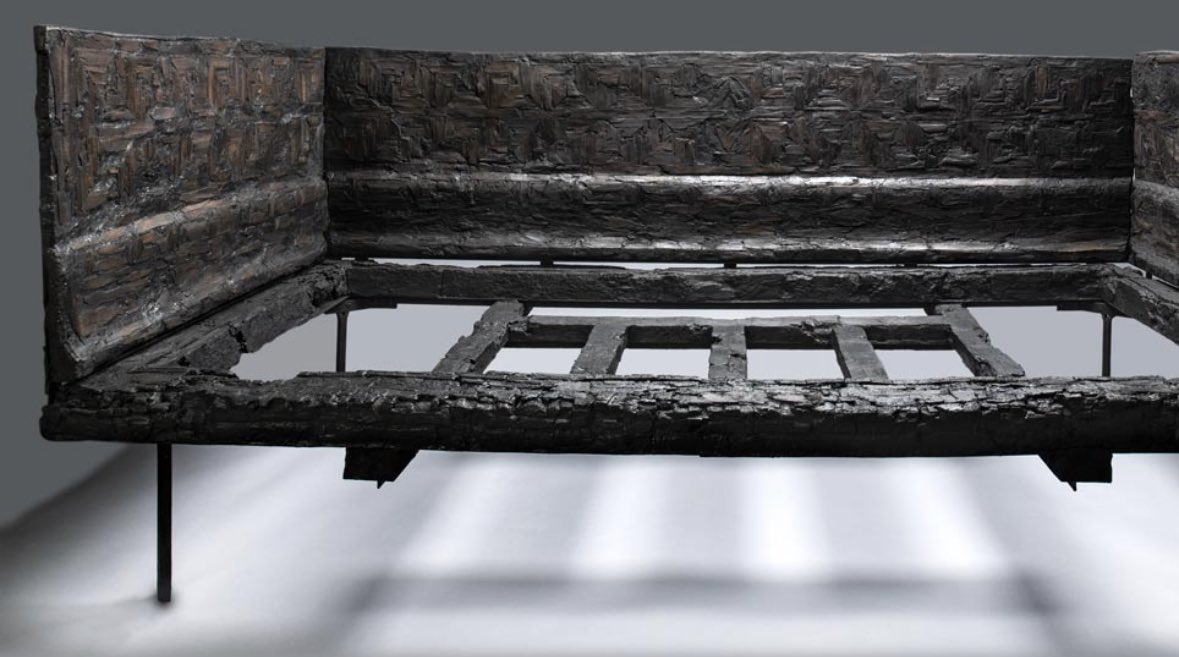
@TorMortensen And this is an astounding original bed of the more comfortable bed type found in the room: the ‘bedstead bed” https://t.co/Ixhad7f9hc This bed with its tall sides was found in Herculaneum
(Image from link above)
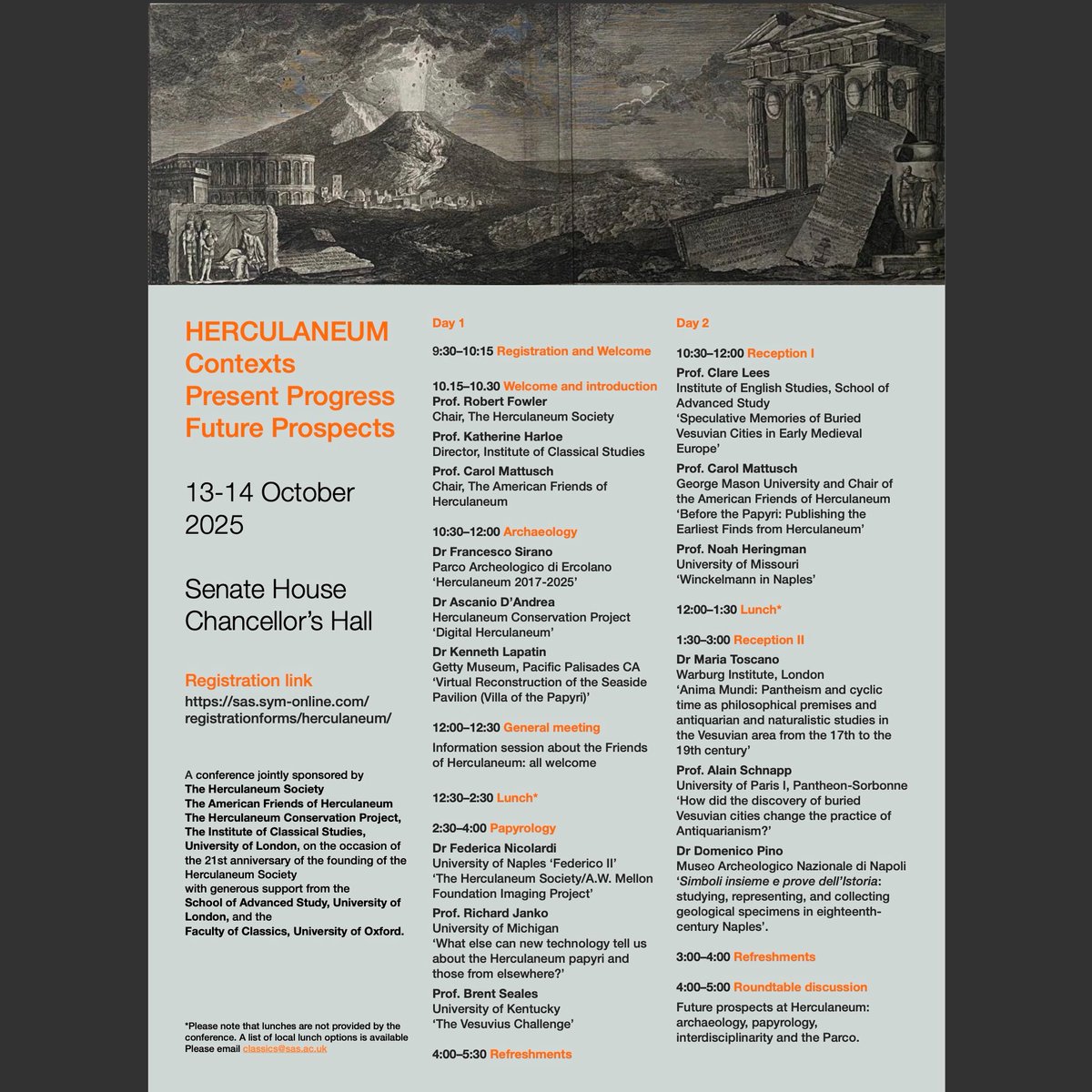
Herculaneum Society conference:
13-14 October 2025, Senate House, University of London
Herculaneum: Contexts, Present Progress, Future Prospects
https://t.co/h1HgOKUfd1
Tour guides are so cooked.
Currently sightseeing in 🇮🇹 Italy, walking through the ancient city of Herculaneum with ChatGPT as my personal guide.
It’s five times more engaging and answers every question in the style I want simple by pointing at things via the video chat mode.
Feels almost too good to be true.
Screw paying extra for a 2h boring, barely understandable human or some shitty audio guides.
A 2,000 year-old Roman advertisement for wine which ranges in price from cheap plonk to the good stuff! 🍷🍷🍷🍷
Painted at the entrance of a shop known as ‘Ad Cucumas’ in Herculaneum, Italy. 📷 by me
#FrescoFriday#Archaeology
When Vesuvius erupted in 79 a soldier died trying to evacuate the beach at Herculaneum. Here's what remains of his equipment.
Belt plates, dagger and the metal tabs once fixed to his pteruges - the leather strips that hung below the belt. #AllMetalMonday
Looking down and up an 18th Century AD, access shaft at Herculaneum in Italy 🇮🇹. It leads to a Roman theatre buried beneath.
In 79 AD, Herculaneum was buried during the eruption of Mount Vesuvius. What you see here in the top photo is some of the seating area exposed while most of the theatre is still buried under metres of volcanic debris.
Photos courtesy of Johannes Eber (2023) and Sera Baker (2009).
#drthehistories
The lost bust of Caligula.
Found in Herculaneum in the mid-18th century, this vanished into private collections for over 200 years. Rediscovered only in 2024, thanks to some brilliant art historical detective work.
Bronze with strikingly silver eyes. 1/4
Luke Farritor is an elite engr on @DOGE
He also won the grand prize in the Vesuvius Challenge, using AI to decode ancient scrolls
He's 21
We underestimate and caricature young ppl at our peril
Watch the video to see what a badass he is