I'll summarize our study on app vendors' responses to Subject Access Requests ("What data do you have on record about me?"), which was presented at #ares2020 – and received the Best Paper Award 🥳. @ARES_Conference#sar#apps#privacy#gdpr#dataprotection 1/18
Ein Stiftplotter ist die einfachste Maschine, die zeichnen kann – drei Befehle reichen ihm: links/rechts, oben/unten, Stift hoch oder runter. Man programmiert dabei, ohne eine Zeile Code zu schreiben. Informatik zum Anfassen, passend zum Jubiläum.
Zum 25-Jährigen der Fakultät WIAI haben wir einen Stiftplotter aus der Werkstatt geholt. Auf https://t.co/HrfHb24tDZ könnt ihr ein eigenes Muster designen – wir zeichnen es auf A3, schwarz auf weiß oder Silber/Gold auf Schwarz. Auf Wunsch auch kleiner.
Wir plotten in vier Runden bis zum Fest. Die erste schließt am 26. Mai, 23:59 Uhr. Abholung am 26. Juni beim Fest in der WE5 in Bamberg, kostenlos. 20 Muster sind schon in der Galerie.
4 Jahre lang haben wir im Bayer. Forschungsverbund https://t.co/Xb3myhH1C6 untersucht, wie IT-Sicherheit im Alltag funktioniert. Informatik, Soziologie und Recht, 5 Unis, 8 Teilprojekte. Am Mittwoch (25.3.) stellen wir die Ergebnisse in München vor. 1/2
Let me blow your mind real quick:
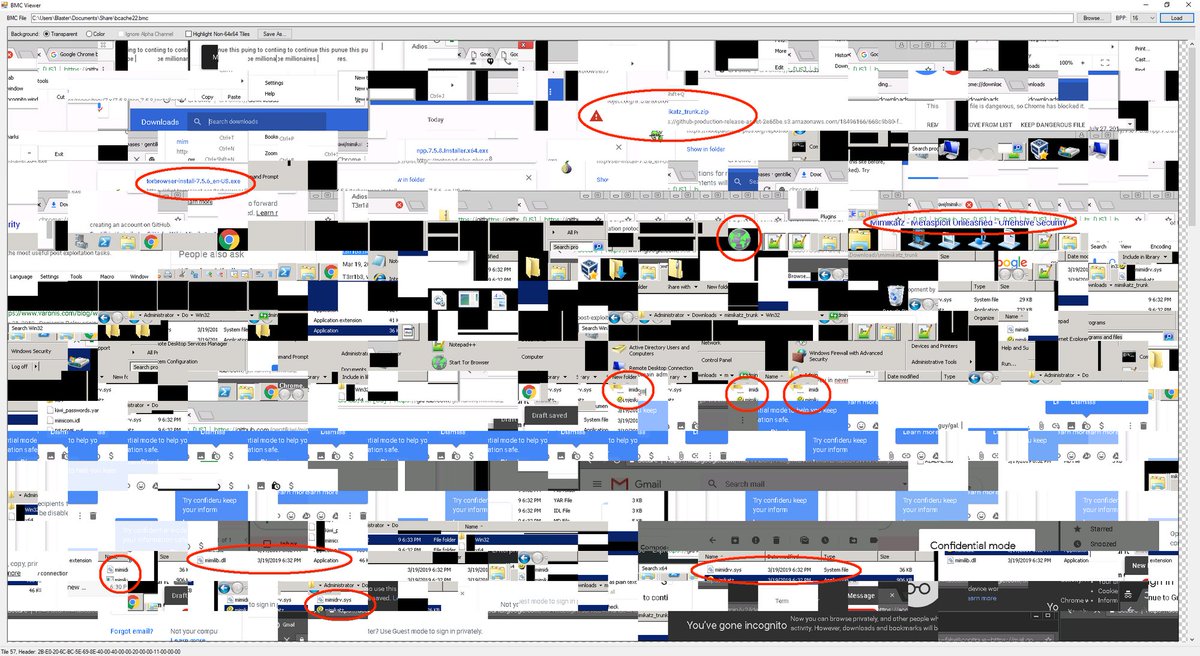
When you use Remote Desktop (RDP), Windows secretly takes screenshots of what you are doing.
It’s called the RDP Bitmap Cache.
To make the connection faster, Windows saves small tiles (images) of the remote screen to your hard drive in a bin file.
Even if the session is over and the remote server is destroyed... your laptop still holds the cache files.
Forensics teams use tools like BMCViewer to stitch those tiles back together.
They won't just see logs but the literal email, document, or picture you were looking at.
💀
Part 2 of my series on exams and AI is live: Automated grading, prompt injection (the LinkedIn flan experiment!), and why we spend more time discussing AI policies than actually teaching.
Bike-shedding at its finest.
https://t.co/I6pONk2i5H
#HigherEd#AI#AcademicTwitter
Finally! An LLM grades 3000 free-text exam answers – while I drink coffee!
Too good to be true? Exactly.
After field testing at Uni Bamberg: We’re not grading faster with AI, we’re grading twice. 🧵
Unlimited exam attempts. Optional exercises. No mandatory checkpoints. Is 70% failure about personal responsibility – or a system designed to produce it?
I refuse to lower standards until we ask: “Name a language starting and ending with C.” That’s theater, not education.
70% fail the final exam. 60% fail the retake. Less than half pass.
Our intro programming course numbers – not unique. The disturbing part? By Week 4, students know they can’t program. Four months later: still can’t. Nothing changed.
Why?
https://t.co/ualeDUhgBl
What can I do? Mandatory mid term tests? Legally not allowed. Mandatory exercises? Only voluntary – outsourced to AI. Labs? Not feasible with 250 students, 5 TAs.
The German university system only allows subtle incentives. No binding structures.
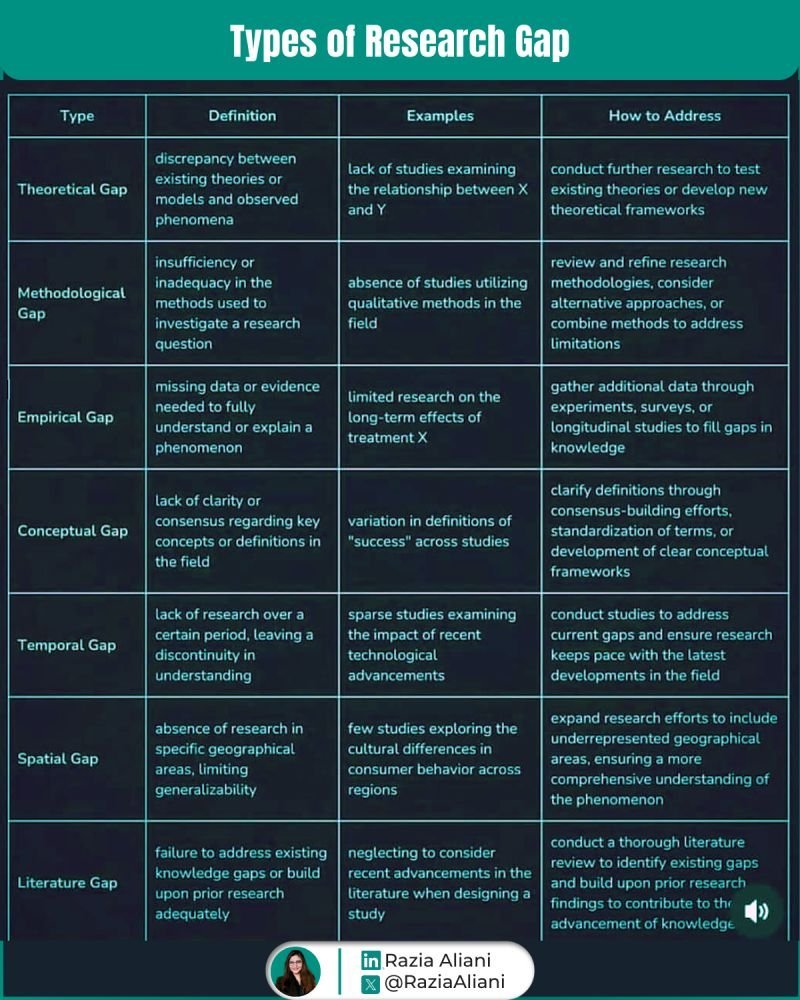
You know that feeling when your advisor says 'but what's the gap?' & your mind goes blank Here's your rescue!
Learn your Gap types & how to address them ⤵️
— Theoretical: when theories fail to explain reality
— Methodological: when current methods fall short
— Empirical: when we lack evidence to explain something
— Conceptual: when key definitions are muddy
— Temporal: when research hasn't kept up with changes
— Spatial: when studies ignore geographic differences
— Literature: when studies fail to build on existing knowledge
Each has distinct ways to address them.
What most miss?
Connecting MULTIPLE gap types creates the strongest research justification.
💬 Reweet & 𝘊𝘰𝘮𝘮𝘦𝘯𝘵 𝑹𝒆𝒔𝒆𝒂𝒓𝒄𝒉 𝑮𝒂𝒑 𝑷𝑫𝑭 𝘪𝘧 𝘺𝘰𝘶 𝘸𝘢𝘯𝘵 𝘵𝘩𝘦 𝘳𝘦𝘴𝘦𝘢𝘳𝘤𝘩 𝘨𝘢𝘱 𝘸𝘳𝘪𝘵𝘪𝘯𝘨 𝘵𝘦𝘮𝘱𝘭𝘢𝘵𝘦𝘴
------------------------------
Follow @RaziaAliani to get more useful AI in Research content (no clickbait stuff!) in your feed.
& join 16K+ researchers & get FREE exclusive tips on using AI in research
🔗 in bio
Fighting with swords against drones.
Workload skyrockets. Impact? Questionable. The disease is systemic. Symptom fighting won’t fix it.
Next week: How we professors succumb to AI temptation ourselves.
Better AI tools, worse exam results. At my uni, failure rates are rising for 2 semesters (65-78%). Students externalize thinking completely, not just calculation like with calculators, but analysis, problem-solving, everything. Thread + blog:
https://t.co/OaLNcGwaza
Our response? Creative symptom fighting: “Ask about events after knowledge cutoff!” → ChatGPT googles
“Submit chat histories!”→ Tab 1: official chat for prof → Tab 2: real work → Tab 3: ChatGPT asks ChatGPT how to fake reflection. Students perform a play. We applaud.