Empowering teachers and leaders to authentically drive learning outcomes through high quality and accessible professional development. All opinions are my own.
Lots of talk about what AI tools can do, but just as important is how thoughtfully they’re used.
Enter a simple app to guide learners through that thinking.
Track your AI Thinking Path: ❓ Do I understand this tool? ⚖️ Is it worth using?
Try it here: https://t.co/tsSiinCXEV
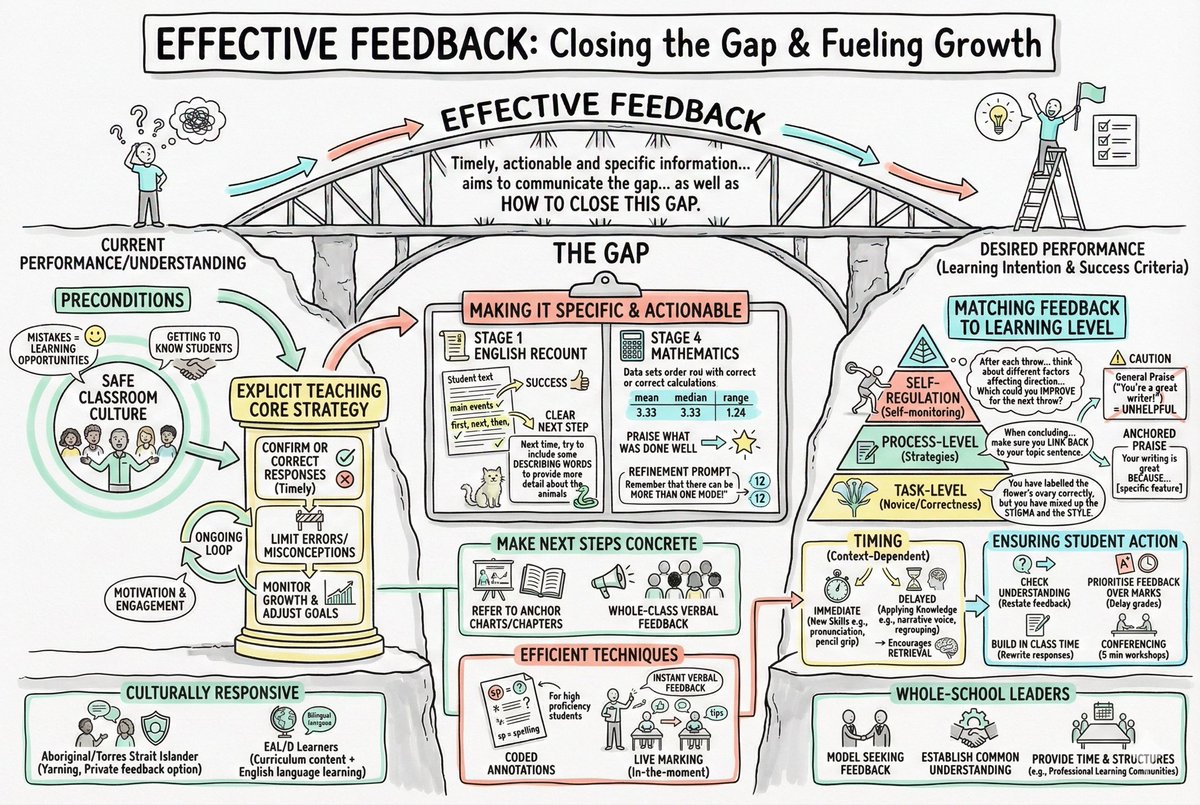
Using Nano Banana Pro for one-page visuals can easily assist engagement with research papers, guides etc. At the start or end of a paper it can cut cognitive load, highlight key ideas and support action. Take this overview of CESE’s effective feedback guide for example…
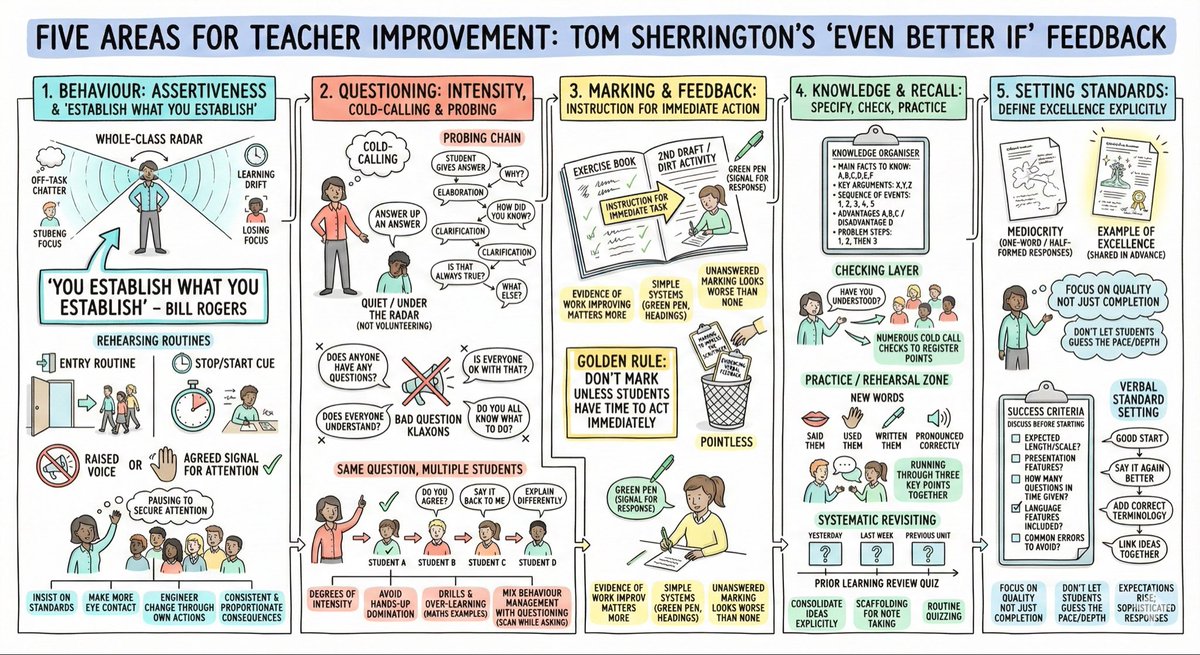
From 2018 - I think the areas are still the areas; one of the most-read posts on my blog.
Five forms of feedback I give to teachers most often... https://t.co/c62cyn5AyZ via @teacherhead
@DoWise Nice! There’s an opportunity to use nano banana pro to support typical ‘worksheet’ engagement - the following is off a basic prompt, but more specific prompts would give a result that would be closer to an experience you’re after.
@MrMetacognition Nice guide Nathan! Have you looked into Nano Banana Pro? It could be useful as tool for a front page, especially when trying to engage audiences like parents - here’s a quick draft example I made with a basic prompt, better results would come from more specific prompts.
I’ve been focussing on how we can better connect research to practice, so I started experimenting with a light lift retrieval practice app for teachers inspired by the work of @C_Hendrick and @KateJones_teach
Try it out here: https://t.co/e86GPkO4k8 - feedback welcome!
Been experimenting with a PL storyboarder app that helps educators design professional learning with Cognitive Load Theory and transient information in mind (inspired by Sweller & @olicav).
Still in development but would love to know your thoughts: https://t.co/BqM9EODke7
Been experimenting with simple web apps for educators, tools that help put good ideas into action.
Inspired by The Pruning Principle by @SimonBreakspear & @mrrosenbrock, I’ve made 2 tools, for task triage and for meeting audits.
Keen to hear any thoughts! https://t.co/0VTGyLIsGu
@gcooksey@teacherhead The samples get them 70% of the way there so they can adapt to their context and then provide that feedback based on the protocols they have set up for their class/school.
Always loved @teacherhead’s 5R’s of actionable feedback. Built a demo quick reference tool that assists with ideating common student needs into clear, student-facing tasks. Try it here and let me know of any actionable feedback you might have 🙂 https://t.co/b1LpKxquoV
@gcooksey@teacherhead Thanks! Yes I’d see it as a prompt for teachers to become familiar with the 5R’s reflexively more than anything. A tool to help teachers develop metacognitive control and consider which actionable feedback approach would have the most impact for student learning need. /
Canva Code has really sparked my genuine interest.
Early outputs were basic, but refining my prompts has started the build towards intuitive, interactive PL tools for immediate use - check out some ideas at: https://t.co/L2HmwLKUeJ
⚠️ NEW! This poster summarises Dylan Wiliam and Siobhán Leahy’s five essential FORMATIVE ASSESSMENT strategies from their book Embedding Formative Assessment (2015) that teachers can utilise to move learners forward.
👊 REPOST and download a FREE high-quality copy: https://t.co/Xj2XpPGvnu
📢 New Blog 📢
Rethinking Assessment for Generative AI: Orals and discussions
@lfurze explores the many diverse and effective ways to assess and provide feedback and calls for a commitment to update assessment practices in age of AI.
https://t.co/NhF3R0BlRd
#rethinkingassessment
A few months back, we teased clips from our upcoming VFX app, @Simulon. We've since been hard at work making Simulon the most powerful, robust, and intuitive VFX workflow available. This weekend, we'll begin granting access to select creators.
Simulon is now able to produce videos that are indistinguishable from reality - can you spot which objects on the table are real and which were added with Simulon? Watch to the end to see if you're right.
A thread 🧵
🔶 NEW! A poster summarising Explicit Direct Instruction (EDI), based on Hollingsworth & Ybarra’s great book on the power of the well-crafted, well-taught lesson. The one-pager features ideas on:
🔸Student Engagement Norms
🔸’TAPPLE’ for CFU
🔸 Essential EDI Lesson Elements
Download a free HQ copy from my website: https://t.co/jxbg4huJJq