I’ve either used or referenced most of the AQA past exam papers for GCSE English Literature, so here’s my attempt at making an AQA GCSE English Literature Paper 1 https://t.co/rMGyGQQTU3 📖
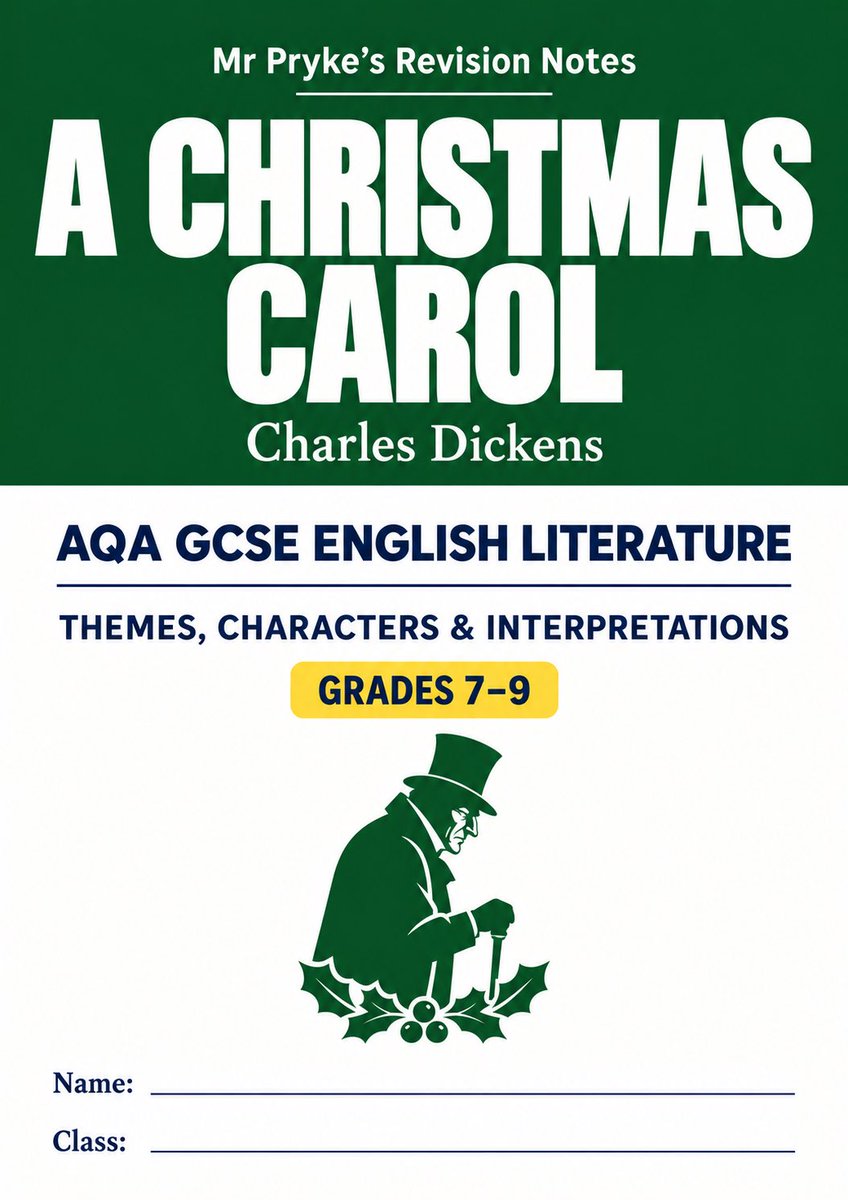
A one-pager on five of the major GCSE English Literature texts. Each one is designed to be used by students as a reminder or to be talked through as part of a last-minute revision session https://t.co/7oT6HeDT96 📖
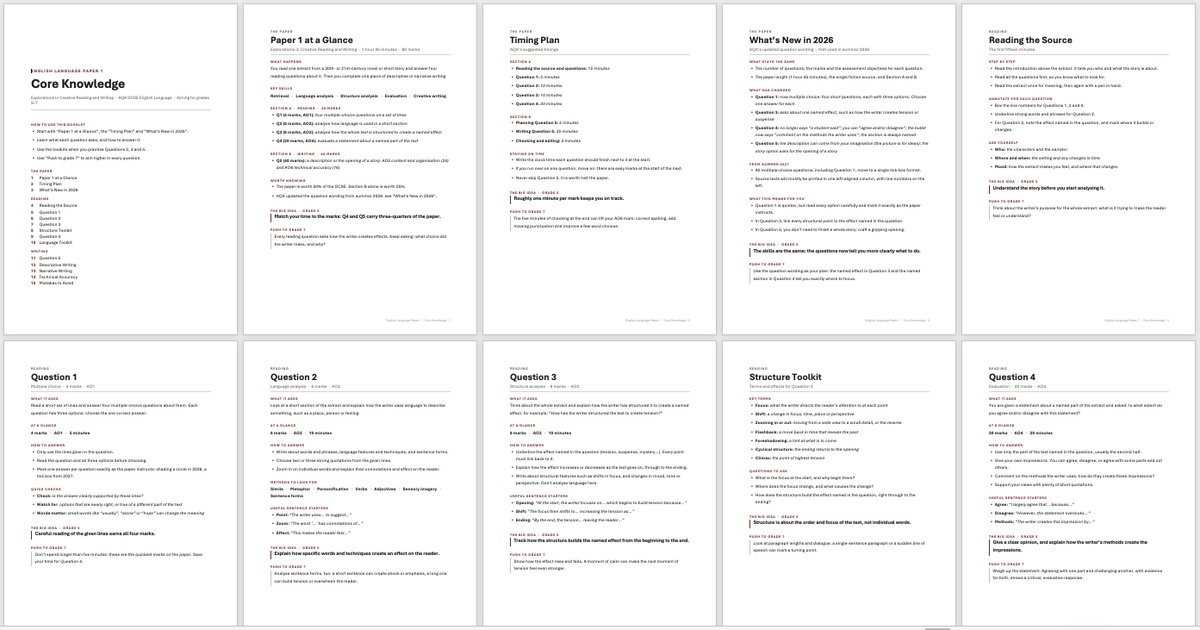
A one-pager on each of the English Language exams (AQA) to be used by students as a reminder or to be talked through as part of a last-minute revision session https://t.co/OlMWaGfvoY 📝
Core knowledge booklet for the unseen poetry tasks on GCSE English Literature Paper 2 (AQA). It’s designed to help students navigate through the various requirements https://t.co/ecKmbUFtPE There’s a link at the end to a one page overview (a bit like the ones I posted earlier) 📝
A simple slide deck to help support the introduction of the AQA Power and Conflict poems: just initial tasks and brief overviews, which should then into discussion and annotation with only a visualiser necessary https://t.co/FNNhWKUEk1 ⚔️
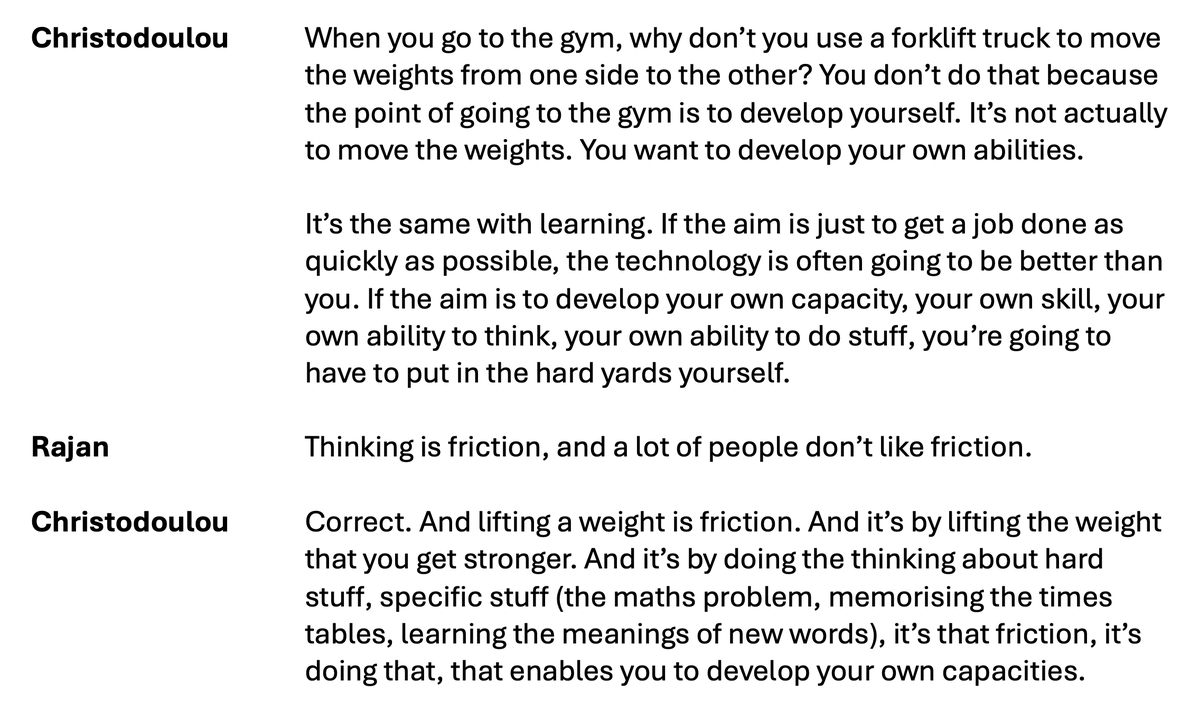
The weightlifting analogy @daisychristo uses to illustrate why effort is essential to learning is beautifully put and well worth sharing with students. Full podcast here https://t.co/3QwaRNt9aQ
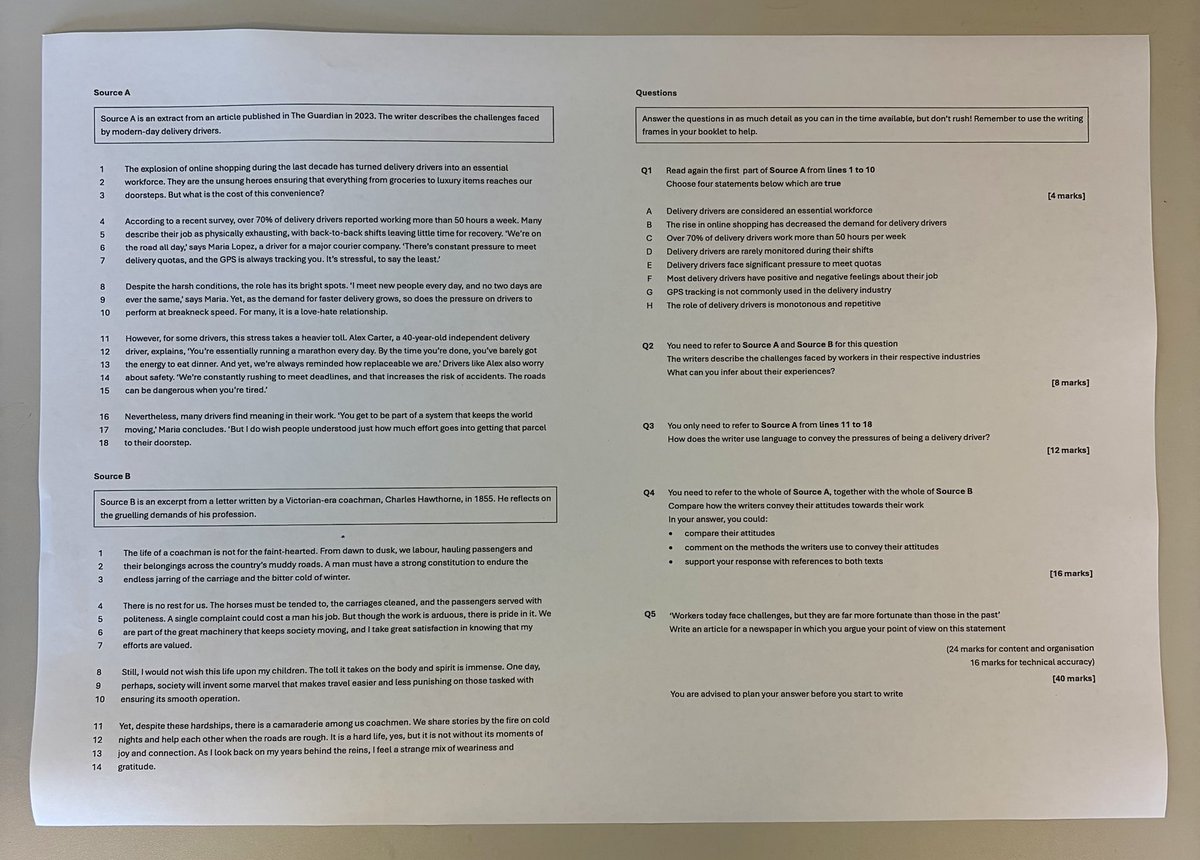
I’ve tried to make the sources and questions for a mini English Language P2 assessment more accessible for one of the classes I teach by placing everything on a single A3 page. No need for flicking though stuff. I’ve also used more generous spacing and numbered every line 📝
Actors use scripts, musicians use scores, surgeons follow protocols. So what? It’s a rubbish analogy because teaching isn’t a performance or a procedure. Great teaching is responsive. It requires expertise, adaptation and professional judgement.