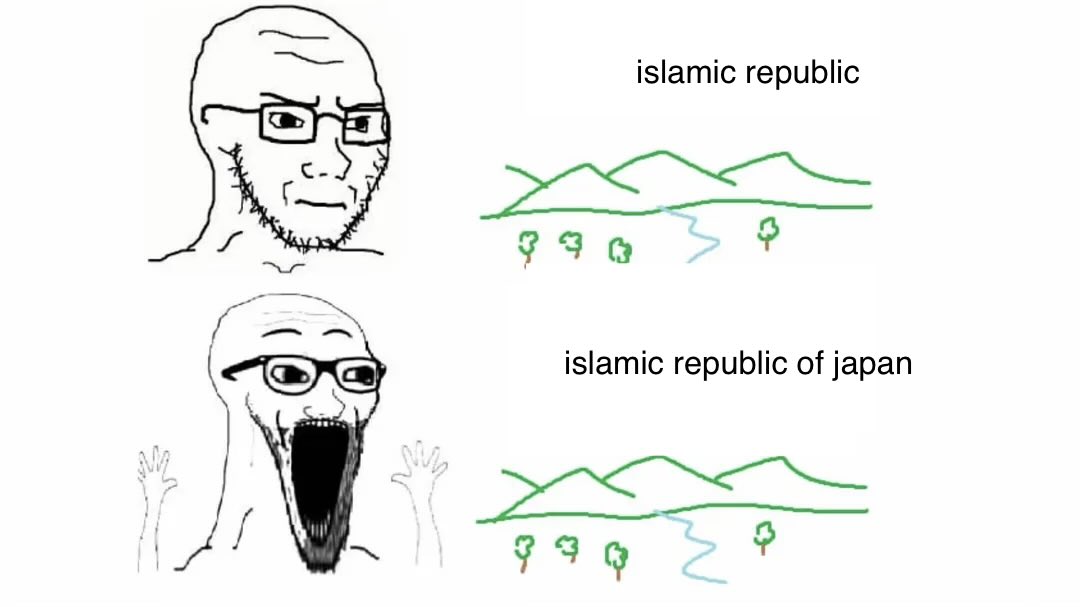
@fyreflow@TerribleMaps That could apply to a lot of places. For Australia and New Zealand those names refer to the land masses and the countries, which are for most purposes synonymous. Whereas SA, CAR, USA are not synonymous with their respective continents.
@Celdazero@SandyofCthulhu A terrorist killing a few people doesn’t prove that measures taken against their people preemptively were reasonable. But if they had actually succeeded in wiping out the German government then yeah, it kinda does?
@loganclarkhall lol at the examples. Both of those are quite famous for having a lot of foreigners or first gen immigrants involved. There was literally a film about the first example quite recently…
@JCeacc@MannOhneListe@Empty_America The point is that every knows that these things were created in the middle of the 20th century at some point. Some people might even guess they are younger. OP’s examples are ones that people might have thought dare back much further than they do.
@fmod999@randomguy495@NashEquiDeliria@RXinruz@textureMonkey If everyone that sells meat does the same calculation I described above then they will all probably end up with a similar rate of bad product sold… meaning there would be no point in switching sellers.
@NashEquiDeliria@RXinruz@randomguy495@textureMonkey But the company selling the food and society at large have different interests. The assumption that the threshold decided on by the company is the objectively best one for a society is just silly.
@RXinruz@randomguy495@textureMonkey Right, so if the company works out that 1% contaminated food is the upper economical threshold, it is perfectly fine for them to lot that much hazard slip through?
@ElijahForCA@textureMonkey@bird_hmm They aren’t gonna deliberately sell loads of rotten meat. But if market forces are the only thing at play, then they will balance the cost of filtering out rotten with the benefits of avoiding complaints, and they will avoidably sell at least some rotten meat.