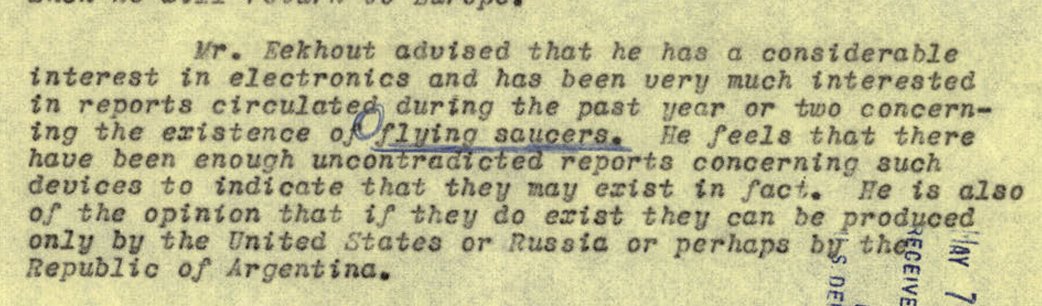
"if they do exist they can be produced only by the United States or Russia or perhaps by the Republic of Argentina"
thanks J Edgar Hoover for the vote of confidence
PgQue v0.1.0 is out.
PgQ -- the Postgres queue system built at Skype 20 years ago for 1B-user-scale workloads -- repackaged for the managed-Postgres era. One SQL file. No C extension. No external daemon. pg_cron to tick.
Why bother reviving a 2007 architecture?
Every major Postgres queue in production today uses some flavor of SKIP LOCKED + UPDATE/DELETE. It works under light load. When you have more data and higher load, it degrades predictably. Then you get posts like these:
- Brandur at Heroku, 2015: 60k job backlog in one hour from a single open transaction
- PlanetScale, 2026: death spiral at 800 jobs/sec
- River issue #59, awa issue #169 and so on, Oban's partitioning work, PGMQ's autovacuum tuning guide and duct-taping with pg_partman
The core issue is how Postgres MVCC is implemented and how we deal with it. Dead tuples in the hot path, xmin horizon pinned, vacuum falling behind, query performance quickly degrades. This happens every time you run pg_dump, execute an analytical query, or have a lagging/unused logical replication slot.
PgQ solved this in 2007 with snapshot-based batching and TRUNCATE rotation -- zero dead tuples in the event
path, by design.
But PgQ needed a C extension and an external daemon. Which means it doesn't run on RDS, Aurora, Cloud SQL, AlloyDB, Supabase, or Neon -- i.e., where most
Postgres lives now.
PgQue closes that gap.
💎 Pure SQL + PL/pgSQL (PgQ engine)
👩💻 \i sql/pgque.sql -- you're done
🕑 pg_cron replaces pgqd (optional, recommended)
💻 Python, Go, TypeScript client examples shipped
💙 Apache 2.0
Trade-off: end-to-end event delivery latency is up to a second, it depends on ticking frequency. If you need sub-3ms job dispatch, use River, Oban, or graphile-worker (and avoid anything that blocks xmin horizon). If you need high-throughput event streaming with fan-out inside Postgres -- Kafka-shaped, without Kafka and dealing with transactional outbox implementation -- this is the right shape of tool.
Kudos to Marko Kreen and Skype engineers who implemented this decades ago, for the original PgQ, and to Alexander Kukushkin whose recent "Rediscovering PgQ" talk brought this quiet corner of the Postgres ecosystem back into view.
Stars, issues, PRs, and honest criticism all welcome.
Link 👇
I love this story.
First, Boom's jet engine supplier, Rolls Royce, pulls out of the supersonic airliner deal. That should have been the end of the story. As GE often says, "if you want to compete with us in jet turbines, you needed to have started 30 years ago", because that's how long it takes. So it would be crazy to start now.
But Boom didn't fold up tents. They said they were going to make their own jet turbine. Good luck 🙄
But they started anyway, and then "a miracle occurs": the AI datacenter boom creates unbounded demand for gas turbines, creating at least a 4-5 year backlog with existing manufacturers.
And because the Boom terrestrial turbine power plants don't have to be certified by the FAA, that takes a decade off their path to market!
So now 90% of the company is working on the turbines, with a huge pipeline of orders, and they're going to be a huge energy company, regardless of whether they ever ship an airplane or not.
What a great testament to resilience. Just keep moving forward and eventually the path will become clear. Action creates information.
Jusqu'à ce jour, les marxistes sont incapables de donner une réponse satisfaisante à ce genre de meme. C'est dire la nullité de leur pensée économique.
La valeur n'est pas dans le bien ni dans l'effort fourni pour le produire. Elle est dans l'esprit de celui qui désire ce bien pour résoudre un besoin individuel. La valeur est donc subjective, marginale, contextuelle. Elle n'est pas objective, mesurable, mathématisable.
Ainsi s'écrase lamentablement la théorie marxiste de la valeur travail et les théories classiques de la valeur objective. Si ces théories ont réussi à survivre jusqu'à aujourd'hui, c'est uniquement parce qu'elle donne une caution scientifique à l'interventionnisme étatique, rien d'autre.
The Year: 2022
The Problem: App-based food delivery drivers don't earn enough.
The Solution: Seattle's Pay Up law, promising $26.40 an hour for drivers—before mileage and tips.
Sounds like a great idea, with the best of intentions. What could possibly go wrong?
Suffering is inherent to our world. Yet it must remain within reasonable limits and for reasonable causes — and what counts as “reasonable” is for us to decide.