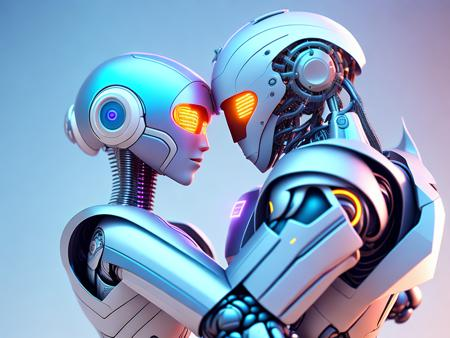
if openai’s serious about ai earbuds as a flagship product, they’re walking straight into the same wall every non airpods earbud has hit for a decade which is that pairing & unpairing is still a nightmare, os level integration is nonexistent, & you’re permanently at the mercy of apple/google.
that alone makes them borderline doa. the only workaround is some pocket “cell bridge” device, which immediately means another thing to carry, another battery, possibly another cellular plan… aka congrats, you built a worse phone.
meanwhile airpods have had ~10 years of ruthless iteration. they pair instantly, hand off flawlessly, sound great, have excellent mics, & basically disappear from the user’s mental model. any ai earbuds would also need to be elite at music & calls, not just smart, which is an insanely high bar.
competing head on with airpods feels masochistic. they’re a rare flagship product that almost nobody dislikes, which makes dislodging them orders of magnitude harder than people think. idk how that ends well. i could be proven wrong obviously. if i were working on ai hardware, i’d approach it very differently.
Four weeks ago we moved from selling software to selling outcomes. Today, @andustry_hq supports an 8-figure $ volume, working with manufacturers in some of the most advanced industries out there.
If you are a manufacturer or startup that has felt the pain of working with suppliers and the messy processes, let us be your supply chain department. We pick up our calls 24/7, and will show up to the suppliers in person. Our customers can attest to that.
The west is going to increase its manufacturing capacity by 100x in the next 5 years with robots, energy, defense, and space. We're only getting started.
Be your self, not someone you were assigned to be!
Bezos won on time horizon, not AWS or 1-Click.
If your bets have to work in 3 years, you compete with everyone. Every smart, funded team is chasing the same 3-year problems. Short horizon, crowded field.
Stretch to 7 and the field collapses. Investors want returns, employees want vesting, founders want proof. Almost nobody can sit in a bet that doesn't pay for most of a decade. The patience is the moat, and it costs you, that's why it works.
But you can't fake a 7-year horizon on a problem you don't actually care about. Pick the users and the problem Moloch assigned you, the safe ones, the fundable ones, and you'll bail the first hard year. Pick the ones that are actually yours and you'll still be there when everyone else has quit.
So the real prerequisite isn't discipline. It's knowing yourself well enough to choose a problem and a set of people you care about that you'll serve them for decades.
scenes from our first customer and machines we sourced. way before we joined @ycombinator@andustry_hq didn't exist back then, but the problem surely did.
we had already made something people wanted.
Thought experiment: if every company suddenly had infinite free compute, what new products would emerge?
My take: with very few exceptions, not much would change. The bottleneck is figuring out what people want, and it’s not so easy to apply compute to solve that.