Our research scientist @Ar_Douillard has published a review of Continual Learning papers at #CVPR2020:
A lot of interesting works on this promising field!
https://t.co/slO3FcWoks
@cvpr2020@ContinualAI
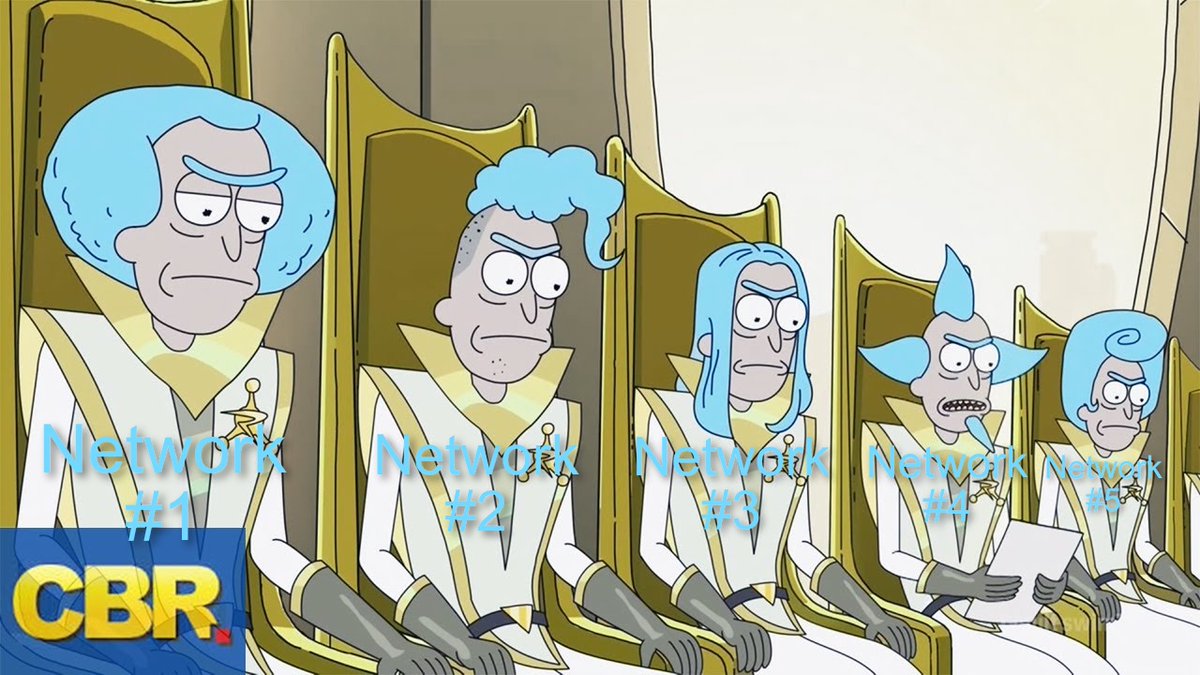
Assume you are creating a team with multiple versions of the same person. Should these versions be collected chronologically, from childhood to adulthood? or rather from independent evolutions in multiple parallel universes? A 🧵about Ricks and our latest #DeepLearning paper.
The first transformer designed for Continual Learning in Computer Vision has been accepted to #CVPR2022! 🥳
Using a dynamic approach, it forgets less than previous ensembling methods while using fewer parameters.
💻: https://t.co/z3fVZSOWwt
📕: https://t.co/et3UlzSgLt
🧵��
Surprised #deeplearning methods were not massively used to detect Covid? Some tried, but most failed: e.g. they rely on patients' age instead of 'truly' analyzing the medical scans. This is because networks learn correlation and not causation. Our preprint Fishr tackles this. 1/4
I've released my course on deep learning for computer vision!
It includes slides, google colab, and Anki decks for all 6 topics I'm covering.
We code from the basics (backprop from scratch) to the SotA (transformers & MLP-mixer).
https://t.co/Uu0Yvglct5
Feedback appreciated!
I'm presenting our work on using prior from the future in Continual Learning to make networks more selfless at this afternoon @CVPR@ContinualAI Workshop.
"Insights from the Future for Continual Learning"
Paper: https://t.co/pkcvOvLm2h
#CVPR2021
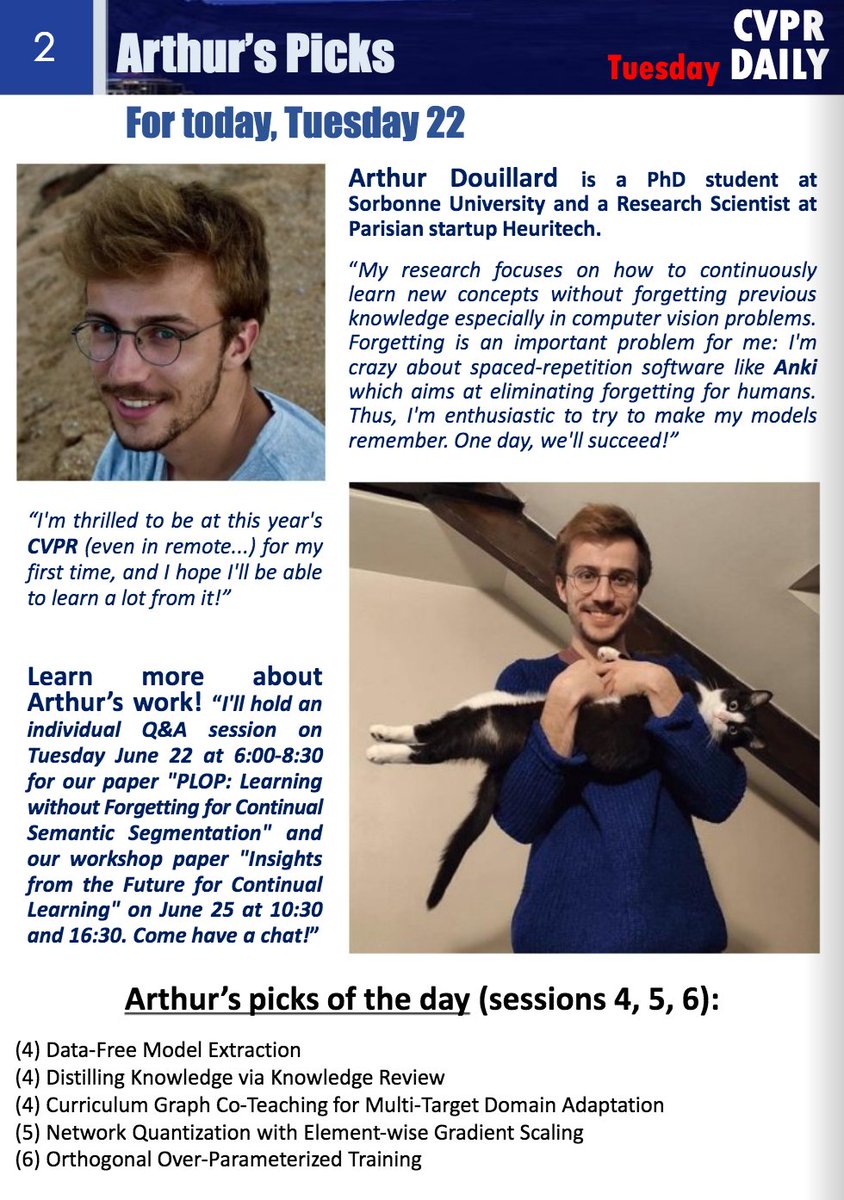
My cat ε and I are honored to be featured in today's @CVPR 's daily.
Despite being virtual, so far I'm enjoying a lot this conf', I've learned a lot!
https://t.co/fjQJ62Ft5S #CVPR2021
Continuum now supports the Continual Learning CTRL benchmark of @TomVeniat@LudovicDenoyer@MarcRanzato@facebookai!
* 5 predefined CTRL datasets
* easy to custom your own CTRL
Code: https://t.co/vQ2BCFgDhi
Colab: https://t.co/XkXS6cDN9E
Paper: https://t.co/YH44wLb85A
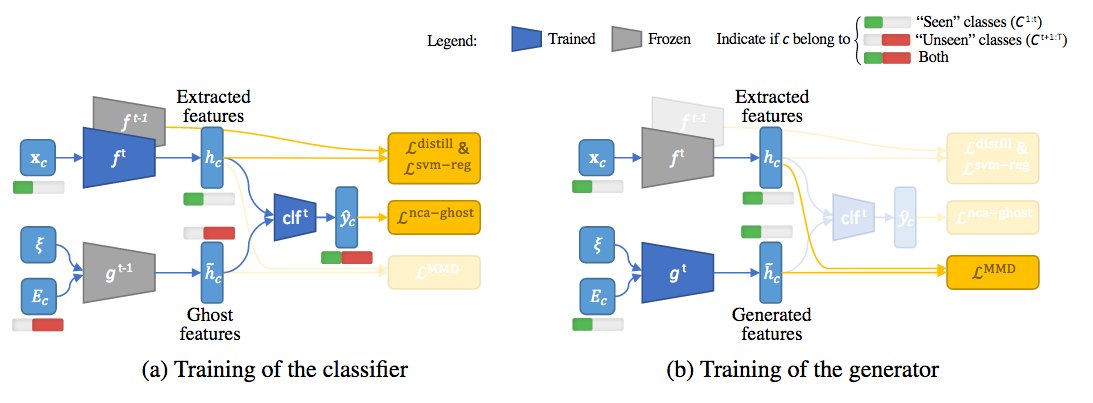
Our paper "Insights from the Future for Continual Learning" has been published at the CLVISION Workshop of #CVPR2021!
We exploit zeroshot to incorpore future concepts in the current embeddings and minimize interference
Paper: https://t.co/pkcvOvLm2h
Code: https://t.co/MzMgU45mgc
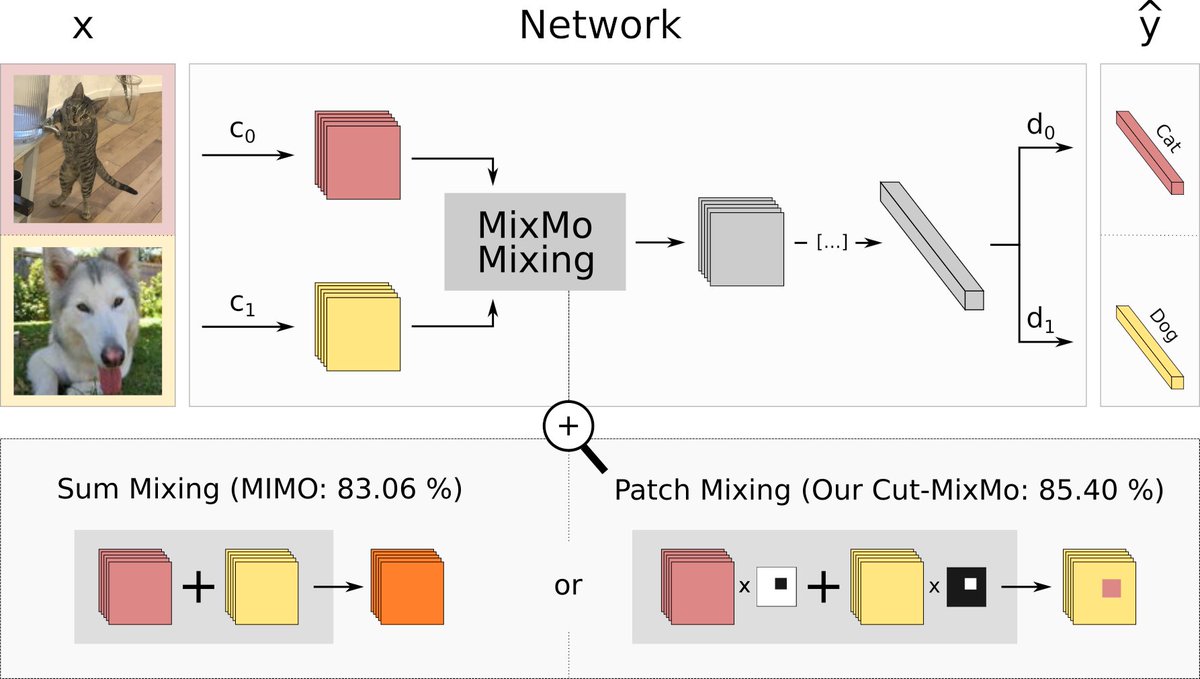
Deep networks only "really" use a small amount of their params: so, why not fit multiple subnetworks into one base network ? We introduce MixMo, a generalized "ensemble for free" framework, to learn multi-input multi-output subnetworks. We reach sota for computer vision ... 1/2
I'm presenting tomorrow Continuum, a light-weight library to do continual learning!
Come watch Friday 3 April, 5.30PM CEST :)
📌 Eventbrite event: https://t.co/tPjzPlqWJH
📌 Miscrosoft Teams: https://t.co/qB1R3x63K1
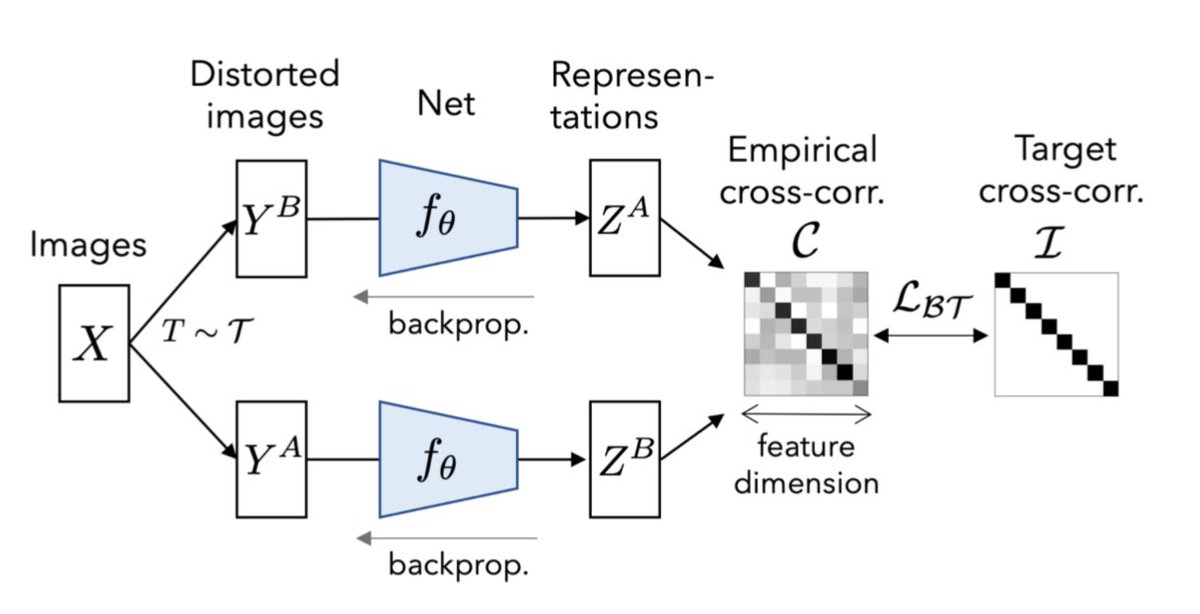
Barlow Twins: Self-Supervised Learning via Redundancy Reduction: https://t.co/5ivqL3j9SU
How cross-correlation matrix can help us avoiding the infamous collapse found in siamese-like networks.
A thread 👇
Happy to share the 3 papers accepted at #CVPR2021!😀
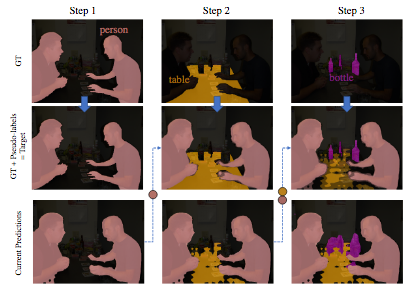
(1/3) "Learning without Forgetting for Continual Semantic Segmentation"
By @Ar_Douillard, Yifu Chen, Arnaud Dapogny, @quobbe
In collaboration w/: @heuritechlab, @DatakaLab, @valeoai
https://t.co/Eu67biWTCg
I've submitted my first paper ever at CVPR2020 and got rejected, it was hard.
But I'm happy to announce that my third paper, PLOP, has been accepted to #CVPR2021!
Code will be released soon!
New work from Y.Chen, A.Dapogny, @quobbe, and myself.
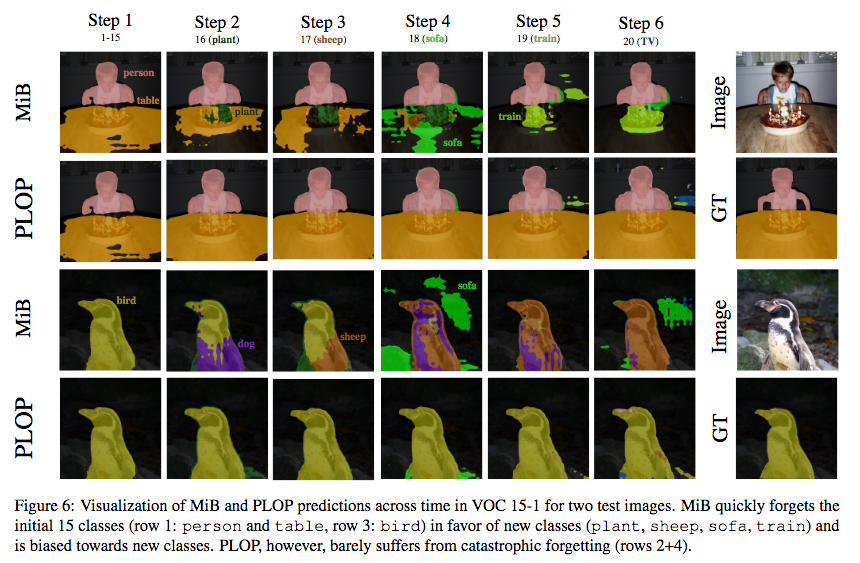
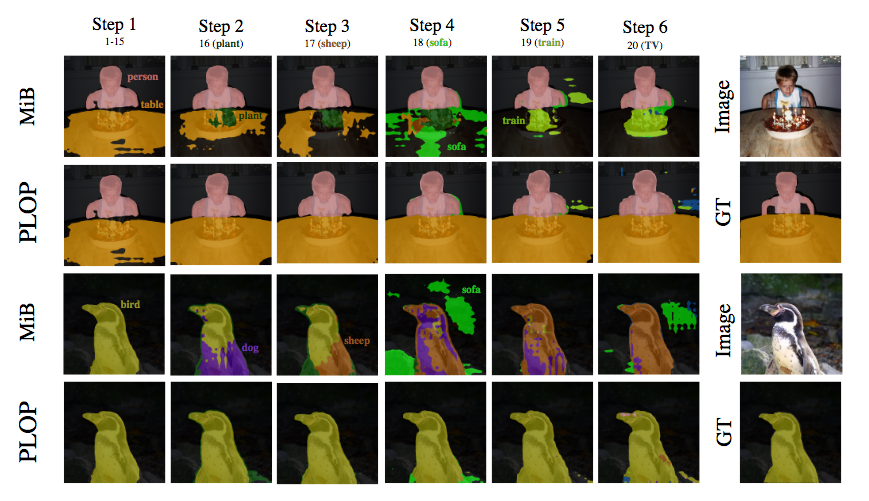
We tackle Continual Semantic Segmentation by introducing a novel distillation loss exploiting local & global details, and an uncertainty-based pseudo-labeling handling background shift
(We are PLOP)
https://t.co/p5yqUYLH22
That's our everyday challenge at @heuritechdata!
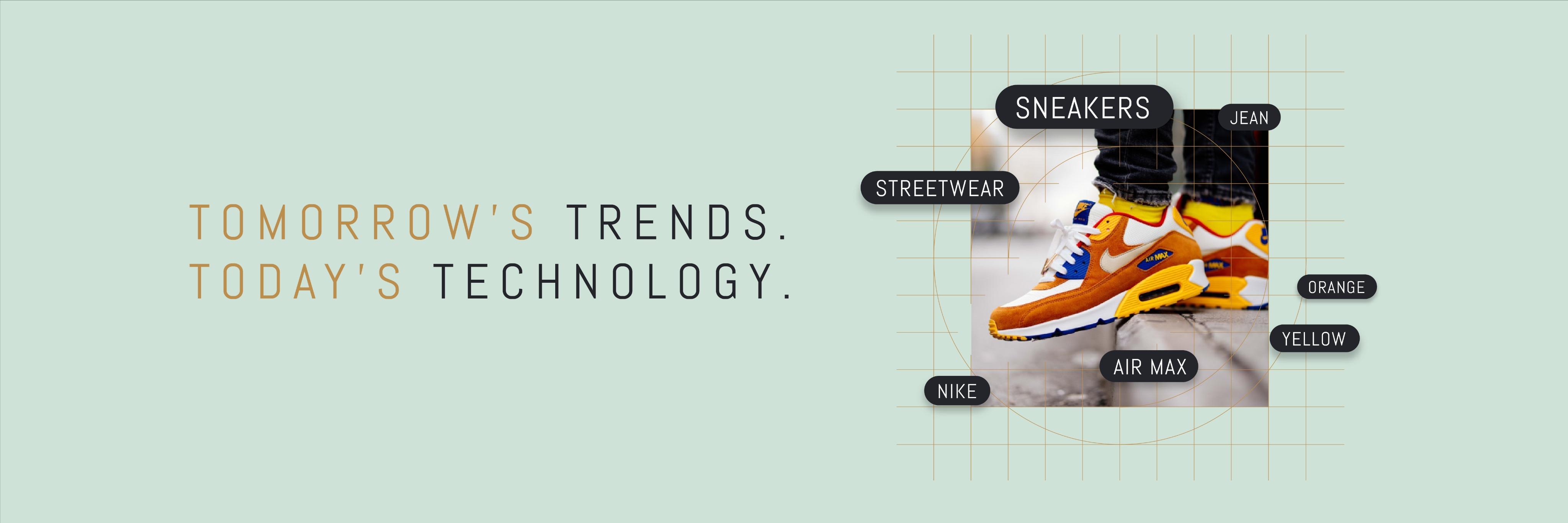
Here our answer: 🚀CORE!
Inspired by Faster-RCCN's anchors, we predict crude RGB values ("velvet red") and then regress to precise RGB
By @ramealexandre (lead), @CharlesOllion, and myself
https://t.co/bGRSxLYW6b
Execution > Idea
I've had so many ideas for research that I wasn't able to make it work in practice, while others have later succeed with essentially the same idea.
It's hard to judge if we should push an idea and maybe waste time or switch to other ideas.
The second #ECCV2020 Q&A session just started, you're more than welcomed to join and ask questions - 1014: Learning Visual Representations with Caption Annotations
Just released blog on Learning Visual Representations with Caption Annotations. Needs less data & attention maps show visual features are interpretable. Work by @mbsariyildiz@jlperez and @dlarlus presented @ECCV2020 today 6am & 2pm #1014 https://t.co/zss1Fn0LFu #eccv20