Totally inappropriate and thuggish for a governor to criticize a college political club for its speaker choices. Worry about your dirty voter rolls and your crime rates more, and student speech less, Governor.
En enero de 1945, en la estación de tren de Jędrzejów, en Polonia, una niña judía de 13 años yacía en el suelo, congelada, hambrienta, exhausta.
Se llamaba Edith Zierer. Venía de un campo de trabajo alemán en Częstochowa. Llevaba puesto un delgado uniforme a rayas, de esos que les ponían a los prisioneros. Quería llegar a Cracovia a buscar a su familia. No sabía todavía que estaba sola. Solo sabía que si se quedaba ahí tirada, se moría de frío y de hambre.
La gente pasaba. Miraba para otro lado. Nadie se detenía.
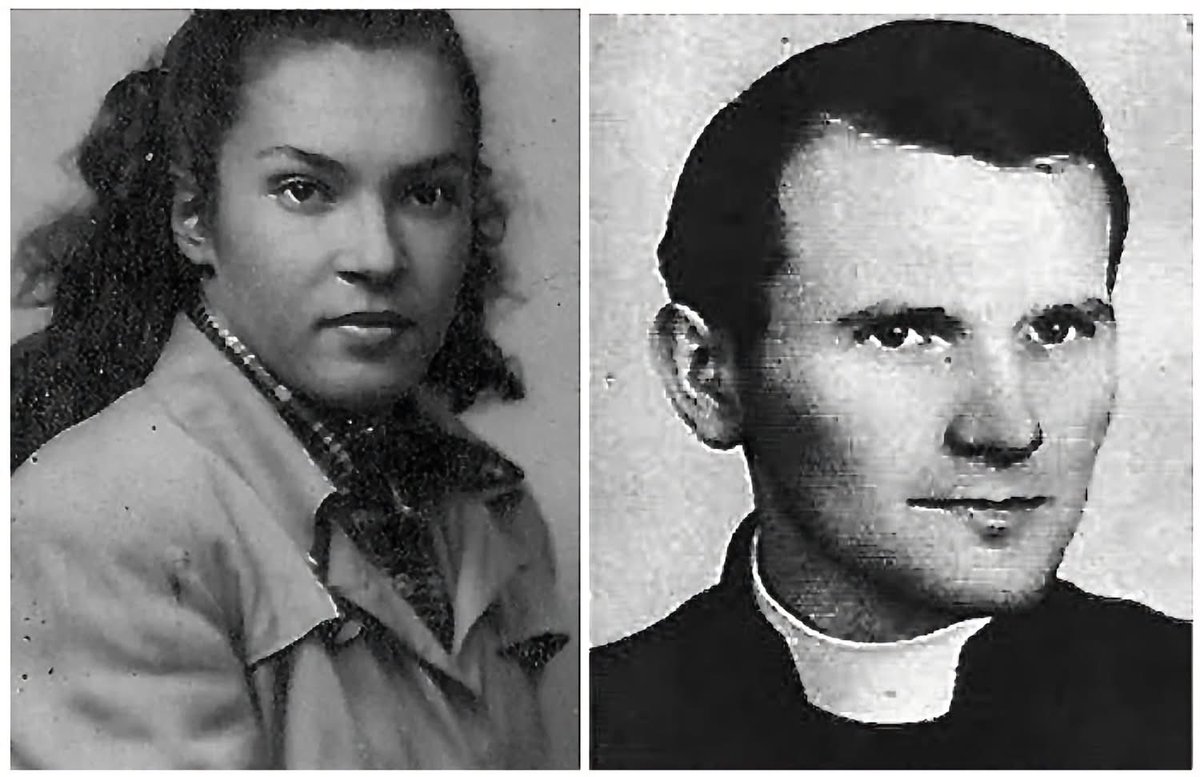
Hasta que se acercó un joven de 24 años. No era todavía sacerdote. Era seminarista. Llevaba una sotana larga, por eso ella pensó que era un cura.
No le hizo un discurso. No le preguntó de qué religión era. Le trajo té caliente, pan y queso. Le dijo con dulzura: "Tratá de pararte". Ella intentó. No pudo. No tenía fuerzas ni para ponerse de pie.
Entonces hizo lo más simple y lo más humano que se puede hacer. Se la cargó sobre su espalda y la llevó caminando tres kilómetros hasta la otra estación, desde donde salía el tren a Cracovia. Tres kilómetros con una niña casi sin vida encima, en pleno invierno polaco, con la guerra todavía rugiendo alrededor.
En el vagón de carbón la cubrió con su capa para que no se muriera de frío. Hizo un pequeño fuego para darle calor. Viajó con ella. La cuidó como si fuera su hermana.
Antes de despedirse, en Cracovia, se presentó: "Me llamo Karol Wojtyła".
Edith guardó ese nombre en su corazón durante 33 años. No sabía quién era. Solo sabía que ese hombre la había salvado.
El 16 de octubre de 1978, Edith abrió una revista y vio su cara. Era el nuevo Papa. El hombre que la había cargado en su espalda en esa estación helada, que la había cubierto con su capa, que le había dado té y pan, ahora era Juan Pablo II. El Papa. El líder de más de mil millones de católicos en el mundo.
Ella no lo podía creer. Le escribió una carta. "Yo soy la niña que salvaste en la estación de Jędrzejów", le dijo.
Y años después, en el año 2000, se reencontraron en Yad Vashem, en Jerusalém, el memorial del Holocausto. El Papa la abrazó. Ella lloró. Y le dijo lo que dice el Talmud, la sabiduría de su pueblo: "Quien salva una vida, salva al mundo entero".
Ese día, en esa estación, él no era Papa. No era santo. No era famoso. Era solo un joven seminarista polaco que decidió no mirar para otro lado.
Y eso alcanzó para salvar un mundo entero.
Porque a veces la santidad no está en los grandes gestos. Está en cargar tres kilómetros a una niña que nadie quiere ayudar.
November 15 is Steve Irwin Day, and it’s incredible to see how the world continues to remember Dad’s passion and enduring legacy. We can all take inspiration from the way he lived life to the fullest and pioneered a new age of conservation all while being committed to family and fun.
Have you ever climbed a staircase on your knees?
In Rome, just beside the Basilica of Saint John Lateran, millions have done exactly that for over 1,600 years.
This is the Scala Sancta ~ the Holy Stairs.
According to ancient Christian tradition, these 28 white marble steps are the very stairs Jesus climbed during His trial before Pontius Pilate in Jerusalem.
In the 4th century, Empress Saint Helena, mother of Emperor Constantine, journeyed to the Holy Land in search of relics of Christ’s Passion. She found the staircase and had it brought to Rome, where it was enshrined in a sanctuary built to honor it.
For centuries, popes, saints, and pilgrims from every corner of the world have come here. Out of reverence for Christ’s suffering, they ascend not on foot ,but on their knees, pausing on each step to pray and meditate.
In the 1700s, the marble was covered in walnut wood to protect it from centuries of devotion. Look closely, and you’ll find small glass windows revealing the spots where tradition says Christ’s blood fell.
Today, the Scala Sancta remains one of the most powerful physical links to the final hours of Jesus’ life :a place where history, faith, and devotion...
Maronite Catholic priest Father Alex Harb of St. Sharbel Maronite Catholic Church in Louisiana brings the Sacrament of Reconciliation to LSU football fans and tailgaters on game days, taking confession beyond the church walls!
People wonder why I'm so obsessed with donkeys. I've looked into it, and my only finding is that the rest of you are underdoing it.
The donkey was built for the ground where everything else gives up. It lives on thorn and scrub that a horse would starve beside, climbs rock on hooves like chisels, cools itself through those ears, and can lose nearly a third of its body weight in water, carry on eating, then drink 25 litres in three minutes and walk off as if nothing happened. We tamed it 7,000 years ago in the dry country of East Africa, and it has been the animal of the hard places ever since.
So it was the donkey, long before the horse, that carried civilisation on its back. One of Egypt's first pharaohs was buried at Abydos with ten donkeys laid in graves beside him, every spine worn from a lifetime under loads. The grain, the salt, the copper and the news of the ancient world moved at a donkey's pace, and wherever a hill is still too steep for a wheel, they still do.
The same animal fed our babies. Donkey milk is the closest milk on earth to a human mother's, Hippocrates prescribed it, and the foundling hospital in Paris kept a stable of jennies so the orphans could be put straight to the udder. A fair share of Europe's abandoned children owe their first month to a donkey, and most of those donkeys carry a dark cross down the back and across the shoulders, which the old story says was given to them on Good Friday.
It carried our wounded too. On the beach at Gallipoli a stretcher-bearer from South Shields found a stray donkey, and for 24 days the two of them walked up and down Shrapnel Gully under fire bringing broken men down to the boats, until a machine gun got the man. The donkey went back up with the next one. Of everything the Anzacs brought home from that campaign, the thing they chose to remember was a donkey.
Then there is the stubbornness, the one fact everybody is sure of, and it is the opposite of the truth. A horse meets danger by bolting, which is why horses die on cliff paths. A donkey stops, looks at the thing in front of it, and makes a decision, and it will refuse to step into water it cannot see the bottom of because it is right not to. For 7,000 years we have been calling a risk assessment an attitude.
Put one in a field of ewes and it appoints itself. A fox or a loose dog comes through the hedge and the donkey goes at it, head down, front feet first, and keeps going until the thing has gone. Nobody trains that in. It decided they were its sheep.
It remembers a face and a field after 25 years. It will stand over a dying companion for a day. It lives to 40 and outlasts half the people who ever owned it.
There are about 50 million of them alive, carrying water, firewood and children for the poorest people on earth, and close to 6 million a year are now killed for their hides, boiled down into a gelatine sold as a tonic. The animal that did the most work for the least thanks is being melted into a wellness product.
Seven thousand years of hauling us uphill, feeding our orphans and carrying our wounded, and the best we managed in return was to turn its name into an insult.
So no. Not nearly obsessed enough.