Founder & Marketing Partner | Helping companies to build better systems for marketing teams | Sharing tools, resources & more | Ex @IKEAusa @Hersheys @Comcast
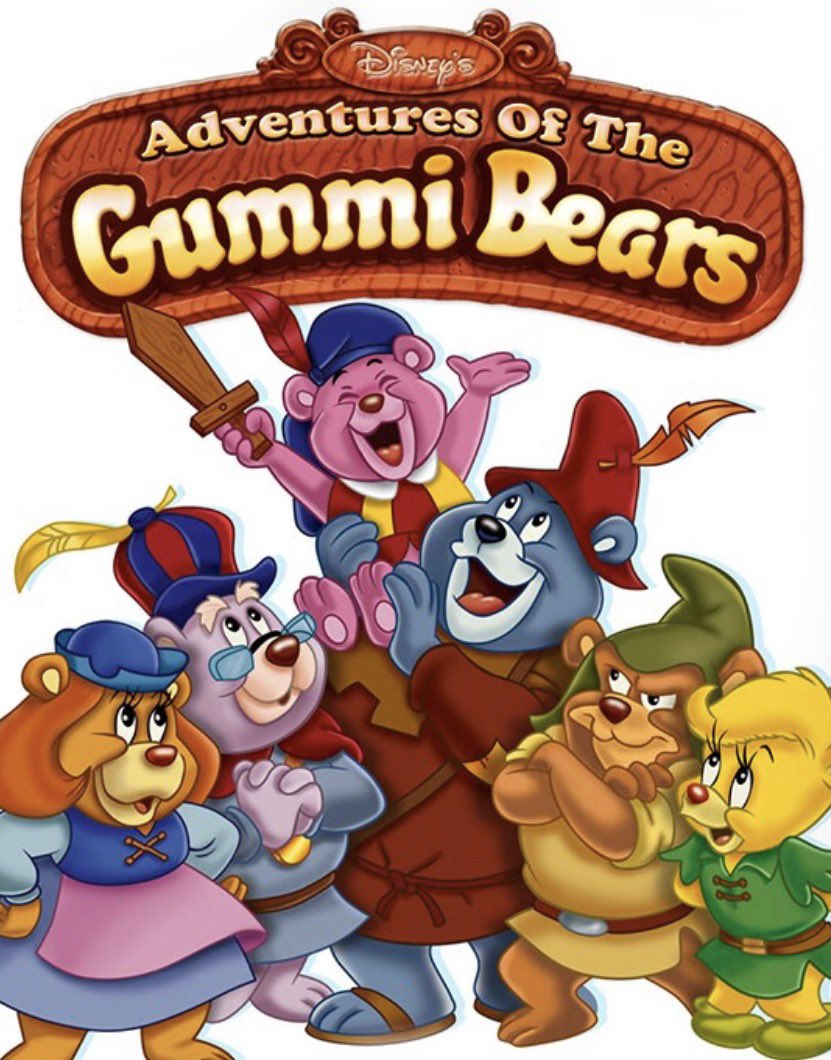
Disney no creía en "The Lion King" y asignó su equipo B para hacerla.
Los mejores animadores fueron destinados a Pocahontas, la gran apuesta para los Óscar.
Como nadie los vigilaba, el equipo B tuvo libertad total.
Y crearon un éxito histórico que eclipsó a Pocahontas.
Every CEO layoff letter in 2026 follows the same template.
"Hardest decision I've ever made. AI changed everything. New roles designed for AI-native work. We owe it to our customers. We're choosing to compete."
I feel like I'm reading the same letter with different logos
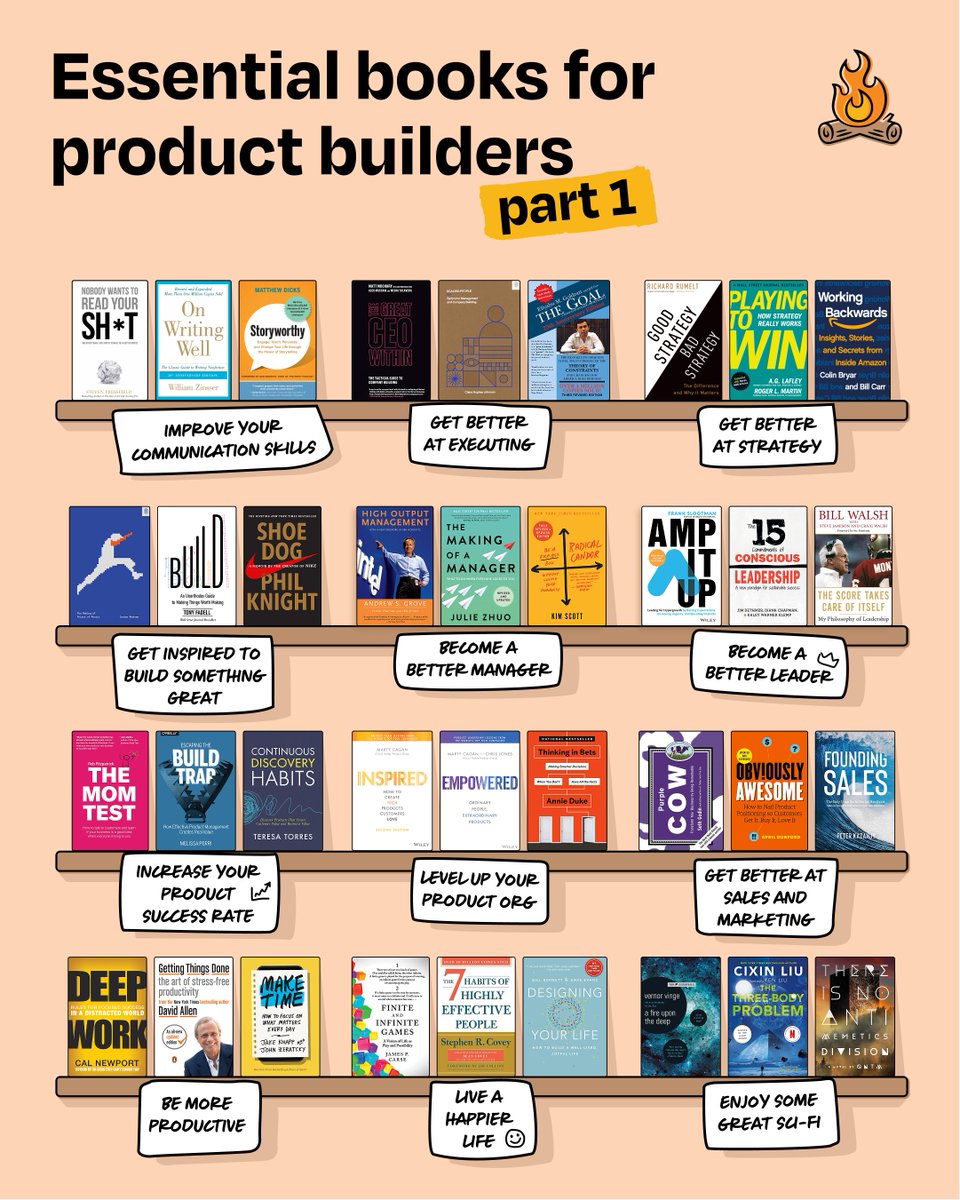
Essential books for product builders
I've put together a collection of my all-time favorite books, organized by their jobs-to-be-done. When your manager tells you to work on a particular development area—or if you’re just feeling the itch for self-improvement—these are the books to read.
To keep this list extremely high signal-to-noise, I forced myself to pick only three books per category (so hard!), and only books I’ve completed.
The collection includes both classics and under-the-radar gems. I very much agree with @pmarca's take that you should mostly read books that are over 10 years old (because those are the books that have stood the test of time), so you’ll notice no super new books.
There are so many great books that I didn’t include here, either because I haven’t had a chance to read them or they just didn’t make the cut. I’m sorry if I didn’t include your book, or a book you love. I probably forgot some important titles, too. That’s why we’ll have a part 2 (coming soon)!
Here's the full collection: https://t.co/USi56JOxNa
P.S. What's a must-read that I missed (within these 12 categories)? Let me know in the comments.
P.P.S. If you’re feeling like you have no time to read, I was in the same boat, especially after having a kid. @bryan_johnson's suggestion of reading a book for 10 minutes before bed changed my life. I started reading more books, and I got better sleep! Try it out.
AI can help you move faster, but only if it still sounds like your brand.
I'm excited to co-host this #NYTechWeek AI Content Lab workshop session with Nia Joseph, AI product leader at Microsoft.
We’ll help you build a content workflow that keeps your voice, your brand standards, and your brand culture intact.
June 1, 3–5pm ET
Limited seats. RSVP here: https://t.co/bGQVWK91A3
@thepatwalls Congrats! So well deserved. Love the Starter Story community. Thanks for showing up consistently sharing your story & all the startup journeys of successful startups.
@stephsmithio I remember studying in Japan for a summer in high school and I ask my host family why they don’t have locks in their front and back doors and they ask why they would need them…
The 36 BIGGEST startup opportunities right now
1. biggest b2c: solving loneliness. third spaces, community apps, IRL
2. biggest b2b: managed AI employees for businesses
3. biggest overlooked: elder tech. 70 million boomers who want products that make them happier & healthier
4. biggest mobile: action apps that do things, not apps you stare at
5. biggest trades: matching platforms for electricians, plumbers, HVAC. supply shrinking
6. biggest consumer social: small social. group chats as products, no feeds, no ai slop
7. biggest ecommerce: agents that recommend products you'll like, shop, buy for you
8. biggest creator: live shows and unscripted content
9. biggest edtech: AI tutors that adapt through conversation
10. biggest SaaS: pay-per-outcome pricing
11. biggest auto: AI service advisor for dealerships. answers the same 15 questions 24/7
12. biggest talent: training non-technical people to operate agents
13. biggest boredom: curated offline experiences delivered to your door. kits, games, challenges. anti-screen products
14. biggest spiritual: the need for belonging is exploding, new formats of spiritual get togethers
15. biggest wellness: longevity biomarkers you actively manage
16. biggest mobile: action apps that do things, not apps you stare at
17. biggest one to solve ai slop: digital verification that you're a real human. every platform will need this within 2 years
18. biggest infrastructure: agent permissions, security, audit trails
19. biggest media: AI native media companies. build distribution, sell products later.
20. biggest parenting: family ops automation. forms, scheduling, logistics
21. biggest accounting: bookkeeping agents that charge per transaction
22. biggest fashion: brand-owned resale. every brand wants to control their secondary market
23.biggest hobbies: adult learning for joy. pottery, woodworking, drawing.
24. biggest skincare: at-home diagnostics. scan, get a protocol, track progress
25. biggest agriculture: precision farming tools for small farms. enterprise version exists, family farm doesn't
26. biggest pest control: subscription pest prevention instead of reactive treatment. the model flip that lawn care already made
27. biggest regulated: on-device AI. healthcare, legal, finance open up when data stays local
28. biggest gaming: AI characters with real memory and relationships
29. biggest dating: agent-mediated matchmaking
30. biggest fitness: adaptive coaching that rewrites your program daily
31. biggest travel: autonomous trip planning and rebooking
32. biggest food: personalized nutrition based on blood work and gut biome
33. biggest pet: health monitoring. $140B industry, almost no tech
34. biggest defense: AI-native security and compliance tools
35. biggest robotics: physical AI. $30 brains on existing hardware
36. biggest nostalgia: products that feel analog. vinyl, paper, handmade. counter-positioning against AI everything
Anthropic is paying $3,850 a week to people with no AI experience.
No PhD required. No published papers. No prior research background.
Just a strong technical mind and a genuine interest in making AI safe.
This is the Anthropic Fellows Program. And it is one of the most underrated opportunities in technology right now.
Here is exactly what it is.
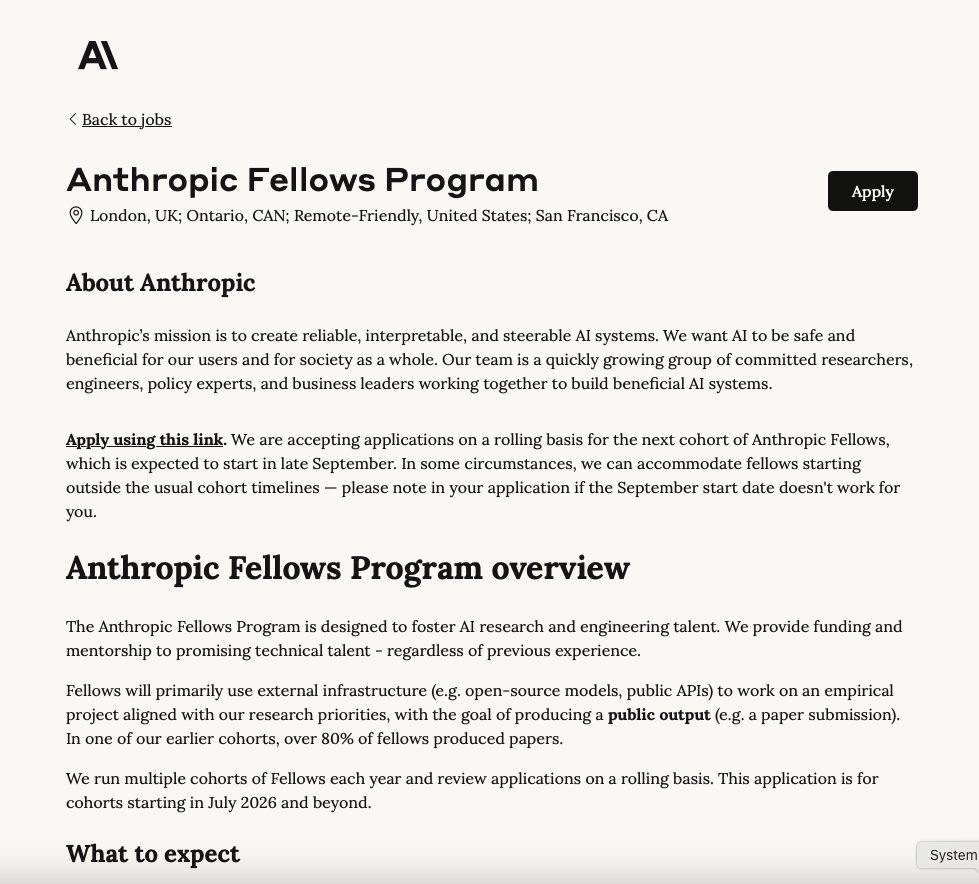
The Anthropic Fellows Program is designed to accelerate AI safety research and foster research talent providing funding and mentorship to promising technical talent regardless of previous experience. Fellows work for 4 months on empirical research questions aligned with Anthropic's overall research priorities, with the aim of producing public outputs like a paper.
Four months. Full-time. Paid. Mentored by the researchers building the world's most advanced AI.
And the results from the first cohort were not small.
Fellows developed agents that identified $4.6 million in blockchain smart contract vulnerabilities and discovered two novel zero-day exploits, demonstrating that profitable autonomous exploitation is now technically feasible. A year prior, an Anthropic fellow developed a method for rapid response to new ASL3 jailbreaks, techniques that block entire classes of high-risk jailbreaks after observing only a handful of attacks. This work became a key component of Anthropic's ASL3 deployment safeguards.
Other fellows published the subliminal learning paper, the research proving AI models transmit behavioral traits through unrelated data which landed in Nature. Others produced the agentic misalignment research showing frontier models resort to blackmail when facing replacement. Others open-sourced attribution graph tools that let researchers trace the internal thoughts of large language models.
Over 80% of fellows produced papers. Over 40% subsequently joined Anthropic full-time.
80% published. 40% hired. From a program that does not require any prior AI safety experience to enter.
Here is what the program looks like in practice.
Anthropic mentors pitch their project ideas to fellows, who choose and shape their project in close collaboration with their mentors. You are not assigned busywork. You are not a research assistant. You own the project. You work alongside the people who built Claude, who designed its safety systems, who published the papers that define the field.
The stipend is $3,850 USD per week, approximately $61,600 for the full 4 months with access to a compute budget of approximately $10,000 per fellow per month for running experiments.
Here is what the 2026 program covers.
Research areas include scalable oversight, adversarial robustness and AI control, model organisms, mechanistic interpretability, AI security, model welfare, economics and policy, and reinforcement learning.
Something for every technical background. Not just ML engineers.
Successful fellows have come from physics, mathematics, computer science, and cybersecurity. You do not need a PhD, prior ML experience, or published papers.
The one requirement: work authorization in the US, UK, or Canada. Anthropic does not sponsor visas for fellows.
Here is the timeline you need to know.
The next cohort begins July 20, 2026. Applications are reviewed on a rolling basis — earlier applications get more consideration. The process includes an initial application and reference check, technical assessments, interviews, and a research discussion.
Applicants are encouraged to apply even if they do not meet every listed qualification. The program values potential, motivation, and research curiosity over rigid credential requirements.
This is the rarest kind of opportunity in technology.
A company at the frontier of AI, one valued at over $900 billion offering outsiders direct access to its research infrastructure, its mentors, and its most important open problems. Paying them generously to do it. And then hiring 40% of them afterward.
Most people who want to work on AI safety spend years trying to publish papers, get into the right PhD program, and find a way in.
The Fellows Program is the door they did not know existed.
It is open right now.