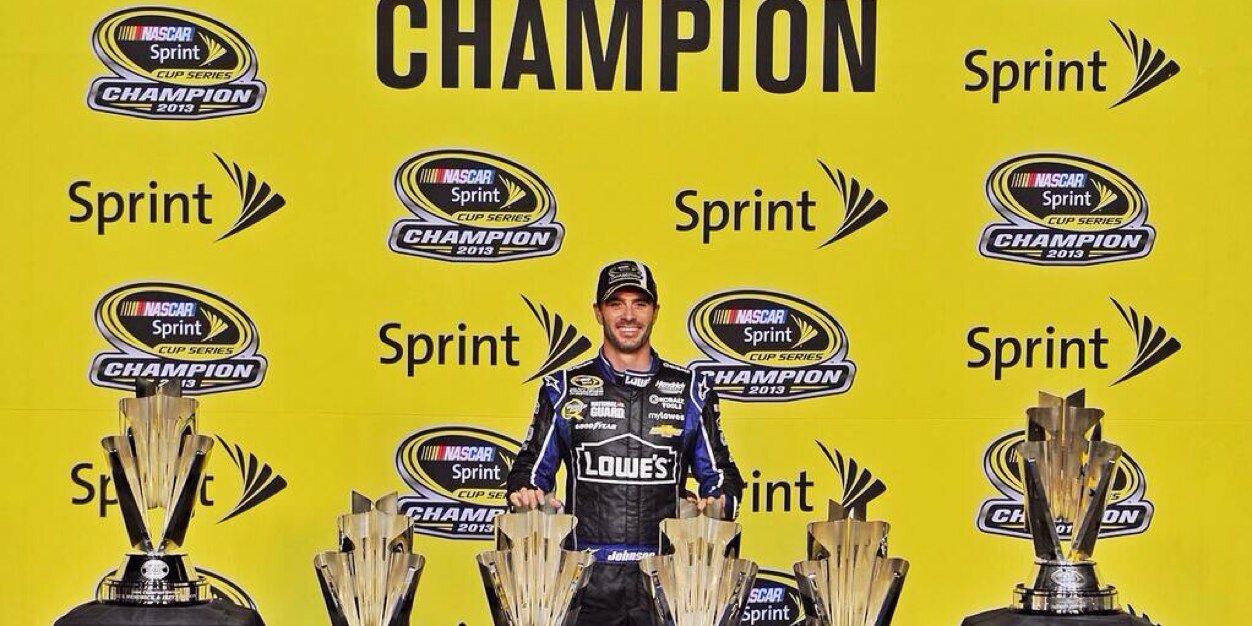
Richard Childress has now lost two drivers who were arguably top-five wheelmen in the sport, both often compared to each other for their raw ability and personality, during the back half of their respective careers.
Steve Sarkisian tells @MattHayesCFB academic standards are different at Texas.
“At Texas, we will only take 50% of a player’s academic credit hours. But at Ole Miss, all you have to do is take basket weaving & you can get an Ole Miss degree.”
https://t.co/xRrA78M3r1
EJ Crowell was so good as an 8th grade RB that Jackson middle school got accused of cheating and reported to the state because an opposing coach thought he was a high schooler.
“He would just knock the piss out of you”
Can he revive Alabama’s run game?
https://t.co/vZDYVhFBZl
Nothing infuriates an uninformed Congressional Dem more than when they realize they voluntarily triggered a debate with someone who actually knows what they are talking about, reads federal statute and adheres to Supreme Court precedent. Today’s self-implosion by @rosadelauro was quite remarkable to witness. Without apology or regret, I will always adhere to the best available reading of federal statute pursuant to the U.S. Supreme Court decision in Loper Bright.
.@SteveSandsGC has had a lot of great moments throughout his career but nothing can top the time he interviewed Jack Nicklaus, Arnold Palmer and Gary Player at Augusta National.
Check out his full interview with @ColtKnost and @thesleezyman now:
https://t.co/FHd5qTOp5q
Presented by: @shadyrays
We flipped $100 into $5,950 at the start of March and now won the first 3 bets of the new ladder to end the month. $100 into $560 so far.
Just got intel from source in Monsco of a post match locker room injury. Waiting on line to release. Ladder step 4 tomorrow 👨🍳
🚨BREAKING: Largest Real-World Study of Ivermectin + Mebendazole in Cancer Patients Shows 84.4% Clinical Benefit — Nearly HALF Report Cancer Disappearance or Tumor Regression
After just 6 months, 48.4% of cancer patients taking ivermectin and mebendazole reported NO EVIDENCE OF DISEASE (32.8%) or tumor regression (15.6%), while 36.1% reported disease stabilization⬇️
We have completed the largest real-world human analysis to date evaluating ivermectin and mebendazole in cancer patients—and the results represent one of the most compelling clinical signals ever documented for repurposed anti-parasitic therapies in oncology.
The groundbreaking analysis was made possible through a unique collaboration between The Wellness Company, the McCullough Foundation, and the Chairman of the President’s Cancer Panel (Dr. Harvey Risch)—uniting real-world clinical data, frontline medical experience, and high-level epidemiologic expertise to deliver urgently needed insights in oncology.
This was a real-world prospective clinical program evaluation of 197 cancer patients, with 122 completing a follow-up survey at about six months (61.9% response rate).
Cancer patients were prescribed compounded ivermectin–mebendazole, with each capsule containing 25 mg ivermectin and 250 mg mebendazole—most commonly taken at 1–2 capsules per day.
The cohort represented a clinically relevant population, including a wide variety cancer types, with 37.1% of patients reporting actively progressing disease at baseline and many having already undergone chemotherapy, radiation, and surgery.
At six months, 84.4% of cancer patients reported clinical benefit (Clinical Benefit Ratio: 84.4% [95% CI: 77.0–89.8%]):
✅ 32.8% reported no evidence of disease (95% CI: 25.1–41.5%)
✅ 15.6% reported tumor regression (95% CI: 10.2–23.0%)
✅ 36.1% reported stable disease (95% CI: 28.1–44.9%)
Treatment adherence was high, with 86.9% completing the full protocol and 66.4% remaining on therapy at six months.
The regimen was well tolerated, with 25.4% reporting side effects, primarily mild and gastrointestinal, and over 93% continuing treatment despite these events.
Patients were treated in real-world conditions alongside concurrent therapies, including chemotherapy (27.9%), radiation (21.3%), surgery (19.7%), supplements (49.2%), and dietary modification (37.7%), supporting use as an adjunctive approach.
Together, these findings represent a large, internally consistent real-world clinical signal that supports URGENT further investigation of ivermectin and mebendazole as low-toxicity, adjunctive cancer therapies.
Given the strength of the signal observed here, advancing this line of investigation is no longer optional—it is necessary.
This is NOT the end. We will continue advancing this work with larger datasets to further define and validate the role of anti-parasitics in cancer outcomes.
The manuscript is now available as a preprint on the Zenodo research repository, operated by the European Organization for Nuclear Research, while undergoing peer review at leading oncology journals: “Real-World Clinical Outcomes of Ivermectin and Mebendazole in Cancer Patients: Results from a Prospective Observational Cohort.”
@twc_health@McCulloughFund@P_McCulloughMD@DrHarveyRisch@DrKellyVictory@jathorpmfm@drdrew@PeterGillooly@FosterCoulson
American Airlines has 77 regional planes sitting in storage because they can't find pilots to fly them. The expected U.S. pilot shortfall in 2026 is 24,000. Training a new commercial pilot takes 2-3 years minimum and costs six figures.
So American found a loophole. Partner with a bus company, brand the bus "American Eagle," sell the seat on https://t.co/mcPOsfKjK5 with a flight number, route passengers through TSA, let them pick a seat, check bags, earn AAdvantage miles. The entire experience is designed to feel like a flight in every way except the part where you leave the ground.
The economics are staggering. A regional jet on a 90-mile route needs two pilots ($100K+ each), a flight attendant, jet fuel, FAA maintenance requirements, and an aircraft that costs $20-30 million. The Landline bus needs one driver and a highway.
South Bend to Chicago O'Hare is 90 miles. That route doesn't make money with a regional jet anymore. It barely made money before the pilot shortage. The bus lets American keep selling connections through O'Hare to every destination in its network without operating a single flight.
This is what the pilot shortage actually looks like. Not cancelled routes. Not smaller airports going dark. The airline just quietly reclassified a bus as a flight and kept charging accordingly. The TikTok exposing it has 13 million views because the passenger cleared security, sat at a gate, and watched her luggage get loaded onto a coach before it merged onto the interstate.
The word "bus" appears once during booking in small text. Google Flights lists it with a tiny bus icon. The airline says customers are "transparently informed." 72% of U.S. airports have already lost an average of 25% of their flights to the shortage, and Landline is expanding, not shrinking. Philadelphia, Chicago, and now five regional airports are on the bus network.
American Airlines is solving a $28,000-per-pilot-shortfall crisis by removing the pilot from the equation entirely. The bus is the product now. The flight number is just packaging.




![NicHulscher's tweet photo. 🚨BREAKING: Largest Real-World Study of Ivermectin + Mebendazole in Cancer Patients Shows 84.4% Clinical Benefit — Nearly HALF Report Cancer Disappearance or Tumor Regression
After just 6 months, 48.4% of cancer patients taking ivermectin and mebendazole reported NO EVIDENCE OF DISEASE (32.8%) or tumor regression (15.6%), while 36.1% reported disease stabilization⬇️
We have completed the largest real-world human analysis to date evaluating ivermectin and mebendazole in cancer patients—and the results represent one of the most compelling clinical signals ever documented for repurposed anti-parasitic therapies in oncology.
The groundbreaking analysis was made possible through a unique collaboration between The Wellness Company, the McCullough Foundation, and the Chairman of the President’s Cancer Panel (Dr. Harvey Risch)—uniting real-world clinical data, frontline medical experience, and high-level epidemiologic expertise to deliver urgently needed insights in oncology.
This was a real-world prospective clinical program evaluation of 197 cancer patients, with 122 completing a follow-up survey at about six months (61.9% response rate).
Cancer patients were prescribed compounded ivermectin–mebendazole, with each capsule containing 25 mg ivermectin and 250 mg mebendazole—most commonly taken at 1–2 capsules per day.
The cohort represented a clinically relevant population, including a wide variety cancer types, with 37.1% of patients reporting actively progressing disease at baseline and many having already undergone chemotherapy, radiation, and surgery.
At six months, 84.4% of cancer patients reported clinical benefit (Clinical Benefit Ratio: 84.4% [95% CI: 77.0–89.8%]):
✅ 32.8% reported no evidence of disease (95% CI: 25.1–41.5%)
✅ 15.6% reported tumor regression (95% CI: 10.2–23.0%)
✅ 36.1% reported stable disease (95% CI: 28.1–44.9%)
Treatment adherence was high, with 86.9% completing the full protocol and 66.4% remaining on therapy at six months.
The regimen was well tolerated, with 25.4% reporting side effects, primarily mild and gastrointestinal, and over 93% continuing treatment despite these events.
Patients were treated in real-world conditions alongside concurrent therapies, including chemotherapy (27.9%), radiation (21.3%), surgery (19.7%), supplements (49.2%), and dietary modification (37.7%), supporting use as an adjunctive approach.
Together, these findings represent a large, internally consistent real-world clinical signal that supports URGENT further investigation of ivermectin and mebendazole as low-toxicity, adjunctive cancer therapies.
Given the strength of the signal observed here, advancing this line of investigation is no longer optional—it is necessary.
This is NOT the end. We will continue advancing this work with larger datasets to further define and validate the role of anti-parasitics in cancer outcomes.
The manuscript is now available as a preprint on the Zenodo research repository, operated by the European Organization for Nuclear Research, while undergoing peer review at leading oncology journals: “Real-World Clinical Outcomes of Ivermectin and Mebendazole in Cancer Patients: Results from a Prospective Observational Cohort.”
@twc_health @McCulloughFund @P_McCulloughMD @DrHarveyRisch @DrKellyVictory @jathorpmfm @drdrew @PeterGillooly @FosterCoulson](https://pbs.twimg.com/media/HFUHVXUaQAAp44K.jpg)


