1/5 EBMs are usually taught as one model family among many. In our new tutorial with @du_yilun, we use them as a single lens on machine learning.
"An Energy-Based Perspective on Machine Learning" https://t.co/ZpPD2qTIPi
(1/4) why do image models chop every picture into the same square patches? 🤔 (hint: they shouldn't)
following the bitter lesson, we let diffusion models *choose* how to tokenize an image. it spends fewer tokens on the boring background, and more tokens on our faces! 🧵
"An Energy-Based Perspective on Machine Learning"
Diffusion models, LLMs, RL, and even inference-time reasoning might all be different ways of solving the same underlying problem.
So this paper provides a unified perspective based on energy-based models, where an energy function assigns lower scores to more ideal outcomes. Different learning algorithms can then be understood through how they define this energy, learn it from data, and search for low-energy solutions.
For example, autoregressive LLMs can be described through the negative log-probabilities of tokens, while diffusion models learn how to move samples toward higher-probability regions.
The paper also applies this interpretation to RL, planning, and test-time reasoning, showing how different energy functions can be combined to solve new tasks without training a separate model for every combination.
https://t.co/jMWI5UzAyJ
for the past few weeks, I’ve been exploring painting with Fable 5.2 in code. one of the most common critiques I heard about Opus 5.5’s paintings was that it was only emulating real art. I thought that was fair, so i’ve been asking Fable 5.2 to develop personas—artists with some sort of a back story and a consistent style roughly identifiable in time
not knowing what to expect, i’ve watched this project evolve in directions i never predicted. I give comments or steers, and Claude updates or revises the engines that power the brushes and paint. where paintings come up i like or find intriguing, i ask it to go deeper. these are some favorites.
each of these is a python program, some one to two thousand lines of code, that places every stroke through a simulated paint engine with different bristles. most take a few thousand strokes, but i’ve pushed much higher with varying results. Claude does not use an image model, nor render or trace in advance
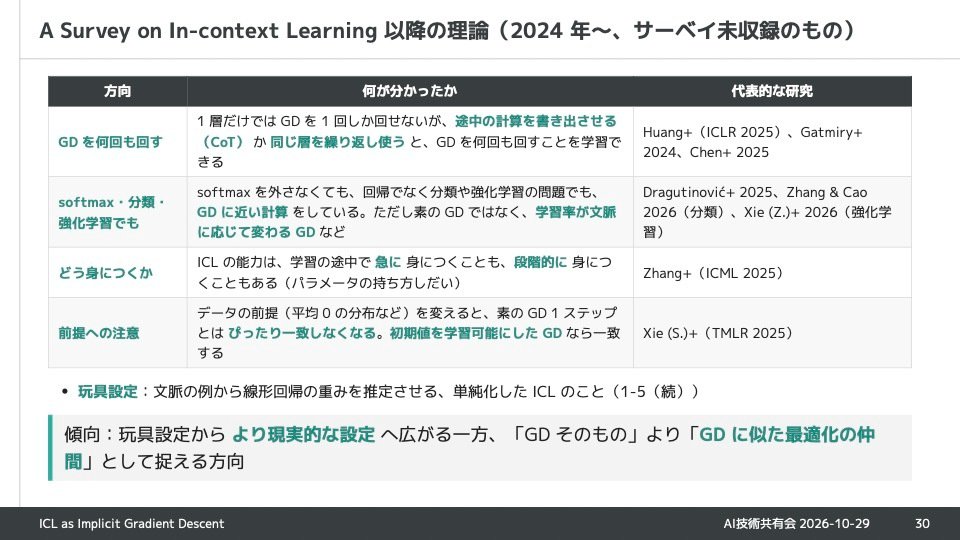
This is an old hat. That's exactly what the neural fast weight programmers did in the 1990s (including the 1991 unnormalised linear Transformer). Overview with links to the original papers: https://t.co/pJ1raBlXmh