Witch the Showdown shipped Early Access today. Same day as GTA VI. On purpose.
Vice City ate the internet. They're parrying bosses and hoping Steam still has a front page.
Indie takeaway: launching into a hurricane only works if you packed a raincoat.
#gamedev#indiedev#Steam
GTA VI just unlocked in New Zealand. Everyone else is waiting on midnight — and a PS5 system update.
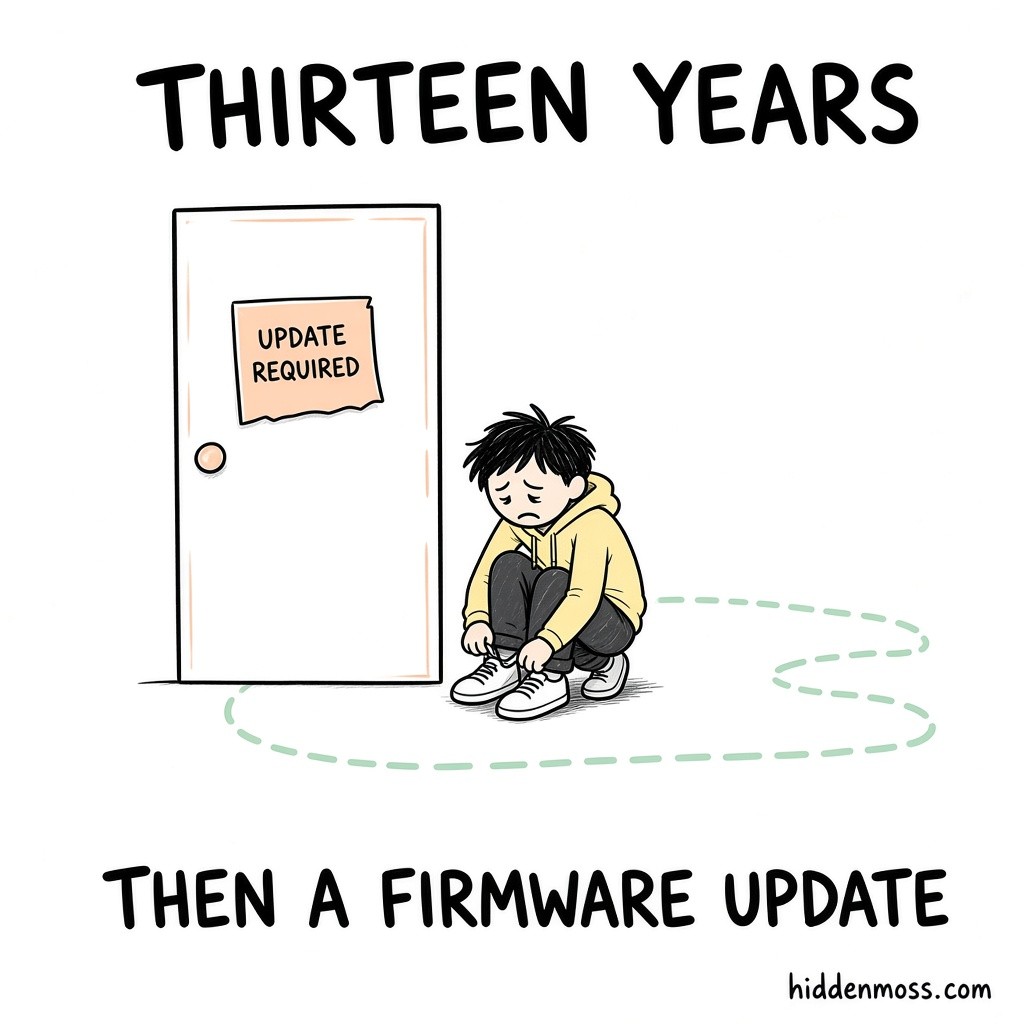
Thirteen years, and the last loading screen is a firmware prompt.
Indie takeaway: even the decade's biggest launch still ships behind a runtime patch.
#gamedev#indiedev#GTAVI
The nominees drop today. GTA VI ships Thursday. The cutoff is Friday.
The biggest game of the year can make the list before most players have even pressed start.
Indie takeaway: ship on time, or the trophy list gets written without you.
#gamedev#indiedev#TheGameAwards
Tuesday, the nominees for #TheGameAwards 2026 will be revealed.
Which games are you hoping to see on the list?
Watch the news as it happens live at Noon ET / 9a PT / 5p GMT
💬 - People please, inside voices!
🔧 - Added a small shake via the #GodotEngine's offest_transform_position to my conversation boxes when it detects two capitals in a row.
It is a small effect, but it helps make dialog feel a little more alive in my #SRPG#IndieGame!
** Sega Megadrive - Lionheart port **
Thalion's Lionheart (1993) is one of the best-looking games on the Amiga. 100s of colors on screen with loads of parallax and an atmospheric sound track and just dripping with quality in every aspect.
So what's the reason for the port ? the challenge for one - there's the Amigas Copper co-processor to emulate on MD in trying to match the visuals, the Audio to try and do justice to with an FM flavor to it , try and get some improvements to gameplay also - particularly the control system.
So how does the MD stack up and differ from the Amiga original so far ?
More of the level on screen. The Amiga game plays in a 280×208 window outdoors, cut to 192 vertical lines in the caves. The MD port uses the full 320 × 224 (NTSC H40 resolution) in all sections so 23%-33% more viewable screen thoughout.
60 hz framerate Megadrive vs 50 hz Amiga , 20% faster frame rate. Game play is unaffected - same movement over time , just a shade smoother .
Parallax added in the caves. On the Amiga, cave 2-1 is a 6-bitplane Extra Half-bright screen (32 colours + 32 half-bright copies) with no parallax / single layer. On the MD the half-bright colours come from Shadow/Highlight mode, each tile is drawn shadowed or normal, with the palettes solved to fit. The back wall has been split out of the map onto the otherwise unused plane B for parallax. The large spider boss is two layered sprite palettes, double-buffered in VRAM to retain all the colors and full frame rate.
Its not been easy though - theres no Copper on the MD ( the Copper is a co-processor synchronised to the display that amongst other things changes color as the screen is been drawn ) . No such luxury on the MD so under the hood, an assembly Horizontal-Interrupt (H-int) list rebuilds the Amiga's Copper color changes by writing color ram (CRAM) mid-screen, about 200 color writes a frame, most of them by DMA. The DMA color changes are driving up to 8 color changes per scanline which normally has negative affects for sprites ( DMA steals the VDPs time for building the sprite line cache ) , however with careful timing that issue has been resolved. There is color change going on in the background and foreground at the same time . The water uses per-line scroll effects for large parts of the screen. Color seams are flickered to improve the seaming as per the original game .
The real struggle - the MD's 512-colour palette against the Amiga's 4,096 means the sky gradients get rounded. The H-Int software copper takes nearly a fifth of the MD 68k cpu frame at times, which the Amiga gets for free with the Copper.
@Megadrive4ever8 has been working hard on Stage 1s music and I think hes doing an amazing job ! He's even using channel 3 extended mode to get effectively 2 channels from 1 on channel 3. Dual PCM channels are used for Music also so effectively 6 FM channels and 2 PCM channels devoted to music. The SFX get their own 1-2 PCM channels, and they're the original sounds re-sampled to 14 khz for XGM driver.
Hence Music and sound effects play at the same time on the MD. On the Amiga, Paula's 4 PCM channels are shared, a SFX takes a channel and the music drops that voice while the effect plays.
The XGM1 driver is modified so idle PCM channels don't read ROM to save cpu . The full stage 1 tracks run for 4 mins + in length and is still WIP.
5.) Intros with Scaling maintained . The intro complete with zoom through the door and the walk down the hall are scaled at run time, by the blitter on the Amiga, and by 68000k assembly code on the MD. The MD draws each picture in about 70–80% of the Amiga's time albiet keeps the Amigas timing for accuracy.
6.) 320 x 448 interlaced resolution used for menu screens, the Amiga used high resolution interlaced 640×344 width here which we can't match horizontally but its still looking pretty sharp in 320 x 448 and this mode was seldem used on MD so great to find some use here.
Other difficulties has been the VRAM management. On the Amiga the playfield is a bitmap, the blitter copies 16×16 blocks into it, so there's no limit on how many unique graphics a single screen can use. On the MD every 8×8 tile on screen has to be in VRAM (64kb) . Stage 1-1 (shown) uses 4,745 unique tiles (3,466 foreground + 1,279 background). Once the plane maps, sprite and scroll tables, hero, HUD and enemy frames have taken their share of the VRAM - there are only about 1,500 tiles left for the background / forground. So both planes stream their scrolling tiles to cache whats needed at the time onscreen. The tightest frames are the diagonals. In a single frame you can need a new foreground column and a new row, plus a background row coming in and the water's per-line windows shifting, and all of it has to go through the vblanks (end of frame) DMA tight window.
Levels 1-1, 2-1, 1-2 and large parts of the intro been done and work continues on the rest of the port. The game is a mix of SGDK for cold paths and Assembly for most of the game time frame for speed - inline with my other projects.
Next up is finishing the rest of the stages with some more follow up vids of the next sections, more music to come which @Megadrive4ever8 is looking forward to implementing !
The game is been ported with AI assistance. The sheer workload of it conversion of assets / analysis / debugging would not be humanly possible in any respectable time frame otherwise and I already have several non AI assisted projects to contend with. The engine uses game code from my other projects but has been further developed for specific needs for this game.
#SegaMegaDrive #Genesis #Amiga #SGDK #RetroGaming
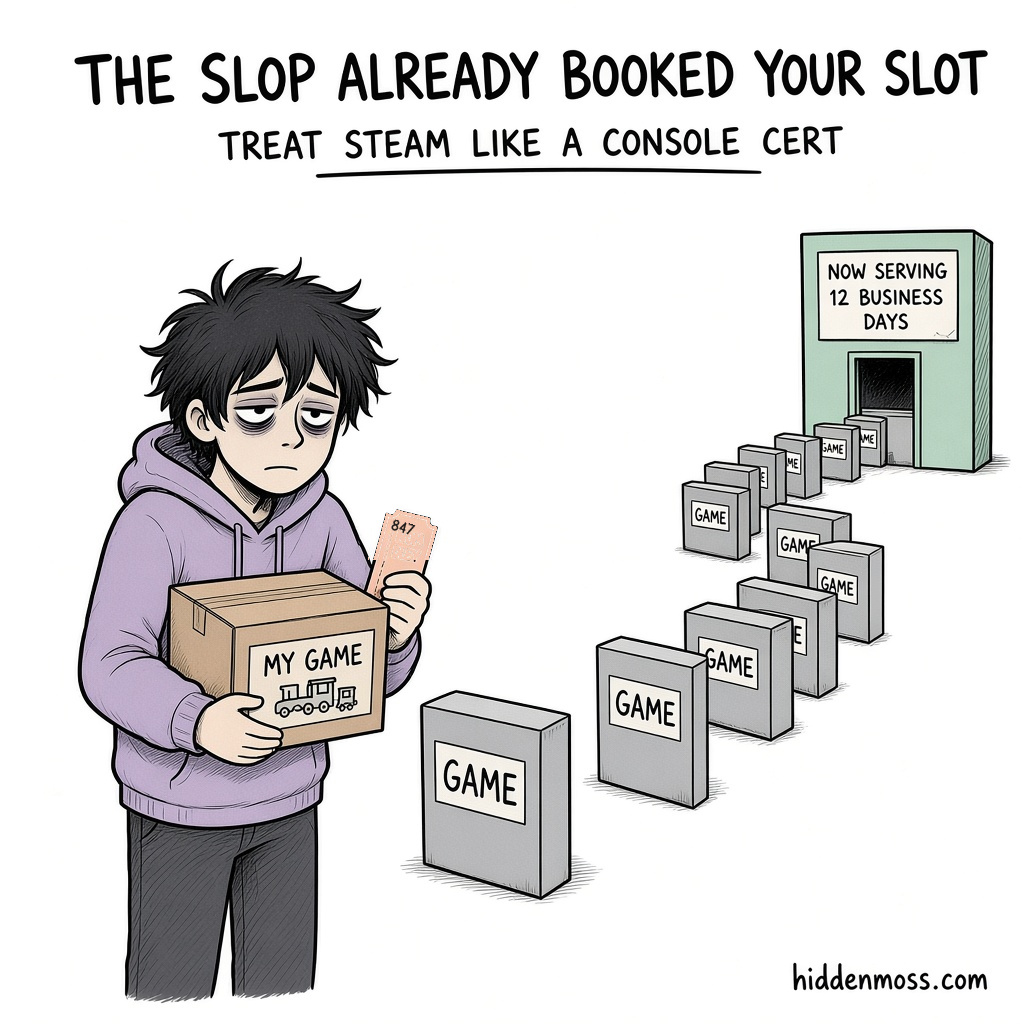
Steam reviews used to take 3–5 days. Valve says it's 12 now.
You fix a controller typo the same day, then sit in line while the queue keeps growing.
Indie takeaway: treat Steam like a console cert. The slop already booked your slot.
#gamedev#indiedev#Steam
Enemy fighter getting blasted by flak - the explosions push the fighter around via physics. Then, I take shots at the ejected pilot (each bullet also pushes the ragdoll) :) #indiegame#gamedev#screenshotsaturday