We’re launching the Latch MCP and announcing its availability within Claude Science, Anthropic’s new AI workbench for scientists.
AI for biology requires agent-native infrastructure: systems where agents can store, process, and visualize large molecular datasets from the interfaces scientists already use.
Biological analysis workflows often require substantial compute. Retries or incorrect long-running tool calls can quickly inflate workflow time and cost, especially when analyses take hours or days to complete. These tools should also be curated with appropriate parameters and agent-readable documentation, ideally provided by the original assay developer, to support correct use across many complex scientific contexts.
At Latch, we’ve seen customers of our Solution Provider partners, including TakaraBio, Vizgen, and AtlasXOmics, use both the Latch Agent and external harnesses like Claude Code and Cursor to accelerate analysis of their data.
The Latch MCP is a remote MCP server that securely connects agent harnesses to the Latch platform, giving agents access to verified bioinformatics tools built and maintained by kit and instrument providers. Agents can navigate data on Latch and launch existing deployments of validated bioinformatics workflows to analyze that data.
We invite applications to participate in our one week course, "Introduction to game theory in biology" at @iitbombay from May 25-29, 2026.
For details and to apply, visit: https://t.co/SmTsjC6MqT
Last date to apply: 20 April 2026
@SynBio1 The good thing about Cell papers is the detailed amount of visual information. Unfortunately, that is also the bad thing about Cell papers. Im a fan tho
The most underrated cafe in all of SF! Open until 11:30 PM, has WiFi, for those looking for late night work spots.
📍can you guess which one? (Hint: serves chai)
The older hifasm algorithm depended on counts. Dr. Cheng's improvement treats variants as site vectors and clusters them using DP. Errors don't match as they are not consistent to other variants and can later be corrected. Super cool!
Check out how a Yale researcher developed an algorithm that builds complete human genomes using standard lab techniques. This tool eliminates costly sequencing and could make genome assembly accessible for research and clinical diagnostics.
https://t.co/b6DeITcYwZ
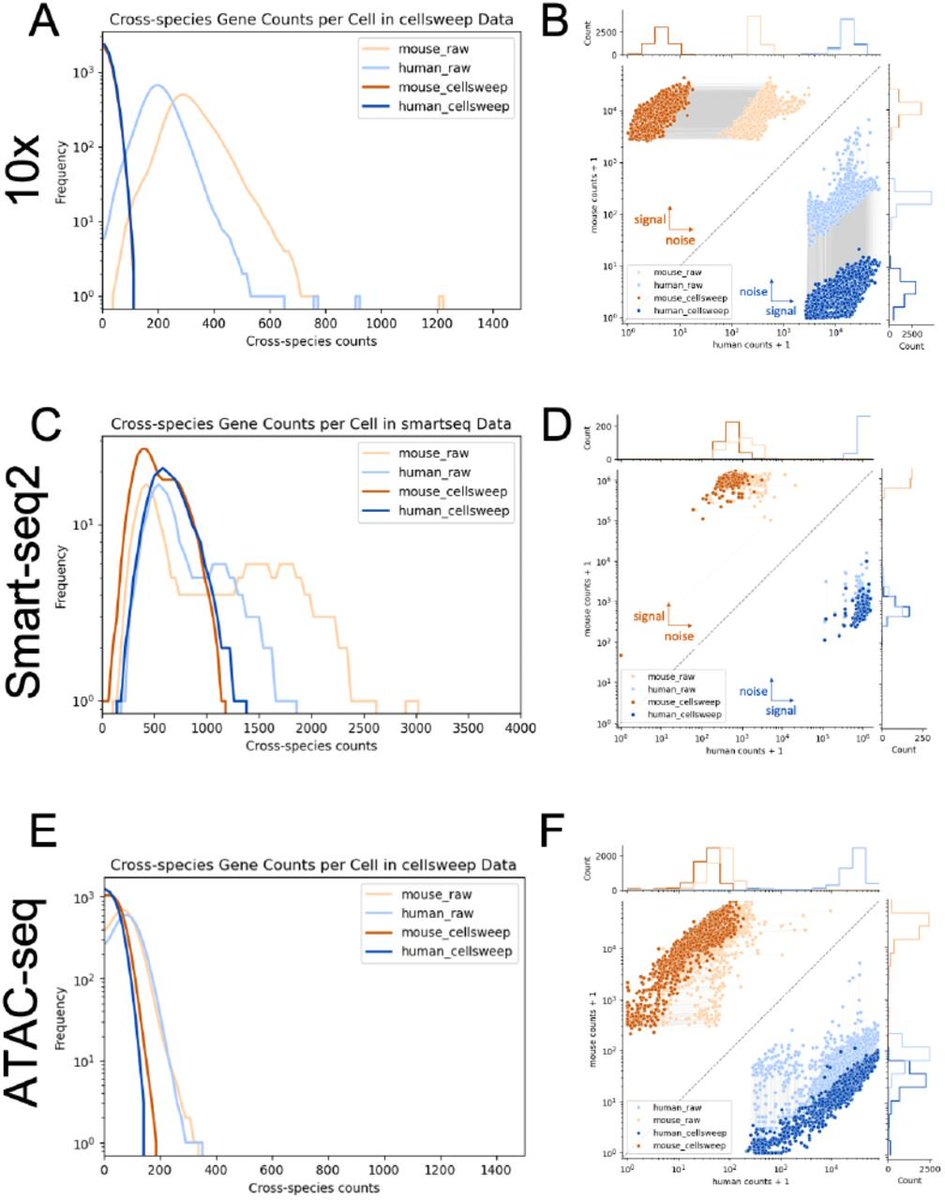
Ambient RNA & barcode swapping is a serious issue in single-cell genomics. Tools such as CellBender, scAR, DecontX & SoupX. We have developed CellSweep which is faster (in some cases by a lot) and much more accurate. Extensively tested and benchmarked. https://t.co/7ZRjDuJocP 1/