@anaiskkillian Controlling for cost of fuel, length of 4th weekend and other “convenience” factors
Something to say about patriotism
Guessing it’s a bit lower this year bc of World Cup
Interesting: LLMs are sycophantic, but their advice tends to depolarise people's choices and improve accuracy, the opposite of what 82% of surveyed experts predicted. In line with what *I* argued in 'How AI will Reshape Public Opinion', though.
New in M365 Copilot: Council.
You can run multiple models on the same prompt at the same time, so you can see where they align and diverge, and understand what each adds.
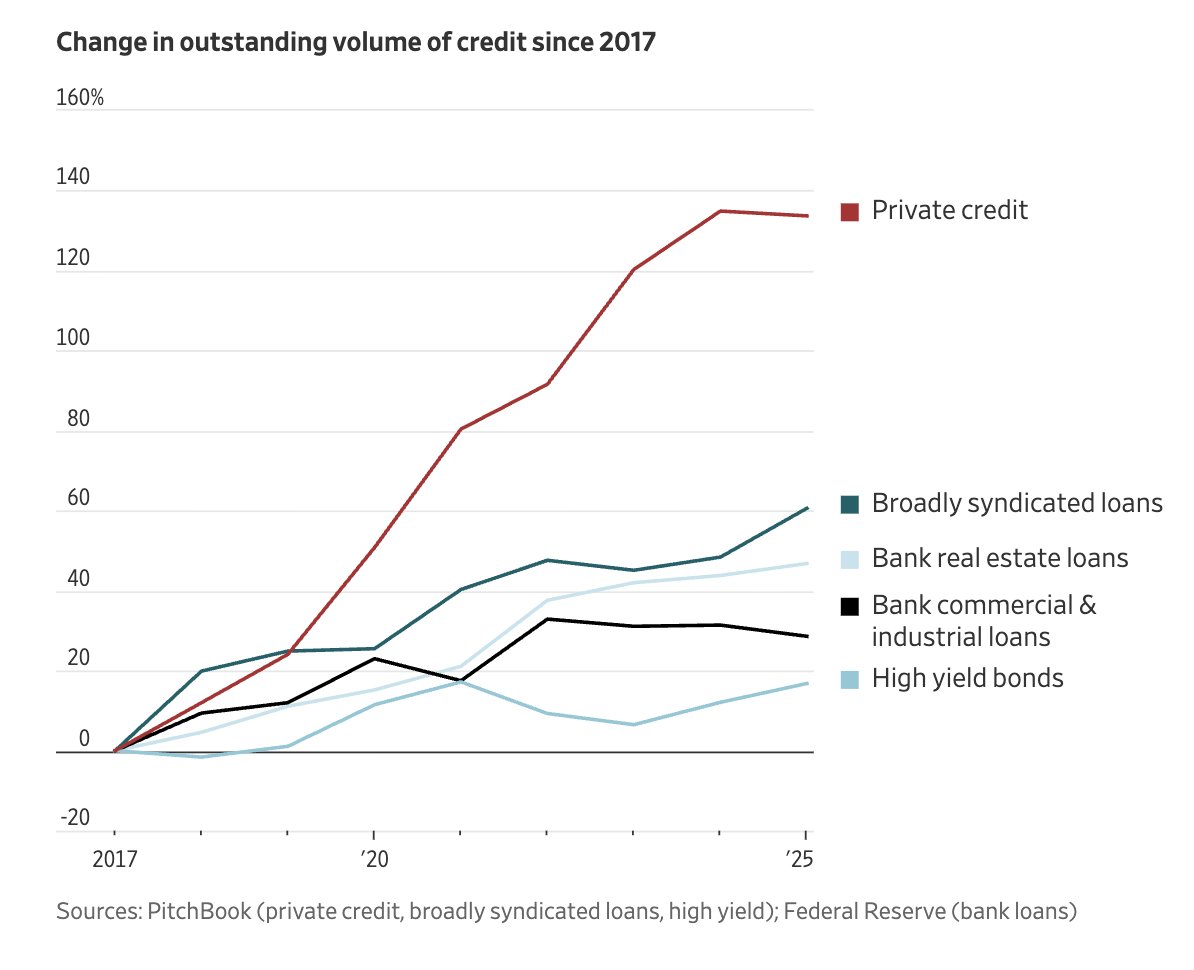
As private credit's troubles mount, it's natural to wonder if it could lead to another financial crisis, as with subprime. I spent some time studying the parallels. Here's my answer. https://t.co/bmRhA0D1v4
Broadly speaking, the big stories in inflation over the past year:
1)
Shelter disinflation proceeded so favorably last year that it is now running *below* core non-housing services (unusual) and also below the pre-pandemic run rate. Shelter dis-inflation was widely expected in 2023, after new lease rents inflected much lower in late 2022. But it took a bit longer to show up, fraying nerves in early 2024.
2)
Core goods inflation picked up in 2025 and showed no signs of slowing in January 2026. Those prices rose at an annualized rate of 3% over the three months ended January. Core goods was around zero before the pandemic. Excluding the 2021-23 surge in core goods prices, core goods inflation accelerated last year to levels not previously experienced since the early 1990s.
3)
Core non-housing services inflation is moving sideways at around 3.5% YoY. It averaged 2% during the five years before the pandemic. It doesn't have to fall quite that low for the Fed to hit 2% because inflation was below 2% before the pandemic, and it doesn't have to fall that low if we get even more shelter disinflation this year, which seems possible.
But the overshoot relative to the pre-pandemic equilibrium in core goods *and* core non-housing services remains a challenge for returning to 2% inflation. One or both of these will have to get better.
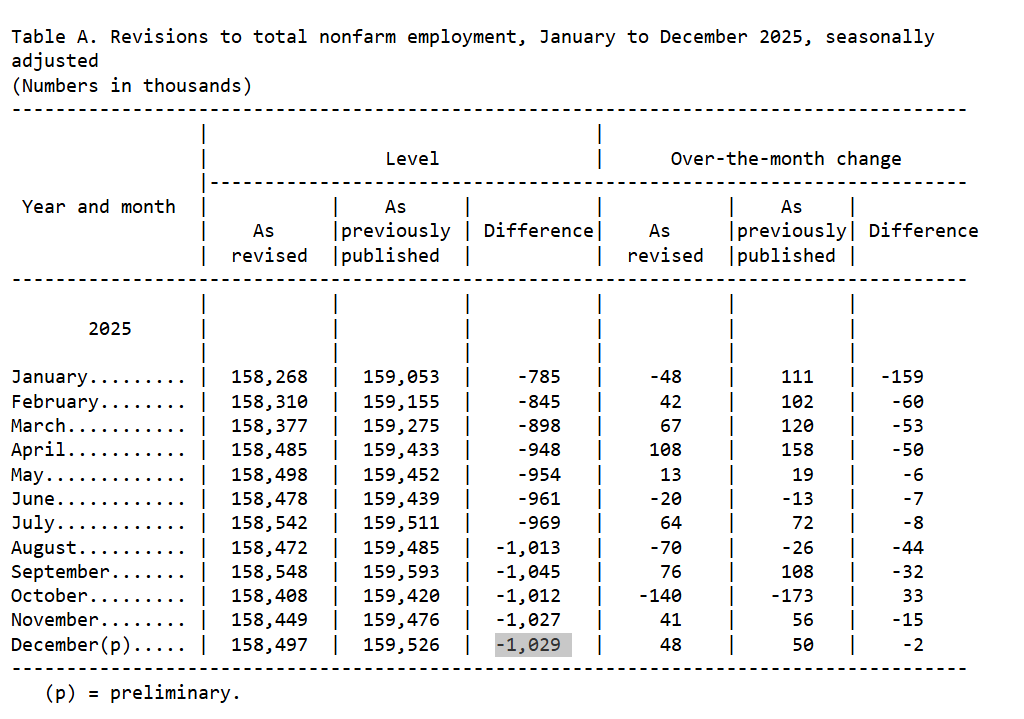
Good news in January, but the downward revisions are huge. More than a million fewer jobs than previously estimated by the end of 2025. And four months last year with outright declines in payrolls. https://t.co/NZ3M8V3s21
A few of the many important therapeutic hypotheses being tested in 2026 🧵
BIIB080 Phase 2 (Tau ASO): is intracellular phosphorylated tau a key driver of Alzheimer's disease, now that it's clear extracellular targeting with antibodies doesn't do anything?
Women derive more benefit from physical activity than men with respect to reduction of cardiovascular risk and related mortality, and can achieve protection at lower levels of engagement. From ~85,000 participants, open-access (blue=men)
https://t.co/gfaPgCna4o
Goldman: "We don’t think the AI investment boom is too big. At just under 1% of GDP, the level of spending remains well below the 2-5% peaks of past general purpose technology buildouts so far."
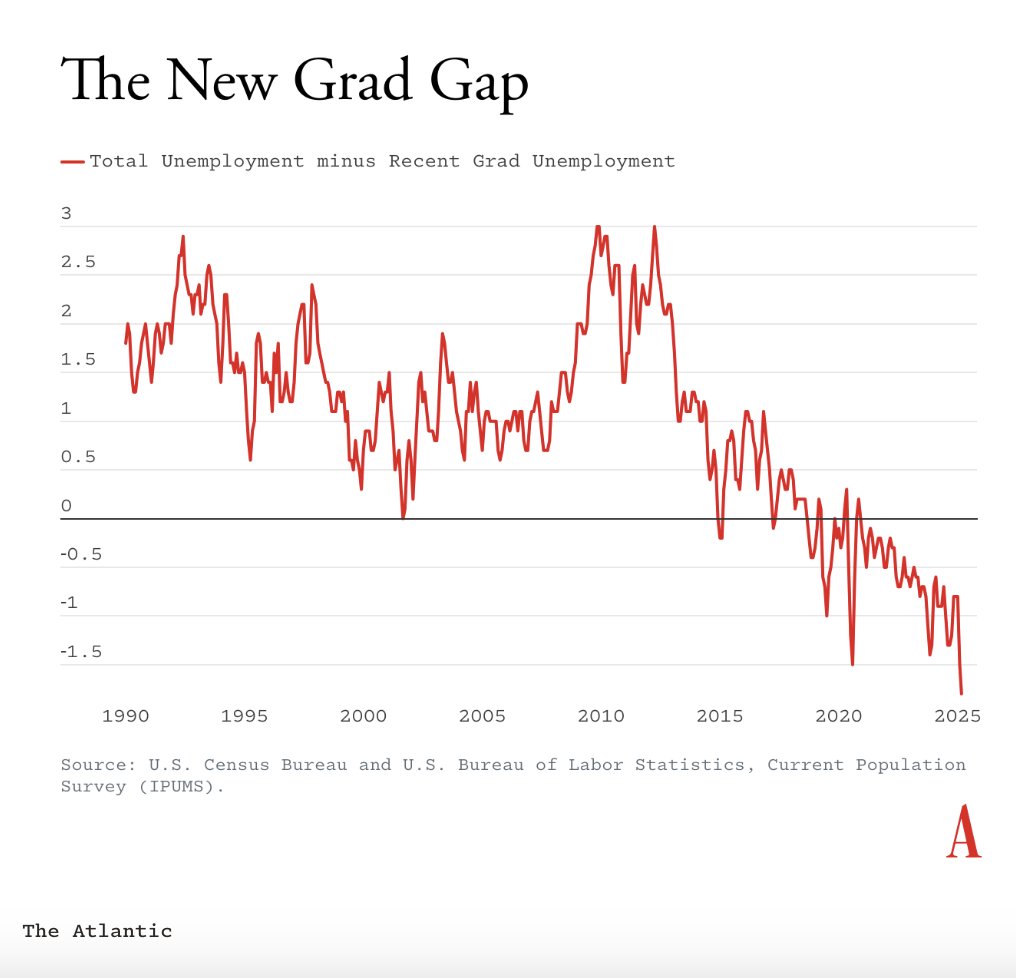
New essay: Something strange—and possibly worrying—is happening to the job market for college grads: unemployment for recent grads is rising, while law school applications are surging.
Maybe it's a sign of Trumpy chaos. Maybe it's a sign of something more structural.
So, here's question I'm mildly obsessed with: What economic indicator should we watch closely to know if AI is starting to really change the whole macroeconomy? "When you think from first principles about what generative AI can do, and what jobs it can replace, it’s the kind of things that young college grads have done” in white-collar firms, @ProfDavidDeming told me. “They read and synthesize information and data. They produce reports and presentations.”
I agree. I'm not catastrophic about the risk of total disemployment by machines. But I do think Gen-AI is amazing at the precise skillset of paralegals and young i-bankers, consultants, researchers, and coders. So I've been wondering when we'll see recent grad unemployment peel away from the rest of the economy.
Well, that's precisely what's happening now. The unemployment rate for recent grads is worse now relative to the overall economy than any time in the last four decades, at least.
Is this slam-dunk evidence of AI disruption? As I say in the piece: nope. But it's ... something to watch.
my sweetgreen salad to end all salads:
spring mix x chopped romaine
cilantro
cucumbers
shredded cabbage
tomatoes
apples
blackened chicken
hot sauce
green goddess ranch
get it spun that's what we pay $13 for